This is not a polished road trip with cute stops and souvenir shops, it is the version where you slow down because something half-broken catches your eye and you cannot stop thinking about it. New York is full of those places once you start paying attention.
You see them from the highway or at the edge of a small town, abandoned resorts, empty forts, old attractions that feel like they slipped out of a different decade and never found their way back.
You will take a loose route from the Hudson Valley up toward the Adirondacks and then back down toward the coast, pulling over when curiosity wins.
Some spots feel frozen, others feel quietly worn down, but all of them carry stories that never made it into a brochure. Keep the music low, the windows cracked, and let the road decide what you notice next.
1. North Brother Island
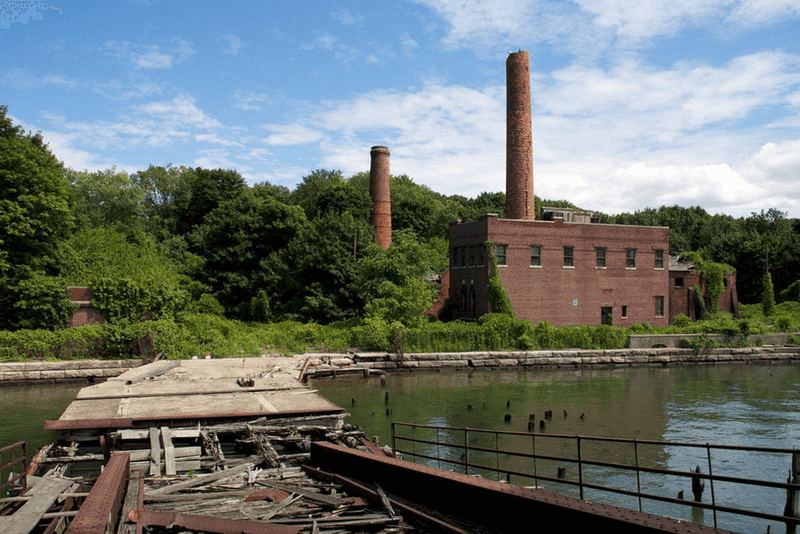
Want to see the city’s quietest ruins without stepping on shore? Cruise slowly past North Brother Island, set in the East River between the Bronx and Rikers Island, New York.
The hospital buildings hide behind thick trees, and the brick looks soft from weather and time.
You only get angles through branches, which somehow makes the whole place feel more private.
I like drifting by near sunset, when the water goes gray and the windows turn into small mirrors. You will catch details like exterior staircases and rooflines that hint at long corridors.
There is no landing here, so the view is a respectful distance kind of thing. That distance adds to the hush, like you’re looking into a sealed memory.
Keep a steady line between Manhattan and the Bronx shore, and you’ll see how the island holds itself apart.
The skyline in the background makes the silence louder.
It remains one of New York State’s most overlooked historic sites, even though millions pass nearby. That contrast is the charm.
Bring binoculars if you have them, because small details reward patience.
You might spot ivy pushing into window frames and a rusted railing still clinging stubbornly.
From the water, you feel the scale without losing the mystery. That’s the sweet spot for a place like this.
When the current tugs, just let it. The island will slide by like a story you’re not quite ready to finish.
2. Grossinger’s Catskill Resort
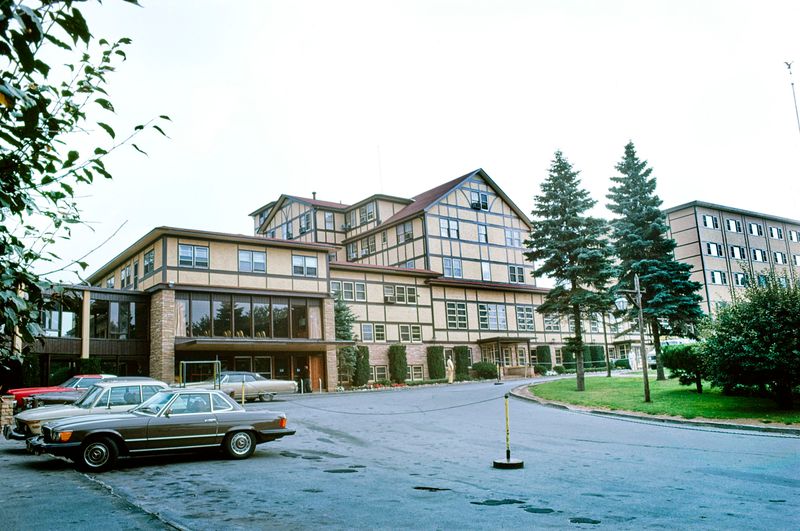
Roll up Route 17 toward Liberty, and the air starts to smell like old vacation days. Grossinger’s Catskill Resort sat near 434 Old Liberty Road, Liberty, with buildings scattered through the woods.
Most of what you’ll see now is quiet, with foundations, broken walls, and the bones of leisure.
The Catskills carry the echo of families arriving with suitcases and unhurried weekends.
Driving past, the long driveways feel like half-remembered punchlines. You can picture music drifting across lawns and late-night laughter sliding out of hallways.
What really gets you is the scale that still lingers even in pieces. You sense the networks of rooms, ballrooms, and walkways stitched through the trees.
New York State built its memory palace up here, and bits remain if you look gently.
Do not rush the car, let the corners open.
If you stop, you’ll see railings crusted with moss and stairwells filled with leaves. It’s like the mountain decided to reclaim the season.
There is something soft in how the light lands on cracked pool tiles. You can almost hear splashes if the wind sneaks the right way.
This isn’t a museum tour, it’s a roadside conversation with the past. Keep your voice low without knowing why.
When people talk Catskills, they picture stages and postcards.
I picture these driveways and the slow fade back into forest.
By the time you loop back to the highway, the resort feels like it waved. Not a goodbye, just a quiet see you around.
3. City Methodist Church
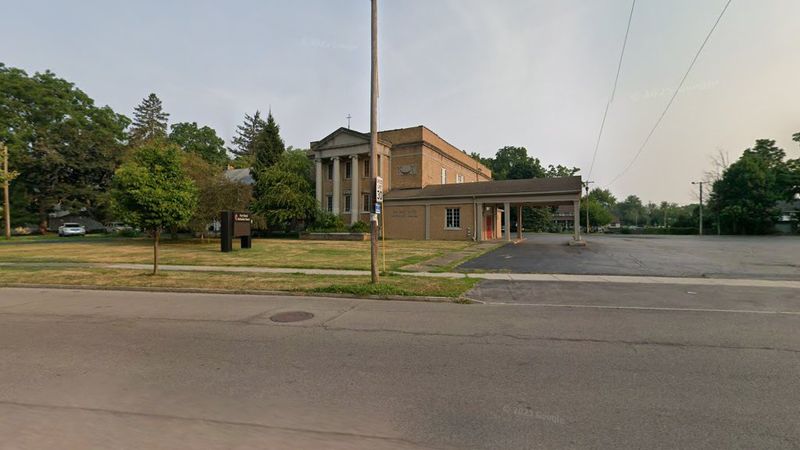
Pull up and the scale hits first, because the building is massive even in silence. City Methodist Church stands at 522 9th St, Niagara Falls, where the street hum fades and the nave swallows it.
Light slides through gaps and paints dusty beams across the floor.
You watch birds drift in and out like they own the balcony.
Buffalo’s industrial story shades this corridor of western New York. That shift feels carved into the stone and the windows that no longer hold.
There’s a rhythm to walking past a shell this big. Your footsteps come back at you with a slow echo.
Arches still frame the view even with missing glass. The geometry hangs on, stubborn and graceful.
I always pause across the street and take in the whole front. It’s a snapshot of ambition and weather playing tug-of-war.
You do not need a long stop to feel it. Two breaths can be enough to reset your day.
Bring a camera if you want, but let your eyes do most of the work.
The angles reward patience more than lenses.
New York State holds plenty of grand shells, and this one sits proudly among them. It’s not loud about it, which I respect.
When you leave, the building keeps staring calmly. You’ll feel like you interrupted a long conversation and quietly backed away.
4. Fort Tilden
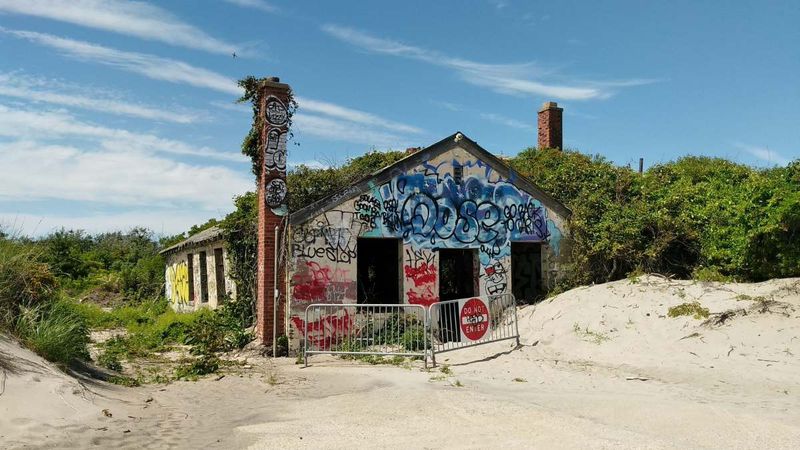
You roll over the Marine Parkway Bridge, and the air flips salty in a second. Fort Tilden sits along Rockaway Point Blvd, Queens, tucked behind dunes and scrub.
Concrete batteries peek out like quiet animals sunning themselves.
The beach wind threads through doorways and returns whistling.
I like to walk the paths until a bunker appears without warning. That surprise makes everything feel new even though it’s old.
The mix of nature and history sneaks up on you. Sand works its way into seams that were never meant to move.
Bring a light if you plan to peek inside, but keep your steps considerate. Shadows here carry their own weather.
From the top of a battery, the skyline drifts on clear days.
It feels wild and city at once, very New York State.
Close your eyes and you can hear the sea push and pull. Open them and concrete holds its ground like a stubborn sibling.
You can loop the road and hit the water in minutes. That quick shift is half the fun of this stop.
Paint flakes, metal rusts, and grass keeps coming back. Nature is patient with old walls.
When you head out, rinse the sand from your shoes. The fort always sneaks a little souvenir into your car.
5. Concrete Central
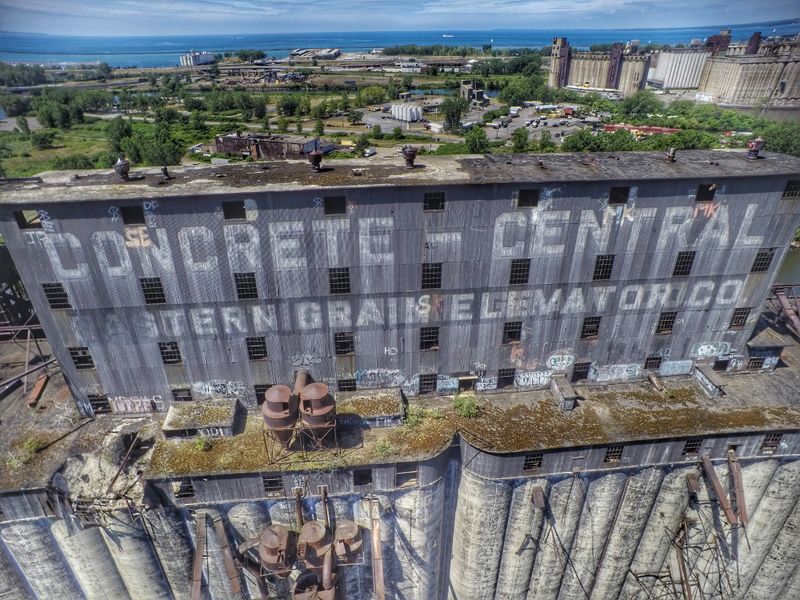
There it is, the giant you can’t miss along the Buffalo River. Concrete Central rises near 175 Buffalo River Rd, Buffalo, with silos lined up like a gray parade.
Even from the road, the scale puts your neck in a stretch.
The river gives it room to breathe, which somehow makes it bigger.
I like to idle for a minute and watch the light slide down the cylinders. It feels like watching a sundial that forgot about hours.
Every seam and ladder tells you how grain once moved like water. Now the wind does the moving and that’s enough.
Buffalo holds a lot of industrial ghosts, and this is the loudest quiet one. It hums without making a sound.
Bring a friend who likes texture, because the concrete wears a thousand shades of gray. You’ll both point at different patches and nod.
From certain angles, the elevators look like canyon walls.
Turn your head and it becomes a pipe organ of stone.
The riverwalk nearby lets you stitch a short stroll into the view. Let your pace match the water’s patience.
New York State’s story of steel, grain, and lake wind is right here in solid form. It reads fine without any plaque.
When you drive off, the silos keep standing like a lineup. They do not wave, they just keep being enormous.
6. Camp Hero
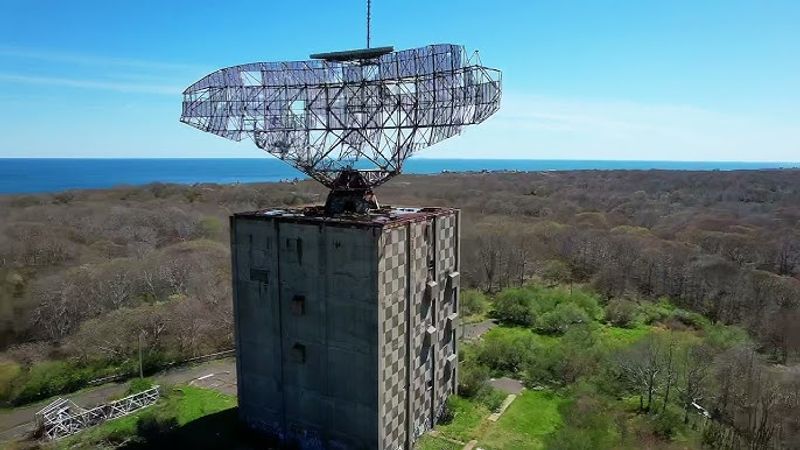
End of the island energy hits different, and Camp Hero leans into it. The entrance is along 1898 Montauk Hwy, Montauk, with the radar tower standing like a quiet sentinel.
The buildings feel paused rather than gone. Doors, windows, and fences trade glances with the ocean wind.
I like the crunch of gravel underfoot as you walk toward the tower. It makes every step sound official even when you’re just curious.
Montauk’s light paints straight lines across flat walls.
Shadows flip from sharp to soft when clouds drift.
There’s enough distance between structures to let your mind fill blanks. History breathes when you are not rushing it.
On a clear day the sea looks like a sheet of glass waiting to be folded. The tower keeps watch without blinking.
You can loop the roads and catch different angles. Each turn is another quiet introduction.
New York State holds a bunch of coastal defenses, but this one feels personal. Maybe it’s the end-of-the-line thing.
Bring layers because the wind ignores forecasts. It slides through sleeves like it rented the place.
Driving out, the dunes make the base fade quickly.
In your mirror, the radar dish looks like it is thinking.
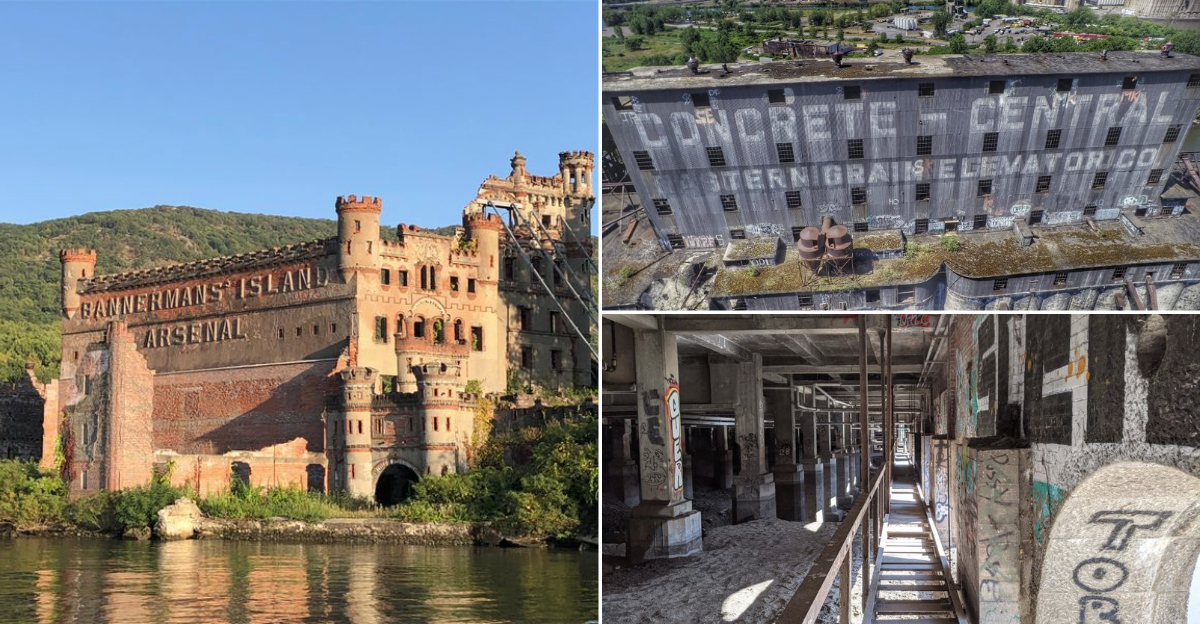
7. Bannerman Castle
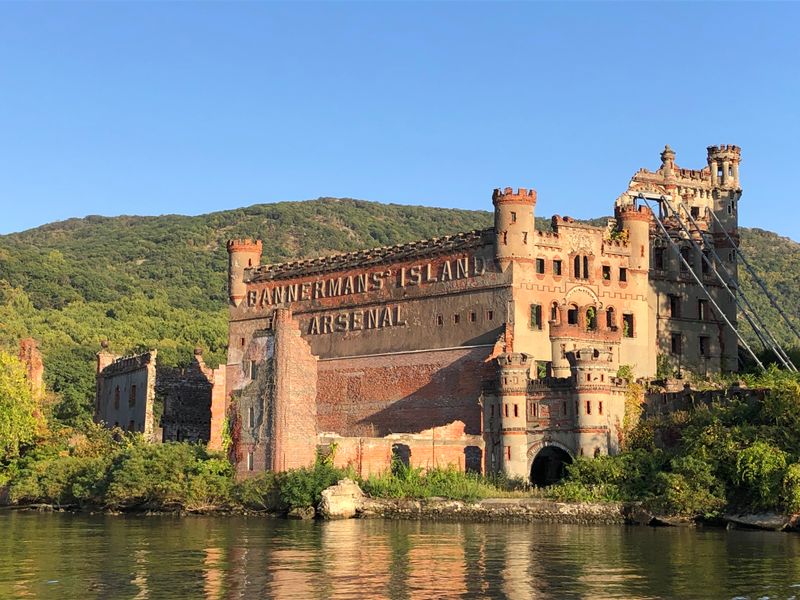
If a fairy tale took a wrong turn and got tougher, it would land here. Bannerman Castle sits on Pollepel Island near Beacon, right in the Hudson River like it owns the channel.
From the shore or a boat, the broken castle walls look both delicate and stubborn.
Curves and crenellations hang on while the river keeps breathing.
I like to watch it from the Metro-North platform in Beacon. Trains slide by and the castle just keeps its pose.
The hills on both sides make the ruin feel framed. Light slips through windows that are mostly air now.
This stretch of New York State feels cinematic on a random Tuesday. Water, brick, and forest play nice together.
If you bring binoculars, you’ll catch ironwork and letters fading. Those small details carry the whole story.
You can time your view with the golden hour if patience is your thing.
The brick warms up like it remembers its first day.
From the river road, pull off where the shoulder widens. A short pause gives you a long look.
It feels out of place and unforgettable, in the best way. The castle does not need to explain itself.
When the sun dips, the silhouette turns sharp and light. The Hudson holds it steady like a careful hand.
8. Neversink Valley Area Resorts
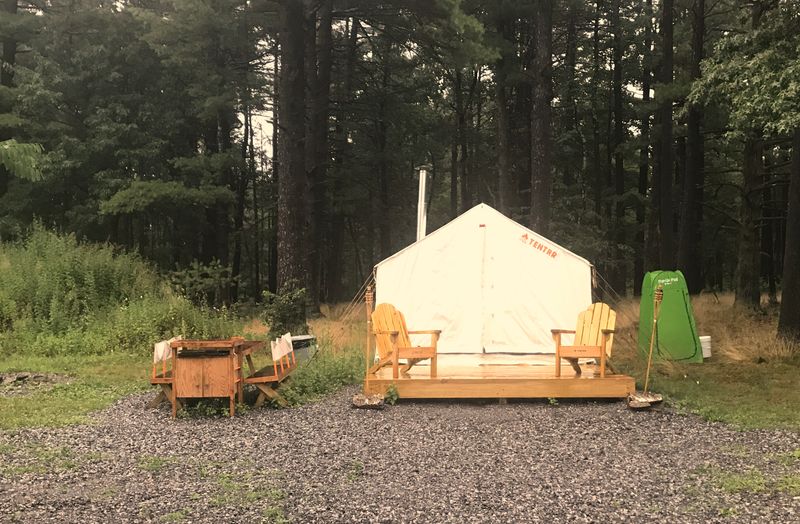
The Neversink Valley feels like someone turned down the volume and left the door ajar. Drive near Neversink and Fallsburg, and you’ll pass small clues tucked behind trees.
Old resorts dissolve into mossy stairs, light poles, and parking lots that forgot their cars.
The quiet spreads evenly, like a blanket laid carefully.
I like to swing down county roads and let the river guide the mood. It’s a gentle companion with good timing.
Most sites are unmarked, so you learn to read the land. A line of stones can be a hint that used to be a lobby.
This part of New York State tells its tourism story softly, with gaps you fill. The gaps are the best part, honestly.
Slow down by the old tennis courts where weeds serve themselves.
You can hear a rally if you listen sideways.
There is no single star stop here, just a constellation. Connect what you see and let it draw itself.
Morning fog does lovely work on fading asphalt. Afternoon sun puts sparkles on leftover glass.
End your loop near the reservoir and breathe. Water and memory always get along.
When you point the car back to the highway, keep your eyes moving. The valley gives up details only when asked nicely.
9. Rensselaer Plateau Abandoned Farms
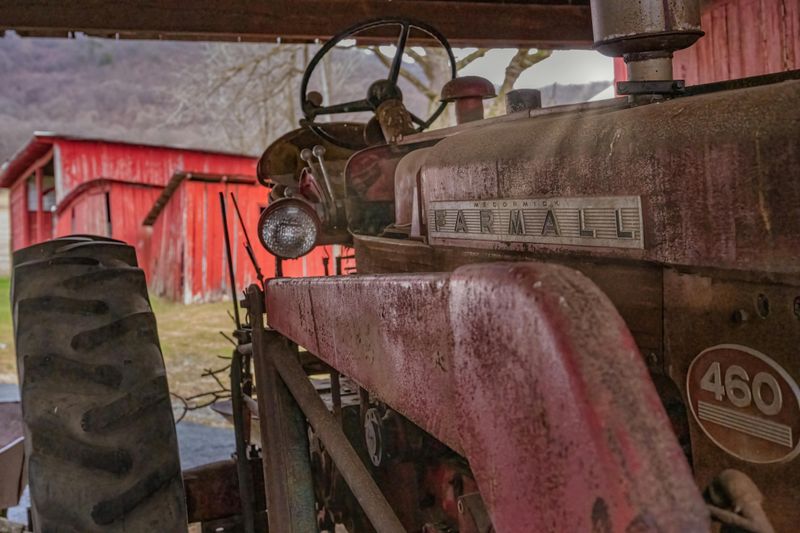
Up on the Rensselaer Plateau, the roads curve like they know you. Aim for NY-66 near Sand Lake, and let old stone walls do the talking.
Foundations sit back in the brush, square and stubborn. Barn corners slump but keep their posture somehow.
I like to pull over where the shoulder widens and stroll a few steps.
Birdsong fills in what the houses left behind.
Stone lines run like sentences through the fields. You can read them if you slow your eyes.
The plateau carries that upstate hush, steady and kind. New York State shows its age gently here.
When the light goes low, every wall gets a little taller. Shadows become storytellers with good pacing.
Watch for a rusted hinge on a lone post. Small hardware holds big memories.
There’s no rush to cover miles on this loop. Curves reward patience better than speed.
On cooler days, the air smells like leaves and old hay.
On warmer ones, the pines add something bright.
Drive on, and the past rides shotgun quietly. You barely notice until it points out another foundation.
10. Letchworth Village
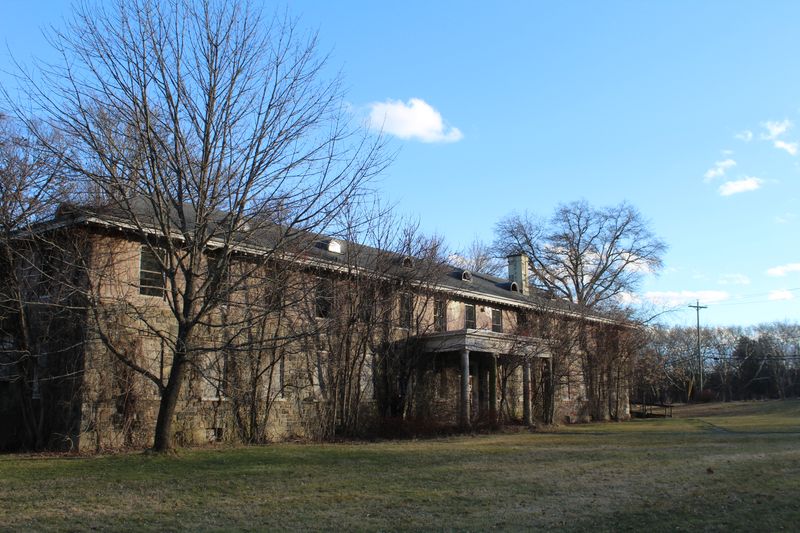
This place is big enough to rearrange your sense of distance. Letchworth Village stretches around 450 Letchworth Village Rd, Thiells, with long brick buildings lining quiet roads.
The windows and doors are sealed in many spots, which somehow makes the lawns louder.
Birds use the eaves like they signed a lease.
I like to move slowly here, block by block. The layout tells you how life once flowed in repetitive loops.
Sometimes you catch a doorway framing nothing but trees. Nature keeps walking in like it knows the schedule.
Rockland County’s hills make the campus breathe a little. It rises and settles without hurrying you.
New York State has a lot of institutional footprints, and this one is wide. You feel it even from the edge.
Look for old lamps and utility covers along the paths.
They whisper the practical stuff that holds a place together.
If you listen long enough, the wind works like narration. It is calm, not spooky, just steady.
Circle back to the car when your feet say so. There is no finish line, only a loop that fits your day.
As you pull away, the buildings fade behind trees. The scale stays with you longer than the view.
11. Concrete Ruins At Fort Ticonderoga Rail Spur
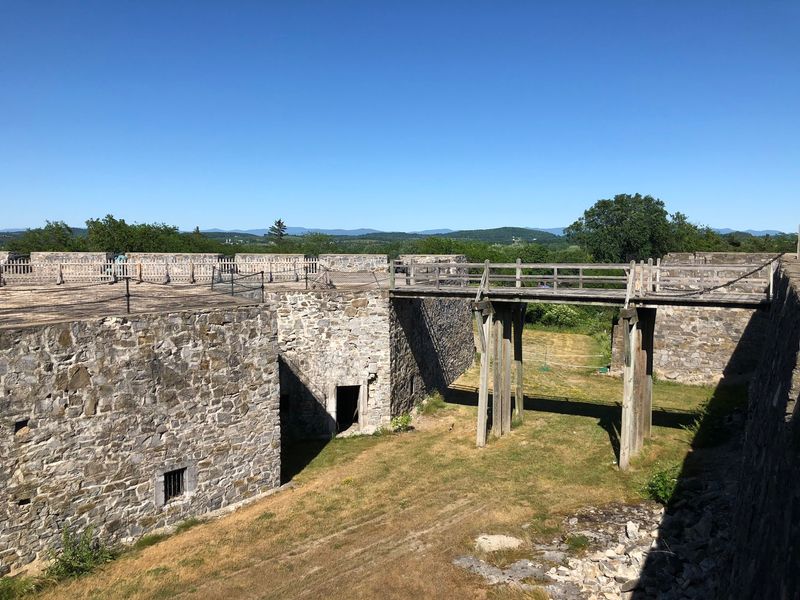
If you’re already near the lake, take a brief detour for these quiet pieces. The old rail spur remnants sit off 102 Fort Ti Rd, Ticonderoga, tucked near trees and grass.
They are just concrete forms and hardware, but they hold a stubborn dignity.
The lake breeze drifts through like a patient visitor.
I like how the shapes feel undecided between sculpture and utility. Your brain flips back and forth and never settles.
Fort Ticonderoga gets the fanfare, and rightly so. These leftovers hum in the background, which I enjoy.
Adirondack roads make the detour easy and calm. New York State knows how to frame a side quest.
Stand quietly and you’ll hear the faint clack your mind invents. Sometimes imagination deserves the wheel.
Look down for bolts half-swallowed by soil. Look up for lines that used to guide freight and schedules.
A short walk is enough here, no big loop needed.
Think of it as a palate cleanser between larger stops.
When you get back to the car, the lake light follows. It sneaks into mirrors and rides along.
By the time you rejoin the main road, the day feels more layered. Small notes can make a song, too.
12. Rochester Subway Remnants
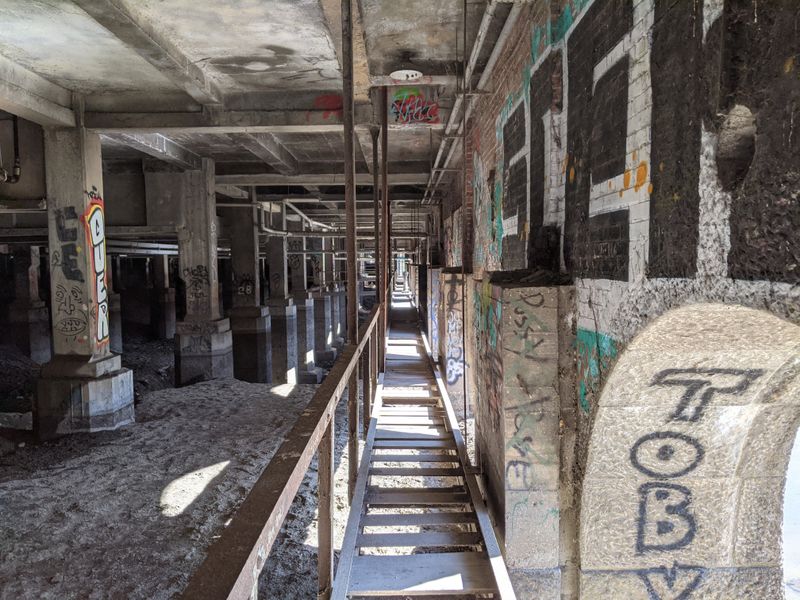
Under the city, there’s a story that decided to nap. The Rochester Subway remnants thread near Court St and Exchange Blvd, Rochester, with traces peeking into daylight.
Arches and platforms stretch like a ribcage under downtown.
Light leaks through in tidy slices that make the dust sparkle.
I like how the river and the old canal history overlap here. Transportation stacked itself like a deck of cards.
From certain viewpoints, you can line up bridges and tunnels in one glance. It feels like a diagram that forgot its labels.
Western New York does infrastructure drama really well. New York State in general has a flair for grand plans.
Stand a minute and listen to the city’s muffled shoes overhead.
It’s a good soundtrack for remembering routes.
You’ll notice dates and names in paint and chalk. Layers of messages keep rewriting the same wall.
Angles change fast, so walk your eyes carefully. Depth plays tricks when light and shadow feud.
I leave this spot with a calmer stride. Old pathways have a way of smoothing the day.
Back at street level, everything looks a shade newer. Perspective is cheap and worth bringing home.
Dear Reader: This page may contain affiliate links which may earn a commission if you click through and make a purchase. Our independent journalism is not influenced by any advertiser or commercial initiative unless it is clearly marked as sponsored content. As travel products change, please be sure to reconfirm all details and stay up to date with current events to ensure a safe and successful trip.
