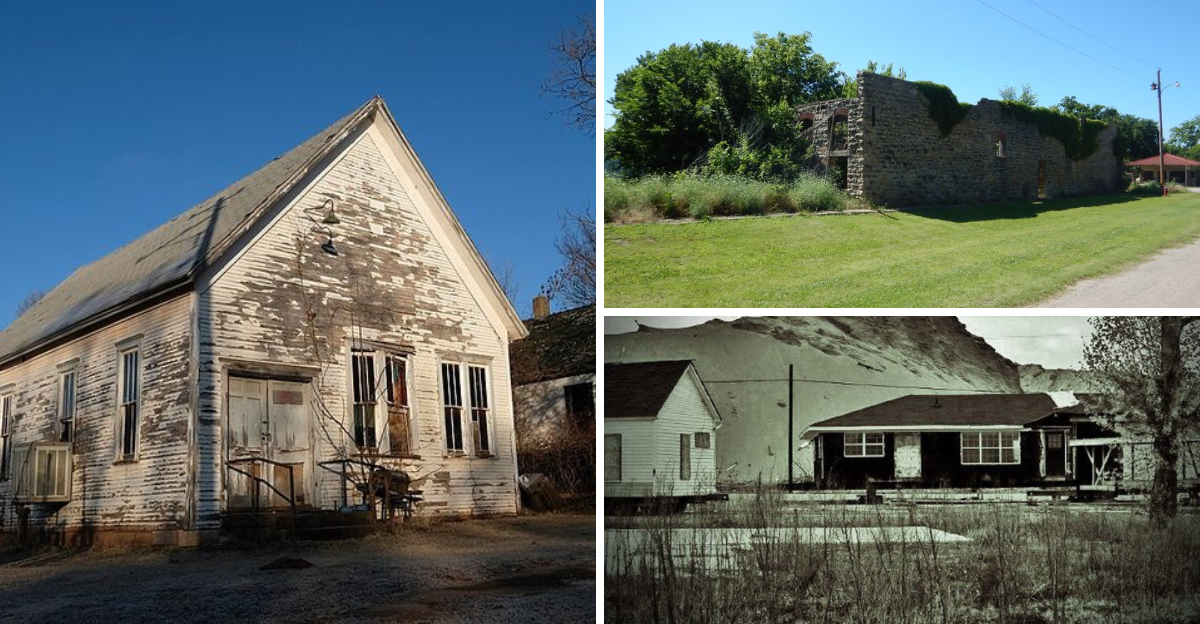
Oklahoma’s ghost towns hold a quiet magic that becomes even more pronounced when winter arrives.
Abandoned buildings and forgotten streets take on an ethereal quality under a blanket of fresh snow, transforming these relics of the past into scenes that feel pulled from another world.
The contrast between the stark white landscape and weathered structures creates a visual experience that photographers and history enthusiasts find irresistible.
1. Picher
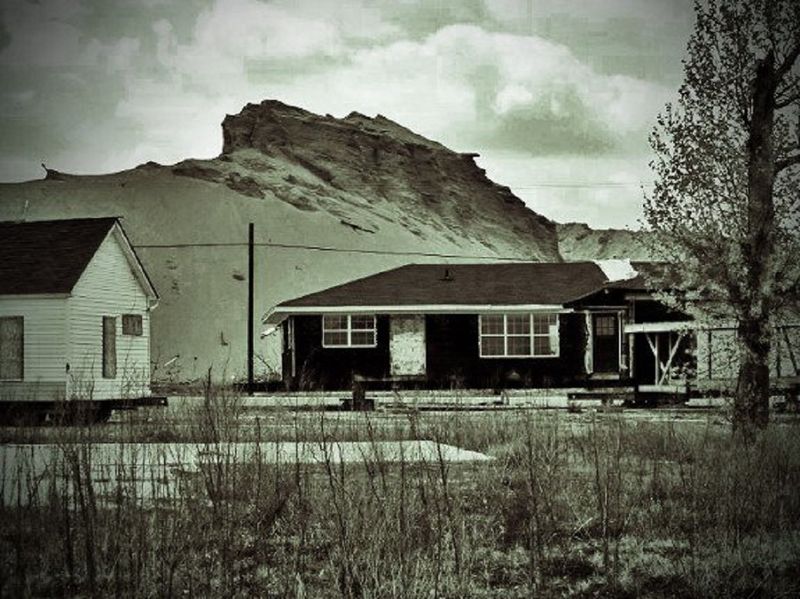
Once a thriving mining community in the northeastern corner of Oklahoma, Picher now stands as one of the most haunting ghost towns in the state.
The town’s history revolves around lead and zinc mining, which brought thousands of workers and their families to the area during the early 20th century.
Environmental contamination from decades of mining eventually forced the complete evacuation of residents by 2009, leaving behind a landscape of empty homes and crumbling structures.
When snow falls on Picher, the white covering softens the harsh reality of toxic chat piles that still dot the landscape.
The abandoned buildings take on a dreamlike quality, their broken windows and sagging roofs creating geometric patterns against the winter sky.
Streets that once bustled with miners and families now lie silent, with only the occasional footprint breaking the pristine snow.
The old Picher-Cardin High School stands as a particularly striking landmark, its weathered brick facade and empty hallways serving as a monument to the community that once thrived here.
Visiting during winter adds an extra layer of isolation to the experience, as the cold temperatures and snow-covered ground amplify the sense of abandonment.
The contrast between nature’s beauty and human abandonment creates a powerful visual reminder of how quickly a bustling town can become a memory.
Photography enthusiasts find endless inspiration in the juxtaposition of decay and winter’s clean slate.
The snow transforms rusted equipment and collapsed buildings into abstract art pieces that tell stories of boom and bust cycles that defined Oklahoma’s mining era.
2. Ingalls
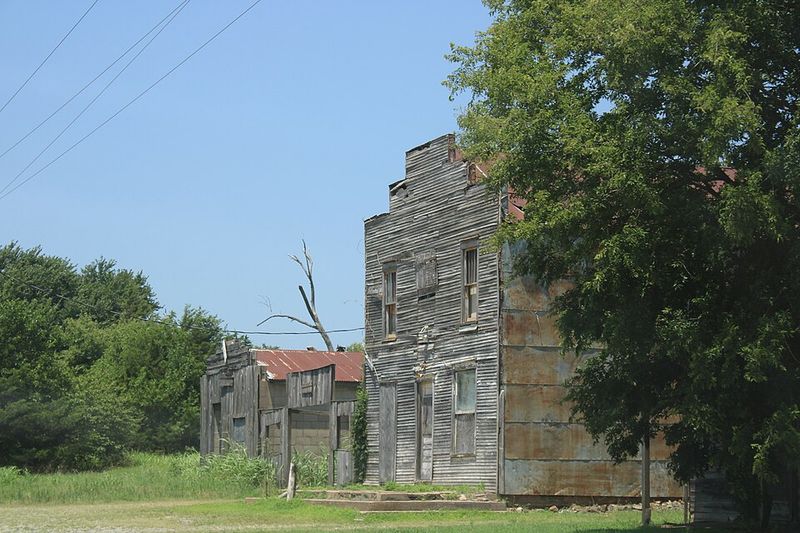
Famous for a legendary gunfight in 1893, Ingalls holds a special place in Oklahoma’s Wild West history.
The small settlement northeast of Stillwater served as a hideout for the Doolin-Dalton Gang, and the shootout between outlaws and lawmen left three marshals dead.
Today, very few original structures remain, but the town’s historical significance draws visitors year-round.
Winter transforms this quiet hamlet into something that feels suspended in time.
Snow blankets the fields where outlaws once rode, and the few remaining buildings wear their white coats like period costumes from a bygone era.
The stillness of a snowy day in Ingalls allows visitors to imagine the tension that must have filled these streets over a century ago.
A historical marker commemorates the famous gunfight, and when surrounded by snow, the site takes on an even more solemn atmosphere.
The bare trees and open landscape provide unobstructed views across the prairie, much as it would have appeared to those 19th-century residents.
Local historians have worked to preserve what remains of Ingalls, and several structures have been reconstructed to give visitors a sense of the original town layout.
Walking through during a snowfall creates an immersive experience that connects past and present in tangible ways.
The white landscape erases modern intrusions, allowing imagination to fill in the details of wooden sidewalks and hitching posts.
Oklahoma’s weather patterns make snowfall somewhat unpredictable, which adds to the special quality of witnessing Ingalls under winter conditions.
3. Skedee
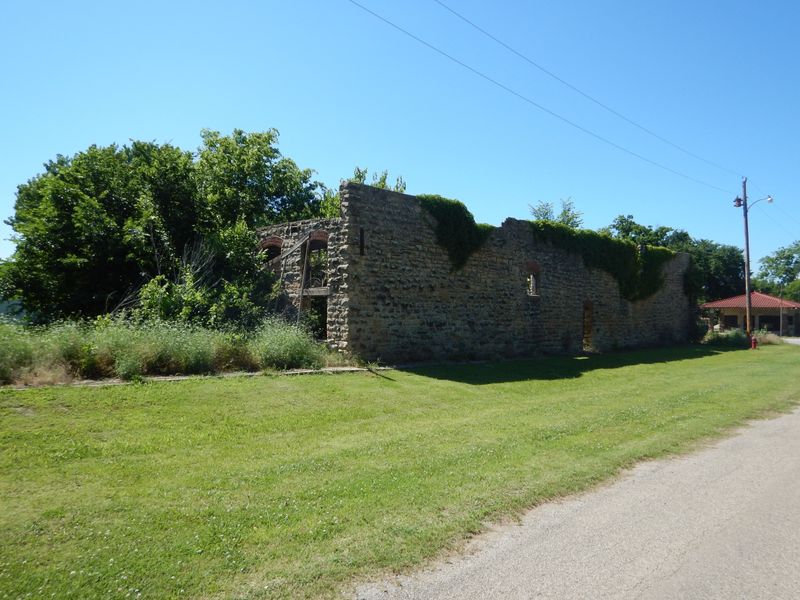
Tucked away in Pawnee County, Skedee represents the countless small agricultural communities that faded as Oklahoma’s economy shifted.
The town was established in the early 1900s and served local farmers and ranchers for several decades before gradually losing population.
By the mid-20th century, most residents had moved to larger towns, leaving behind a scattering of structures that now face the elements alone.
Snow has a way of making Skedee’s abandonment feel less tragic and more peaceful.
The rolling prairie landscape surrounding the town becomes a sea of white, with only the occasional building breaking the horizon.
Old wooden structures lean at precarious angles, their weathered boards darkened by age and moisture.
When fresh snow accumulates on rooflines and window ledges, these buildings gain a temporary beauty that masks their deterioration.
The silence in Skedee during winter is profound, broken only by wind whistling through gaps in walls and the occasional call of a winter bird.
Visitors who make the journey to this remote location often find themselves completely alone, surrounded by nothing but snow-covered prairie and the ghosts of Oklahoma’s agricultural past.
The town’s cemetery remains maintained, providing a poignant contrast to the abandoned buildings nearby.
Headstones emerging from snow drifts tell stories of families who built lives in this harsh but beautiful landscape.
Photography during winter months captures Skedee at its most visually striking, when the starkness of abandonment meets the softness of snow.
4. Boggy Depot
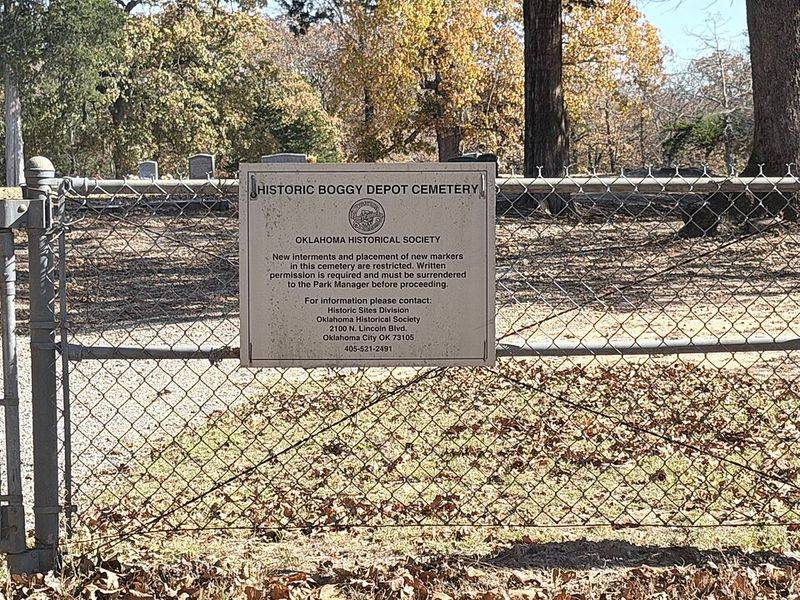
Boggy Depot holds the distinction of being one of Oklahoma’s oldest settlements, predating statehood by many decades.
Located in Atoka County, this former Choctaw Nation trading post thrived during the 19th century as a stop along important travel routes.
The town served as a Confederate supply depot during the Civil War, adding layers of historical significance to its story.
Now a state park, Boggy Depot preserves several original structures and ruins that become particularly atmospheric under snow.
The stone chimneys and foundations stand as silent sentinels, their rough-hewn surfaces collecting snow in crevices and creating natural sculptures.
Bare winter trees frame the ruins, their dark branches providing stark contrast against white ground and gray stone.
Park interpreters maintain the site year-round, and winter visitors can explore the grounds in relative solitude.
The cemetery at Boggy Depot contains graves dating back to the 1800s, including Confederate soldiers who died far from home.
Snow-covered headstones and monuments create a scene of quiet reverence, inviting reflection on the lives lived and lost in this frontier community.
Walking trails wind through the historic site, and following them through fresh snow offers a meditative experience.
Footprints become the only modern intrusion in a landscape that otherwise looks much as it did over a century ago.
The interpretive center provides context for the ruins, helping visitors understand the vital role Boggy Depot played in Oklahoma’s early development.
Address: Park Ln, Atoka, Oklahoma
5. Kenton
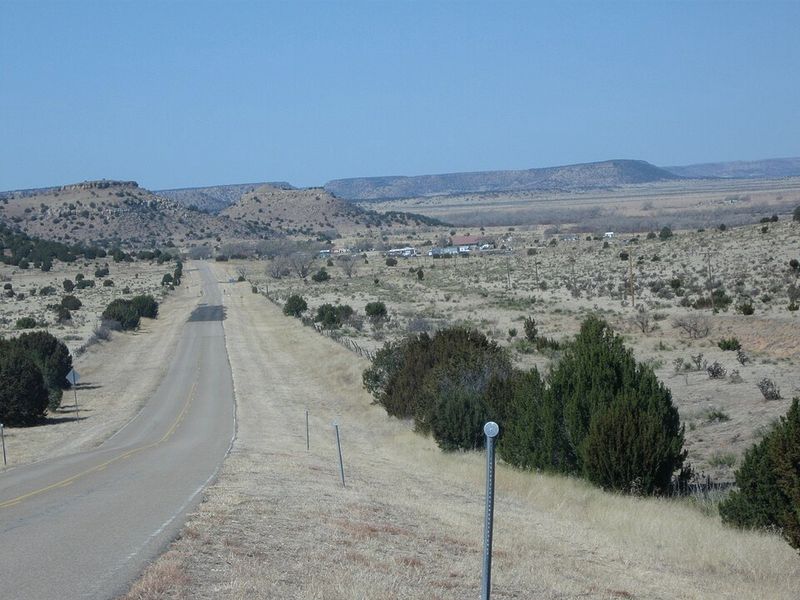
Perched in Oklahoma’s narrow panhandle, Kenton represents isolation like few other places in the state.
This tiny community near Black Mesa, Oklahoma’s highest point, has never had a large population, but it has dwindled to just a handful of year-round residents.
The surrounding landscape consists of mesas, canyons, and wide-open spaces that feel more like Colorado or New Mexico than typical Oklahoma terrain.
Winter in Kenton brings a special kind of desolation that borders on the surreal.
Snow accumulates across the high desert landscape, clinging to sagebrush and juniper while dusting the red rock formations in white.
The few buildings that still stand in town appear even more remote when surrounded by this stark beauty.
Old storefronts and abandoned homes create small islands of human presence in an otherwise overwhelming natural environment.
The panhandle’s weather can be fierce during winter months, with wind sweeping across the plains and creating dramatic snow drifts.
Kenton’s remoteness means that visitors must be prepared for challenging conditions, as services are extremely limited.
However, those who make the journey during a winter snowfall are rewarded with views that few people ever witness.
Black Mesa State Park nearby offers additional exploration opportunities, with trails leading to Oklahoma’s highest elevation point.
The combination of ghost town atmosphere and dramatic high desert landscape makes Kenton a unique destination for adventurous travelers.
Snow transforms the already otherworldly terrain into something that feels almost alien in its beauty.
6. Texola
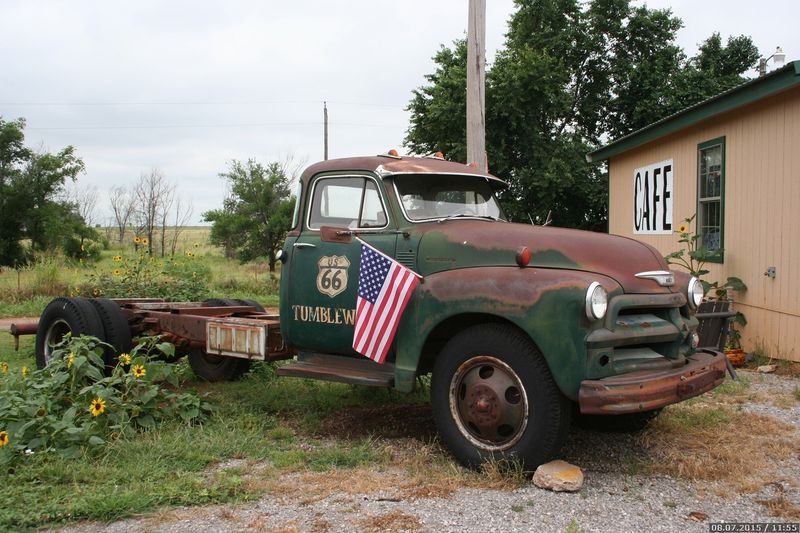
Straddling the Oklahoma-Texas border, Texola once thrived as a Route 66 community serving travelers crossing the country.
The town’s name combines Texas and Oklahoma, reflecting its unique position on the state line.
During Route 66’s heyday in the mid-20th century, Texola had gas stations, motels, and restaurants catering to road-trippers seeking adventure on America’s Mother Road.
When Interstate 40 bypassed the town in the 1970s, Texola’s economy collapsed almost overnight.
Today, abandoned buildings line the old highway, their faded signs and broken windows telling stories of better times.
Snow transforms these relics into photographic gold, softening harsh edges and adding nostalgic beauty to the decay.
The old water tower still stands as Texola’s most recognizable landmark, its rusted metal tank rising above the low buildings.
When snow accumulates on its structure and surrounding buildings, the scene becomes a perfect representation of faded American dreams.
Route 66 enthusiasts make pilgrimages to Texola throughout the year, but winter visitors find a particularly poignant atmosphere.
The silence that now defines the town stands in sharp contrast to the roar of traffic that once filled its streets.
Several buildings retain vintage signage and architectural details that transport observers back to the 1950s and 60s.
Snow accentuates these period features, making them stand out against the white landscape like artifacts in an outdoor museum.
The few remaining residents keep watch over Texola’s history, occasionally sharing stories with curious visitors who stop to explore.
7. Fallis
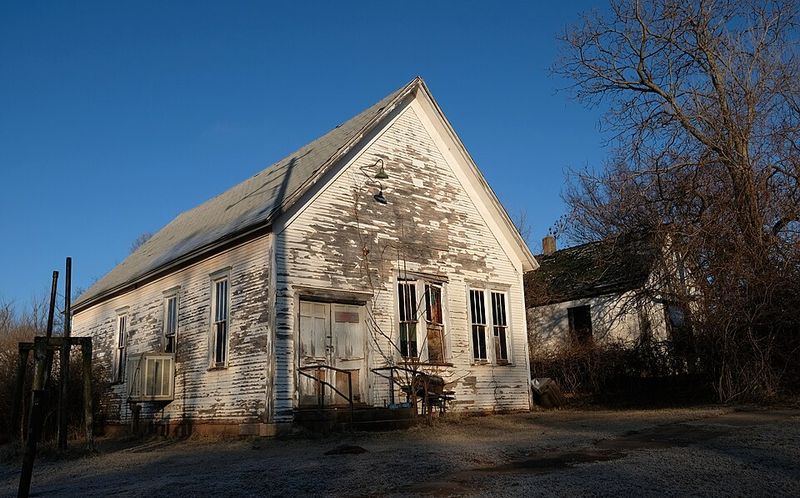
Located in Lincoln County, Fallis represents the typical fate of small Oklahoma farming communities that lost their economic base.
The town was established in the early territorial period and served local agricultural interests for several generations.
As farming consolidated and people moved to cities for work, Fallis gradually emptied until only a few structures remained.
Winter snowfall gives Fallis an almost storybook quality, with its scattered buildings appearing like illustrations from a forgotten tale.
The old grain elevator stands as the town’s most prominent feature, its tall wooden structure visible for miles across the flat landscape.
Snow collects on its weathered boards and around its base, creating natural drifts that reshape the building’s appearance.
A handful of houses still show signs of occasional use, though most structures have been abandoned for decades.
The empty streets and overgrown lots become unified under snow, erasing the boundary between maintained and neglected spaces.
Visiting Fallis during winter requires venturing off main highways onto rural roads that may not be well-maintained.
This remoteness adds to the authentic ghost town experience, as visitors truly feel they have discovered something off the beaten path.
The surrounding farmland stretches endlessly in all directions, emphasizing the isolation that eventually doomed small towns like Fallis.
Snow-covered fields merge with the horizon, creating a minimalist landscape where the abandoned buildings become focal points of visual interest.
Local history buffs occasionally visit to document the remaining structures before they disappear entirely.
8. Doaksville
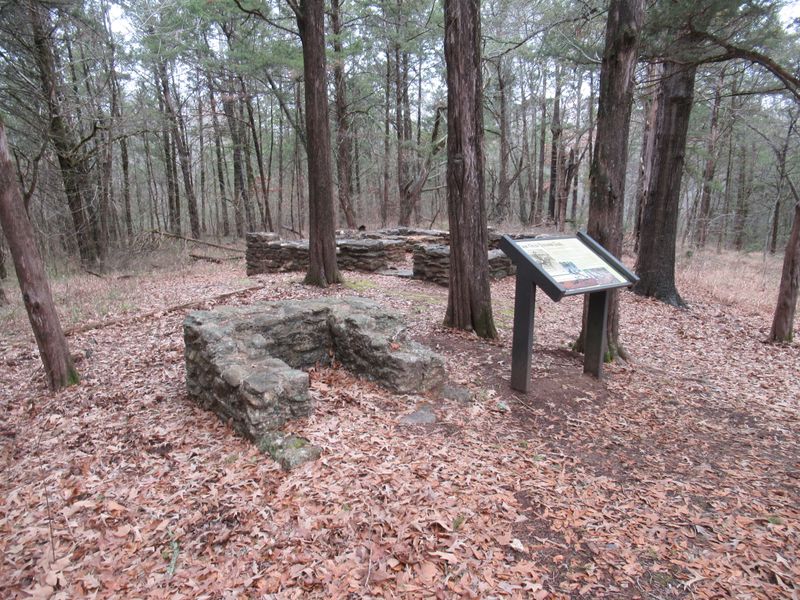
Near Fort Towson in southeastern Oklahoma, Doaksville once served as the Choctaw Nation’s capital and a major trading center.
The town’s importance in the 19th century cannot be overstated, as it hosted treaty negotiations and served as a hub for tribal government activities.
Several significant historical figures passed through Doaksville, including Confederate General Stand Watie and various tribal leaders.
The town declined after the Civil War and was eventually abandoned, leaving behind ruins that now form a historic site.
Snow transforms these ruins into something magical, highlighting the craftsmanship of stone foundations and chimney remnants.
The site sits near the banks of the Kiamichi River, and winter views across the water add to the atmospheric quality.
Interpretive signs explain the significance of various ruins, helping visitors understand the layout of the original town.
When covered in snow, the stone structures take on an almost castle-like appearance, their irregular shapes creating interesting shadows and forms.
The cemetery at Doaksville contains graves of important tribal members and early settlers, their markers weathered by time and elements.
Fresh snow on these headstones creates a scene of peaceful remembrance, honoring those who shaped Oklahoma’s early history.
The site remains relatively undeveloped, allowing nature to reclaim much of the former townsite.
This natural reclamation becomes visually striking under snow, as bare trees and winter vegetation frame the historic ruins.
Doaksville offers a different kind of ghost town experience, one rooted in Native American history rather than mining or railroad booms.
9. Adamson

Established as a railroad town in Pittsburg County, Adamson thrived briefly during the early 20th century coal mining boom.
The town served workers from nearby mines and provided services for railroad operations that moved coal to markets across the region.
As mining operations closed and railroad routes changed, Adamson lost its economic foundation and residents gradually moved away.
Today, scattered buildings and foundations mark where a community once stood, their abandonment made more visible by winter’s arrival.
Snow settles on collapsed roofs and through empty window frames, nature slowly reclaiming what humans built.
The railroad grade can still be traced through the landscape, though tracks have long since been removed for salvage.
When snow covers this grade, it becomes a white ribbon cutting through the forest, a ghost of the transportation network that once defined the area.
Adamson’s remote location in the wooded hills of southeastern Oklahoma means few people stumble upon it accidentally.
Those who seek it out find a peaceful abandonment, where trees grow through foundations and wildlife has completely reclaimed the townsite.
Winter visits require careful navigation, as roads leading to Adamson may not be maintained during snowy periods.
The reward for this effort is an authentic ghost town experience, free from tourist infrastructure or interpretive signs.
Snow transforms the site into a natural gallery where decay and beauty coexist, each building telling its own story of boom and bust.
The silence in Adamson during winter is complete, broken only by the sound of snow falling through bare branches.
Dear Reader: This page may contain affiliate links which may earn a commission if you click through and make a purchase. Our independent journalism is not influenced by any advertiser or commercial initiative unless it is clearly marked as sponsored content. As travel products change, please be sure to reconfirm all details and stay up to date with current events to ensure a safe and successful trip.
