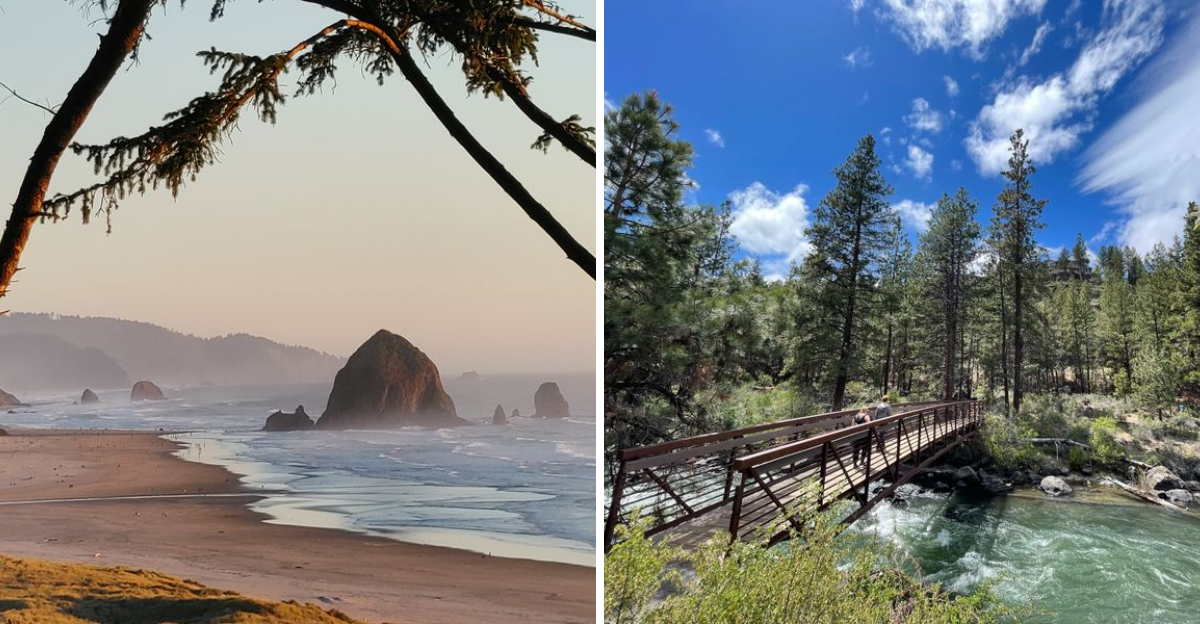
Oregon offers some of the most breathtaking scenery in the Pacific Northwest, from towering waterfalls cascading through emerald forests to rugged coastlines where the ocean meets dramatic rock formations.
Locals who have explored every corner of this diverse state know that you don’t need a week-long vacation to experience its magic.
A single day trip can take you from the high desert’s red rocks to misty coastal cliffs, from world-renowned vineyards to volcanic peaks that pierce the sky.
Whether you’re craving adventure on hiking trails, searching for the perfect sunset over the Pacific, or simply want to escape the city for fresh mountain air, Oregon delivers unforgettable experiences within a few hours’ drive.
These carefully chosen destinations represent the best day trips that residents return to again and again, each offering something unique that captures the spirit of the region.
Pack your camera, fill up the gas tank, and get ready to discover why Oregonians feel so lucky to call this place home.
1. Columbia River Gorge Waterfalls
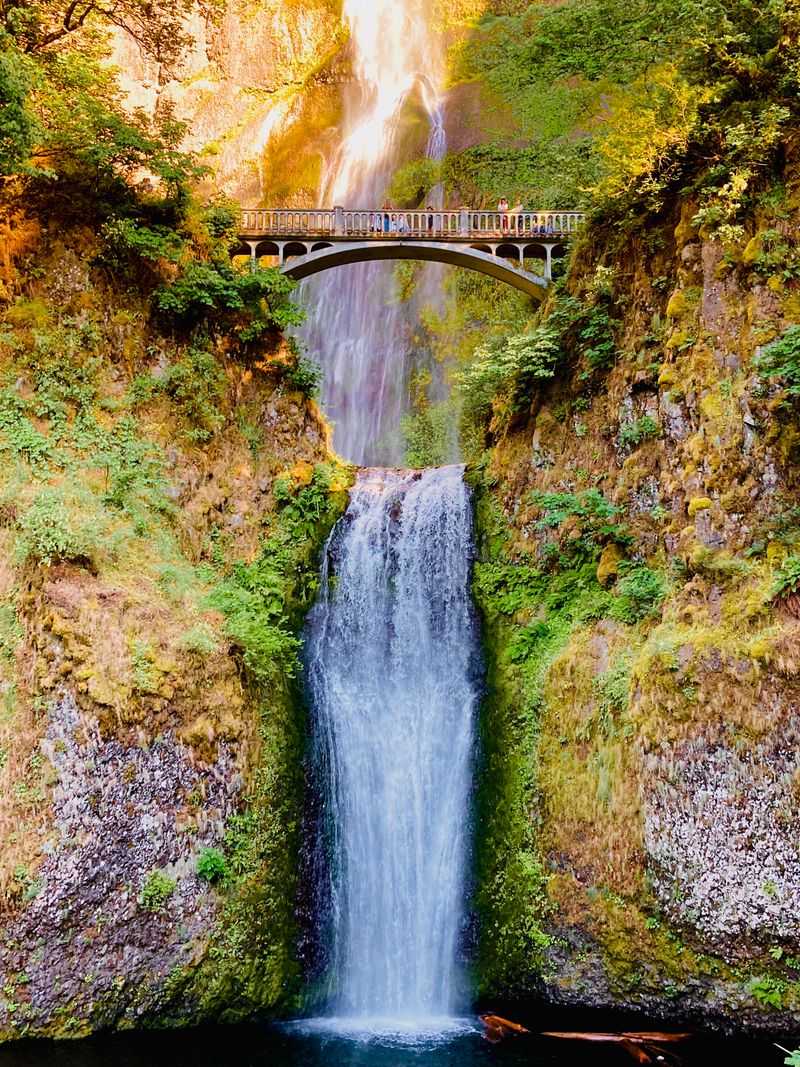
Waterfalls tumble down moss-covered cliffs in one of the most spectacular natural corridors in North America.
The Columbia River Gorge creates a dramatic canyon where over 90 waterfalls flow year-round, offering visitors an easy escape from urban life into pristine wilderness.
This area sits less than an hour east of Portland, making it perfectly accessible for anyone seeking natural beauty without the commitment of a long road trip.
Multnomah Falls stands as the crown jewel, plunging over 600 feet in two magnificent tiers that you can view from a charming stone bridge.
Latourell Falls showcases a different character with its unique columnar basalt formations framing the water’s descent.
Horsetail Falls offers a short walk that takes you behind the cascading water for an unforgettable perspective.
Crown Point Vista House perches high above the river, providing panoramic views that stretch for miles across the gorge.
Built as a rest stop for early travelers, this historic octagonal structure now serves as both museum and viewpoint.
The scenic highway winds through dense forest, revealing new waterfalls around nearly every curve.
Spring brings wildflowers that carpet the hillsides, while autumn transforms the deciduous trees into brilliant gold and crimson.
Winter adds dramatic icicles to the falls, creating stunning frozen sculptures.
Summer offers the warmest weather for swimming in cool pools beneath some of the smaller cascades.
Historic Columbia River Highway State Trail allows cyclists and walkers to experience the gorge at a slower pace.
Multiple trailheads provide access to longer hikes that connect several waterfalls in a single journey.
Address: Historic Columbia River Highway, Corbett, OR 97019.
2. Cannon Beach and Ecola State Park
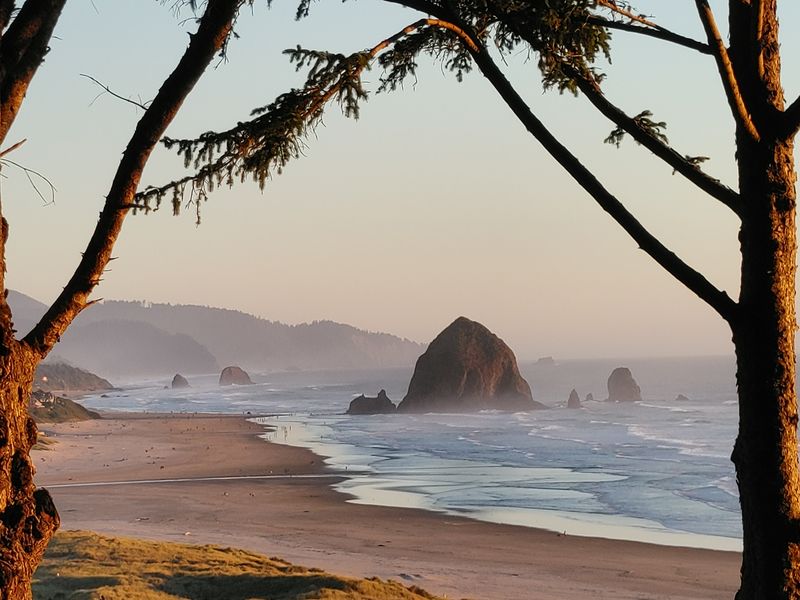
Haystack Rock rises 235 feet from the sandy shore, creating one of the most photographed coastal scenes in the entire Pacific Northwest.
This massive sea stack serves as home to nesting seabirds during summer months, while tide pools at its base reveal colorful starfish, anemones, and tiny crabs.
Families spend hours exploring these natural aquariums during low tide, discovering marine life in crystal-clear pools.
Cannon Beach itself charms visitors with its artistic community, galleries, and welcoming atmosphere.
The town maintains a relaxed vibe despite its popularity, with locally owned shops and cafes lining the main street.
Sandy beaches stretch for miles, perfect for long walks where you can watch kites dancing in the coastal breeze.
Ecola State Park extends north from town, offering some of the most dramatic coastal vistas anywhere along the Oregon shore.
Forested trails wind along clifftops high above crashing waves, providing viewpoints that seem pulled from fantasy landscapes.
Indian Beach nestles in a protected cove where surfers catch waves year-round despite the chilly Pacific waters.
Wildlife watching opportunities abound throughout the area, with bald eagles soaring overhead and gray whales passing during migration seasons.
Elk often graze in meadows near the park entrance, seemingly unbothered by visitors snapping photos.
Harbor seals lounge on offshore rocks, occasionally popping their heads up to investigate passersby.
Sunset transforms the entire coastline into a painter’s palette of orange, pink, and purple hues.
Photographers arrive early to claim the best spots for capturing Haystack Rock silhouetted against the colorful sky.
Address: Ecola State Park, 84318 Ecola Park Road, Cannon Beach, OR 97110.
3. Mount Hood and Hood River
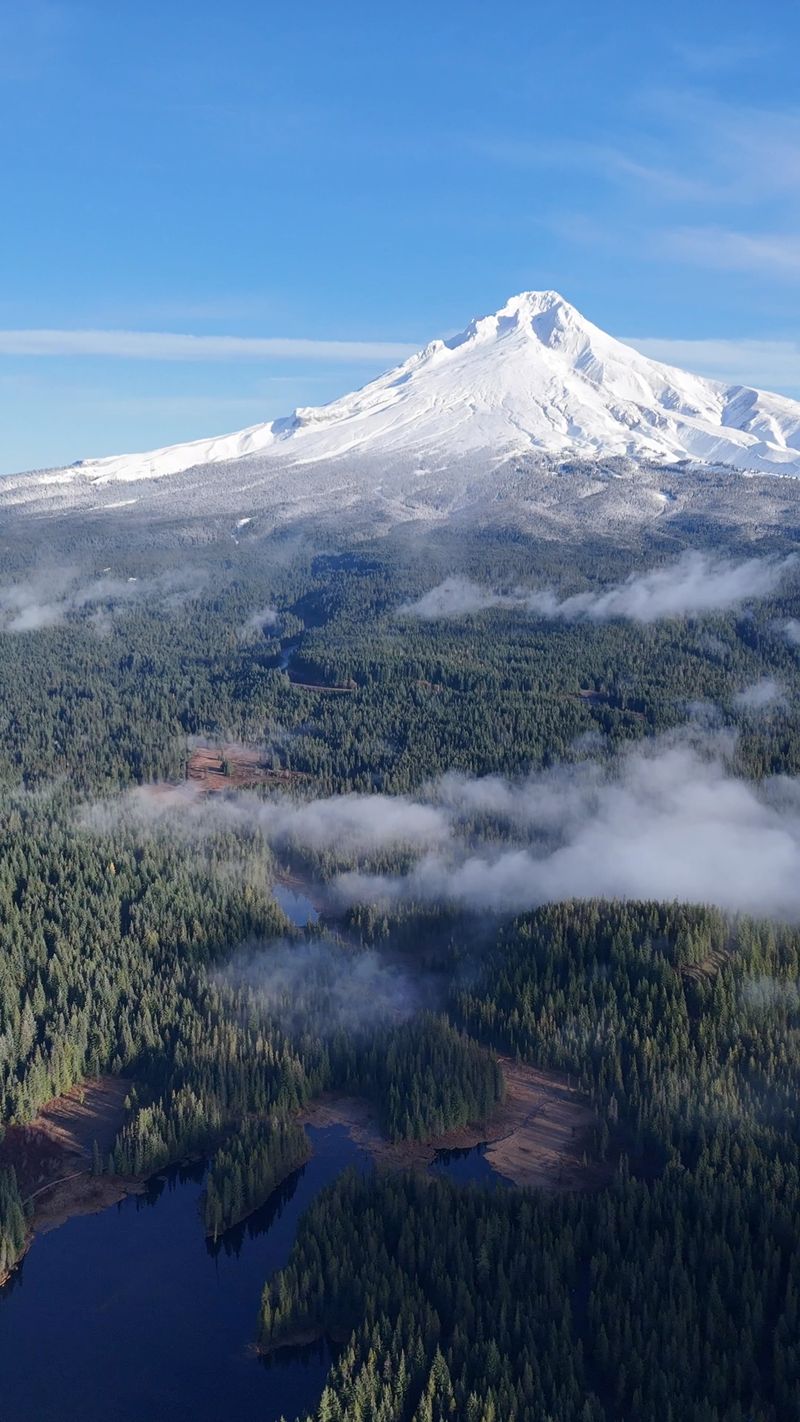
Oregon’s tallest peak dominates the skyline, its snow-capped summit visible from Portland on clear days.
Mount Hood reaches over 11,000 feet into the sky, offering year-round skiing and snowboarding on its glaciated slopes.
Summer reveals alpine meadows bursting with wildflowers, while crystal lakes reflect the mountain’s perfect volcanic cone.
Timberline Lodge sits high on the mountain’s south face, a stunning example of Depression-era craftsmanship built entirely from local materials.
Massive hand-hewn timbers and intricate woodwork fill the interior, creating a rustic elegance that has welcomed visitors for generations.
Hiking trails radiate from the lodge, including routes that connect to the Pacific Crest Trail.
Hood River town thrives at the confluence of the Hood River and Columbia River, famous worldwide as a windsurfing and kiteboarding mecca.
Strong winds funnel through the gorge, creating ideal conditions for these sports nearly every afternoon during summer.
Watching colorful sails zip across the water provides entertainment even if you prefer to stay dry.
Fruit orchards blanket the valley surrounding Hood River, with roadside stands selling fresh cherries, apples, and pears depending on the season.
The area has also developed a thriving craft beverage scene, with numerous breweries, cideries, and distilleries offering tastings.
Downtown features galleries, outdoor gear shops, and restaurants serving everything from casual tacos to upscale farm-to-table cuisine.
Lost Lake offers a serene alternative to busier destinations, with calm waters perfect for kayaking and a stunning reflection of Mount Hood.
Trillium Lake provides similar beauty with easier access and family-friendly facilities.
Address: Mount Hood National Forest, 16400 Champion Way, Sandy, OR 97055.
4. Central Coast Around Cape Perpetua
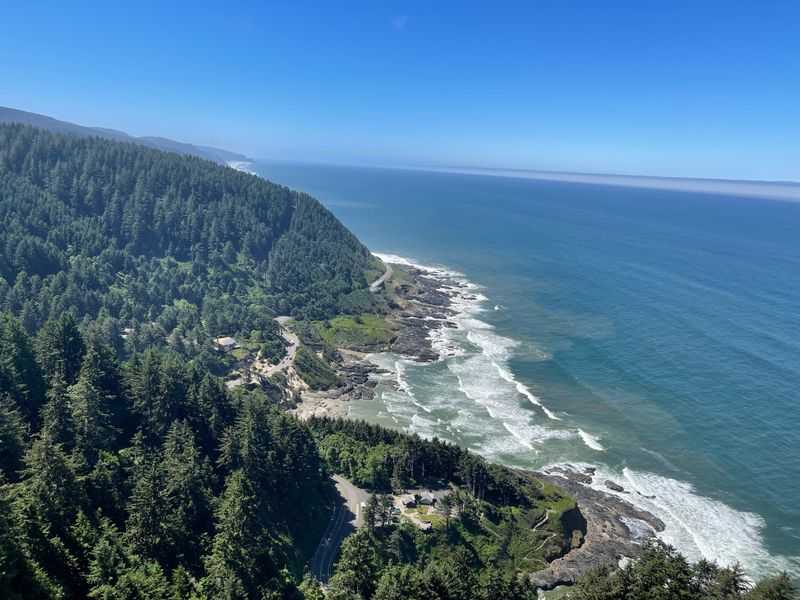
Volcanic rock meets the relentless Pacific Ocean in a dramatic display of nature’s power.
Cape Perpetua rises 800 feet above sea level, providing the highest viewpoint accessible by car along the Oregon coast.
Ancient Sitka spruce forests cloak the cape’s slopes, some trees having stood for centuries while watching storms batter the shoreline below.
Thor’s Well creates an optical illusion that appears to drain the ocean into a bottomless pit.
This natural sinkhole fills and empties with each wave cycle, sending plumes of seawater skyward during high tide and rough seas.
Photographers arrive before dawn to capture the spectacle in perfect light, though the site mesmerizes visitors any time of day.
Devil’s Churn demonstrates the ocean’s erosive force as waves crash into a narrow basalt fissure with thunderous violence.
Spray shoots high into the air while the ground literally shakes beneath your feet.
A short paved trail leads to multiple viewpoints where you can safely observe this natural phenomenon.
Heceta Head Lighthouse perches on a cliff just south of the cape, considered one of the most scenic lighthouses in America.
The keeper’s house now operates as a bed and breakfast, though day visitors can tour the grounds and hike to the lighthouse itself.
Harbor seals often lounge on rocks below, their barks echoing up the cliffs.
Tide pools along this stretch reveal incredible biodiversity during low tide, with sea stars in vibrant purples and oranges clinging to rocks.
Short trails connect various viewpoints, allowing you to experience multiple natural wonders without extensive hiking.
Address: Cape Perpetua Scenic Area, 2400 Highway 101, Yachats, OR 97498.
5. Smith Rock State Park
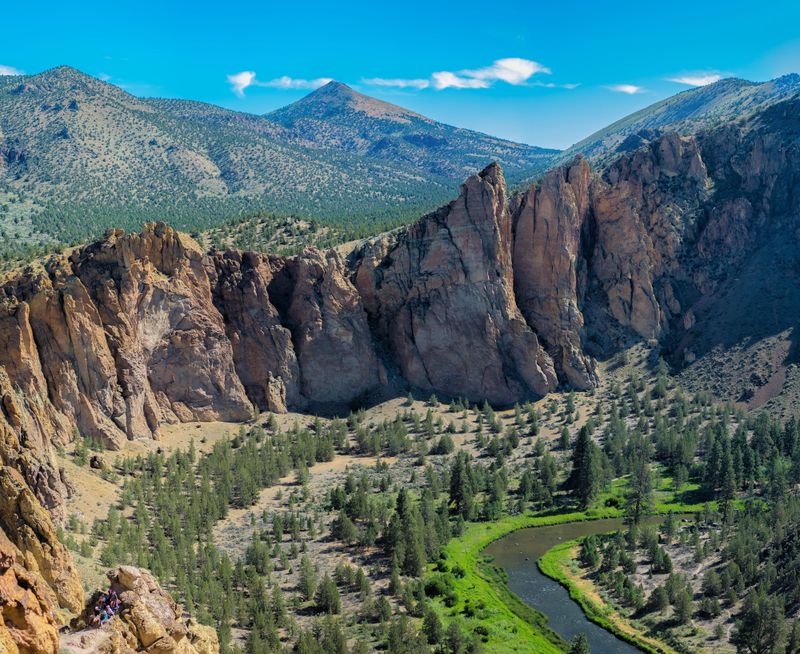
Towering rock spires rise abruptly from the high desert floor, their orange and red hues glowing brilliantly against blue skies.
Smith Rock State Park has earned international recognition among rock climbers who travel from around the world to test their skills on these challenging walls.
Even if you never touch a rope, the landscape’s stark beauty and the Crooked River winding below create an unforgettable setting.
Misery Ridge Trail earns its name through steep switchbacks that climb 600 vertical feet in less than a mile.
The effort pays off with panoramic views across the entire park and toward the distant Cascade peaks.
Spring wildflowers soften the desert environment, adding splashes of yellow and purple to the rocky terrain.
River Trail offers an easier option, following the Crooked River at the base of the cliffs where you might spot river otters playing in the water.
Climbers dangle from routes overhead, their colorful gear contrasting with the natural rock.
Bald eagles nest in the area, and golden eagles soar on thermals rising from sun-warmed cliffs.
The park’s unique ecosystem supports plants and animals adapted to hot, dry summers and cold winters.
Juniper trees twist into sculptural forms, while sagebrush releases its distinctive scent when brushed against.
Lizards dart across sun-baked boulders, and marmots whistle warnings from rocky perches.
Sunrise and sunset transform the rocks into glowing sculptures, with shadows creating dramatic contrasts in the canyon.
Photographers find endless compositions among the spires and twisted junipers.
Winter brings occasional snow that dusts the rocks, creating a surreal desert-meets-alpine landscape.
Address: Smith Rock State Park, 9241 NE Crooked River Drive, Terrebonne, OR 97760.
6. Pacific City and Cape Kiwanda
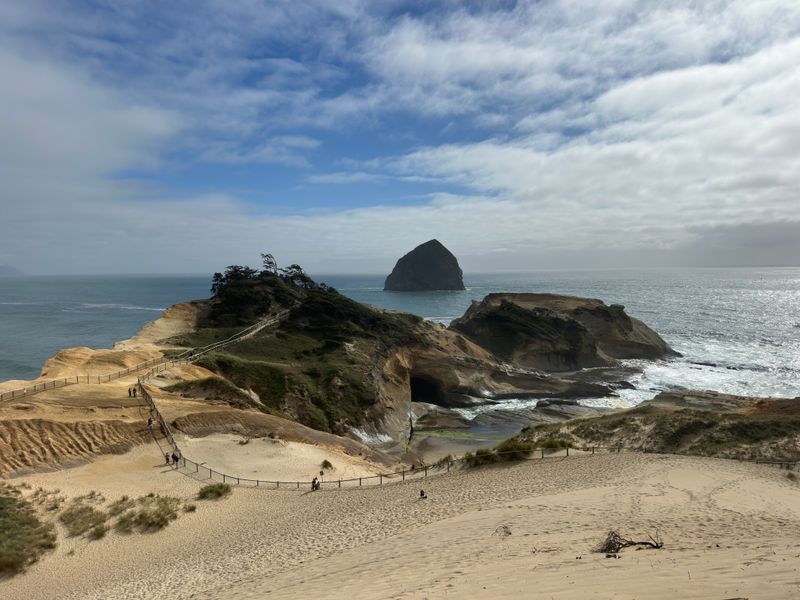
A massive sand dune rises directly from the beach, its golden slopes inviting visitors to climb for spectacular ocean views.
Cape Kiwanda’s distinctive sandstone headland creates a protected cove where dory boats launch directly through the surf in a tradition dating back generations.
Watching these flat-bottomed fishing boats power through breaking waves and then return to beach themselves on the sand provides thrilling entertainment.
The climb up the dune rewards effort with 360-degree views encompassing the Pacific Ocean, Haystack Rock offshore (different from Cannon Beach’s famous rock but equally impressive), and the surrounding coastline.
Hang gliders and paragliders launch from the top, soaring on updrafts created by wind hitting the cliff face.
Kids delight in running down the steep sandy slope, often tumbling in laughing heaps.
Tide pools at the cape’s base teem with marine life during low tide, offering close encounters with sea stars, hermit crabs, and anemones.
The sandstone formations have been carved by wind and waves into fascinating shapes and caves worth exploring carefully.
Sunset paints the golden cliffs in even warmer tones while silhouetting the offshore haystack.
Pacific City maintains a relaxed beach town atmosphere with excellent seafood restaurants serving the day’s fresh catch.
Outdoor patios provide front-row seats to the ocean action while you enjoy fish and chips or clam chowder.
The town attracts fewer crowds than some coastal destinations while offering equally stunning scenery.
Summer brings the warmest weather and calmest seas, though the area’s beauty shines year-round.
Storm watching in winter reveals the ocean’s raw power as massive swells pound the headland.
Address: Cape Kiwanda State Natural Area, Pacific City, OR 97135.
7. Deschutes River and Bend Area
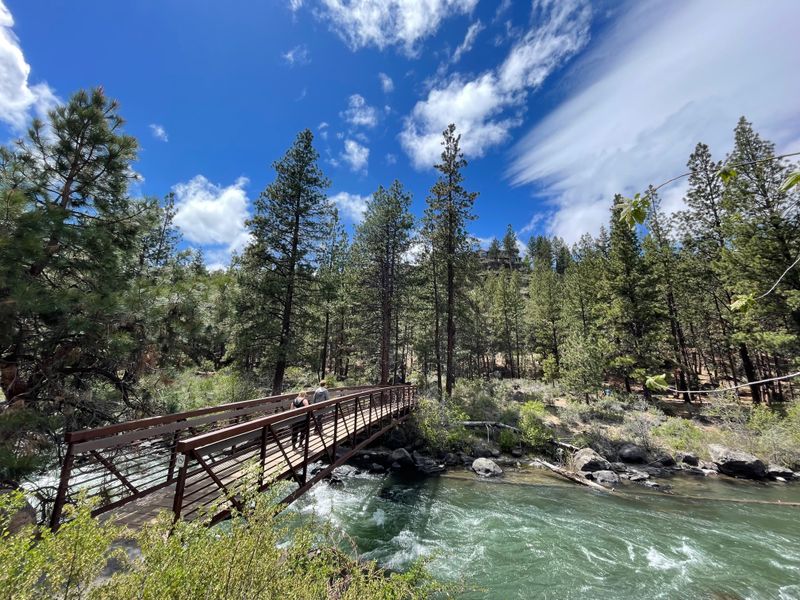
Crystal-clear water flows through ponderosa pine forests, creating a recreational paradise in Oregon’s high desert.
The Deschutes River winds through Bend, offering everything from gentle floats to whitewater excitement depending on which section you choose.
Stand-up paddleboarders, kayakers, and inner-tubers share the waterway during summer months, all seeking refreshment from the warm desert sun.
Tumalo Falls plunges 97 feet over a basalt cliff, accessible via a short hike through fragrant pine forest.
The trail continues beyond the main falls to reveal several smaller cascades upstream, each with its own character.
Snow melt feeds the falls, making spring and early summer the most impressive times to visit when the water volume peaks.
Bend has transformed into an outdoor recreation hub, with mountain biking trails, rock climbing areas, and skiing all within easy reach.
The town’s compact downtown features locally owned shops, galleries, and restaurants serving creative cuisine.
Phil’s Trail network alone offers over 300 miles of mountain biking trails for all skill levels.
Pilot Butte rises from the eastern edge of town, providing panoramic views after a quick climb or drive to the summit.
From the top, you can see the Cascade peaks marching north to south, including the Three Sisters, Mount Bachelor, and Mount Hood in the distance.
The volcanic landscape tells the story of the region’s fiery geological past.
Summer brings near-perfect weather with warm days, cool nights, and minimal rainfall.
The high desert climate means over 300 days of sunshine annually, making outdoor activities accessible almost any time.
Winter transforms the area into a snow sports destination with Mount Bachelor offering extensive skiing and snowboarding terrain.
Address: Deschutes River, Bend, OR 97701.
8. Silver Falls State Park
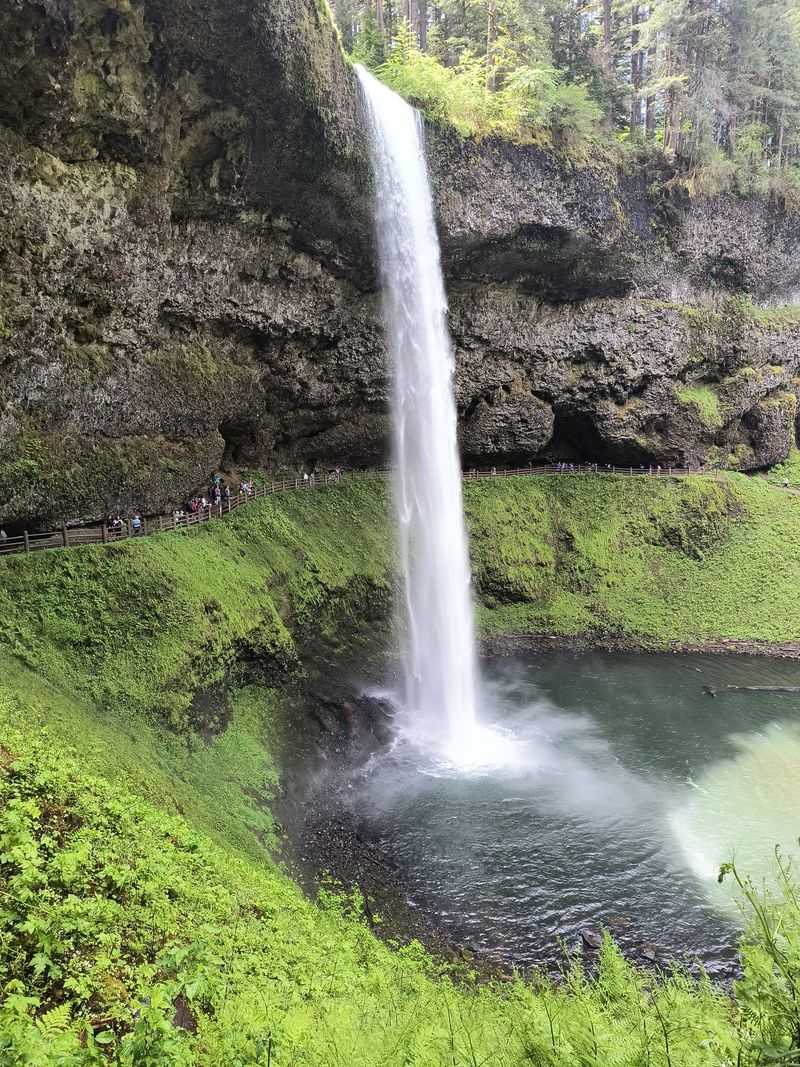
Ten major waterfalls await discovery along a single spectacular hiking trail, making this park a bucket-list destination for waterfall enthusiasts.
The Trail of Ten Falls loops through old-growth forest, passing behind four of the waterfalls for perspectives you won’t find anywhere else.
Moss-covered cliffs drip with moisture while ferns carpet the forest floor in endless shades of green.
South Falls drops 177 feet and allows hikers to walk behind the curtain of water through a natural cavern.
The experience of standing behind thousands of gallons of falling water creates memories that last a lifetime.
Mist from the falls keeps the area cool even on warm summer days, and rainbows often appear in the spray.
The complete loop covers about eight miles with moderate elevation changes, though shorter options exist for those with limited time or mobility.
Each waterfall presents a different character, from delicate ribbons to powerful torrents depending on the season and recent rainfall.
Spring runoff creates the most dramatic displays, while autumn brings colorful foliage to frame the cascades.
Well-maintained trails include bridges and staircases where needed, making the hike accessible to anyone with reasonable fitness.
Interpretive signs explain the geology and ecology of this unique canyon ecosystem.
The park receives visitors year-round, with each season offering distinct beauty from winter ice formations to summer wildflowers.
Facilities include a large day-use area, campground, and historic lodge available for group rentals.
The park’s popularity means weekends can get crowded, so arriving early ensures better parking and a more peaceful experience.
Address: Silver Falls State Park, 20024 Silver Falls Highway SE, Sublimity, OR 97385.
9. Crater Lake National Park
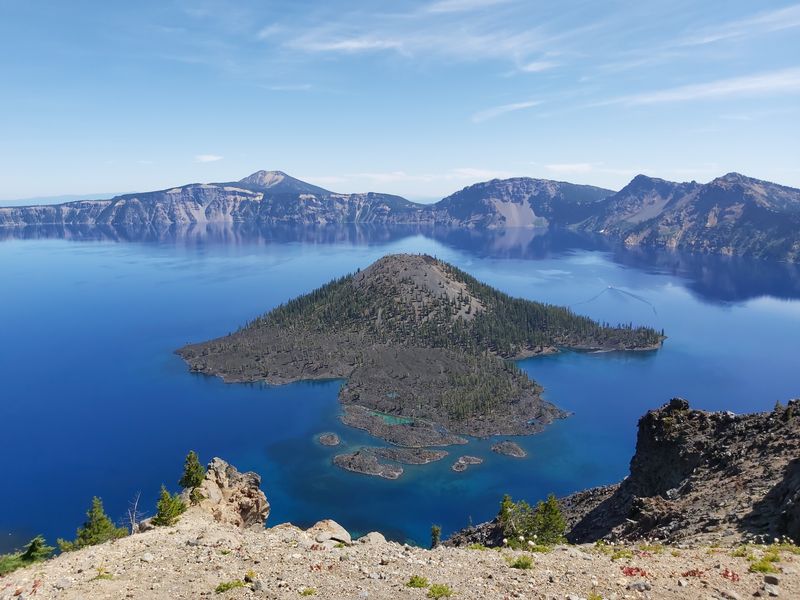
The deepest lake in the United States fills an ancient volcanic caldera with water so blue it seems almost unreal.
Crater Lake formed when Mount Mazama collapsed following a massive eruption thousands of years ago, creating a basin that gradually filled with rain and snowmelt.
No rivers feed the lake, keeping the water exceptionally pure and creating its famous sapphire color.
Rim Drive circles the caldera, providing numerous viewpoints where you can pull over to photograph and admire the scene.
Each vista offers a slightly different perspective on the lake, Wizard Island (a volcanic cone that emerged after the main eruption), and the surrounding cliffs that plunge hundreds of feet to the water.
The drive itself becomes an adventure, winding through mountain hemlock and Shasta red fir forests.
Hiking trails range from easy rim walks to challenging descents to the lake shore.
The Cleetwood Cove Trail represents the only legal access to the water, dropping 700 feet in just over a mile of steep switchbacks.
Those who make the descent can take boat tours to Wizard Island or simply dip their toes in the frigid water.
Snow blankets the park for much of the year, with the rim road typically opening completely only from July through October.
Winter transforms Crater Lake into a stunning white-and-blue wonderland, though accessing viewpoints requires skiing or snowshoeing.
Rangers lead snowshoe walks on winter weekends for those wanting to experience this unique environment.
The park sits about four hours from Portland and two hours from Bend, making it the longest day trip on this list but absolutely worth the drive.
Address: Crater Lake National Park, Crater Lake, OR 97604.
Dear Reader: This page may contain affiliate links which may earn a commission if you click through and make a purchase. Our independent journalism is not influenced by any advertiser or commercial initiative unless it is clearly marked as sponsored content. As travel products change, please be sure to reconfirm all details and stay up to date with current events to ensure a safe and successful trip.
