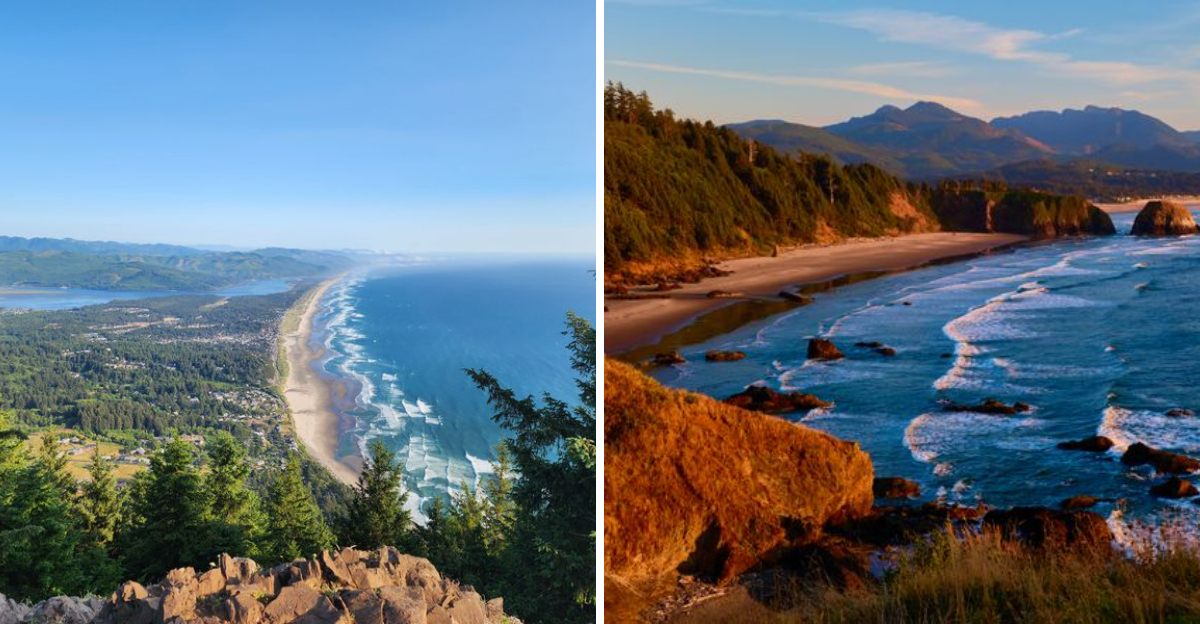
Oregon’s landscape is a masterpiece painted with contrasts, where rugged coastlines meet alpine peaks, and high desert vistas stretch endlessly beneath wide-open skies.
Every corner of this state reveals something extraordinary, from volcanic calderas filled with impossibly blue water to waterfalls cascading through emerald forests.
Locals know the secret spots where the crowds thin out and the views become personal, almost spiritual.
These lookout points aren’t just destinations marked on a map; they’re places where people return again and again, chasing sunsets, breathing in crisp mountain air, or simply standing in awe of nature’s grandeur.
Whether you’re perched on a cliff overlooking crashing waves or gazing across painted desert hills that glow in the afternoon light, Oregon offers perspectives that stay with you long after you leave.
This collection highlights ten beloved lookout points where residents escape, reflect, and reconnect with the wild beauty that defines the Pacific Northwest.
Get ready to discover vistas that will make you understand why Oregonians feel so fiercely protective of their home.
1. Ecola State Park
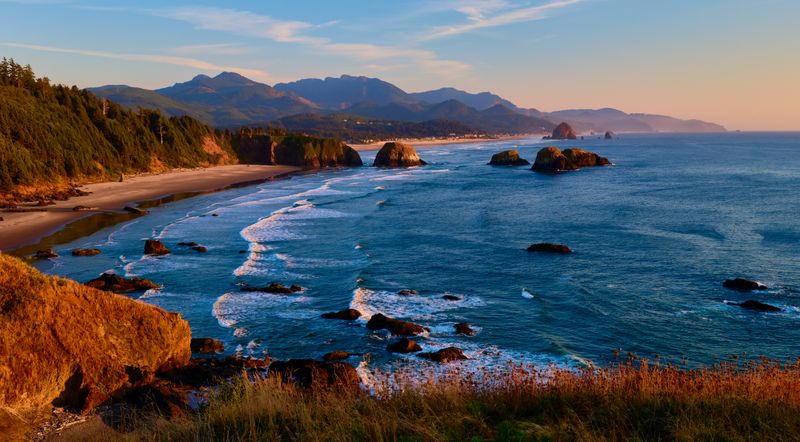
Perched on dramatic headlands north of Cannon Beach, this coastal gem delivers some of the most photographed scenery along the entire Pacific shoreline.
Sweeping views extend southward toward the iconic Haystack Rock, while offshore sea stacks rise from the churning ocean like ancient sentinels.
Trails wind through old-growth Sitka spruce forests before opening to clifftop vistas that take your breath away.
On clear mornings, the sunrise paints the rocks golden, and you might spot migrating gray whales spouting offshore during spring months.
Locals love hiking to Indian Beach, where tide pools teem with colorful sea stars and anemones.
The park’s name comes from the Tillamook people’s word for whale, honoring the creatures that once washed ashore here.
Photographers arrive before dawn to capture the moody fog rolling over the headlands, creating ethereal scenes that feel almost otherworldly.
Families spread picnic blankets at viewpoints while children marvel at the crashing waves below.
Winter storms bring dramatic wave action that sends spray high into the air, attracting storm watchers who bundle up to witness nature’s raw power.
Several overlooks offer wheelchair-accessible viewing platforms, making these spectacular vistas available to everyone.
The drive through the park itself winds along cliffsides, offering continuous ocean panoramas.
Early evening brings another magic hour when the setting sun illuminates the entire coastline in shades of amber and rose.
Bald eagles nest in the coastal forests, and you’ll often see them soaring above the waves hunting for fish.
Pack layers because coastal weather shifts quickly, and bring binoculars to spot seals lounging on distant rocks.
Address: 84318 Ecola Park Road, Cannon Beach, OR 97110</p>
2. Vista House at Crown Point
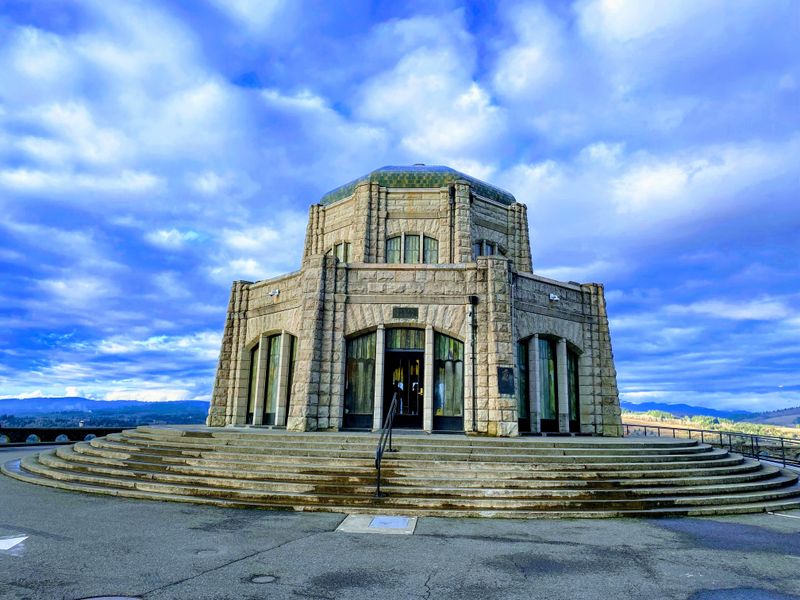
Standing at this historic stone observatory feels like stepping into a postcard from another era.
Built as a memorial and rest stop for travelers, the octagonal structure commands a panoramic view of the Columbia River Gorge that stretches for miles in every direction.
Wind whips through the gorge below, carrying the scent of pine and river water.
The building’s architecture alone is worth the visit, with its elegant stonework and copper dome weathered to a beautiful green patina.
Inside, interpretive displays tell the story of the Historic Columbia River Highway, America’s first scenic highway.
Floor-to-ceiling windows frame the gorge like living paintings that change with every shift in light and weather.
Locals stop here on Sunday drives, sipping coffee from the small cafe while watching sailboarders skim across the river far below.
The elevation provides a bird’s-eye perspective on the layered basalt cliffs that define this geological wonder.
Spring brings wildflowers blooming along the surrounding hillsides, adding splashes of purple and yellow to the green landscape.
Sunset transforms the gorge into a symphony of color, with the river reflecting oranges and pinks as shadows deepen in the valleys.
The viewpoint sits at a perfect elevation where you’re above the valley floor but still surrounded by towering peaks.
Tour buses arrive during summer, but early morning visits offer solitude and the best photography light.
Winter occasionally dusts the area with snow, creating stunning contrasts between white hillsides and the steel-gray river.
Walking the perimeter walkway gives you views in all directions, including back toward Portland on exceptionally clear days.
The wind can be fierce, so hold onto hats and secure anything that might blow away.
Address: 40700 E Historic Columbia River Hwy, Corbett, OR 97019
3. Cape Perpetua
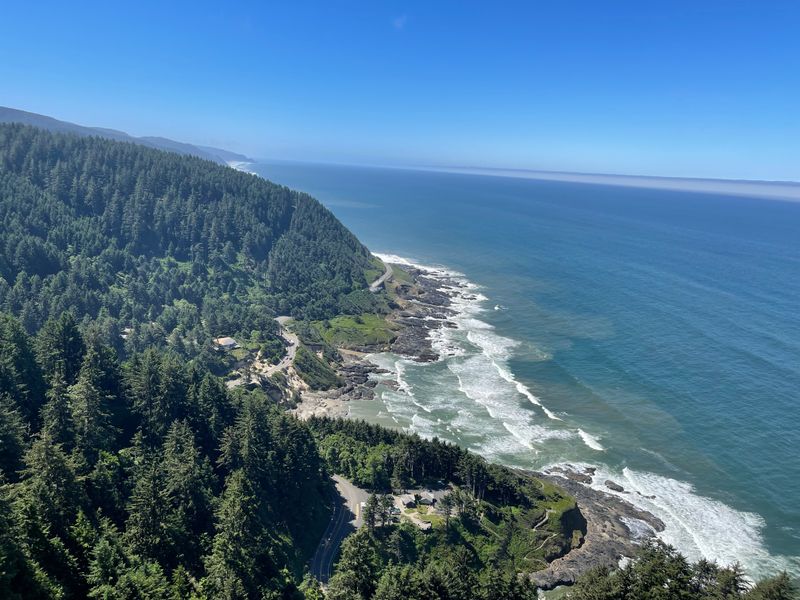
Rising over eight hundred feet above the pounding surf, this volcanic headland offers some of the most dramatic coastal scenery anywhere in Oregon.
Trails lead to multiple viewpoints, each revealing different perspectives on the rugged shoreline and endless Pacific horizon.
The forest here feels primeval, with massive Sitka spruce trees draped in moss creating a cathedral-like atmosphere.
Locals know to time visits with incoming tides to witness Thor’s Well, a natural sinkhole that appears to drain the ocean itself.
Water rushes in and explodes upward in spectacular fountains that photographers travel across the country to capture.
The Spouting Horn nearby sends geysers of seawater skyward through cracks in the volcanic rock.
A short but steep trail climbs to the Cape Perpetua Overlook, where interpretive panels help identify landmarks stretching seventy miles along the coast.
On exceptionally clear days, you can see the curve of the earth on the horizon.
Whales migrate past this point twice yearly, and the elevated vantage makes spotting them easier.
The visitor center provides excellent context about the area’s ecology and indigenous history.
Tide pools at the base teem with marine life during low tide, offering close encounters with sea urchins and hermit crabs.
Windswept shore pines grow in twisted shapes, sculpted by constant ocean breezes into living sculptures.
Winter storms create phenomenal wave action that draws adventurous souls willing to brave the elements.
The Captain Cook Trail winds through old-growth forest before emerging at coastal viewpoints that feel like the edge of the world.
Sunset paints the rocky coastline in warm hues while the forest behind darkens to silhouette.
Address: 2400 Highway 101, Yachats, OR 97498
4. Crater Lake National Park
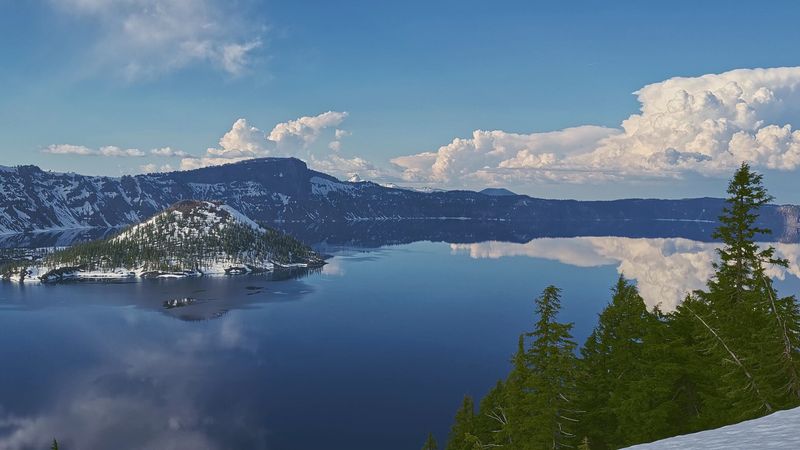
Nothing prepares you for that first glimpse of impossibly blue water cradled within the collapsed caldera of an ancient volcano.
The lake’s depth creates a color so intense it almost seems unnatural, ranging from sapphire to cobalt depending on light and weather conditions.
Snow lingers well into summer at this elevation, framing the water with brilliant white that intensifies the blue even further.
Rim Drive circles the entire caldera, offering continuously changing perspectives on Wizard Island and the surrounding cliffs.
Each viewpoint reveals new details: the Phantom Ship rock formation, the layered volcanic geology, the way clouds cast shadows across the water’s surface.
Locals visit throughout the seasons, knowing that winter transforms the landscape into a snowy wonderland accessible only by snowshoe or ski.
The clarity of the water allows you to see deep below the surface on calm days.
Scientists have measured it as some of the purest water on Earth, fed only by rain and snowmelt with no streams flowing in or out.
Standing at the rim feels humbling, contemplating the massive eruption that created this basin thousands of years ago.
Sunrise brings soft pastels reflected in the mirror-smooth water before winds pick up later in the day.
The Watchman Peak trail offers the highest accessible viewpoint, rewarding the climb with panoramic views that include distant Cascade peaks.
Chipmunks and golden-mantled ground squirrels scurry around the rim, surprisingly bold in their quest for dropped snacks.
Summer wildflowers bloom in meadows surrounding the lake, adding splashes of color to the volcanic landscape.
The steep Cleetwood Cove Trail provides the only lake access, descending to a small beach where the water’s temperature shocks even on hot days.
Evening alpenglow paints the caldera walls pink and orange before stars emerge in the crisp mountain air.
Address: Crater Lake, OR 97604
5. Council Crest Park
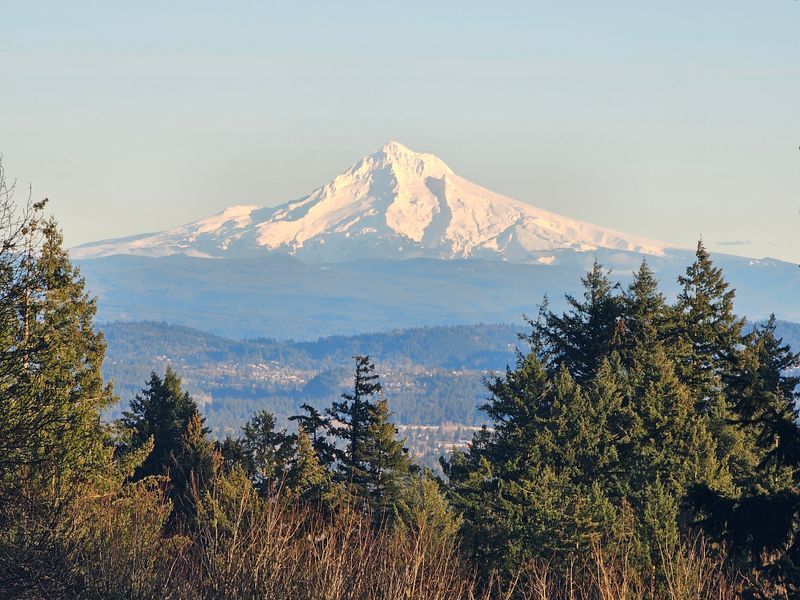
At the highest point within Portland’s city limits, this neighborhood park delivers surprisingly expansive views that take in five major Cascade peaks on clear days.
Mount Hood dominates the eastern skyline, its snowy summit glowing pink during sunrise and sunset.
The city spreads below in all directions, a patchwork of neighborhoods, bridges, and the winding Willamette River.
Locals jog here in the early morning, rewarding their uphill effort with coffee and views before the day begins.
Families gather at the playground while parents scan the horizon for Mount St. Helens to the north.
The park’s circular plaza features markers identifying each visible peak, helping visitors orient themselves to the surrounding geography.
On New Year’s Eve, crowds gather to watch fireworks erupt across the city from this elevated vantage.
The view encompasses both downtown’s skyscrapers and the suburban sprawl extending toward distant mountains.
Benches positioned around the plaza offer perfect spots for contemplation or conversation with strangers who’ve also climbed the hill.
Spring brings cherry blossoms to nearby streets, and the elevation provides views over the blooming canopy.
Cyclists coast down the winding roads afterward, grinning at the easy descent after the challenging climb.
The park’s accessibility makes it popular with people of all ages and abilities, though the final approach does involve some incline.
Foggy mornings create ethereal scenes where the city disappears beneath a blanket of white with only the tallest buildings and mountain peaks visible above.
Summer evenings draw couples who spread blankets to watch the sunset paint the sky in brilliant colors.
The park’s mature trees provide shade during hot afternoons, and squirrels entertain children with their acrobatic antics.
Winter’s clear, cold days offer the sharpest visibility, making it the best season for mountain spotting.
Address: 1717 SW Council Crest Dr, Portland, OR 97201
6. Haystack Rock
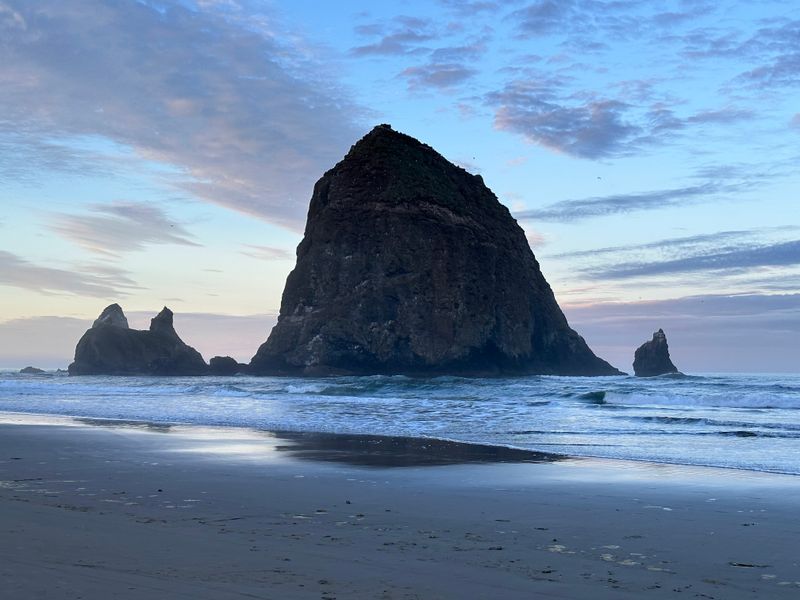
This massive monolith rises from the sand like something from a fantasy novel, its dark basalt contrasting sharply with white surf and golden beach.
At low tide, tide pools surrounding the base become windows into an underwater world filled with bright orange sea stars, green anemones, and darting fish.
Tufted puffins nest on the rock’s upper reaches during summer, delighting birdwatchers who scan the heights with binoculars.
Sunset transforms the rock into a silhouette against blazing skies, creating the postcard image that defines the Oregon coast for many visitors.
Locals walk here year-round, knowing that each season and tide brings different experiences.
Winter storms send waves crashing against the rock with tremendous force, while summer days see families exploring the tide pools with volunteer naturalists who explain the delicate ecosystem.</p><p>The beach stretches for miles in both directions, offering long walks with the rock as a constant landmark.
Children build sandcastles in its shadow while dogs chase waves and seagulls wheel overhead.
Photographers arrive before dawn to capture the rock emerging from morning mist, and again at dusk when the light turns magical.
Smaller rock formations called the Needles stand nearby, also hosting seabird colonies and tide pool communities.
The entire area is designated a marine garden, protecting the creatures that live here from collection.
Rangers patrol during low tide to ensure visitors observe without disturbing the wildlife.
Foggy days give the rock an air of mystery, appearing and disappearing as mist rolls past.
The surrounding town offers galleries and cafes where locals gather after beach walks to warm up with hot drinks.
Spring brings wildflowers to the grassy dunes behind the beach, and bald eagles sometimes perch on driftwood logs.
The rock’s presence anchors the entire beach, drawing eyes and cameras constantly toward its impressive bulk.
Address: Cannon Beach, OR 97110
7. Silver Falls State Park
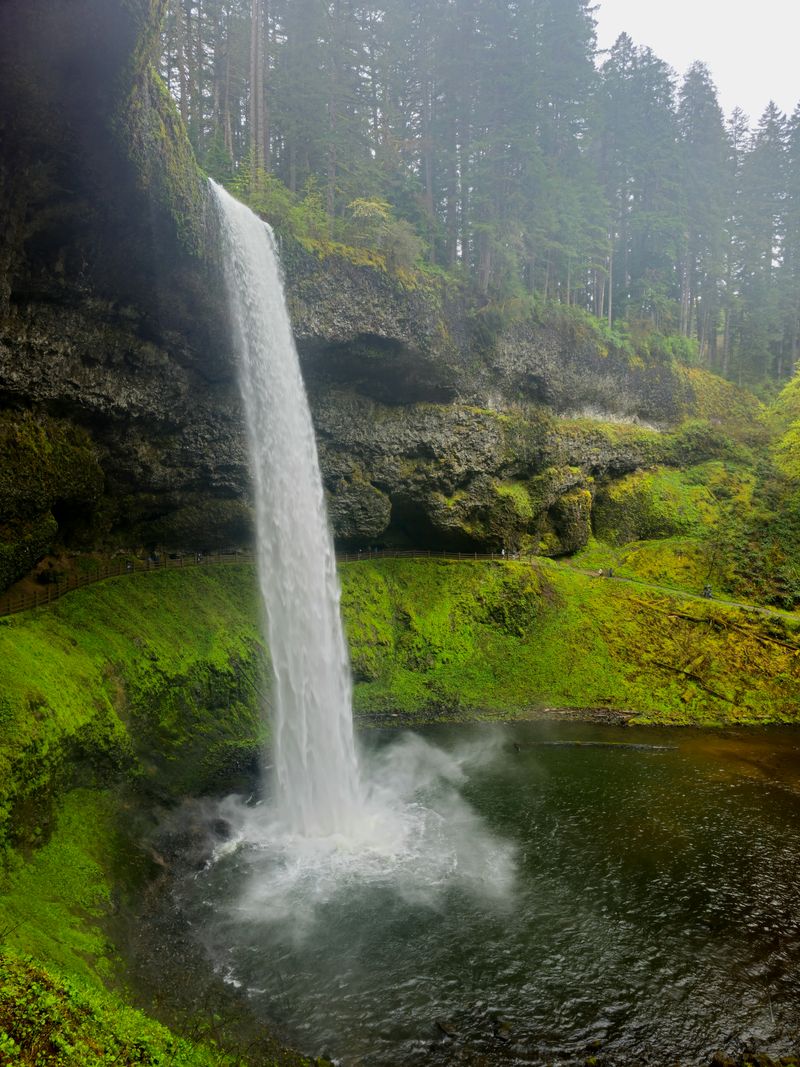
Known affectionately as the crown jewel of the Oregon State Parks system, this forested wonderland showcases ten waterfalls along a single hiking loop.
The trail winds through ancient forest, crosses wooden bridges, and actually leads behind several falls where you walk through misty caverns carved by centuries of flowing water.
Moss covers every surface in shades of emerald and chartreuse, creating a fairytale atmosphere.
South Falls plunges over a basalt rim into a deep pool, and the trail descends to walk behind the curtain of water.
The roar is deafening, and mist soaks anyone who ventures close, but the perspective from behind a waterfall is unforgettable.
Locals hike here year-round, knowing that winter’s high water creates the most impressive flows while summer offers easier trail conditions.
Each waterfall has its own character: some cascade over multiple tiers, others plunge straight down, and a few split around rock formations.
The forest canopy filters sunlight into soft green light that makes the whole experience feel otherworldly.
Douglas fir and western hemlock tower overhead, some reaching heights that make you crane your neck to see their tops.
Spring brings wildflowers to the forest floor and swollen creeks that make the waterfalls thunder.
Photographers love the challenges of capturing moving water in dim forest light, experimenting with long exposures that turn falls into silky ribbons.
The trail covers several miles but remains relatively gentle, making it accessible to families with older children.
Fall paints the deciduous trees in gold and rust, adding warm colors to the predominantly green landscape.
Winter occasionally brings snow that transforms the park into a hushed wonderland, though ice can make trails treacherous.
Benches positioned near several falls offer rest stops where you can simply sit and absorb the beauty and power of falling water.
Address: 20024 Silver Falls Hwy SE, Sublimity, OR 97385
8. Steens Mountain Lookout
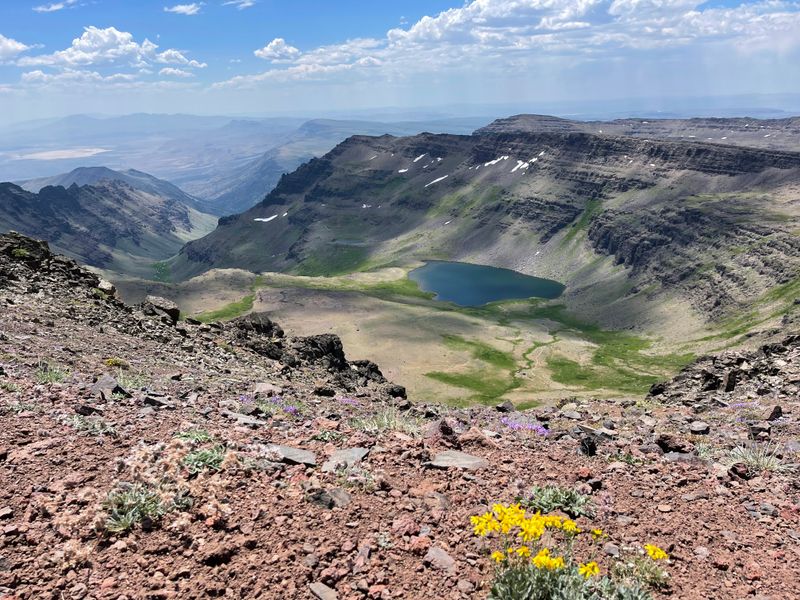
The high desert reveals itself in all its stark beauty from this remote mountain summit in southeastern Oregon.
Glacial valleys drop away dramatically on one side while the vast Alvord Desert spreads like a tawny blanket thousands of feet below.
The scale is overwhelming, with distances measured in dozens of miles and nothing but sagebrush and sky in between.
This is Oregon’s outback, where visitors are few and silence is profound.
The gravel road climbing to the summit is an adventure itself, switchbacking up the mountain’s eastern face with increasingly spectacular views.
Locals who make the journey know to bring plenty of water, sun protection, and respect for the remote environment.
Wildflowers carpet the alpine meadows in early summer, a brief explosion of color before the harsh sun and wind reclaim the landscape.
Bighorn sheep occasionally appear on rocky slopes, perfectly adapted to this rugged terrain.
The air is so clear that stars seem close enough to touch after dark, and the Milky Way stretches across the sky in a glowing band.
Sunrise from the summit is a spiritual experience, watching light flood across the desert floor and ignite distant mountains.
The temperature can swing dramatically between day and night even in summer, so layers are essential.
No guardrails protect the steep drop-offs, adding an element of adventure and requiring careful attention.
The Alvord Desert below is a dry lakebed that occasionally fills with water after storms, creating a massive mirror reflecting the sky.
Golden eagles soar on thermal updrafts rising from the heated desert floor.
Fall brings golden aspens to the mountain’s valleys, and winter closes the road with snow that doesn’t melt until late spring.
The remoteness means you might not see another person for hours, creating a sense of solitude increasingly rare in modern life.
Address: Steens Mountain Loop Road, Princeton, OR 97721
9. Neahkahnie Mountain Viewpoint
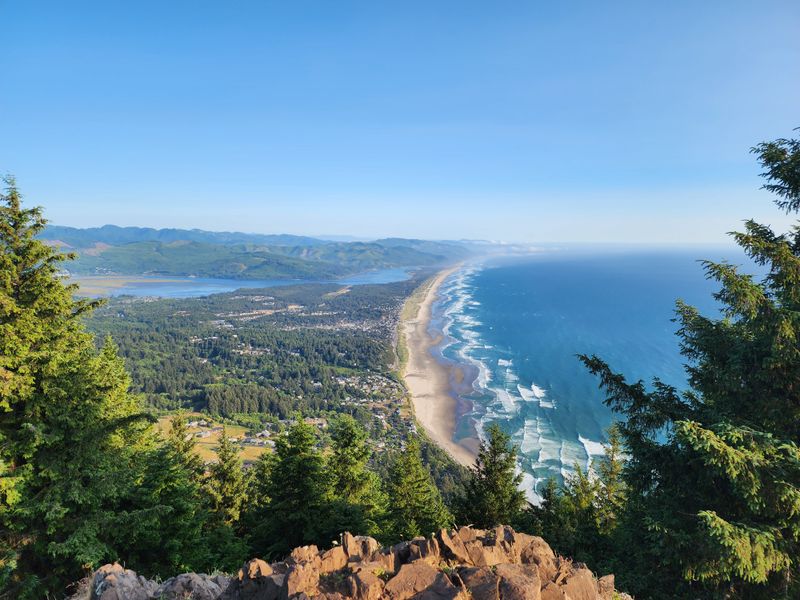
Highway 101 hugs the mountainside here, offering pullouts where drivers can safely stop to absorb the sweeping coastal panorama.
The viewpoint sits high enough to see the curve of the coastline stretching both north and south, with waves creating white lines against the dark blue Pacific.
Offshore rocks punctuate the seascape, and on clear days, the view extends for miles.
Locals treasure this spot for its accessibility combined with truly spectacular scenery.
You don’t need to hike for hours to reach views that rival any in the state.
The mountain itself rises behind the highway, and more adventurous souls can climb trails to even higher vantages, but the roadside pullout satisfies most visitors.
Legends speak of buried treasure somewhere on Neahkahnie’s slopes, supposedly left by Spanish sailors centuries ago.
Whether true or not, the stories add mystique to an already dramatic location.
The Tillamook people considered the mountain sacred, and standing here, feeling the wind and watching the endless ocean, it’s easy to understand why.</p><p>Spring wildflowers bloom on the steep slopes, adding color to the green hillsides.
Migrating whales pass close to shore here, and patient watchers are often rewarded with sightings.
The elevation means fog sometimes obscures the view, but when it clears, the reveal is all the more dramatic.
Sunset turns the ocean into liquid gold, and the high vantage lets you watch the sun sink into the horizon.
Winter storms bring dramatic cloud formations and powerful waves that crash against the base of the mountain far below.
The viewpoint has enough space for several cars, though it can fill quickly on beautiful summer weekends.
Bring a camera with a wide-angle lens to capture the full sweep of coastline, and allow time to simply stand and breathe in the salty air while absorbing one of Oregon’s most impressive coastal panoramas.
Address: Highway 101, Manzanita, OR 97130
10. Painted Hills Unit
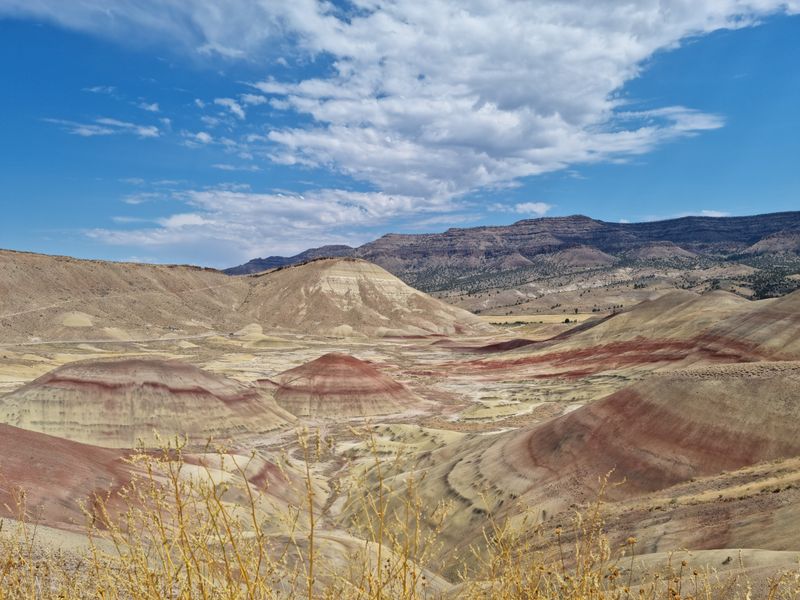
These hills look like someone spilled paint across the landscape in stripes of red, gold, black, and tan.
The colors shift and intensify as the sun moves across the sky, creating a constantly changing display that mesmerizes photographers and nature lovers.
Each layer represents a different geological era, a timeline written in earth and stone spanning millions of years.
The hills are best viewed after rain when colors saturate and practically glow against dark storm clouds.
Locals know that late afternoon light brings out the warmest tones, while overcast days emphasize the contrasts between layers.
Wooden boardwalks protect the fragile clay soil while allowing close access to the colorful formations.
This is high desert country where sagebrush scents the air and juniper trees dot the surrounding hills.
The silence is profound, broken only by wind and the occasional raven’s call.
Ancient fossils hide within these hills, remnants of subtropical forests that once covered this now-arid landscape.
Several trails offer different perspectives, from overlooks providing panoramic views to paths winding among the painted mounds.
The Carroll Rim Trail climbs to a ridge where the full sweep of the Painted Hills spreads below like an abstract painting.
Spring brings brief wildflower blooms that add purple and yellow to the earth-toned palette.
Summer heat can be intense, making morning or evening visits more comfortable.
The landscape feels almost alien, like something from another planet rather than central Oregon.
Winter occasionally dusts the hills with snow, creating stunning contrasts between white caps and colorful slopes.
The remoteness means fewer crowds than coastal attractions, offering opportunities for contemplation and photography without fighting for space.
Sunrise and sunset transform the hills into glowing sculptures, making the drive to this remote location worthwhile for anyone seeking Oregon’s more unusual natural wonders.
Address: Painted Hills Road, Mitchell, OR 97750
Dear Reader: This page may contain affiliate links which may earn a commission if you click through and make a purchase. Our independent journalism is not influenced by any advertiser or commercial initiative unless it is clearly marked as sponsored content. As travel products change, please be sure to reconfirm all details and stay up to date with current events to ensure a safe and successful trip.
