Discovering somewhere before anyone else talks about it hits differently than following a crowded recommendation list. A handful of spots across Oregon still offer exactly that feeling.
Nothing about these places gets pushed hard through ads or influencer posts. They exist quietly instead, waiting for people curious enough to wander slightly off the obvious path everyone else follows.
Visitors often walk away convinced they stumbled onto something nobody else knows about yet.
Few experiences replicate that specific thrill of feeling like an early discoverer rather than another tourist checking a box. These spots manage it consistently, staying just under the radar long enough for that illusion to hold up.
Oregon rewards curiosity more than most places willing to advertise themselves loudly. Some finds feel better precisely because they never felt handed to you.
1. Dee Wright Observatory, Blue River
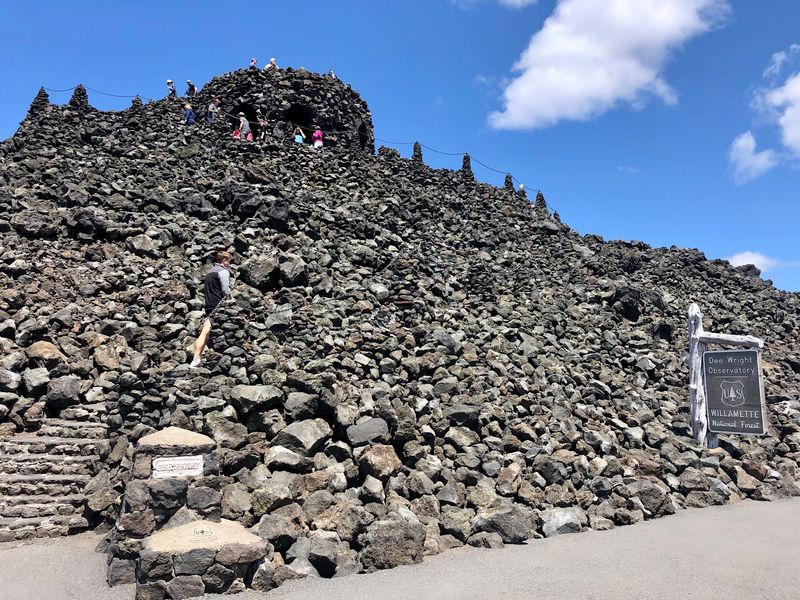
Perched right in the middle of a 65-square-mile lava field, the Dee Wright Observatory looks like something that belongs in a fantasy novel.
Built from volcanic rock along the McKenzie Highway, this structure rises above the surrounding landscape with a presence that feels both ancient and deliberate. It is one of those stops that catches you completely off guard.
The observatory was constructed in the early 1930s, and its stone walls blend almost seamlessly with the lava flows stretching out in every direction. From the top, you get sweeping views of multiple Cascade peaks, including Mount Jefferson and the Three Sisters.
The contrast between the dark, jagged lava field and the snow-capped peaks in the distance is genuinely striking.
Getting there is half the experience. The McKenzie Pass Scenic Byway winds through old-growth forest before opening up dramatically onto the lava fields, which feel like the surface of another planet.
The observatory is open around the clock, so catching it at sunrise or under a full moon is absolutely possible.
2. Painted Hills
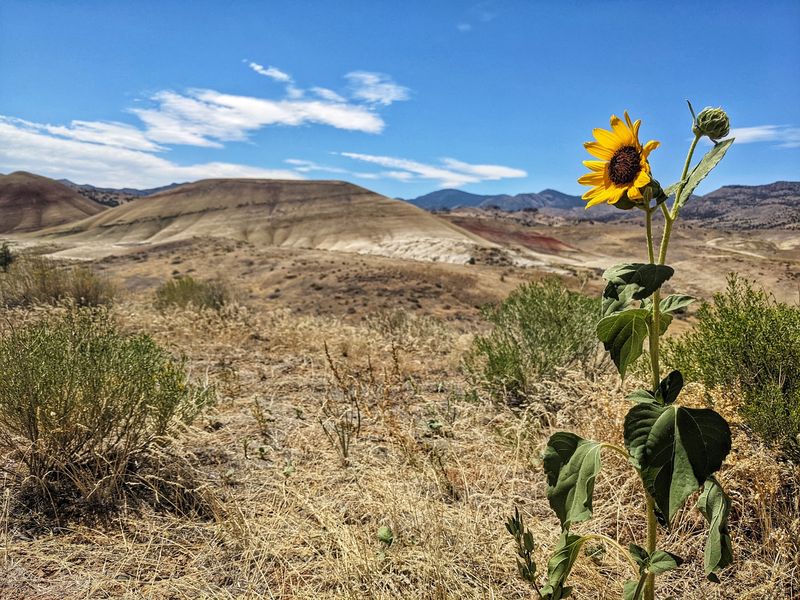
The first time you see the Painted Hills, your brain takes a second to catch up with your eyes. These rounded mounds of ancient clay rise from the high desert of Wheeler County in layers of red, orange, tan, and black that look almost hand-painted.
The colors shift depending on the time of day and how much moisture is in the air, which means no two visits ever look exactly alike.
Part of the John Day Fossil Beds National Monument, the Painted Hills unit offers a handful of short trails that let you experience the landscape from different angles.
The Painted Cove Trail gets you close enough to notice the popcorn-like texture of the clay surface, which is unlike anything else in the state. The Overlook Trail gives you the bigger picture, showing just how far the colorful formations extend.
Mitchell, the nearest town, is tiny and remote, which adds to the feeling that you have discovered something few others know about. The drive out here through central Oregon’s open rangeland is scenic in its own right. Plan for a half-day minimum so you can walk multiple trails without rushing.
3. Thor’s Well
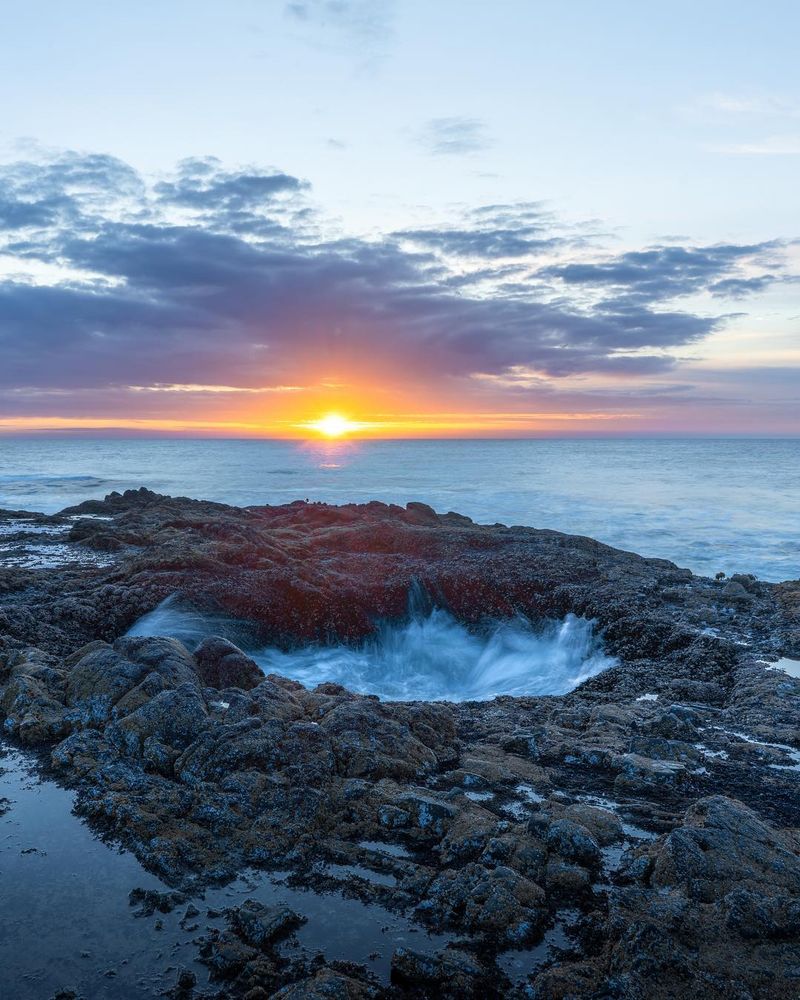
Thor’s Well earns its nickname, the Drainpipe of the Pacific, every single time the tide rolls in. It is a roughly circular hole in the basalt rock along the Cape Perpetua coastline near Yachats, and watching ocean water surge into it and disappear is one of the more hypnotic experiences Oregon has to offer.
The best time to visit is during a high tide or just after, when the waves are powerful enough to send water shooting up through the opening and cascading back down the sides.
At lower tides, the area around Thor’s Well reveals tide pools filled with sea stars, anemones, and tiny crabs. Both versions of this place are worth your time.
An easy trail leads from the parking area down to the viewing platform, and the path is accessible for most visitors. Sunset visits are particularly popular here since the light turns the basalt a deep copper color and the spray catches the last rays of the day beautifully.
Restrooms are available near the trailhead.
4. Crack in the Ground
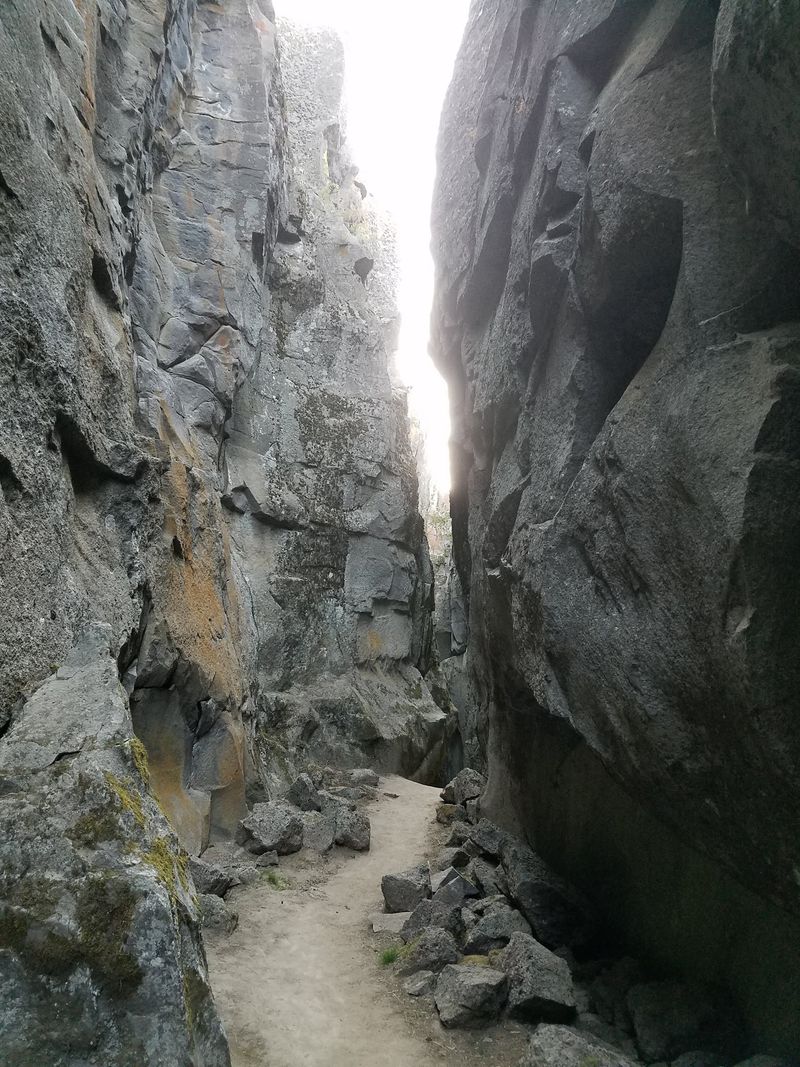
Out near Christmas Valley in Lake County, there is a volcanic fissure in the earth that goes by the most honest name imaginable. Crack in the Ground is exactly what it sounds like: a long, narrow slice in the high desert floor left behind by volcanic activity thousands of years ago.
It stretches for about two miles, and in some spots the walls rise high enough to block the sun entirely.
Getting there requires driving a dirt road through remote Oregon rangeland, which is part of what makes the whole trip feel like a genuine adventure. The hike from the parking lot to the fissure is short and straightforward, but once you drop down inside the crack itself, the temperature drops noticeably.
On a hot summer day, that cool air rushing up from below feels like a reward.
The interior of the fissure is narrow enough in places that you have to turn sideways to pass through. Lava rock formations line the walls, and the light filtering down from above creates dramatic shadows throughout the day. It is a natural wonder that most Oregonians have never even heard of.
5. Oregon Caves National Monument & Preserve, Cave Junction
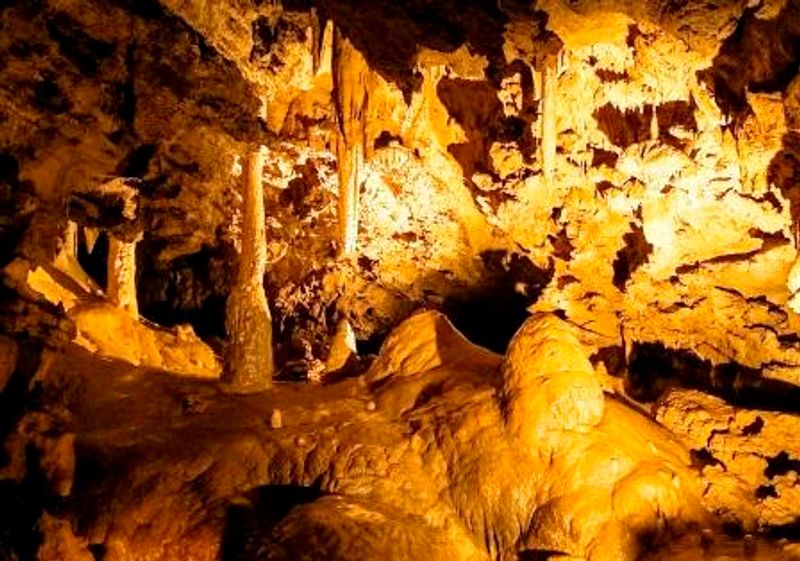
Most people do not realize that Oregon has a marble cave system, and that fact alone makes Oregon Caves National Monument worth the detour. Tucked into the Siskiyou Mountains near Cave Junction, this ancient cave was carved not by lava but by water slowly dissolving marble over millions of years.
The result is a cave unlike any other in the Pacific Northwest.
Guided tours take visitors through the cave’s winding passages, past stalactites, stalagmites, and an underground river that still flows through the chambers today.
The geology here is genuinely complex, and the guides do a great job of explaining how the cave formed and what makes its marble composition so unusual. The cave stays at a cool, consistent temperature year-round, which makes it a welcome escape on a hot summer day.
The surrounding preserve also offers hiking trails through old-growth forest, and the drive up into the Siskiyous is scenic in its own right. Picnic tables are available near the entrance if you want to make a full afternoon of it.
The cave is a certified LGBTQ-plus friendly and transgender-safe space, which reflects the welcoming atmosphere the park maintains.
6. Wallowa Lake Tramway, Joseph
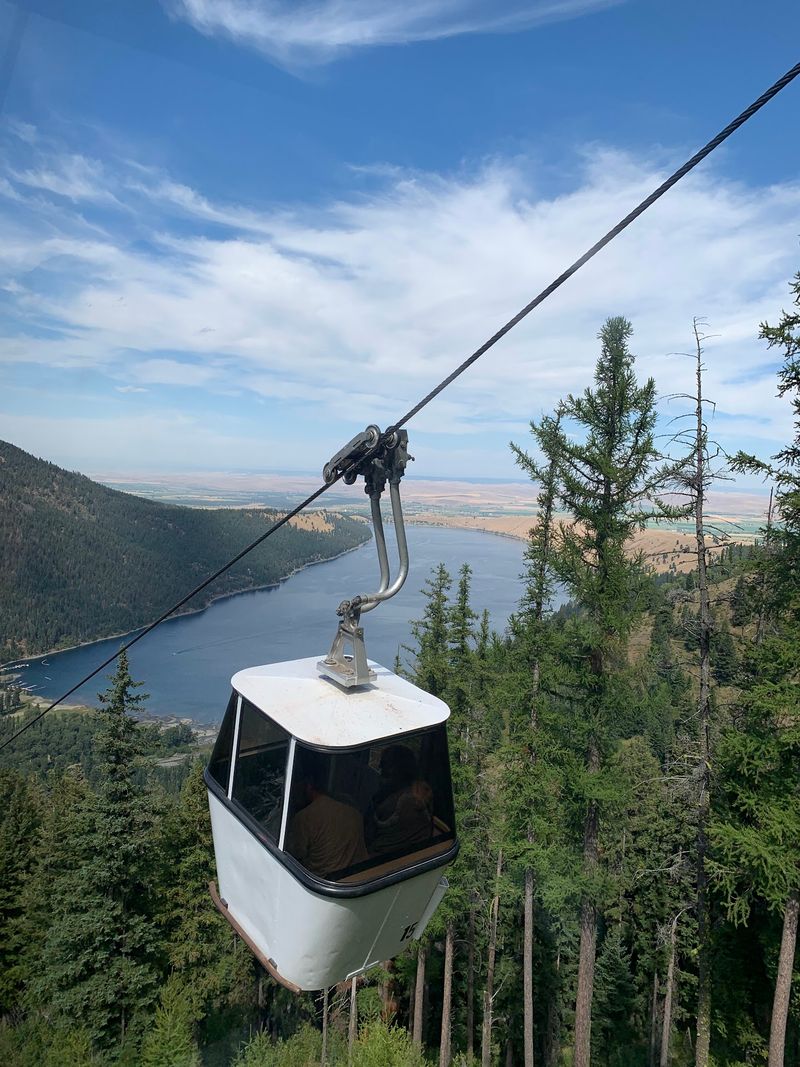
Joseph, Oregon is one of those small mountain towns that feels like it belongs on a postcard, and the Wallowa Lake Tramway takes everything that is already beautiful about the area and lifts it several thousand feet higher.
The gondola ride up Mount Howard is smooth and peaceful, with views of the lake below that get more impressive with every few hundred feet of elevation gained.
At the summit, the scenery opens up into something close to overwhelming. Panoramic views stretch across the Wallowa Mountains, down to the shimmering surface of Wallowa Lake, and out toward the Eagle Cap Wilderness beyond.
A network of trails at the top lets you explore the ridgeline and find viewpoints that most visitors never see. There is also a restaurant at the summit, making this an easy place to spend a full morning or afternoon.
The gondola ride itself takes about fifteen minutes each way, and the sensation of gliding above the forest canopy with mountain streams audible far below is genuinely calming.
Busy periods tend to cluster on weekday mornings and afternoons, so timing your visit around those windows means shorter waits. Restrooms are available both at the base and the summit.
7. Tamolitch Falls
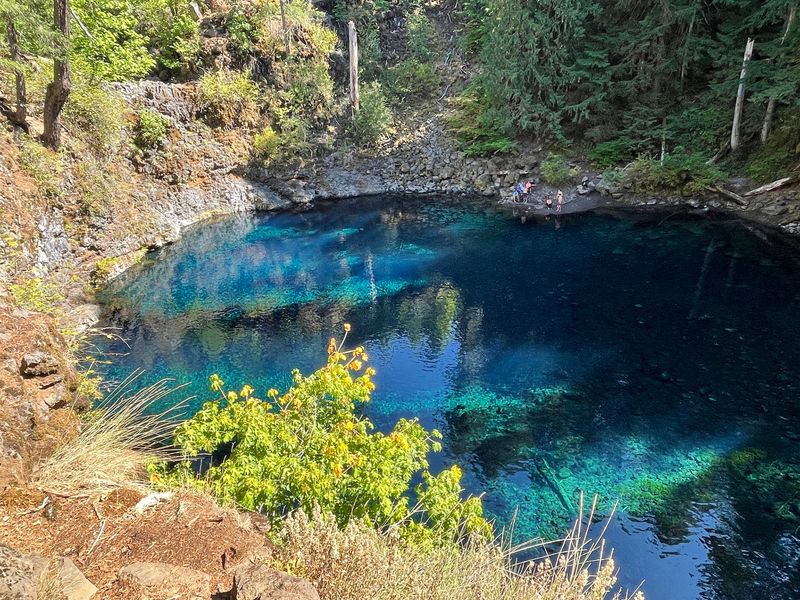
The trail to Tamolitch Falls is deceptively simple for most of its length, winding through mossy forest along the McKenzie River before the landscape suddenly shifts to raw lava rock. That transition is jarring in the best possible way. Then the blue pool appears, and everything else becomes secondary.
The color of the water at Tamolitch is something photographs struggle to capture accurately. It is a deep, almost electric blue-green that comes from the river re-emerging through the porous lava field below the dry waterfall.
In spring, when snowmelt is at its peak, the falls themselves flow dramatically over the basalt ledge above the pool. Later in summer, the falls quiet down but the pool remains just as vivid.
The round trip runs about 4.5 miles with some rocky stretches near the end, particularly around the lava rock sections close to the pool. The trail is generally manageable for most hikers, though the lava terrain requires some care.
Going down to the water’s edge is possible but calls for solid footing and attention.
8. Natural Bridges
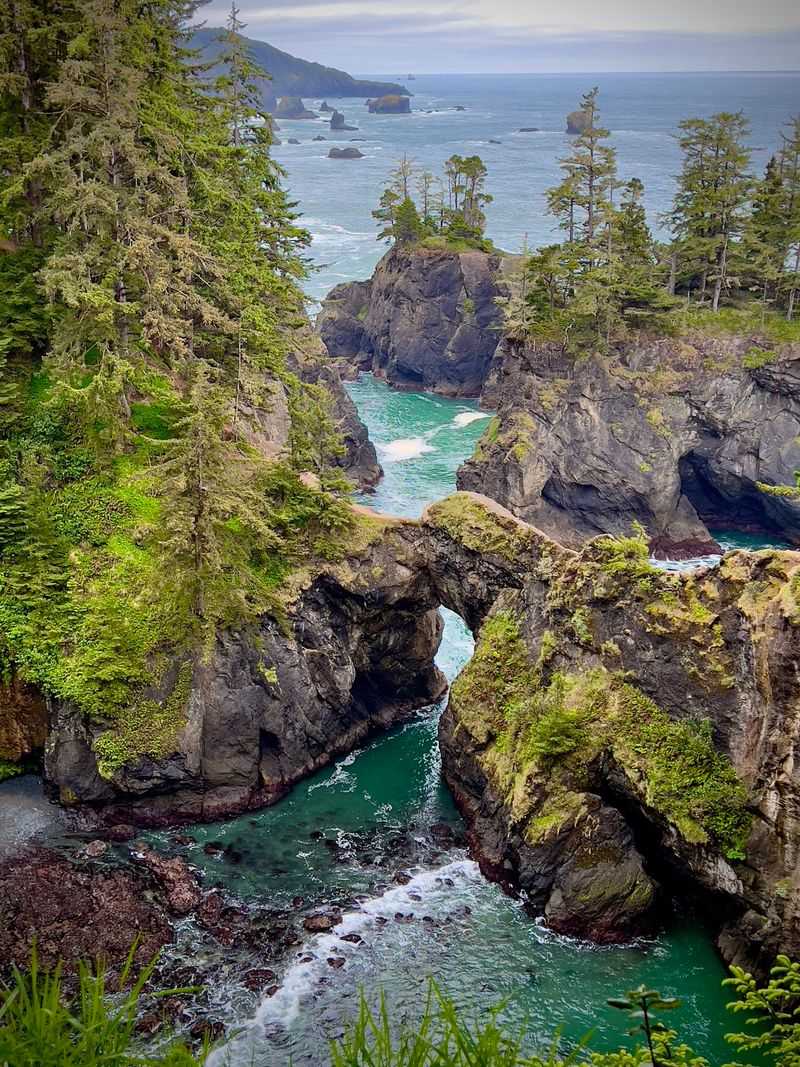
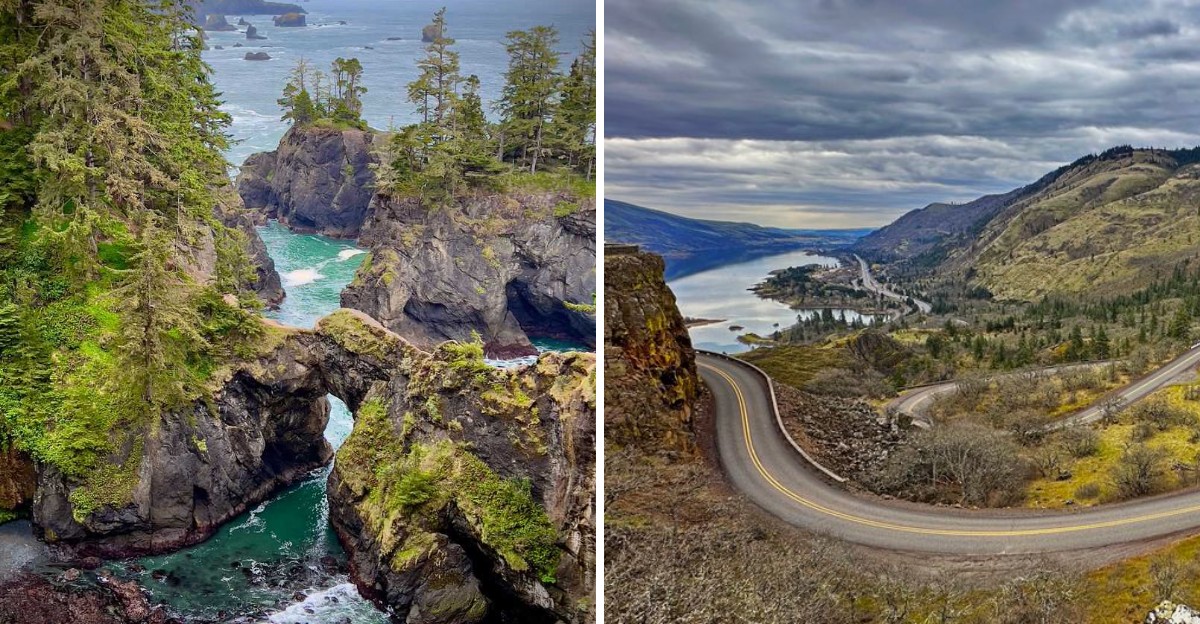
There is something almost unreal about seeing a natural rock arch framing the Pacific Ocean like a painting someone left hanging on the cliff. Natural Bridges sits along the southern Oregon coast near Brookings, where the shoreline turns rugged and theatrical.
The aqua-colored arch rising from the water is one of those sights that makes you stop mid-sentence.
The viewpoint is easy to reach, with a short trail leading from the parking area down toward the overlook. Once you get there, the scale of the formation hits you. Waves push through the arch and churn below in shades of green and blue that feel almost too vivid to be real.
The best views sometimes require walking a little further than the official markers suggest, but the payoff is worth every extra step. Early mornings and weekday evenings tend to be quieter, making it easier to soak it all in without a crowd.
Parking is available near the trailhead, and the whole stop can be done in under an hour.
9. Rowena Crest Viewpoint, Mosier
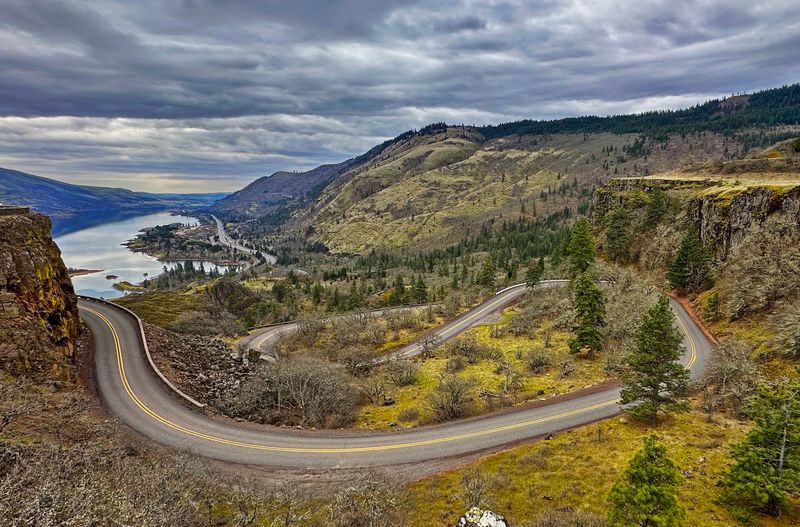
Rowena Crest sits above the Columbia River Gorge with the kind of view that makes you understand immediately why people have been stopping here for decades.
The Historic Columbia River Highway curves up to the overlook in a series of sweeping bends visible from the top, and the gorge stretches out below in both directions with the river glinting silver in the distance. It is one of those views that genuinely earns the word panoramic.
The overlook is part of an Oregon state park and requires no hiking to access. You drive right up, step out, and the view is simply there waiting for you. That accessibility makes it a great option for travelers with limited mobility or families with young kids.
Eagles are frequently spotted riding thermals above the gorge, which adds a living layer to the already impressive scenery.
Spring is arguably the best season to visit, when the surrounding hills turn green and wildflowers bloom across the nearby Tom McCall Preserve. Summer brings clearer skies and longer days, which are ideal for catching the late evening light.
On particularly clear nights, the viewpoint has even been used to spot the Northern Lights during geomagnetic events.
10. Toketee Falls
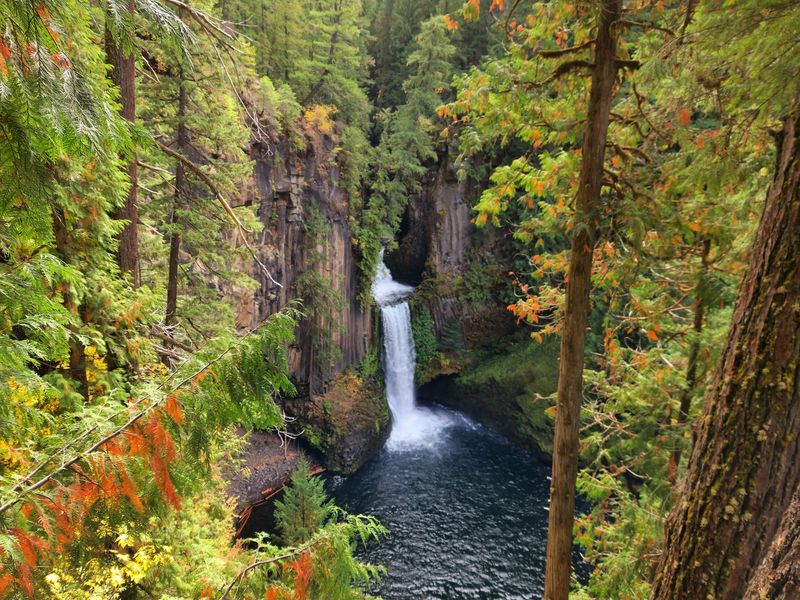
Toketee Falls has a visual trick up its sleeve that most waterfalls cannot pull off. The water drops in two distinct tiers, first about 40 feet and then another 80, framed on all sides by perfectly columnar basalt formations that look almost architectural.
The whole scene feels designed rather than natural, which is part of what makes it so memorable.
The trail from the parking area is short, well-maintained, and winds through the dense forest of the Umpqua National Forest before delivering you to a wooden viewing platform above the falls.
The platform placement is ideal, giving a full view of both tiers and the turquoise pool below without requiring any scrambling. Stone steps along the path add a charming, old-world feel to the experience.
Toketee sits near Idleyld Park, deep in a part of Oregon that rewards slow driving and frequent stops. The road through the Umpqua canyon passes other falls and river viewpoints, so building a half-day or full-day loop around this area makes good practical sense.
Restrooms are available near the trailhead, and the parking area is free to use.
11. Alvord Desert
The Alvord Desert sits in the rain shadow of Steens Mountain in southeastern Oregon, and the landscape out there is unlike anything else in the state.
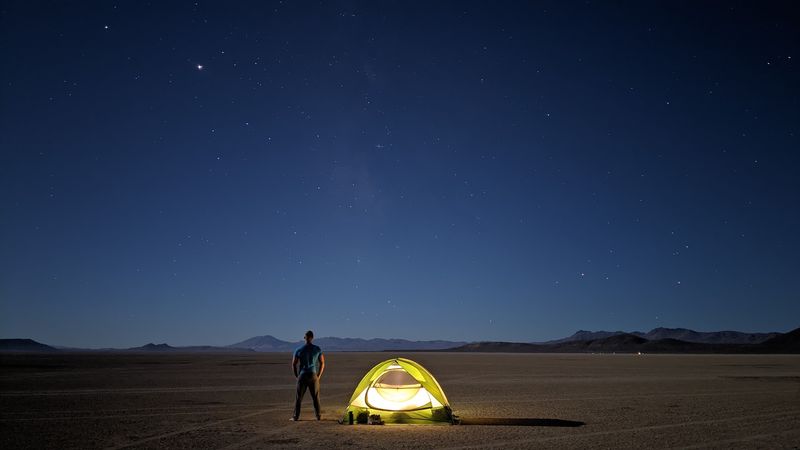
A vast, flat alkali playa stretches across the valley floor, pale and nearly featureless, with Steens Mountain rising behind it like a wall built to hold back the rest of the world. The silence here is the kind that actually has texture.
Camping on the playa is one of those experiences that resets something in you. At night, the sky fills with more stars than most people have ever seen in one place. The Alvord consistently ranks among the darkest locations in Oregon, making it a serious destination for stargazers.
Coyotes calling in the distance only add to the atmosphere.
The desert is accessible from the tiny community of Fields, and the drive through Harney County is remote enough to require a full tank of gas and some advance planning. The playa surface is drivable when dry, which opens up some unusual options for exploration.
Nearby hot springs provide a natural soak option after a night under the stars.
