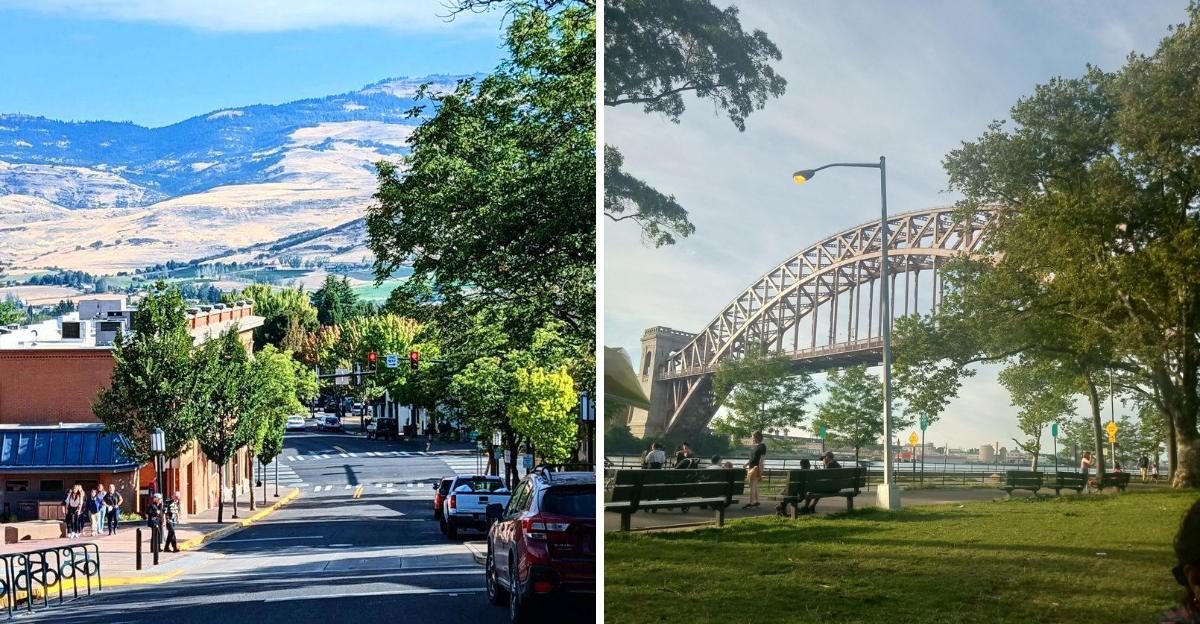
Planning a simple weekend trip through Oregon somehow turned into questioning every life decision I’d ever made. These towns have a way of sneaking up on you.
You arrive expecting a quick stroll and a decent lunch, then notice the way the light hits the mountains or how strangers wave from their porches. Next thing you know, real estate listings are open on your phone and you’re wondering how realistic a “temporary move” really is.
Oregon does that to people. The air feels cleaner, the pace slows down, and it’s like someone quietly turned the volume down on life.
I’ve felt it happen more than once. These eight towns are the reason so many weekend trips turn into extended stays and one-way moving trucks.
Pack light, just in case. There’s a very real chance you’ll be sending “I’m not coming back yet” texts from a coffee shop in the Cascades.
1. Jacksonville
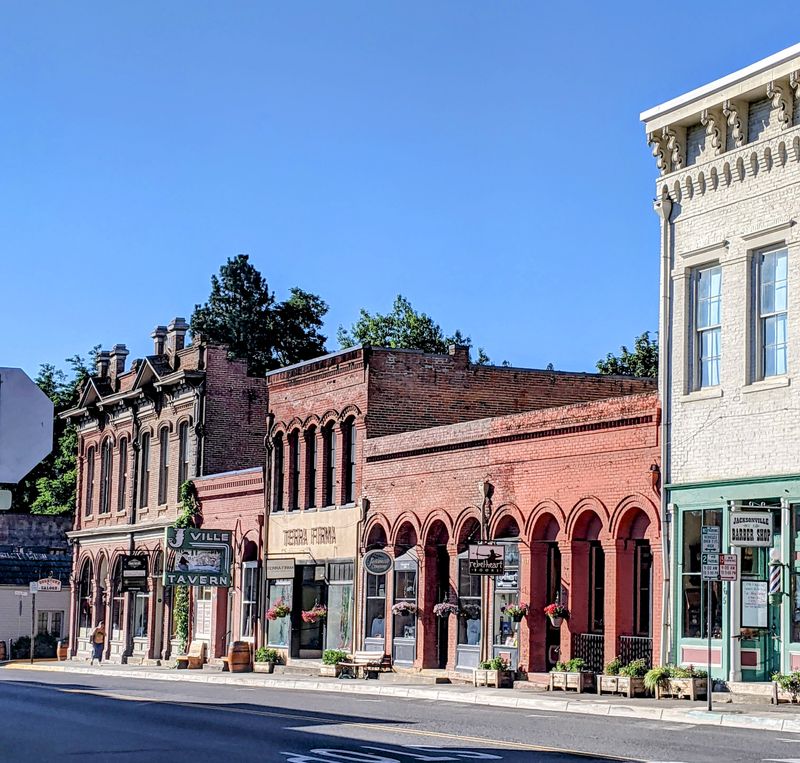
Walking down California Street feels like stepping onto a movie set, except everything here is genuinely authentic. The entire downtown is a National Historic Landmark, which means those brick facades and wooden awnings aren’t replicas or theme park decorations.
I watched a family from Seattle pull over for what they called a “quick photo stop” and three hours later they were still wandering through antique shops, completely mesmerized.
The Britt Music Festival brings world-class performances to an outdoor amphitheater every summer, and locals treat it like their personal concert series. Jacksonville Cemetery sits on a hillside where you can read headstones dating back to the 1850s, each one telling stories of pioneers who also decided they couldn’t leave.
The whole town covers less than one square mile, yet it packs in enough charm to justify a permanent relocation.
Real estate agents here have gotten used to people calling back six months after a visit, suddenly serious about buying property. The Mediterranean climate means mild winters and warm summers, perfect for the vineyards that now surround the historic core.
I met a couple who came for a wine tasting weekend and ended up opening a bed and breakfast on Third Street.
Oregon’s southern region doesn’t get the attention of Portland or the coast, but Jacksonville proves that flying under the radar has its advantages. The absence of chain stores and corporate sameness creates an atmosphere that feels increasingly rare in modern America.
You can actually park easily, walk everywhere, and know your barista’s name by your third visit.
2. Ashland
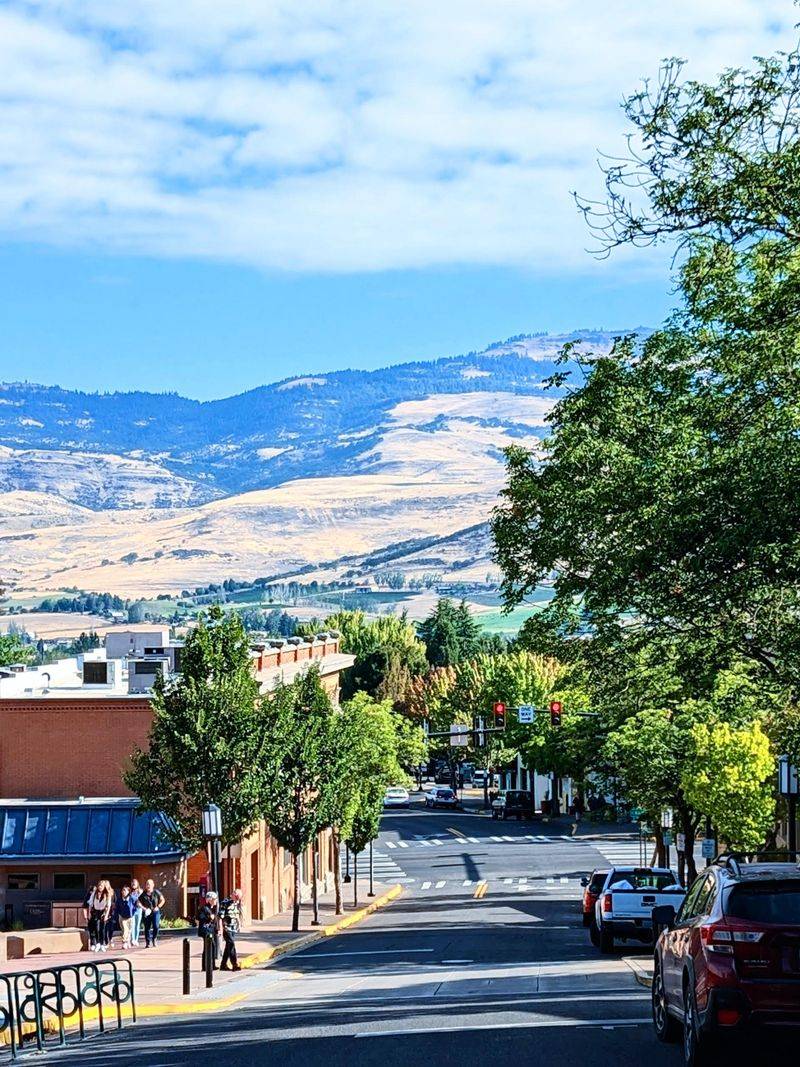
Ashland operates on a completely different frequency than the rest of the world. The Oregon Shakespeare Festival has been running since 1935, transforming this small town into a cultural powerhouse that rivals cities ten times its size.
I’ve watched people arrive skeptical about live theater and leave with season tickets and apartment lease applications.
Lithia Park stretches for 93 acres right through the heart of downtown, offering hiking trails, a duck pond, and a Japanese garden without ever leaving city limits. The park connects to a network of paths that wind through residential neighborhoods where historic homes sit under massive oak trees.
You can walk from a matinee performance to a creekside picnic spot in about five minutes.
The food scene here punches way above its weight class, with farm-to-table restaurants that actually know the farmers by name. Ashland’s location in the Rogue Valley means access to incredible local produce, and chefs take full advantage of it.
I counted seven different cuisine styles within a three-block radius of the plaza, none of them chains.
Southern Oregon University adds a youthful energy without the overwhelming party atmosphere of larger college towns. The student population keeps things lively and ensures a steady stream of coffee shops, bookstores, and quirky retail spaces.
Mount Ashland offers skiing just 18 miles away, making this one of the few places where you can catch a Shakespeare play and hit the slopes in the same day.
The climate here is genuinely special, with four distinct seasons that never get too extreme in any direction. Summer evenings stay comfortable enough for outdoor theater, while winter rarely brings more than a dusting of snow to town.
3. Astoria
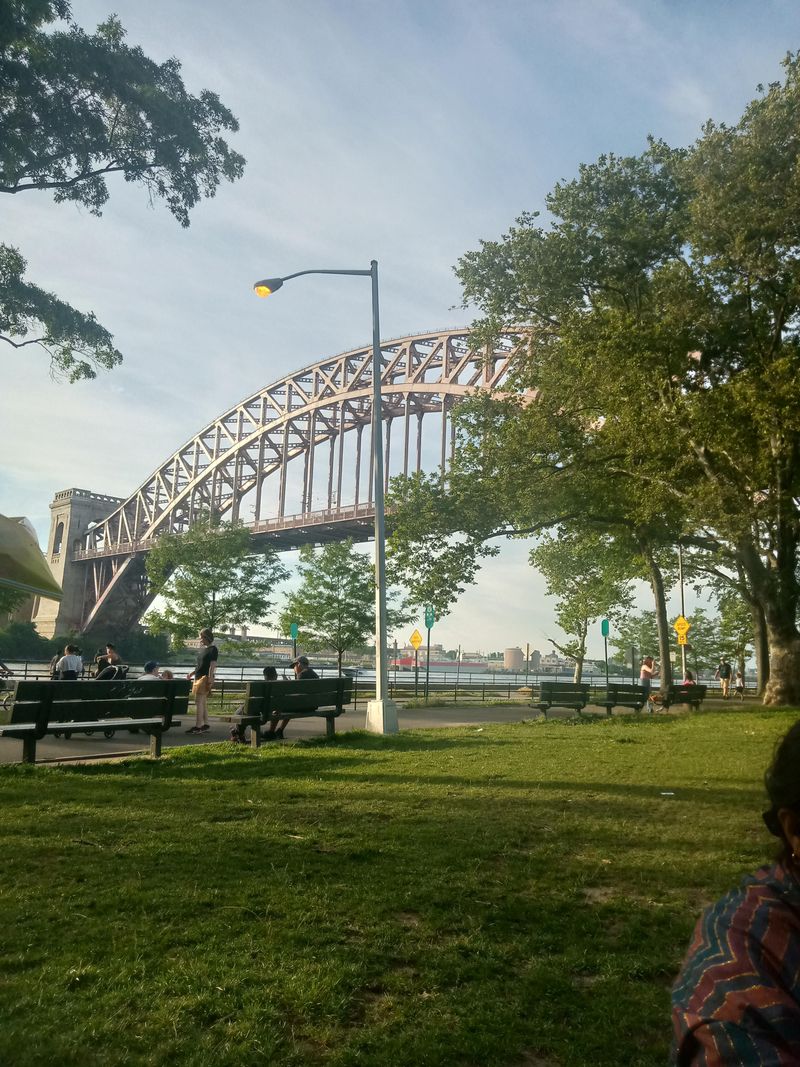
Perched on steep hills overlooking where the Columbia River meets the Pacific Ocean, Astoria feels like a secret that Pacific Northwesterners are trying to keep to themselves. Victorian homes cling to hillsides at angles that seem to defy gravity, their colorful paint jobs creating a patchwork visible from the waterfront below.
I met a couple from California who drove up for a long weekend and immediately started job hunting in the area.
The Columbia River Maritime Museum at 1792 Marine Dr, Astoria, OR 97103 tells the story of this working port city with exhibits that actually engage you rather than just displaying artifacts behind glass. Astoria’s history as the oldest American settlement west of the Rockies shows up in every corner, from the beautifully restored Liberty Theatre to the massive Astoria Column that offers 360-degree views from atop Coxcomb Hill.
You can climb 164 steps inside the column and see the entire region spread out like a topographical map.
Downtown still functions as a real working waterfront, with fishing boats unloading their catches alongside tour vessels and recreational sailors. The absence of resort-town polish makes everything feel more genuine and lived-in.
Local restaurants serve seafood that was swimming in the ocean that morning, and nobody tries to dress it up with unnecessary complications.
Rain is a fact of life here, but locals have made peace with it and learned to embrace the moody, atmospheric weather that keeps the landscape impossibly green. The marine layer creates dramatic fog effects that photographers dream about, and the changing light conditions mean the same view never looks identical twice.
Oregon’s northwest corner offers something rare in Astoria: a fully functional town that hasn’t been transformed into a tourist attraction.
4. Cannon Beach
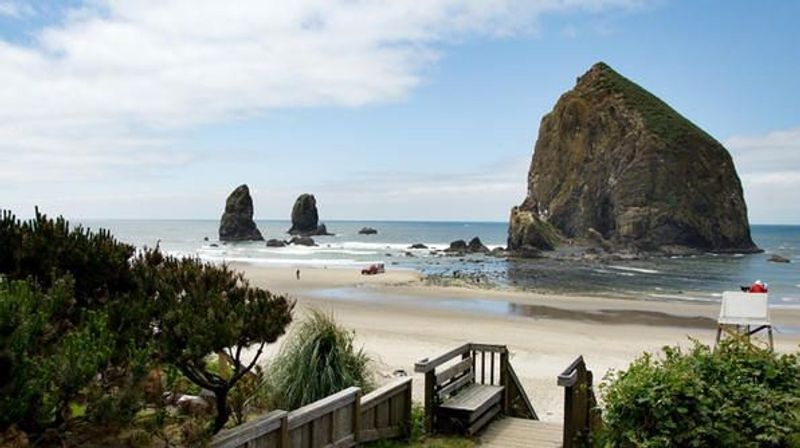
Haystack Rock rises 235 feet from the sand like a natural monument to the raw beauty of the Oregon coast. Tide pools around its base teem with starfish, anemones, and hermit crabs during low tide, creating a natural aquarium that delights kids and adults equally.
I’ve watched people plan a quick beach stop here and end up staying until sunset, then booking a hotel room because they couldn’t bring themselves to drive away in the dark.
The town itself maintains a careful balance between welcoming visitors and preserving its character, with strict building codes that prevent the kind of commercial sprawl that ruins so many coastal communities. Art galleries line Hemlock Street, showcasing work from local and regional artists who draw inspiration from the surrounding landscape.
You won’t find a single chain restaurant or big-box store, which creates a refreshingly unique dining and shopping experience.
Ecola State Park sits just north of town, offering hiking trails with some of the most photographed coastal views in America. The Tillamook Head Trail connects to a network of paths that wind through old-growth Sitka spruce forests before emerging onto clifftop viewpoints.
You can watch gray whales migrate past during spring and winter, often from trails that feel remarkably uncrowded considering the spectacular scenery.
Summer brings the Cannon Beach Sandcastle Contest, where professional and amateur teams create elaborate sculptures that last only until the next high tide. The temporary nature of the art somehow makes it more special, a reminder that not everything needs to be permanent to be meaningful.
Local accommodations range from cozy cottages to upscale inns, many offering ocean views that justify the premium prices.
Oregon’s north coast reaches perfection in Cannon Beach, where natural beauty and thoughtful development create something worth staying for.
5. Bend
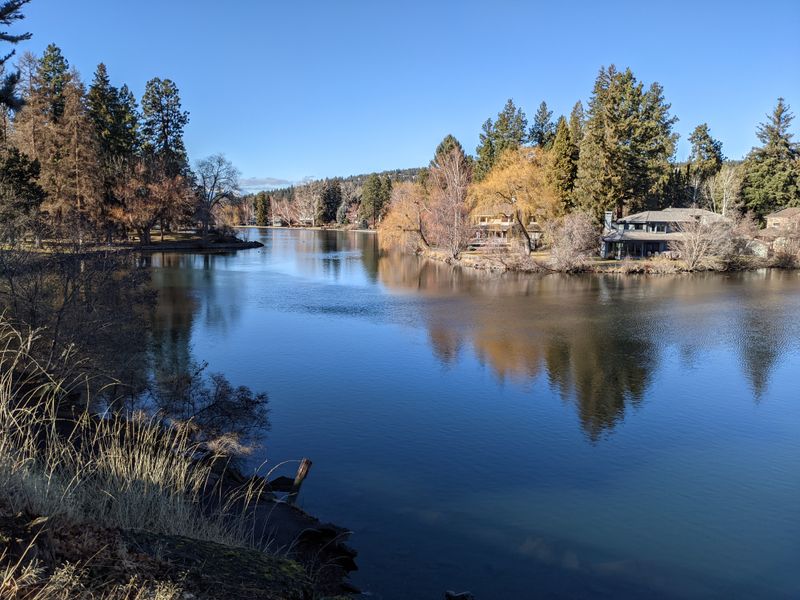
Bend transformed from a sleepy lumber town into one of America’s most desirable places to live, and you understand why within about ten minutes of arrival. The Deschutes River runs right through downtown, creating a blue-green ribbon that kayakers and paddleboarders navigate while office workers eat lunch on the banks.
I watched a family from Texas spend their entire first day just walking the river trails, completely forgetting about their planned itinerary.
Mount Bachelor looms to the west, offering some of the best skiing and snowboarding in the Pacific Northwest with a season that often extends into July. The volcanic peaks of the Cascade Range create a dramatic backdrop for literally everything you do here, from grocery shopping to morning coffee runs.
Central Oregon’s high desert climate means over 300 days of sunshine annually, a shocking statistic for anyone who assumes all of Oregon is rainy.
The craft brewery scene here is legitimately world-class, with over 30 breweries creating a culture where meeting friends for a pint is the default social activity. Deschault Brewery at 1044 NW Bond St, Bend, OR 97703 anchors the west side downtown scene, but you could spend months exploring all the options without repeating a visit.
The beer culture here isn’t pretentious or exclusive, just enthusiastic and welcoming.
Mountain biking trails crisscross the surrounding forests, ranging from gentle cruisers to technical challenges that attract riders from around the world. Phil’s Trail network alone offers over 300 miles of singletrack, all within minutes of town.
Rock climbing, hiking, fishing, skiing, and paddling are all available year-round, making Bend a paradise for anyone who defines themselves by their outdoor pursuits.
Real estate prices reflect the desirability, but people keep moving here anyway, willing to pay premium costs for the lifestyle upgrade.
6. Hood River
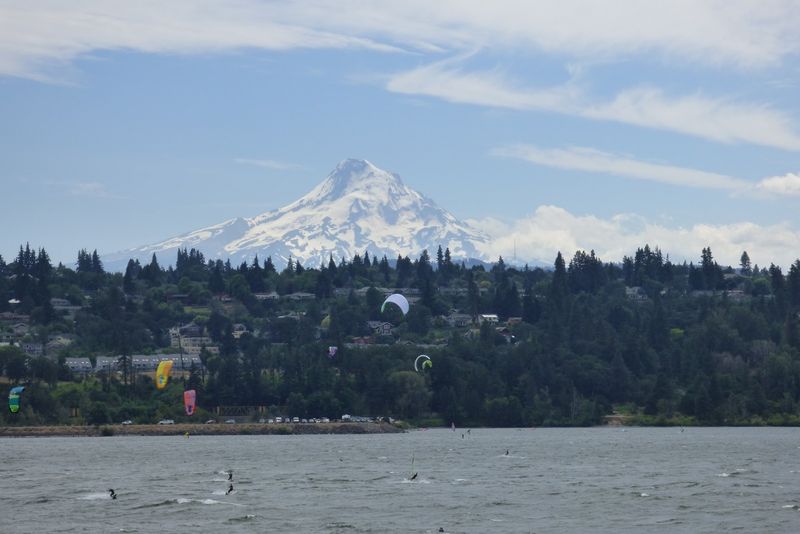
Mount Hood dominates the southern skyline while the Columbia River stretches wide to the north, creating a geographic situation that feels almost too perfect to be real. The combination of reliable winds and spectacular scenery has made Hood River the windsurfing and kiteboarding capital of North America.
I met someone who came for a weekend windsurfing lesson three years ago and now runs a gear shop on Oak Street.
Spring brings the Hood River Valley into full bloom, with thousands of acres of orchards producing apples, pears, and cherries against a backdrop of snow-capped peaks. The Fruit Loop is a 35-mile scenic drive connecting farms, wineries, and fruit stands where you can taste the difference that volcanic soil and mountain water make.
Many of the farms offer u-pick opportunities, and there’s something deeply satisfying about eating fruit you just pulled from a tree yourself.
Downtown Hood River packs impressive energy into a compact area, with restaurants, breweries, and outdoor gear shops creating a walkable core that serves both locals and visitors. The historic Columbia Gorge Hotel sits just west of town, a 1920s landmark that’s been beautifully restored and still serves its famous farm-to-table breakfast.
Waterfront parks provide easy river access, and watching the colorful sails of windsurfers and kitesurfers has become a popular spectator sport.
The Columbia River Gorge National Scenic Area offers hundreds of hiking trails, many leading to waterfalls that cascade down basalt cliffs. Oregon’s dramatic geology is on full display here, where the river carved through the Cascade Range over millions of years.
The Bridge of the Gods connects to Washington state, expanding your exploration options into an even larger wilderness playground.
Hood River’s combination of agricultural heritage and outdoor recreation culture creates a unique community identity that’s hard to replicate.
7. Baker City
Eastern Oregon doesn’t look anything like the lush green forests most people picture when they think of the state. Baker City sits in high desert country where the Elkhorn Mountains create a dramatic backdrop and the pace of life slows to something approaching reasonable.
I met a writer from Portland who came here researching a book and ended up renting an apartment above a Main Street storefront because the quiet allowed her to actually focus.
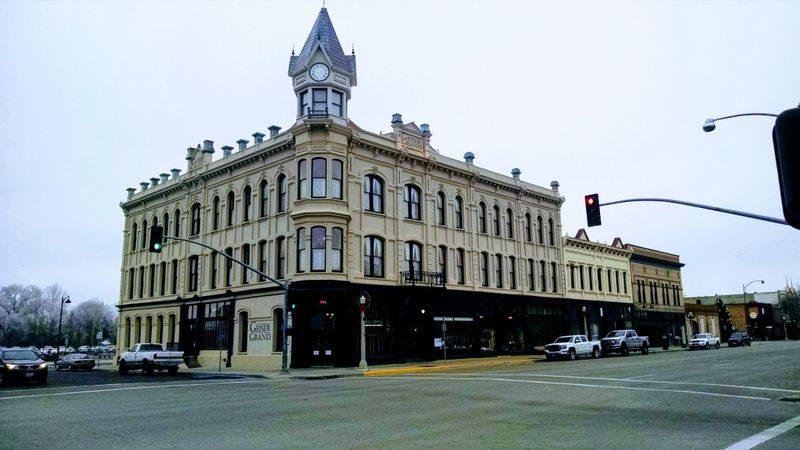
The entire downtown is a National Historic District, with over 100 buildings listed on the National Register of Historic Places. These aren’t reconstructions or facades but actual structures from the late 1800s when Baker City served as a major stop on the Oregon Trail and later thrived during the gold rush.
Walking down Main Street feels like time travel, except with good coffee and reliable wifi.
The National Historic Oregon Trail Interpretive Center sits five miles east of town, offering exhibits and living history demonstrations that bring the pioneer experience to life. The center sits atop Flagstaff Hill, providing panoramic views of the route that wagons actually traveled.
You can see the ruts worn into the landscape by thousands of wagon wheels, a tangible connection to the people who passed through here 170 years ago.
Outdoor recreation here focuses on activities that don’t require crowds or reservations. The Elkhorn Scenic Byway loops through old mining towns and mountain passes, offering spectacular fall colors and winter snow without the traffic jams of more famous routes.
Anthony Lakes Mountain Resort provides skiing and snowboarding with lift lines measured in minutes rather than hours.
Baker City represents something increasingly rare: an authentic small town that hasn’t been discovered and transformed by outside money. The population hovers around 10,000, large enough to support real amenities but small enough that you recognize faces at the grocery store.
8. Yachats
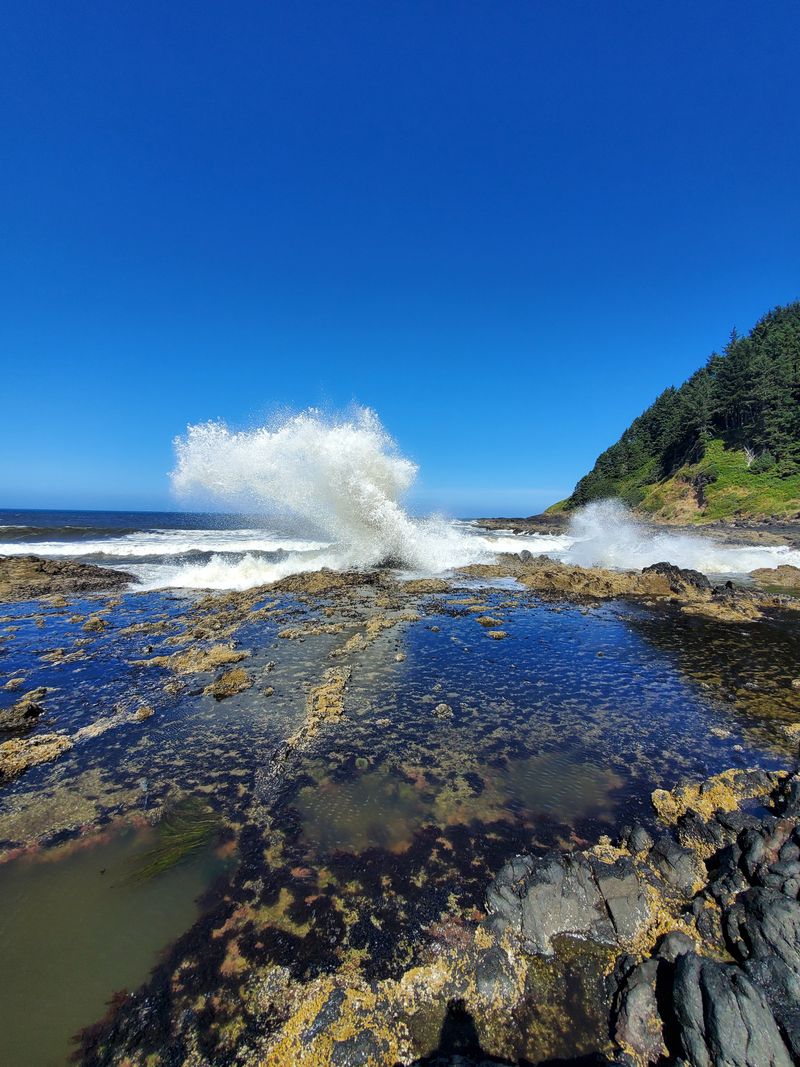
Yachats bills itself as the Gem of the Oregon Coast, and locals will tell you it’s not marketing hype but simple truth. The town spreads along Highway 101 with the Pacific Ocean on one side and coastal forests on the other, creating a setting that feels both intimate and expansive.
I watched a couple from Arizona park at the Yachats State Recreation Area and just stand there silently for ten minutes, overwhelmed by the raw beauty of waves crashing against dark basalt rocks.
Thor’s Well sits just south of town, a natural sinkhole in the rocky shore that creates dramatic displays during high tide and storms. The well appears to drain the ocean, swallowing waves and spray in a display that photographers travel thousands of miles to capture.
Cape Perpetua towers 800 feet above the ocean just beyond, offering hiking trails and a summit viewpoint that provides some of the most spectacular coastal vistas anywhere in Oregon.
The 804 Trail runs for seven miles along the coastline, connecting beaches, rocky headlands, and forest paths into a hiking experience that showcases everything special about this area. You can walk from town to tide pools teeming with marine life without ever getting in a car.
Gray whales pass close to shore during migration seasons, and locals know the best spots for watching them feed and breach.
Yachats maintains a population under 1,000, creating a genuine village atmosphere where community events feel like neighborhood gatherings. The Yachats Farmers Market operates seasonally, connecting residents with local growers and artisans in a way that supports the regional economy.
Green Salmon Coffee Company at 220 Highway 101 N, Yachats, OR 97498 serves as an unofficial town hall where locals and visitors mix over excellent coffee and pastries.
Oregon’s central coast reaches a kind of perfection in Yachats, where natural beauty and community spirit create something worth abandoning your previous life plans for.
Dear Reader: This page may contain affiliate links which may earn a commission if you click through and make a purchase. Our independent journalism is not influenced by any advertiser or commercial initiative unless it is clearly marked as sponsored content. As travel products change, please be sure to reconfirm all details and stay up to date with current events to ensure a safe and successful trip.
