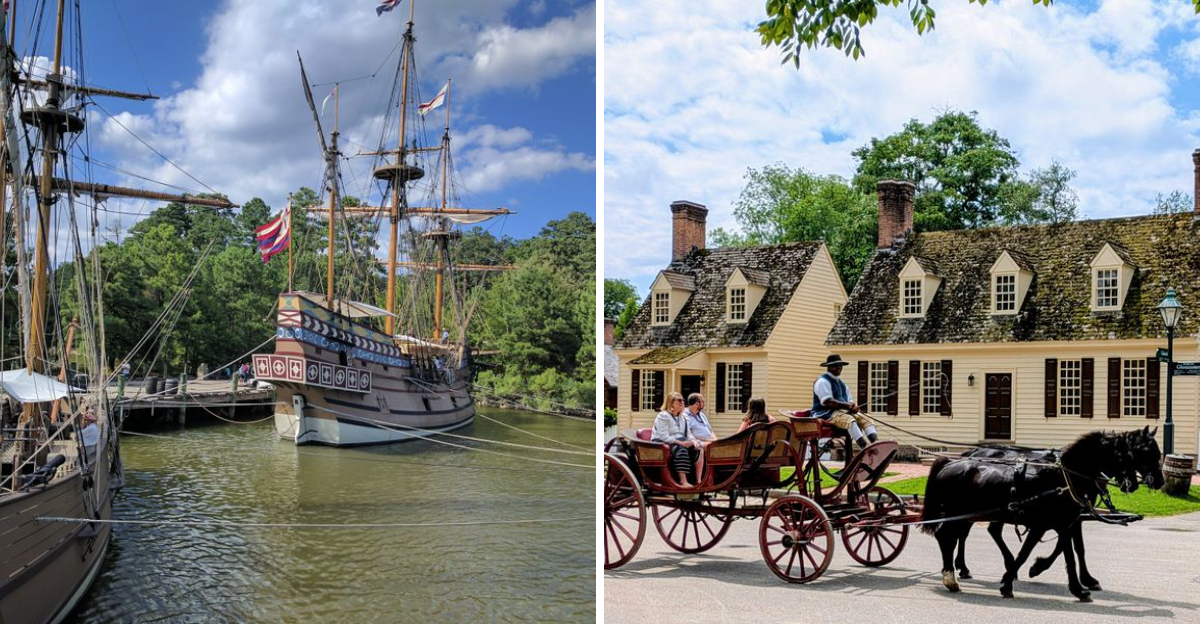
Virginia holds a special place in the heart of American history.
Long before the nation declared independence, this land witnessed the struggles, triumphs, and conflicts that would define a new world.
From the first English settlers stepping onto unfamiliar shores to the revolutionary debates that sparked a war for freedom, Virginia was at the center of it all.
Walking through these historic sites today feels like stepping back in time, where every brick and cobblestone tells a story of courage, vision, and determination.
The places scattered across this beautiful state are more than just landmarks.
They are living classrooms where the past comes alive through museums, reenactments, and preserved architecture.
Families, students, and history lovers travel from all over to experience the very spots where America’s foundation was laid.
Whether you’re exploring a colonial port town or standing on a battlefield where freedom was won, each location offers a unique window into the early days of our nation.
Get ready to discover the remarkable places that shaped the story of early America.
1. Jamestown Settlement
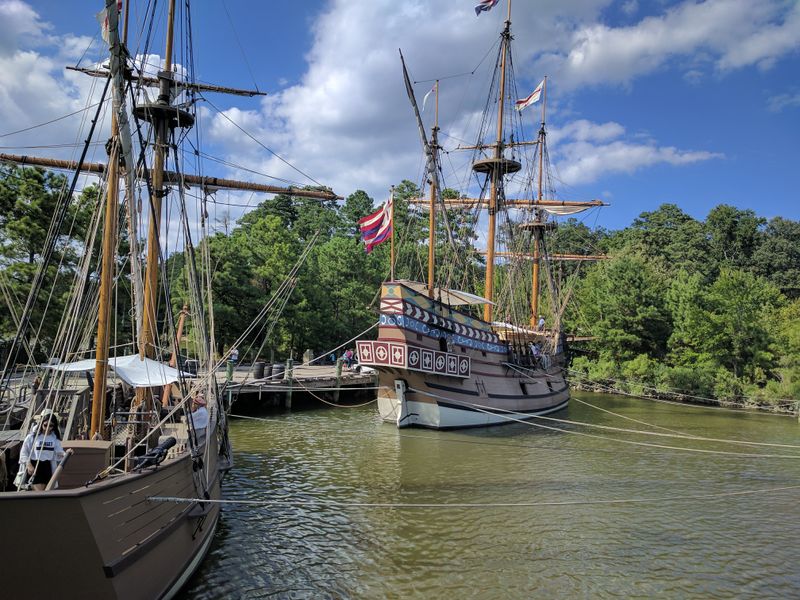
Stepping into Jamestown feels like opening the first chapter of America’s story.
This site marks where English colonists landed and built their first permanent home in the New World.
The journey was anything but easy, with harsh winters, scarce food, and tense encounters with the Powhatan people testing their survival every day.
Today, a living history museum brings that era back to life in vivid detail.
Visitors wander through a reconstructed fort, complete with thatched-roof buildings and costumed interpreters demonstrating colonial crafts and daily tasks.
You can also explore a recreated Powhatan village, gaining insight into the indigenous culture that existed long before European arrival.
Replicas of the three ships that carried the settlers across the Atlantic are docked nearby, and climbing aboard gives you a real sense of the cramped, challenging voyage they endured.
Families and school groups flock here to see history unfold before their eyes.
The exhibits are designed to be interactive, making learning feel like an adventure rather than a lecture.
From the struggles of early colonization to the complex relationships between settlers and Native Americans, Jamestown offers a comprehensive look at the beginning of English America.
Address: 2110 Jamestown Road, Williamsburg, Virginia.
Every corner of this site reminds us how fragile and determined those early days were.
2. Colonial Williamsburg
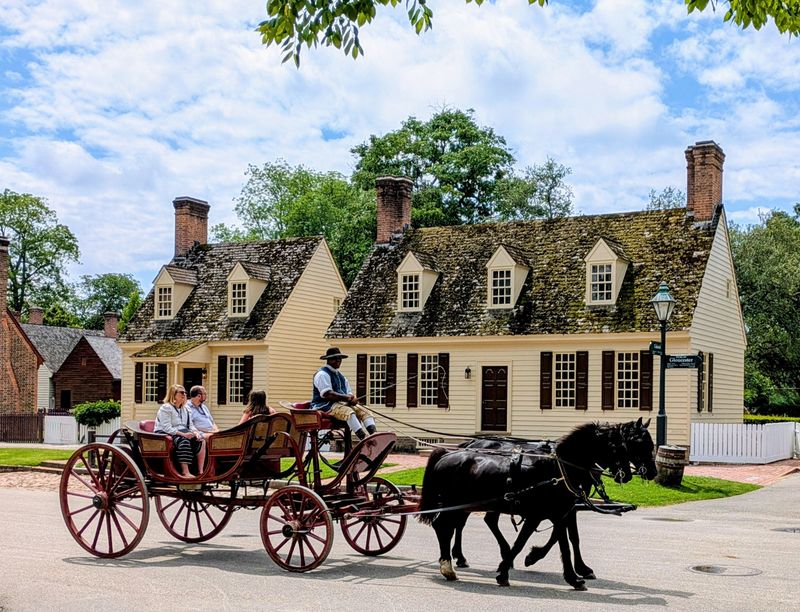
Walking down the cobblestone streets of Colonial Williamsburg transports you straight into the heart of Revolutionary Virginia.
This outdoor living history museum is the largest of its kind in the country, sprawling across an entire restored colonial town.
Costumed interpreters greet you at every turn, fully immersed in their roles as blacksmiths, wigmakers, tavern keepers, and government officials.
Authentic buildings line the streets, from the Capitol where fiery debates about independence took place to the Governor’s Palace with its grand gardens and elegant interiors.
You can watch craftsmen shape horseshoes, print newspapers on colonial presses, or bake bread in wood-fired ovens.
Reenactments of political speeches and court trials happen throughout the day, giving visitors a front-row seat to the tensions and ideals that fueled the American Revolution.
Kids love the interactive nature of the experience, asking questions and even trying their hand at colonial games and activities.
The attention to detail is extraordinary, from the language used by interpreters to the tools and clothing they wear.
Colonial Williamsburg doesn’t just show you history; it immerses you in it.
Address: 101 Visitor Center Drive, Williamsburg, Virginia.
Spending a day here is like living inside a time capsule where the spirit of revolution still echoes through every building and street.
3. Yorktown Battlefield
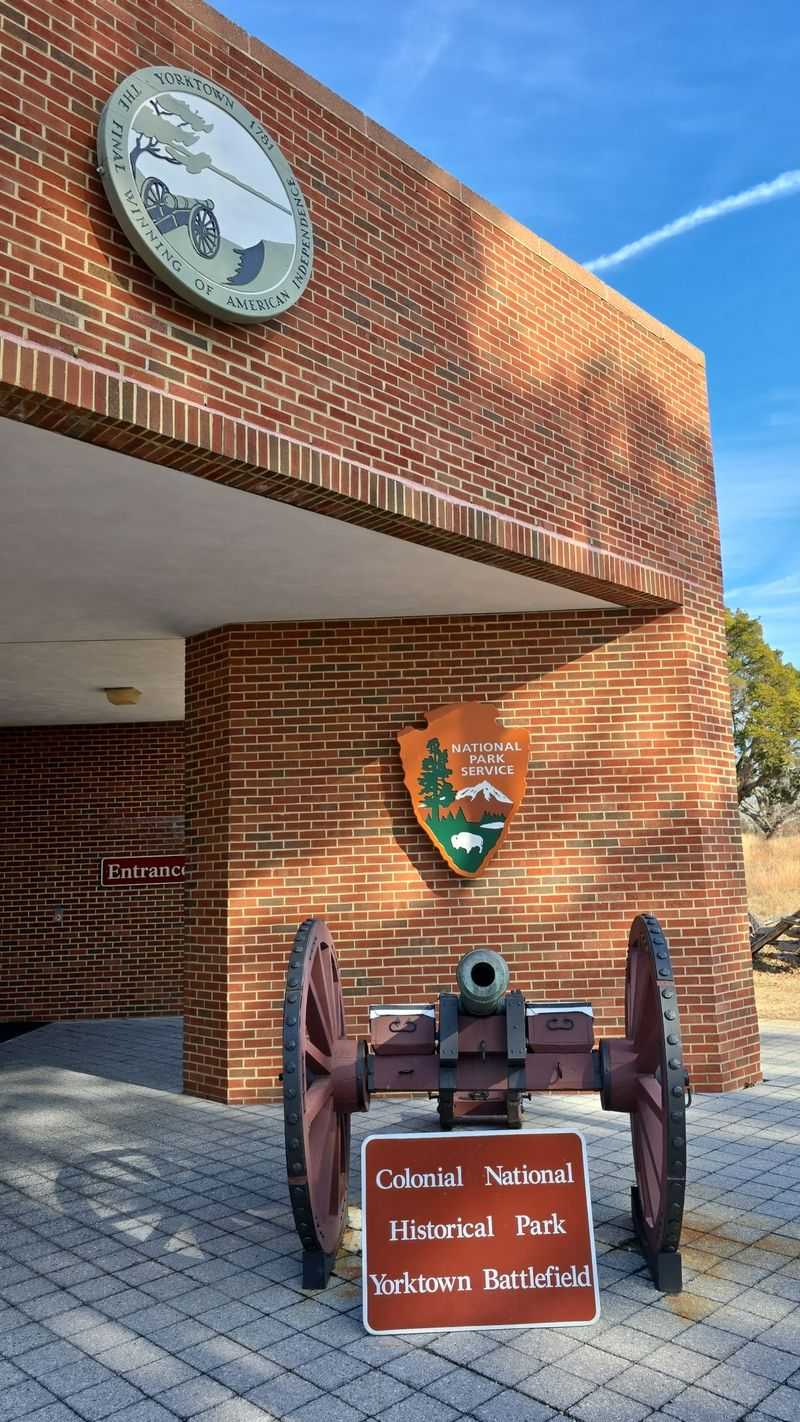
Few places in America carry the weight of victory quite like Yorktown Battlefield.
This is where the Revolutionary War reached its dramatic conclusion, with General George Washington leading American and French forces in a decisive siege against British General Cornwallis.
The surrender that followed effectively ended the war and secured American independence.
Standing on this ground today, you can almost hear the thunder of cannons and feel the tension of that historic moment.
The battlefield is remarkably well-preserved, with earthworks, redoubts, and artillery positions still visible across the landscape.
A visitor center houses fascinating exhibits, including original artifacts, maps, and detailed accounts of the siege.
Guided tours take you through the key sites where critical battles unfolded, explaining the strategies and sacrifices that led to American victory.
History buffs find this place especially captivating, as it offers a deep understanding of military tactics and the collaboration between American and French forces.
Walking the battlefield trails, you gain a profound appreciation for the courage and determination of those who fought for freedom.
Address: 1000 Colonial Parkway, Yorktown, Virginia.
Yorktown isn’t just a battlefield; it’s a monument to the birth of a nation and the power of perseverance against overwhelming odds.
4. George Washington’s Mount Vernon
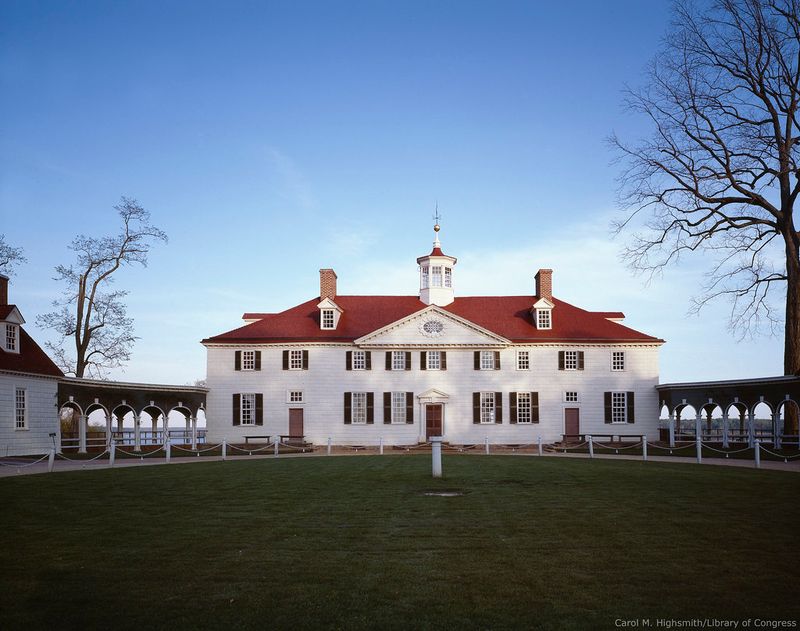
Mount Vernon offers an intimate look into the life of George Washington, the man who led America to independence and became its first president.
Perched elegantly on the banks of the Potomac River, this estate was Washington’s beloved home and working plantation.
The mansion itself is beautifully preserved, filled with original furnishings, personal items, and artwork that reflect Washington’s tastes and interests.
Touring the rooms, you get a sense of his daily life, from the study where he managed his estate to the dining room where he entertained guests.
The surrounding gardens are meticulously maintained, showcasing the same plants and design that Washington himself cultivated.
Beyond the beauty, Mount Vernon doesn’t shy away from the complex history of slavery.
Exhibits and tours discuss the lives of the enslaved people who worked the land, built the structures, and made the estate function.
This honest portrayal adds depth and nuance to the story, reminding visitors that history is rarely simple.
Locals often visit Mount Vernon to connect with the founding father’s legacy and reflect on the values and contradictions of early America.
Address: 3200 Mount Vernon Memorial Highway, Mount Vernon, Virginia.
Whether you’re drawn to the architecture, the history, or the stunning riverside views, Mount Vernon leaves a lasting impression on everyone who walks its grounds.
5. Thomas Jefferson’s Monticello
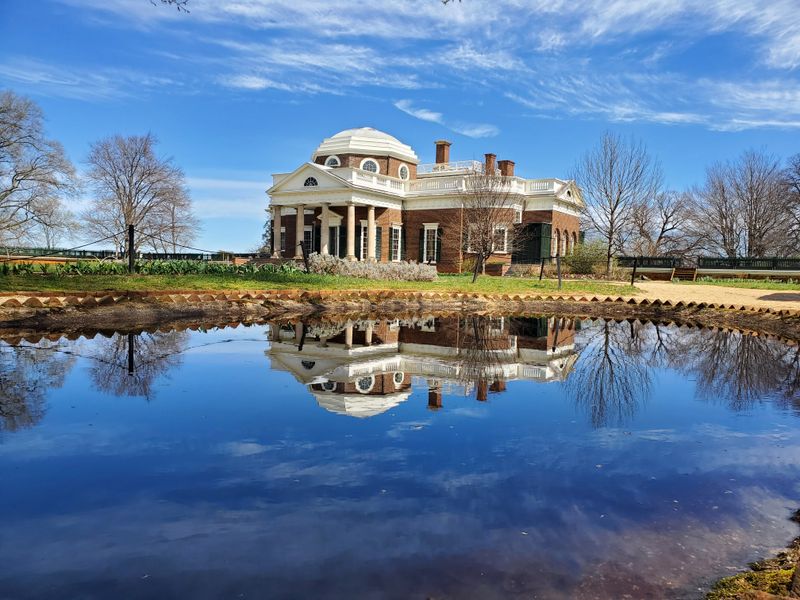
Monticello stands as a testament to Thomas Jefferson’s brilliance and the contradictions of his legacy.
Designed by Jefferson himself, this architectural masterpiece reflects his love of innovation, classical design, and intellectual curiosity.
The house is filled with clever inventions, from a rotating book stand to a hidden bed that rises into the ceiling.
Every detail reveals Jefferson’s mind at work, constantly tinkering and improving.
Walking through the rooms, you learn about his role as the principal author of the Declaration of Independence and his time as the third president.
But Monticello also tells a more complete and challenging story.
The plantation was built and maintained by enslaved people, and recent exhibits shine a light on their lives, contributions, and struggles.
Tours explore the living quarters of enslaved families, the work they performed, and the harsh realities they faced.
This honest approach helps visitors understand the full scope of Jefferson’s legacy, both his achievements and his failures.
The grounds are stunning, with sweeping views of the Virginia countryside and gardens that Jefferson designed with the same care he applied to his architecture.
Address: 931 Thomas Jefferson Parkway, Charlottesville, Virginia.
Monticello invites reflection on genius, freedom, and the deep contradictions woven into the fabric of American history.
6. St. John’s Church
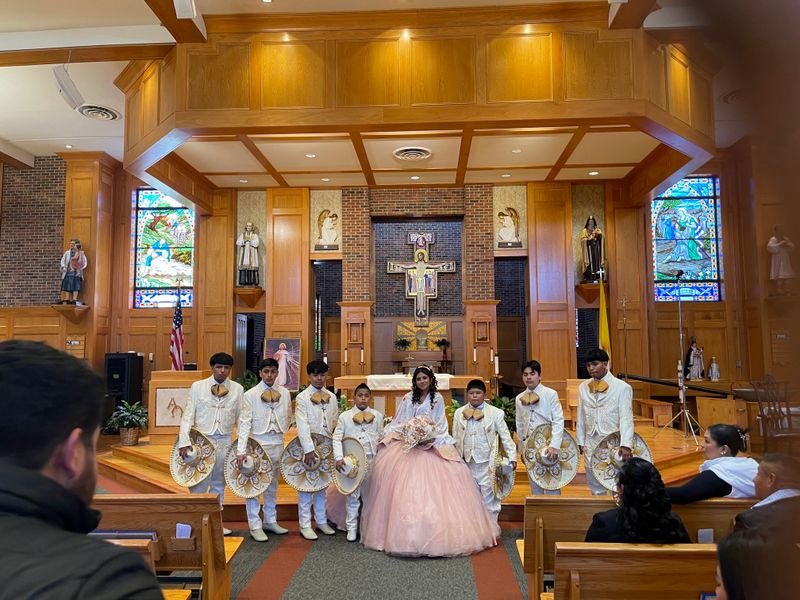
Few speeches in American history resonate as powerfully as Patrick Henry’s famous words at St. John’s Church.
Standing before the Second Virginia Convention, he delivered his electrifying call to arms with the unforgettable phrase, “Give me liberty, or give me death!”
That moment in this modest Richmond church helped ignite the flame of revolution across the colonies.
Today, the church remains a beautiful example of colonial architecture, simple yet dignified.
Visitors can sit in the very pews where delegates debated the future of America, feeling the weight of that historic decision.
Reenactments of the convention are performed regularly, bringing Patrick Henry’s passionate speech back to life with dramatic flair.
Actors in period costume recreate the debates, the tension, and the courage it took to stand against British rule.
Locals treasure this tradition, often bringing friends and family to witness the powerful performance.
The church itself is still an active place of worship, blending its historic significance with its ongoing spiritual mission.
Walking the grounds, you can imagine the urgency and determination that filled the air as colonists chose the path of resistance.
Address: 2401 East Broad Street, Richmond, Virginia.
St. John’s Church is a reminder that words have the power to change the course of history and inspire generations to fight for freedom.
7. Gunston Hall
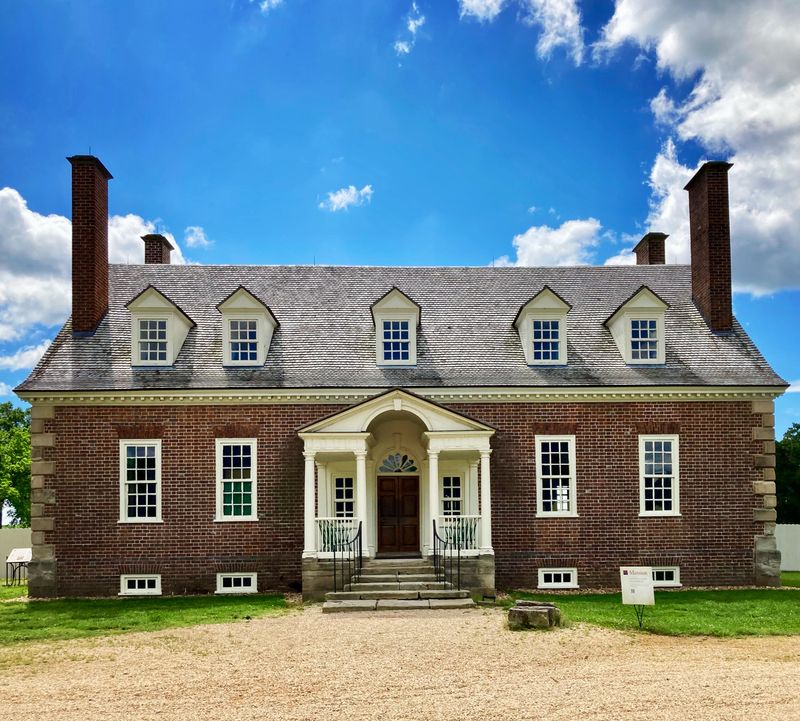
Gunston Hall may not be as famous as some other Virginia estates, but its impact on American democracy is undeniable.
This was the home of George Mason IV, the brilliant mind behind the Virginia Declaration of Rights.
His work laid the foundation for the Bill of Rights, guaranteeing the freedoms we cherish today.
The mansion itself is a stunning example of colonial architecture, with ornate woodwork and beautifully proportioned rooms.
Mason’s attention to detail is evident everywhere, from the intricate carvings to the elegant gardens that stretch toward the Potomac River.
Touring the house, you learn about Mason’s principles, his commitment to individual liberty, and his refusal to sign the Constitution because it lacked a bill of rights.
His principled stand eventually led to the amendments that protect our freedoms.
The grounds are equally impressive, featuring restored gardens, walking trails, and views of the river that offer a peaceful escape from modern life.
Educational programs and exhibits help visitors understand Mason’s contributions and the importance of protecting individual rights.
Gunston Hall is a quieter, more contemplative historic site, perfect for those who appreciate thoughtful reflection on the ideas that shaped America.
Address: 10709 Gunston Road, Mason Neck, Virginia.
Visiting this estate reminds us that the fight for freedom wasn’t just won on battlefields but also in the minds and writings of visionary thinkers.
8. Stratford Hall
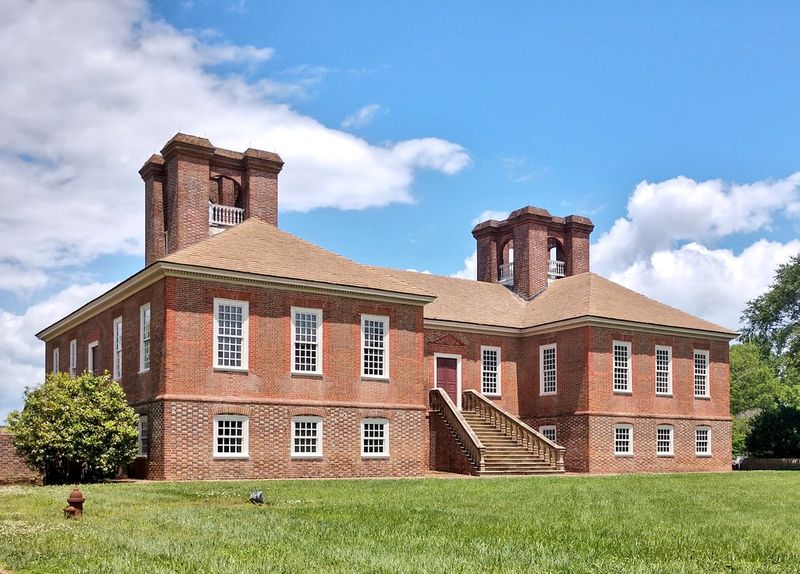
Stratford Hall holds a unique place in American history as the birthplace of Robert E. Lee and two signers of the Declaration of Independence.
The grand H-shaped Georgian Great House dominates the landscape, a symbol of the power and influence of the Lee family during the colonial era.
Walking through the mansion, you get a sense of the wealth and prestige that defined this prominent Virginia family.
The rooms are filled with period furnishings, portraits, and artifacts that tell the story of multiple generations.
Richard Henry Lee and Francis Lightfoot Lee, both signers of the Declaration, grew up here, surrounded by discussions of liberty and governance.
The estate also explores the life of Robert E. Lee, whose later role in the Civil War adds complexity to the site’s narrative.
Stratford Hall doesn’t avoid difficult conversations about slavery and the contradictions of the Lee legacy.
Exhibits and tours address the lives of enslaved people who lived and worked on the plantation, providing a fuller picture of the past.
The grounds are expansive, with beautiful views of the Potomac River and walking trails that invite exploration.
Address: 485 Great House Road, Stratford, Virginia.
Stratford Hall offers a fascinating look at a powerful family whose members shaped both the founding and the fracturing of the nation.
9. Bacon’s Castle
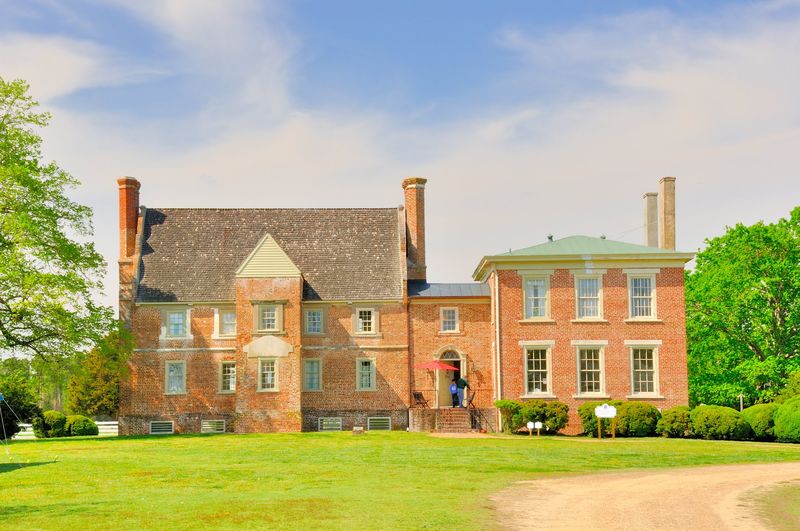
Bacon’s Castle is a true architectural treasure, standing as the oldest documented brick house in English North America.
Its unique Jacobean design, with distinctive curved gables and towering chimneys, is unlike anything else you’ll find in the United States.
The house earned its name during Bacon’s Rebellion, the first major armed uprising in the American colonies.
Rebels took over the house and used it as a stronghold during the conflict, adding a dramatic chapter to its already fascinating history.
Touring the castle, you can see original brickwork, period furnishings, and architectural details that have survived for centuries.
The site also features beautiful gardens that have been restored to reflect colonial-era planting styles.
Walking through the grounds, you get a sense of the isolation and self-sufficiency required of colonial plantations.
Bacon’s Rebellion itself was a pivotal moment, highlighting tensions between wealthy landowners and struggling settlers.
The uprising ultimately failed, but it exposed deep divisions in colonial society and foreshadowed future conflicts.
Bacon’s Castle offers a rare glimpse into the architectural and social history of early America, blending beauty with rebellion.
Address: 465 Bacon’s Castle Trail, Surry County, Virginia.
Standing before this ancient brick structure, you can’t help but marvel at its resilience and the turbulent history it has witnessed over the centuries.
10. Old Town Alexandria
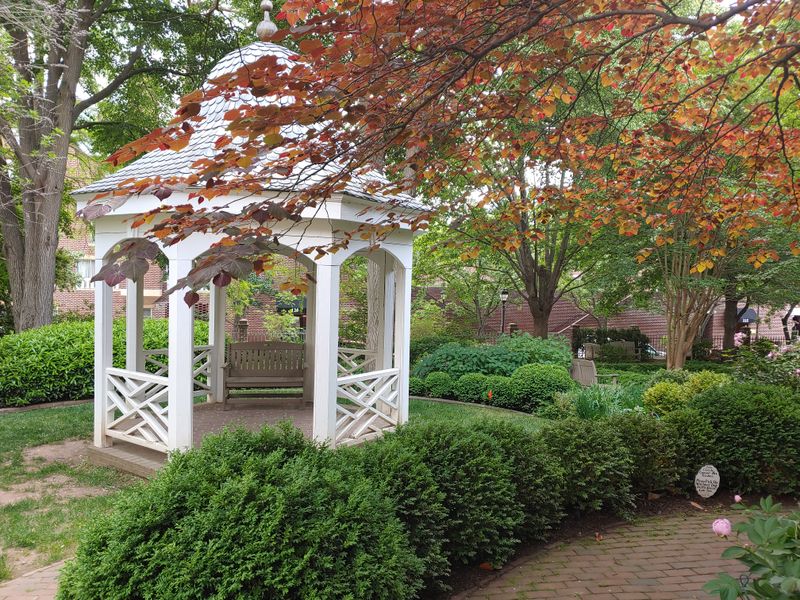
Old Town Alexandria feels like a living postcard from the past, with cobblestone streets and colonial architecture perfectly preserved.
Once a bustling colonial port, this waterfront town played a vital role in the trade and politics of early America.
Ships loaded with tobacco, grain, and goods sailed in and out, connecting Virginia to the wider world.
Today, walking through Old Town is like stepping back in time, with historic buildings housing shops, galleries, and museums.
Gadsby’s Tavern Museum is a favorite stop, where George Washington and Thomas Jefferson once dined and discussed the future of the nation.
The tavern has been carefully restored, and tours offer a glimpse into colonial dining, entertainment, and social life.
The seaport area remains charming, with views of the Potomac River and a marina filled with boats.
Historic markers and plaques throughout the town tell stories of the people, events, and businesses that shaped Alexandria’s past.
Families enjoy strolling the streets, popping into boutiques, and soaking up the atmosphere of a town that has managed to preserve its heritage while embracing modern life.
Address: King Street, Alexandria, Virginia.
Old Town Alexandria is a delightful blend of history and charm, where every corner reveals another piece of the story that helped build America.
