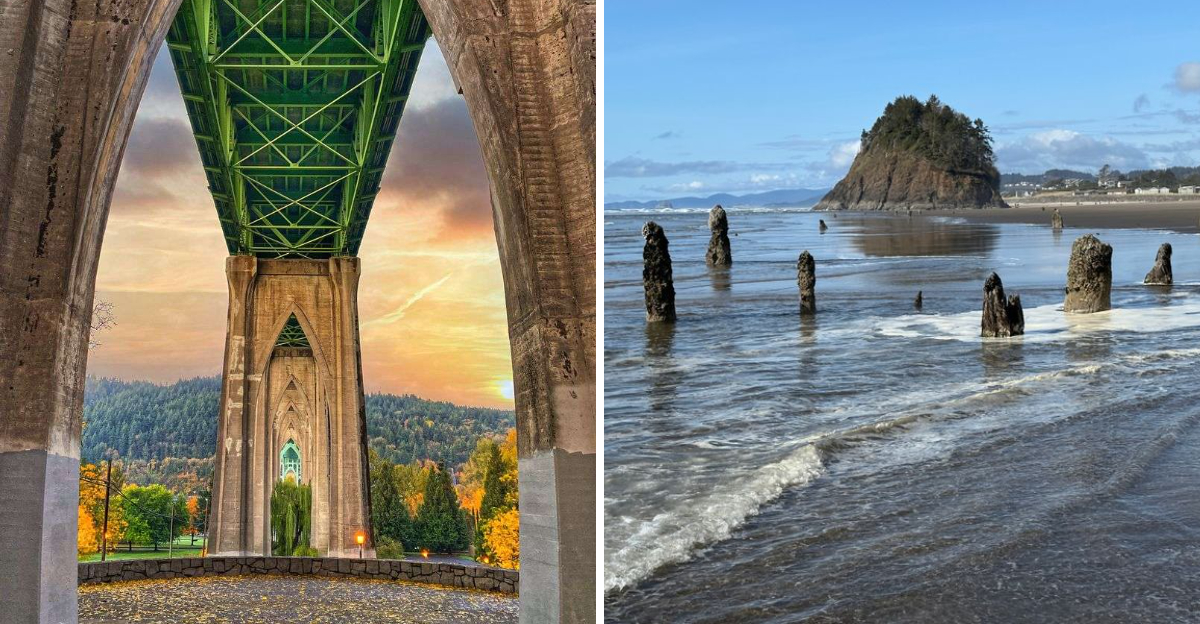
Daylight should make everything feel safe, yet Oregon has corners where sunlight only sharpens the unease.
You step into a clearing, hear a crow, and suddenly the state’s history breathes close, like a whisper just out of view.
Each site on this list unsettles for different reasons, from violent chapters to vast isolation, and that variety is exactly why they linger in the mind.
These are not haunted house gimmicks, they are real places with scars you can still feel.
Walk slowly, listen carefully, and notice how the ordinary changes tone.
A mossy wall becomes a story, a cold breeze turns into a presence, a quiet tunnel suggests footsteps behind you.
If you crave beautiful places that still raise your heartbeat, Oregon will not disappoint.
1. Witch’s Castle, Forest Park
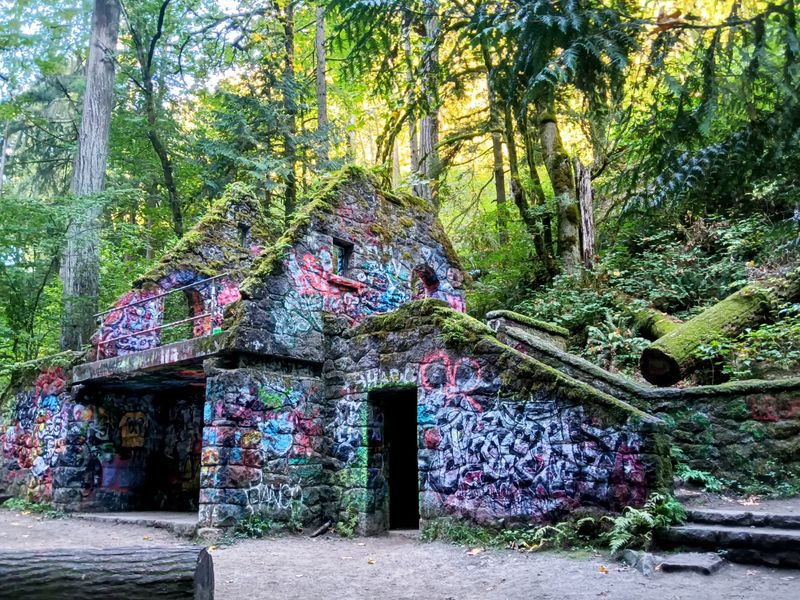
Deep inside Forest Park, the ruined stone walls of Witch’s Castle seem to hold the hillside in a strange grip, their mossy surfaces glistening even on dry days.
You can hear Balch Creek moving below the trail, a steady hush that makes every snapped twig feel louder than it should.
Sunlight filters through bigleaf maples and ferns, yet the structure stays dim, like the forest refuses to give it back.
Locals trade stories about feuds, legends, and midnight dares, but the unsettling part is how normal footsteps echo inside the roofless rooms.
It feels as if the stone keeps memory, and you are walking through a thought that is not your own.
The castle is not a castle at all, just a crumbling park shelter, which somehow makes the mood heavier because the mystery thrives on misnaming.
Forest Park is one of Oregon’s beloved escapes, yet this pocket twists the vibe into something ancient and watchful.
On bright afternoons, bright enough for cyclists to hum past and dogs to bark, the interior remains cave cool and stubbornly shadowed.
If you go, bring good shoes, since the trail can be slick with wet leaves, and let your eyes adjust before stepping inside.
The address lands you at the Upper Macleay trailhead, 2960 NW Upshur St, Portland, OR 97210, then the path curls into the green.
2. Cathedral Park, St. Johns Bridge
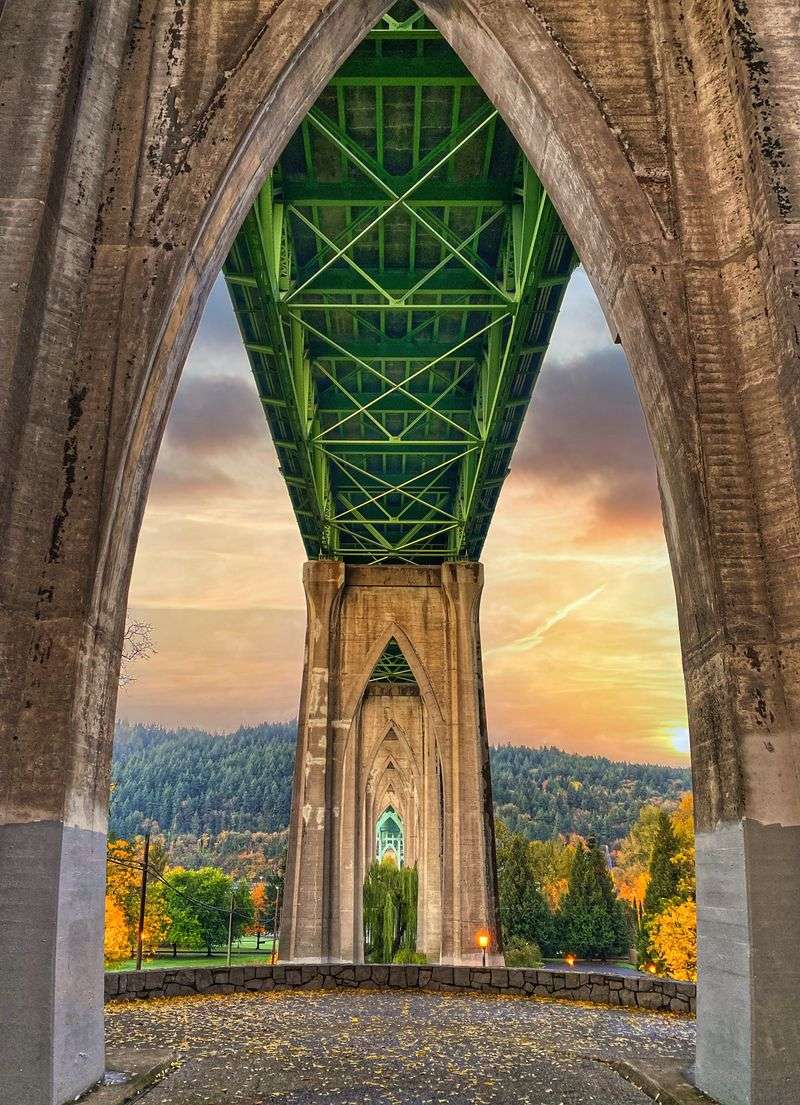
Under the St. Johns Bridge, the sweeping arches of Cathedral Park turn daylight into pale stained glass that never quite reaches the ground.
Voices bounce off concrete in a way that distorts distance, so a laugh far away sounds like someone breathing right behind you.
The park carries a grim history, and even though families gather on the lawn, the shadows between piers feel oddly private.
Wind from the Willamette slides through the columns and whistles along the railings, a song with no chorus, just long, low notes.
Photographers love the symmetry, yet the view has a severity that can chill, even with the city moving normally above.
Oregon is full of bridges, but this one makes a cathedral out of concrete, and that solemn beauty changes how you walk.
Stand beneath the central span and look up, and the vertical lines can leave you a little dizzy, as though the air narrows.
There are benches, paths, and a boat dock, but the silence under the arches is what stays with you after you leave.
If you visit, keep to open areas, let your phone light guide the steps at dusk, and listen for bikes on the path.
The park sits at 8708 N Bradford St, Portland, OR 97203, directly below the bridge’s green sweep and stone faced pylons.
3. Oregon Caves National Monument
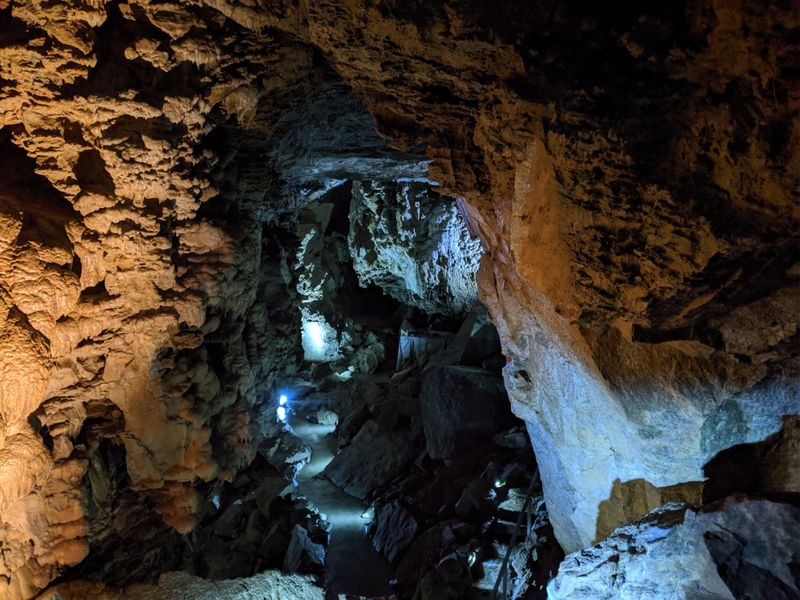
The marble passages at Oregon Caves feel old in a way that shrinks your voice, as if language itself does not belong down there.
Cool air pours from the openings and wraps around your arms, even when the sun burns bright on the Siskiyou slopes above.
Water drips somewhere you cannot see, steady and patient, and each footstep clicks against stone like a tiny announcement.
Formations curl from ceilings like frozen curtains, and the corridors squeeze and widen without warning, playing with your sense of distance.
Tour lights create small islands of sight, and beyond them the dark seems active, more like an animal than an absence.
Oregon’s surface forests feel generous, but this interior world insists on careful movement and a respectful pace.
Legends talk about spirits, and while guides keep the facts straight, the quiet hum has a presence you cannot name.
Listen closely and the cave answers in clicks and whispers, a vocabulary of stone that does not translate.
Wear sturdy shoes, watch your head in low bends, and avoid touching formations so the cave keeps growing.
The visitor center and cave entrance are at 19000 Caves Hwy, Cave Junction, OR 97523, tucked in a steep sided valley.
4. Antelope and Rajneeshpuram Remnants
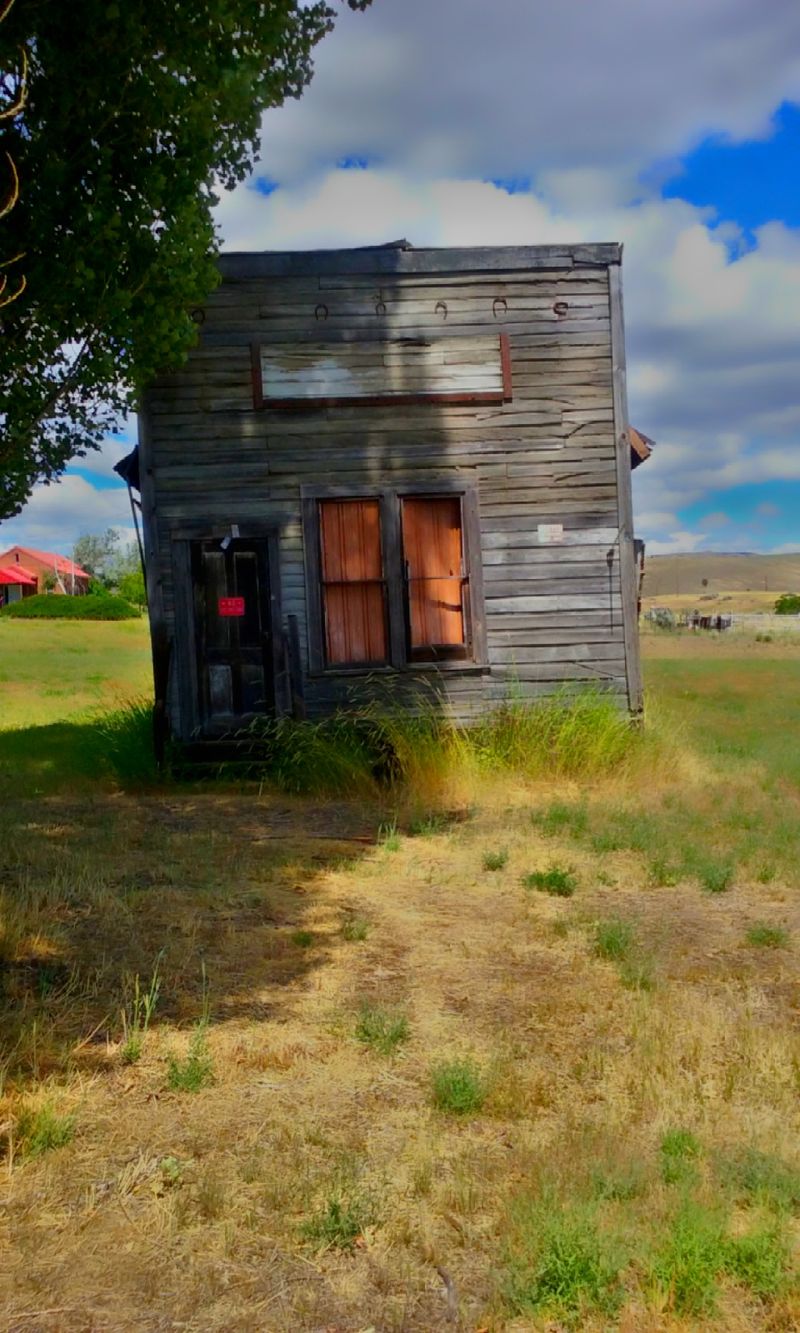
Driving into Antelope, the landscape opens wide, then the wind presses on the grass and you feel that long memory the desert holds.
Fragments of the Rajneesh era linger in the region as stories, signs, and reworked spaces, and the emptiness turns those traces louder.
Sunlight reveals everything, yet it feels like something is being kept from you, because distance here is its own kind of veil.
The hills glow in dry gold, fences click in the breeze, and a lone crow might cross the road like a slow moving thought.
Oregon’s interior can feel endless, and that vastness unsettles, particularly where people once tried to shape a new order.
Locals today carry on with normal life, but the aura does not fully clear, it settles like dust in the air.
Stand on Main Street for a minute and the quiet grows, even with a car passing, as if sound does not want to linger.
Respect private property, read posted signs, and remember that memory here remains sensitive and very human.
Photograph buildings from public vantage points, keep conversations gentle, and let the landscape do most of the talking.
The town center sits along 1st St and Main St, Antelope, OR 97001, in Wasco County’s open country.
5. Battery Russell, Fort Stevens
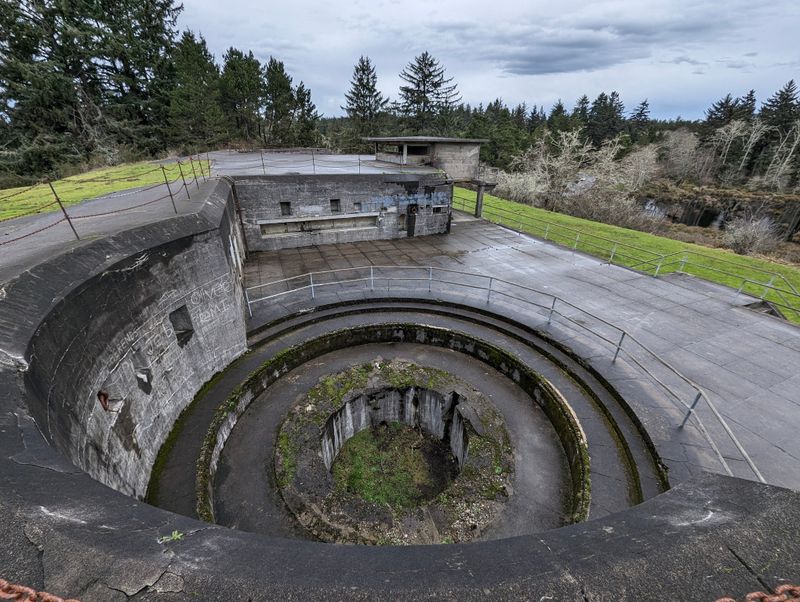
Battery Russell crouches among shore pine at Fort Stevens, a concrete bunker that seems to drink the light and return it colder.
Steps descend into narrow rooms where voices flatten, and your footsteps ring with a metallic edge that stays in the ear.
The ceilings sweat with moisture, and the rusted doors feel like they remember closing, hard and final.
Out beyond the trees, the Pacific breathes, and that constant push and pull gives the bunker a rhythm it never asked for.
Stories talk about a patrolling soldier seen on quiet afternoons, and even skeptics admit the corridors invite that kind of thinking.
Oregon’s coast can feel playful on the sand, but here it turns stern, practical, and watchful.
Stand at the gun emplacements and the horizon looks closer than it is, as if something large is about to appear.
Graffiti shares space with lichens, which creates an uneasy dialogue between human marks and slow living rock.
Carry a flashlight, step carefully on slick stairs, and mind open shafts that may be hidden by dim corners.
The site is within Fort Stevens State Park at Peter Iredale Rd and Battery Russell Rd, Hammond, OR 97121.
6. Cornucopia and Other Ghost Towns
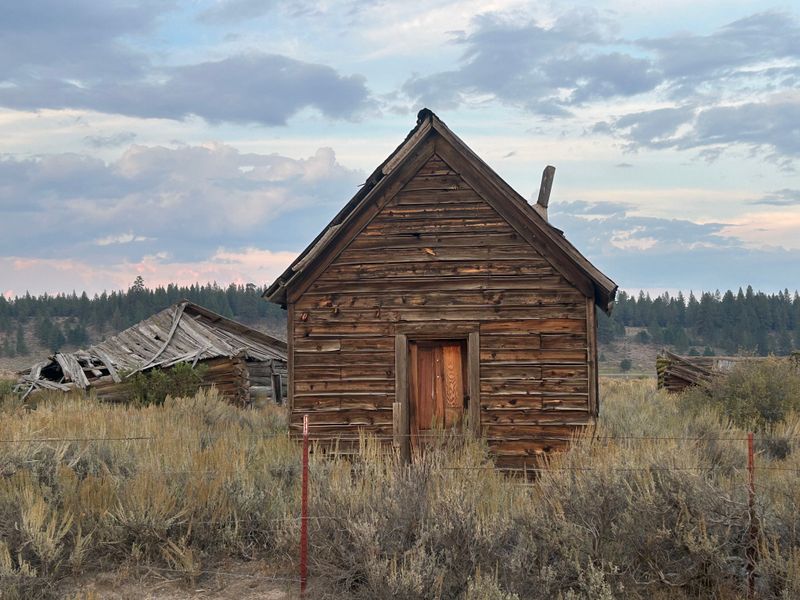
High in the Wallowas, the ghost town of Cornucopia sits against steep mountains, its wooden buildings leaning like tired actors after the show.
Windows stare back empty, and the wind moves through board gaps with a hushed tone that suggests someone listening.
Gravel crunches underfoot, each step a reminder that the town no longer belongs to daily life.
Other Oregon ghost towns, from Shaniko to Hardman, share that hollowed out feeling, though each carries its own texture and light.
Sunlight here does not warm the streets, it exposes their vacancy, and the silence can feel physical.
Old signs still hang, and you read them the way you read a faded letter, squinting for missing pieces.
Mountain air arrives clean and cold, sharpening the edges of every board and nail as if preserving a museum without walls.
Respect closures and private holdings, because many structures are fragile and dangerous to enter.
Photograph from the road, step gently, and listen for creaks that sound like speech until you realize it is the wind.
Cornucopia can be approached near Cornucopia Rd, Halfway, OR 97834, along rugged tracks in the Wallowa country.
7. Crater Lake Rim and Wizard Island Views
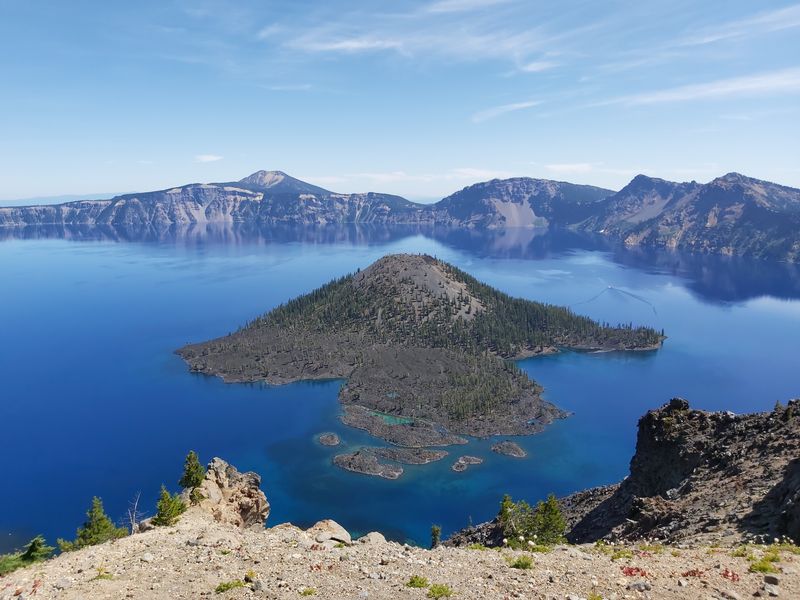
Crater Lake looks impossibly calm, a saturated blue set inside volcanic stone, and that stillness can feel heavy, not peaceful.
Stand at a rim pullout and the drop takes your stomach before your eyes catch up, which changes how you breathe.
Cloud shadows pass across the water like slow animals and then vanish, leaving the surface blank again.
Wizard Island rises with a strange symmetry, and the surrounding cliffs make sound behave oddly, so voices seem closer than they are.
Oregon prides itself on big landscapes, but this one carries a hush that feels less like quiet and more like judgment.
Rim paths look straightforward, yet loose pumice can slide underfoot with a dry whisper that startles the nerves.
The view is clean and total, and that completeness can unsettle because there is nowhere else for attention to rest.
On windy days, the water darkens, and the bowl turns austere, as if it prefers you to keep a respectful distance.
Stay behind barriers, tread carefully near edges, and give yourself time to reorient after long stares into the blue.
The main rim village area sits at 1 Rim Dr, Crater Lake, OR 97604, within Crater Lake National Park.
8. Portland Shanghai Tunnels
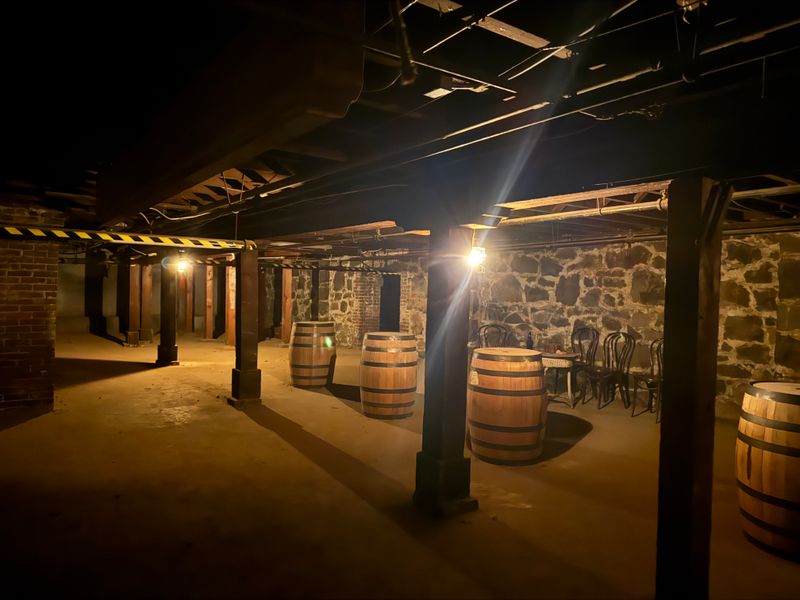
Under downtown Portland, bricks line narrow tunnels that carry a smell of damp earth and dust, the kind that sticks to your clothes.
Light bulbs hum on wires like tired stars, and the spaces between rooms feel longer than they measure.
Stories about kidnappings and hidden pathways draw visitors, but the real chill comes from how workmanlike the rooms appear.
Nothing is theatrical down here, which makes it worse, because the plainness suggests use and routine.
Footsteps carry down long corridors and return as soft taps that sound almost polite.
Oregon history keeps complicated layers, and this underground slice shows how a city can fold in on itself.
You may notice old trap doors and bricked over thresholds that hint at routes now sealed, like lines erased on a map.
Guides share context, and the details settle slowly, as if memory prefers the dim.
Bring a sweater, watch low beams, and stay with the group so corners do not swallow your sense of direction.
Tour meeting points cluster near 120 NW 3rd Ave, Portland, OR 97209, within Old Town’s grid of brick and light.
9. Geiser Grand Hotel, Baker City
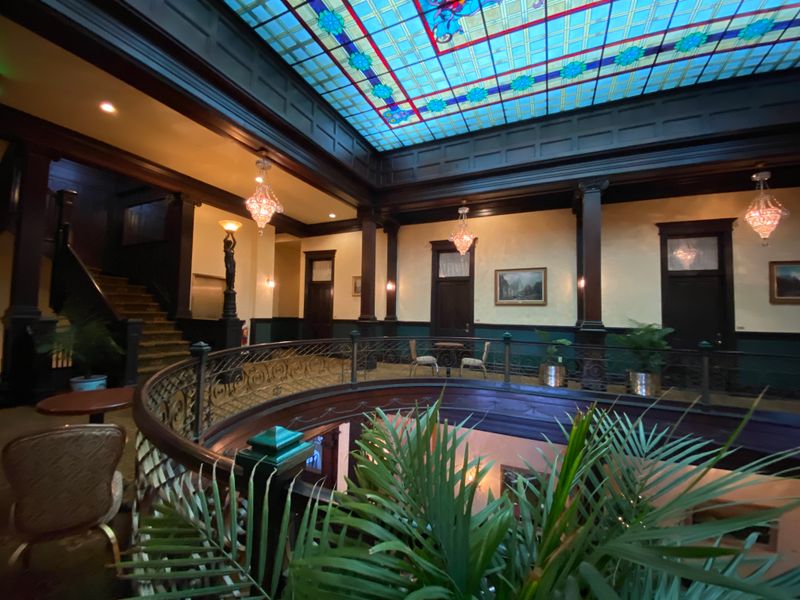
Inside the Geiser Grand Hotel, light pools in the atrium and climbs the balustrades, yet hallways still hold a hush that feels deliberate.
Floorboards settle with tiny pops that sound like someone stepping just out of sight.
Victorian details shine, but the elegance does not erase the building’s long memory, it underlines it.
Mirrors brighten corners and then oddly deepen them, a trick of angles that makes you look twice.
Staff keep the place welcoming, and still the quiet between doors has a private weight.
Oregon travelers love old hotels, and this one delivers that charged stillness people look for and then pretend not to feel.
Stand on the staircase and the chandelier gleam reflects in a way that suggests movement where there is none.
You might hear a whisper of the street outside, then nothing, like the building closed a throat.
Be polite in shared spaces, move slowly on polished floors, and let the mood be what it is.
The hotel stands at 1996 Main St, Baker City, OR 97814, right on the historic downtown corridor.
Morning light through the skylight creates patterns that shift across walls and banisters as hours pass.
Sit quietly in the lobby and you can trace decades of arrivals, farewells, and hushed conversations.
Each doorway, trim, and tile seems chosen to hold memory without overwhelming the senses.
The scent of polished wood and aged carpet carries a subtle welcome that anchors the day.
Even a brief pause here leaves a sense that history moves slowly, like shadows stretching across the atrium.
10. Remote Reaches of the Oregon Coast
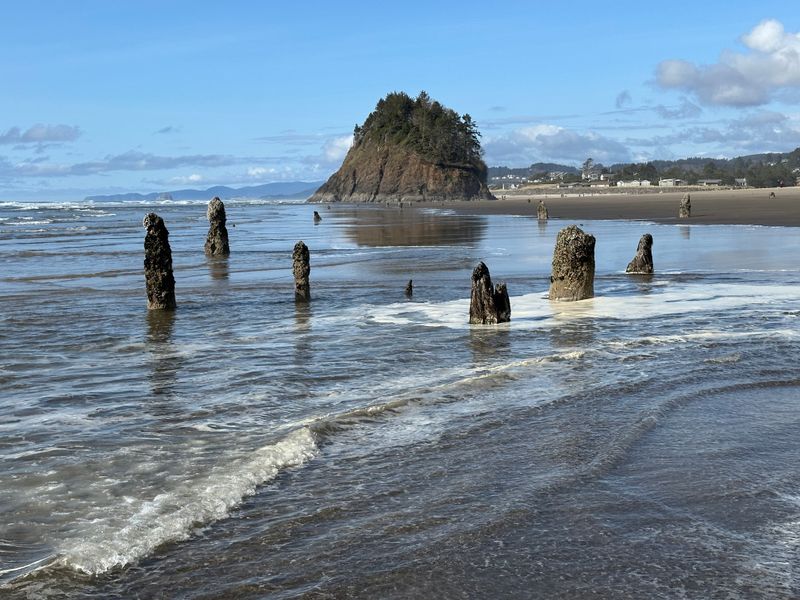
Walk a foggy stretch near Cannon Beach and the surf pounds cliffs that rise like walls, their faces glistening with mist.
Gulls turn white and gray in the moving haze, and their cries sound farther away than the sky suggests.
Logs lie stranded like bones, and every cave mouth looks like a breath held too long.
Sand darkens under thin water sheets, which slide back and leave mirror stripes that make distance tricky to read.
Oregon’s shoreline feels wild, and the sight of wreckage posts or collapsed stairs adds a stern note to the beauty.
Headlands cast long shadows even midday, and that cool shade can turn the beach into a corridor.
Rocks stack offshore, and the spaces between them look like doors that close as soon as you blink.
Keep a wide berth from sneaker waves, watch tides, and stay off unstable bluffs where soil breaks without warning.
Choose viewpoints with clear access, step carefully on wet stone, and treat fog like weather, not decoration.
The mist softens every contour, turning cliffs and stacks into shapes that feel both massive and intimate.
Each step along the shoreline asks attention, rewarding patience with fleeting reflections and subtle color shifts.
Leave only footprints, because the beach’s rhythm rewrites itself with every incoming tide.
For bearings, start at Ecola State Park, 84318 Ecola Park Rd, Cannon Beach, OR 97110, then work the edges.
Dear Reader: This page may contain affiliate links which may earn a commission if you click through and make a purchase. Our independent journalism is not influenced by any advertiser or commercial initiative unless it is clearly marked as sponsored content. As travel products change, please be sure to reconfirm all details and stay up to date with current events to ensure a safe and successful trip.
