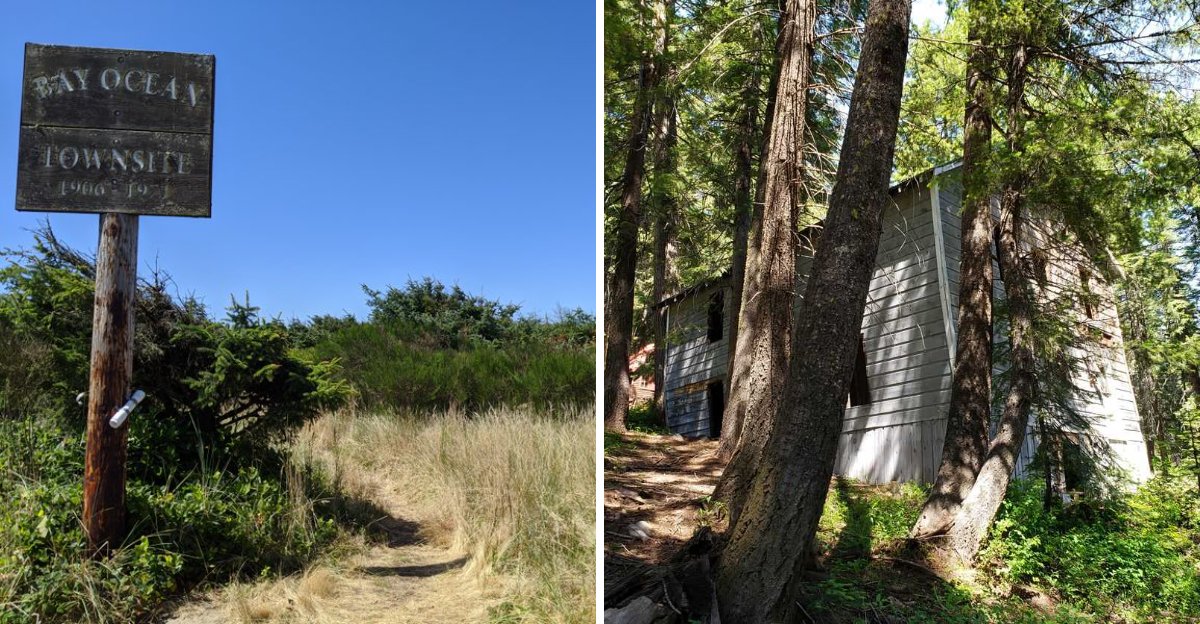
You came for spooky legends, but Oregon’s quiet castoffs tell a more grounded story of shifting tracks, tired industries, and landscapes that refused to bend.
These places did not vanish into rumor, they simply became inconvenient, unprofitable, or unsafe.
As the state evolved, rails moved, coastlines rearranged, and resources dwindled, leaving behind structures that could not keep up.
Walk these sites and you feel decisions, not ghosts.
1. Shaniko, The Ghost of a Wool Empire
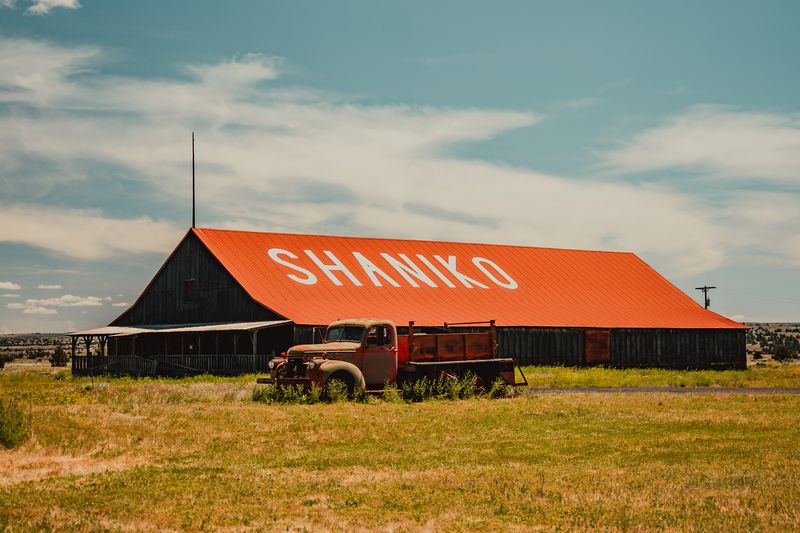
Shaniko rests on wide open sagebrush country, where quiet streets hint at a time when wool shipments ruled the high desert.
The town grew around rail connections that no longer made economic sense once routes shifted to faster corridors.
When trains bypassed this hub, shipping costs rose, businesses left, and daily life thinned until silence settled in.
Today you can stand by the historic hotel and hear wind move through false fronts, a reminder that logistics decide winners.
The buildings remain because dismantling them never paid, and nostalgia became the last surviving industry.
Visitors find a tidy grid, a water tower, and weathered boards that photograph beautifully in Oregon’s dry light.
There is no grand mystery, only a cautionary tale about infrastructure and the fragility of single industry towns.
Travelers should respect private property and fragile structures, because history breaks easily when leaned on.
The lesson feels modern, markets redirect quickly, and what is central today can sit at the edge tomorrow.
Oregon’s interior carries many such pauses, yet Shaniko’s scale makes the pause feel like a held breath.
Small interpretive signs help with context, though the story lands best as you trace the old depot line.
Plan a cool day, bring water, and let sunlight write long shadows where freight once brought noise and purpose.
2. Bayocean, A Resort Claimed by the Sea
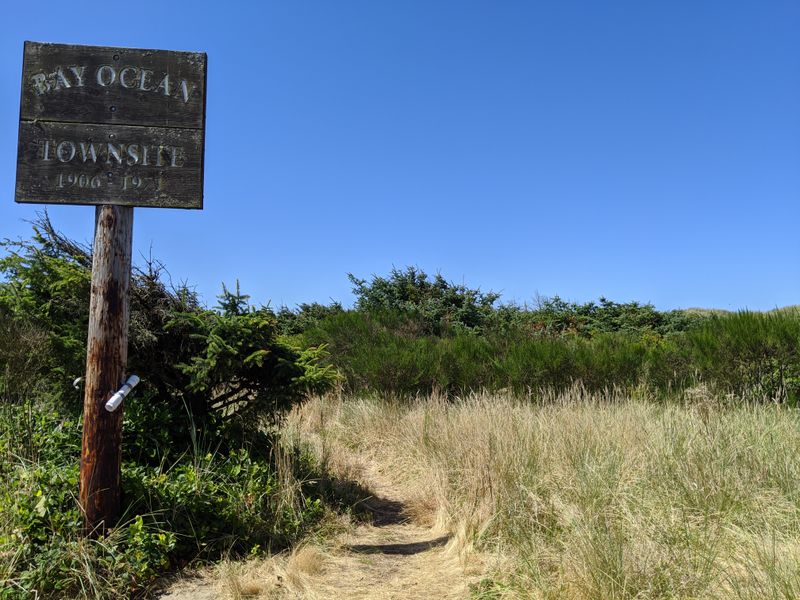
Bayocean lived on a narrow spit where optimism outpaced the physics of wind, waves, and sand.
Developers sold a beach dream that could not survive repeated storms and relentless erosion along the Oregon Coast.
Buildings shifted, utilities failed, and the shoreline kept migrating until the town’s footprint washed into the Pacific.
What remains today are traces, subtle mounds and fragments that tell a measured story about coastal engineering limits.
Walkers follow quiet trails with views of Tillamook Bay to one side and the open ocean to the other.
The emptiness feels intentional, as if the landscape asked for its room back and finally got it.
Practical abandonment came when maintenance costs outpaced tax bases and safe access could not be guaranteed.
Shoreline work later reshaped the area, stabilizing parts of the spit while leaving the town’s memory offshore.
It is a gentle hike with interpretive signs, dunes, and weathered posts that suggest where streets once ran.
Oregon teaches humility here, because even ambitious blueprints bow to tides that never miss an appointment.
Bring layers, coastal wind changes quickly, and stay on signed paths to protect vegetation and nesting habitats.
The absence of buildings is the point, the lesson is simple, design with the sea, or the sea decides.
3. Cornucopia, Gold Country Gone Quiet
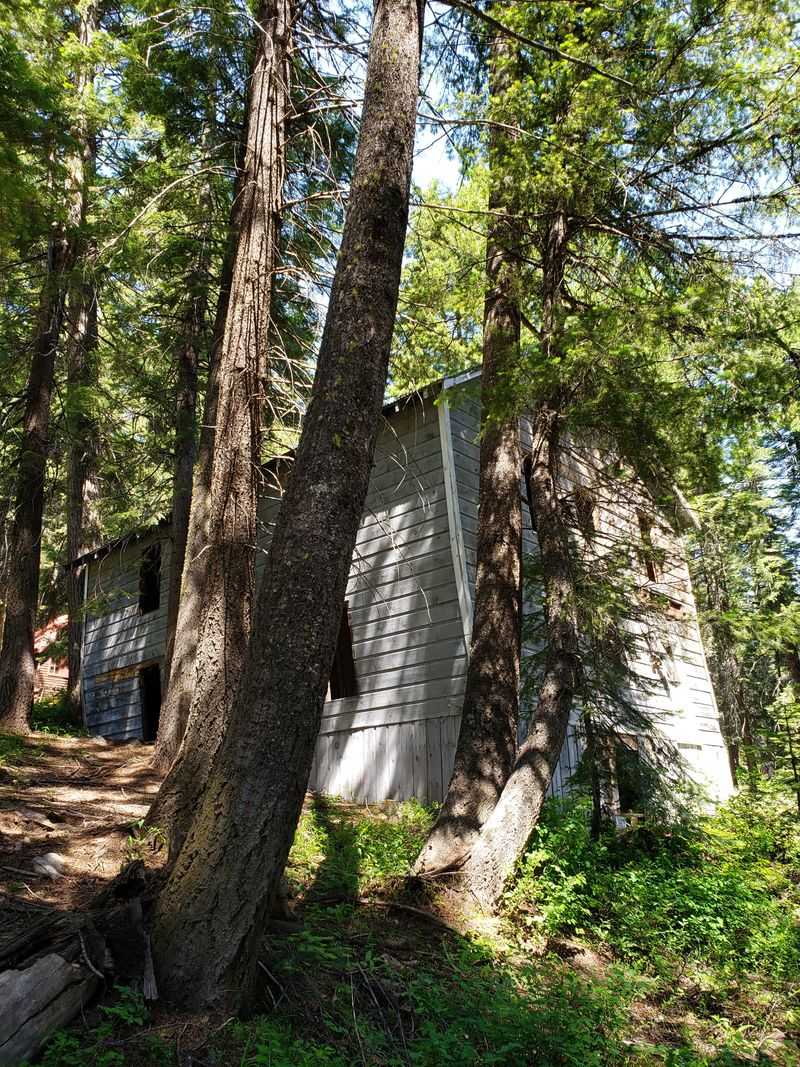
Cornucopia rests high in the Wallowas, where mine headframes once pierced treelines and wagons rattled through dust.
Ore veins thinned, operating costs climbed, and the arithmetic of deep tunnels stopped working for investors and crews.
When the numbers broke, payrolls stopped, and families moved to steadier ground across Oregon and beyond.
Cabins and mill sites cling to a narrow valley that echoes with water and the memory of compressors.
What looks romantic now was once loud, dangerous, and completely practical in its rise and fall.
Snow closes access seasonally, which also preserved some structures by limiting casual traffic and hard wear.
You will see remnants of tram towers, footings, and timber walls silvered by mountain weather.
Safety matters, mine openings and unstable debris make wandering off trail a poor choice even for experts.
Local caretakers and historians have documented claims, camps, and routes that stitched the district together.
The setting is striking, steep slopes catch late light, and the valley narrows like a funnel.
Abandonment here meant accepting geology’s verdict when grade dropped and hauling costs kept climbing.
The story is not tragic, it is the lifecycle of extraction written across crisp eastern Oregon air.
4. Friend, The Last Stop That Lost Its Train
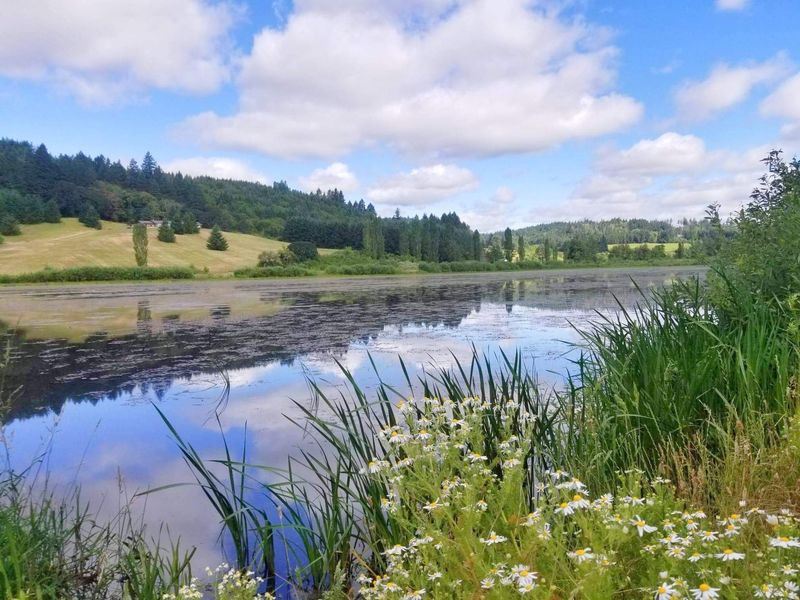
Friend sits at the far end of an old branch line where timetables once dictated every chore.
When rail service shrank, freight shifted to trucks, and the schedule that sustained shops and jobs evaporated.
The depot closed, the section houses emptied, and platforms faded into fields of grass and grain.
Today the town feels like a punctuation mark at the end of a paragraph about changing transport.
Elevators, sheds, and scattered homes mark a place that did not fail, it was simply rerouted.
Standing by the road, you can trace the rail bed like a scar stitched through wheat.
Ghosts do not haunt pole lines, economics does, and the map redraws winners whenever roads improve.
Visitors come for photographs, crisp horizons, and a sense of stillness that feels almost curated.
Respect gates and posted signs, as many structures remain on private land with active use nearby.
Oregon’s interior tells this story repeatedly, downstream towns drift when upstream decisions change freight paths.
Morning and evening light pull textures from peeling paint and corrugated metal roofs.
Leave nothing behind except tire tracks on gravel and a promise to remember why the train stopped.
5. Kelly Butte Civil Defense Center, Portland’s Quiet Bunker
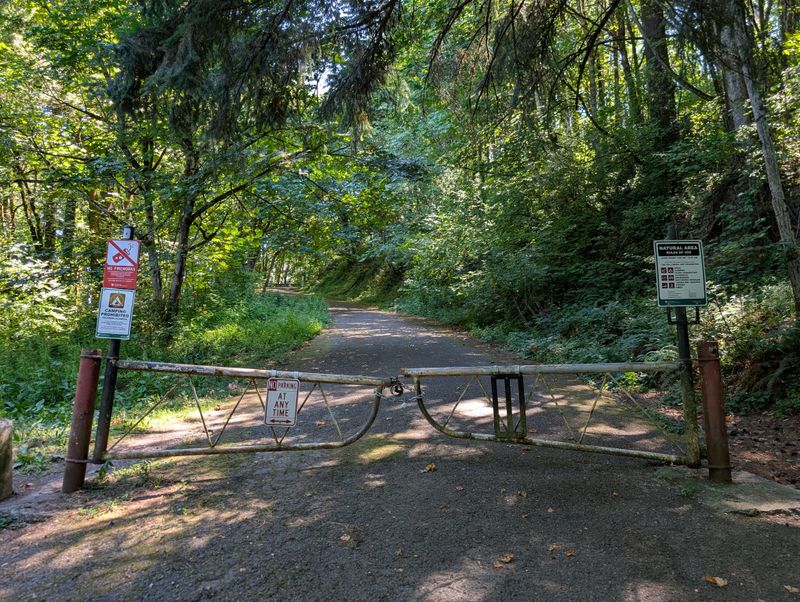
Kelly Butte hides a mid century bunker inside a green Portland hillside where fir trees muffle traffic.
The facility once held emergency operations, built for a world that managed risk with maps, radios, and shelters.
As strategy modernized, the underground rooms became redundant, costly to maintain, and awkward for contemporary needs.
The city eventually decommissioned the site, moving functions to flexible spaces above ground.
Today you will find a secured entrance, utility infrastructure, and trail access framing a chapter of urban planning.
Public safety shaped the changes, old walls did not support new technology or staffing models.
The story is practical, budgets, codes, and the physics of damp concrete under a hill in Oregon.
Interpretive resources exist through local archives, which help connect the site to broader civil defense history.
Walking the perimeter feels like reading footnotes to a book everyone used to quote.
The forest reclaims edges, moss patterns creep across steps, and ventilation stacks hide among branches.
It is not spooky, it is solved, a system retired because better systems came along.
Stand quietly and you can hear the city deciding what to keep and what to let go.
6. The Lodge at Hot Lake Springs, La Grande’s Restored Relic
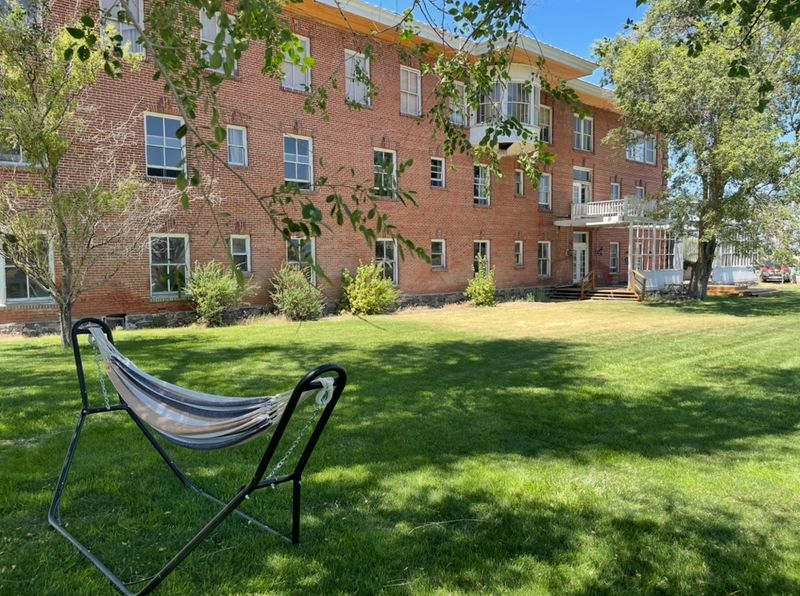
Hot Lake Springs tells a looping story, grand opening, hard years, closure, and a patient return to use.
Thermal waters still rise, but upkeep and shifting travel habits once made full operations impractical.
Ownership changes brought periods of vacancy, which amplified repair backlogs and drove a pause in daily life.
The complex eventually found careful restoration that honors architecture while adapting to modern codes and comfort.
What looked abandoned now reads as stewardship, spaces made safe after years of hard weather.
You can admire the lodge exterior, formal lines set against broad skies east of Oregon’s mountains.
The setting feels cinematic, steam drifts, and brickwork glows warm in late day light.
Practical decisions guided the resets, operators waited for a working plan that matched resources to reality.
This is not a ghost story, it is a repair story with scaffolds, permits, and patience.
Trails, viewpoints, and nearby history give the area depth beyond the building’s graceful profile.
Respect posted access rules, as active hospitality uses require privacy and careful site management.
The lesson is clear, restoration begins when the arithmetic of care finally exceeds the weight of decline.
7. Moro and Wasco, When Routes and Markets Shift
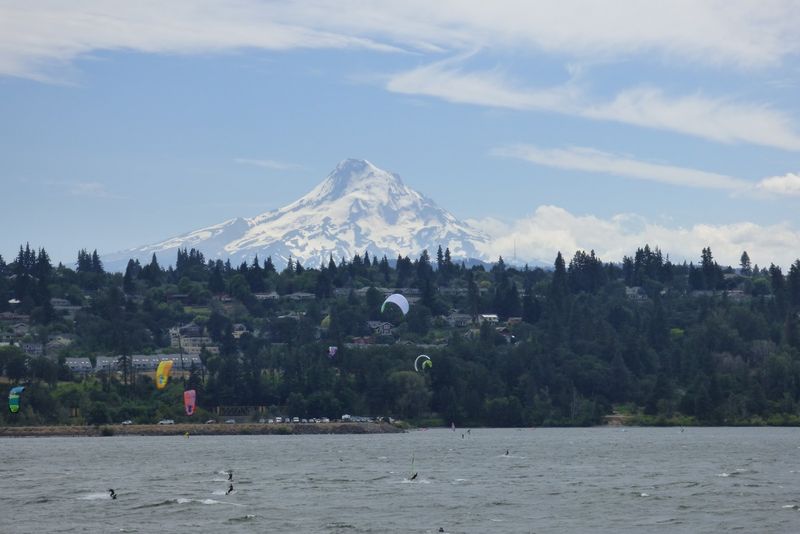
Moro and Wasco sit among rolling wheat country where elevators mirror the seasons and trucks hum along highways.
Rail realignments and market consolidation pulled activity toward larger hubs, thinning storefronts that once served harvest cycles.
Neither town vanished, but some blocks emptied as services clustered closer to major junctions.
Abandonment here feels selective, certain buildings retired while others adapted to leaner patterns of use.
You can walk past stately brick facades that glow at sunset and listen to flags snap in the breeze.
Practicality guided every change, fewer shipments meant fewer reasons to keep duplicate shops and depots open.
Historic signs and tidy sidewalks show pride, even when windows stay dark for long stretches.
Visitors should keep expectations honest, this is living history shaped by agriculture and transportation math.
Oregon’s plateau spreads wide, and the horizon makes these towns appear smaller than they feel in person.
The quiet can be calming, a reminder that decline is not failure, it is adaptation.
Photographers find nice lines where streets meet grain country and clouds stack like sails.
Plan a respectful stroll, spend locally where you can, and let the slower rhythm set the pace.
Wind shifts carry the scent of dry wheat and earth, tying each street corner to the surrounding fields.
Sunlight traces textures on brick and wood, highlighting details that tell the story of steady work over decades.
Leaving these towns, you take with you a sense of how Oregon communities adapt quietly without losing their character.
8. Millican and Whitney, Short Lives on Long Roads
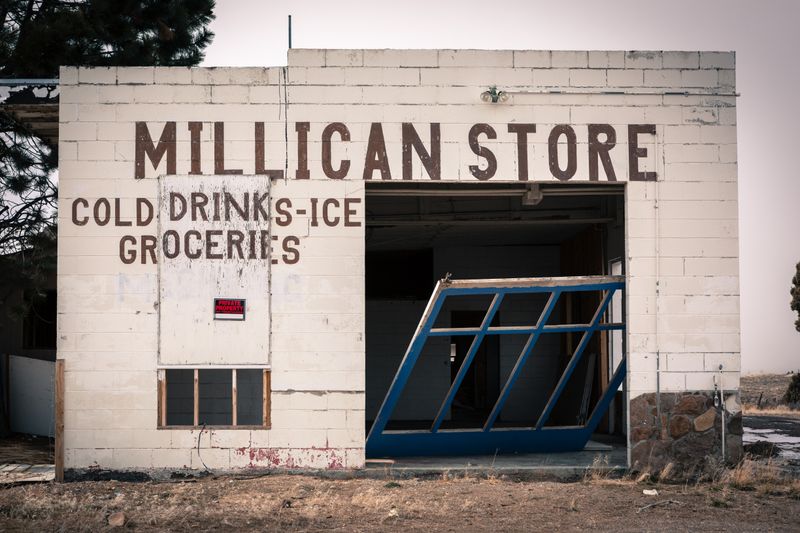
Millican and Whitney tell two versions of the same theme, small settlements stretched thin by distance and time.
Millican served travelers across dry country until traffic patterns changed and support services consolidated elsewhere.
Whitney grew around timber work that slowed, leaving cabins and a schoolhouse without a payroll to sustain them.
When maintenance outpaces revenue, roofs sag, and weather does the steady work of emptying rooms.
Practicality explains it, fewer deliveries, fewer jobs, fewer reasons to wait at the edge of nowhere.
Driving through, you see the bones of commerce, a canopy without pumps, and porches made for conversations.
In the forested site, stacked logs and rail remnants sketch the outline of a once busy yard.
Both places sit quietly now, not ruined, just paused until a new use makes sense.
They are easy to romanticize, but the day to day reality was remote, seasonal, and spare.
Oregon’s backroads keep these vignettes intact, partly because there is little pressure to redevelop them.
Respect closures and safety signs, as structures can be unstable after long winters and hot summers.
Take only photographs of exteriors and the spacious sky that keeps watch over two practical goodbyes.
9. Golden, A Community That Finished Its Work
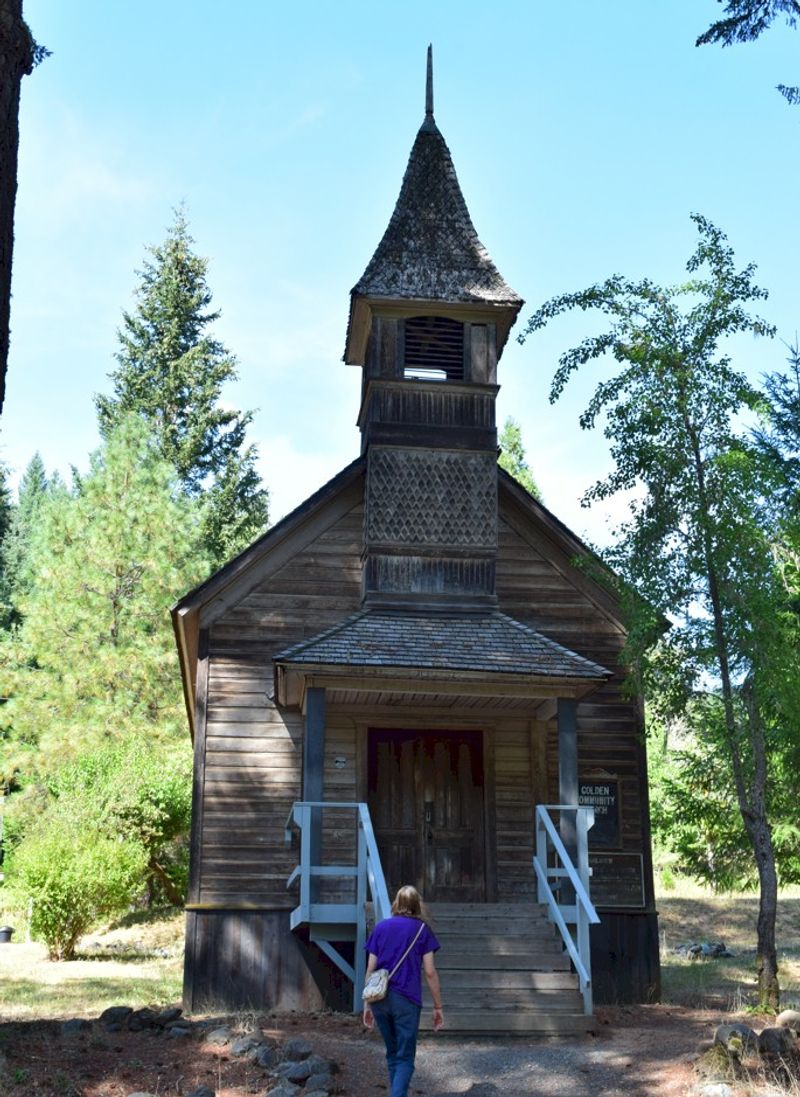
Golden sits in a quiet Josephine County clearing where a church, cabins, and paths thread between tall trees.
The community supported nearby placer claims until deposits dwindled and families moved toward steadier prospects.
Buildings remain because preservation efforts recognized their value as a tidy window into frontier routines.
Nothing sinister happened, the place simply concluded its purpose and shifted into a historic park rhythm.
Visitors find simple lines, hand cut boards, and an atmosphere that invites slow walking and careful looking.
Interpretive panels tell just enough to anchor the scene without overwhelming the sounds of wind and birds.
Abandonment reads here as completion, work done, tools hung, and doors closed with appreciation rather than regret.
It is an easy stop on a southern Oregon route that ties forests to river valleys.
Please treat the site gently, step lightly on thresholds and keep to paths that protect roots and soil.
Photographs of exteriors capture the calm geometry of porches and steeples against green shade.
The lesson feels generous, communities can end without drama and still leave a helpful trace.
Carry the quiet forward, it will make the next busy town feel kinder and more grounded.
Morning light filters unevenly through the canopy, giving the buildings a softened, almost domestic scale.
The clearing feels intentional, as if chosen carefully rather than claimed in haste.
You begin to notice small human decisions in layout and spacing that once balanced work, worship, and rest.
Seasonal changes matter here, with leaf fall and spring growth subtly rewriting the scene each year.
Golden stays memorable not for what it lost, but for how clearly it shows a moment allowed to finish.
10. Neskowin Ghost Forest, Stumps That Outlast Storms
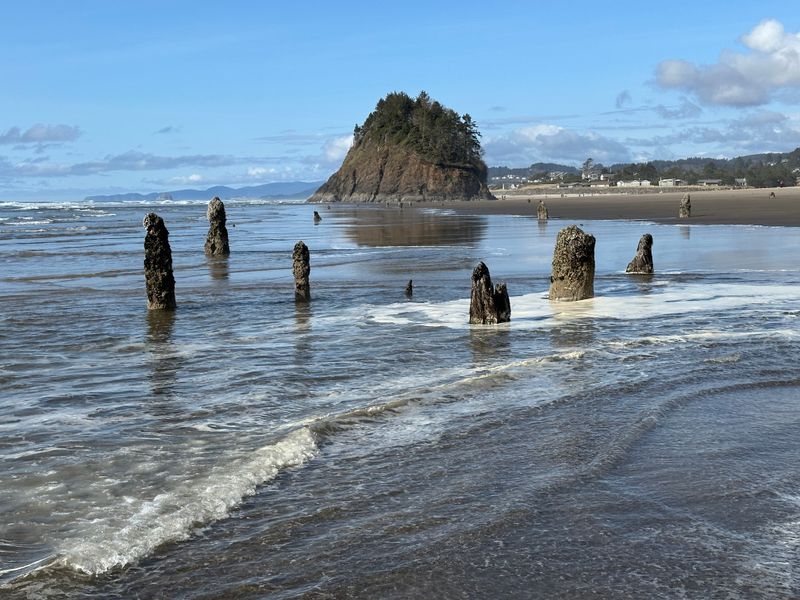
The Neskowin Ghost Forest looks like a shipwreck of trees, dark stumps ringed by tides at the waterline.
These are ancient Sitka spruce preserved by sand and revealed when storms shifted the beach profile.
Nothing was abandoned by people here, yet the scene often appears in lists of ghostly places.
The practical cause is geology, subsidence and erosion working together to uncover a long buried stand.
It is a rare sight that changes with tide, light, and the season’s shifting sand.
Stand quietly and you hear the soft push of waves and the scuff of shells across wood.
Interpretive information at nearby access points helps explain how rooted trunks can still be in place.
This is Oregon teaching with visuals, a field class at the edge of the Pacific.
Visitors should check tide tables, keep a safe distance from surf, and avoid climbing on slick stumps.
The beach rewards patience, textures reveal themselves as water drains and rivulets braid around bases.
Photographers get moody horizons, and the forest’s remnants turn into sculptures under low gray light.
Leave nothing but prints that the next tide will tidy into smooth sand again.
At low tide, the stumps feel closer, their rings hinting at centuries of quiet growth.
Salt air and cool wind sharpen the moment, making the exposure feel both fragile and enduring.
Each exposed root reads like a cross section of time rather than a remnant of loss.
The scene resists drama when you linger, trading spectacle for steady observation.
You leave aware that the forest is not gone, only waiting beneath the sand for the right conditions to speak again.
Dear Reader: This page may contain affiliate links which may earn a commission if you click through and make a purchase. Our independent journalism is not influenced by any advertiser or commercial initiative unless it is clearly marked as sponsored content. As travel products change, please be sure to reconfirm all details and stay up to date with current events to ensure a safe and successful trip.
