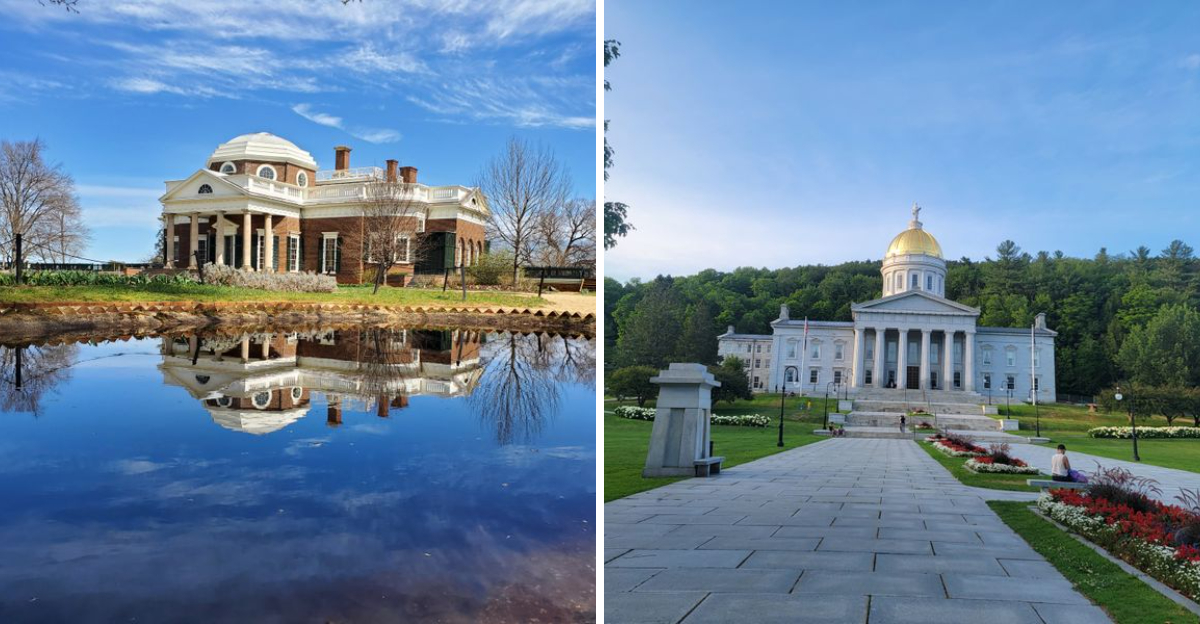
What if the history you learned in school was only half the story? Virginia holds layers of the past that clash, contradict, and challenge each other at every turn.
Some sites celebrate triumph while others memorialize tragedy. Some honor rebellion, others commemoration.
Walking through the Old Dominion means encountering narratives that don’t always agree, and that’s exactly what makes exploring this state so powerful. These ten locations across Virginia don’t just preserve history; they argue with each other about what really happened, who deserves to be remembered, and why the past still matters today.
From battlefields to plantations, from museums to monuments, each place offers its own lens on events that shaped America. You’ll find stories of freedom fighters and enslavers, revolutionaries and loyalists, victors and victims all claiming their space in the historical record.
Ready to see how complicated the truth really gets?
1. Monticello
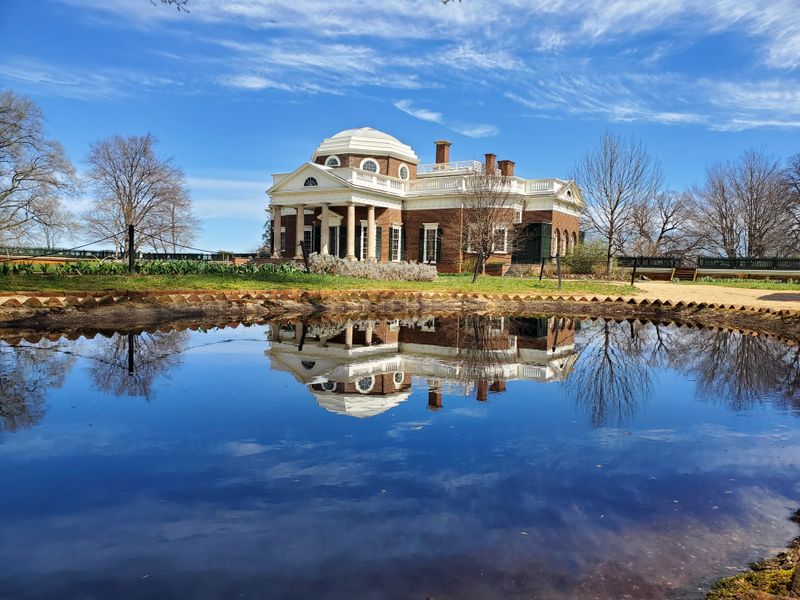
Thomas Jefferson’s mountaintop estate presents one of history’s most glaring contradictions. The author of “all men are created equal” designed this architectural masterpiece while enslaving over six hundred people throughout his lifetime.
Visitors today experience two radically different tours. The main house celebrates Jefferson’s brilliance as inventor, architect, and statesman.
You’ll marvel at his innovations, from the Great Clock to hidden alcove beds. His library, his gadgets, his correspondence with world leaders paint him as an Enlightenment genius.
But step along Mulberry Row, and the narrative shifts entirely. This is where enslaved families lived, worked, and somehow maintained dignity under brutal conditions.
The Hemings family story particularly challenges comfortable historical myths. Sally Hemings bore Jefferson’s children while legally considered his property, a relationship that defies simple categorization as either love story or exploitation.
Recent restoration efforts have rebuilt slave quarters and workshops, forcing visitors to confront the labor that made Jefferson’s lifestyle possible. The contrast between his elegant dining room and the sparse living conditions of those who prepared his meals couldn’t be starker.
Monticello doesn’t let you walk away with easy answers. Jefferson remains both visionary and hypocrite, his legacy forever tangled with the people he refused to free even in death.
The estate acknowledges this complexity now, presenting history’s uncomfortable truths alongside its celebrated achievements. It’s a place where two versions of America’s founding collide on the same hilltop, neither one complete without the other.
2. Appomattox Court House
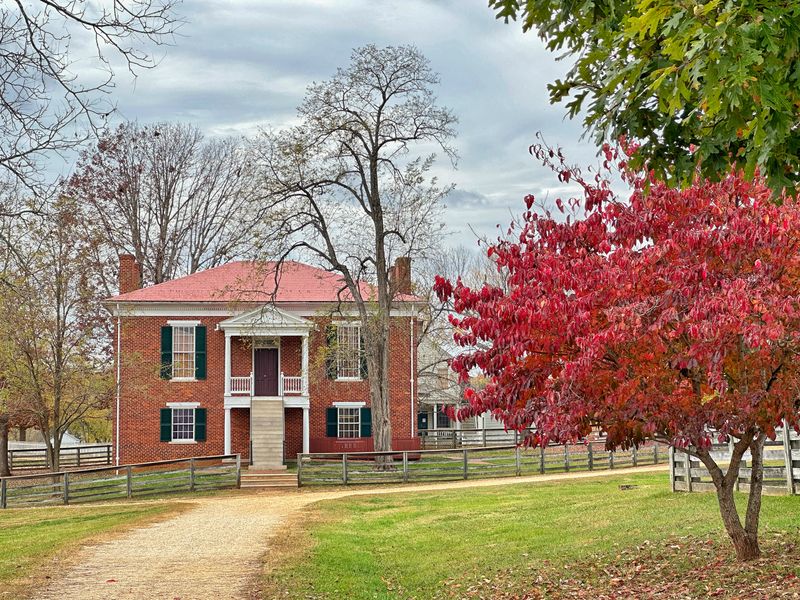
For some, this quiet village represents the noble end of Southern independence. For others, it marks the beginning of freedom for millions.
Same location, completely opposite meanings.
General Lee surrendered to General Grant here, effectively ending the Civil War. The reconstructed village looks peaceful now, with brick buildings and split-rail fences under old trees.
Nothing about the scene suggests the catastrophic conflict that brought two armies to this spot.
The surrender itself gets remembered differently depending on who’s telling the story. Lost Cause mythology portrays Lee as a tragic hero, Grant as a magnanimous victor, both men conducting themselves with honor.
This version emphasizes reconciliation between white Northerners and Southerners, conveniently sidelining what the war was actually fought over.
But step into the museum exhibits, and you’ll encounter the fuller truth. The war was about slavery, full stop.
Lee fought to preserve a system that treated human beings as property. His surrender didn’t just end a military conflict; it destroyed the legal foundation of enslavement across the South.
The National Park Service now presents both narratives, though not as equals. Interpretive programs acknowledge how this site has been mythologized while centering the experiences of formerly enslaved people who understood what Lee’s defeat actually meant for their futures.
Walking through Appomattox means wrestling with how Americans have told themselves different stories about the same events. The village hasn’t changed, but our understanding of what happened here continues evolving, challenging comfortable myths with uncomfortable facts about who won, who lost, and what was really at stake.
3. Colonial Williamsburg
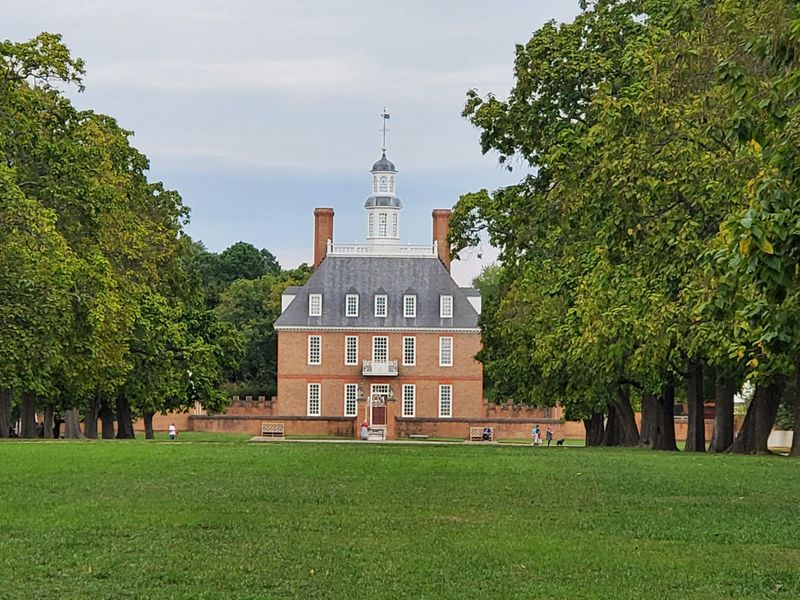
Step into America’s largest living history museum and you’ll find yourself in a carefully curated version of the past. Colonial Williamsburg spent decades presenting an idealized view of colonial life before confronting the fuller story.
The restored area showcases elegant buildings where Virginia’s colonial elite made decisions that shaped a nation. You can watch craftspeople demonstrate trades, tour the Governor’s Palace, and see where Patrick Henry gave fiery speeches.
It’s impressive, educational, and for many years, it was also incomplete.
Early interpretations focused almost exclusively on white colonists, particularly wealthy ones. Enslaved people appeared as background figures, if they appeared at all.
The narrative celebrated American independence without adequately addressing who was excluded from that freedom.
Things have changed dramatically. Today’s Williamsburg confronts slavery head-on through programs like “The Enslaved Community.” Interpreters portray real people who lived and worked here, sharing their stories with unflinching honesty.
You’ll hear about resistance, family separation, and the daily realities of bondage alongside discussions of colonial politics.
The contrast between old and new interpretations reveals how historical sites can evolve. What was once a celebration of colonial achievement now includes harder truths about who built this prosperity and at what cost.
Some visitors resist this expanded narrative, preferring the simpler story. Others find the fuller history more meaningful precisely because it’s more honest.
Williamsburg demonstrates that historical interpretation isn’t static. As our understanding deepens, the stories we tell must change too, even when those stories make us uncomfortable about the past we’ve inherited.
4. Manassas National Battlefield
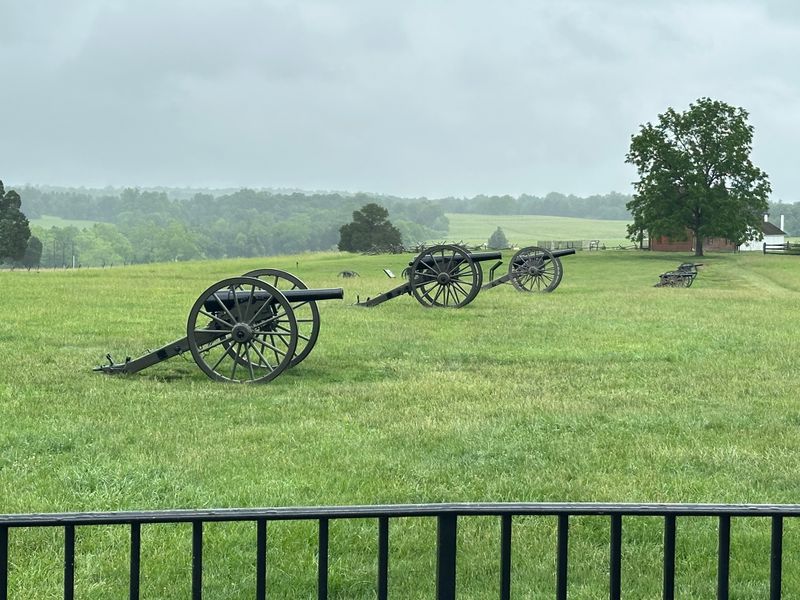
Two major battles happened here, and both get remembered through wildly different lenses. Confederates called their victories here Bull Run.
Union forces used the name Manassas. Even what to call these battles became a point of contention.
The first battle shattered Northern assumptions about a quick war. Spectators actually came from Washington with picnic baskets, expecting to watch a brief skirmish.
Instead, they witnessed shocking carnage and a Confederate victory that sent Union troops fleeing in chaos.
Southern mythology celebrates these battles as proof of Confederate military superiority. Monuments across the battlefield commemorate Southern commanders and units, many erected decades after the war as part of efforts to romanticize the Lost Cause.
But modern interpretation asks harder questions. Why were these men fighting?
What cause did their sacrifice serve? The answers complicate simple narratives about bravery and honor.
Walking the battlefield today, you’ll encounter competing commemorations. Some monuments glorify Confederate generals without mentioning slavery.
Newer interpretive signs provide context about what the war was actually about and who benefited from Southern victory.
The landscape itself remains contested ground. Preservation battles continue over how much development should be allowed near these historic fields.
Some see the land as sacred to Confederate memory. Others argue that preserving battlefields shouldn’t mean preserving myths about why the battles were fought.
Manassas shows how physical spaces become battlegrounds for memory itself. The fighting ended over a century ago, but arguments about what these battles meant and how they should be remembered continue.
Every monument, every interpretive sign, every tour represents someone’s version of history competing for dominance.
5. Jamestown Settlement
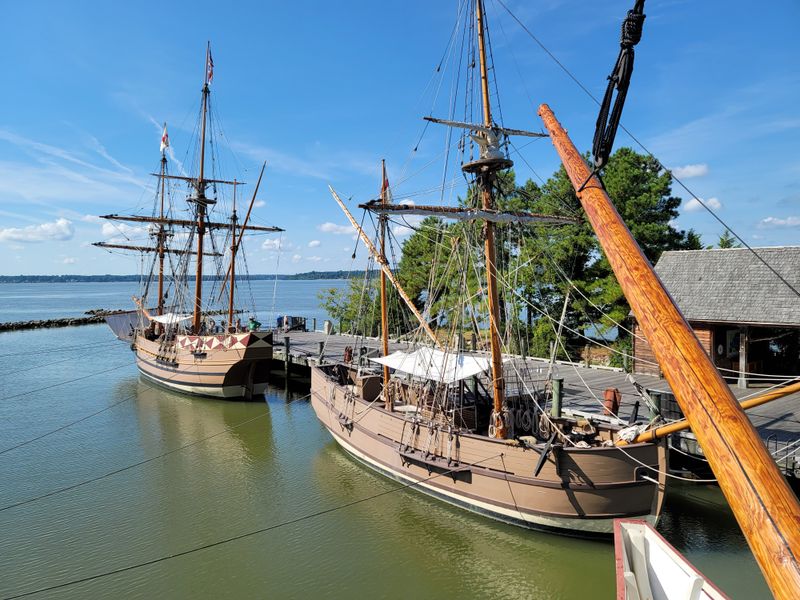
America’s origin story gets told here, but which version depends on whose perspective you’re hearing. English colonists, Powhatan people, and enslaved Africans all experienced Jamestown differently, and those differences matter.
Traditional narratives celebrate Jamestown as the birthplace of American democracy and free enterprise. The settlement struggled but ultimately succeeded, establishing English presence in North America.
Captain John Smith, Pocahontas, and the first representative assembly get starring roles in this version.
But Powhatan descendants tell a different story entirely. English arrival brought disease, violence, and displacement.
What colonists called settlement, Indigenous people experienced as invasion. The famous Pocahontas story, romanticized for centuries, looks very different when you consider she was a child taken captive, converted, and paraded through England as proof of colonial success.
Then there’s the African experience. The first enslaved Africans arrived here, beginning a system that would define American society for centuries.
Their arrival rarely featured in earlier Jamestown narratives but fundamentally shaped everything that followed.
Today’s Jamestown Settlement museum presents all three perspectives through separate galleries and outdoor living history areas. You can explore a Powhatan village, board recreated ships, and walk through the colonial fort.
Each area tells its own truth about what happened here.
The contrast between perspectives can be jarring. What looks like opportunity and adventure from one angle appears as catastrophe from another.
The museum doesn’t try to reconcile these differences into a single comfortable narrative. Instead, it lets them coexist, challenging visitors to hold multiple truths simultaneously and understand that historical events rarely mean the same thing to everyone involved.
6. Robert E. Lee Monument Site in Richmond

For over a century, a massive statue of Robert E. Lee on horseback dominated Richmond’s Monument Avenue.
Then, after nationwide protests, it came down. The empty pedestal now tells a story about changing historical consciousness.
When erected, the monument celebrated Lee as a noble warrior who fought bravely for Virginia. Monument Avenue became a Confederate shrine, with statues honoring Southern leaders lining the boulevard.
For many white Richmonders, these monuments represented heritage and history.
But for Black Richmonders, these same statues meant something entirely different. They represented glorification of men who fought to keep their ancestors enslaved.
Walking past these monuments meant confronting daily reminders that the city honored people who considered them property.
The national reckoning following George Floyd’s murder brought these tensions to a breaking point. Protesters covered the Lee monument with graffiti, transforming it into a memorial for racial justice.
The pedestal became a gathering place for demonstrations, a symbol of resistance rather than reverence.
When the statue finally came down, reactions split sharply. Some celebrated the removal as long overdue, a necessary step toward honest reckoning with the past.
Others mourned what they saw as erasure of history and dishonoring of ancestors.
The empty pedestal remains, at least for now. What should replace it?
Nothing? Something new?
The debate continues, reflecting broader questions about whose history gets commemorated in public spaces and whose pain gets centered in those decisions. Richmond’s monument controversy shows how historical memory isn’t fixed.
What one generation honors, another generation questions, and the next might remove entirely.
7. Booker T. Washington National Monument
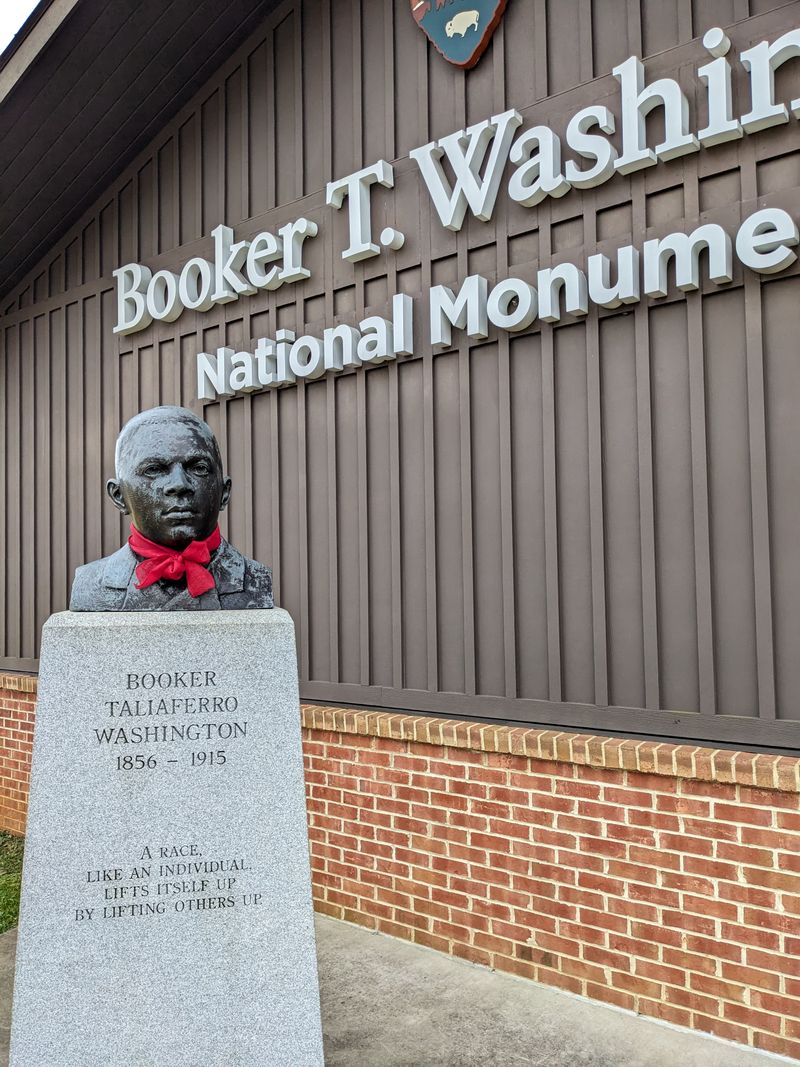
Born enslaved on this tobacco farm, Booker T. Washington became one of America’s most influential educators.
His birthplace tells the story of transformation from bondage to achievement, though interpretations of his legacy remain complicated.
The reconstructed plantation shows the harsh realities of Washington’s childhood. Small, crowded slave quarters.
Backbreaking agricultural labor. Complete lack of legal rights or protections.
Understanding where Washington started makes his later accomplishments even more remarkable.
After emancipation, Washington pursued education with fierce determination. He eventually founded Tuskegee Institute, becoming a powerful voice for Black economic advancement.
His autobiography remains a classic American narrative of rising from nothing to prominence through hard work and perseverance.
But Washington’s philosophy generated fierce debate during his lifetime and continues to do so. His emphasis on vocational training and economic self-reliance over immediate political rights drew criticism from leaders like W.E.B.
Du Bois, who demanded full equality immediately.
Was Washington a pragmatist working within brutal constraints, or did his accommodationist approach delay civil rights progress? Did his focus on industrial education empower Black communities or limit their aspirations?
These questions don’t have simple answers.
The National Monument presents Washington’s life and work while acknowledging these ongoing debates. Exhibits explore both his achievements and the criticism he faced, refusing to reduce a complex figure to simple hero worship or dismissal.
Visiting here means confronting questions about strategy, compromise, and resistance. Washington’s story offers no easy lessons about the right way to fight injustice.
Instead, it reveals how people facing impossible circumstances make difficult choices, and how those choices get judged differently by different generations with different perspectives on what worked.
8. Yorktown Battlefield
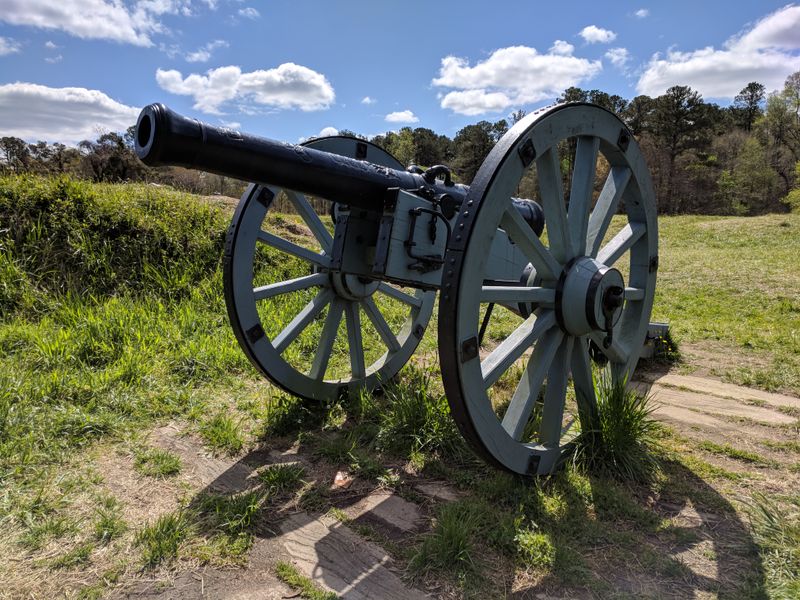
American independence was won here when Cornwallis surrendered to Washington. That’s the story everyone learns.
But whose independence, exactly, and what did victory actually mean for different people present at the siege?
Traditional narratives celebrate Yorktown as the triumphant conclusion to the Revolutionary War. American and French forces trapped British troops, forcing surrender after a brutal siege.
The victory secured American freedom and established a new nation based on liberty and self-governance.
That version isn’t wrong, but it’s incomplete. Thousands of enslaved people fled to British lines during the war, believing promises of freedom in exchange for supporting the Crown.
When Cornwallis surrendered, he tried to send these freedom seekers back to slavery. American victory meant their hopes for liberty died at the moment independence was secured.
The French contribution also gets downplayed in American-centered versions. French naval power and troops were absolutely crucial to victory here.
Without them, the siege likely would have failed. Yet American narratives often minimize this dependence, preferring stories of self-reliant colonists defeating the empire alone.
Then there are the Native American perspectives rarely included at all. Various tribes sided with different powers during the war, trying to protect their lands and interests.
American victory ultimately meant westward expansion and displacement for Indigenous peoples, making this battlefield the beginning of their catastrophic losses rather than any kind of liberation.
Modern interpretation at Yorktown increasingly acknowledges these multiple perspectives. Walking the battlefield, you can now learn about enslaved people’s wartime experiences, French military contributions, and the complex calculations Native Americans made.
The site reveals that independence meant radically different things depending on your position in colonial society.
9. Montpelier
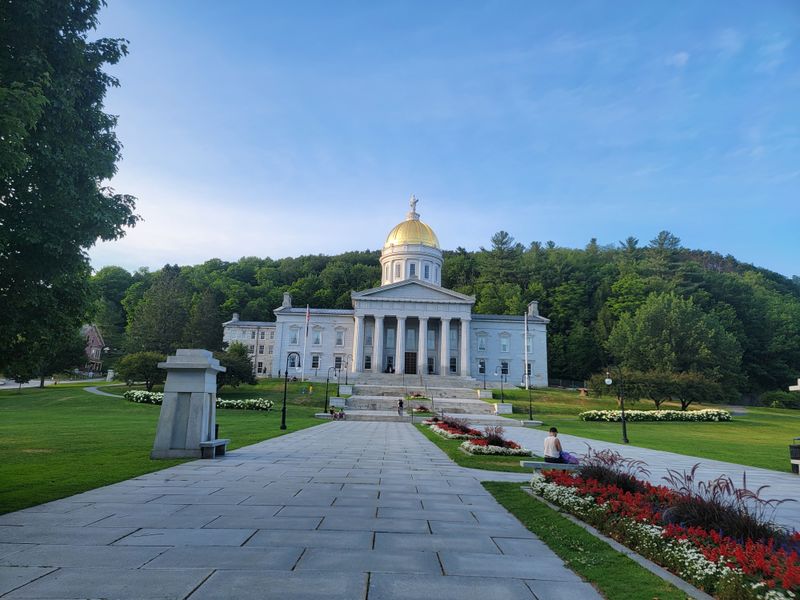
James Madison gets celebrated as the Father of the Constitution, the brilliant political theorist who designed American government. His estate now tells a more complete story about the people who made his intellectual work possible.
For years, tours focused almost exclusively on Madison’s political achievements. Visitors learned about the Constitutional Convention, the Federalist Papers, and Madison’s presidency.
The mansion showcased his library and the rooms where he entertained political leaders.
But Madison enslaved over one hundred people at Montpelier. Their labor supported his lifestyle and gave him the leisure time to engage in political philosophy.
You can’t separate his intellectual contributions from the enslaved community that made them possible.
Recent archaeological work and interpretation have transformed how Montpelier presents its history. The estate now includes extensive exhibits about enslaved people’s lives, work, and resistance.
You’ll learn about specific individuals and families, not anonymous laborers.
Particularly significant is the focus on Paul Jennings, enslaved by Madison and later by Dolley Madison. Jennings eventually purchased his freedom and wrote one of the first White House memoirs.
His perspective on the Madison family provides crucial counterpoint to hagiographic versions of Madison’s life.
The contrast between old and new interpretation demonstrates how historical sites can evolve. What was once a shrine to political genius now acknowledges the uncomfortable truth that American democracy was built by people excluded from its promises.
Montpelier doesn’t diminish Madison’s intellectual contributions, but it refuses to celebrate them in isolation from the system of slavery that supported his work. Visitors leave understanding that you can’t honestly tell the story of the Constitution’s creation without telling the story of the enslaved people whose labor made that creation possible.
10. Contrabands and Freedmen Cemetery Memorial
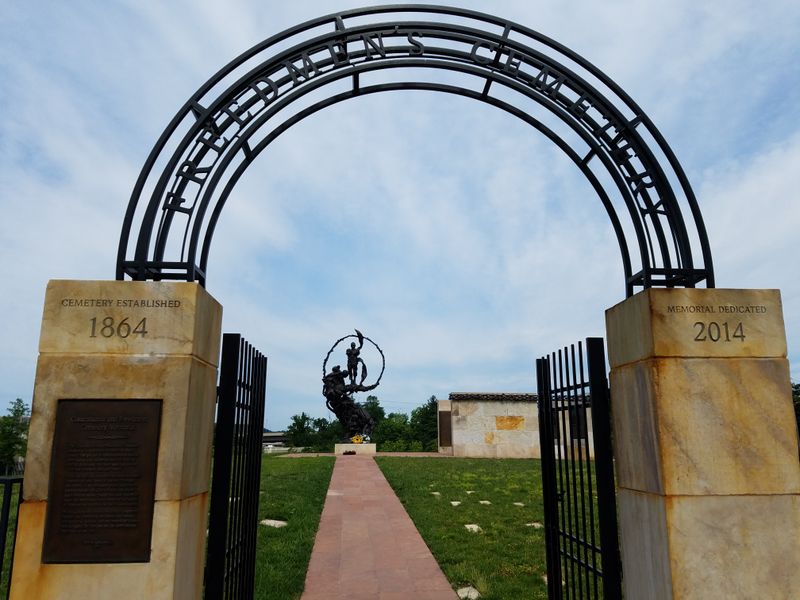
Tucked away in Alexandria, this memorial honors formerly enslaved people who sought refuge with Union forces during the Civil War. Their story of self-liberation challenges narratives that credit only Northern armies with ending slavery.
As Union troops occupied Alexandria early in the war, enslaved people from surrounding areas fled to Union lines seeking freedom. The military termed them “contraband,” a dehumanizing label that nonetheless offered a path to liberty.
Thousands gathered in Alexandria, creating a massive refugee community.
Life in contraband camps was harsh. Overcrowding, disease, and inadequate resources meant many who escaped slavery died before experiencing real freedom.
This cemetery holds the remains of approximately eighteen hundred people, most buried in unmarked graves and forgotten for over a century.
Traditional Civil War narratives focus on military campaigns and political decisions. Emancipation gets credited to Lincoln’s proclamation or Union military victory.
These stories position enslaved people as passive recipients of freedom rather than active agents in their own liberation.
But the contraband experience tells a different story. Enslaved people didn’t wait to be freed; they freed themselves by fleeing to Union lines, often at tremendous personal risk.
Their actions forced the Union to confront slavery directly and contributed to shifting war aims from preservation of the Union to abolition.
The memorial, dedicated decades after the cemetery’s rediscovery, includes interpretive panels explaining this history. Sculptural elements and markers honor those buried here while educating visitors about their agency in ending slavery.
This site matters because it centers people usually relegated to the margins of Civil War history. It insists that liberation was something enslaved people achieved for themselves, not just something done for them.
That shift in perspective fundamentally changes how we understand both slavery and freedom.
Dear Reader: This page may contain affiliate links which may earn a commission if you click through and make a purchase. Our independent journalism is not influenced by any advertiser or commercial initiative unless it is clearly marked as sponsored content. As travel products change, please be sure to reconfirm all details and stay up to date with current events to ensure a safe and successful trip.
