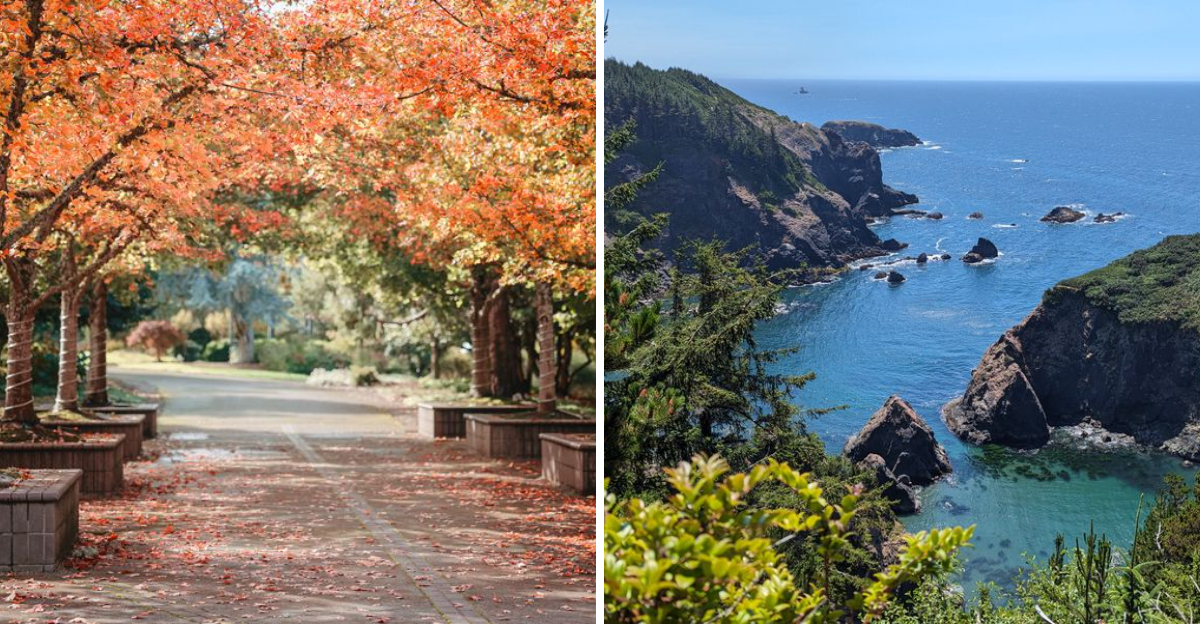
Oregon has a way of making you feel like you’re the only person left on earth. While tourists flock to Crater Lake and Cannon Beach, locals slip away to lesser-known corners where silence feels like a luxury.
These aren’t the places you’ll find on a postcard rack or splashed across social media feeds.
They’re the kind of destinations where you can hear your own thoughts again, where the air smells like pine and salt, and where time seems to slow down just enough to let you breathe.
From windswept coastal villages to high desert expanses that stretch for miles, Oregon holds pockets of peace that feel almost sacred. Whether you’re craving the sound of waves without the crowds or the sight of stars uninterrupted by city lights, these ten quiet places offer the kind of reset that only nature and solitude can provide.
Pack light, leave your expectations behind, and let these hidden gems remind you what it feels like to truly unplug.
1. Manzanita
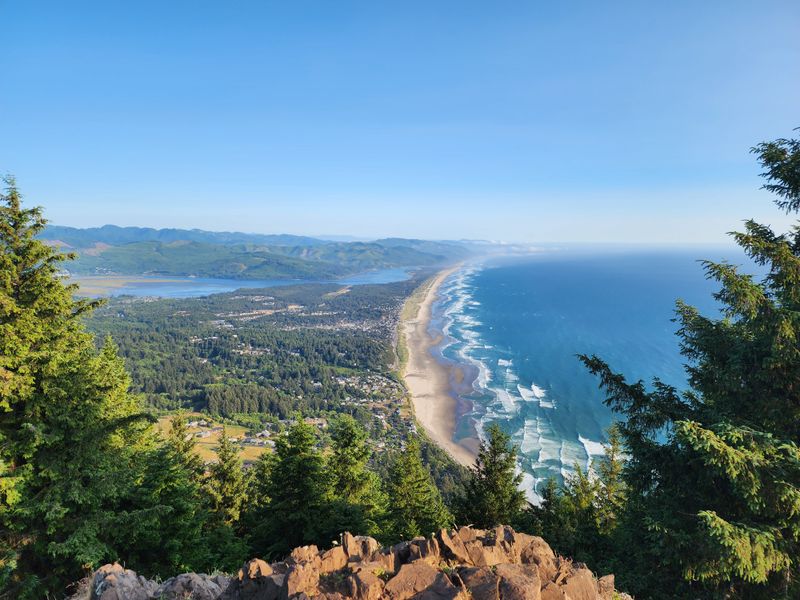
Nestled beneath the towering presence of Neahkahnie Mountain, Manzanita feels like a coastal village that time forgot. The town stretches along seven miles of sandy beach, where sunrise walks become meditative rituals accompanied only by the rhythm of crashing waves and the whisper of coastal winds.
Strict building codes ensure that no structure rises above the tree line, preserving an intimate, almost secretive atmosphere that locals fiercely protect.
Walking through town, you’ll notice the absence of commercial clutter. No chain stores interrupt the low-key charm, and the few local shops that do exist seem to understand that less is more.
This isn’t a place where you come to be entertained; it’s where you come to remember what quiet feels like.
The beach itself stretches wide and welcoming, with driftwood logs scattered like nature’s furniture. Locals often arrive early, thermos in hand, to watch the sun paint the horizon in shades of pink and gold.
Tide pools reveal tiny ecosystems, and beachcombing becomes an unexpected treasure hunt.
Beyond the shoreline, trails wind through coastal forests where Sitka spruce and hemlock create a green canopy overhead. The air smells earthy and fresh, a combination of salt and soil that clears the mind.
Manzanita doesn’t shout for attention; it simply exists, offering a refuge for anyone willing to slow down and listen. For Oregonians seeking a reset, this village delivers peace without pretense.
Address: Manzanita, OR 97130
2. Joseph

Tucked into the northeastern corner of Oregon at the base of the Wallowa Mountains, Joseph earns its nickname as the “Oregon Alps” with dramatic alpine scenery that rivals anything in Europe. Ranch-town authenticity blends seamlessly with a surprisingly vibrant local art scene, creating a cultural oasis in a landscape defined by rugged peaks and wide-open skies.
Locals come here when they need to trade urban noise for the kind of quiet that only mountain air can provide.
Wallowa Lake sits just outside town, its glacial waters reflecting the surrounding peaks like a mirror. The lake offers peaceful kayaking and shoreline strolls, far removed from the crowded resort lakes elsewhere in the state.
Nearby, Eagle Cap Wilderness beckons with over 500 miles of trails, but even a short walk into its boundaries delivers profound solitude.
Downtown Joseph surprises visitors with its bronze foundries and galleries showcasing Western and wildlife art. The town’s creative spirit doesn’t overshadow its cowboy roots; instead, the two coexist in a way that feels genuine rather than manufactured.
Coffee shops serve locals who know each other by name, and conversation flows easily.
Winter transforms the area into a snowy wonderland, but summer and fall bring golden grasses and wildflower meadows that seem to glow in the afternoon light. The pace here matches the landscape: unhurried, grounded, and deeply connected to the natural world.
For those seeking a mental reset, Joseph offers both physical beauty and a sense of community that feels increasingly rare.
Address: Joseph, OR 97846
3. Yachats
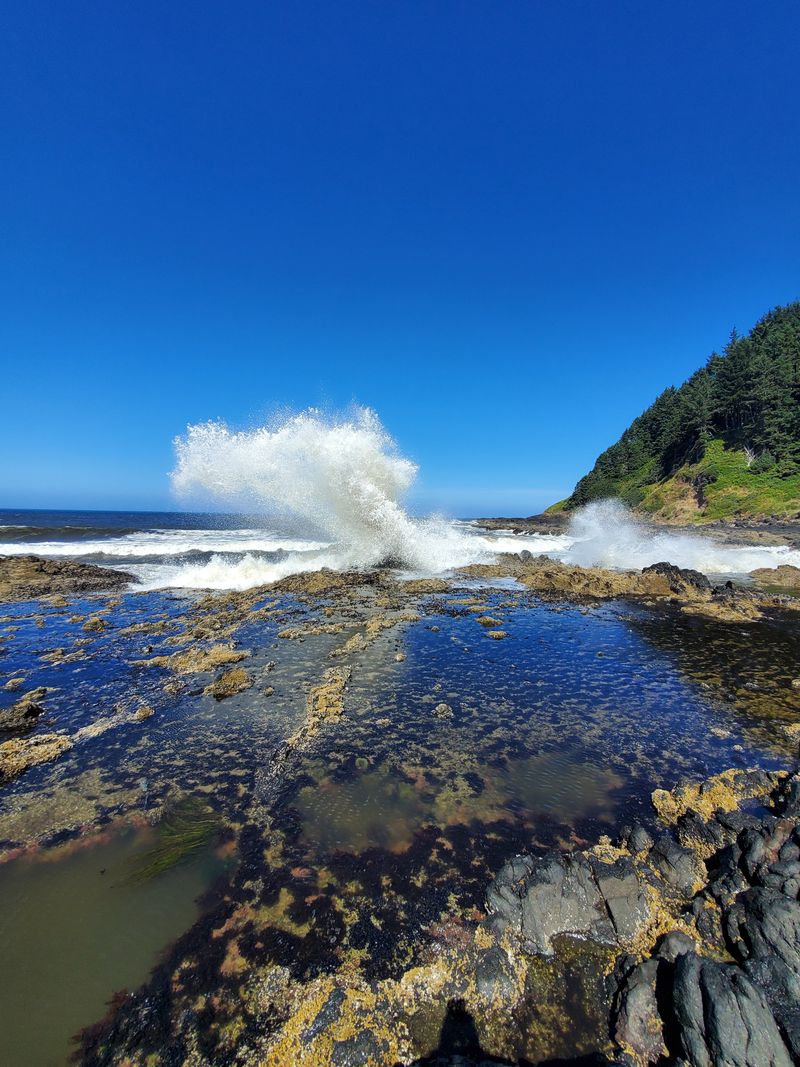
Pronounced “YAH-hots,” this tiny coastal village occupies a dramatic stretch where ancient forests meet jagged black basalt ledges carved by centuries of Pacific storms. Known affectionately as the “gem of the coast,” Yachats gets overlooked precisely because it sits between major highways, making it a haven for those who know where to look.
The village wraps around rocky headlands and hidden coves, offering a coastline that feels wild and untamed.
Locals treasure the 804 Trail, a pathway that follows an ancient Native American route along shoreline bluffs. The trail offers constantly changing views as it weaves between forest and ocean, with benches strategically placed for contemplation.
Tide pools teem with starfish and anemones, and whale watching becomes a year-round possibility from these elevated vantage points.
The village itself maintains a low-key vibe, with locally owned cafes and small galleries that reflect the artistic community living here. There’s no boardwalk, no amusement park, no neon signs competing for attention.
Instead, Yachats offers simplicity: good coffee, fresh seafood, and the kind of hospitality that doesn’t feel forced.
Gray whales migrate past these shores twice annually, and storm watching in winter has become a beloved local tradition. Waves crash against the basalt with thunderous force, sending spray high into the air while locals watch from cozy viewing spots.
The power of nature on full display provides perspective that’s hard to find anywhere else. Yachats doesn’t try to be anything other than what it is: a quiet refuge where the ocean does most of the talking.
Address: Yachats, OR 97498
4. Alvord Desert
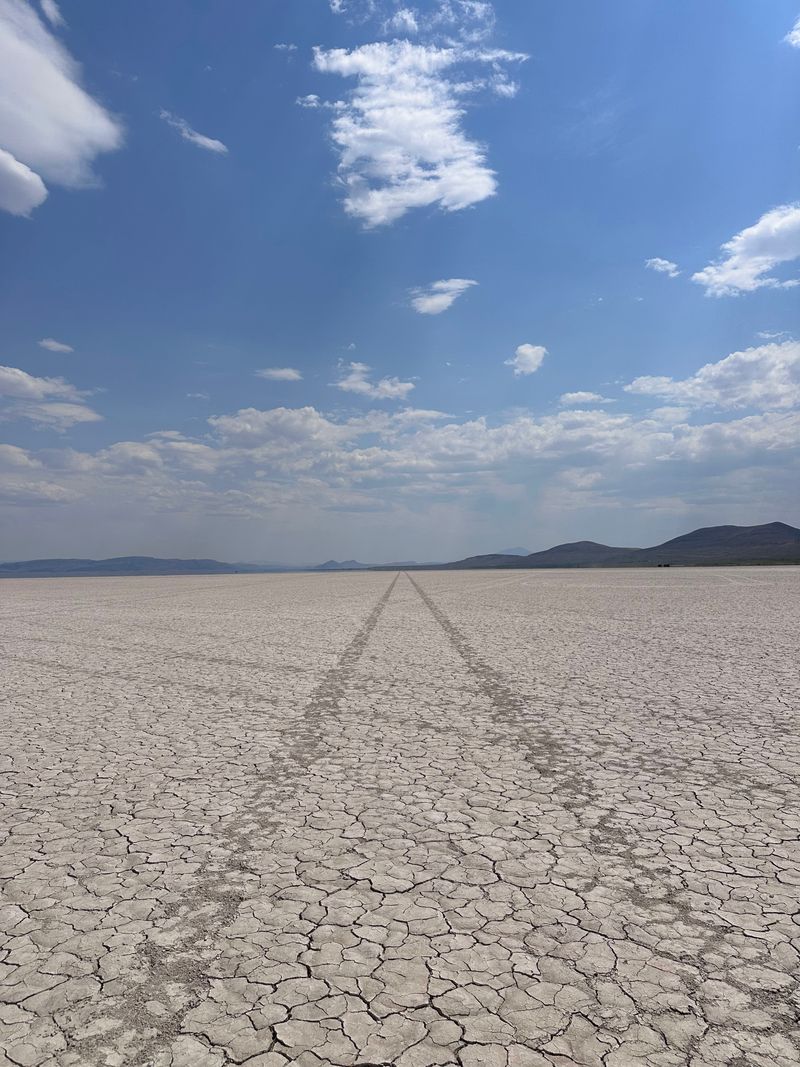
When Oregonians need a complete sensory reset, they make the pilgrimage to this 84-square-mile dry lakebed in the southeastern corner of the state. Surrounded by the towering presence of Steens Mountain, the Alvord Desert delivers what locals call “hush and horizon,” a combination of absolute silence and views that stretch to infinity.
This is high desert at its most elemental, where the absence of trees, buildings, and people creates a meditative emptiness.
Light pollution doesn’t exist here. On clear nights, the Milky Way stretches overhead like a river of stars, and meteor showers become immersive experiences rather than distant spectacles.
The darkness feels complete, almost tangible, making it one of the premier stargazing locations in the Pacific Northwest.
During dry seasons, the playa becomes a vast expanse of cracked earth, perfectly flat and seemingly endless. Some visitors drive onto the lakebed, while others simply stand at its edge, absorbing the scale.
Hot springs bubble up nearby, offering the surreal experience of soaking in natural pools while gazing across miles of desert.
Steens Mountain looms to the west, its fault-block geology creating one of the most dramatic vertical rises in North America. The contrast between mountain and desert amplifies the sense of being in a landscape that operates on geological time scales.
Wind is often the only sound, carrying the scent of sagebrush and dust. For those seeking solitude and perspective, the Alvord Desert delivers both in overwhelming measure, reminding visitors just how small they are in the grand scheme of things.
Address: Alvord Desert, Fields, OR 97710
5. Silverton
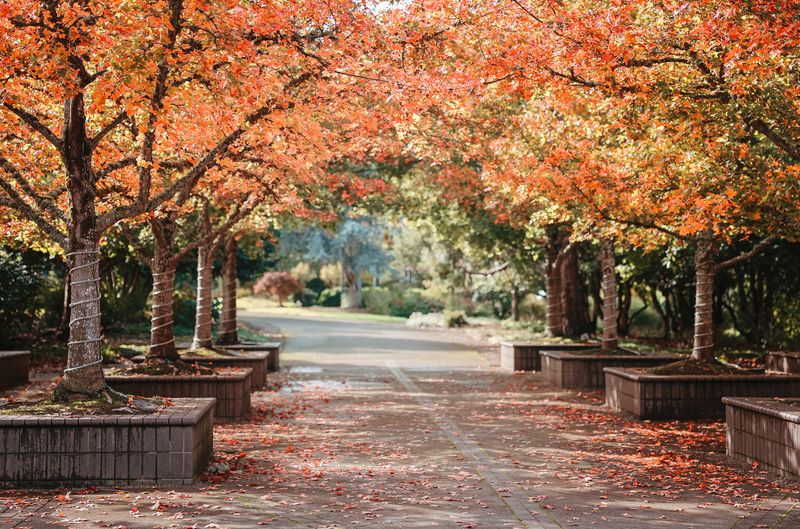
Silverton earned its title as Oregon’s “Garden City” honestly, with blooms spilling from window boxes and public gardens that transform the town into a living canvas. While tourists rush past on their way to the thundering waterfalls of Silver Falls State Park, locals often prefer the quieter contemplation offered by the 80-acre Oregon Garden.
This intentionally designed space provides manicured paths that wind through specialty gardens, each offering a different sensory experience.
The town itself radiates small-town charm without feeling manufactured. Historic buildings line the main street, housing antique shops, local eateries, and bookstores where you can actually browse without feeling rushed.
There’s a farmer’s market feel to the place, even when the market isn’t running, as if the community values homegrown over imported.
Walking through the Oregon Garden, visitors encounter everything from a conifer collection to a wetland habitat, each area thoughtfully laid out to encourage slow exploration. Benches appear at intervals, inviting you to sit and simply observe.
The garden changes with the seasons, offering spring bulbs, summer roses, fall foliage, and winter structure.
Beyond the gardens, Silverton’s location in the foothills of the Cascade Mountains provides easy access to forest trails and creek-side walks. The town serves as a gentle introduction to the wilder landscapes beyond, offering comfort and nature in equal measure.
For locals needing a reset that includes beauty without overwhelming wilderness, Silverton strikes the perfect balance. The pace here encourages lingering, and that’s exactly the point.
Address: Silverton, OR 97381
6. Samuel H. Boardman Scenic Corridor
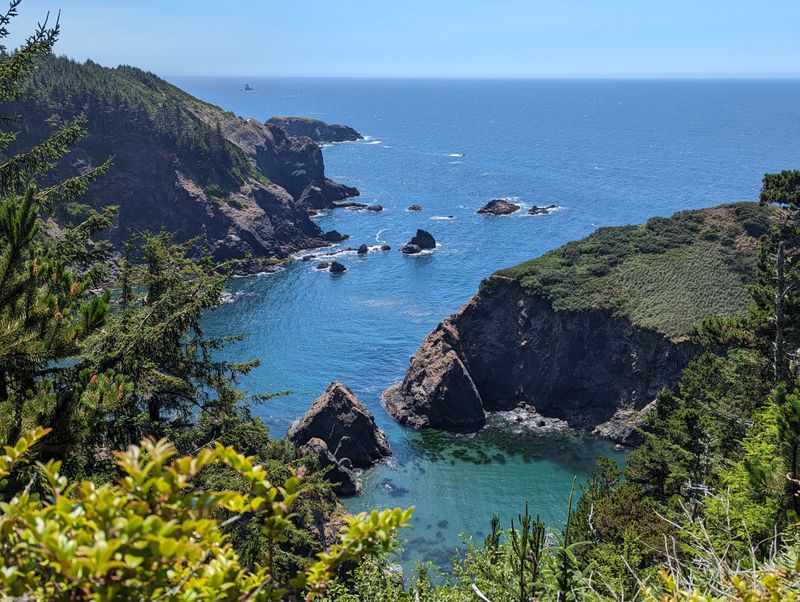
While the northern Oregon coast draws summer crowds by the thousands, this 12-mile stretch of southern coastline remains surprisingly secluded. Named after the first superintendent of Oregon State Parks, the corridor delivers dramatic coastal scenery without the accompanying tourist infrastructure.
Locals come here specifically because it hasn’t been “discovered” in the way that other coastal destinations have been.
Secret Beach lives up to its name, requiring a short but steep trail down to a cove framed by towering rock formations. The beach feels like a private discovery, with driftwood scattered across dark sand and tide pools revealing hidden ecosystems.
Natural arches punctuate the coastline, carved by millennia of wave action into shapes that seem almost architectural.
The highway winds along clifftops, with numerous pullouts offering viewpoints that change with every quarter mile. Sitka spruce forests grow right to the edge of the cliffs, their roots clinging to rocky soil while their branches reach toward the Pacific.
The contrast between green forest and blue ocean creates a color palette that photographers chase endlessly.
Trails branch off from various access points, leading to hidden beaches, rocky promontories, and viewpoints that provide sweeping coastal vistas. The sound of waves is constant, sometimes distant and soothing, other times thunderous and immediate.
Whales pass offshore during migration seasons, and seabirds nest in the rocky cliffs. This stretch of coast feels wild in a way that’s becoming increasingly rare, offering the kind of unfiltered nature experience that helps reset perspective and restore peace.
Address: Samuel H. Boardman State Scenic Corridor, Brookings, OR 97415
7. Mosier

Just ten minutes east of Hood River’s bustling waterfront, Mosier exists as a quiet counterpoint to its adventure-sport-obsessed neighbor. While windsurfers and kiteboarders crowd the Columbia River beaches to the west, Mosier offers tree-lined streets and a pace that feels borrowed from an earlier era.
Locals escape here when they need a break from the crowds without actually leaving the Columbia River Gorge.
The Mosier Twin Tunnels Trail has become a beloved local secret, following an abandoned section of the Historic Columbia River Highway through hand-carved tunnels. The trail emerges onto viewpoints overlooking the river, with wildflowers blooming in spring and golden grasses in summer.
It’s short enough for a quick reset but beautiful enough to feel like a real escape.
Creek-side paths wind through town, offering shaded walks where the only sounds are birdsong and flowing water. The town itself consists of a few blocks of historic buildings, a couple of local eateries, and not much else.
That’s precisely the appeal. There are no tourist shops selling Columbia Gorge souvenirs, no crowds queuing for the latest trendy restaurant.
Orchards surround Mosier, their fruit trees creating a pastoral landscape that changes dramatically with the seasons. Spring brings blossoms that blanket the hillsides in white and pink, while fall offers apples and pears ready for harvest.
The agricultural heritage remains visible and active, providing a grounding contrast to the tourism-driven economy dominating much of the Gorge. For those seeking tranquility within reach of adventure, Mosier delivers quiet pockets that feel worlds away from the action next door.
Address: Mosier, OR 97040
8. Cottage Grove
Famous for its collection of historic covered bridges, Cottage Grove feels like a town that chose to remain in a time when life moved at a gentler pace. Six covered bridges dot the surrounding countryside, each one a wooden relic from an era when craftsmanship mattered more than speed.
Locals use these structures not just as tourist attractions but as actual landmarks, giving directions based on which bridge you’re nearest to.
The Row River Trail stretches for miles along an abandoned rail line, offering flat, easy cycling and walking through pastoral landscapes that could illustrate a storybook. Hay meadows spread out on either side, bordered by wooden fences and punctuated by old barns weathered to soft grays.
The trail passes through covered bridges, adding a sense of history to every outing.
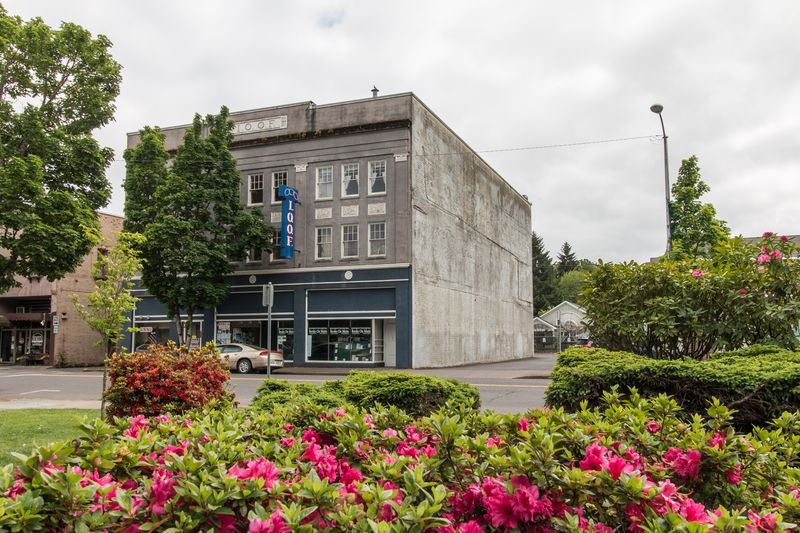
Downtown maintains its historic character with brick buildings housing antique stores, local cafes, and a sense that people here aren’t in any particular hurry. The pace feels deliberate, not lazy, as if the community collectively decided that rushing isn’t worth the cost.
Conversations happen on sidewalks, and shopkeepers know their customers by name.
Surrounding forests offer additional trails for those seeking deeper solitude, but even the more accessible paths provide genuine peace. The combination of agricultural land, forest, and historic structures creates a landscape that feels quintessentially Pacific Northwest without any of the trendy overlay.
For locals seeking a reset, Cottage Grove offers simplicity and a reminder that not everywhere needs to change with the times. Sometimes staying the same is exactly what’s needed.
Address: Cottage Grove, OR 97424
9. Blue Basin (John Day Fossil Beds)
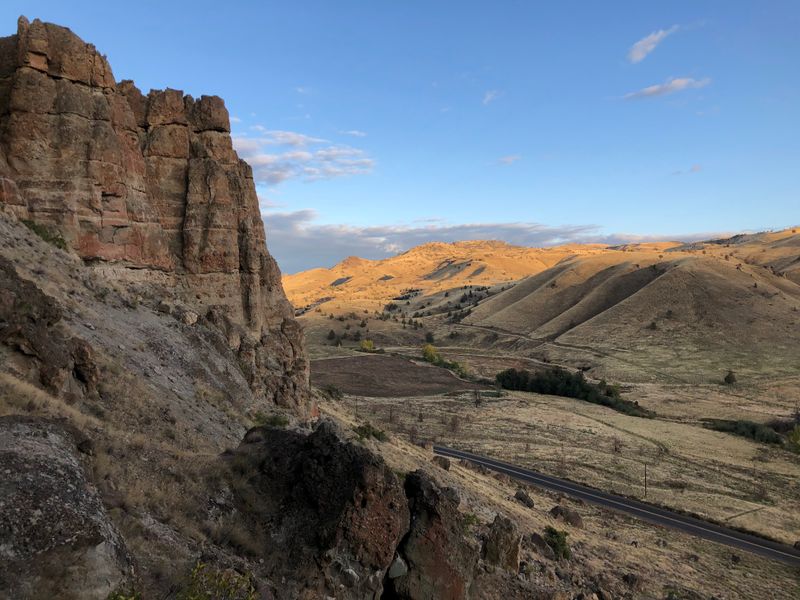
Hidden off Highway 19 in central Oregon, Blue Basin reveals a landscape that seems transported from another planet. Teal and gray claystone formations rise in rippled layers, the result of volcanic ash compressed over millions of years.
The colors shift with the light, sometimes appearing almost turquoise, other times settling into muted sage tones. This isn’t typical Oregon scenery, and that’s exactly why locals come here for perspective.
The Blue Basin Overlook Trail climbs gently through this otherworldly terrain, with interpretive signs explaining the ancient ecosystems preserved in the rocks. Fossils of prehistoric mammals rest within these layers, telling stories from when Oregon looked nothing like it does today.
The trail feels cathedral-like in its quiet grandeur, with the towering claystone walls creating natural acoustics that amplify silence.
Surrounding sagebrush desert provides sharp contrast to the basin itself, making the colored formations feel even more dramatic. The scent of sage fills the air, especially after rain, and the openness of the high desert landscape creates a sense of exposure that urban dwellers rarely experience.
There are no trees to hide behind, no buildings to provide reference points, just earth and sky in conversation.
Visiting during golden hour transforms the basin into something almost magical, with low light painting the formations in warm tones that seem to glow from within. The solitude here runs deep; you might walk the entire trail without seeing another person.
For those seeking a reset that includes geological time scales and landscapes that defy expectation, Blue Basin delivers a humbling reminder of how temporary human concerns truly are.
Address: Blue Basin Trail, John Day Fossil Beds National Monument, Dayville, OR 97825
10. Netarts

This unincorporated community on Netarts Bay has made a deliberate choice to remain small, simple, and uncommercial. There are no stoplights interrupting the flow of traffic because there’s barely any traffic to interrupt.
Limited commercial development keeps the focus squarely on the natural beauty of the bay itself, where mirror-like waters reflect surrounding hills and ever-changing skies. Locals come here specifically because it hasn’t been developed into something more polished.
Kayaking on Netarts Bay feels like paddling through glass on calm days, with only the dip of your paddle breaking the silence. The bay’s protected waters make it ideal for peaceful exploration, whether you’re a beginner or experienced paddler.
Oyster beds dot the shallows, and harvesting your own oysters has become a beloved local activity that connects people directly to their food source.
The beach stretches for miles, wide and sandy, with tide pools appearing during low tide. Beachcombing yields agates, shells, and driftwood, but the real treasure is the solitude.
Even during summer, you can walk for stretches without seeing another soul. The sound of waves provides a constant, soothing backdrop.
A few local establishments serve fresh seafood and provide basic supplies, but there’s no pressure to spend money or participate in organized activities. Netarts simply exists, offering space for people to create their own experiences.
For Oregonians seeking a reset that includes salt air, calm waters, and the freedom to do absolutely nothing, this unassuming community delivers exactly what’s needed. Sometimes the best places are the ones that refuse to become destinations.
Address: Netarts, OR 97143
Dear Reader: This page may contain affiliate links which may earn a commission if you click through and make a purchase. Our independent journalism is not influenced by any advertiser or commercial initiative unless it is clearly marked as sponsored content. As travel products change, please be sure to reconfirm all details and stay up to date with current events to ensure a safe and successful trip.
