At first glance, it just looks like a stretch of quiet land, nothing loud, nothing dramatic.
Then you realize you are standing on something built centuries ago, shaped by people whose stories still linger in the ground beneath your feet. That shift hits differently than any sign or plaque could explain.
The atmosphere does most of the talking, open space, soft wind, and a kind of stillness that makes you naturally pause. Texas has plenty of historic sites, but this one feels less like a stop and more like a moment.
The Three Sacred Mounds and What They Mean
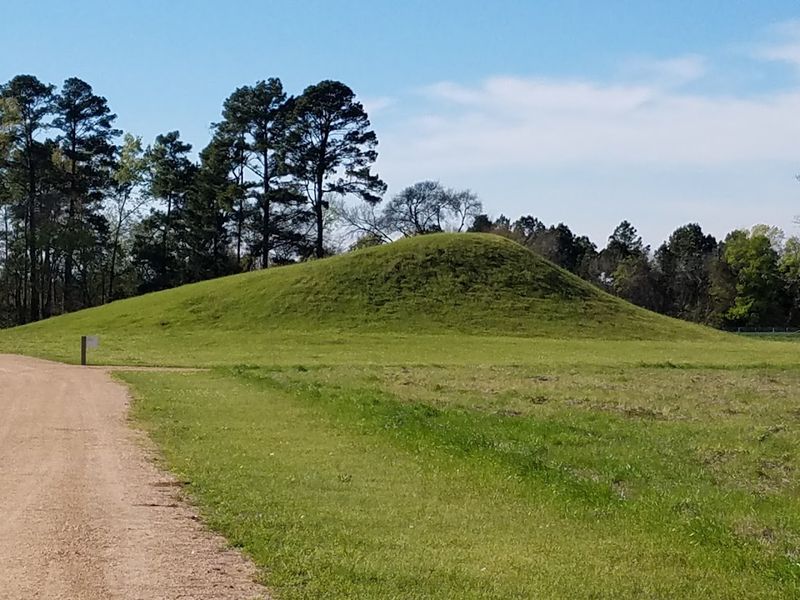
Few things in Texas history carry as much quiet weight as the three earthen mounds at this site. Mound A is the largest of the group and is believed to have served as a ceremonial platform where important rituals took place.
It is not just a pile of dirt. It is a carefully constructed monument built over generations by the Caddo people who called this place home.
Mound B is thought to have been a temple mound, a place of spiritual gathering and community life. Mound C served as a burial site for elite members of Caddo society, which tells us a lot about how organized and socially complex this civilization really was.
The Caddo began building here around A.D. 800 and maintained this settlement for nearly 500 years. That kind of continuity is remarkable.
Each mound has its own story, and together they paint a picture of a thriving, deeply spiritual community that shaped this corner of Texas long before European contact. Seeing them in person feels less like a history lesson and more like a quiet conversation with the past.
A Civilization That Thrived for Five Centuries
Most people driving through Cherokee County on Highway 21 have no idea that one of the most sophisticated pre-Columbian civilizations in the American South once flourished right here. The Caddo people were not a small nomadic group.
They were farmers, traders, and skilled craftspeople who built permanent settlements and maintained complex social hierarchies.
This particular site was active from roughly A.D. 800 to A.D. 1300, which means it was a living, breathing community for about 500 years. For context, that is longer than the United States has existed as a country.
The Caddo traded goods across vast distances, connecting communities from the Gulf Coast to the Great Plains.
Their agricultural practices were advanced, and their pottery traditions were so distinctive that archaeologists can identify Caddo artifacts at sites hundreds of miles away. Understanding the full scope of what the Caddo accomplished here changes how you see this landscape.
The mounds are not ruins of a forgotten people. They are the legacy of a civilization that was deeply rooted, highly organized, and extraordinarily resilient across half a millennium of continuous occupation.
The Visitor Center and Its Remarkable Artifacts
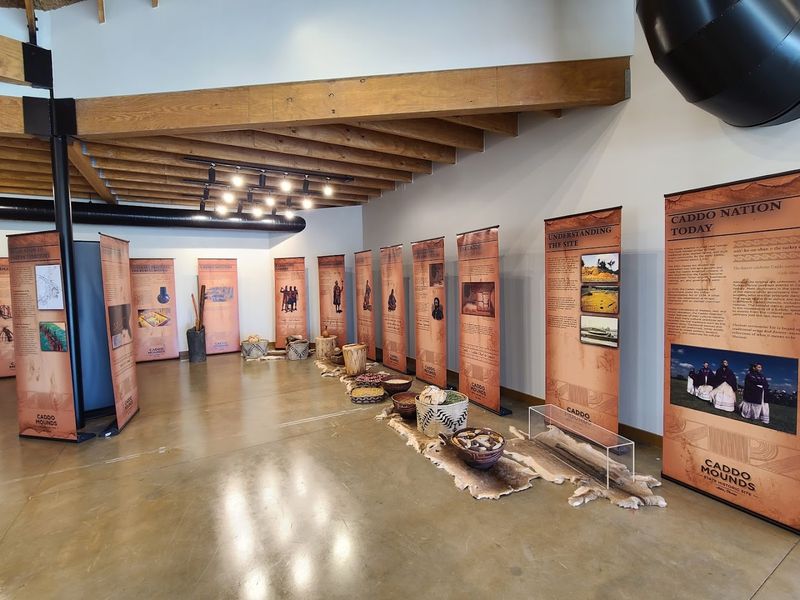
The visitor center at Caddo Mounds is genuinely impressive for a site of this size. It reopened in 2015 after renovations and now houses a collection of artifacts spanning from A.D. 750 to A.D. 1400.
Pottery shards, tools, weapons, and ceremonial objects fill the display cases, each one pulled from the ground right here at this site.
What strikes you most is how beautiful the pottery is. The Caddo were master ceramicists, and their engraved designs show a level of artistic sophistication that is hard to ignore.
Holding that knowledge while looking at a 1,000-year-old bowl behind glass is a genuinely humbling experience.
The exhibits are laid out in a way that makes the history feel accessible rather than overwhelming. Labels are clear, the layout flows logically, and the staff are genuinely knowledgeable and enthusiastic about sharing what they know.
Even if you are not usually a museum person, this one earns its time. Plan to spend at least 30 to 45 minutes inside before heading out to the trails, because the context it provides completely transforms how you experience the mounds themselves.
The Self-Guided Interpretive Trail Experience
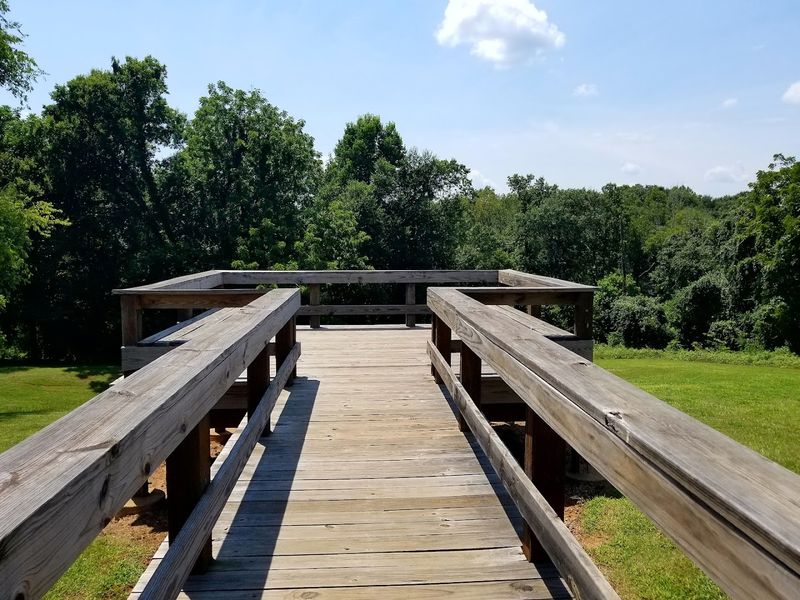
The 0.7-mile self-guided interpretive trail at Caddo Mounds is one of those rare walks that feels both easy and deeply meaningful. It is flat, well-maintained, and suitable for most ages and fitness levels.
The trail takes you past all three mounds and includes several interpretive signs that explain the significance of each area without being overly academic.
There is a real rhythm to this walk. You start near the visitor center, move through open grassland, and gradually feel the landscape shift as the mounds come into view one by one.
The signs are well-written and placed at just the right moments to give you information exactly when you need it.
Morning is a particularly good time to do this trail. The light comes through the surrounding pines at a low angle, and the mounds cast long shadows across the grass.
It feels atmospheric in a way that photographs struggle to capture. The trail also connects to the El Camino Real de los Tejas National Historic Trail, adding another layer of history to the walk.
Budget about an hour for the full experience, including stops at each mound and a few quiet moments just to take it all in.
The Reconstructed Caddo Grass House
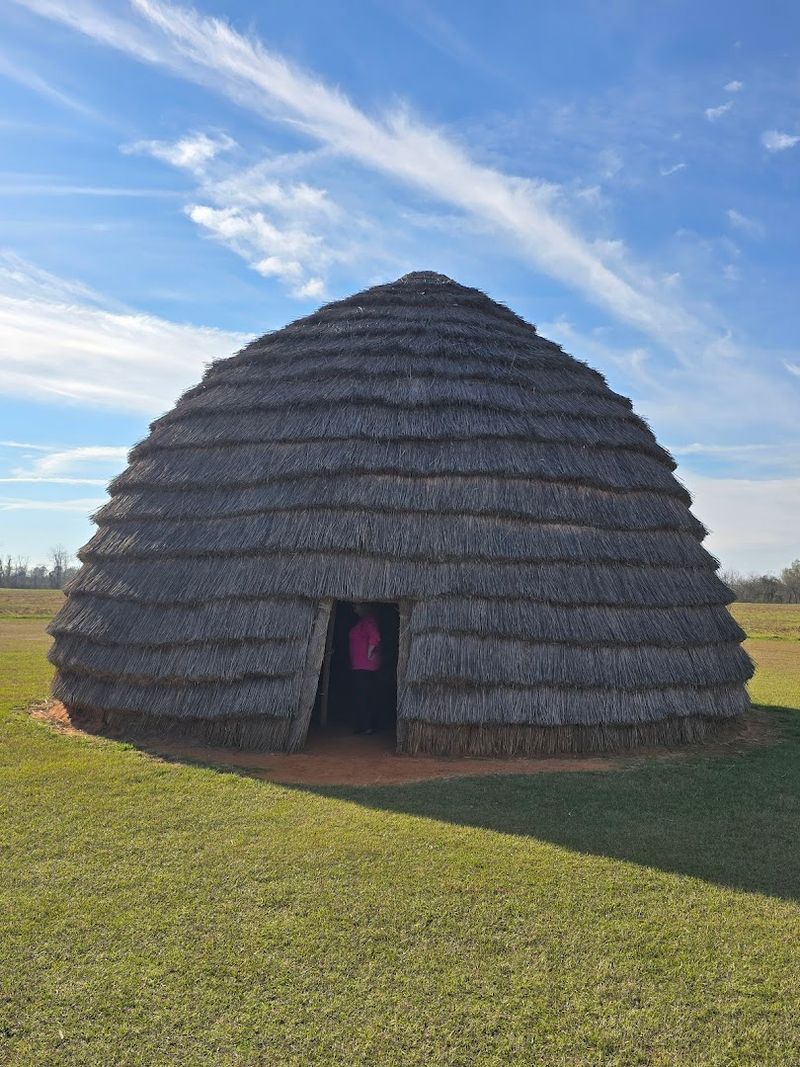
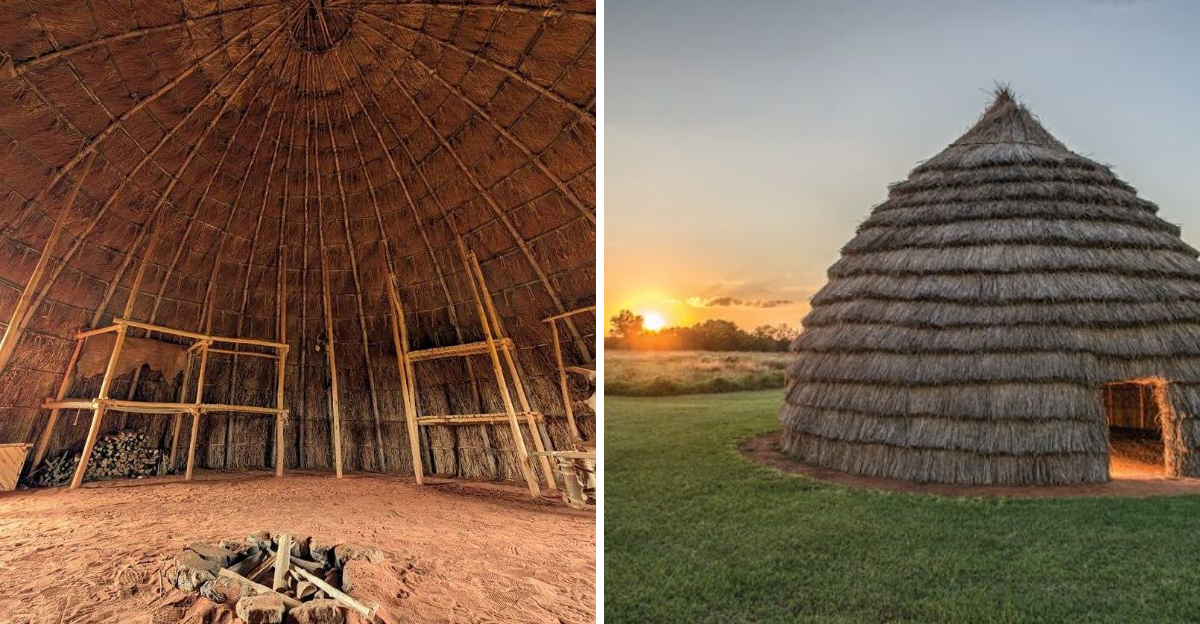
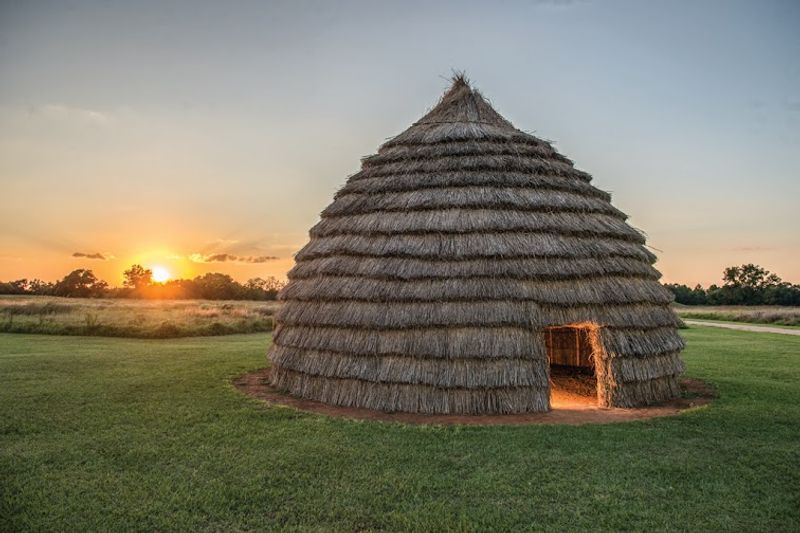
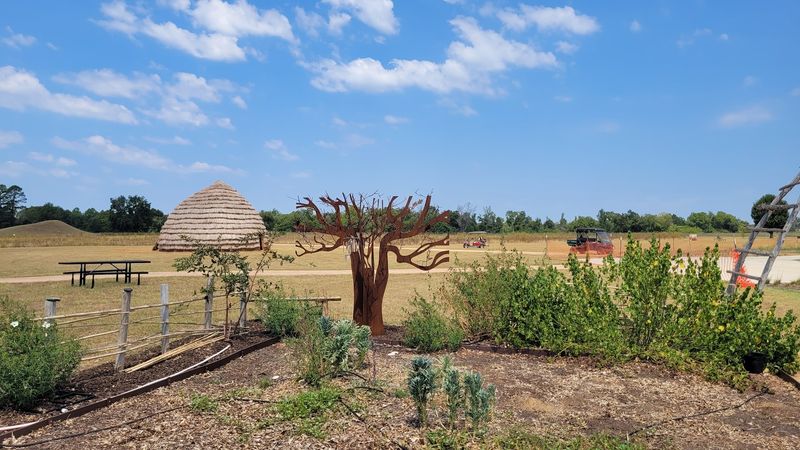
One of the most visually striking features of the site is the reconstructed Caddo grass house standing near the trail. It is a full-scale replica of the kind of structure the Caddo people would have built and lived in, and it is far more impressive in person than any photo suggests.
The structure is round, tall, and covered in layers of bundled grass woven over a wooden frame.
Caddo architecture was remarkably sophisticated. These houses were not temporary shelters.
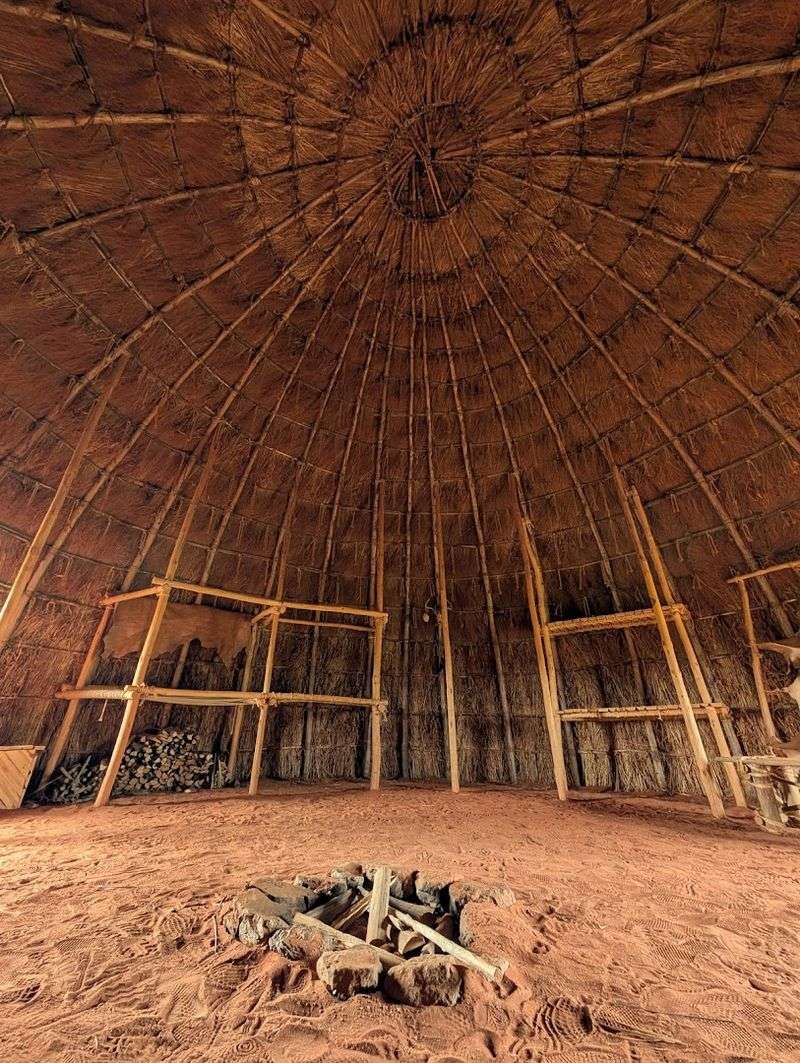
They were permanent, well-insulated homes designed to handle the heat of Texas summers and the occasional cold snap of winter. The grass covering could reach thicknesses that made the interior surprisingly comfortable.
Getting up close to the replica gives you a real sense of the craftsmanship involved. The way the materials are layered and tied is almost artistic.
The Caddo did not build this way because it was the only option available to them. They built this way because it worked beautifully for the environment they lived in.
Seeing it standing against the East Texas sky, surrounded by pine trees, makes the whole experience feel more grounded and real than any textbook description ever could.
El Camino Real de los Tejas and the Layers of History
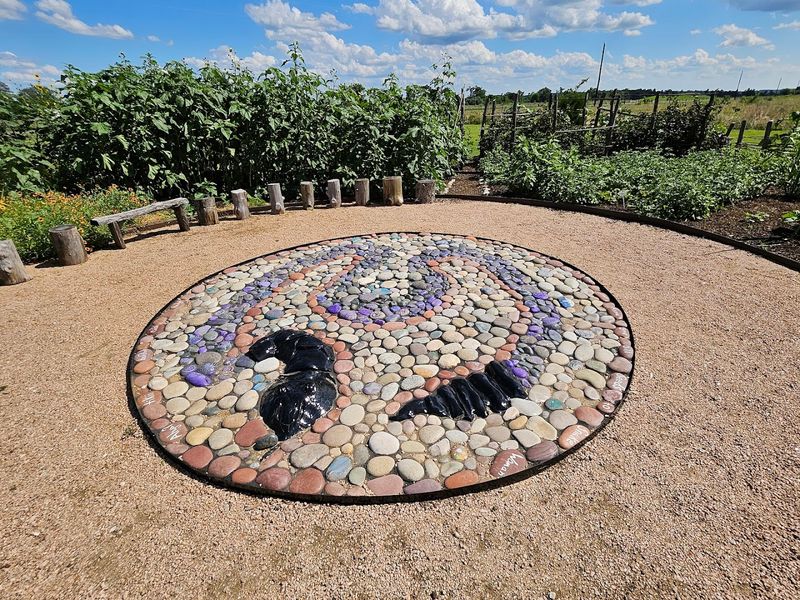
The story of this land does not stop with the Caddo. An additional 0.4-mile trail at the site follows a portion of El Camino Real de los Tejas, a historic road that connected Spanish colonial settlements across Texas and into Louisiana.
This trail was used by Spanish missionaries, soldiers, and traders centuries after the Caddo had already left the mounds behind.
Walking this path adds a fascinating second layer to the site’s identity. You are not just standing in a place of Caddo significance.
You are also standing on a road that shaped the colonial history of an entire region. The intersection of these two histories in one small corner of East Texas is genuinely remarkable.
The National Historic Trail designation means this route is recognized at a federal level for its historical importance. Interpretive markers along the path explain the road’s role in connecting communities across hundreds of miles.
It is a short walk, but it rewards careful attention. Few places in Texas offer this kind of layered, multi-era historical experience in such a compact and accessible setting.
Both trails together give you the full sweep of what this land has witnessed.
First Saturday Guided Tours Worth Planning Around
If your schedule has any flexibility at all, try to time your visit with one of the First Saturday Guided Tours offered every first Saturday of the month at 10 a.m.
These tours are led by an educator at the site and cover the history, archaeology, and cultural significance of the mounds in a way that goes well beyond what the trail signs can offer.
Guided tours change the experience entirely. Questions get answered in real time, unexpected details come out in conversation, and you notice things you would have completely walked past on your own.
The format is relaxed and unhurried, which makes it approachable for families, solo visitors, and history enthusiasts alike.
The group size tends to stay manageable, so it never feels like a crowded tourist event. There is something genuinely special about gathering around a thousand-year-old mound with a small group of curious people and learning together.
If you have kids with you, this format tends to hold their attention much better than reading signs independently. Check the Texas Historical Commission website before your trip to confirm the schedule and any special programming happening around your planned visit date.
Caddo Culture Day: A Living Celebration
Once a year, the site comes alive in a completely different way during Caddo Culture Day. This annual event brings together members of the Caddo Nation and the broader community to celebrate Caddo history not as something frozen in the past, but as a living, continuing culture.
Traditional cooking, stickball exhibitions, and cultural demonstrations fill the grounds with energy and color.
Attending this event is a completely different experience from a regular visit. The mounds take on new meaning when the descendants of the people who built them are present, sharing their traditions and stories.
It is one of those rare occasions where a historic site feels genuinely alive.
The event also serves as an important reminder that the Caddo people did not disappear. The Caddo Nation of Oklahoma is a federally recognized tribe with a strong cultural identity and ongoing traditions that connect directly to the history preserved at this site.
Caddo Culture Day makes that connection visible and tangible in a way that no exhibit can fully replicate. If you can plan your visit around this event, do it.
It transforms a meaningful historical site into something that feels urgent, warm, and deeply human.
The Atmosphere of the East Texas Piney Woods Setting
The setting itself deserves its own conversation. Caddo Mounds sits in the heart of the East Texas Piney Woods, a region that looks and feels dramatically different from the arid landscapes most people associate with Texas.
Tall loblolly pines, thick undergrowth, and red clay soil give this part of the state a lush, almost Southern feel that surprises first-time visitors.
The landscape around the mounds is open and grassy, which creates a striking visual contrast with the dense treeline surrounding the site. On a clear morning, the light is genuinely beautiful out here.
The mounds seem to glow a warm amber color when the sun is low, and the surrounding pines frame the scene in a way that feels almost deliberate.
There is also a quietness to this place that is harder to find than you might think. The site sits off Highway 21 outside the small town of Alto, far from urban noise and distraction.
Birds, wind, and the occasional rustle of the trees are pretty much all you hear. That stillness makes the experience more contemplative and more affecting.
Some places earn their atmosphere. This one has been building its for over a thousand years.
Planning Your Visit to Caddo Mounds State Historic Site
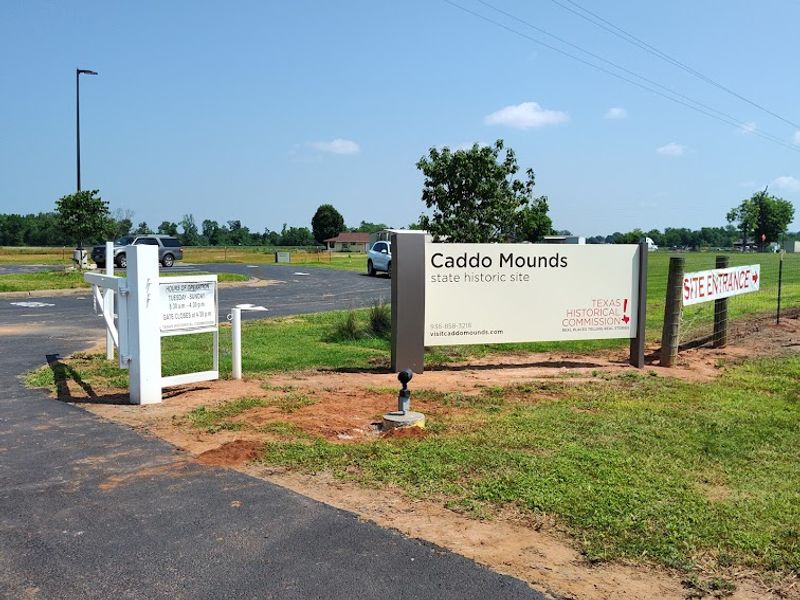
Getting to Caddo Mounds is straightforward. The site is located at 1649 State Highway 21 West in Alto, Texas, about 20 miles east of Nacogdoches and roughly two and a half hours from both Dallas and Houston.
The drive through the Piney Woods is pleasant, and the site is clearly marked from the highway.
The site is open Tuesday through Sunday from 8:30 a.m. to 4:30 p.m. and is closed on Mondays. Admission is affordable, and children under five get in free.
The visitor center, trails, and grass house are all accessible within a single visit, making it easy to see everything in a half-day trip.
Wear comfortable shoes and bring water, especially in warmer months when the East Texas humidity can catch you off guard. The trails are flat and easy, but the sun can be intense on open ground.
A light jacket is worth having in cooler months since the open landscape offers little wind protection. The staff are friendly and genuinely glad to help you make the most of your time here.
Address: 1649 TX-21, Alto, Texas 75925.
Dear Reader: This page may contain affiliate links which may earn a commission if you click through and make a purchase. Our independent journalism is not influenced by any advertiser or commercial initiative unless it is clearly marked as sponsored content. As travel products change, please be sure to reconfirm all details and stay up to date with current events to ensure a safe and successful trip.
