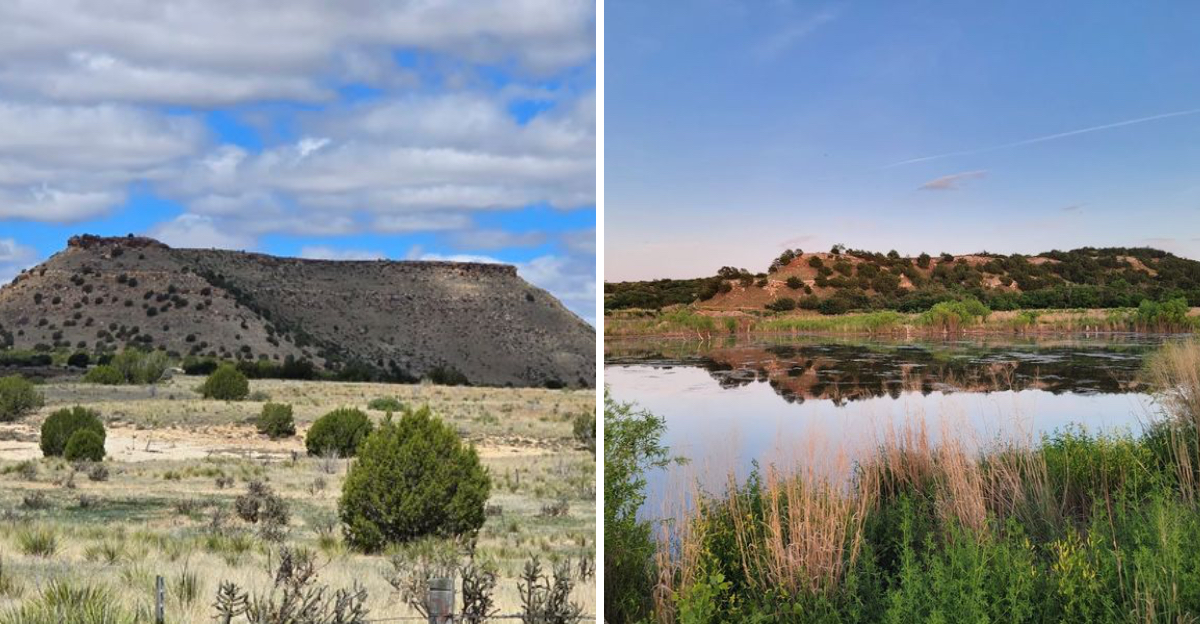
Oklahoma does not boast about its mountains. Perhaps it should.
Scattered across the state, ancient rock formations rise from the plains with quiet dignity, having witnessed centuries of change without feeling the need to announce themselves.
These are not the towering peaks of the Rockies or the jagged edges of the Cascades. They are something rarer: accessible highlands where solitude still exists and the views feel earned rather than crowded.
The Wichitas, the Arbuckles, the Ouachitas. Each range offers its own character, its own light, its own reason to linger. A sunrise from a granite summit here carries the same weight as any famous overlook.
The difference is you might have it all to yourself.
Ten Oklahoma mountain escapes deserve a spot on your bucket list.
Not because they compete with bigger ranges. But because they have quietly perfected the art of being exactly what a mountain should be. Wild, ancient, and wonderfully unhurried.
1. Wichita Mountains Wildlife Refuge, Indiahoma, OK
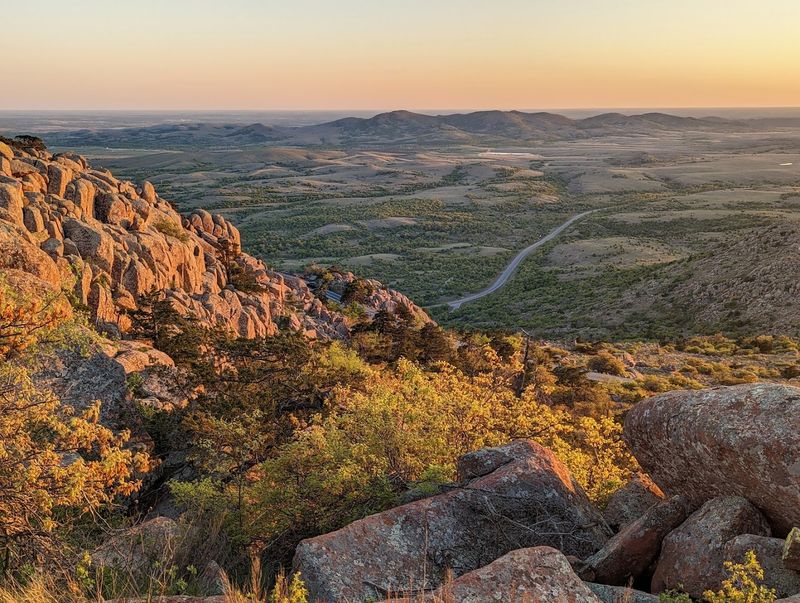
Standing on top of Mount Scott and watching bison roam freely across the valley below is one of those moments that genuinely stops you in your tracks.
The Wichita Mountains Wildlife Refuge sits near Indiahoma in southwest Oklahoma. It protects some of the oldest exposed granite peaks in North America, and that geological history is visible in every boulder and cliff face you pass.
The refuge covers around 59,000 acres. That is a lot of land to explore, and the trail network makes it very accessible for hikers of all experience levels.
Mount Scott is the crown jewel here. A paved road winds all the way to the summit, so even non-hikers can enjoy the panoramic views that stretch for miles in every direction.
Early morning visits are my personal favorite. The light hits the granite in a warm golden tone, and the wildlife tends to be most active before the day heats up.
Beyond bison, the refuge is home to elk, longhorn cattle, prairie dogs, and over 240 bird species. Birdwatchers will absolutely find their happy place here.
The best time to visit is spring or fall. Summer temperatures in southwest Oklahoma can be intense, so planning your hike for cooler months makes the experience far more enjoyable.
There are several designated picnic areas and a visitor center near the refuge headquarters on 32 Refuge Headquarters Road. Stop in before hitting the trails to grab a map and check on current wildlife activity.
The Wichita Mountains remain one of Oklahoma’s most remarkable outdoor destinations, combining wildlife, rugged scenery, and some of the state’s most memorable views.
2. Beavers Bend State Park, Broken Bow, OK
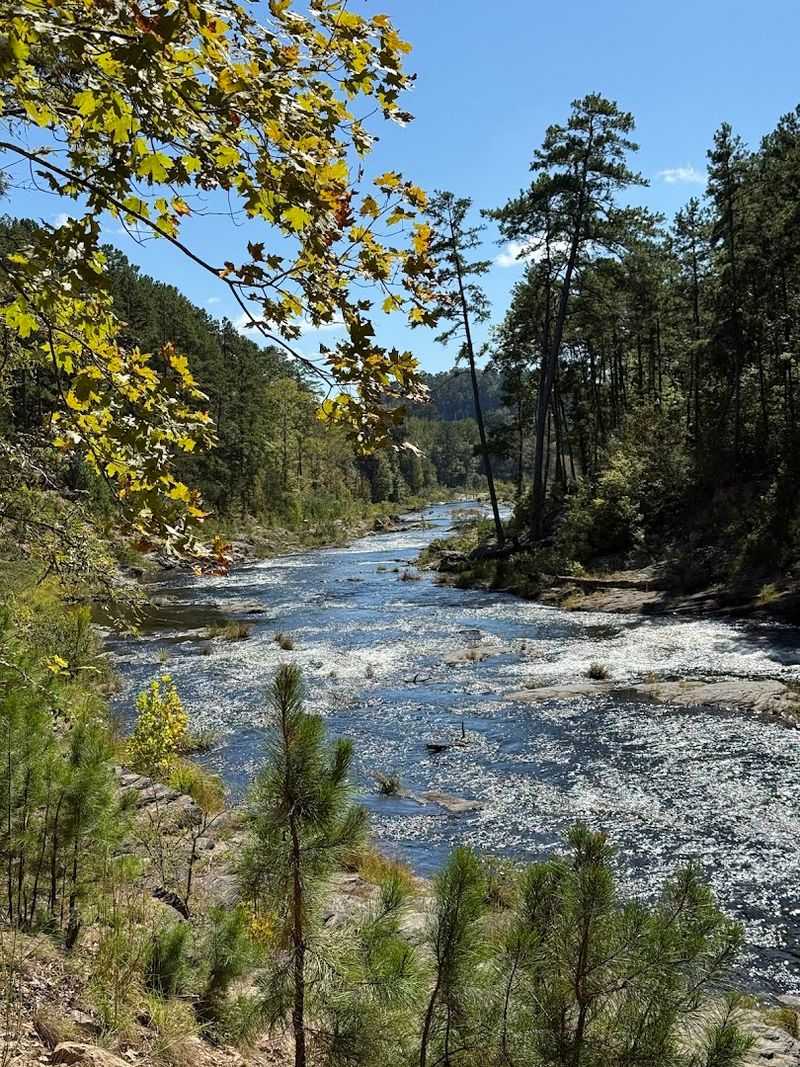
There is something deeply refreshing about arriving at a place that looks like it belongs in the Pacific Northwest but is tucked right into southeastern Oklahoma.
Beavers Bend State Park is located near Broken Bow in the Ouachita foothills. Towering shortleaf pines shade the trails, and the Mountain Fork River runs cold and clear through the heart of the park.
The park sits at 4350 OK-259A and is one of the most visited state parks in Oklahoma for good reason. The combination of dense forest, moving water, and mountain terrain creates an atmosphere that feels genuinely wild.
Hiking is outstanding here. The David L. Boren Trail stretches for miles through the forest, offering views of the river and plenty of spots to stop and take in the scenery.
Fishing is another major draw. The Mountain Fork River is stocked with trout, and fly fishing along its banks is a peaceful, rewarding experience even if you have never tried it before.
Fall is spectacular at Beavers Bend. The pine forest stays green, but the hardwood trees turn brilliant shades of orange and red, creating a striking contrast that photographers love.
Cabin rentals within the park are a popular option. Waking up surrounded by forest with the sound of the river nearby is a completely different experience from a standard hotel stay.
I always recommend arriving early on weekends. This park draws big crowds, especially during fall foliage season, and the trails are far more enjoyable when they are not packed with people.
3. Robbers Cave State Park, Wilburton, OK
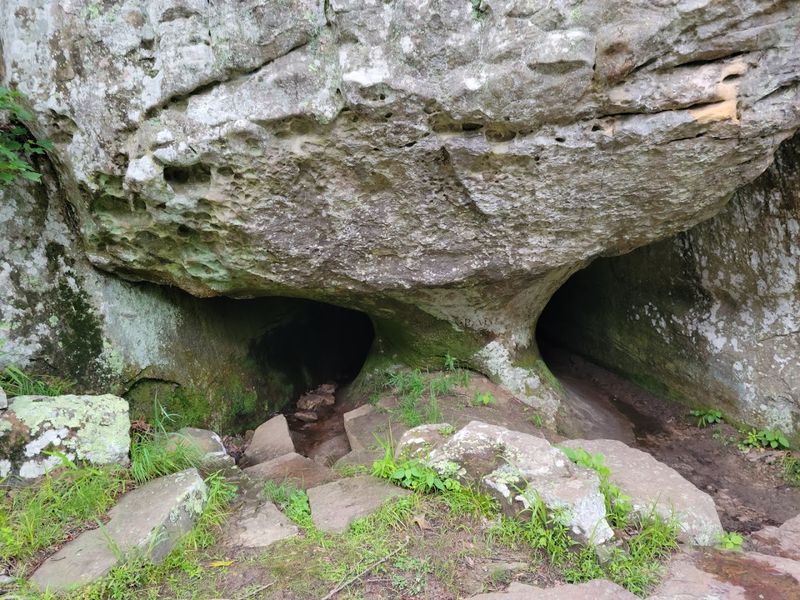
Few places in Oklahoma carry as much historical intrigue as a park literally named after the outlaws who once used its caves as a hideout.
Robbers Cave State Park is located near Wilburton in eastern Oklahoma, nestled into the rugged San Bois Mountains. The park’s address is 2084 NW 146th Rd, and the drive in through the forested hills already sets the mood perfectly.
The sandstone cliffs here are impressive. They rise sharply from the forest floor, creating a dramatic landscape that feels more like the American Southwest than central Oklahoma.
The caves themselves are the main attraction. Belle Starr and other notorious outlaws from the late 1800s reportedly used these hidden caverns as shelter, and walking through them today still carries a certain sense of mystery.
Rock climbing is a popular activity at Robbers Cave. The sandstone faces offer routes for both beginners and more experienced climbers, and the views from the top of the cliffs are genuinely worth the effort.
Horseback riding trails wind through the park as well. Exploring the forest on horseback adds a completely different dimension to the experience and connects you to the outlaw history in a fun, tangible way.
The lake within the park is great for paddleboating and fishing. It is a calm, scenic spot that provides a nice contrast to the rugged terrain of the cliffs and caves.
Spring wildflower season is particularly beautiful here. The forest floor lights up with color, and the combination of blooms against the red sandstone is a photographer’s dream.
4. Gloss Mountain State Park, Fairview, OK
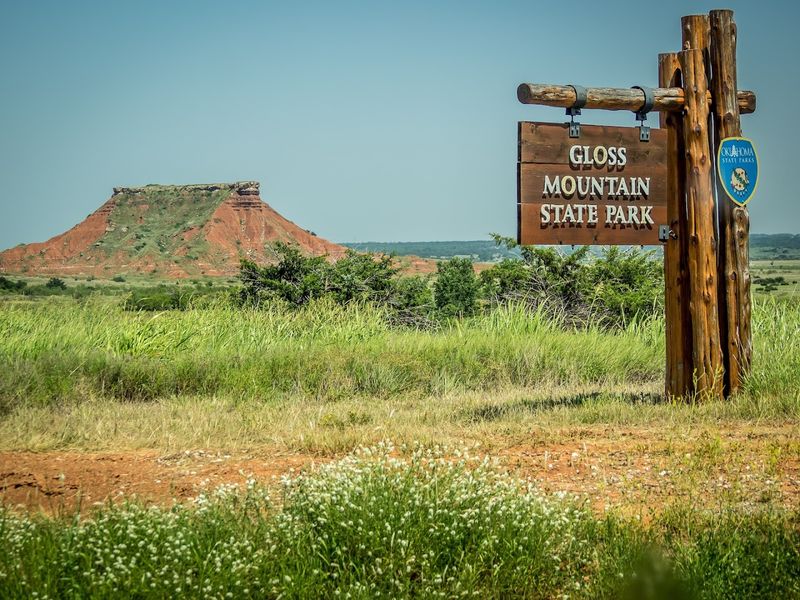
Not every mountain needs to be tall to be remarkable, and Gloss Mountain State Park makes that argument better than almost anywhere else in the country.
Located along US-412 near Fairview in northwest Oklahoma, Gloss Mountain is a collection of striking high-plains mesas that rise unexpectedly from the flat surrounding landscape.
What makes them truly unique is the selenite glass embedded throughout the rock, which catches sunlight and makes the entire surface sparkle.
The effect is almost surreal. On a clear afternoon, the mesas genuinely seem to glow, and the visual impact from the roadside alone is enough to make you pull over immediately.
A metal staircase leads to the top of one of the main mesas. The climb is short but steep, and the 360-degree view from the summit reveals just how flat and vast the surrounding plains really are.
Geologically, this area is fascinating. The selenite crystals formed as ancient shallow seas evaporated, leaving behind minerals that were later exposed through erosion over millions of years.
Sunrise and sunset visits are absolutely worth planning for. The low-angle light intensifies the sparkle dramatically, and the color of the sky reflected in the crystals creates combinations that feel almost painted.
There are no facilities beyond basic parking, so come prepared with water and snacks. The park is small but packs a serious visual punch for such a quick and easy stop.
If you are driving through northwest Oklahoma and think there is nothing worth stopping for, Gloss Mountain will change that assumption completely and permanently.
5. Talimena National Scenic Byway, Talihina, OK
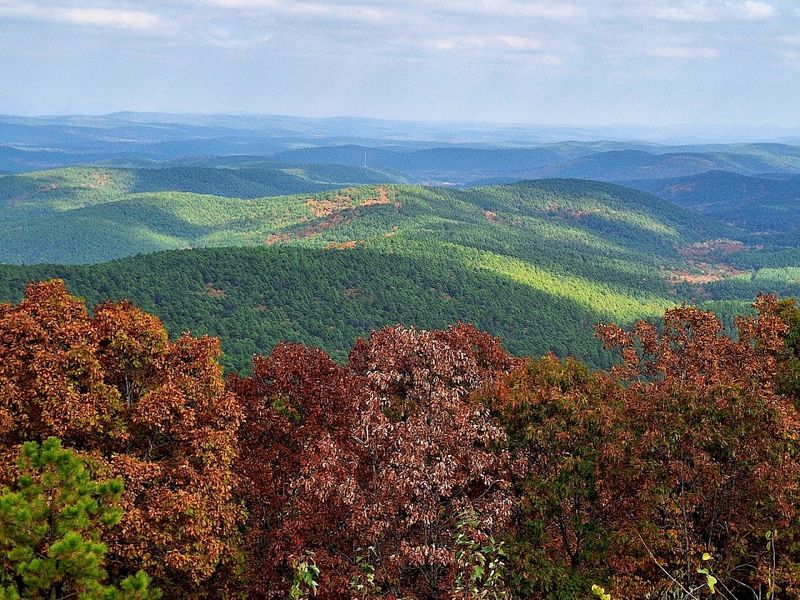
Some roads are just roads, and then there are roads that make you want to slow down, roll the windows down, and forget about wherever you were headed.
The Talimena National Scenic Byway is firmly in the second category. Starting near Talihina on OK-1 Scenic in southeastern Oklahoma, this 54-mile route crests the ridges of the Winding Stair and Ouachita Mountain ranges in a series of sweeping curves and breathtaking overlooks.
The elevation changes along this route are dramatic by Oklahoma standards. The byway reaches heights of over 2,600 feet, and the views from the overlook pullouts stretch across forested valleys that seem to go on forever.
Fall is when this drive truly reaches its peak. The hardwood forest that blankets the mountains turns into a brilliant patchwork of red, orange, and gold, and the overlooks become some of the most photographed spots in the entire state.
Several hiking trailheads branch off from the byway. The Ouachita National Recreation Trail follows the ridge for long stretches and is ideal for backpackers who want to spend a night or two surrounded by mountain forest.
Wildflower season in spring is another excellent time to make the drive. The roadsides bloom with color, and the forest is a fresh, vivid green that photographs beautifully in the soft morning light.
The byway continues into Arkansas, so you can extend the drive and explore even more of the Ouachita region if time allows.
I always plan at least half a day for this route, because every overlook tempts you to stop and linger just a little longer than planned.
6. Quartz Mountain State Park, Lone Wolf, OK
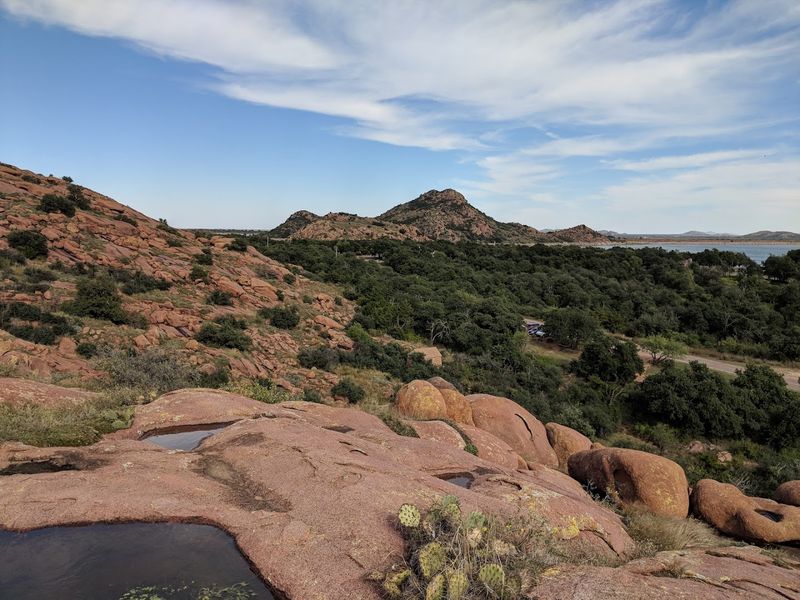
Picture a cluster of bare, pink granite mountains rising straight out of a flat southwestern plain, with a shimmering lake at their base, and you have Quartz Mountain State Park.
Located near Lone Wolf in southwest Oklahoma at 14722 OK-44A, this park is one of the most visually striking landscapes in the entire state. The contrast between the rugged mountains and the open plain surrounding them is genuinely dramatic and almost hard to believe until you see it in person.
Lake Altus-Lugert wraps around the base of the mountains. The lake is popular for fishing, kayaking, and paddleboarding, and the reflections of the granite peaks on the water’s surface are absolutely stunning on calm mornings.
Hiking trails wind up and around the granite formations. The terrain is rocky and exposed, so sturdy footwear is essential, but the payoff at the top is a sweeping view of the lake and the surrounding plains that stretches for miles.
The park is also home to a performing arts center and an arts institute. It has a long tradition of supporting arts and culture, which gives it a character that is quite different from most state parks.
Bald eagles are common visitors during winter months. They congregate near the lake to feed, and spotting one perched on a granite boulder against a cold blue sky is a genuinely memorable experience.
Spring storms over the mountains here are something to witness from a safe distance. The wide open sky and the rocky silhouette of the peaks create a dramatic backdrop for lightning and fast-moving clouds.
7. Natural Falls State Park, Colcord, OK
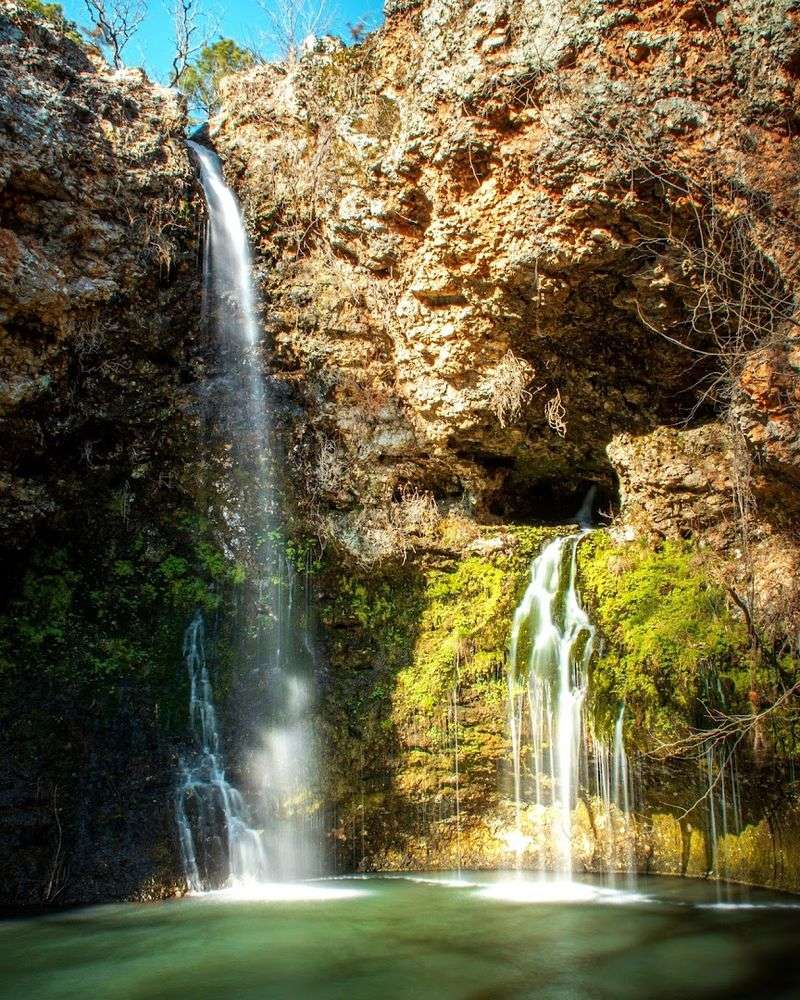
Tucked into a hidden valley in the far northeastern corner of Oklahoma, Natural Falls State Park holds one of the most beautiful waterfalls in the entire south-central United States.
The park is located near Colcord in the Ozark Highlands at 19225 E 578 Rd. Getting there involves winding through forested hills, and the approach already feels like a reward before you even reach the main attraction.
The waterfall itself drops 77 feet into a narrow, moss-lined gorge. The sound of it hits you before you even see it, and the first glimpse through the trees is genuinely breathtaking in a way that photos simply cannot fully capture.
A wooden boardwalk and staircase system leads down into the valley and around the base of the falls. The descent is easy enough for most visitors, and the views from multiple levels along the trail offer completely different perspectives of the cascading water.
The surrounding forest is dense and lush. Ferns, wildflowers, and mossy boulders line the trail, and the microclimate in the valley stays noticeably cooler and more humid than the surrounding landscape.
Spring and early summer bring the highest water flow. After heavy rains, the falls become even more powerful and loud, filling the entire gorge with mist and the roar of moving water.
Wildlife sightings are common along the trails. White-tailed deer, wild turkey, and a wide variety of songbirds make regular appearances, especially in the early morning hours before crowds arrive.
This park is small but packs an outsized emotional punch, and it consistently ranks among my personal favorite spots in all of Oklahoma.
8. Black Mesa State Park and Nature Preserve, Kenton, OK
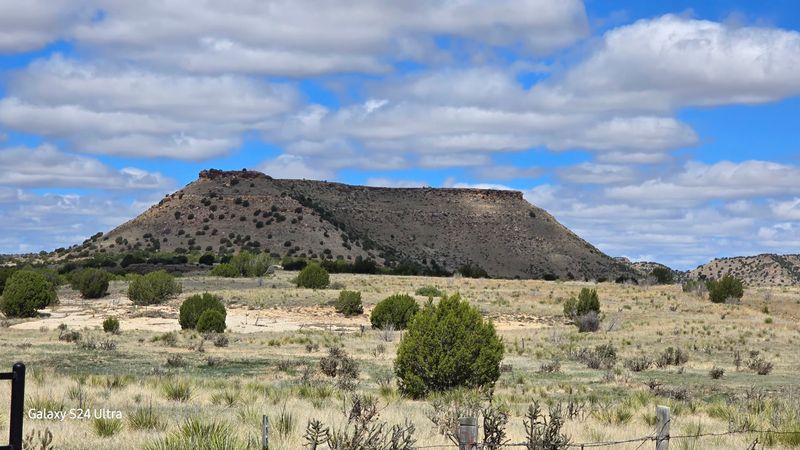
At the far western edge of the Oklahoma Panhandle, Black Mesa rises above the surrounding High Plains landscape and creates one of the state’s most distinctive environments.
Black Mesa State Park and Nature Preserve is located near Kenton on OK-325 in Cimarron County. The mesa itself is a remnant of ancient volcanic activity, and its flat, dark basalt cap stands in stark contrast to the surrounding tan and golden plains.
The hike to the summit is about 4.2 miles one way. It is a moderate trail across open terrain, and the sense of wide-open space on the approach is unlike anything else I have experienced in Oklahoma.
The summit marker sits at 4,973 feet above sea level. Reaching it feels like a real achievement, and the 360-degree view from the top encompasses parts of Oklahoma, New Mexico, and Colorado simultaneously.
Dinosaur tracks have been discovered in this region. The area around Black Mesa has yielded significant paleontological finds, and the prehistoric atmosphere of the landscape makes that history feel very present and real.
The night sky out here is extraordinary. Cimarron County is one of the darkest areas in the entire state, and stargazing from the mesa on a clear night reveals a canopy of stars that is genuinely overwhelming in the best possible way.
Wildlife in this remote corner of Oklahoma includes mule deer, pronghorn antelope, and golden eagles. The isolation of the landscape means animal sightings feel especially raw and unfiltered.
Getting here requires a long drive on rural roads, but arriving at Black Mesa feels like discovering a completely different world hidden inside Oklahoma.
9. Roman Nose State Park, Watonga, OK
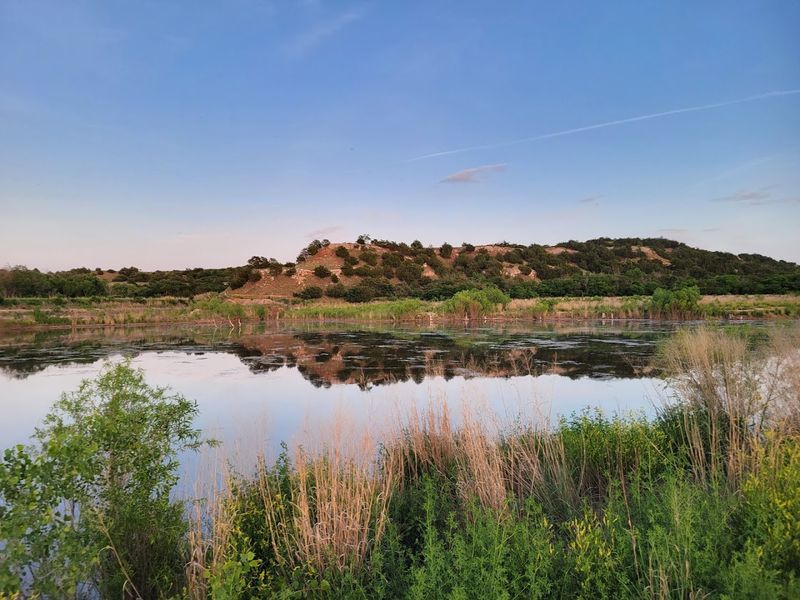
Hidden inside the rolling red hills of central Oklahoma, Roman Nose State Park reveals a canyon landscape so unexpected that first-time visitors often do a double-take from the parking area.
The park sits at 3236 OK-8A near Watonga in Blaine County. The canyon it occupies was carved by natural springs and erosion over thousands of years, creating a rugged, intimate landscape that feels completely out of place in the surrounding flat plains.
The gypsum rock formations are the standout geological feature. White and cream-colored stone walls rise on either side of the canyon floor, and the natural springs that bubble up from the base have created small, turquoise pools that are genuinely beautiful.
Water features and swimming areas within the park become popular gathering spots during warmer months. The water stays cool, and the setting inside the canyon walls makes it feel like a private natural retreat far removed from everyday life.
The canyon trail network is compact but rewarding. Paths wind along the canyon rim and down into the valley floor, offering very different perspectives of the same dramatic landscape within a relatively short distance.
The park is named in honor of Chief Roman Nose, a respected leader of the Southern Cheyenne people. That history adds a layer of cultural significance to the natural beauty of the landscape.
Birdwatching along the canyon rim is excellent, particularly in spring. The mix of cedar forest, open grassland, and water sources attracts a wide variety of species that are not commonly found elsewhere in this part of the state.
Roman Nose is one of those parks that rewards slow, attentive exploration rather than a quick pass-through visit.
10. Turner Falls Park, Davis, OK
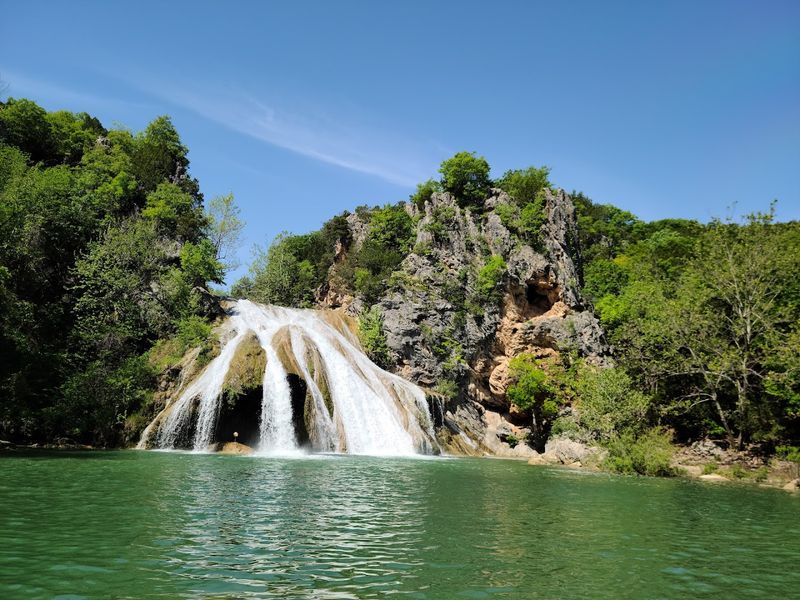
Right in the middle of one of the oldest mountain ranges on Earth, a waterfall pours over a limestone ledge and lands in a natural pool that has been drawing visitors for over a century.
Turner Falls Park is located near Davis, Oklahoma, along I-35 and US-77 in the heart of the ancient Arbuckle Mountains. The Arbuckles are not tall by most standards, but their age, estimated at over 500 million years, makes them a geological marvel worth every bit of attention.
The waterfall stands 77 feet tall and is the largest natural waterfall in Oklahoma. Watching it crash into the pool below while surrounded by canyon walls covered in ferns and moss is a sensory experience that is hard to match anywhere in the state.
The park includes natural caves and rocky formations that visitors can explore in designated areas, adding another layer of adventure beyond the falls themselves.
Exploring them on a hot summer afternoon, with cool water rushing through and the sound of the falls echoing off the stone, is the kind of experience you remember for years.
The park also contains the ruins of an old castle structure built in the early 20th century. The stone walls and arches are partially intact, and they add an unexpectedly dramatic architectural element to the natural landscape.
Wildflower meadows bloom throughout the Arbuckle foothills in spring. The drive into the park through rolling green hills dotted with color is a beautiful preview of what waits at the falls.
Weekends in summer get very busy here. Arriving early in the morning on a weekday gives you the best chance of having the falls and the pool largely to yourself.
Turner Falls is the kind of place that earns a permanent spot on any Oklahoma bucket list the moment you see it.
