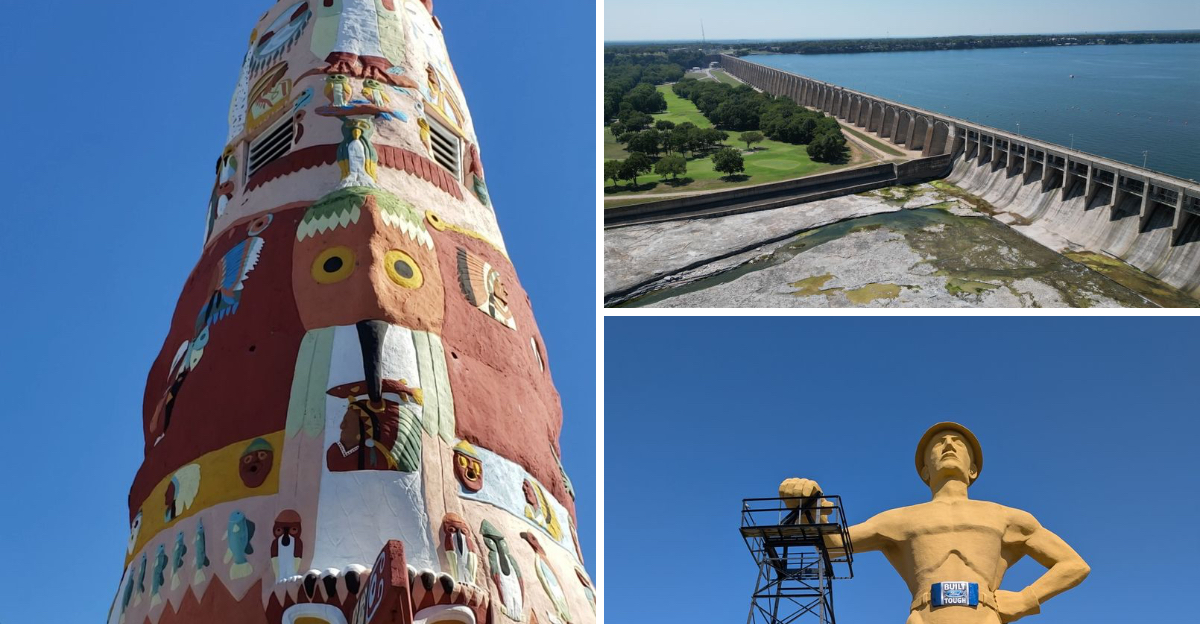
Oklahoma has a talent for catching travelers off guard, especially when the road bends toward something that makes you slow down and stare.
Across the state, unexpected landmarks rise from open fields, quiet towns, and forgotten highways, each one stranger than the last.
You may think you understand them from photos or quick descriptions, but that confidence rarely survives the moment you stand in front of the real thing.
These attractions feel less like stops on an itinerary and more like interruptions to normal logic.
Scale feels wrong, purpose feels unclear, and your sense of place starts to wobble in a way that is oddly thrilling.
Oklahoma does not announce its oddities with fanfare.
It lets them exist quietly, waiting for curious visitors to discover how strange the landscape can feel when imagination leaves its mark on the land.
1. Center of the Universe in Tulsa
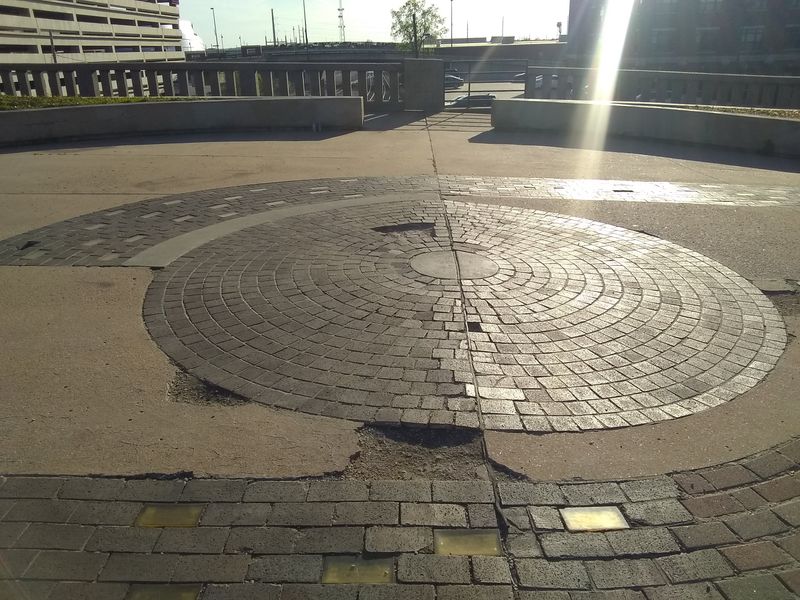
Downtown Tulsa harbors an acoustic anomaly that scientists and sound engineers still struggle to explain fully.
A small concrete circle roughly eight feet in diameter sits in the middle of a pedestrian bridge near Boston Avenue.
Stand in the center and speak at normal volume, and your voice echoes back with startling amplification.
The sound bounces around your head in a way that feels almost supernatural.
Step just a few feet outside the circle, and the effect vanishes completely.
Even stranger, people standing nearby hear only your normal speaking voice without any amplification whatsoever.
The phenomenon occurs because of the specific arrangement of curved walls and surfaces surrounding the spot.
Sound waves reflect back to the center point in perfect synchronization, creating the unusual acoustic effect.
Visitors often spend several minutes stepping in and out of the circle, testing different sounds and volumes.
Some people sing, others shout, and a few simply stand there talking to themselves in amazement.
The experience feels distinctly personal since only the person in the center hears the dramatic echo.
No photograph or video can truly convey the sensation of hearing your own voice transformed this way.
The surrounding brick structures create the necessary acoustic environment, but the precise positioning required remains impressive.
Local residents often bring out-of-town guests here specifically to watch their reactions.
The Center of the Universe costs nothing to visit and requires no special equipment or preparation.
Address: 20 E Archer St, Tulsa, Oklahoma
2. Arcadia Round Barn
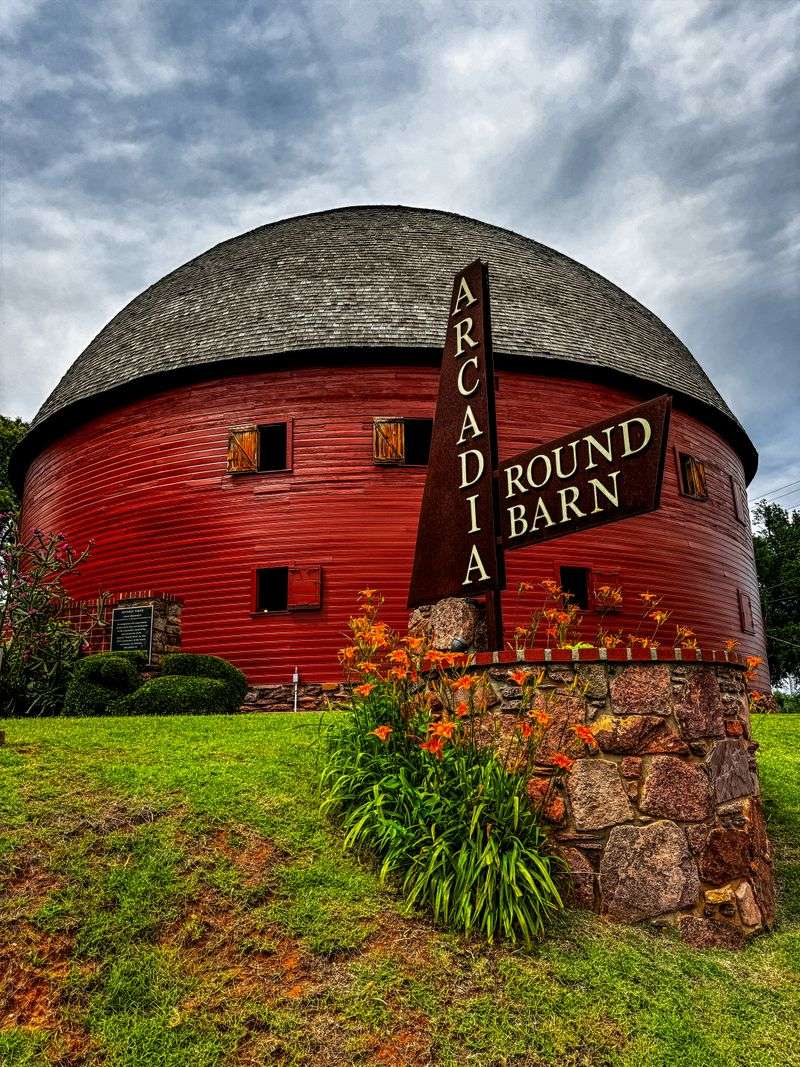
Circular barns represent an architectural curiosity from the early twentieth century, and this specimen stands as one of the finest surviving examples.
William Odor constructed the sixty-foot-diameter structure in 1898 using burr oak wood and traditional carpentry techniques.
The design was considered innovative at the time because it supposedly required less material and provided better wind resistance.
Walking inside reveals a soaring interior space that defies typical barn expectations.
The central support system radiates outward like the spokes of a wagon wheel, creating geometric patterns overhead.
Natural light filters through windows positioned around the upper level, illuminating the aged wood with warm tones.
The building fell into severe disrepair by the 1980s, with the roof partially collapsed and walls leaning dangerously.
A determined group of preservationists spent years fundraising and rebuilding to save this unique piece of Oklahoma history.
Today the barn serves as a museum and gift shop celebrating Route 66 culture and rural heritage.
Visitors can climb to the upper level for a better view of the intricate roof structure and support system.
The craftsmanship involved in creating such a large circular building without modern tools becomes apparent up close.
Each beam was hand-shaped and fitted together with wooden pegs rather than metal fasteners.
Photographs capture the exterior charm but miss the spatial experience of standing beneath that circular roof.
The acoustics inside create interesting echoes and sound patterns unlike rectangular buildings.
Oklahoma takes pride in this distinctive landmark that represents both agricultural history and architectural experimentation.
Address: 107 E OK-66, Arcadia, Oklahoma
3. Totem Pole Park
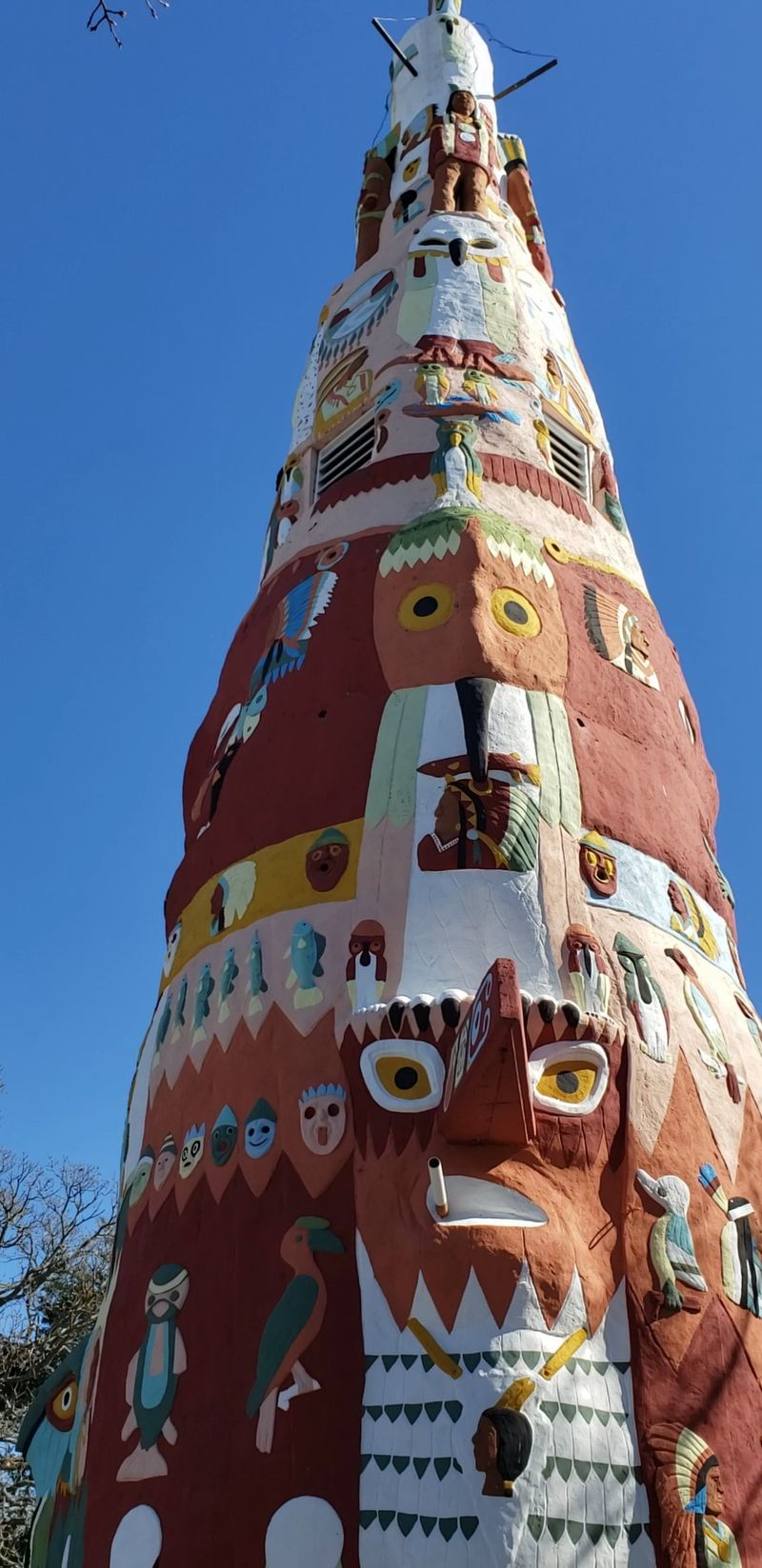
Ed Galloway spent eleven years carving and constructing a ninety-foot totem pole using brightly colored concrete and found materials.
He began the project in 1937 at age sixty-two, working alone in the woods near Chelsea.
The main totem pole stands as the tallest concrete totem in the United States, decorated with dozens of carved figures and painted designs.
Galloway drew inspiration from Native American art but created his own unique folk art style rather than replicating traditional forms.
The park includes several smaller totems, a replica fiddle house, and various concrete sculptures scattered among the trees.
Vibrant reds, yellows, blues, and greens cover every surface, creating a kaleidoscopic effect that photographs struggle to capture accurately.
Time and weather have faded the paint somewhat, but restoration work continues to preserve Galloway’s vision.
Visitors can walk right up to the base of the main totem and crane their necks to see the carved figures stacked impossibly high above.
The scale becomes truly apparent only when standing directly beneath it.
Each level features different characters and symbols, from animals to human faces to geometric patterns.
Galloway worked without formal training or architectural plans, relying on his imagination and determination.
He mixed his own concrete and hauled materials by hand through the wooded property.
The fiddle house holds special significance because Galloway was an accomplished fiddle maker who crafted over three hundred instruments during his lifetime.
The entire park feels like stepping into one person’s vivid creative dream made tangible through years of labor.
Oklahoma celebrates this site as an important example of outsider art and individual artistic expression.
Address: 21300 E OK-28A, Chelsea, Oklahoma
4. Golden Driller Statue
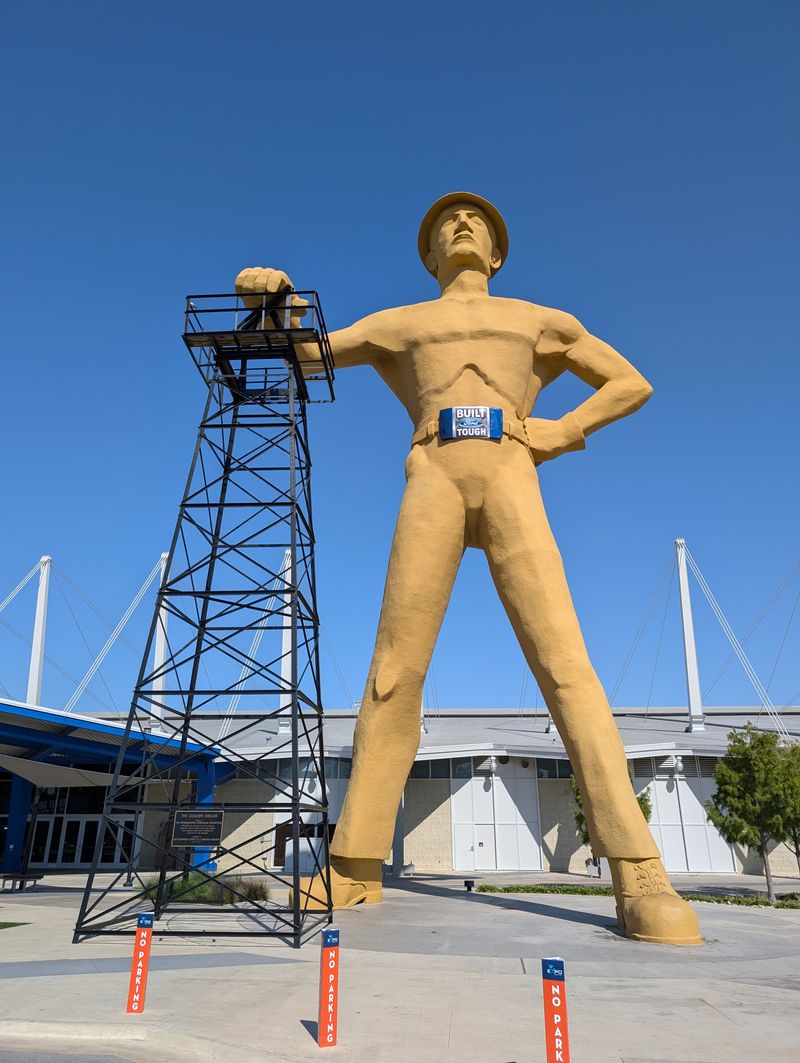
Tulsa erected this seventy-five-foot-tall monument to the petroleum industry in 1953, creating an instant landmark visible for miles.
The statue depicts an oil worker in period clothing with one hand resting on an actual oil derrick beside him.
Originally constructed for the International Petroleum Exposition, the Golden Driller was meant to be temporary.
Public affection for the giant figure led to permanent installation at the Tulsa Fairgrounds.
The statue weighs over forty-three thousand pounds and stands on a concrete base that adds additional height.
His distinctive yellow-gold color comes from the original paint scheme, though he has been repainted several times over the decades.
Looking up at the statue from ground level creates a dizzying sense of scale that photos rarely convey.
His massive boots alone stand taller than most adult humans.
The details in his clothing and facial features remain visible even at that enormous size.
Workers used steel framework and concrete to create the structure, then added the painted exterior surface.
The Golden Driller has become an unofficial symbol of Tulsa and appears in countless promotional materials.
Locals give directions using him as a landmark and bring visitors specifically to see the towering figure.
The statue represents a specific era when oil dominated Oklahoma’s economy and cultural identity.
Standing beside him makes you feel tiny, which seems to be exactly the point.
The surrounding fairgrounds area provides parking and easy access year-round.
Oklahoma proudly maintains this quirky monument as part of its industrial heritage and roadside attraction legacy.
Address: 4145 E 21st St, Tulsa, Oklahoma
5. Pensacola Dam Spillway
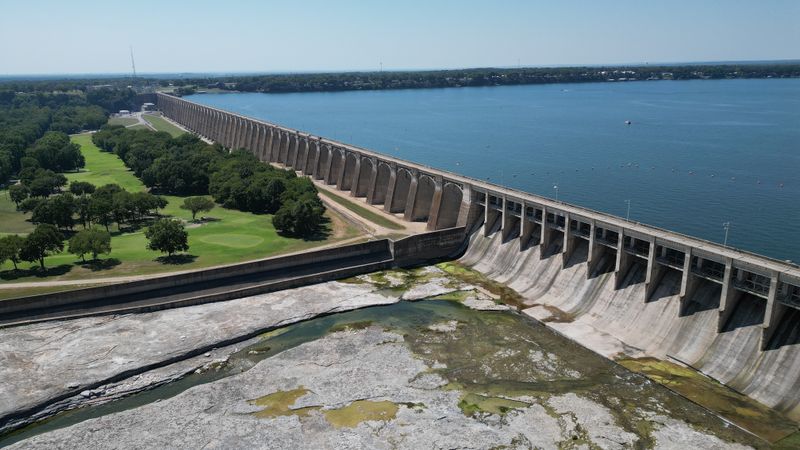
Grand Lake’s hydroelectric dam features the longest multiple-arch spillway in the world, stretching over a mile across the water.
Construction crews completed the dam in 1940, creating Grand Lake and providing power to the surrounding region.
The spillway consists of fifty-one graceful arches that create a repeating pattern across the massive concrete structure.
When water releases through the spillway during high-water periods, the sight becomes absolutely spectacular.
Thousands of gallons per second cascade over the arches, creating a thundering wall of white water visible for miles.
The sound alone overwhelms nearby observers, rumbling through the ground like continuous thunder.
Photographs capture individual arches or sections but cannot convey the sheer scope of the entire structure.
Walking or driving across the top provides perspective on just how far the spillway extends.
The arches create interesting geometric patterns and shadows that change throughout the day.
Engineers designed the multiple-arch style both for structural efficiency and to handle the enormous water volume.
Each arch distributes stress differently than a straight dam would, creating greater overall strength.
The Art Deco influence shows in the clean lines and symmetrical design typical of 1930s engineering projects.
Local residents consider the spillway a point of pride and bring visitors to witness water releases when possible.
The structure represents Depression-era ambition and the transformation of Oklahoma’s landscape through major public works.
Standing near the spillway during a release creates an almost overwhelming sensory experience that defies description.
Address: 495301 E 450 Rd, Langley, Oklahoma
6. Stafford Air and Space Museum
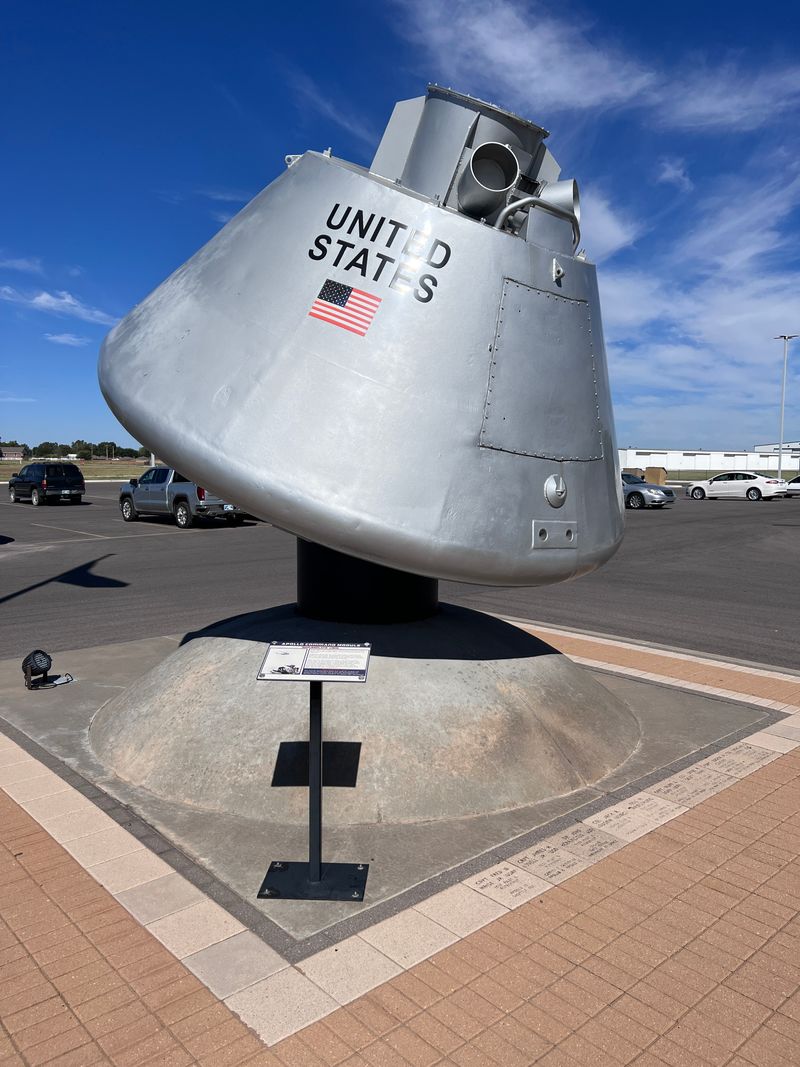
Weatherford celebrates hometown hero Thomas Stafford, astronaut and Air Force general, with a museum that houses genuine spacecraft and flight artifacts.
The building’s exterior features a distinctive design with angular walls and a space-age aesthetic.
Inside, visitors find a real Gemini spacecraft that actually flew in orbit during the 1960s space race.
The capsule looks impossibly small and fragile for carrying humans into the hostile environment beyond Earth’s atmosphere.
Standing inches away from the scorched heat shield and cramped interior creates profound respect for early astronauts.
The museum displays spacesuits, moon rocks, and equipment that traveled to space and returned.
Each artifact carries the weight of history and human achievement in ways that photographs cannot duplicate.
A full-size shuttle simulator allows visitors to experience the complexity of spacecraft controls and procedures.
The planetarium presents shows about astronomy and space exploration using modern projection technology.
Flight simulators let guests attempt to pilot various aircraft, from early biplanes to modern jets.
The collection spans aviation history from the Wright brothers through contemporary space exploration.
Oklahoma’s contributions to aerospace development receive special attention throughout the exhibits.
Stafford’s personal story connects the small-town Oklahoma roots with the heights of human exploration.
The museum manages to feel both educational and inspiring without becoming dry or overly technical.
Children and adults alike find themselves drawn into the stories behind each artifact and achievement.
Seeing these objects in person rather than in textbooks transforms abstract history into tangible reality.
Address: 3000 E Logan Rd, Weatherford, Oklahoma
7. Alabaster Caverns State Park
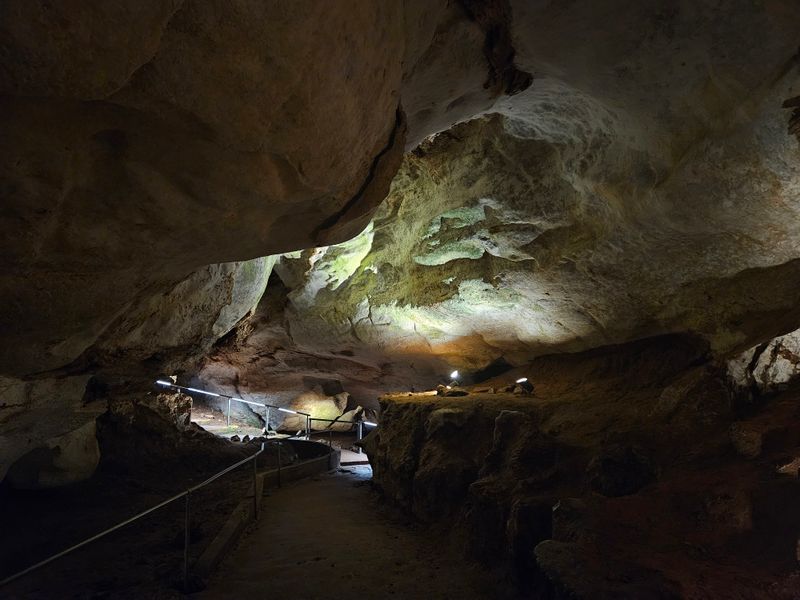
Natural gypsum caves rarely reach the size and accessibility of this underground wonder near Freedom.
The main cavern extends for three-quarters of a mile, making it the largest natural gypsum cave open to the public in the world.
Alabaster refers to the pink and white gypsum formations that cover the walls and ceiling throughout the cave system.
Guided tours lead visitors deep underground where the temperature remains a constant fifty-eight degrees year-round.
The cave’s massive chambers create spaces large enough to hold buildings, with ceilings disappearing into darkness above.
Gypsum formations take different shapes than the limestone stalactites and stalagmites found in more common caves.
The mineral creates smoother, more flowing shapes with a distinctive translucent quality when light passes through thin sections.
Pink and white layers alternate in some areas, creating natural banding patterns in the rock.
The largest chamber, called the Main Corridor, stretches wide enough for tour groups to walk comfortably without crowding.
Photographs struggle with the darkness and scale, often failing to capture the sense of being surrounded by ancient stone.
The cave system formed over millions of years as water dissolved the gypsum deposits and carved out these hollow spaces.
Several species of bats make their home in the deeper sections of the cave system.
Tour guides point out various formations and explain the geological processes that created this underground landscape.
The experience of walking through these massive natural chambers stays with visitors long after returning to the surface.
Oklahoma preserves this unique geological feature as a state park, maintaining safe access while protecting the fragile cave environment.
Address: 50 Cedar Canyon Rd, Freedom, Oklahoma
8. The Blue Whale of Catoosa
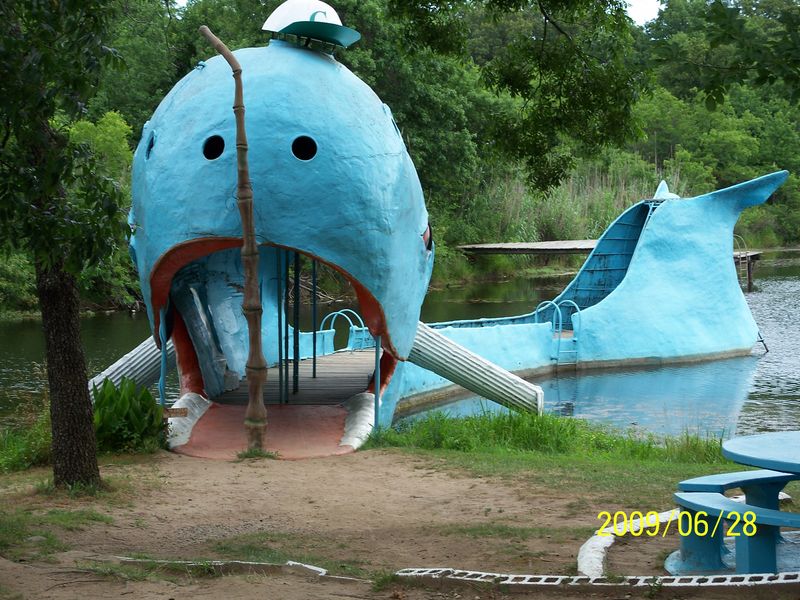
Route 66 roadside attractions rarely reach the iconic status of this massive blue cetacean lounging beside a small pond.
Built in the early 1970s by Hugh Davis as an anniversary gift for his wife Zelta, who collected whale figurines, this eighty-foot-long structure became an unexpected sensation.
The whale was originally intended as a private swimming hole for family and friends.
Word spread quickly, and soon travelers from across the country were stopping to splash around in the pond beneath the smiling giant.
Photographs fail to capture the sheer surrealism of encountering this cheerful blue behemoth in landlocked Oklahoma.
The structure towers over visitors with its open mouth forming a slide into the water below.
Faded paint and weathered concrete add to its charm rather than diminishing it.
The surrounding park area features picnic tables and a small beach area where families once gathered on hot summer days.
Though swimming is no longer permitted, the site remains a beloved photo opportunity.
Restoration efforts by local volunteers have kept the whale in reasonable condition despite decades of exposure to the elements.
The attraction sits just off the highway, easy to miss if you blink but impossible to forget once you see it.
Children press against the fence to get closer looks while adults shake their heads in amused bewilderment.
Something about its massive scale and unexpected location creates a sense of wonder that transcends logic.
The Blue Whale represents the quirky spirit of Oklahoma roadside culture perfectly.
Address: 2600 OK-66, Catoosa, Oklahoma
9. The Pioneer Woman Statue

Ponca City honors frontier women with a seventeen-foot-tall bronze statue that has become an iconic Oklahoma landmark.
Bryant Baker sculpted the figure in the 1920s, capturing a pioneer mother striding forward with a young boy walking beside her.
The statue was dedicated in 1930 after a fundraising campaign brought together contributions from across the state.
She stands atop a large granite base that adds to her already impressive height.
The bronze figure faces east, looking toward the rising sun with determination etched in her features.
Her long dress and bonnet reflect the clothing worn by women who settled the Oklahoma territory in the late 1800s.
The young boy clutches a Bible, symbolizing the faith and values these families carried into uncertain frontier life.
Seeing the statue in person reveals details that smaller reproductions miss entirely.
The texture of the bronze, the folds in the fabric, and the expressions on both faces show remarkable craftsmanship.
The surrounding museum complex tells the stories of actual pioneer women who helped build Oklahoma communities.
Exhibits feature clothing, tools, photographs, and personal items that belonged to these determined settlers.
The statue has inspired countless visitors and become a symbol of strength and perseverance.
Her imposing size and forward motion create a sense of unstoppable determination.
Photographers capture her profile against Oklahoma skies, but standing at her feet creates a different emotional impact.
The monument represents not just history but the continuing influence of those frontier experiences on Oklahoma culture and identity.
Address: 701 Monument Rd, Ponca City, Oklahoma
10. Pops Soda Ranch
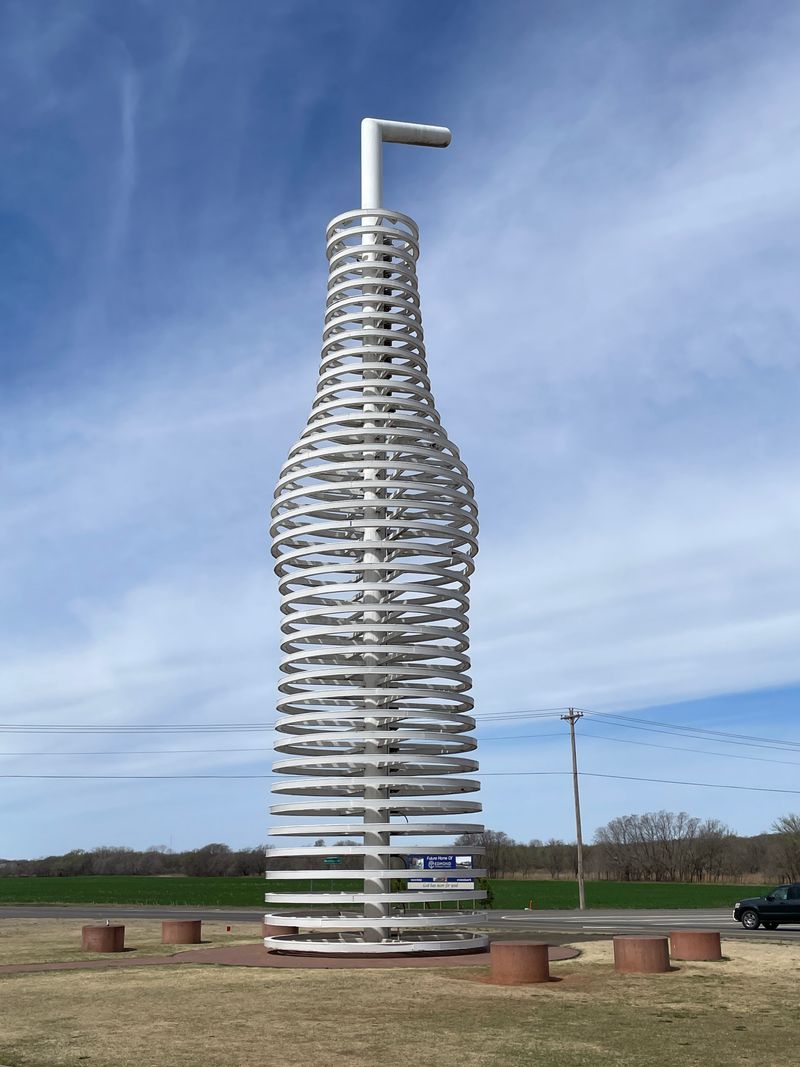
A sixty-six-foot-tall soda bottle glows in LED lights beside Interstate 44, marking one of the most photographed stops along modern Route 66.
The giant bottle sculpture towers over the attached restaurant and store, visible from miles away in either direction.
At night, the LED lighting system cycles through different colors, creating a beacon that draws travelers off the highway.
Inside, the restaurant stocks over seven hundred varieties of soda from around the world.
Glass-front coolers line the walls, displaying bottles in every imaginable color and flavor combination.
The selection ranges from classic American brands to obscure international sodas with flavors like lychee, cucumber, and rose.
Visitors often spend considerable time browsing the selection, reading labels, and sampling unusual varieties.
The building itself features sleek modern architecture with lots of glass and steel, contrasting with traditional Route 66 nostalgia.
The giant bottle sculpture uses modern materials and lighting technology to create something that feels both retro and futuristic.
Photographs capture the bottle’s impressive height but miss the experience of seeing it illuminate the night sky.
The color-changing lights create different moods and atmospheres throughout the evening.
During holidays, special lighting programs celebrate seasonal themes.
The restaurant serves American comfort food alongside the extensive soda selection, making it a full dining destination.
Route 66 enthusiasts consider Pops a must-see stop that represents the road’s continuing evolution rather than just its nostalgic past.
The combination of massive scale, modern design, and quirky concept creates something uniquely memorable.
Address: 660 OK-66, Arcadia, Oklahoma
Dear Reader: This page may contain affiliate links which may earn a commission if you click through and make a purchase. Our independent journalism is not influenced by any advertiser or commercial initiative unless it is clearly marked as sponsored content. As travel products change, please be sure to reconfirm all details and stay up to date with current events to ensure a safe and successful trip.
