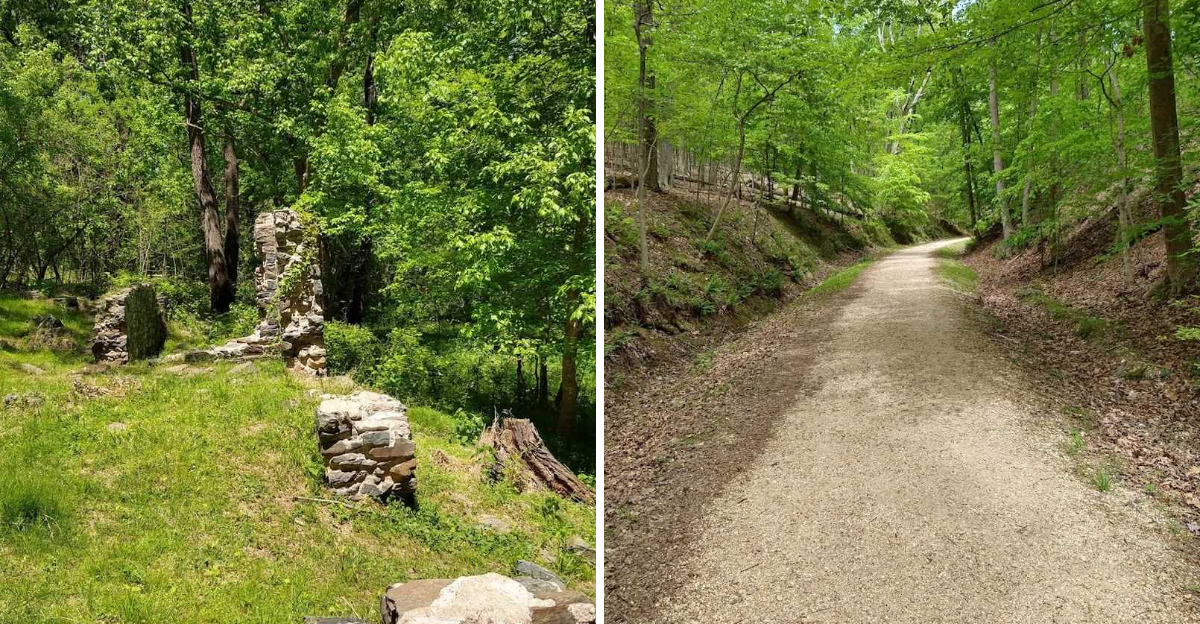
History in Virginia does not always come with tickets or guided tours. Just beyond Washington D.C., an 800-acre National Historic Landmark park hides the remains of an 18th-century town slowly giving itself back to nature.
Stone walls still stand where lives once unfolded, surrounded by forest that has been quietly reclaiming the space for generations. Walking these trails feels less like sightseeing and more like uncovering something that was never meant to be forgotten.
It stays overlooked by many, yet leaves a lasting impression on anyone who takes the time to explore it.
The Forgotten Town That Time Left Behind
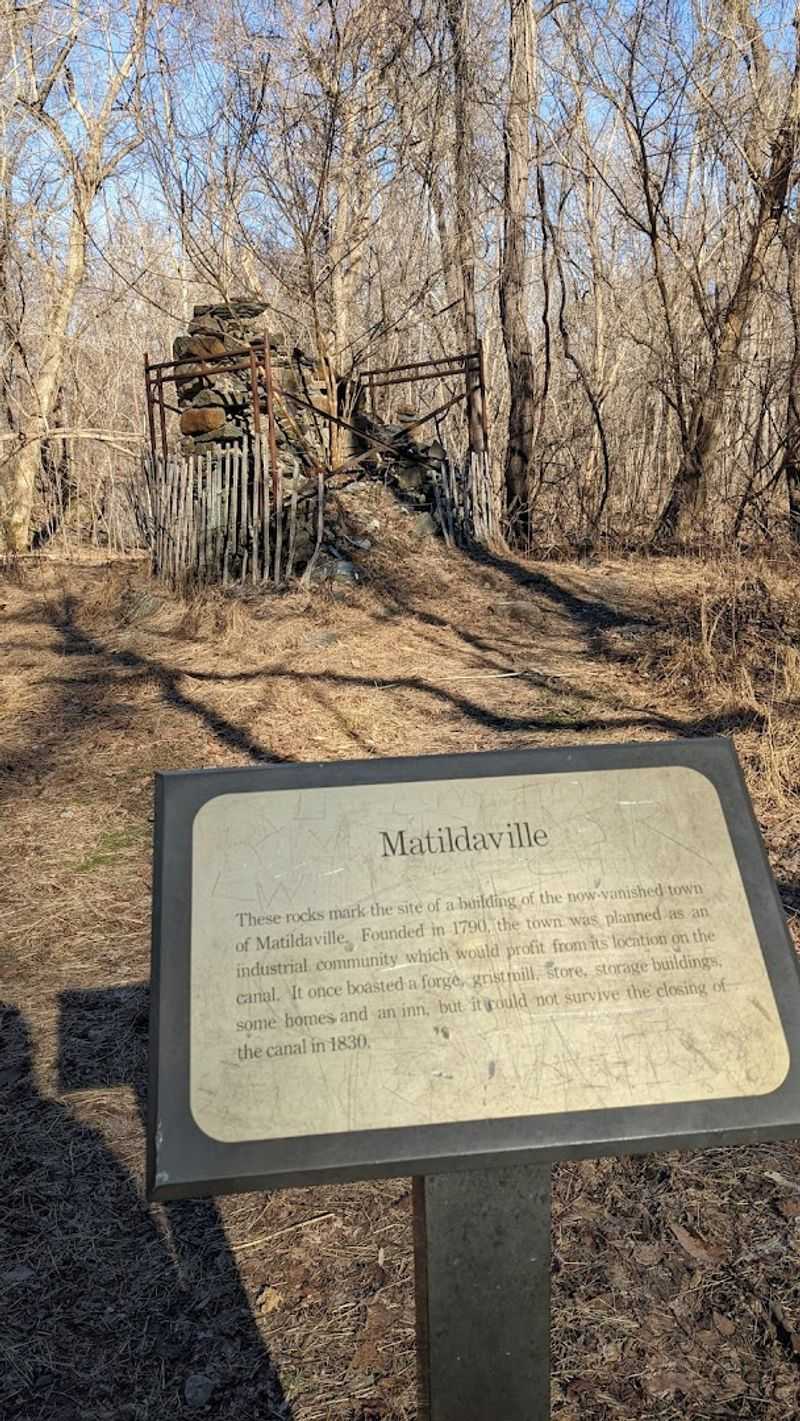
Somewhere between a history book and a fairy tale, a vanished town sits quietly in the Virginia woods. Matildaville was once a real, buzzing community, complete with a market, a gristmill, a sawmill, a foundry, an inn, and worker barracks.
Founded in 1790 by Revolutionary War hero Henry “Light Horse” Harry Lee, it was named after his beloved first wife, Matilda Lee.
The town served as the operational heart of the Patowmack Company, a bold venture designed to make the Potomac River fully navigable through a series of canals and locks. Boaters passing through the locks would stop here to rest, resupply, and enjoy an evening in town before continuing their journey.
Financial trouble eventually caught up with the canal project. By 1828, the Patowmack Canal had gone bankrupt, and by 1830, the entire operation was abandoned.
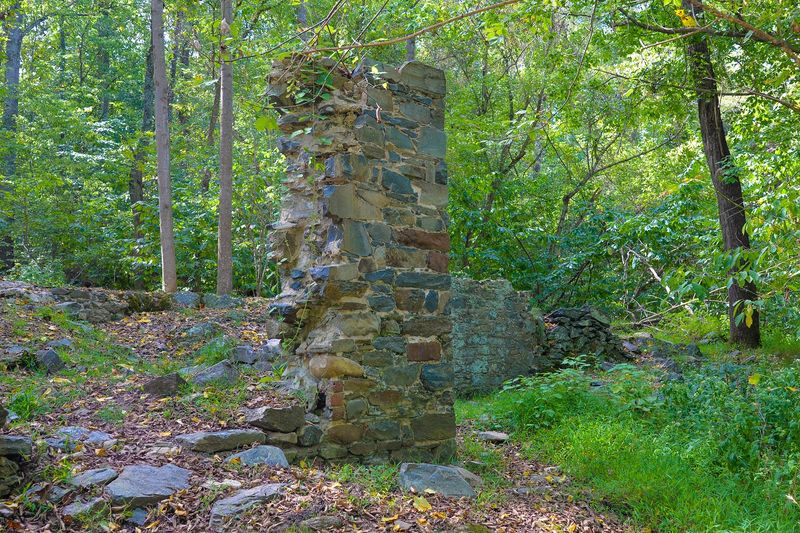
Matildaville followed suit, slowly swallowed by Virginia’s relentless forest. Today, the stone ruins of the superintendent’s house are among the few visible reminders that a whole community once thrived here.
Walking through what remains feels less like hiking and more like reading an open-air chapter of American history.
Light Horse Harry Lee’s Bold Vision
Henry “Light Horse” Harry Lee was not exactly the type to think small. A celebrated cavalry commander during the American Revolution and a close friend of George Washington, Lee had the kind of ambition that built towns from scratch.
Founding Matildaville was his way of turning a grand engineering dream into a living, breathing community.
Lee saw enormous potential in the Patowmack Canal project. If the Potomac River could be made fully navigable, goods could flow freely between the interior of the young nation and the ports of the East Coast.
Matildaville was designed to support that infrastructure, providing housing, commerce, and services to the workers and travelers who kept the canal running.
His vision was genuinely ahead of its time. The canal predated the Erie Canal and represented one of the earliest large-scale American infrastructure projects.
Sadly, the financial realities of the era proved brutal. Lee himself faced serious money troubles throughout his life, and the canal project mirrored that struggle.
Yet his legacy lives on every time someone walks the Matildaville Trail in Virginia and pauses to wonder who built all of this, and why.
The Patowmack Canal Story Worth Knowing
Before railroads stitched the country together, rivers were the highways of America. The Patowmack Canal was a visionary attempt to extend that highway deep into the continent by bypassing the rocky, unnavigable stretches of the Potomac River with a series of hand-dug canals and locks.
It was a massive undertaking for its era, and Matildaville was right at the center of it all.
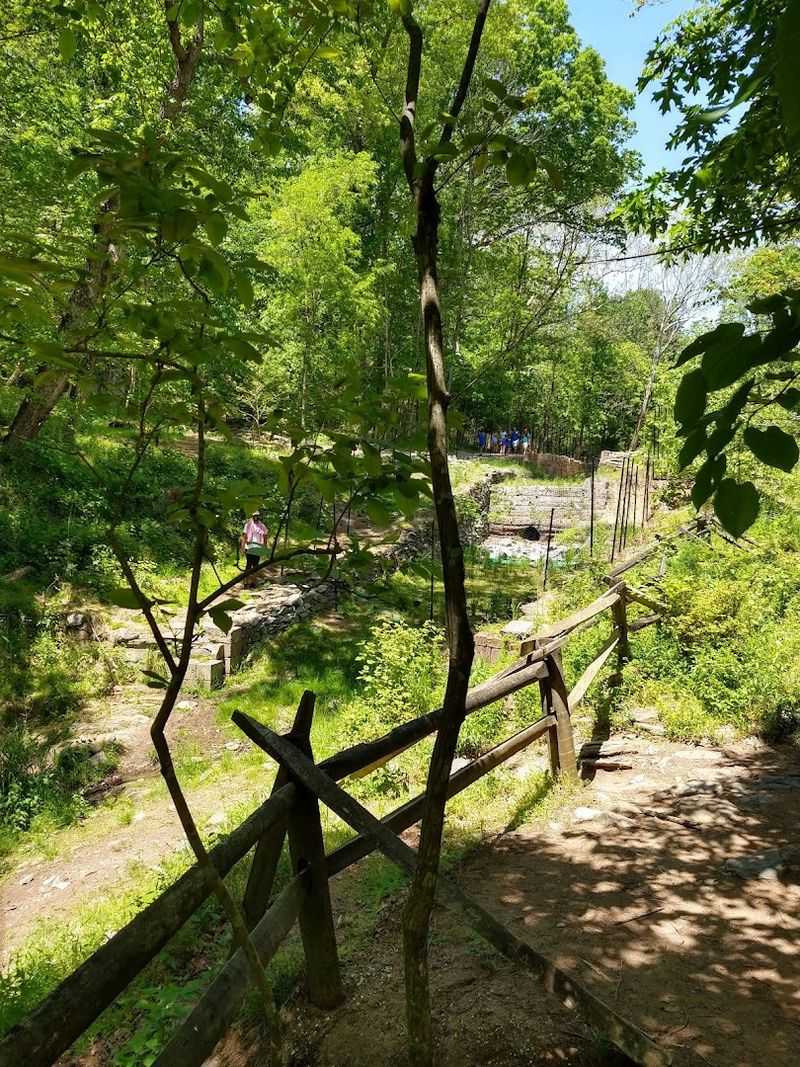
The canal featured multiple lift locks, skirting the treacherous Great Falls section of the Potomac. Workers carved through solid rock, moved earth, and built structures that still partially survive today.
The engineering was genuinely remarkable given the tools available at the time, and the project attracted attention from some of the most prominent figures in early American life.
George Washington himself was one of the strongest supporters of the canal concept, recognizing its potential to unite the new nation economically. Walking along the Matildaville Trail today, you can still spot remnants of this incredible effort.
The stones underfoot and the ruins visible through the trees are not just picturesque. They are evidence of a young country trying to build itself into something great, one lock at a time.
Great Falls Park: So Much More Than a Waterfall
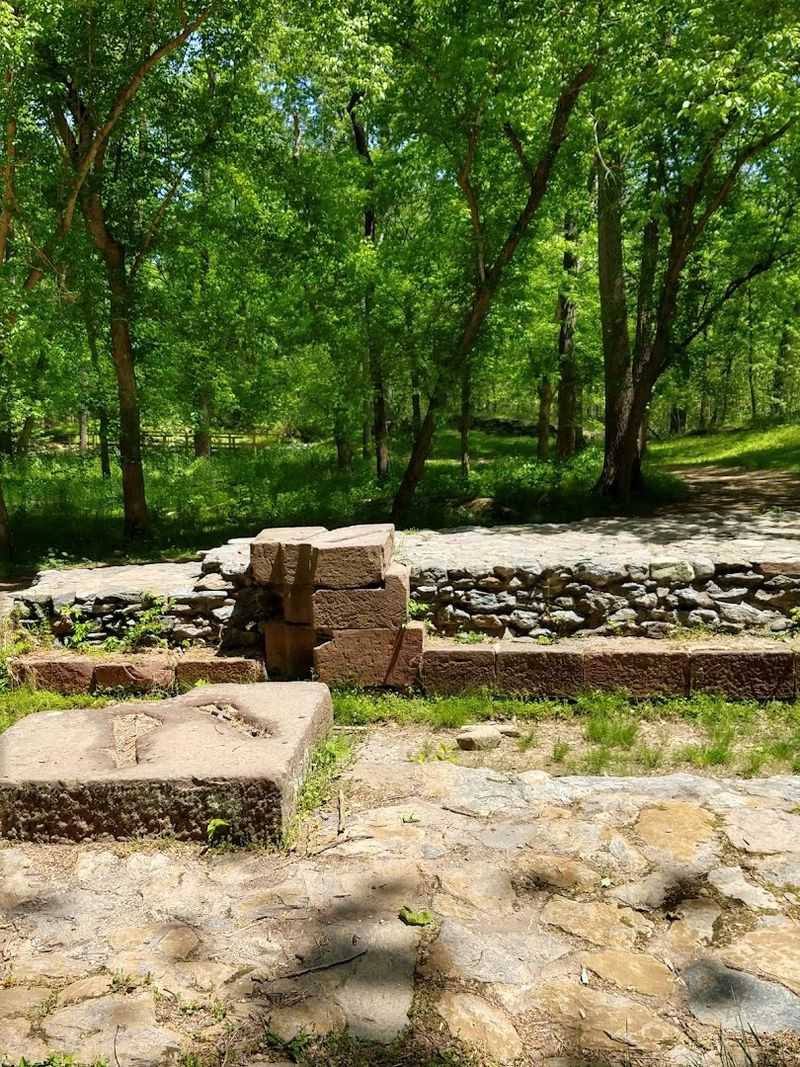
Great Falls Park in Virginia is the kind of place that makes you question every weekend you ever spent indoors. Sprawling across roughly 800 acres of National Historic Landmark territory, the park packs an extraordinary amount of natural and historical drama into a single destination just outside Washington D.C.
Most visitors arrive for the famous waterfalls, and honestly, who can blame them? The Potomac River absolutely roars through this section of Virginia, dropping dramatically over jagged rocks in a display that is loud, wild, and genuinely awe-inspiring.
But the park offers far more than the view from the overlooks.
Hiking trails wind through dense forest, past Civil War-era earthworks, along the river’s edge, and directly through the ruins of Matildaville. Birdwatching here is spectacular, with a wide variety of species calling the park home throughout the year.
Picnic areas, ranger programs, and easy parking make it accessible for solo explorers and families alike. Dogs are welcome on leashes, which immediately earns bonus points.
Great Falls Park is one of Virginia’s most rewarding outdoor experiences, and the Matildaville section adds a layer of historical texture that most parks simply cannot match.
Walking the Matildaville Trail Step by Step
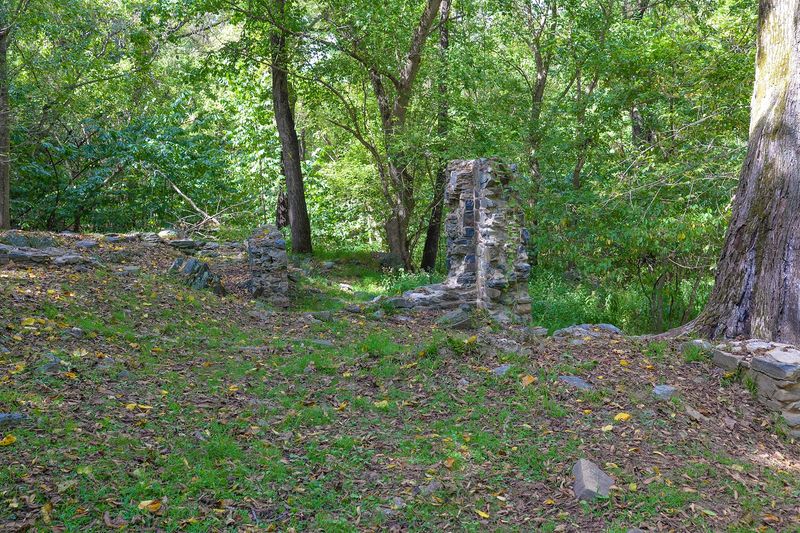
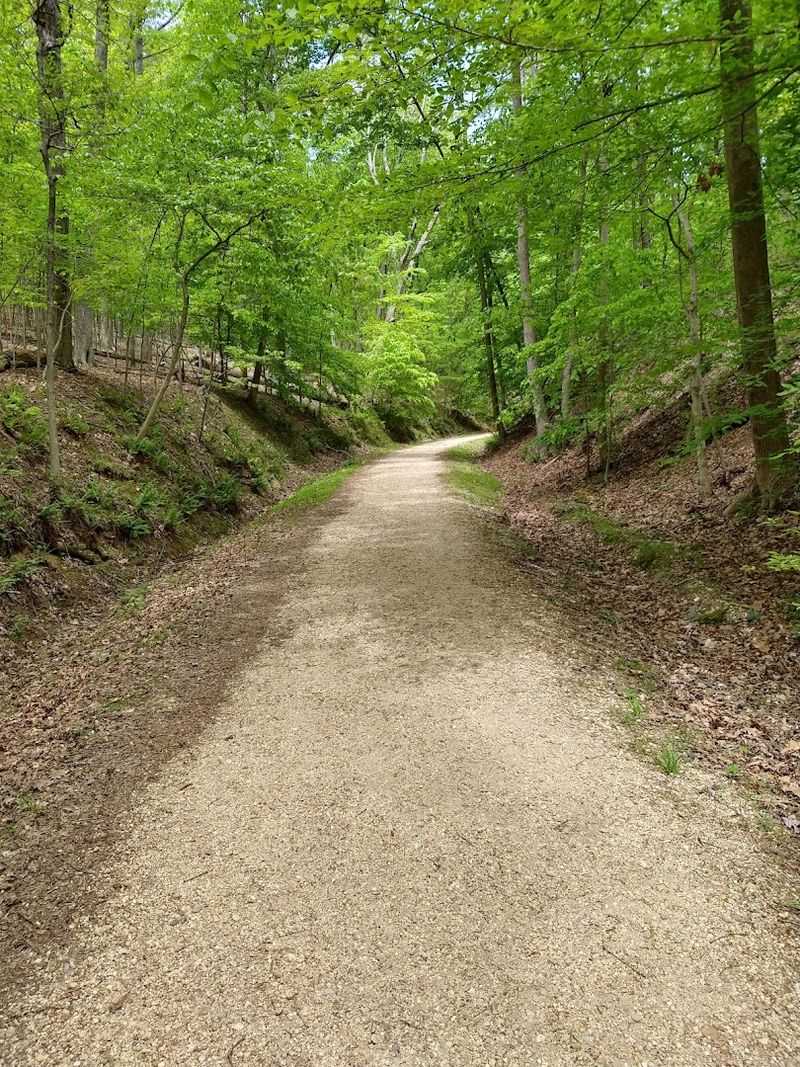
The Matildaville Trail is beautifully approachable. Running just over a mile as an out-and-back route, it earns its reputation as an easy trail, making it perfect for a casual morning outing or a spontaneous afternoon escape from the city.
The elevation gain is gentle, and the path is well-maintained enough that you don’t need any specialized gear to enjoy it.
Starting from the main visitor area of Great Falls Park in Virginia, the trail winds through a canopy of mature hardwood trees before delivering you to the ruins themselves. Along the way, interpretive signs offer context and historical background, so you’re never left guessing what you’re looking at.
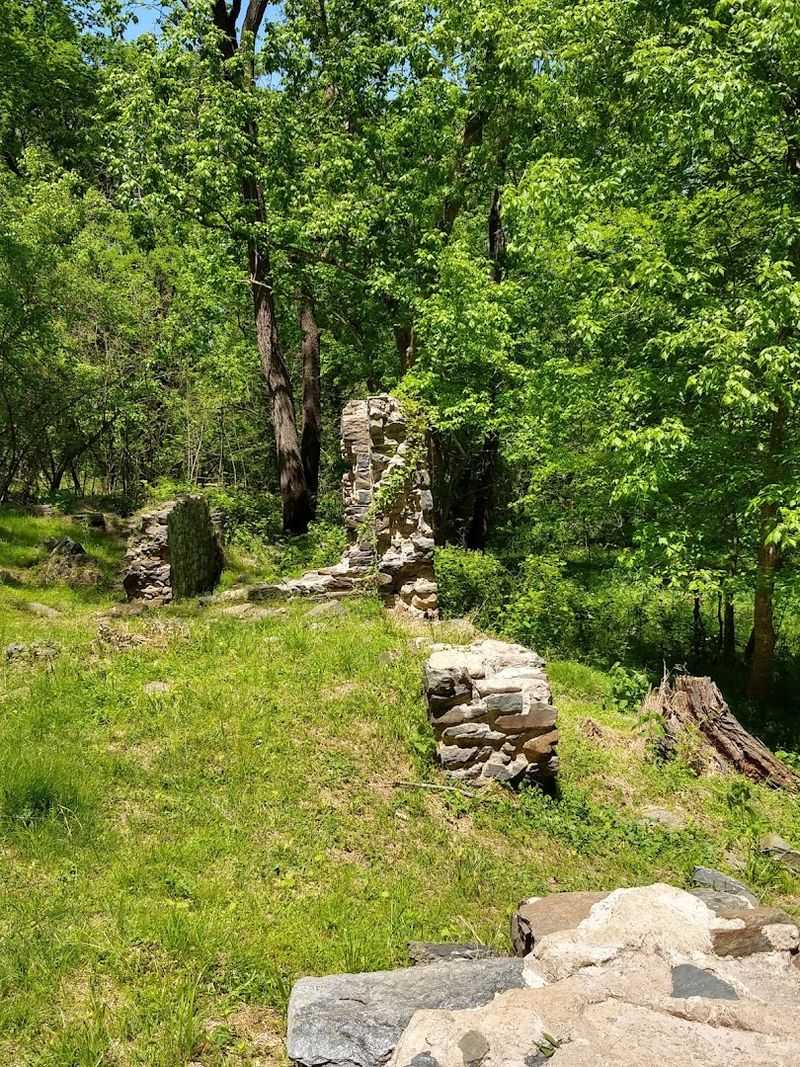
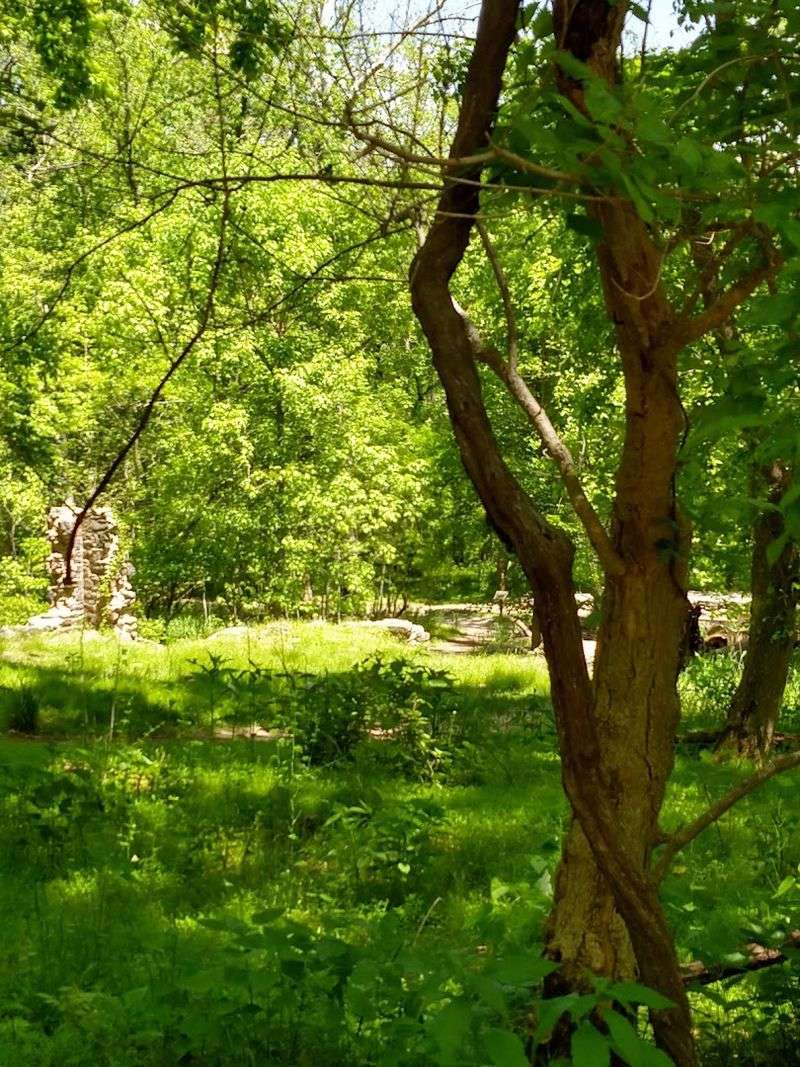
The ruins of the superintendent’s house are the undeniable highlight, their stone walls rising from the forest floor with quiet dignity. Nearby, foundations and scattered stonework hint at the broader town that once occupied this space.
The trail is popular on weekends, so arriving early on a weekday gives you the best chance of having the ruins almost entirely to yourself. That kind of stillness, surrounded by centuries-old stones, is genuinely hard to find this close to a major metropolitan area.
The Ruins Up Close: What You’ll Actually See
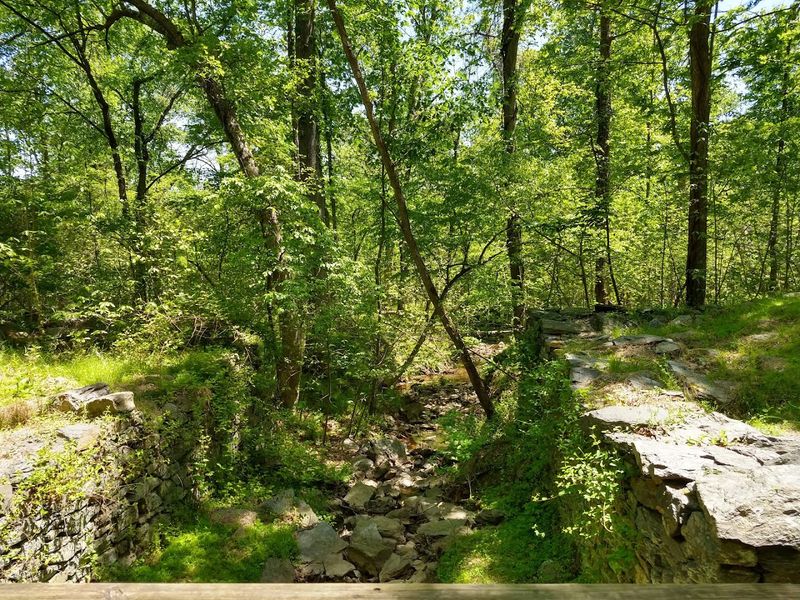
Standing in front of the Matildaville ruins for the first time, the first thing that hits you is how solid they still look. These walls were built to last, and despite nearly two centuries of abandonment, the stonework of the superintendent’s house retains a quiet structural integrity that speaks to the craftsmanship of the original builders.
Moss creeps across every surface. Ferns push up through gaps in the foundation stones.
The forest has clearly decided to redecorate, and honestly, the effect is stunning. The ruins sit in a small clearing surrounded by tall trees, giving the site an almost theatrical quality, as if nature has carefully arranged itself around these stones to maximize the drama.
Beyond the superintendent’s house, scattered foundation remnants mark where other buildings once stood. Interpretive panels placed by the National Park Service help connect the dots, explaining what each area was used for and who lived and worked there.
Photography enthusiasts will find this spot endlessly rewarding, especially in autumn when the foliage turns and the contrast between warm orange leaves and cold grey stone becomes almost painterly. The Matildaville Trail delivers a visual experience that is genuinely difficult to replicate anywhere else in Virginia.
Why History Feels Different Outdoors
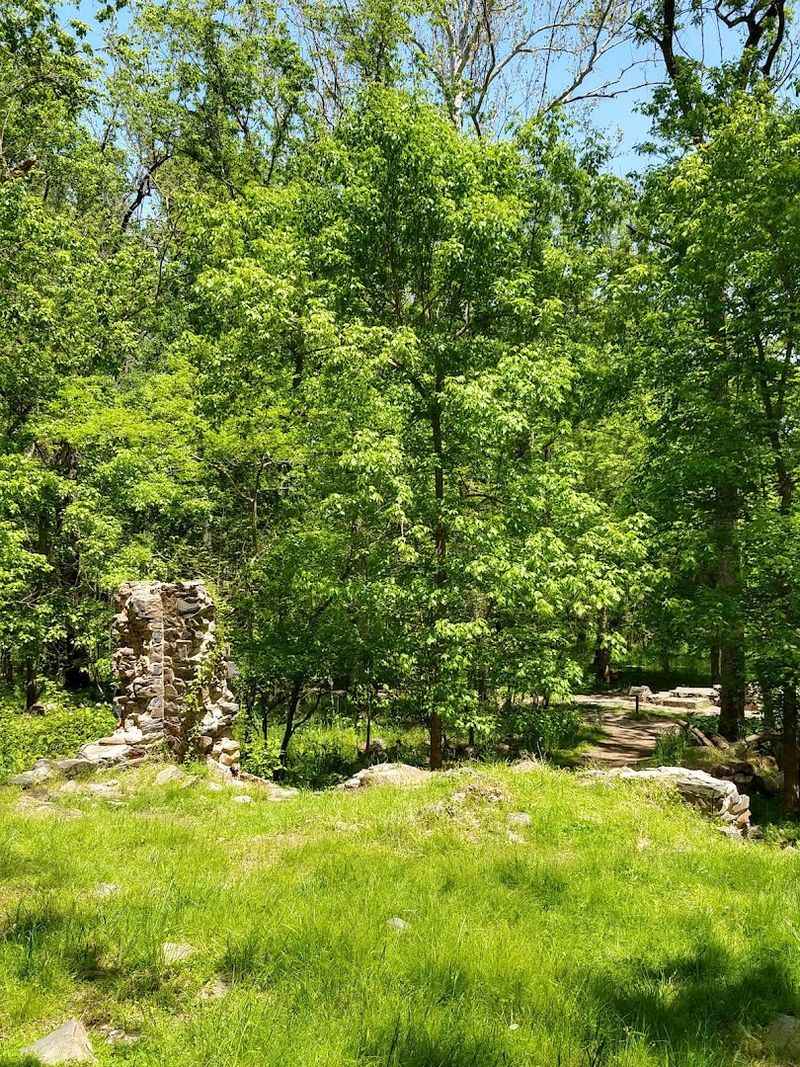
Museums are great. Textbooks serve their purpose.
But there is something fundamentally different about standing in the actual physical space where history happened, breathing the same air, looking at the same river, and touching the same stones that people touched centuries ago.
The Matildaville Trail offers that rare kind of immersive historical encounter. When you walk past the ruins, you’re not observing history from behind glass.
You’re inside it. The spatial relationship between the ruins and the surrounding landscape tells a story that no exhibit label can fully capture.
You can see exactly why this location made sense for a canal town, perched near the water with forests providing timber and the falls providing power.
Virginia has an extraordinary density of historical significance packed into its landscape, and Great Falls Park is a prime example of how outdoor spaces can carry that history just as powerfully as any formal institution. The Matildaville Trail invites a slower, more contemplative kind of exploration.
Pause at the ruins. Look around.
Let the silence do some of the storytelling. The experience has a way of making American history feel personal, immediate, and surprisingly moving for a weekday morning hike.
Wildlife and Scenery Along the Way
The Matildaville Trail is not purely a history lesson. The surrounding forest and proximity to the Potomac River make it one of the more wildlife-rich walking routes in the greater D.C. region.
White-tailed deer are a common sight, often spotted grazing calmly in the clearings near the ruins, seemingly unbothered by the presence of hikers.
Birdlife along the trail is genuinely impressive. The park’s diverse habitat supports a wide range of species, including great blue herons fishing along the riverbanks, red-tailed hawks circling overhead, and a rotating cast of warblers, woodpeckers, and songbirds moving through the tree canopy.
Bringing binoculars is always a good call.
The seasonal changes in this Virginia forest are also worth experiencing across multiple visits. Spring brings wildflowers carpeting the forest floor in delicate color.
Summer offers full green canopy and cool shade. Autumn turns the entire trail into a riot of amber, crimson, and gold.
Even winter has its own stark beauty, with bare branches opening up views of the Potomac that summer foliage hides completely. The Matildaville Trail rewards repeat visitors with a genuinely different experience each time.
Planning Your Visit: Practical Tips That Actually Help
Getting to Great Falls Park from Washington D.C. takes roughly 30 to 45 minutes depending on traffic, making it one of the most accessible natural escapes in the region. The park sits just off Georgetown Pike in Virginia, and the main entrance is straightforward to find with standard navigation apps.
Parking is available at the main visitor center, and the National Park Service entrance fee is required for vehicles. The park is open year-round, which means there is genuinely no bad time to visit, though spring and fall tend to draw the largest crowds.
Arriving early on weekday mornings is the single best strategy for a peaceful experience on the Matildaville Trail.
Wear comfortable walking shoes since the trail surface includes packed dirt and some uneven rocky sections near the ruins. Bringing water is always smart, especially in summer.
The visitor center near the entrance offers maps, restrooms, and ranger assistance if you want additional context before hitting the trail. Dogs are permitted throughout the park on leashes, which makes this a fantastic outing for four-legged companions too.
The Matildaville Trail address is Great Falls, VA 22102, right inside Great Falls Park.
A Day Trip Worth Every Minute of the Drive
Combining the Matildaville Trail with the rest of Great Falls Park turns a quick history walk into a genuinely full and satisfying day out. After exploring the ruins, the overlooks above the falls are just a short walk away and deliver one of the most dramatic natural views anywhere in Virginia.
The contrast between the quiet, contemplative atmosphere of the Matildaville ruins and the thunderous energy of the Great Falls overlooks is striking. One moment you’re standing in mossy silence among 18th-century stones.
The next, you’re watching the Potomac River launch itself over a massive rocky cascade with a roar you can feel in your chest.
Pack a picnic and claim one of the shaded tables in the park’s designated areas for a proper midday break. The combination of history, nature, wildlife, and spectacular river scenery makes this one of the most well-rounded day trips available from D.C.
Virginia keeps delivering on that promise of depth and variety, and Great Falls Park is one of its finest arguments. So go ahead, clear your Saturday, and let the Matildaville Trail surprise you in the best possible way.
Your future self will absolutely thank you.
Dear Reader: This page may contain affiliate links which may earn a commission if you click through and make a purchase. Our independent journalism is not influenced by any advertiser or commercial initiative unless it is clearly marked as sponsored content. As travel products change, please be sure to reconfirm all details and stay up to date with current events to ensure a safe and successful trip.
