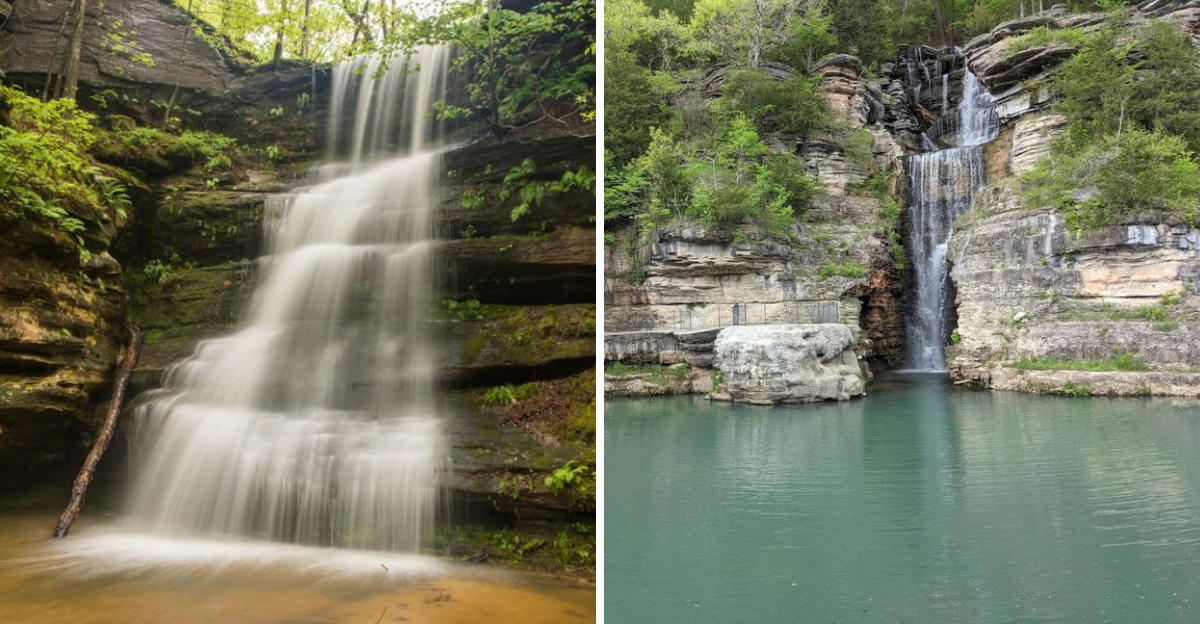
Missouri hides waterfalls in nearly every corner of the state, from the Ozark hills to the river valleys, each one offering a reward for the hiker willing to seek it out. Some tumble gently, creating delicate curtains of water that sparkle in the afternoon light.
Others roar with the force of spring rains, shaking the ground beneath your feet. The best part about these falls is their unpredictability.
Visit after a dry spell and you might find a trickle. Catch them after a storm and you will witness something unforgettable.
That uncertainty makes each visit feel like a small adventure. Bring sturdy shoes and a camera that handles mist.
The trails can get slippery. The views never disappoint.
These eight waterfalls deserve your time, your attention, and a spot near the top of your list.
1. Mina Sauk Falls, Taum Sauk Mountain State Park
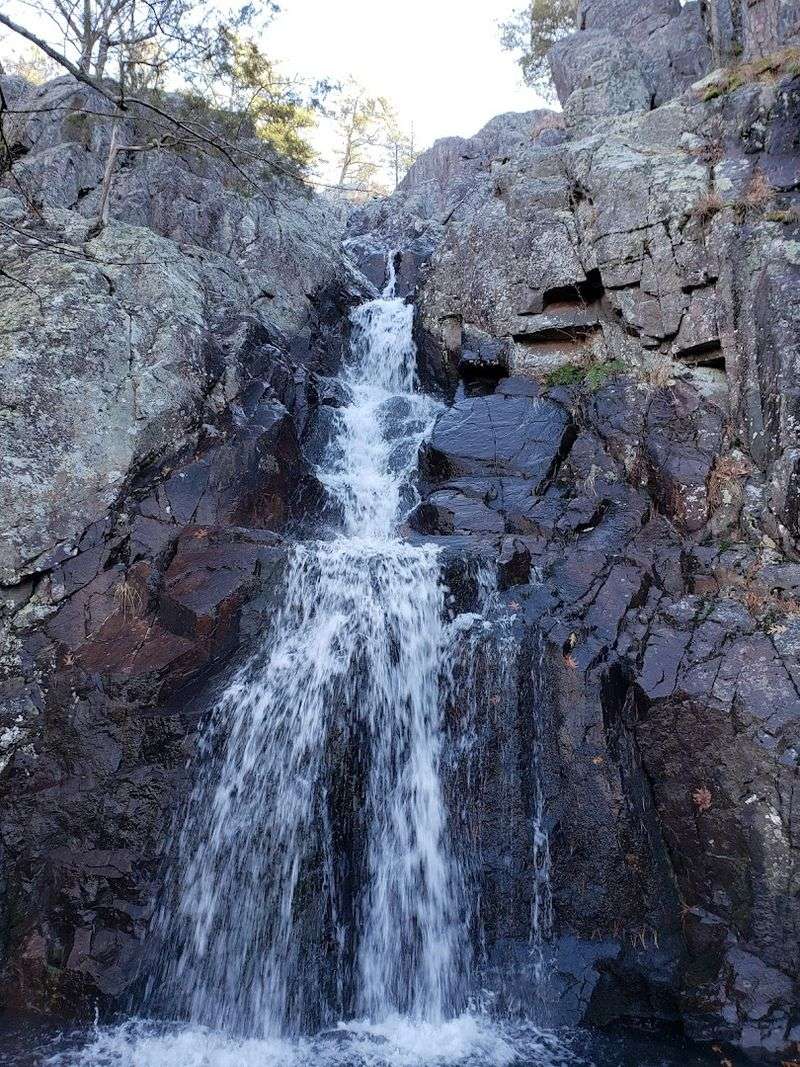
Standing at the top of Missouri, both literally and figuratively, Mina Sauk Falls holds the title of the tallest waterfall in the entire state.
Located at Taum Sauk Mountain State Park in Iron County, this dramatic cascade drops 132 feet down rugged volcanic ledges.
The rock here is ancient, formed from volcanic activity hundreds of millions of years ago, and you can feel that deep history under your boots as you hike in.
The trail to the falls is a 3-mile loop that winds through pine and oak forest before revealing the cascade in all its glory.
After rainfall, the water rushes with serious force, turning the ledges into a thundering curtain of white.
During drier stretches, the falls slow to a gentle trickle, but the landscape stays just as striking.
Taum Sauk Mountain itself is the highest point in Missouri, so the views along the trail are an added bonus.
I made the mistake of visiting on a busy weekend once, and the trailhead parking filled fast. An early morning start is the smart move here.
The park is open year-round, and fall foliage turns the hike into something almost unreal.
Spring visits after heavy rain deliver the most powerful waterfall experience, hands down.
There are no facilities right at the falls, so pack your own water and snacks before heading out.
This spot rewards the effort completely, and the moment you round that final bend on the trail and hear the roar ahead, you will understand why Mina Sauk Falls belongs at the very top of any Missouri waterfall list.
2. Grand Falls, Shoal Creek, Joplin
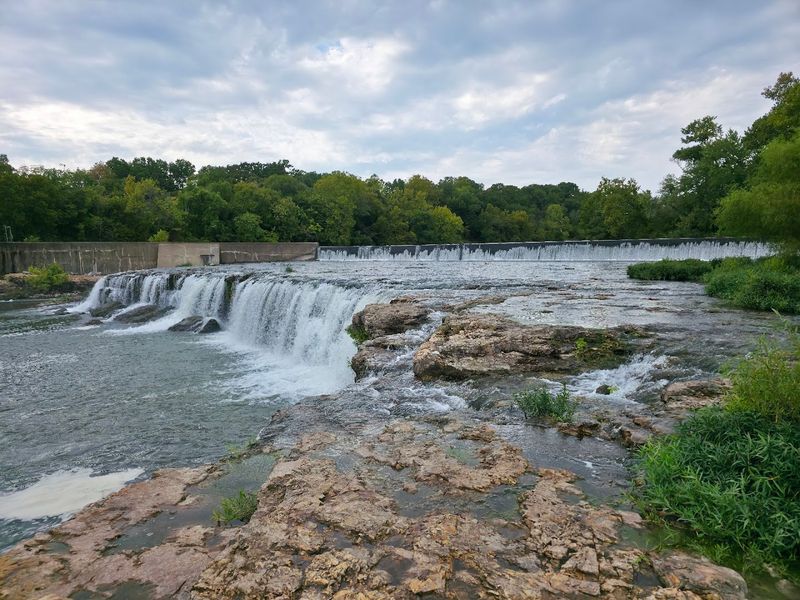
Few waterfalls in the Midwest can match the sheer width and raw power of Grand Falls on Shoal Creek, located just south of Joplin in southwestern Missouri.
This is the largest natural, continuously flowing waterfall in the entire state, which is a title it wears with serious confidence.
What sets Grand Falls apart immediately is the chert rock shelf it flows over. Chert is an extremely hard rock, and the waterfall has been carving across it for thousands of years without losing much ground.
The result is a wide, layered curtain of water that stretches impressively across the creek.
After heavy spring rains, the volume of water here is genuinely jaw-dropping.
I visited on a rainy April morning, and the roar was loud enough that I had to raise my voice to talk to the person next to me.
The viewing area is easy to access, which makes this a great stop even for people who are not big hikers.
You can walk along the rocky shoreline and get surprisingly close to the edge of the falls.
Swimming is popular in the calmer pools downstream during summer months, though always check conditions before wading in.
The surrounding area is relaxed and casual, with a grassy picnic spot nearby.
Joplin itself is worth exploring while you are in the area, with solid local food and a lively arts scene.
Grand Falls is one of those places that photographs beautifully but looks even better in person, and every season here brings a completely different mood to the water.
3. Rocky Falls, Shannon County
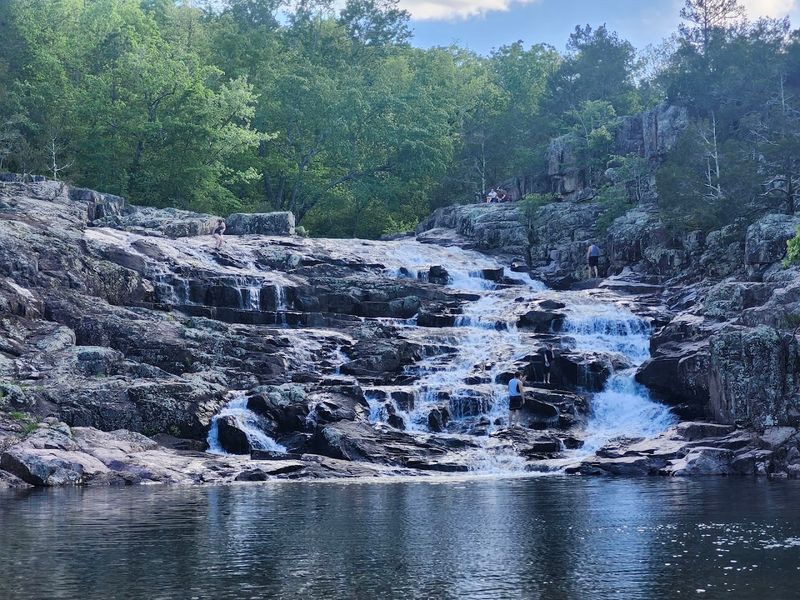
There is something almost prehistoric about Rocky Falls in Shannon County, deep in the Ozark National Scenic Riverways region of southern Missouri.
The water here drops roughly 30 feet over some of the oldest exposed igneous rock in the state, a dark, rust-colored formation that gives the falls a dramatic and moody look.
That igneous rock is the real showstopper. It is smooth in places and jagged in others, sculpted by water over an enormous span of time.
Rocky Falls is technically a wet-weather cascade, meaning it flows most powerfully after significant rainfall.
Timing your visit after a good rain in spring or early summer will reward you with a genuinely powerful rush of water.
The natural swimming hole at the base of the falls is crystal clear and refreshing during warmer months.
I spent a full afternoon here once, alternating between the cool water and sitting on the warm rocks in the sun.
The short trail from the parking area to the falls is easy and well-marked, making it accessible for most fitness levels.
Shannon County sits in one of the least populated corners of Missouri, so the drive out here feels like leaving the modern world behind.
The surrounding Ozark hills are blanketed in hardwood forest that turns spectacular shades of orange and red each October.
Nearby Eminence and the Current River offer additional outdoor adventures if you want to extend your trip.
Rocky Falls is one of those places that gets under your skin quietly, and you find yourself planning a return trip before you have even left the parking lot.
4. Dogwood Canyon Waterfalls, Lampe
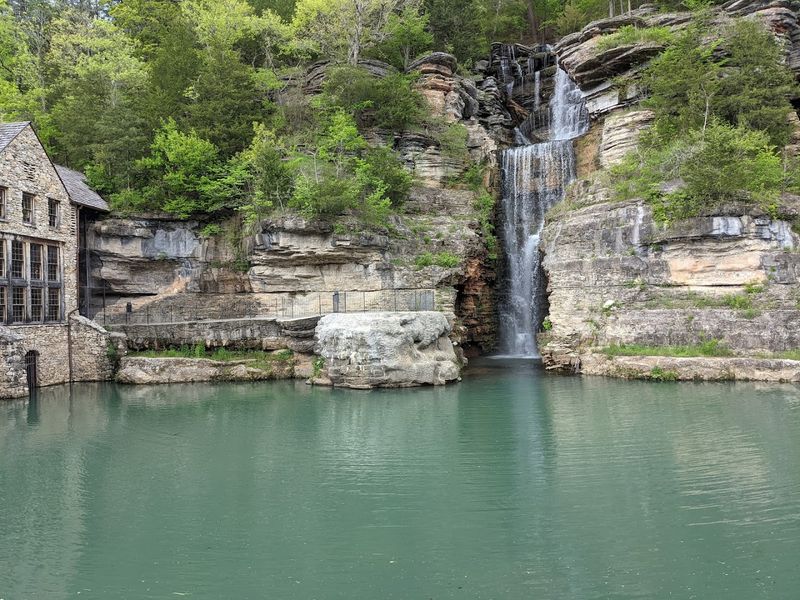
Dogwood Canyon Nature Park near Lampe, Missouri, in the southern Ozarks close to the Arkansas border, is the kind of place that makes you slow down and actually breathe.
The park sits along a gorgeous limestone canyon carved by Dry Fork Creek, and the waterfalls tucked inside it feel like they were designed specifically to impress.
Multiple cascades appear along the main trail, each one framed by towering bluffs and thick canopy overhead.
The water runs remarkably clear here, fed by natural springs that keep it cool and consistent even in summer.
I walked the full canyon trail on a weekday in May, and the combination of wildflowers, birdsong, and falling water made it feel genuinely peaceful.
The park is privately managed and very well maintained, with paved pathways along much of the trail system.
Tram tours are available if you prefer a more relaxed way to see the canyon, which is a great option for families with younger kids.
Wildlife sightings are common here. Deer, elk, and wild turkey all roam the property, and spotting them along the trail is a regular highlight.
Fishing is also available in the stocked stream, adding another reason to linger longer than planned.
Dogwood Canyon is located near Branson, making it an easy addition to any trip to that part of the state.
The canyon is at its most colorful in spring when dogwood trees bloom along the bluffs, and again in fall when the hardwoods ignite with color.
Every corner of this park feels carefully tended, and the waterfalls are the sparkling centerpieces of the whole experience.
5. Falling Spring Falls, Mark Twain National Forest
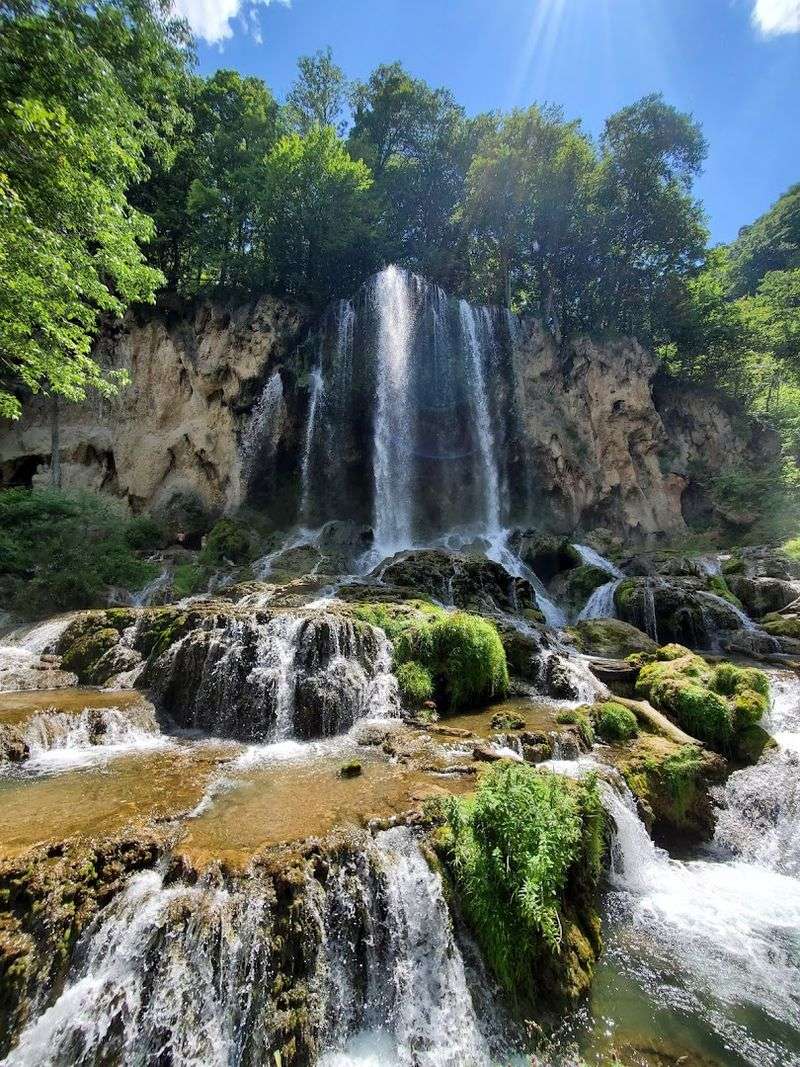
Falling Spring Falls earns its place on this list through sheer originality. The waterfall does not tumble down a hillside or cascade over a rocky ledge in the usual way.
Instead, it pours directly out of a rock bluff, emerging from the limestone face like the earth itself is sweating.
Located in the Mark Twain National Forest in southern Missouri, this spot pairs natural wonder with a slice of history.
Right beside the falls stands a historic 19th-century mill, and the combination of the two makes this one of the most photogenic spots in the entire state.
The mill has been standing since the 1800s, and seeing it framed against the falling water and mossy bluff feels genuinely timeless.
I visited on a quiet autumn afternoon when the leaves were just starting to turn, and the light filtering through the trees was something special.
The area around the falls is peaceful and relatively uncrowded compared to more publicized Missouri destinations.
A short, easy walk from the parking area brings you right to the base of the bluff where the water emerges.
Spring is the best time to visit for maximum water flow, when the aquifer feeding the spring is fully charged from winter moisture.
The surrounding national forest offers additional hiking and exploration if you want to make a full day of it.
This waterfall is a favorite among photographers for good reason. The combination of flowing water, ancient limestone, and the weathered mill creates a scene that looks like it belongs in a painting rather than a casual afternoon hike in Missouri.
6. Hodgson Mill Waterfall, Ozark County
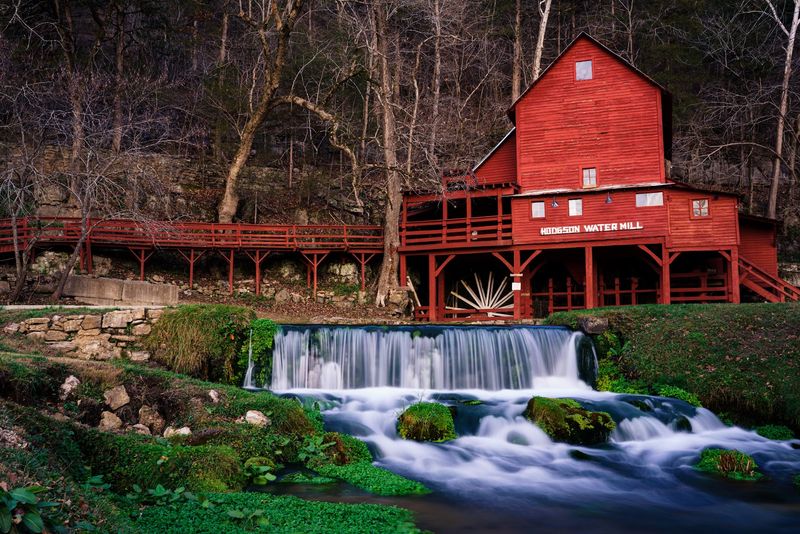
Hodgson Mill in Ozark County, near the small community of Sycamore in southern Missouri, is one of those places that makes history feel alive rather than dusty.
The waterfall here flows alongside a beautifully preserved historic grist mill, and together they create one of the most charming and photogenic scenes in the entire Ozarks.
The mill was built in the 1860s and is still standing in remarkable condition, powered by the same spring-fed stream that creates the waterfall beside it.
Bryant Creek Spring feeds the mill race with an impressive volume of cold, clear water year-round.
That consistency means the waterfall at Hodgson Mill flows reliably regardless of season, which is a real advantage over some of the more weather-dependent cascades in the state.
I pulled over here on a road trip through the Ozarks expecting a quick stop, and ended up spending nearly two hours just exploring the grounds and watching the water.
The setting is incredibly peaceful, with the sound of rushing water mixing with birdsong and the rustle of the surrounding hardwood forest.
A small natural spring also bubbles up directly from the ground near the mill, adding to the sense that water is simply everywhere here.
The area is popular with photographers, especially in morning light when the mist rises off the cold spring water.
Ozark County itself is a wonderful region to explore, with rolling hills, clear streams, and a relaxed rural character that feels a world away from city life.
Hodgson Mill is one of those rare spots where nature and history hold hands, and neither one overshadows the other.
7. Hickory Canyons Falls, Farmington
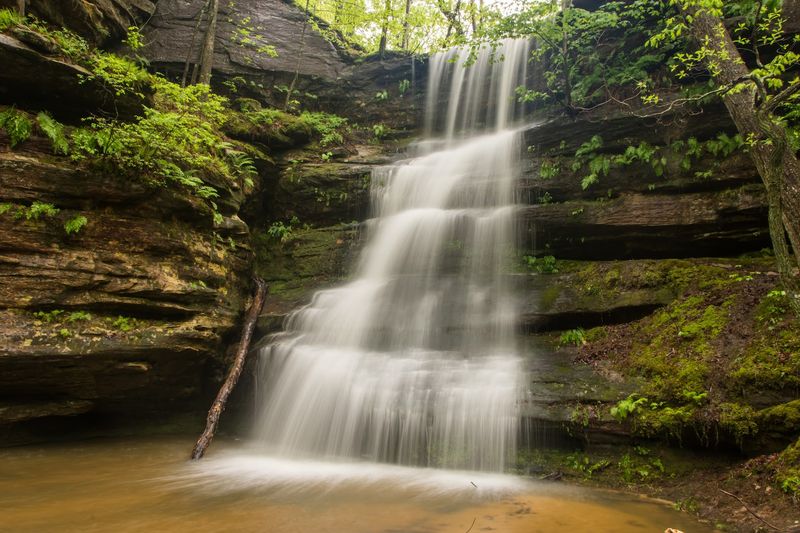
Hickory Canyons Natural Area near Farmington in St. Francois County holds one of Missouri’s most rewarding seasonal surprises.
After heavy spring rains, a stunning box-canyon waterfall comes to life here, filling the sandstone canyon with the sound and sight of rushing water in a way that feels almost theatrical.
The geology at Hickory Canyons is what makes it stand out from other Missouri waterfall sites.
The canyon walls are made of laminated sandstone that has been slowly carved by centuries of seasonal water flow, creating overhanging ledges and deep, shadowy alcoves.
When the falls are running, water spills from multiple points along the canyon rim, converging at the bottom in a scene that rewards every step of the hike to reach it.
Timing is everything here. Visit too late in summer and the falls may have dried up completely.
I made the trip in late March after a week of steady rain, and the canyon was absolutely roaring with water.
The trail system at Hickory Canyons is well-maintained and loops through a diverse mix of glades, woodlands, and rocky outcrops.
The natural area is managed by the Missouri Department of Conservation, so it is kept in excellent shape with clear signage throughout.
Wildflowers bloom along the trail edges in spring, adding bursts of color to the hike.
Farmington is a convenient base for the trip, with easy access and local dining options to round out the day.
Hickory Canyons is the kind of place that rewards seasonal awareness, and catching it at peak flow feels like a genuinely earned experience.
8. Tryst Falls, Excelsior Springs
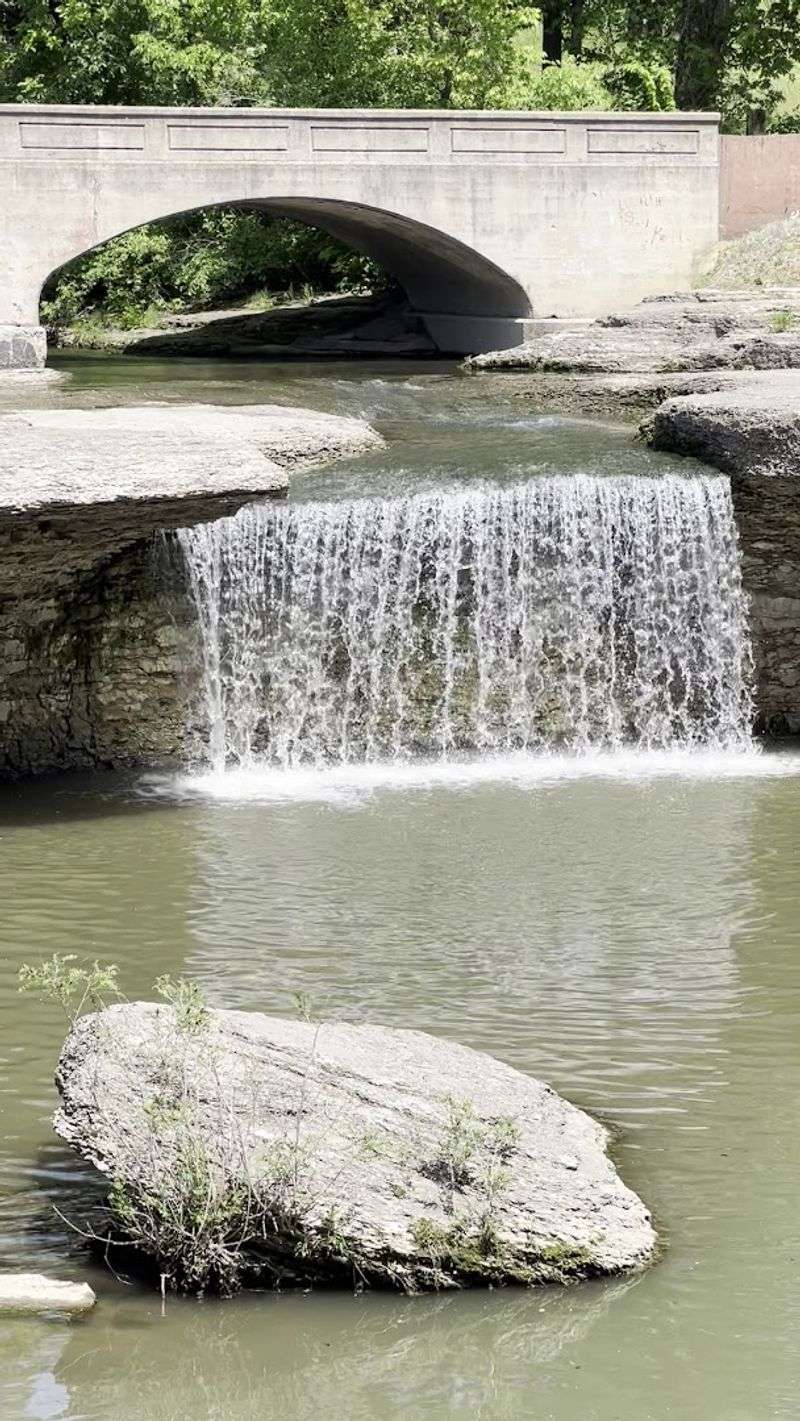
Most Missouri waterfall lists focus heavily on the Ozarks in the southern half of the state, which is exactly what makes Tryst Falls such a pleasant find for anyone exploring the northern regions.
Located in a scenic park between Excelsior Springs and Liberty in Clay County, Tryst Falls is one of the very few easily accessible natural waterfalls in northern Missouri.
That rarity alone makes it worth seeking out, but the falls themselves are genuinely lovely rather than just a curiosity.
The cascade tumbles over layered rock through a wooded park setting, with a peaceful creek running downstream through mature trees.
The surrounding park has a relaxed, neighborhood-park feel that makes it approachable for all kinds of visitors, from families with strollers to solo hikers looking for a quiet afternoon.
I visited on a calm weekday morning when the light was soft and the park was nearly empty, and the whole place had a wonderfully unhurried atmosphere.
The trail to the falls is short and manageable, making it a low-commitment stop that still delivers a real waterfall experience.
Spring and early summer bring the best water flow, though the shaded woodland setting keeps the area pleasant even in the heat of July.
Excelsior Springs has an interesting history of its own, known for its natural mineral springs that drew visitors from across the region in the early 20th century.
Pairing a visit to Tryst Falls with a stroll through the historic downtown of Excelsior Springs makes for a well-rounded and surprisingly rich day trip from Kansas City.
Northern Missouri deserves more credit, and Tryst Falls is one of the best arguments for making the drive.
