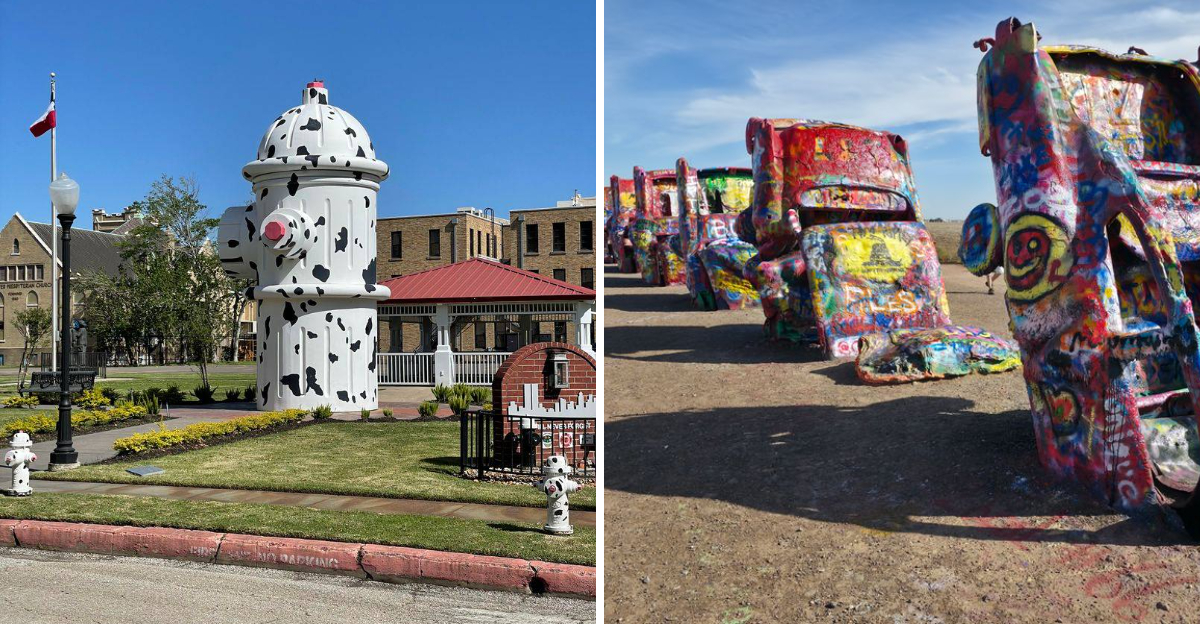
Texas stretches across hundreds of miles of open highway, where long stretches of road connect bustling cities to quiet towns and vast desert landscapes to rolling hill country.
Along these routes, travelers discover a collection of roadside attractions that break up the monotony and add a touch of wonder to every journey.
From towering art installations to quirky replicas of world-famous monuments, these stops reflect the state’s bold personality and creative spirit.
Whether you’re cruising down historic Route 66 or exploring the back roads of central Texas, these destinations invite you to pull over, stretch your legs, and experience something truly unforgettable.
1. Cadillac Ranch
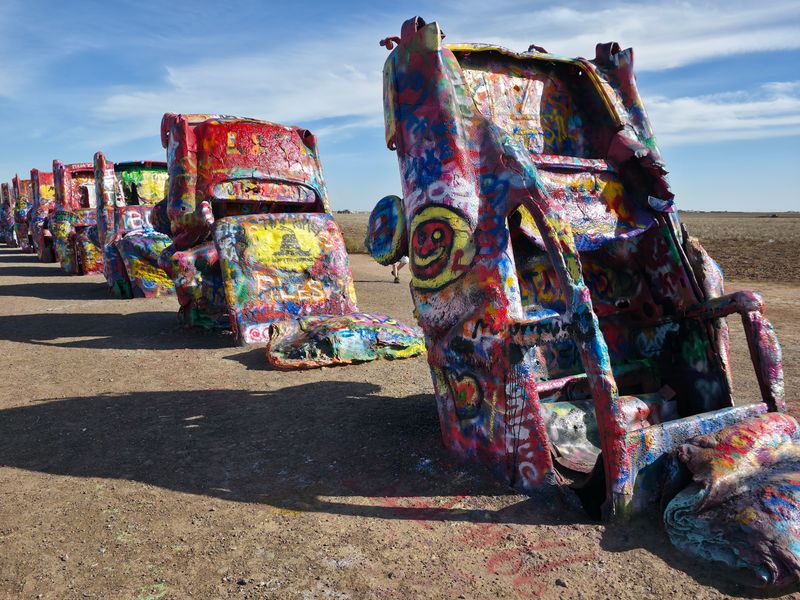
Just west of Amarillo, a stretch of flat Texas prairie hosts one of the most iconic public art installations in the entire country.
Ten classic Cadillacs stand buried nose-first into the earth at the same angle as the Great Pyramid of Giza, creating a striking visual against the endless sky.
Artists Chip Lord, Hudson Marquez, and Doug Michels created this piece in 1974, and it has evolved into a living canvas where visitors are encouraged to bring their own spray paint and leave their mark.
Layers upon layers of graffiti cover every inch of the cars, transforming them daily as new travelers add their creative contributions.
Some people write names and dates, others create elaborate murals, and many simply add splashes of color to the ever-changing masterpiece.
The site sits on private land but remains open to the public year-round, making it accessible any time of day or night.
Photographers love the golden hour here when the setting sun casts long shadows across the painted metal surfaces.
Families often make this a planned stop on road trips, bringing cans of spray paint specifically for the occasion.
The ground around the installation is littered with empty paint cans, a testament to the thousands of visitors who have contributed to this collaborative artwork.
While the cars themselves are vintage models from the 1940s through the 1960s, their constant transformation keeps them feeling fresh and contemporary.
Visiting Cadillac Ranch offers more than just a photo opportunity; it provides a hands-on art experience that connects travelers to a living piece of Texas culture.
Address: 13651 I-40 Frontage Rd, Amarillo, TX 79124
2. Leaning Tower of Britten
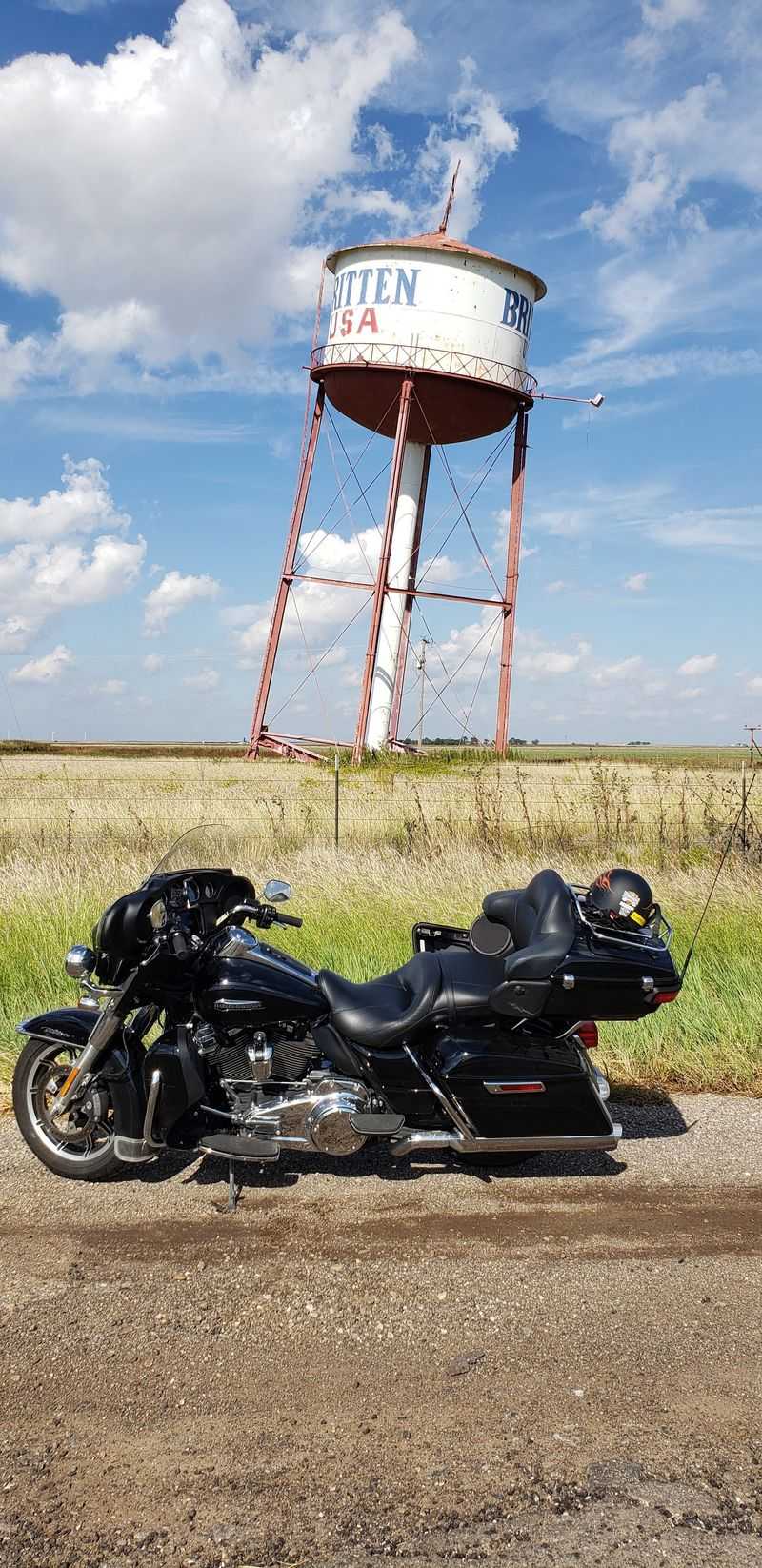
Along the legendary Route 66 in the small town of Groom, a water tower leans at what appears to be a precarious angle, catching the eye of every passing driver.
Built intentionally at a ten-degree tilt, the Leaning Tower of Britten pays homage to Italy’s famous Leaning Tower of Pisa while celebrating the quirky roadside culture of America’s Mother Road.
Ralph Britten constructed this novelty attraction to draw attention to his truck stop, and it has served that purpose brilliantly for decades.
The tower stands as a testament to the entrepreneurial spirit that defined Route 66 businesses, where creative attractions meant the difference between success and obscurity.
Travelers often pull over to snap photos that play with perspective, making it appear as though they’re holding up the tower or pushing it over.
The structure’s bright red and white coloring makes it visible from a considerable distance, serving as a landmark for navigation and a beacon for curious road trippers.
Unlike many roadside attractions that have faded with time, this tower remains well-maintained and continues to delight visitors young and old.
The surrounding area offers a glimpse into small-town Texas life, where the pace is slower and the hospitality genuine.
Many Route 66 enthusiasts include this stop on their bucket lists, documenting their journey along the historic highway with photos at each iconic location.
The Leaning Tower of Britten represents more than just a tilted water tower; it embodies the playful creativity that makes Texas roadside attractions so memorable.
Address: Interstate 40 U.S. Rte 66, Groom, Texas
3. World’s Largest Fire Hydrant
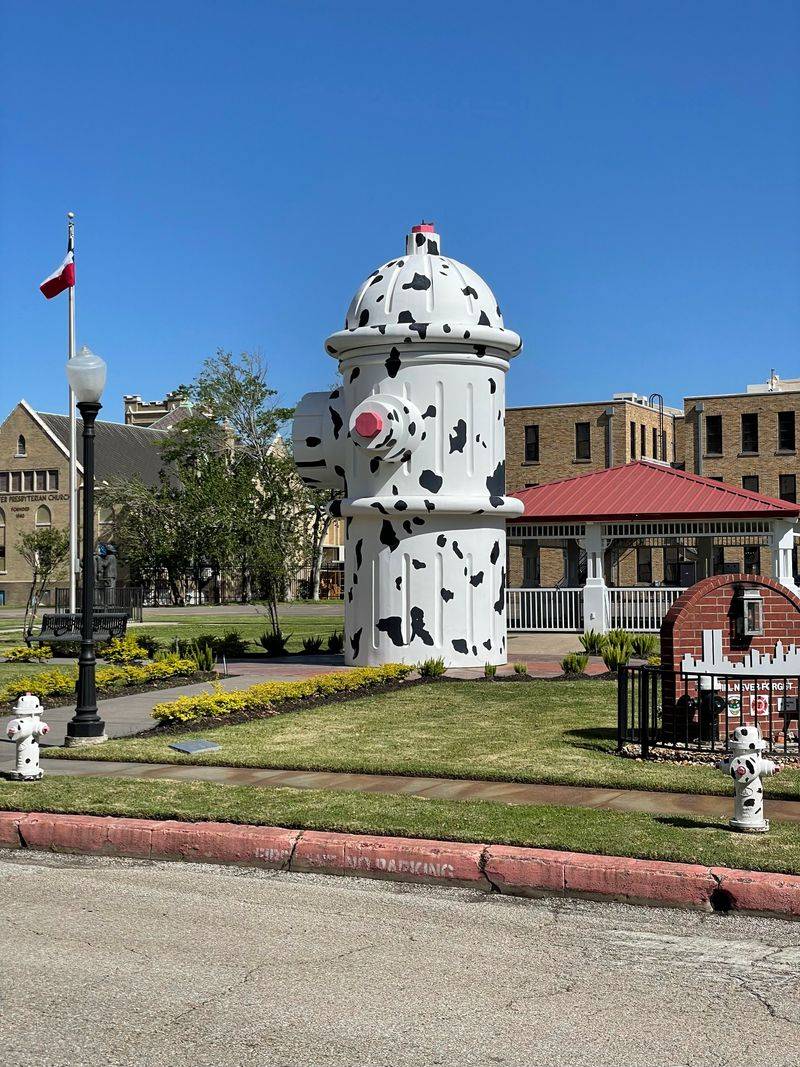
Beaumont boasts an oversized attraction that towers above visitors at an impressive 24 feet tall, making it impossible to miss.
The World’s Largest Fire Hydrant features distinctive Dalmatian spots and was donated by the Walt Disney Company in 1999 to promote the re-release of the animated classic 101 Dalmatians.
Originally displayed in New York City, the hydrant found its permanent home in Texas, where it stands as a beloved local landmark.
Fire Museum of Texas serves as the backdrop for this giant replica, creating a fitting context for the oversized firefighting equipment.
Children especially love this attraction, often running around its base and marveling at how something so familiar can become so extraordinary when scaled up.
The hydrant’s playful design with black spots on white paint connects perfectly with the Dalmatian theme, making it instantly recognizable and photographable.
Visitors often use the massive structure as a meeting point or landmark when exploring downtown Beaumont.
The fire museum itself offers additional context about firefighting history in Texas, making this stop educational as well as entertaining.
Local residents take pride in this quirky attraction, which has become part of the city’s identity and appears in promotional materials and postcards.
The hydrant serves as a reminder that roadside attractions don’t need to be ancient or historically significant to capture imaginations.
Sometimes the most memorable stops are simply fun, whimsical creations that make people smile and reach for their cameras.
Address: 219 Main St, Beaumont, TX 77701
4. Stonehenge II
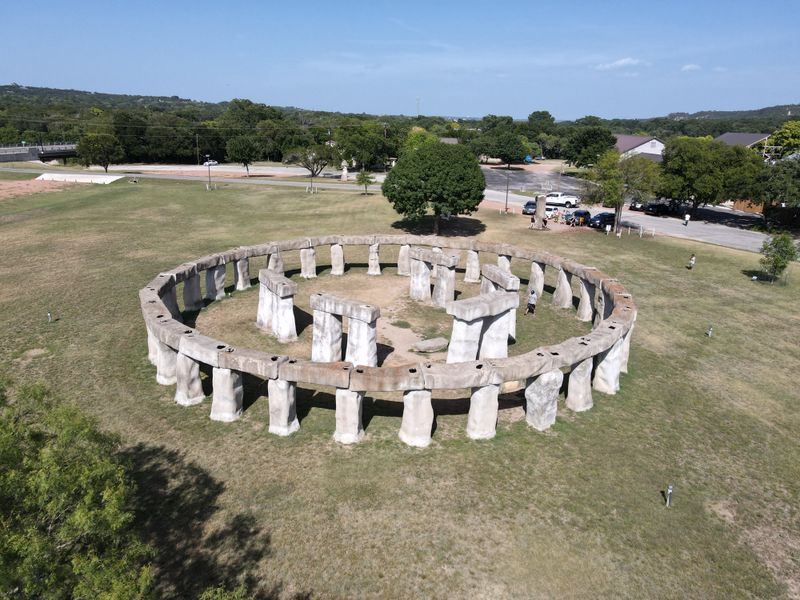
In the scenic Texas Hill Country near Ingram, an unexpected replica of England’s most mysterious monument rises from the landscape.
Stonehenge II stands approximately 90 percent as tall and 60 percent as wide as the original, constructed from local materials and situated among rolling hills dotted with oak trees.
Al Shepperd and Doug Hill created this tribute in the 1980s, adding two Easter Island moai statues to the site for an extra layer of ancient mystery.
The combination of these two iconic monuments from different corners of the world creates a surreal experience that feels both familiar and completely out of place.
Unlike the original Stonehenge, which sits behind barriers and requires tickets, this Texas version welcomes visitors to walk freely among the stones and touch the structures.
The Hill Country setting provides a beautiful backdrop, especially during wildflower season when bluebonnets carpet the surrounding fields.
Photographers find endless opportunities here, capturing the contrast between ancient architectural forms and the distinctly Texan landscape.
The moai statues add an element of whimsy to the site, their stoic faces gazing out over the countryside as if guarding secrets from across the Pacific.
Many visitors come expecting a simple roadside oddity but leave impressed by the scale and craftsmanship of the replica.
The site has become a popular location for unique photo shoots, from family portraits to engagement pictures.
Stonehenge II demonstrates how Texas embraces the unexpected, creating spaces where global history and local creativity intersect in surprising ways.
Address: 120 Point Theater Road South, Ingram, Texas
5. Cathedral of Junk
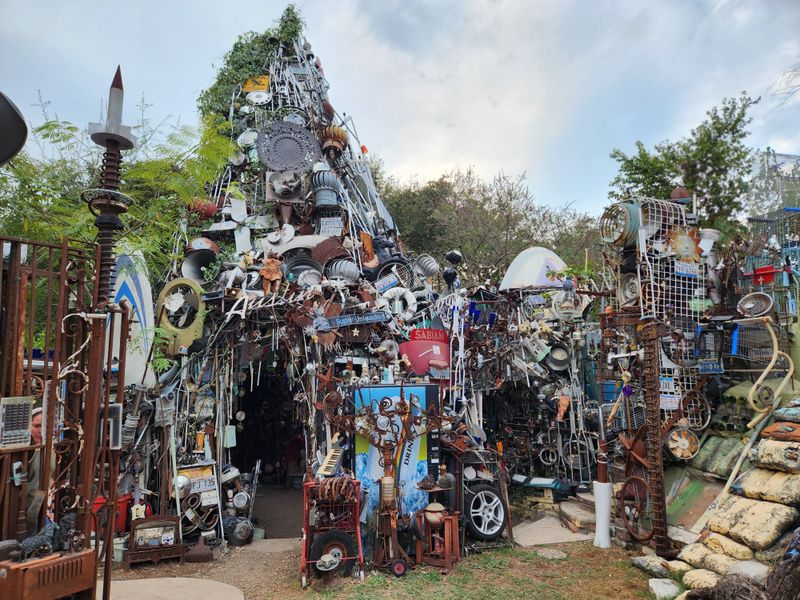
Austin’s unofficial motto encourages residents to keep the city weird, and the Cathedral of Junk stands as perhaps the ultimate expression of that philosophy.
Vince Hannemann began building this three-story structure in his backyard in 1989, using over 60 tons of discarded objects, scrap metal, and found materials.
The result is a labyrinthine tower that visitors can climb through and explore, discovering new details with every step.
Old hubcaps, bicycle wheels, circuit boards, toys, tools, and thousands of other items are woven together into a cohesive architectural marvel.
Each section of the cathedral tells a different story through the objects incorporated into its walls and ceilings.
Visitors must make reservations to tour the private property, but those who do gain access to one of Austin’s most unique artistic environments.
The structure constantly evolves as Hannemann adds new pieces and rearranges existing elements, ensuring that no two visits are exactly alike.
Natural light filters through the spaces between objects, creating patterns that shift throughout the day.
The cathedral serves as both a commentary on consumer culture and a celebration of creativity, transforming trash into treasure through artistic vision.
Many visitors report feeling overwhelmed by the sheer density of items and the imagination required to conceive such a project.
The backyard setting adds to the intimate, personal nature of the experience, making visitors feel like they’re being let in on a local secret.
Address: 4422 Lareina Drive, Austin, Texas
6. Prada Marfa
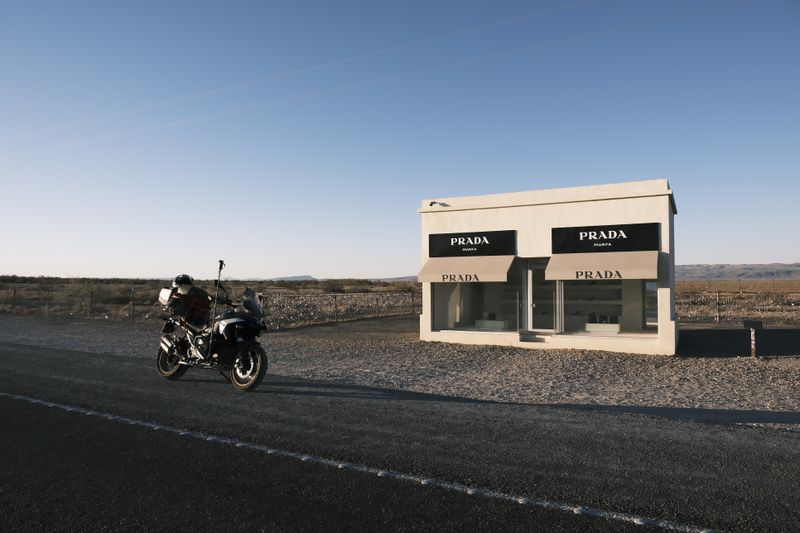
Approximately 37 miles northwest of Marfa, a fully stocked Prada boutique stands alone in the Chihuahuan Desert, miles from the nearest town.
Artists Michael Elmgreen and Ingar Dragset created this permanent sculpture in 2005 as a commentary on consumerism and the relationship between art and commerce.
The building features real Prada handbags and shoes from the fall/winter 2005 collection, displayed behind glass windows that never open.
The store’s isolation creates a striking contrast, placing luxury fashion in one of the most remote and rugged landscapes in Texas.
Visitors cannot enter the structure or purchase anything; it exists purely as an art installation meant to provoke thought and conversation.
The building has been vandalized and restored multiple times over the years, becoming part of its ongoing narrative as a piece of contemporary art.
Photographers flock to this location, especially during sunrise and sunset when the light transforms the white building into a glowing beacon against the desert backdrop.
The surrounding landscape offers dramatic views of mountains and desert vegetation, making the journey to Prada Marfa as memorable as the destination itself.
Many visitors combine this stop with a trip to the town of Marfa, known for its thriving art scene and mysterious lights phenomenon.
The installation has become so iconic that it appears in countless social media posts, fashion magazines, and travel articles.
Standing before this surreal sight, travelers often contemplate the absurdity and genius of placing high fashion in such an unlikely location.
Prada Marfa challenges expectations and invites viewers to question what they consider valuable, accessible, and worth preserving in the modern world.
7. Hamilton Pool Preserve
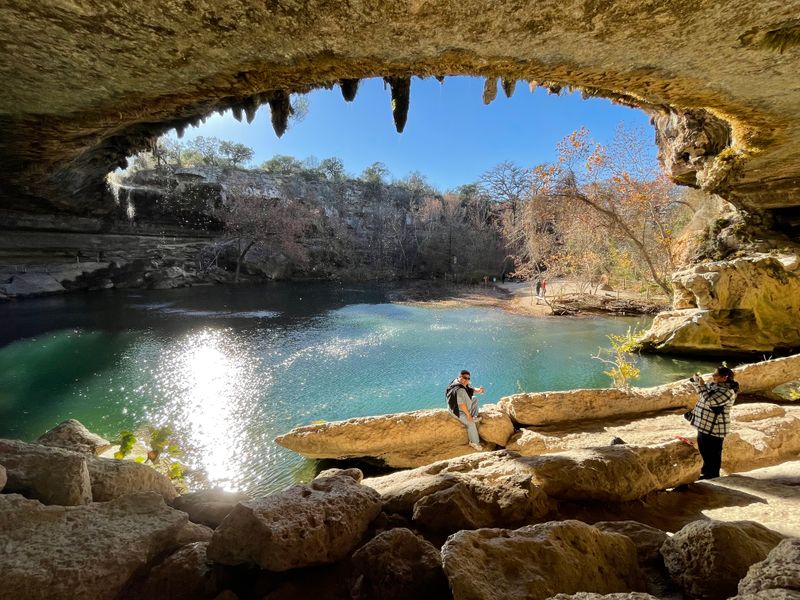
About 23 miles west of Austin, a collapsed underground river dome created one of the most breathtaking natural swimming holes in all of Texas.
Hamilton Pool Preserve features a 50-foot waterfall that spills over a limestone overhang into a jade-green pool below, surrounded by towering canyon walls.
Stalactites cling to the grotto ceiling, and lush vegetation drapes down the rock faces, creating an almost prehistoric atmosphere.
The pool formed thousands of years ago when the dome of an underground river eroded and collapsed, leaving behind this stunning natural cathedral.
Swimming is permitted when bacteria levels are safe, though the water remains cool year-round, fed by underground springs.
The preserve requires reservations during peak season due to its popularity and the need to protect this fragile ecosystem.
A quarter-mile trail leads from the parking area down to the pool, winding through native Hill Country vegetation and offering glimpses of the canyon below.
The grotto provides natural shade and shelter, making it a refreshing escape during hot Texas summers.
Photographers and nature enthusiasts visit throughout the year, as each season brings different water flows and lighting conditions.
The site was privately owned for generations before being acquired for public preservation, ensuring future generations can experience its beauty.
Birds nest in the rocky alcoves, and the sound of falling water creates a peaceful soundtrack that drowns out the outside world.
8. World’s Largest Pecan
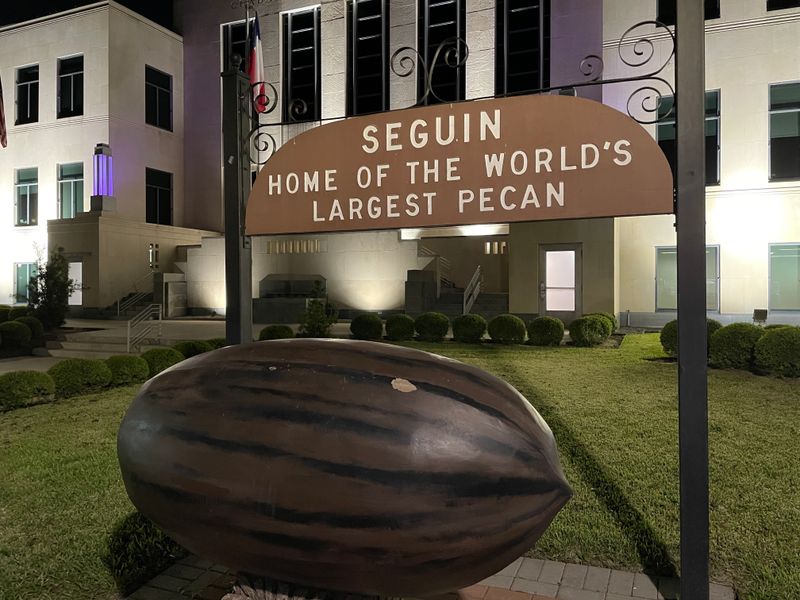
Seguin proudly claims the title of Pecan Capital of Texas, and to prove it, the town displays the World’s Largest Pecan right off the highway.
The oversized nut measures approximately five feet long and weighs over 1,000 pounds, constructed from concrete and metal to create a lasting monument to the local industry.
Pecan farming has deep roots in the region, and this quirky attraction celebrates that agricultural heritage while giving travelers a reason to stop and explore.
The giant pecan sits in a small park area with informational signs about the town’s history and the importance of pecan cultivation to the local economy.
Families often stop here for quick photo opportunities, with children climbing on or standing next to the massive nut for scale.
The town of Seguin itself offers additional charm, with historic buildings, antique shops, and restaurants serving pecan pie and other regional specialties.
During autumn harvest season, the area comes alive with pecan-related activities, festivals, and farm stands selling fresh nuts by the pound.
The attraction exemplifies the Texas tradition of celebrating local products and industries through larger-than-life roadside sculptures.
Similar oversized objects dot the Texas landscape, from giant strawberries to enormous cowboy boots, each marking a town’s unique identity.
The World’s Largest Pecan serves as both a landmark and a conversation starter, inviting travelers to learn more about this important Texas crop.
Visitors leaving Seguin often take home bags of locally grown pecans, connecting the roadside attraction to a tangible taste of the region.
Address: 101 E Court St, Seguin, TX 78155
9. Enchanted Rock
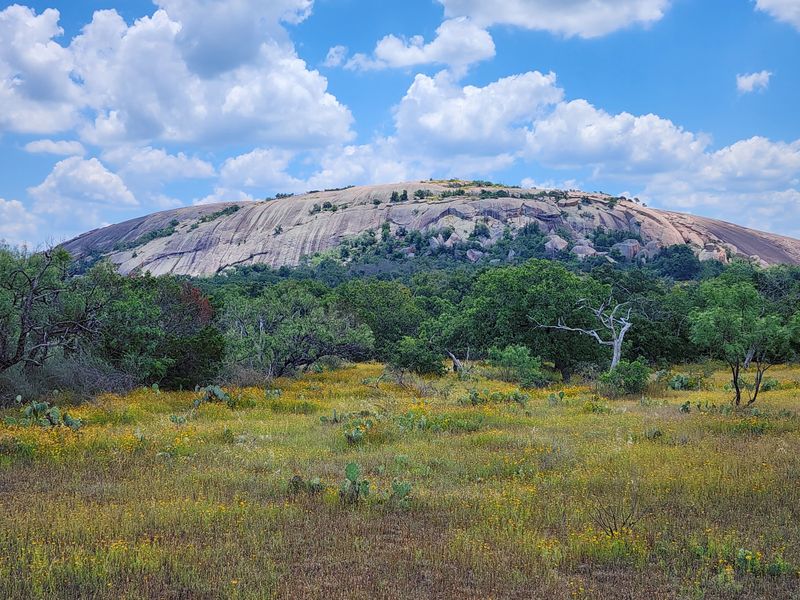
Rising 425 feet above the surrounding Hill Country landscape, Enchanted Rock is a massive pink granite dome that has drawn humans to its summit for thousands of years.
Native American tribes considered the rock sacred, and legends speak of supernatural phenomena including strange creaking sounds caused by the rock’s expansion and contraction.
The dome formed over a billion years ago deep underground and was gradually exposed through erosion, creating one of the largest batholiths in the United States.
Hiking to the summit takes about an hour for most visitors, following a well-maintained trail that grows steeper as it approaches the top.
The panoramic views from the peak stretch for miles in every direction, revealing the rolling hills, valleys, and distant horizons that define this region.
The rock’s surface features unique features including vernal pools that support rare fairy shrimp, and weathering pits that create miniature ecosystems.
Rock climbers tackle the dome’s faces year-round, taking advantage of the friction and crack systems that make the granite ideal for technical climbing.
The preserve requires reservations during busy periods, as park managers work to protect the fragile environment while allowing public access.
Night visits reveal spectacular stargazing opportunities, as the elevated position and relative isolation from light pollution create ideal viewing conditions.
The rock’s pink hue becomes especially vibrant during sunset, when the granite seems to glow with an internal fire.
Wildflowers bloom across the surrounding landscape each spring, adding splashes of color to the already dramatic scenery.
Enchanted Rock stands as a natural wonder that transforms an ordinary drive through the Hill Country into a journey to one of Texas’s most awe-inspiring geological features.
Dear Reader: This page may contain affiliate links which may earn a commission if you click through and make a purchase. Our independent journalism is not influenced by any advertiser or commercial initiative unless it is clearly marked as sponsored content. As travel products change, please be sure to reconfirm all details and stay up to date with current events to ensure a safe and successful trip.
