Texas is famous for its big cities and iconic landmarks, but the real magic happens when you step off the beaten path.
Locals know that the best experiences often hide in small towns, natural wonders, and quirky spots that guidebooks tend to overlook.
From mysterious lights in the desert to enchanting cypress swamps, these hidden treasures offer something you cannot find at crowded tourist hotspots.
Get ready to explore ten incredible places across the Lone Star State that might just steal your heart more than the Alamo ever could.
1. Terlingua Ghost Town
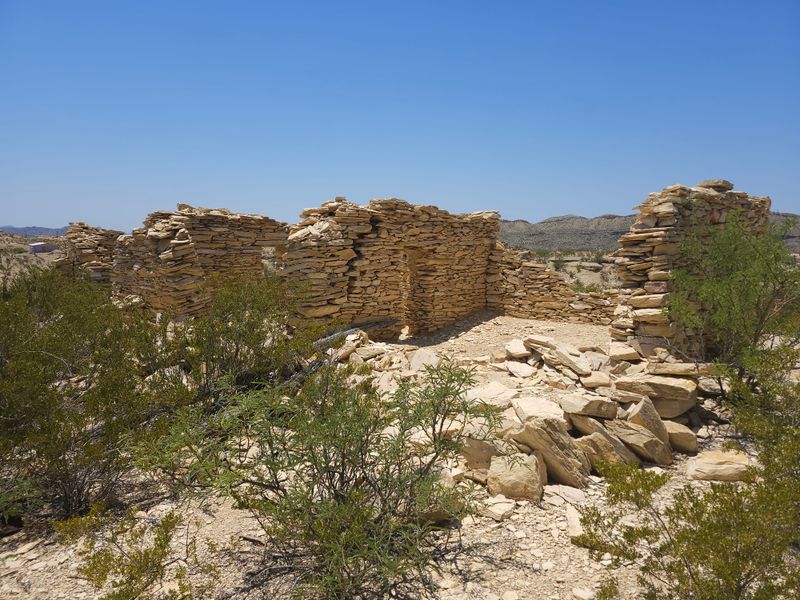
A desert wind whispers through crumbling adobe walls where miners once chased mercury deep beneath the Chihuahuan Desert.
Terlingua stands as a testament to boom and bust, its weathered buildings now home to artists, free spirits, and adventurers who appreciate authentic Texas grit.
The town thrived in the early 1900s when the Chisos Mining Company extracted cinnabar ore, but by the 1940s, the mines closed and residents scattered like tumbleweeds.
What remained became something unexpected.
Today, colorful characters run quirky shops and restaurants among the ruins, creating a community that feels like stepping into a living postcard from another era.
Every November, thousands descend upon this tiny outpost for the Terlingua International Chili Championship, turning the ghost town into a spicy celebration of Texas culture.
The event features live music, storytelling, and of course, fierce competition over who makes the best bowl of red.
Artists have claimed many of the old structures, transforming them into galleries showcasing desert-inspired paintings, metalwork, and pottery.
Nearby Big Bend National Park draws nature lovers, but Terlingua offers something the park cannot provide.
Human connection thrives here despite the isolation.
Sunsets paint the surrounding mountains in shades of purple and orange that photographers dream about for years afterward.
Night brings a blanket of stars so thick you feel you could reach up and grab a handful.
This place teaches visitors that sometimes the most meaningful destinations are those where history, art, and wilderness collide in unexpected harmony.
2. Caddo Lake State Park
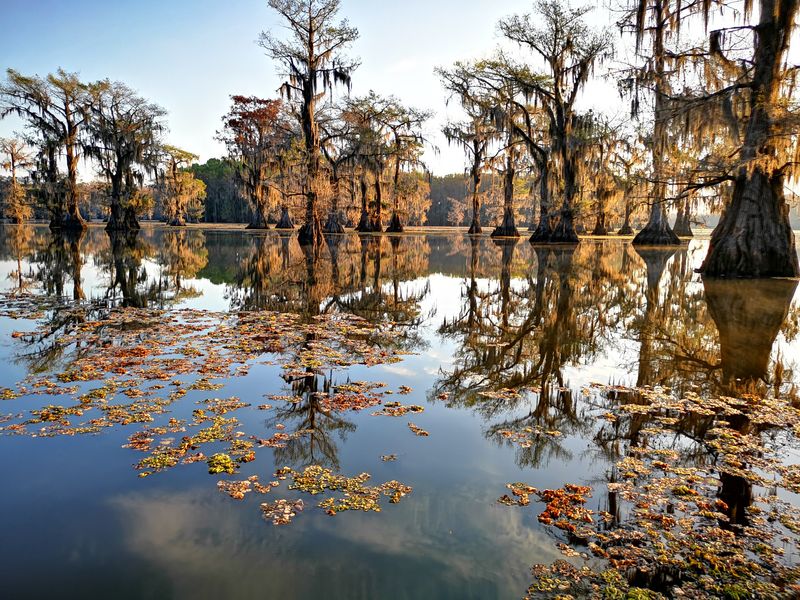
Moss drapes from ancient cypress trees like nature’s own curtains, creating an otherworldly landscape that belongs more to Louisiana bayous than typical Texas scenery.
Caddo Lake stretches across the border between Texas and Louisiana, covering over 25,000 acres of mysterious waterways, sloughs, and ponds.
Legend says the lake formed after a massive logjam on the Red River caused water to back up and flood the cypress forest.
Native American stories speak of a great earthquake that created the depression, adding to the mystical atmosphere.
Whatever its origin, paddling through the maze of channels feels like entering a forgotten world where time moves differently.
Spanish moss hangs so thick in places that sunlight barely penetrates the canopy, casting everything in emerald shadows.
Alligators sun themselves on logs while herons stand motionless in shallow water, waiting for unsuspecting fish to swim past.
The lake supports over 70 species of fish and serves as crucial habitat for countless birds, making it a paradise for wildlife enthusiasts
Photographers arrive before dawn to capture mist rising off the water as golden light filters through the trees.
Kayakers and canoeists explore narrow passages that twist and turn, sometimes opening into wider pools where lily pads float like green islands.
Getting lost feels almost inevitable, but that sense of disorientation adds to the adventure.
Local guides offer tours for those who prefer expert navigation through the labyrinth.
The park provides cabins and camping for visitors who want to experience multiple sunrises over this enchanted ecosystem.
Caddo Lake reminds us that Texas contains multitudes, including landscapes that defy every stereotype about the state.
3. Gruene Historic District
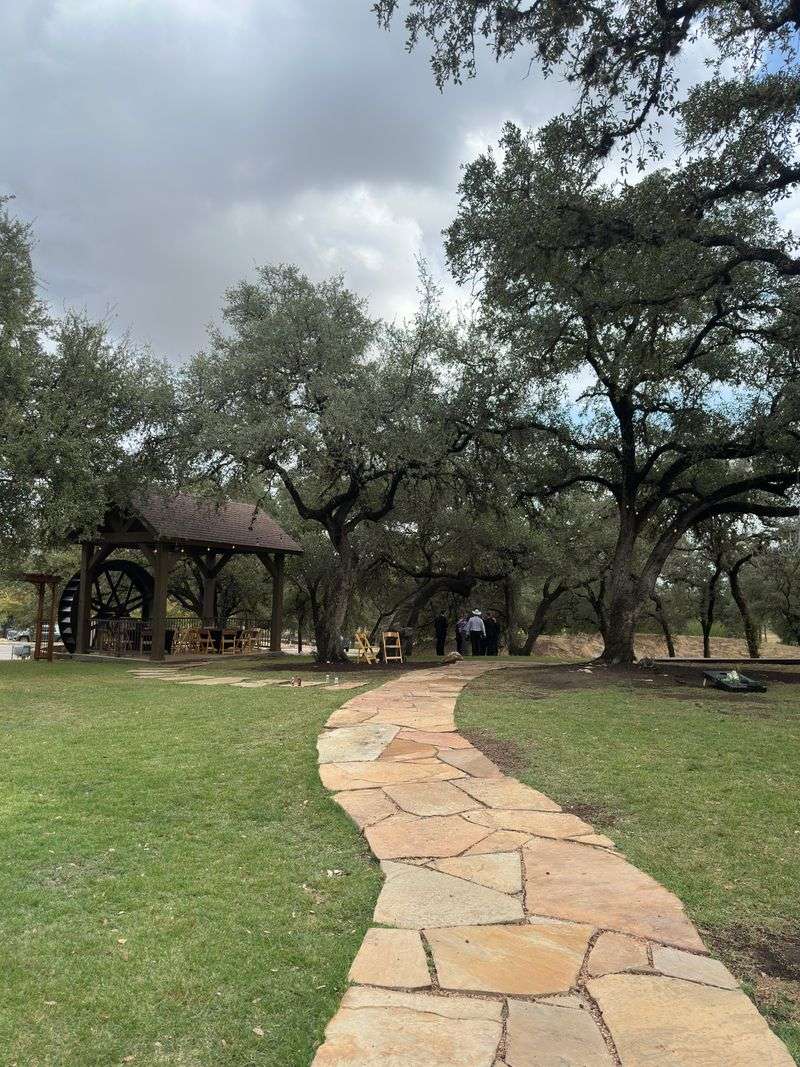
Wooden floorboards worn smooth by generations of dancing boots tell stories that no history book could capture quite as well.
Gruene Hall has hosted musicians and dancers since 1878, making it the oldest continuously operating dance hall in Texas.
The building itself looks like it might collapse any moment, but that weathered charm is precisely what draws visitors from around the world.
Willie Nelson, George Strait, and countless other legends have played this intimate venue where everyone stands close enough to feel the music in their bones.
Beyond the famous hall, the entire district preserves a slice of 19th-century German-Texan culture.
Henry Gruene established a cotton gin and general store here in the 1870s, and his descendants maintained the buildings even after the town faded.
Today, those preserved structures house antique shops, restaurants, and galleries that maintain the authentic character without feeling like a theme park.
The Guadalupe River flows nearby, offering tubing and swimming that provides welcome relief from Texas heat.
Locals know to arrive early on summer weekends when river traffic reaches its peak.
Gristmill Restaurant occupies the ruins of an old cotton gin, its outdoor deck overlooking the river creating perfect ambiance for Hill Country cuisine.
Browse through shops selling handmade pottery, vintage clothing, and Texas memorabilia without encountering a single chain store.
Weekend afternoons bring live music to various venues throughout the district, creating a soundtrack that drifts through the streets.
The combination of authentic history, natural beauty, and vibrant culture makes Gruene feel like discovering a secret that somehow remained hidden in plain sight.
Address: 1601 Hunter Road, New Braunfels, Texas
4. Marfa Lights Viewing Area
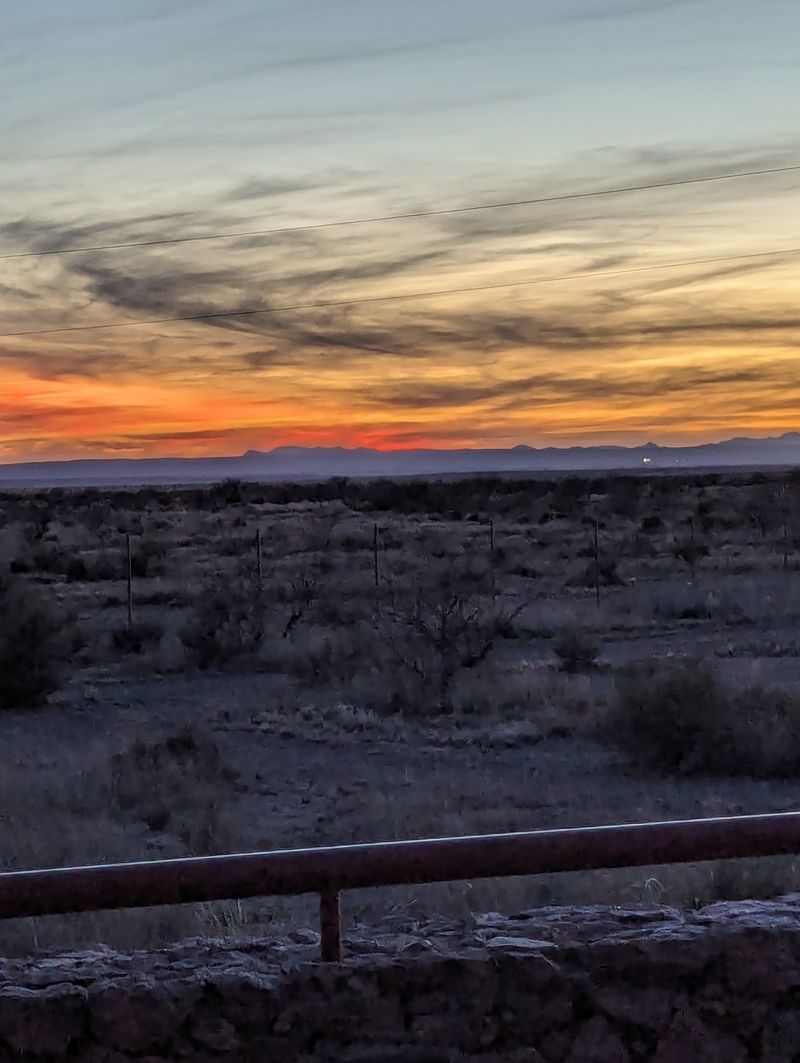
Strange orbs dance on the horizon like cosmic fireflies, appearing and disappearing with no pattern that scientists have definitively explained.
The Marfa Lights have puzzled observers since the 1880s when a cowboy named Robert Ellison first reported seeing them.
Some nights they glow bright white, other times they split into multiple colors or seem to merge together.
Theories range from atmospheric reflections to piezoelectric effects in the surrounding mountains, but none fully account for all the reported behaviors.
The official viewing area sits along Highway 90 east of Marfa, equipped with a parking lot and informational plaques describing the phenomenon.
Visitors gather at dusk, scanning the dark landscape for any sign of the mysterious illuminations.
Not every night produces a show, which somehow makes witnessing them feel even more special.
Marfa itself has transformed from a remote railroad town into an unlikely art destination thanks to minimalist artist Donald Judd.
He established permanent installations in old military buildings, attracting galleries, boutique hotels, and creative types seeking inspiration in the high desert.
The juxtaposition between cutting-edge contemporary art and unexplained natural phenomena creates an atmosphere unlike anywhere else in Texas.
Stargazing here rivals any location in the state due to minimal light pollution and high elevation.
The Milky Way stretches across the sky so vividly that constellations become almost difficult to pick out against the cosmic backdrop.
Bring warm layers even in summer because desert nights turn surprisingly cool.
Whether you witness the lights or not, the experience of standing under that vast Texas sky changes your perspective on how much mystery still exists in our modern world.
Address: Highway 90, Marfa, Texas
5. Jacob’s Well Natural Area
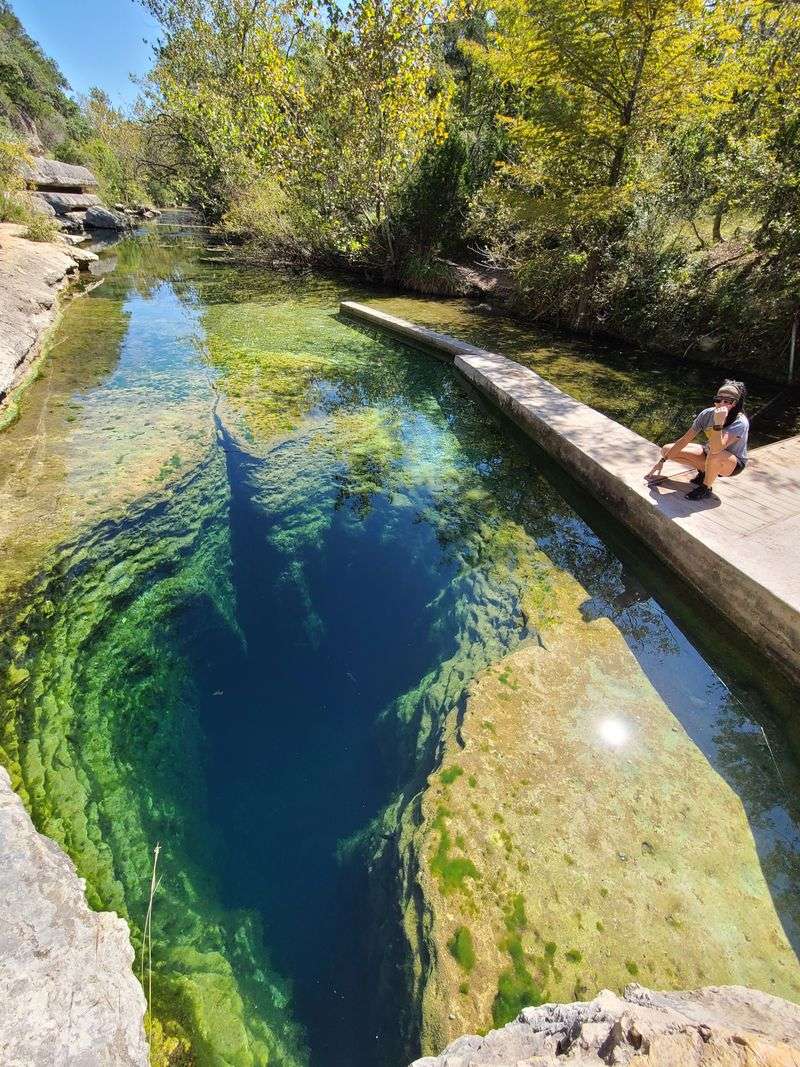
Crystal-clear water bubbles up from an underground cave system, creating a swimming hole so pristine it looks like something from a fantasy novel.
Jacob’s Well in Wimberley has drawn visitors for thousands of years, with evidence of Native American camps surrounding this precious water source.
The spring produces between 170 and 600 gallons per minute depending on rainfall, feeding Cypress Creek which eventually flows into the Blanco River.
Looking down into the well reveals multiple chambers descending over 140 feet into the earth.
Experienced cave divers have explored the underwater passages, though several tragic accidents led to restrictions on who can enter the deeper sections.
For surface swimmers, the experience feels magical enough without venturing into the cave system.
Water temperature remains a constant 68 degrees year-round, refreshingly cool in summer and surprisingly warm during winter months.
The surrounding preserve protects 81 acres of Hill Country habitat, with hiking trails winding through juniper and oak woodlands.
Hays County acquired the property to ensure public access while protecting the delicate ecosystem.
Reservations are now required during peak season because too many visitors were damaging vegetation and overwhelming the area.
This system helps preserve the experience for future generations while managing environmental impact.
Arrive prepared because the preserve offers limited shade and no food vendors.
Watching water continuously emerge from the earth reminds us that Texas sits atop vast underground aquifers that sustain life across the region.
Jacob’s Well represents more than just a beautiful swimming spot; it serves as a tangible connection to the hidden water systems that make Hill Country existence possible.
Address: 1699 Mount Sharp Road, Wimberley, Texas
6. Palo Duro Canyon State Park
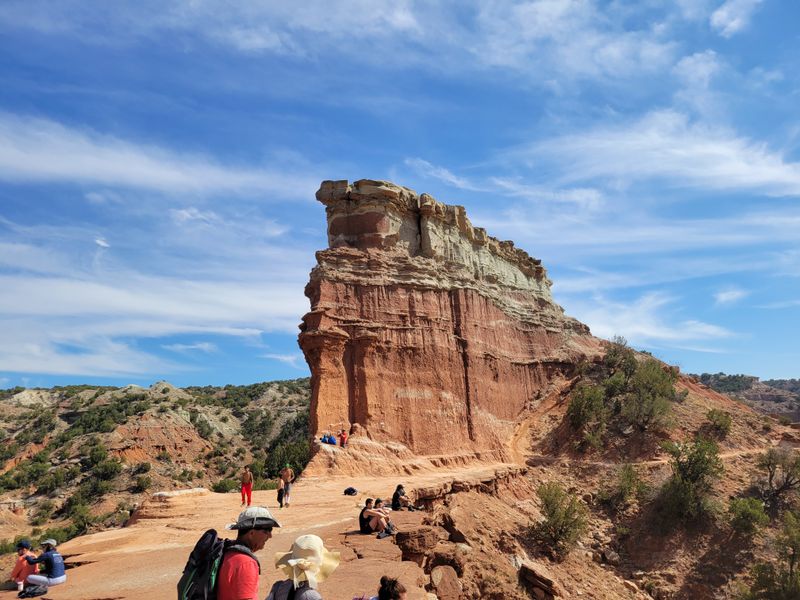
Red rock walls rise dramatically from the High Plains, revealing 250 million years of geological history in layered bands of color.
Palo Duro Canyon stretches 120 miles long and reaches depths of 800 feet, making it the second-largest canyon system in the United States.
Most people never realize Texas contains such spectacular geology because the canyon remains hidden until you stand right at its edge.
Spanish explorers named it Palo Duro, meaning hardwood, after discovering juniper trees growing along the Prairie Dog Town Fork of the Red River below.
The canyon provided shelter for Native Americans for over 12,000 years before Colonel Ranald Mackenzie drove the last Comanche and Kiowa bands from the area in 1874.
Charles Goodnight established his famous ranch here shortly afterward, recognizing that the canyon offered protection from harsh winter winds.
Today, visitors explore 30 miles of trails ranging from easy rim walks to challenging climbs down to the canyon floor.
The Lighthouse Trail leads to a distinctive rock formation that has become the park’s signature landmark.
Mountain bikers tackle rugged paths while horseback riders follow routes once traveled by Comanche warriors.
Summer evenings bring the outdoor musical drama TEXAS, performed in a natural amphitheater carved into the canyon wall.
Camping under those towering cliffs creates an experience that city-dwelling Texans often forget their state can provide.
Sunrise and sunset transform the canyon into a painter’s palette of oranges, purples, and reds.
Wildlife including roadrunners, mule deer, and even the occasional bobcat make their homes among the rocks and scrub vegetation.
Palo Duro proves that Texas contains natural wonders capable of competing with any famous national park.
Address: 11450 State Highway Park Road 5, Canyon, Texas
7. Enchanted Rock State Natural Area
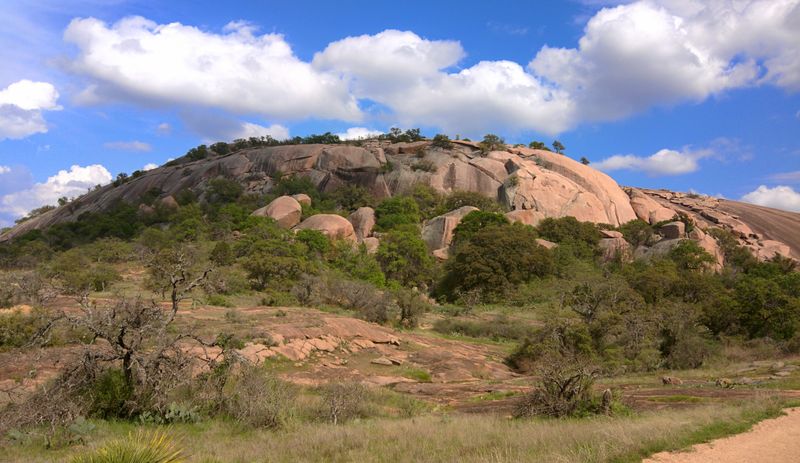
A massive pink granite dome rises from the Hill Country like a sleeping giant, its bare surface gleaming in the Texas sun.
Enchanted Rock covers 640 acres and towers 425 feet above the surrounding landscape, making it visible for miles in every direction.
Native Americans considered the rock sacred, telling stories of spirits that caused the strange creaking and groaning sounds heard at night.
Those noises result from the rock contracting as it cools after sunset, but the explanation does nothing to diminish the eerie effect.
Geologists estimate the batholith formed over a billion years ago deep underground, only becoming exposed after millions of years of erosion stripped away softer surrounding rock.
Climbing to the summit requires moderate effort but rewards hikers with panoramic views extending across the Hill Country.
The bare granite surface offers little shade, so smart visitors arrive early or late to avoid the brutal midday heat.
Vernal pools form in depressions on the rock surface after rains, creating temporary ecosystems where fairy shrimp and other specialized creatures complete their entire life cycles.
More challenging trails circle the base and explore surrounding areas where caves, crevices, and boulder fields create habitat for diverse plant and animal species.
Rock climbers tackle various routes up the steeper faces, their colorful gear standing out against the pink granite.
The park often reaches capacity on beautiful weekends, so reservations help guarantee entry.
Camping allows visitors to experience the rock at dawn when mist rises from the valleys and the stone glows in soft morning light.
Stargazing from the summit provides an unforgettable experience as the Milky Way arcs overhead with minimal light pollution to diminish its brilliance.
Enchanted Rock reminds us that Texas landscapes include ancient geological wonders that predate human history by incomprehensible spans of time.
Address: 16710 Ranch Road 965, Fredericksburg, Texas
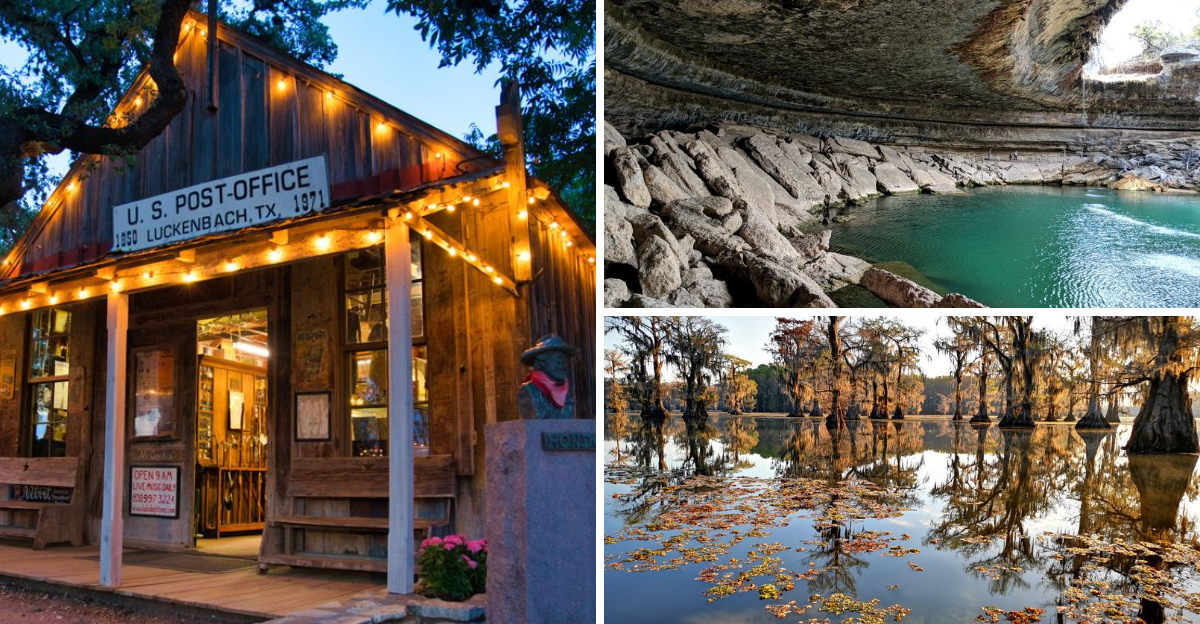
8. Luckenbach Texas
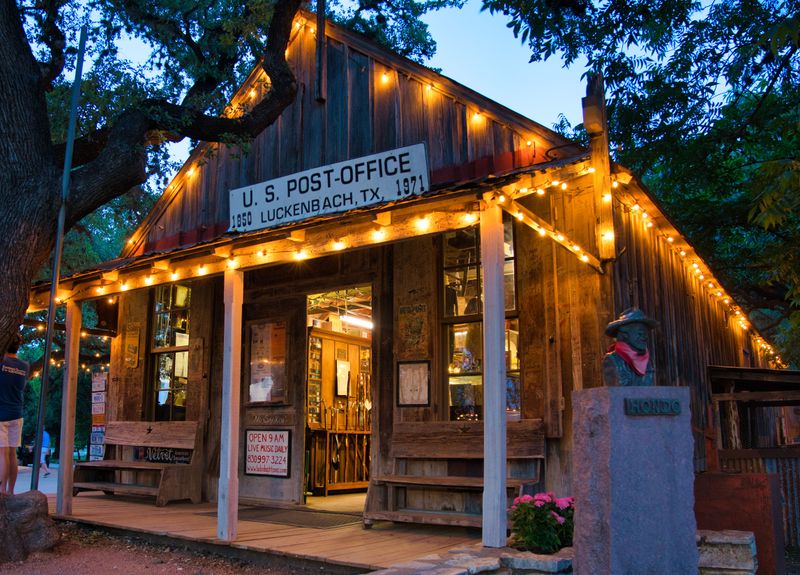
A handful of buildings cluster under old oak trees where the speed limit never exceeds whatever feels right at the moment.
Luckenbach became legendary when Waylon Jennings and Willie Nelson immortalized it in their 1977 hit song, but the town predates that fame by over a century.
German immigrant Jacob Luckenbach established a trading post here in 1849, and his descendants ran the general store and dance hall for generations.
By the 1970s, the entire town went up for sale, and local characters Hondo Crouch and Kathy Morgan purchased it with plans to create a place celebrating Texas music and laid-back living.
Their vision succeeded beyond imagination.
Today, the population officially stands at three, but hundreds gather on weekends to hear live music under the oak trees.
The old dance hall hosts everything from unknown singer-songwriters to surprise appearances by major country stars seeking an intimate venue.
No one cares about fancy production or elaborate staging here.
Musicians simply plug in and play while audience members sit on whatever they can find, from hay bales to tailgates.
The general store sells cold beer, snacks, and countless souvenirs bearing the town name.
Walls inside are covered with business cards, dollar bills, and messages left by visitors from around the world.
Annual events like the Ladies State Chili Bust and the Hug-In draw crowds celebrating the quirky spirit that defines this place.
Nothing happens quickly in Luckenbach, and that deliberate pace represents exactly what draws people here.
Modern life rushes past at breakneck speed, but these few acres exist outside that frantic timeline.
Sitting under those oaks with a cold drink and good music playing feels like the Texas everyone imagines but rarely finds anymore.
Address: 412 Luckenbach Town Loop, Fredericksburg, Texas
9. Hamilton Pool Preserve
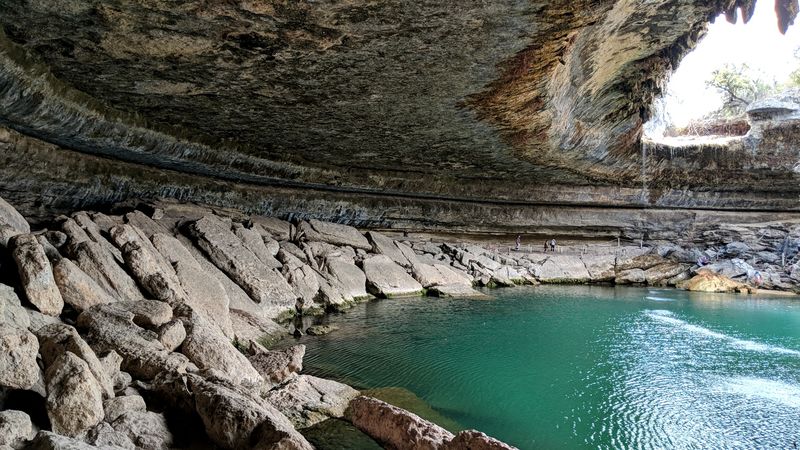
Water cascades over a limestone overhang into a jade-green pool surrounded by ferns and moss that thrive in the perpetual mist.
Hamilton Pool formed thousands of years ago when the dome of an underground river collapsed, creating a natural grotto that resembles an ancient cathedral.
The 50-foot waterfall flows year-round during wet periods, though it may reduce to a trickle during severe droughts.
Stalactites cling to the overhanging cliff, dripping water that has carved intricate patterns in the rock over millennia.
The pool itself stretches about 25 feet across, its depth varying depending on recent rainfall.
Swimming is allowed when bacteria levels meet safety standards, though periodic closures protect both visitors and the delicate ecosystem.
The Reimers family owned this property for generations, operating it as a private swimming hole before Travis County acquired it as a preserve.
That transition ensured public access while implementing protections for the endangered Golden-cheeked Warbler and other species living in the surrounding habitat.
Reservations are required because too many visitors were trampling vegetation and causing erosion along the trail.
The quarter-mile hike down to the pool follows a rocky path that can become slippery, so proper footwear makes the journey safer.
Photography enthusiasts arrive hoping for perfect light filtering through the opening above the falls.
The preserve also includes a portion of the Pedernales River where visitors can explore when the main pool reaches capacity.
Pecan, sycamore, and cypress trees shade the river corridor, providing habitat for countless bird species.
Hamilton Pool demonstrates how geological forces create beauty that no human architect could design, a reminder that nature remains the ultimate artist.
Address: 24300 Hamilton Pool Road, Dripping Springs, Texas
10. Balmorhea State Park
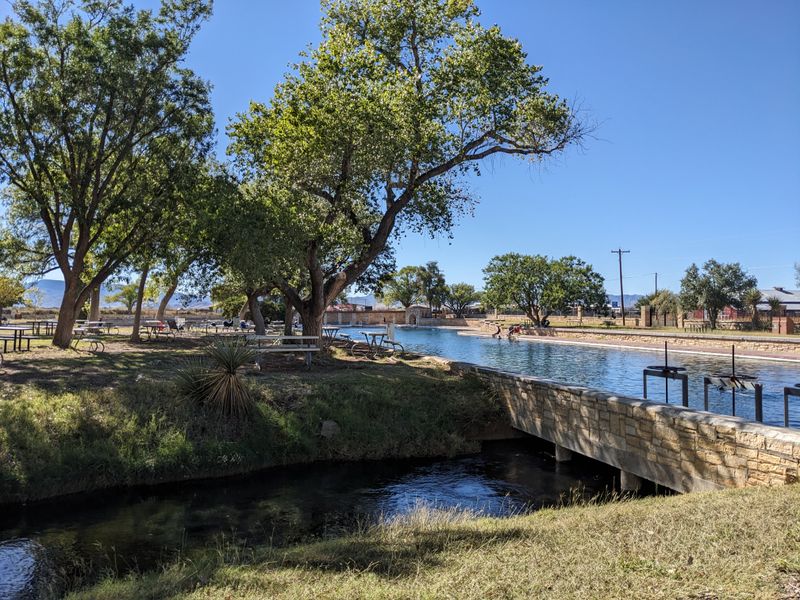
Desert heat shimmers across West Texas until suddenly a massive spring-fed pool appears like a mirage made real.
Balmorhea contains 3.5 million gallons of crystal-clear water that maintains a constant 72 to 76 degrees regardless of outside temperatures.
San Solomon Springs produces up to 15 million gallons daily, creating an oasis that has sustained life in this arid region for thousands of years.
The Civilian Conservation Corps constructed the pool during the 1930s, using native stone to create a swimming area that stretches up to 25 feet deep.
Unlike chlorinated pools, this water comes straight from the aquifer, supporting an entire ecosystem of fish, turtles, and aquatic plants.
Snorkelers glide through the clear water observing the endangered Comanche Springs pupfish, a tiny species found nowhere else on earth.
Scuba divers explore the main spring outlet where water rushes up from underground with enough force to create a current.
The pool covers nearly two acres, providing plenty of space even when crowds gather on hot summer weekends.
Families splash in shallow areas while serious swimmers complete laps in the deeper sections.
The park offers camping and motel-style accommodations for those who want to swim at dawn when mist rises off the water.
Surrounding desert landscape creates stark contrast with the lush vegetation growing around the spring outlets.
Cottonwood and willow trees provide shade along the edges where visitors relax between dips.
Nearby Davis Mountains offer additional exploration opportunities for those willing to venture beyond the pool.
Balmorhea proves that even in the driest parts of Texas, water finds a way to reach the surface and create life in unlikely places.
Address: 9207 Highway 17, Toyahvale, Texas
Dear Reader: This page may contain affiliate links which may earn a commission if you click through and make a purchase. Our independent journalism is not influenced by any advertiser or commercial initiative unless it is clearly marked as sponsored content. As travel products change, please be sure to reconfirm all details and stay up to date with current events to ensure a safe and successful trip.
