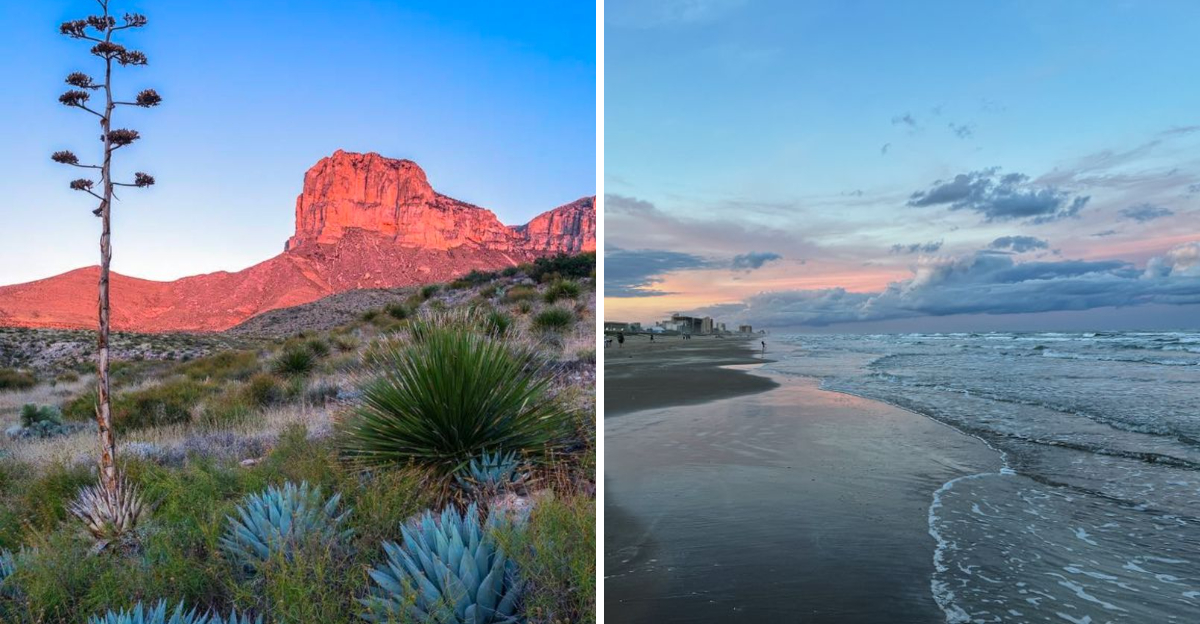
Texas stretches out like a living canvas, painting the horizon with colors and landscapes that shift from desert gold to emerald valleys in just a few hours of driving.
The Lone Star State holds a reputation for doing everything big, and its scenery is no exception, offering vistas that demand you slow down, pull over, and simply breathe it all in.
From ancient canyons carved by rivers over millions of years to misty bayous draped in Spanish moss, every mile reveals something unexpected and unforgettable.
Whether you crave the solitude of wide-open desert or the charm of rolling hills dotted with wildflowers, these eight spots will make your road trip through Texas a journey you will remember long after the dust settles.
1. Big Bend National Park
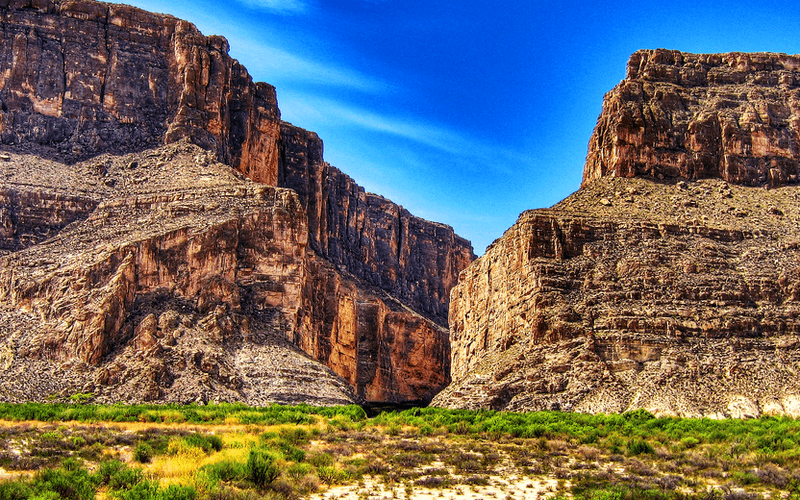
Standing at the edge of Big Bend feels like stepping onto another planet, where the earth cracks open to reveal secrets hidden for millions of years.
The Rio Grande carves through towering canyons, creating walls of rock that rise hundreds of feet above the water, their surfaces painted in layers of rust, amber, and deep crimson.
Desert landscapes stretch endlessly in every direction, dotted with resilient cacti and hardy shrubs that somehow thrive under the relentless Texas sun.
Wildlife roams freely here, from roadrunners darting across dusty trails to black bears wandering through mountain woodlands at higher elevations.
The park offers three distinct ecosystems in one place: desert lowlands, forested mountains, and riverside canyons, each with its own personality and charm.
Sunrise transforms the Chisos Mountains into a symphony of purple and gold, while sunset casts long shadows that make the landscape feel both ancient and alive.
Stargazing here is unmatched, with skies so dark and clear that the Milky Way appears as a glowing river overhead.
Hiking trails wind through Santa Elena Canyon, where the river narrows and the walls seem to close in, creating a cathedral-like space that echoes with the sound of flowing water.
Remote and rugged, Big Bend rewards those willing to venture far from city lights with views that make you understand why people fall in love with the desert.
Every turn in the road offers a new perspective, a fresh angle on the raw beauty that defines this corner of Texas.
2. Palo Duro Canyon
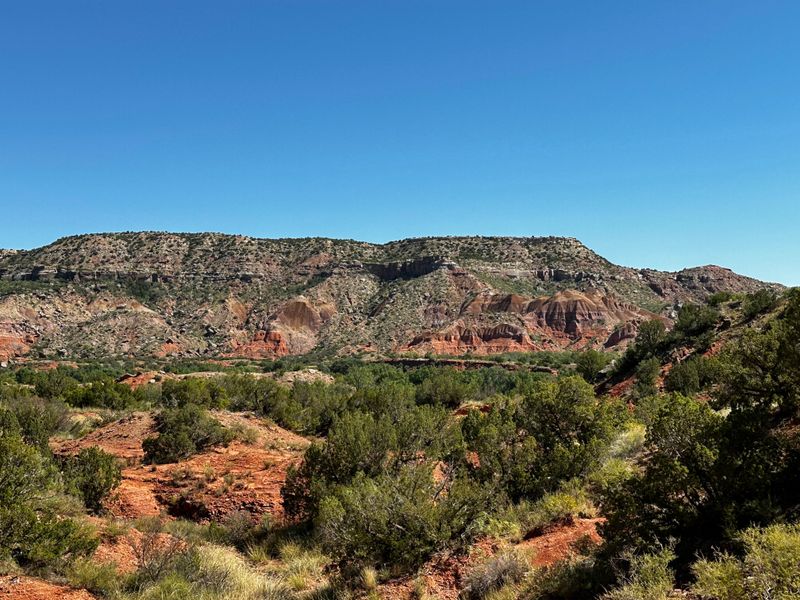
Driving across the flat plains of the Texas Panhandle gives no hint of what lies ahead until the earth suddenly drops away, revealing Palo Duro Canyon in all its glory.
Often called the Grand Canyon of Texas, this massive gorge stretches over 120 miles long and plunges more than 800 feet deep, carving through layers of colorful rock that tell stories spanning millions of years.
Bands of red, orange, yellow, and white stripe the canyon walls, creating a natural masterpiece that shifts with the changing light throughout the day.
Morning mist sometimes fills the canyon floor, softening the jagged edges and giving the landscape an almost dreamlike quality.
By midday, the sun illuminates every crevice and cliff face, highlighting textures and details invisible in dimmer light.
Trails lead down into the canyon, where juniper trees provide shade and the air smells of earth and sage.
The famous Lighthouse rock formation stands as a sentinel, its distinctive shape visible from various viewpoints and serving as a popular hiking destination.
Wildlife thrives here too, with mule deer, wild turkeys, and roadrunners making appearances along the trails and scenic drives.
Summer evenings bring outdoor musical performances in the canyon amphitheater, where the natural acoustics and stunning backdrop create an unforgettable experience.
Palo Duro proves that Texas holds surprises for those willing to explore beyond the obvious, offering grandeur that rivals any landscape in the American West.
3. Devil’s Backbone Scenic Drive
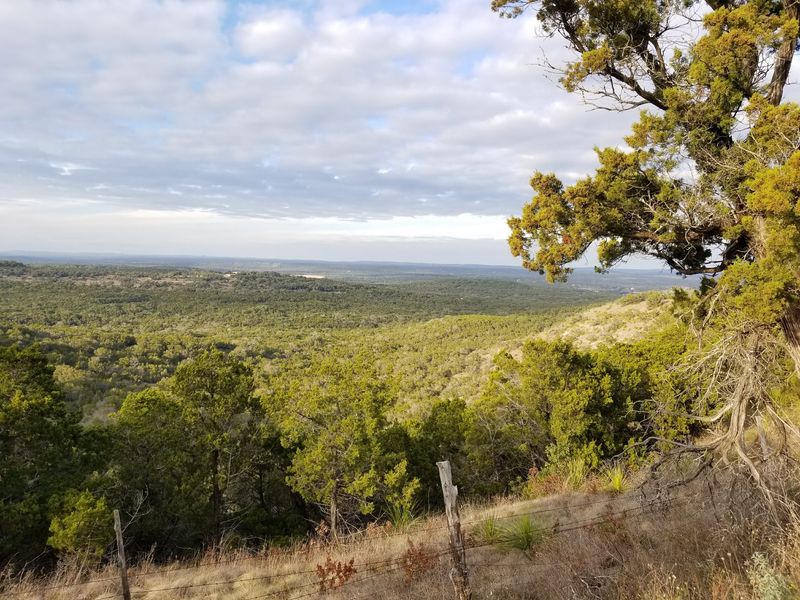
Winding along the spine of a limestone ridge, this drive through the Texas Hill Country offers views that make your heart skip a beat at every curve.
Ranch Road 32 climbs to elevations where the landscape opens up on both sides, revealing valleys that roll away into the distance like frozen waves.
Oak and cedar trees dot the hillsides, their green canopies contrasting beautifully with the pale limestone outcroppings that give the region its distinctive character.
Clear creeks cut through the valleys below, their waters sparkling in the sunlight and feeding the lush vegetation that lines their banks.
Spring brings an explosion of wildflowers, with bluebonnets, Indian paintbrush, and wine cups carpeting the roadsides in brilliant color.
The drive connects several charming Hill Country towns, each offering its own slice of Texas hospitality and small-town charm.
Pull-offs along the route provide perfect spots to stop, stretch your legs, and soak in the panoramic views that stretch for miles in every direction.
Hawks circle overhead, riding thermal currents that rise from the sun-warmed rocks, while deer graze peacefully in meadows visible from the roadway.
Autumn transforms the landscape again, with the changing leaves adding warm tones to the already beautiful scenery.
The name Devil’s Backbone comes from the ridge’s appearance when viewed from below, where the rocky spine seems to jut from the earth like the vertebrae of some ancient creature.
This drive captures everything that makes the Hill Country special: natural beauty, peaceful solitude, and views that remind you why Texas inspires such fierce loyalty.
4. Caddo Lake
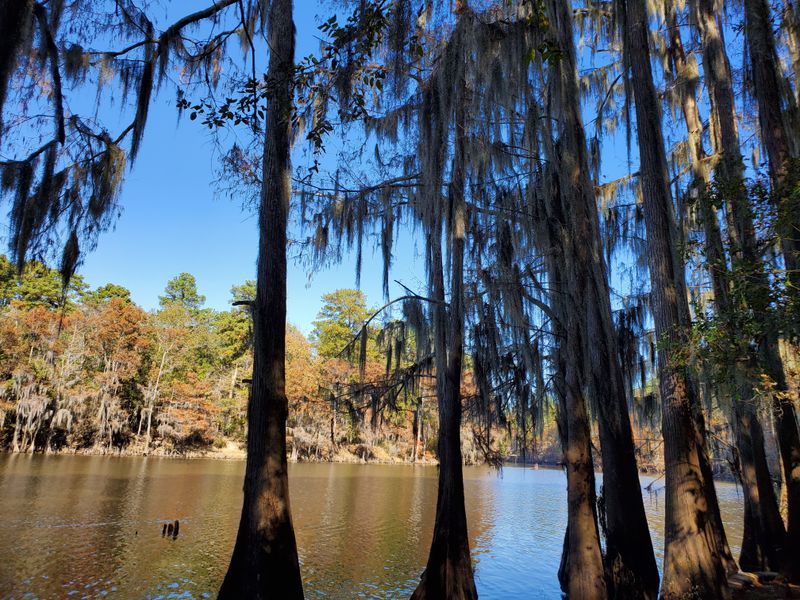
Mist rises from the dark waters of Caddo Lake at dawn, weaving between cypress trees draped in Spanish moss like something from a Southern Gothic novel.
This mysterious wetland straddles the Texas-Louisiana border, creating a landscape unlike anywhere else in the Lone Star State.
Bald cypress trees rise from the water, their knobby knees breaking the surface and their wide trunks providing homes for countless birds and small creatures.
Spanish moss hangs in long, silvery curtains from the branches, swaying gently in the breeze and adding to the ethereal atmosphere.
Narrow waterways wind through the forest, creating a maze of channels that kayakers and canoeists love to explore.
The lake formed naturally when a massive logjam on the Red River backed up water into the bayous, though some believe it might have been created by an earthquake.
Alligators bask on logs and muddy banks, while egrets and herons stalk through the shallows searching for fish.
Lotus flowers bloom in summer, their large pink and white blossoms floating on the surface and perfuming the air with their sweet scent.
Autumn brings a spectacular show as the cypress needles turn rusty orange before falling, carpeting the water with color.
The stillness here feels profound, broken only by the calls of birds and the occasional splash of a fish jumping.
Caddo Lake offers a glimpse into a wilder, older Texas, where nature still holds sway and the modern world feels very far away.
5. Texas Hill Country Wildflower Season
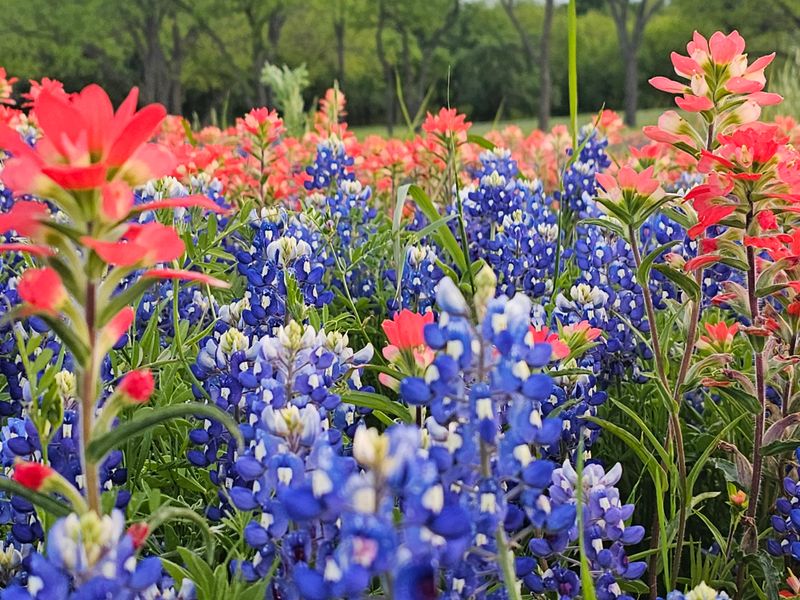
When spring arrives in the Hill Country, the landscape transforms into a living quilt of color that stretches as far as the eye can see.
Bluebonnets blanket fields and roadsides in waves of deep blue, their distinctive bonnets nodding in the breeze like tiny flags celebrating the season.
Indian paintbrush adds splashes of brilliant red and orange, often growing right alongside the bluebonnets to create a patriotic display.
Wine cups spread their magenta petals low to the ground, while white prickly poppies stand tall with their delicate tissue-paper blooms.
The wildflower season typically peaks in late March through April, though timing varies depending on rainfall and temperature patterns.
Entire families pull over along country roads to take photos, children running through the flowers while parents try to capture the perfect shot.
The state takes its wildflowers seriously, with laws protecting them from being picked on public property and programs dedicated to seeding roadsides with native species.
Driving the Willow City Loop or the roads around Fredericksburg and Llano offers some of the most spectacular displays, with flowers covering hillsides in every direction.
Old barns and windmills surrounded by blooms create picture-perfect scenes that capture the essence of rural Texas.
The flowers attract butterflies and bees, adding movement and life to the already vibrant landscape.
This annual explosion of color reminds Texans and visitors alike that beauty can be both wild and abundant, requiring nothing more than sun, rain, and patience to create something truly magnificent.
6. Guadalupe Mountains National Park
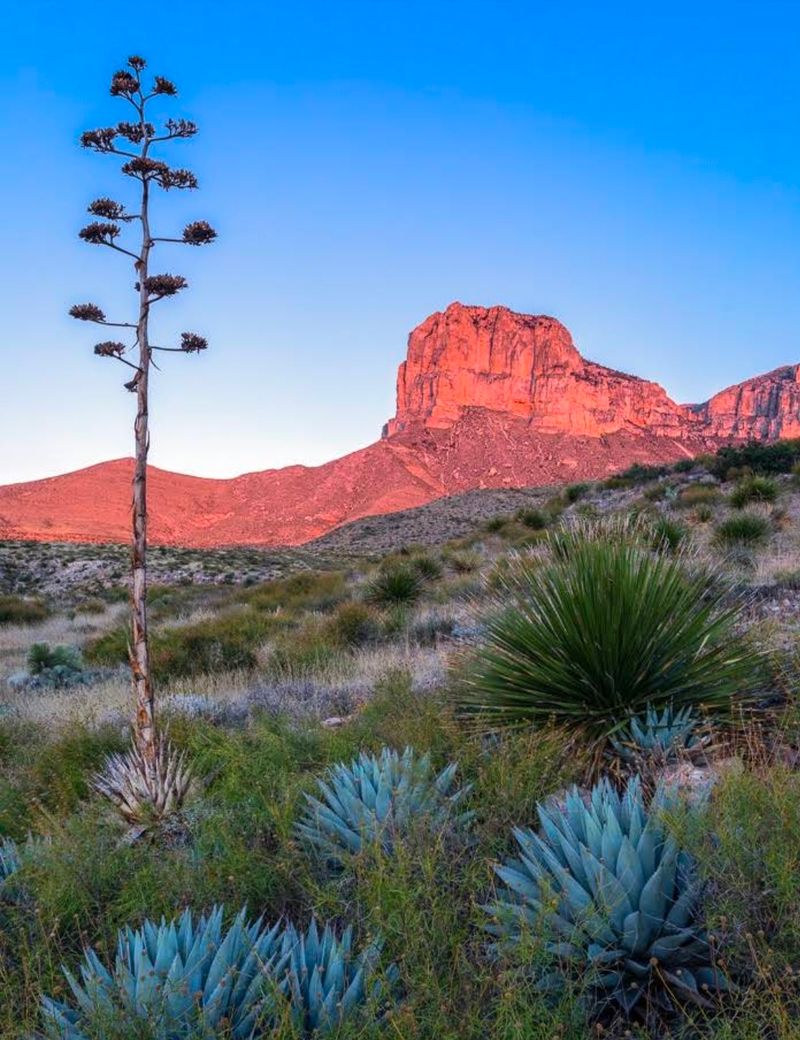
Rising abruptly from the desert floor, the Guadalupe Mountains create a skyline of jagged peaks that dominate the landscape of far West Texas.
Guadalupe Peak itself stands as the highest point in Texas at 8,749 feet, offering climbers and hikers a challenging ascent and breathtaking views from the summit.
The mountains contain an ancient reef from a long-vanished sea, its fossilized remains now exposed and tilted upward to form these dramatic cliffs.
McKittrick Canyon cuts through the range, creating a hidden oasis where bigtooth maples grow in surprising abundance.
Fall transforms this canyon into a riot of gold, orange, and red as the maples change color, a phenomenon rare in Texas and all the more precious for it.
The western face of El Capitan, a massive limestone cliff, glows like burnished gold at sunset, visible from miles away along the highway.
Desert vegetation covers the lower slopes, giving way to pine and fir forests at higher elevations where cooler temperatures and more moisture support different plant communities.
Wildlife includes mule deer, elk, mountain lions, and over 300 species of birds, making the park a haven for nature enthusiasts.
The night sky here rivals Big Bend for darkness and clarity, with constellations and planets appearing in stunning detail.
Trails range from easy nature walks to strenuous all-day climbs, each offering unique perspectives on this remarkable landscape.
The Guadalupes prove that Texas geography extends far beyond the stereotypical images of flat plains and cattle ranches, encompassing true mountain wilderness that challenges and inspires.
7. Enchanted Rock State Natural Area
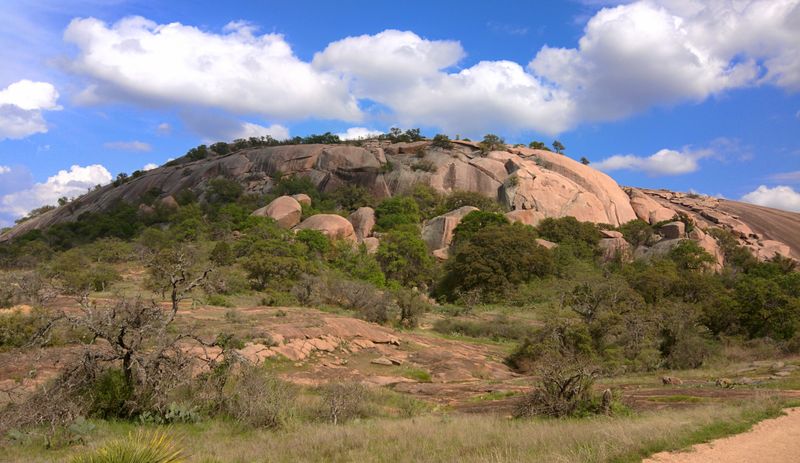
A massive pink granite dome rises from the Hill Country landscape, its smooth surface gleaming in the sunlight and beckoning adventurous souls to make the climb.
Enchanted Rock formed over a billion years ago, making it one of the oldest exposed rock formations in North America, its surface weathered smooth by countless centuries of wind and rain.
The climb to the summit takes about an hour for most visitors, following a well-worn trail up the dome’s gradually sloping face.
From the top, views extend for miles in every direction, encompassing the rolling hills, distant valleys, and patchwork of ranches and towns below.
The rock makes creaking and groaning sounds as it expands and contracts with temperature changes, which explains the legends that gave the formation its mystical name.
Native Americans considered this place sacred, and it’s easy to understand why when standing on the summit with wind rushing past and the world spread out below.
Vernal pools form in depressions on the rock surface after rains, creating temporary habitats for fairy shrimp and other specially adapted creatures.
Rock climbers tackle the steeper faces and cracks, their colorful gear visible against the pale granite as they work their way up challenging routes.
Wildflowers bloom in the soil pockets and surrounding areas each spring, adding splashes of color to the predominantly pink and gray landscape.
The park limits daily visitors to preserve the experience and protect the fragile ecosystem, so reservations are often necessary, especially on weekends.
Enchanted Rock offers a physical challenge and spiritual reward, combining natural beauty with the satisfaction of reaching the summit under your own power.
8. South Padre Island Beaches
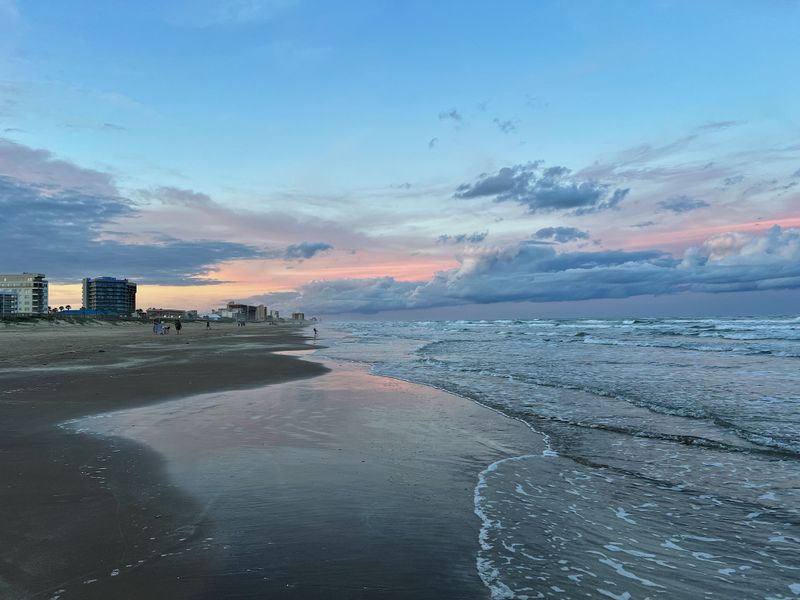
Turquoise waves roll onto white sand beaches that stretch for miles along the Texas Gulf Coast, creating a tropical paradise at the southern tip of the state.
South Padre Island offers the kind of beach scenery typically associated with Caribbean destinations, with clear water, soft sand, and palm trees swaying in the constant sea breeze.
Dolphins swim just beyond the breakers, their dorsal fins cutting through the water as they hunt for fish or simply play in the surf.
Sunrise over the Gulf paints the sky in shades of pink, orange, and purple, reflecting off the water and wet sand to create a mirror effect that doubles the beauty.
Sea turtles nest on these beaches during summer months, with conservation groups working to protect the eggs and help hatchlings make their journey to the sea.
The Laguna Madre bay on the island’s western side provides calmer waters perfect for paddleboarding and kayaking, with shallow flats where you can spot stingrays gliding beneath the surface.
Beachcombing yields treasures like sand dollars, colorful shells, and occasionally pieces of sea glass worn smooth by the waves.
Pelicans dive for fish in spectacular fashion, plunging from the air into the water with barely a splash before emerging with their catch.
The island’s southern location means warm weather persists most of the year, making it possible to enjoy beach views even during winter months when most of Texas shivers.
Whether you’re watching thunderstorms roll in from across the Gulf or enjoying a perfect sunny day, South Padre Island reminds you that Texas coastline holds its own unique beauty worth celebrating.
Dear Reader: This page may contain affiliate links which may earn a commission if you click through and make a purchase. Our independent journalism is not influenced by any advertiser or commercial initiative unless it is clearly marked as sponsored content. As travel products change, please be sure to reconfirm all details and stay up to date with current events to ensure a safe and successful trip.
