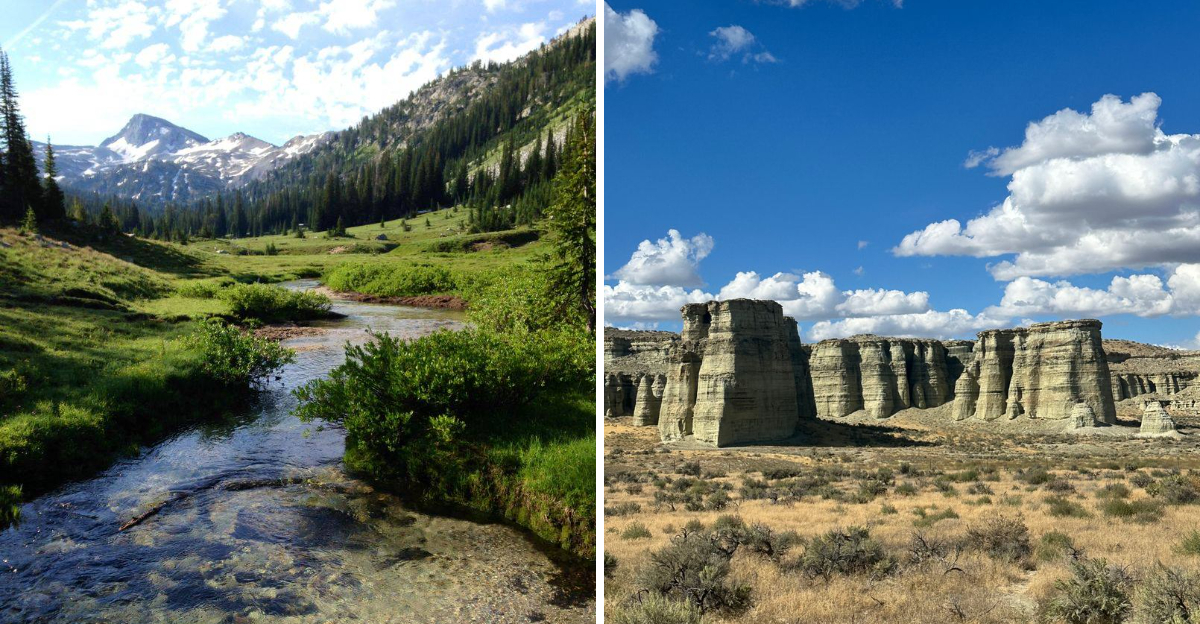
You think you know Oregon, then a quiet turnoff or dusty road reveals a place that steals your breath and resets your sense of scale.
Locals whisper about valleys and rimrock where crowds never gather, where sound carries and colors feel freshly mixed by the sky.
This is the Oregon that changes with every mile, shifting from glacial basins to lunar flats and canyons that hum at sunset.
If you crave solitude, cinematic light, and stories etched into stone, these overlooked places will pull you far beyond the postcards.
1. Leslie Gulch
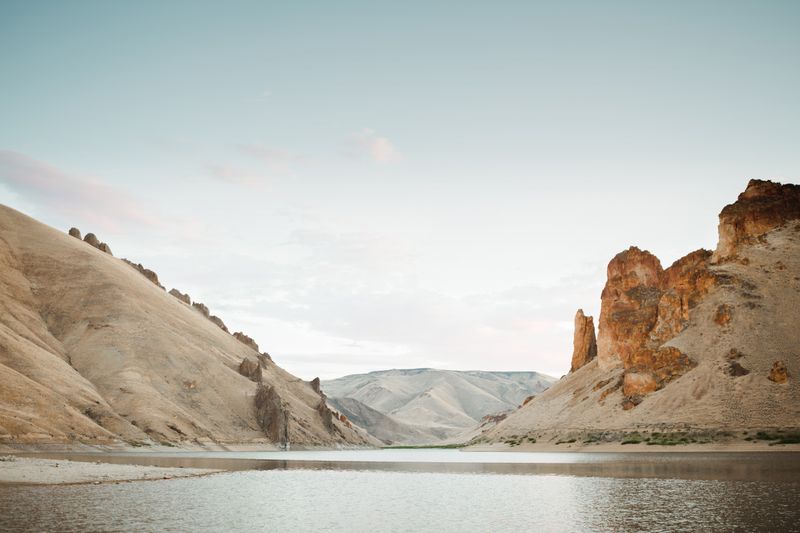
Leslie Gulch feels like a secret cathedral carved from fire, the kind of place that makes Oregon feel unexpected and wild.
Slender spires of volcanic tuff glow in sunrise pinks and late afternoon gold, creating a maze of walls that fold and twist like drapery.
The gravel approach narrows your focus, then the canyon opens and the silence becomes a companion.
You can lace up and stroll past rabbitbrush and juniper, following the track toward side draws where swallows circle and lizards dash.
Look up and you see windows in the stone, pockets and arches shaped by rain, wind, and time working patiently.
Carry a map, because the turns repeat themselves, and the light shifts quickly across the cliffs.
Mud after storms lingers, so dry spells are your friend, and sturdy tires ease the washboard.
You might spot bighorn sheep tiptoeing along ledges, their silhouettes steady against the sky.
Camping is simple and quiet, with a few tables and the sound of crickets rising at dusk.
Morning here arrives cool and clean, the canyon breathing out the night as color climbs the stone.
The Oregon desert shows its softer side in these curves, yet the scale keeps you humble.
A camera helps, but standing still helps more, letting shadows teach the contours.
Respect closures that protect wildlife and fragile formations, and leave surfaces undisturbed.
Cell service drops out early, so download maps and tell someone your plan.
When you drive back toward the reservoir, the gulch recedes behind you like a memory sharpening in reverse.
Address, Leslie Gulch Road, Jordan Valley, OR 97910.
2. Alvord Desert
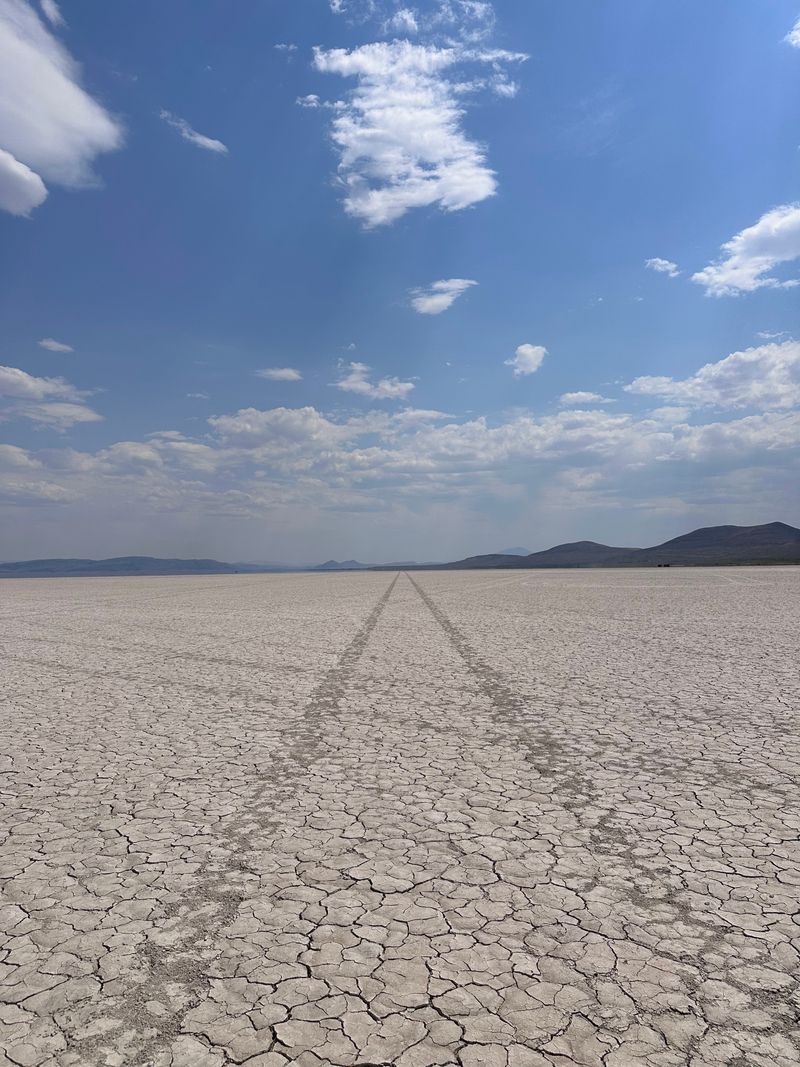
The Alvord Desert spreads like a pale canvas at your feet, all horizon and hush, where Oregon turns spare and luminous.
Stand on the playa and the cracked earth becomes a map of fine lines, each square catching faint shadows like graphite.
Clouds drift slowly, and the wide light makes even small gestures feel important.
Across the basin, Steens Mountain rises in layered ridges, a dark silhouette that orients you when everything else repeats.
Wind writes short messages in the dust, then erases them before you can finish reading.
Walking here is a meditation, a rhythm of steps and silence with nothing to distract you.
After rain, the surface turns slick, so watch for soft patches and respect closures to protect the crust.
Night brings a dome of stars that looks close enough to touch, a reward for patient timing and warm layers.
Minimal gear goes a long way, but sun protection and plenty of water are essential.
If you drive onto the playa in dry conditions, keep speed gentle and your path deliberate.
Photography loves this place, especially when the first light edges the mountain and the ground glows faintly.
Oregon’s desert heart beats slowly here, steady and sure, reminding you to measure time differently.
Check road conditions from both the south and north approaches, and avoid muddy ruts that linger.
Nearby hot springs exist on private land or with specific rules, so research and be respectful.
Leave no trace, and let the emptiness stay generous for the next traveler who needs it.
Address, Fields Denio Road and East Steens Road junction, Princeton, OR 97721.
3. Wallowa Lake and Mountains
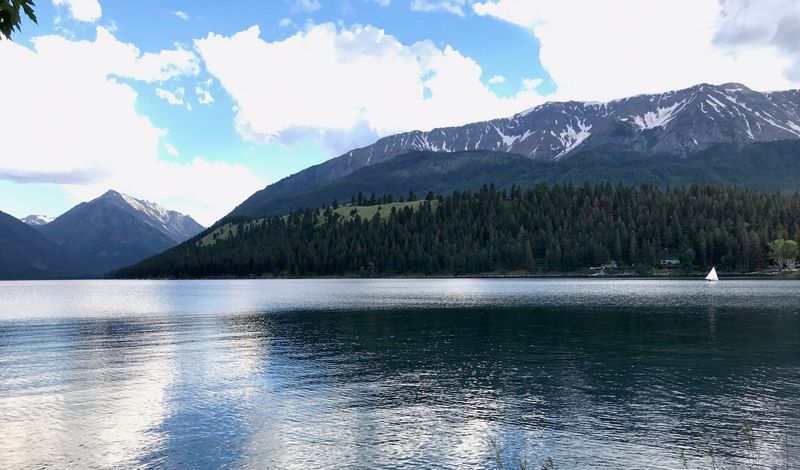
Wallowa Lake sits like a polished mirror at the foot of sawtooth ridges, a scene that explains why locals call these peaks Oregon’s Alps.
From the shoreline, you watch clouds roll along the granite and fir, their shadows sliding across the water.
Every breeze sends a new pattern of ripples that briefly erases the mountains, then restores them brighter.
Trails climb from the valley floor into high meadows where marmots chirp and clear creeks thread through grass.
Even if you stay low, the lakeside path offers benches and quiet pockets with postcard views in every direction.
In town, you find a gentle rhythm of boardwalks and small shops, yet the wild remains the main event.
Rides to high viewpoints can jump start your day, but hikers earn their vistas step by step.
Summer crowds gather closer to the docks, while early mornings give you space to think and breathe.
Pack layers, since mountain weather flips moods, and storms move fast along the crest.
Wildflowers fill the margins in warmer months, tiny bursts beneath big geology.
In winter, the slopes turn quiet and the lake becomes a meditation of blues and silvers.
Respect trail etiquette and give wildlife distance, because this valley thrives on balance.
Oregon’s northeast corner rewards patience, and the longer you linger, the more textures you notice.
Bring a map with clear contours, as side paths branch and rejoin like threads in fabric.
Sunset paints the peaks pink, then lavender, before the first stars find their places.
Address, Wallowa Lake State Park, 72214 Marina Lane, Joseph, OR 97846.
4. Painted Hills
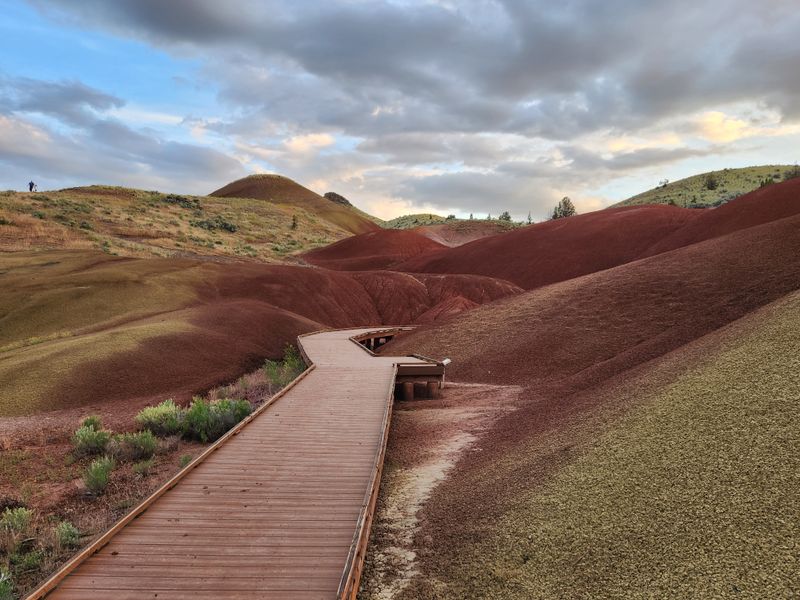
The Painted Hills look like someone brushed color across the land and left it to dry under the Oregon sun.
Bands of ochre, rust, and gold arc over rounded slopes, each stripe a story about ancient climates and slow change.
Boardwalks and short trails protect the soil while inviting you to study the patterns up close.
When clouds pass, shadows flow like ink, deepening the reds and then lifting them to honey tones.
Stay on paths, because the clay crust is delicate, and a single step can last longer than your memory.
Morning and late afternoon add dimension, turning every fold into a soft puzzle of light.
Interpretive signs explain the layers, but the silence does its own teaching as you walk.
Photographers favor side angles that show curve and color without flattening the scene.
You will not find big facilities here, which makes the calm feel more complete.
Pack water and keep the visit unhurried, letting the palette change as the sun arcs.
Birdsong comes from the sage and creek margins, small percussion under the big canvas.
Oregon shows its artistic side here without a gallery, only time and minerals for tools.
Nearby units of the fossil beds expand the story, connecting colors to bones and leaves.
Mind the weather, since storms leave slick clay that clings to boots and track.
Leave no trace, and let those stripes remain unbroken for the next curious pair of eyes.
Address, Painted Hills Unit, 45500 Bear Creek Road, Mitchell, OR 97750.
5. Blue Basin
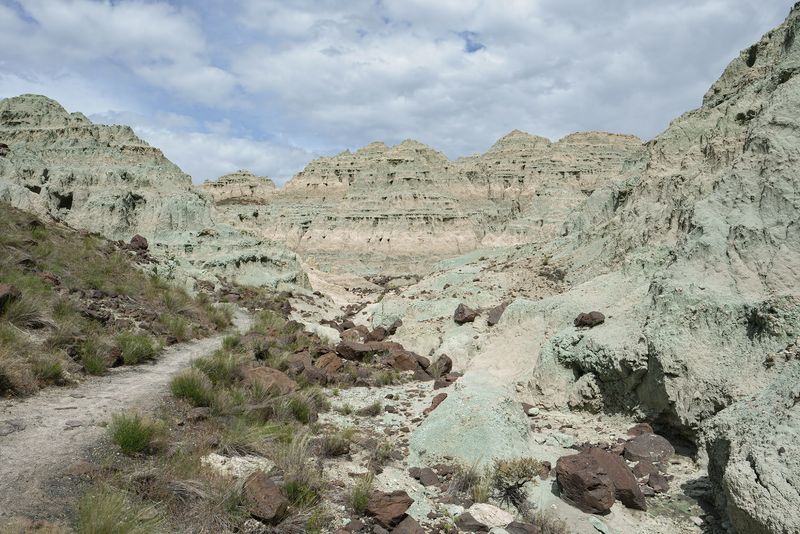
Blue Basin hides just off the highway, a pocket of teal and gray claystone that looks unreal against Oregon sage.
The trail loops through gullies and along ridges where mineral bands glow even under a quiet sky.
Every turn shows a new angle, a different balance of color, texture, and fragile slope.
Signs explain fossils found in these layers, a record of vanished forests and animals underfoot.
Stay to the path because the clay breaks easily, and footprints linger long after rain.
When the light is flat, tones deepen and details sharpen, perfect for patient wandering.
After storms, expect sticky mud that clings and rises on your boots like extra soles.
Small benches appear at viewpoints that feel close enough to touch, yet wisely fenced.
A gentle quiet holds the basin, with wind threading the gullies like a careful instrument.
Bring water, since shade is rare and the climb sneaks up through steady grades.
Wildlife keeps low here, though you might catch a hawk drawing circles over the rim.
Oregon’s fossil story feels personal in this small amphitheater of rock and time.
Use a wide lens to hold the basin in a single frame, then step closer for textures.
Foot traffic is modest compared to larger parks, which keeps the mood unrushed.
Leave the colors undisturbed and the paths clear for those arriving after you.
Address, Blue Basin, Sheep Rock Unit, 32651 OR-19, Kimberly, OR 97848.
6. Eagle Cap Wilderness
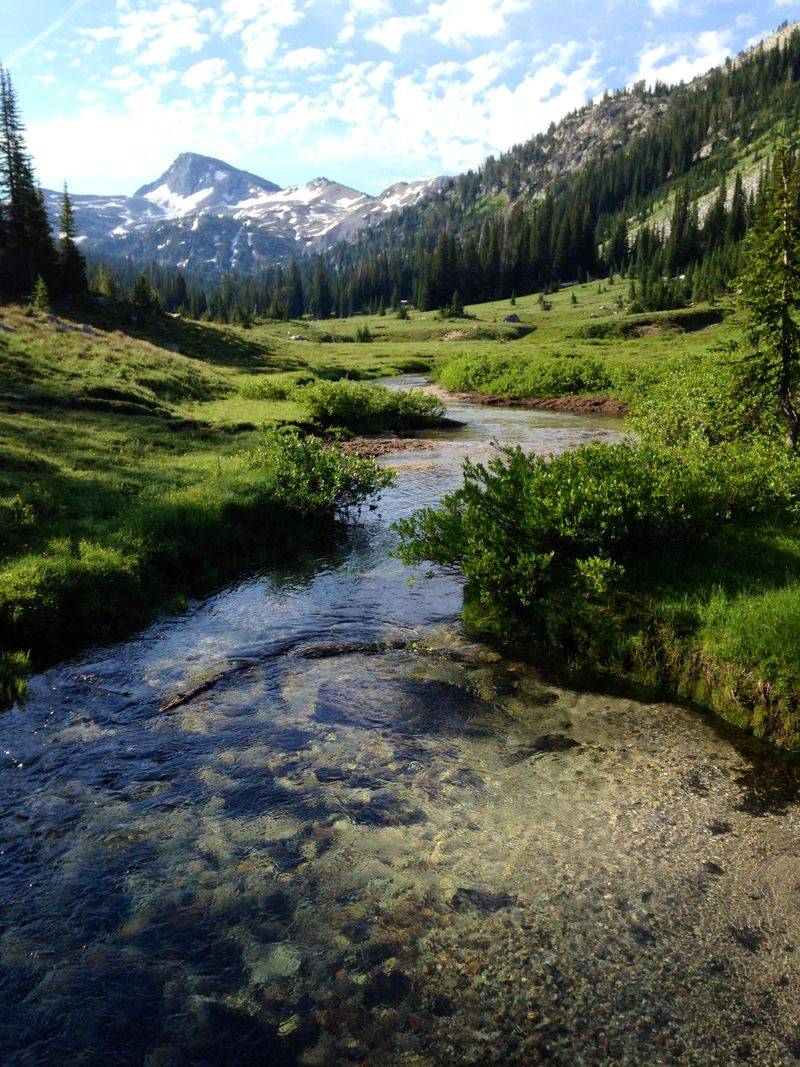
The Eagle Cap Wilderness is a sweep of granite bowls and bright lakes that makes Oregon feel alpine to the core.
Trails link basins like beads, each one holding mirrored water and a ring of pale stone.
Pines thin as you climb, replaced by open meadows that breathe wind and carry the scent of sun-warmed rock.
Camps sit near outlets on durable surfaces, with views that earn their quiet.
Creeks chatter through the day, then soften to a hush when stars crowd the high vault.
Snow can linger in pockets, so steady boots and cautious creek crossings matter.
Maps help with the web of passes, and route choices shape your days like gentle decisions.
Go early to beat afternoon thunder and to watch light slide from silver to honey.
Wildflowers scatter across the margins, small fireworks against the granite.
You share the high country with mountain goats and careful marmots, both asking for space.
Leave no trace, especially around lakeshores, because fragile soils recover slowly.
Permits and rules shift with seasons, so check ahead and plan conservatively.
Oregon’s far corner rewards hikers who prefer crisp air and clean horizons.
Photographers find reflections best at dawn, when wind sleeps and color stretches.
Even short trips feel big here, thanks to stacked views and generous silence.
Address, Eagle Cap Wilderness, Wallowa-Whitman National Forest, 201 East Highway 82, Enterprise, OR 97828.
7. Pillars of Rome
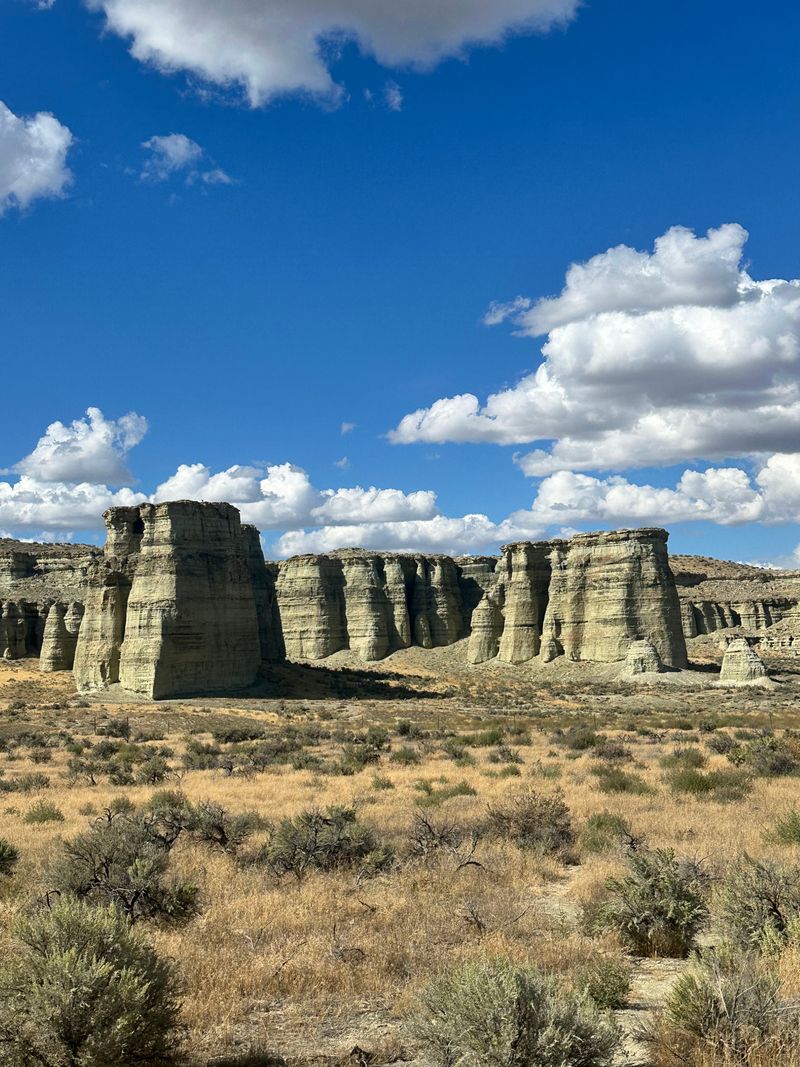
The Pillars of Rome rise from the sage like a stranded city, columns and walls cut into pale volcanic stone.
From the gravel road, the scale sneaks up, and soon the cliffs fill your windshield and your thoughts.
Textures shift from smooth faces to crumbly ledges, all etched by wind and scarce rain.
Walk along the base where safe, and you hear pebbles tick down like slow metronomes.
Colors change with the sun, moving from chalk to caramel as afternoon blooms.
The quiet feels deep here, a distant hum of insects and maybe a hawk’s brief call.
Roads can be rough when wet, so patience and clear weather are your allies.
There are no big facilities, which helps keep the mood spare and contemplative.
Bring plenty of water and let your timeline loosen, because the formations deserve a slow look.
Photographers will love the side angles that reveal buttresses and narrow runnels.
Oregon’s desert architecture stands tall here, inviting wonder without crowds.
Respect private lands and posted signs, and leave gates exactly as you find them.
Even a short stop leaves a long impression, the kind that resurfaces on quiet drives.
Shadows lengthen early along the walls, so plan for earlier light than your map suggests.
As you pull away, the pillars shrink to a thin skyline, still unmistakable against the blue.
Address, Pillars of Rome, Rome, OR 97910.
8. Steens Mountain
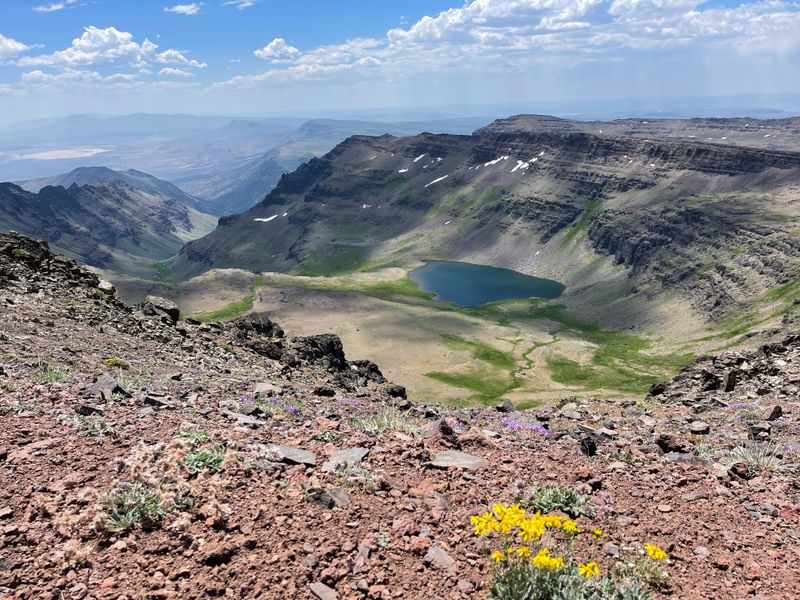
Steens Mountain is a single long ridge that seems to hold up half the Oregon sky, a fault block tilting toward wide desert.
From the rim, you look into glacial gorges where snow sometimes lingers in shadowed bowls.
The road climbs steadily to high viewpoints that layer distance in blues and soft browns.
Pullouts invite slow stops, each one framing a new cut or curve in the mountain’s spine.
Wind is a constant companion up high, clean and insistent, sharpening the edges of sound.
Wildlife moves in cautious lines, pronghorn threading the flats and songbirds working willow draws.
Even in warm seasons, the temperature swings, so pack layers and count on gusts.
Trails along the rim compare sky to stone, and every step adds another mile of horizon.
Gravel can rattle the tires, and snow gates close when conditions demand caution.
Leave time for side valleys, where creeks write green streaks through tan country.
Sunrise paints the ridge first, then runs down toward the Alvord.
Oregon feels enormous from here, a geography lesson spread across your field of view.
Photography thrives on oblique light that sculpts the cirques and terraces.
Keep pullouts clear, watch wildlife from a distance, and tread lightly on fragile plants.
On the drive down, the mountain reveals new angles that were hidden on the way up.
Address, Steens Mountain Loop Road, near Frenchglen, OR 97736.
9. Hells Canyon
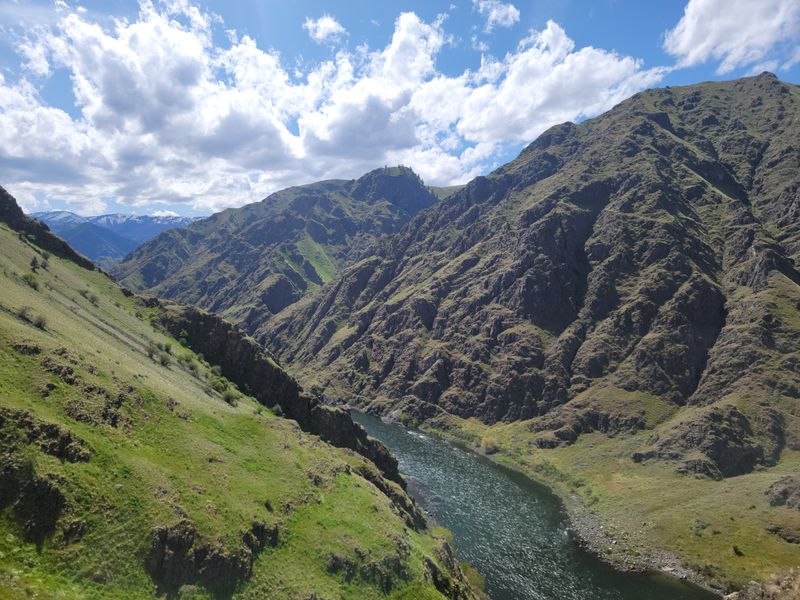
Hells Canyon carves a line so deep that it reads like a fold in the map, a place where Oregon and Idaho watch the river work.
From overlooks, the ridgelines stack in hazy layers, each one softer and bluer as distance gathers.
The Snake runs dark and steady below, a ribbon that ties the whole story together.
Grassy hills roll into pockets of pine, and the wind carries a hint of resin and dust.
Benches sit at railings where you can trace old fire scars and fresh green.
Trails peel away to views that make silence feel natural, not forced.
Look for bighorn sheep along broken slopes, and keep dogs leashed for safety.
Roads to the higher points twist and climb, so allow time and watch for gravel.
Sunrise picks out details in the near hills, while sunset turns the canyon bronze.
Pack water, sun protection, and a camera that can handle big scenes.
Oregon’s eastern edge shows its muscle here, weathered and elegant at once.
Interpretive signs add context without stealing attention from the view.
In spring and fall, the colors shift, grasses going from fresh to tawny.
Respect cliff edges, which can be crumbly, and keep a mindful stance.
Leaving at dusk feels like closing a heavy book, one you will reopen in memory.
Address, Hells Canyon Overlook, Hells Canyon Scenic Byway, Imnaha, OR 97842.
10. Owyhee Canyonlands
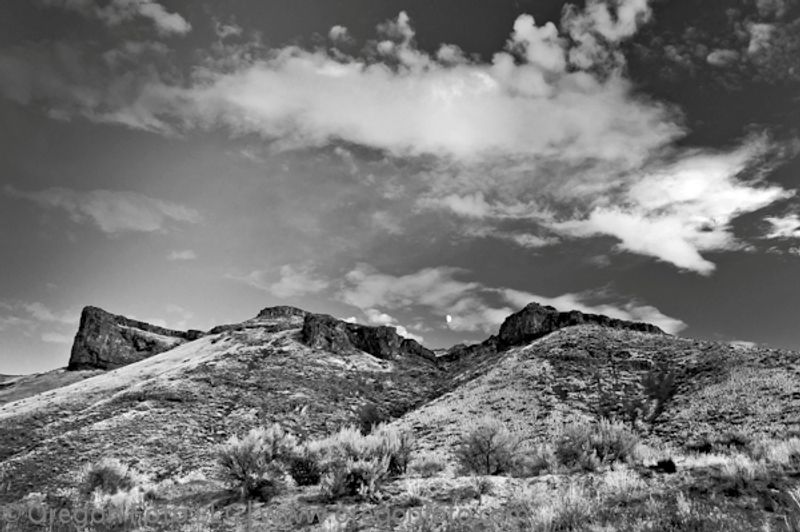
The Owyhee Canyonlands feel endless, a lattice of canyons and mesas that stretches across Oregon’s farthest corner.
From rim points, cliffs glow red and tan while the river flashes silver deep below.
Silence here arrives layered, with wind on sage, distant ravens, and the soft scrape of gravel underfoot.
Routes range from rough roads to faint trails, all demanding care and rewarding patience.
Maps and offline downloads are essential, because signals fade and landmarks repeat.
When storms pass, colors sharpen and the air smells like wet dust and juniper.
You may spot wildflowers tucked into cracks, bright punctuation in a wide sentence of stone.
Camps are minimalist, which keeps the night skies open and the dawns unrushed.
Respect seasonal closures and habitat protections that keep this place resilient.
Water is scarce, so plan conservatively and carry more than seems necessary.
Photographers will love oblique light that slides along walls and chisels shadows.
Oregon’s remote soul lives here, untidy and graceful, asking only for careful footsteps.
Creek canyons hold cottonwood pockets, small oases that hum with birds.
If you explore side draws, mind the footing and watch for brittle ledges.
Exit days feel longer because the views keep tugging you back for one more look.
Address, Owyhee Canyonlands access, McDermitt to Jordan Valley corridor, Jordan Valley, OR 97910.
Dear Reader: This page may contain affiliate links which may earn a commission if you click through and make a purchase. Our independent journalism is not influenced by any advertiser or commercial initiative unless it is clearly marked as sponsored content. As travel products change, please be sure to reconfirm all details and stay up to date with current events to ensure a safe and successful trip.
