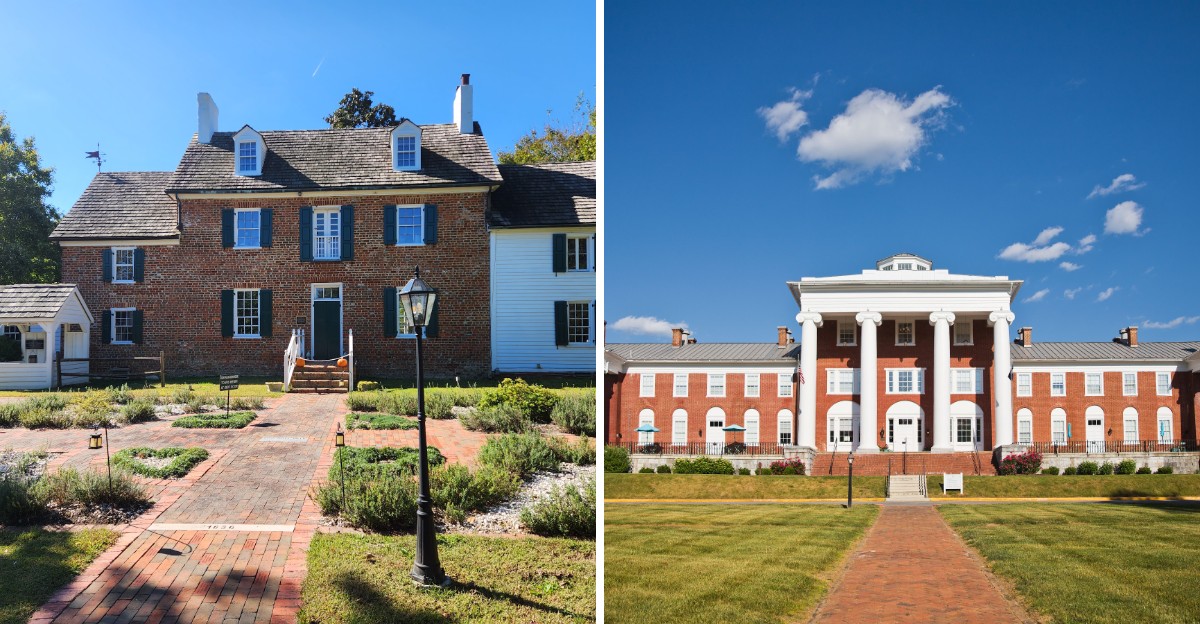
Some haunted houses are just for fun. Plastic skeletons, fake cobwebs, and actors jumping out from behind corners.
But the haunted houses on this list are different. These nine Virginia locations are considered real paranormal hotspots, places where people have reported strange activity for years.
Some are old homes with tragic histories. Others are former hospitals or prisons where the past seems to linger.
A few are private residences that have become famous for their unexplained events. Visitors have reported cold spots, shadowy figures, and sounds that cannot be explained.
Whether you believe in ghosts or not, there is something about these places that makes your skin crawl. Virginia has plenty of spooky spots, but these are the ones that keep paranormal investigators coming back.
Bacon’s Castle and Its Runaway Fireball
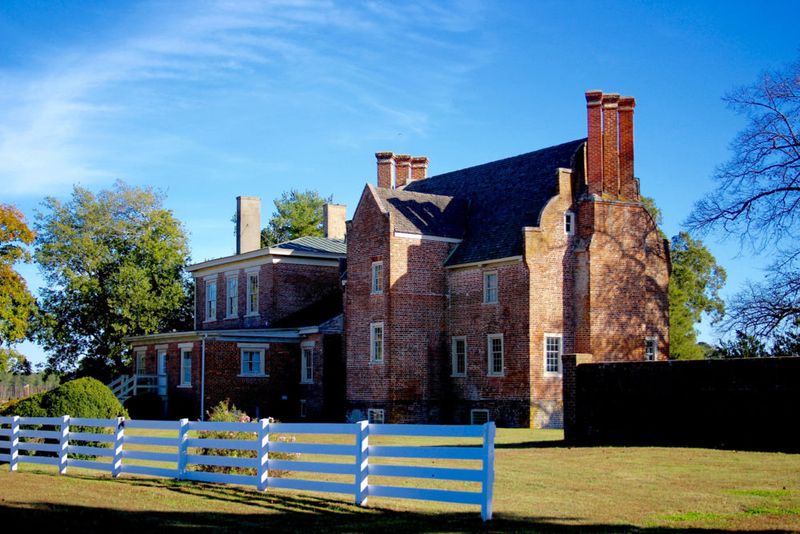
Curving Flemish gables, triple stacked chimneys, and brick laid before most American towns existed. Bacon’s Castle sits at 465 Bacons Castle Trail in Surry, and it holds the title of oldest documented brick dwelling in the country.
Arthur Allen built it. Nathaniel Bacon never actually slept here, though his rebellious followers seized the place during Bacon’s Rebellion, which is how the name stuck.
Architecture nerds come for the rare Carolean styling. Others come for the fireball.
Folklore describes a burst of light that appears between the upper floors near the stair tower, then races downward, slips through a long bricked-over back door, and streaks across the farm field toward the Lawnes Creek Parish ruins and its old cemetery. Picture a comet with a commute.
A second legend is far gentler. A woman in a flowing white dress reportedly appears in the yard, sometimes perched near the Wing Stair Tower added in the 1850s, and she supposedly tickles sleeping children in the small hours.
Preservation Virginia cares for the property, so the grounds and gardens are genuinely worth your afternoon even if nothing glows.
Bring a camera with decent low-light range. Walk the formal garden, one of the oldest surviving English-style gardens in the nation, then stand at the rear facade near dusk and watch that tree line.
Surry County itself rewards slow driving. Ferry rides, farmland, and quiet backroads make the trip feel like a step sideways in time.
The Martha Washington Inn and Spa Keeps Its Wartime Secrets
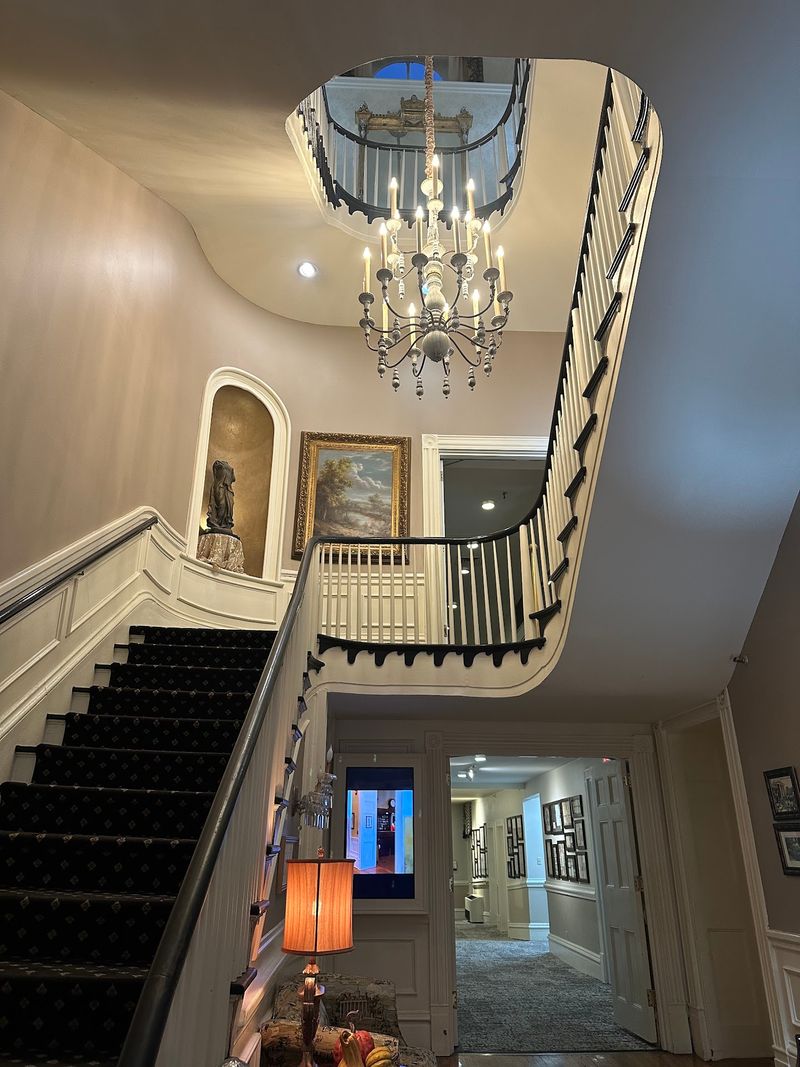
Grand porches, polished woodwork, and a reputation that refuses to stay quiet. The Martha Washington Inn and Spa anchors 150 West Main Street in Abingdon, right across from the Barter Theatre.
General Francis Preston built it as a family home for himself and his large brood. Later it became Martha Washington College, where young women studied for decades.
Then the Civil War arrived and the elegant halls turned into a makeshift hospital.
That chapter fuels most of the ghost lore. A young woman is said to wander the floors still searching for a love she lost during those years, and phantom bloodstains supposedly resurface no matter how often the boards are cleaned.
Violin music occasionally drifts through the building with no player in sight, according to the inn’s own storytelling. A sealed tunnel once linked the property to the theater across the street, and something restless is rumored to linger there.
Skeptical? Stay anyway.
The southwest corner of the state delivers hard here, with the Virginia Creeper Trail, mountain air, and a walkable historic district that glows in October.
Request an upper floor room if you want the full atmospheric effect, and give yourself time on the veranda rockers as the light fades.
Abingdon manages something rare. It feels genuinely lived in rather than staged, which makes the spooky stories land harder.
Peyton Randolph House Wears Its Grief Openly
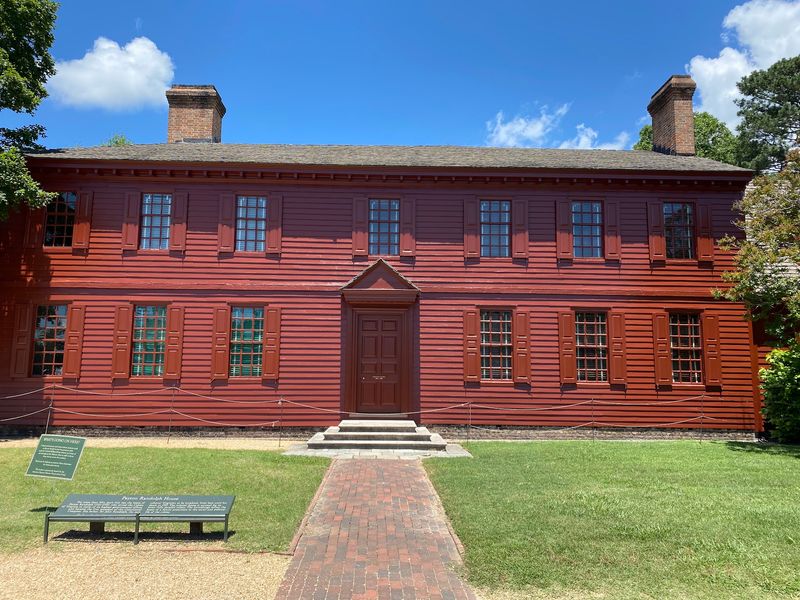
Thirty-plus documented deaths inside one dwelling will earn a building a reputation. The Peyton Randolph House stands at 100 W Nicholson Street in Colonial Williamsburg, and it regularly lands on national lists of the most haunted homes in America.
Parts of the structure date to roughly 1715, making it one of the oldest surviving houses in town. Peyton Randolph, first President of the Continental Congress, lived here.
Prestige aside, the place absorbed an enormous amount of sorrow.
During the Revolution the rooms served as a hospital for wounded soldiers. Records point to deaths from smallpox, accidents, and even a duel across the property’s long timeline.
Tour groups sometimes report sudden dizziness or nausea before crossing the threshold, which guides mention more often than you might expect. Construction of a parkway tunnel in 1941 disturbed Native American burial ground on the site, another detail woven into the heaviness people describe.
Deep red clapboard, oversized chimneys, and ancient trees make the exterior photogenic in daylight. After dark the same facade reads completely differently.
Colonial Williamsburg runs evening ghost walks that include this address, and booking ahead in fall is smart because they fill quickly.
Pair the visit with a daytime ticket to the historic area so you understand the family, the politics, and the losses behind the legend.
Context makes the chills sharper. Walk Nicholson Street slowly and let the quiet do its work.
Mount Vernon Where the First President Reportedly Lingers
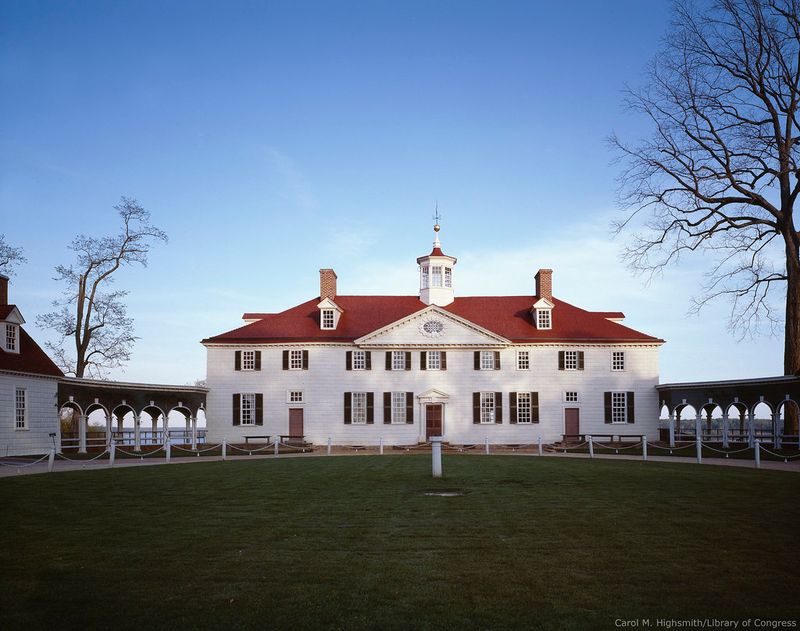
America’s most famous farmhouse comes with a side of spectral gossip. George Washington’s Mount Vernon spreads across 3200 Mount Vernon Memorial Highway, perched above the Potomac with that unmistakable colonnaded piazza.
Washington’s father built the original dwelling in 1734. The estate grew dramatically under George’s own hand, and both he and Martha rest in the tomb on the grounds.
Centuries of family life, enslaved labor, mourning, and legend have layered this hilltop thickly.
Stories claim Washington himself appears in his former bedchamber during quiet night hours. Another account describes a woman in eighteenth century dress descending the main staircase carrying a flower-trimmed punch bowl before vanishing at the bottom step.
A mustachioed older gentleman supposedly favors the Little Parlor. Unexplained touches in the hallways and security alarms tripping without cause round out the folklore.
Practical tip: the estate is enormous, so allow most of a day. The mansion tour, the working farm, the wharf, the gardens, and the memorial to the enslaved people who built this place all deserve attention.
Seasonal candlelight tours in the cooler months are the closest thing to an atmospheric night visit, and tickets are timed.
Views over the river from the piazza rank among the finest in the commonwealth, ghost or no ghost.
Arrive early, skip the midday crush, and let the wide green lawn work its strange calming spell on you.
Ferry Plantation House Hosts a Whole Crowd of Spirits
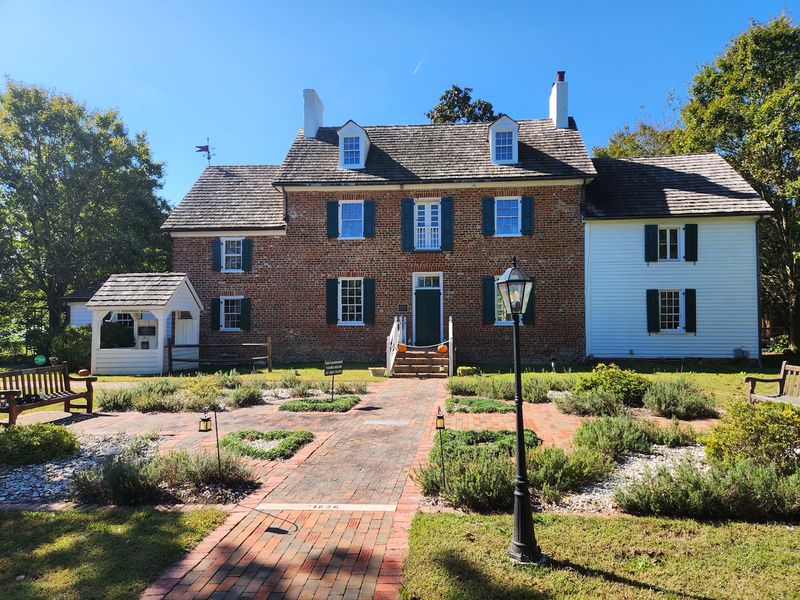
Eleven. That is the number of distinct spirits associated with Ferry Plantation House at 4136 Cheswick Lane in Virginia Beach, and it makes the property one of the busiest supernatural addresses on the coast.
People have occupied this land since at least the 1500s. A ferry crossing operated along the Lynnhaven River here beginning in 1642, and the current brick house went up around 1830.
Local accounts say nearby construction once disturbed a Native American burial ground, which storytellers blame for the intensity of the activity.
Henry, a formerly enslaved man said to have lived in third floor quarters above the old kitchen, is described as fond of fishing. Sally Rebecca Walke mourns a lost love.
A Lady in White is tied to the staircase and a fatal fall, while victims of an 1810 shipwreck are linked to the old ferry landing.
Orbs of light reportedly drift near the roofline. Two children, a boy and a girl, have been described standing silently against the wall on the second story landing.
Guided daytime tours run regularly, and the volunteer-run site also hosts seasonal paranormal investigations that sell out fast in October.
Combine it with a Chesapeake Bay beach stop or nearby First Landing State Park for a day that balances sunshine with shivers.
Parking sits close to the house, and the grounds are compact enough for an easy hour of wandering.
Weems-Botts Museum and Its Self-Opening Closet
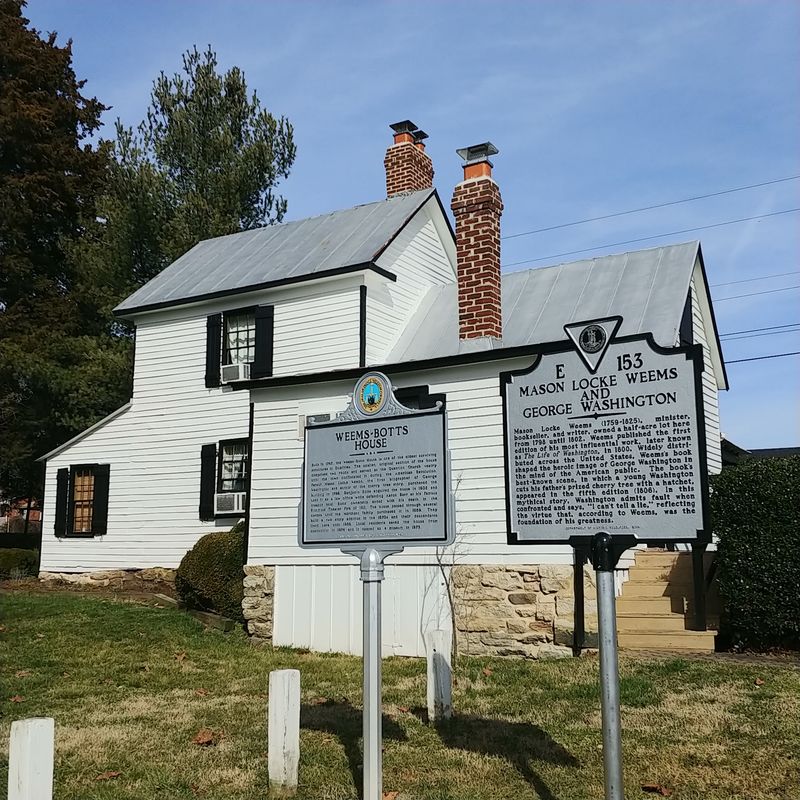
A closet door that swings open every single day would rattle anyone. That particular quirk belongs to the Weems-Botts Museum in Dumfries, one of the strangest small historic sites in the region.
Start at the Museum Annex, 3944 Cameron Street, Dumfries, VA 22026. The historic house itself sits at the corner of Duke and Cameron Streets.
Dumfries holds the distinction of being the oldest chartered town in the commonwealth, which gives the whole neighborhood a deep well of history.
Parson Mason Locke Weems, the man who wrote the famous early biography of George Washington and popularized the cherry tree tale, used the building. Attorney Benjamin Botts owned it later.
Originally the structure functioned as the vestry for Quantico Church, adding yet another layer to its past.
Reported oddities pile up here. Books leaving shelves without help, orbs turning up in photographs, unexplained touches on the staircase, and one memorable account of water pouring down on someone beneath a tree outside.
Staff lean into the reputation with regular ghost tours, and the small scale means you actually get to ask questions rather than shuffle along in a crowd.
Budget about an hour, then explore the surrounding Prince William County countryside or head toward the Potomac shoreline.
Compact, genuinely odd, and refreshingly unpolished, the museum proves haunted does not require grandeur to deliver goosebumps.
Adam Thoroughgood House Keeps Losing Its Candlesticks
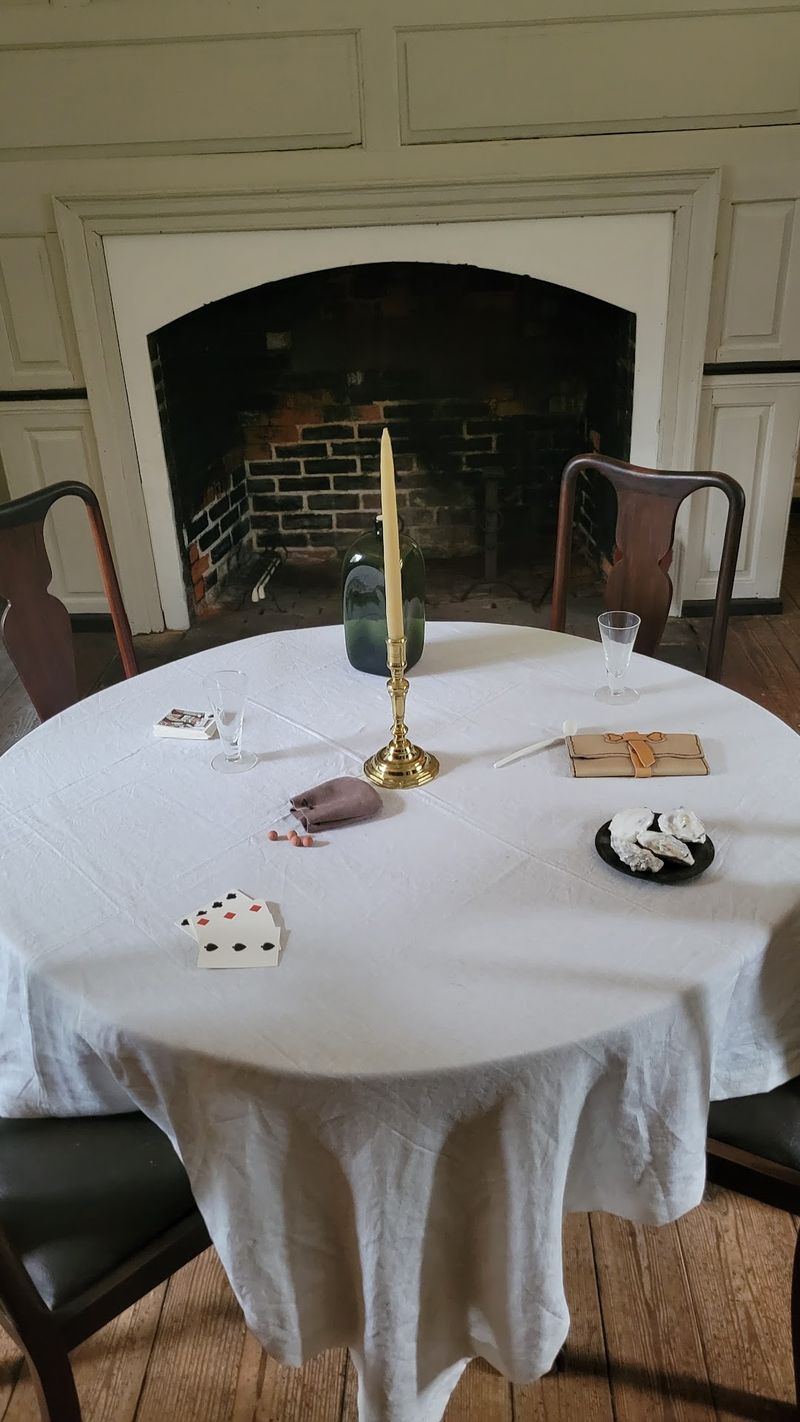
Candlesticks apparently have wanderlust in this house. Museum staff at the Adam Thoroughgood House, 1636 Parish Road in Virginia Beach, describe objects quietly relocating themselves, with candlesticks the clear favorite.
Compact, sturdy, and unmistakably old, the brick dwelling ranks among the oldest surviving colonial homes in the area. Adam Thoroughgood arrived as an indentured servant and rose to considerable prosperity, though research suggests one of his grandsons actually built the house around 1719.
Since the late 1950s the property has operated as a museum interpreting early American domestic life.
Now the residents nobody put on the payroll. A red-haired woman in various colonial style dresses turns up repeatedly across the property, making her the site’s most consistent apparition.
A man in a brown suit reportedly moves silently between rooms. Cold drafts sweep through the interior without an obvious source, and the sensation of being watched is a common refrain.
Guided interpretation covers seventeenth and eighteenth century daily life, and the small scale of the rooms makes the history feel intimate rather than distant.
Outside, the grounds slope toward the Lynnhaven River with herb gardens and shade trees worth a lap.
Photographers should aim for late afternoon when low sun hits that steeply pitched roof and oversized chimney.
Pair it with Ferry Plantation House for a two-stop haunted afternoon in Virginia Beach, since the two sit remarkably close together.
Fairfax Station Railroad Museum Holds the Weight of Wartime
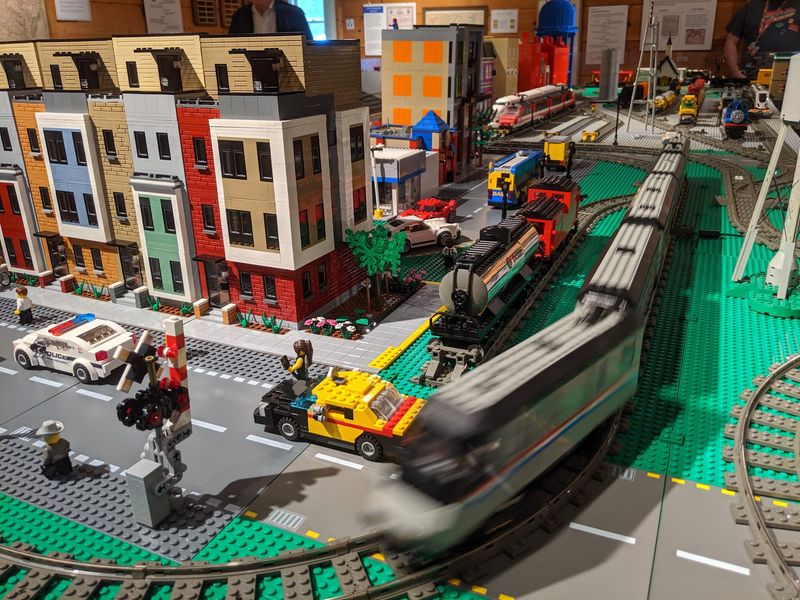
Not every haunting announces itself with slamming doors. At the Fairfax Station Railroad Museum, 11200 Fairfax Station Road, the heaviness comes from what actually happened on this ground.
Rail lines here moved troops and supplies throughout the Civil War, making the stop strategically vital. Then came the aftermath of the Second Battle of Bull Run and Chantilly in 1862.
Wounded Union soldiers were evacuated from this very site, hundreds upon hundreds of them, laid out on the ground awaiting transport.
Clara Barton, who went on to found the American Red Cross, worked here during that evacuation. Her presence turned a modest depot into a landmark of American humanitarian history.
The original station dated to the mid nineteenth century, and today’s building is a replica of a later structure housing exhibits, model railroad displays, and local history.
Ghost stories are not the draw. What lingers instead is atmosphere, the sense of standing where enormous suffering met extraordinary compassion.
Volunteers keep the museum open on limited days, so check the schedule before driving out, and the model train setup is a genuine delight for kids.
Outside, a marker commemorates Barton’s work and the soldiers who passed through.
Stand near the tracks, let the trees absorb the traffic noise, and the century and a half between then and now shrinks considerably.
Quiet, moving, and easily the most understated stop on this Virginia circuit.
The Blackburn Inn Turned an Asylum Into a Getaway
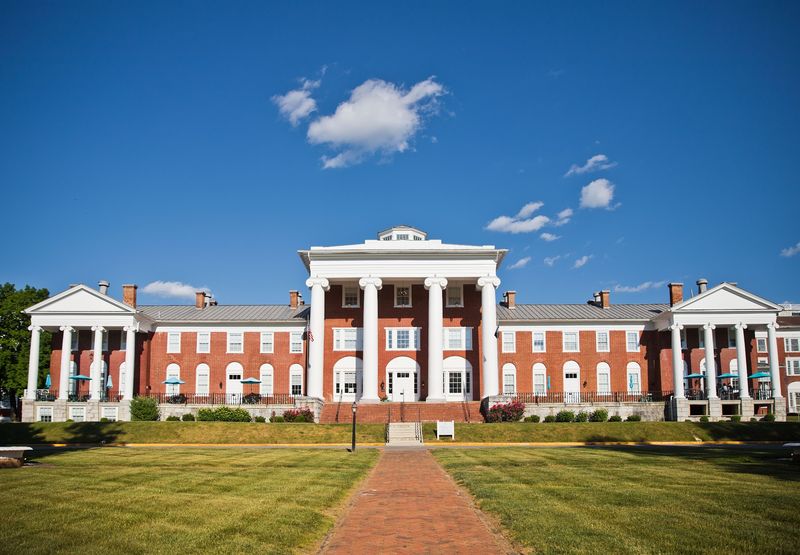
Sleeping inside a former asylum sounds like a dare. The Blackburn Inn at 301 Greenville Avenue in Staunton makes it feel like a design magazine spread instead, which is exactly what makes it fascinating.
Thomas Blackburn, who trained under Thomas Jefferson, designed the building, and his signature surfaced during renovations. The 1828 structure served as the main administration building of Western State Hospital.
Early on the institution pioneered what was then called moral treatment, running as a resort-style asylum focused on patient wellbeing. Overcrowding eroded that vision as the century wore on.
Later the complex operated as a medium-security prison before its conversion into the boutique hotel that opened in 2018.
Neighboring businesses have described soft moans carrying a single word, home, drifting from the grounds. Local lore insists a long line of ghostly residents simply refuses to leave.
Walk the corridors and the architecture alone justifies the trip, with soaring ceilings, a graceful rotunda, and windows that flood the space with Shenandoah Valley light.
Staunton makes an excellent base regardless. The American Shakespeare Center, a walkable downtown of Victorian storefronts, and quick access to Skyline Drive fill a weekend easily.
Autumn is peak season here, so reserve well ahead when the Blue Ridge turns gold.
Layered, beautiful, and faintly unsettling, this stay closes out the haunted route through Virginia on a thoughtful note rather than a scream.
