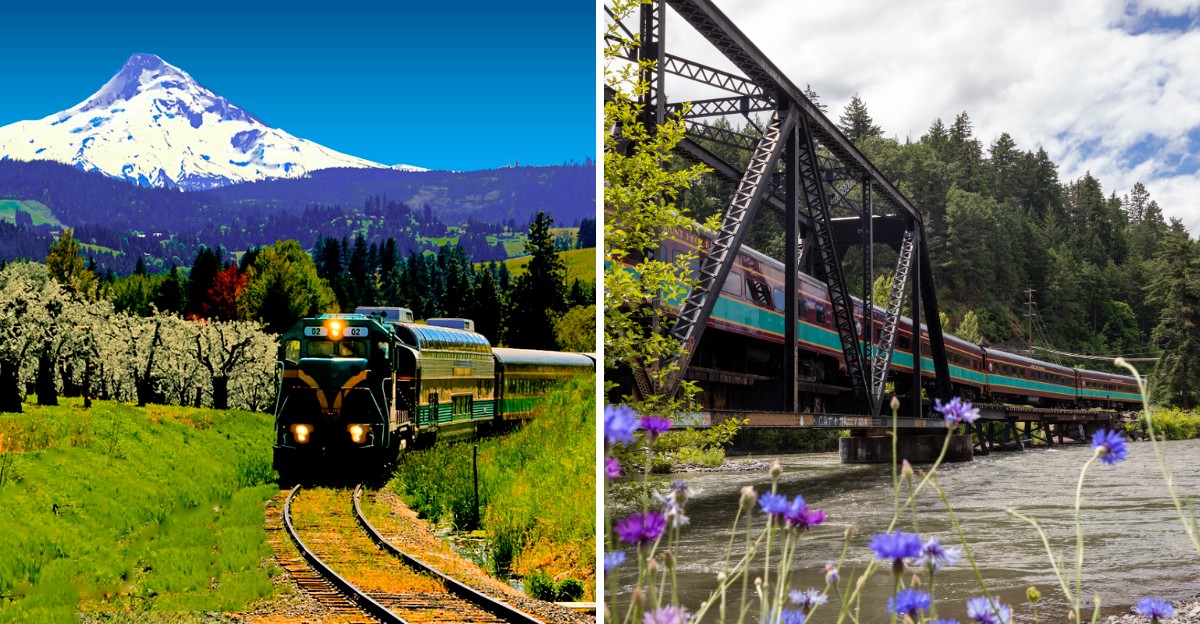
Watching fall color from behind a windshield rarely compares to watching it drift past a train window instead.
Tracks wind through valleys here, trees shifting from green into deep reds and golds as the ride continues further along the route. Nobody needs to focus on driving either, freeing every passenger to actually look around instead of splitting attention between scenery and the road ahead.
Timing a ride like this around peak color takes some planning, though the payoff rarely disappoints anyone who gets the timing right. Conductors often point out specific stretches worth watching closely, adding context most passengers wouldn’t catch entirely on their own.
Fall color rarely gets experienced this passively, letting the landscape do all the moving while everyone else just sits back. Oregon’s rail route through changing leaves offers exactly that kind of unhurried, scenic escape.
The Historic Depot in Hood River Sets the Mood
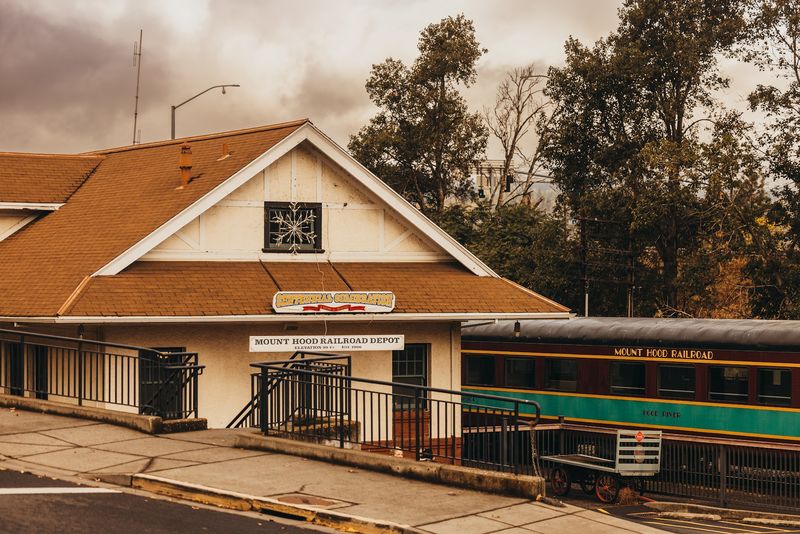
Arriving early pays off here. The depot smells faintly of old wood and warm engine oil, and the boarding platform buzzes with families comparing seat assignments.
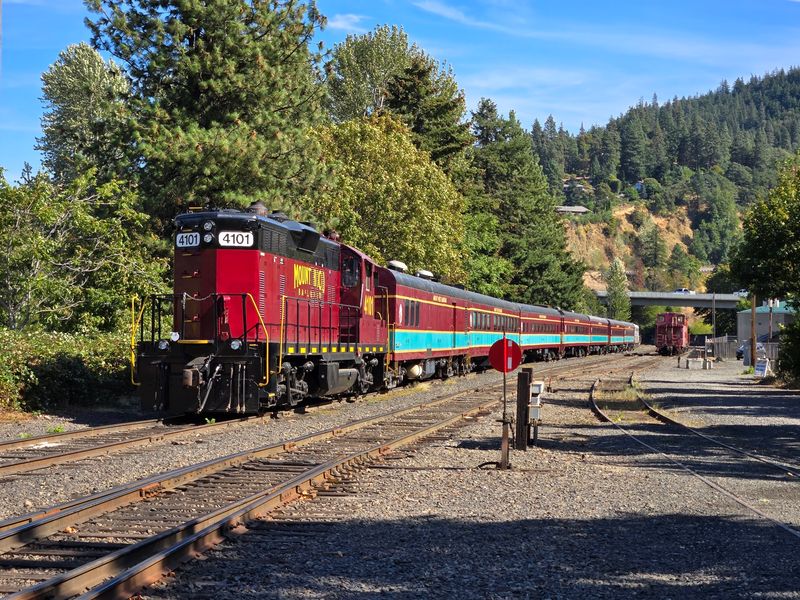
Built to serve a working rail line that once hauled fruit and lumber out of the valley, the station still carries that practical, hardworking character. Vintage passenger cars sit waiting on the tracks, their paint catching the low autumn sun.
Staff move through the crowd answering questions, and the whole scene has a friendly, small-town rhythm rather than a rushed tourist shuffle.
Give yourself twenty or thirty minutes before departure. There is a gift area worth browsing, restrooms to use before the ride, and plenty of photo angles along the platform.
A small tip from experience: stand near the front of the line if a window seat matters, because the valley views start almost immediately once the wheels begin turning.
Fun detail for history fans, this line dates back to 1906 and remains one of the oldest continuously operating short rail routes in the Pacific Northwest.
Orchards That Turn Gold in October
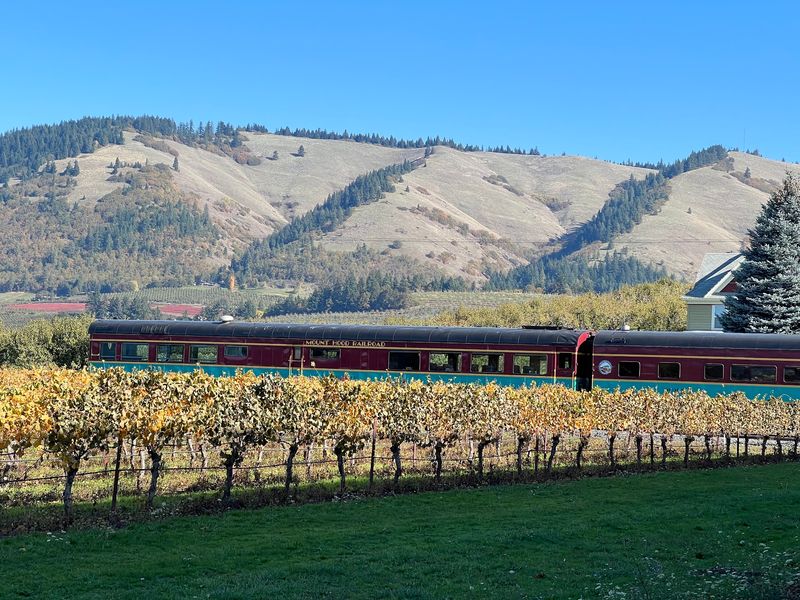
Pear country puts on a quiet show every fall. Row after row of trees line the tracks, their leaves shifting from green to butter yellow and rust orange, and the effect from a slow-moving train is almost hypnotic.
Hood River Valley grows a huge share of Oregon’s pears, so the orchards stretch farther than most visitors expect. Harvest season means ladders propped against trunks, bins stacked at row ends, and the occasional wave from workers in the fields.
Bring a camera with a decent zoom if possible. The train moves gently enough for clear shots, and the contrast between bright foliage and dark fir forest makes for striking pictures.
Late September through late October usually brings the strongest color, though timing shifts a little each year depending on weather.
What surprised me most was the scent. Even through an open window, the air carries something sweet and earthy, like ripe fruit mixed with cold mountain air. It is the kind of detail photos never quite capture.
Two Mountains, One Unforgettable View
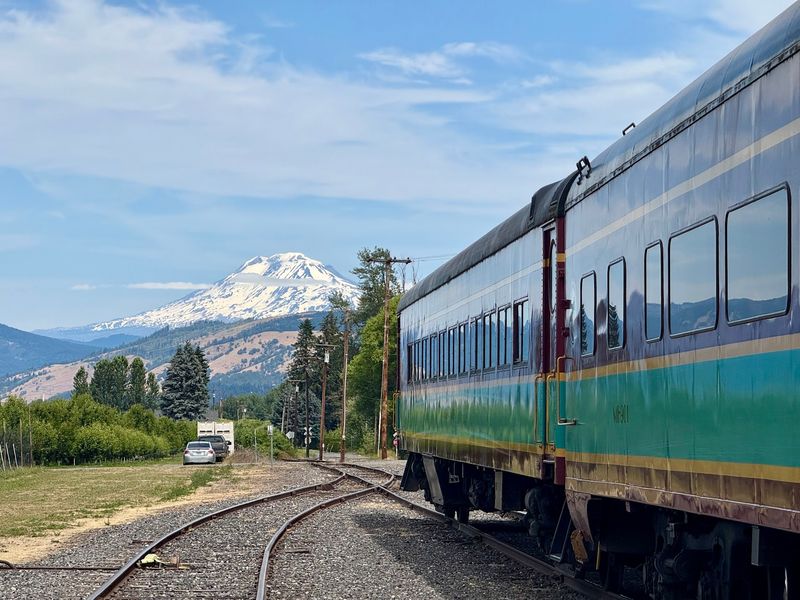
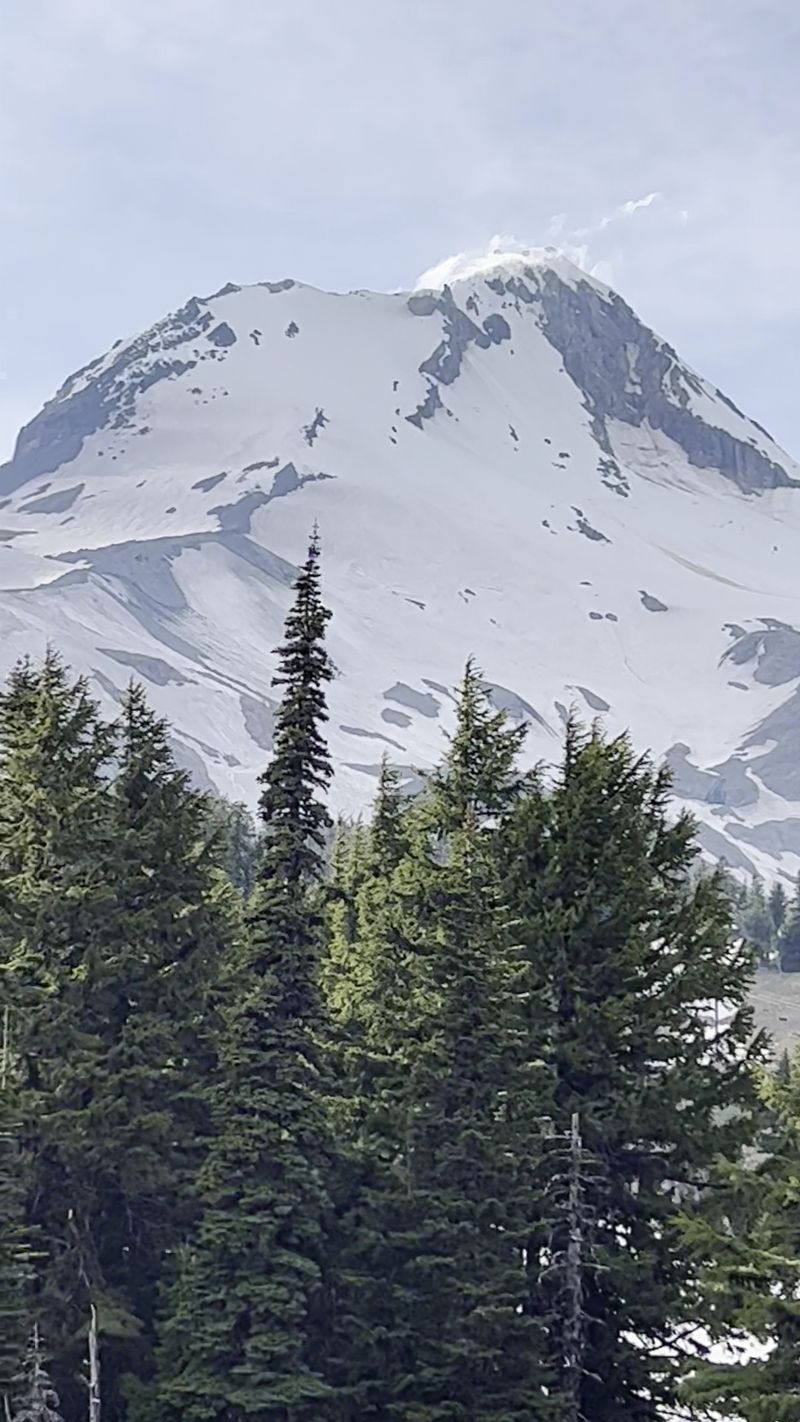
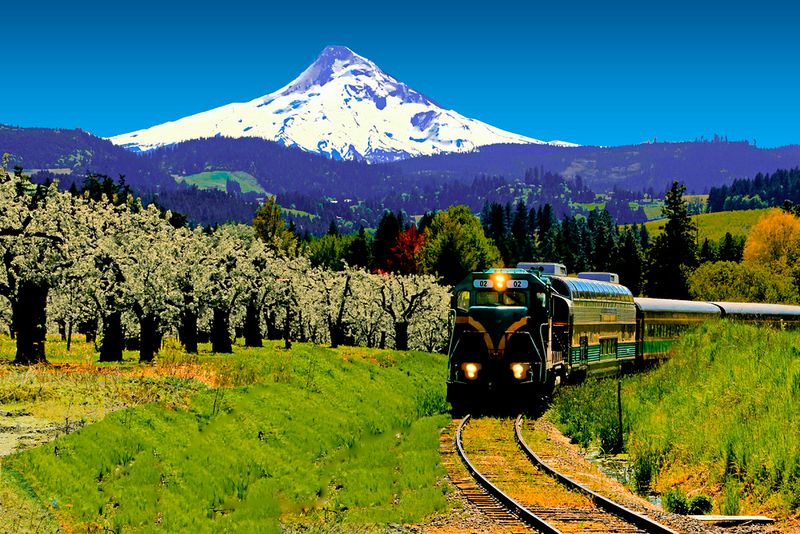
Few spots in Oregon let a person see two major volcanoes without moving an inch. From the upper stretch of the route, Mount Hood rises to the south while Mount Adams stands across the Columbia to the north.
On a clear fall day, both wear fresh snow, and the effect against golden orchards is genuinely jaw-dropping. Riders often call this the highlight of the whole trip, and it is easy to understand why.
Clear mornings tend to offer the best odds. Autumn skies in the Gorge can be crisp and blue, though haze or low clouds sometimes hide the peaks entirely. Even then, the forested slopes and colorful valley floor keep the scenery worthwhile.
The Indigenous names for these mountains, Wy’east for Hood and Pahto for Adams, come from local traditions and are worth knowing before the trip. Learning them adds a layer of meaning to a view that already feels bigger than the moment.
Rail Bikes Offer a Wide Open Alternative
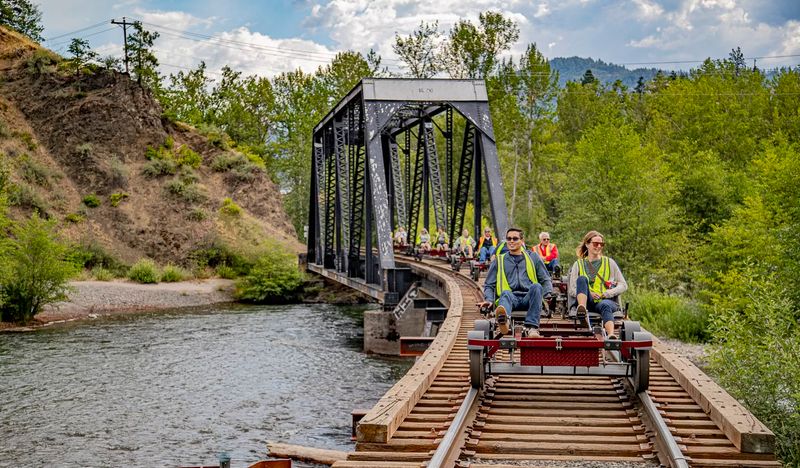
Pedaling along a railroad track sounds strange until the first hundred yards go by, and then it makes perfect sense. The rail bikes roll on the same historic line, but with no walls, no roof, and nothing between riders and the fall colors.
Electric assist does most of the work, which means uphill sections never feel like a workout unless someone wants them to. Groups move together at a steady pace, guided by crew members who handle the turnarounds at the switchbacks.
Guides tend to keep things light with local history, terrible puns, and helpful pointers about what to watch for along the way. Layers matter in autumn. Mornings run chilly in the valley, but the sun warms things quickly once the fog lifts.
For anyone who finds regular sightseeing a little too passive, this option delivers fresh air, unobstructed views, and just enough novelty to make the day stick in memory.
Vintage Cars With Character and Comfort
Step inside one of the restored coaches and the decades roll back. Polished wood trim, wide windows, and the steady sway of the car create a mood that modern transport simply cannot match. Seats face each other in some sections, which turns a ride into a conversation.
Several seating options exist, from standard coach to upgraded cars with extra amenities, so groups can pick what suits them.
The motion is smooth and rhythmic, the kind that makes eyelids heavy on a warm afternoon. More than one rider has admitted to dozing off between orchard stretches. Windows open in many cars, which helps with photos and lets the cool valley air in.
Bringing a light blanket is a smart move for late-season trips. Autumn mornings can be brisk, especially in the shaded stretches where tall firs block the sun. Small comforts make a long ride feel like an unhurried afternoon rather than a schedule to keep.
Switchbacks That Climb the Valley Wall
Here is a bit of railroad engineering that genuinely surprises first-timers. Rather than looping around the hillside, the train backs up and changes direction to gain elevation, using a switchback system that dates to the earliest days of the line.
Only a handful of these remain in operation across the country. The maneuver takes a few minutes and comes with a running explanation from the crew.
Watching the landscape swing from one side of the car to the other adds a bit of theater to the ride. Passengers who claimed the left-side window suddenly find themselves facing the forest instead. Nobody seems to mind much.
Elevation climbs steadily from the Columbia River level up toward Parkdale, which means the foliage changes as the train rises. Lower slopes hold their green longer while upper elevations turn earlier, so a single trip can showcase several stages of autumn at once.
A Layover Stop Worth Lingering Over
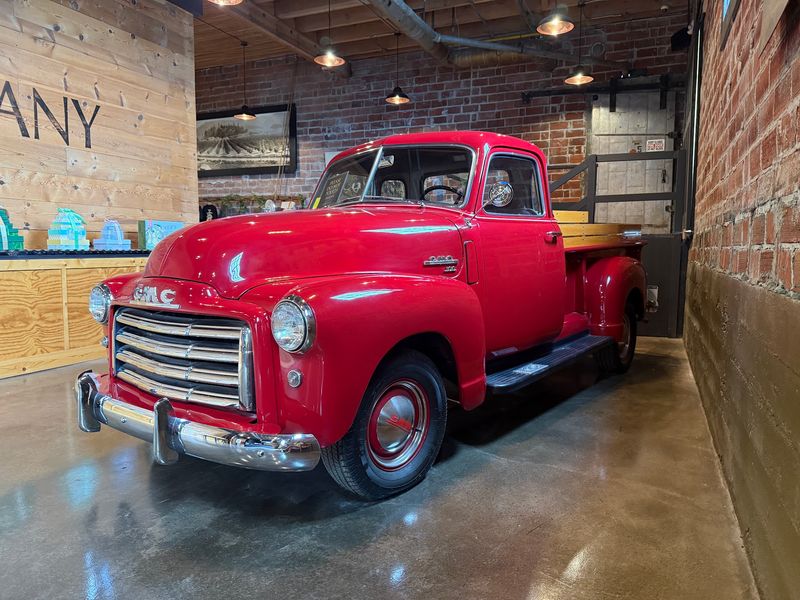
Midway through many excursions, the train pauses long enough for passengers to stretch their legs and explore. The stop near The Fruit Company gives riders time to browse local goods, sample fresh fruit, and watch packaging operations through viewing windows.
A beautifully restored 1949 GMC pickup sits in the showroom, complete with wooden sideboards. Cherry samples are a regular highlight, and the shelves are packed with jams, dried fruit, and gift boxes.
The layover generally runs around an hour, which is enough to wander without feeling rushed. Views from this spot open up toward both mountains, making it a favorite photo stop. Benches and open areas give families room to spread out.
Packing a small snack is never a bad idea, though food options exist on some trips. What stands out most is how unhurried the whole stop feels, a genuine pause rather than a quick photo grab before the whistle blows again.
Guides Who Make the Miles Fly By
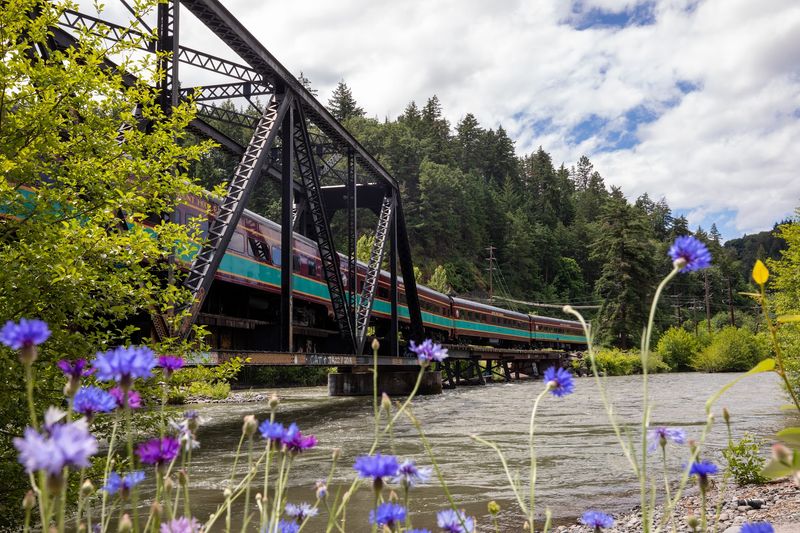
Good narration turns scenery into story. Crew members aboard this line share details about the valley’s farming history, the origins of the railroad, and which peaks are visible around each bend.
The delivery tends to be relaxed and conversational, sprinkled with jokes that riders happily groan at. Questions get real answers, and nobody rushes past a curious passenger.
Beyond the commentary, the staff handle practical things well. They help with boarding, point out photo opportunities, and keep everything running on schedule without making the day feel regimented.
Assistance for riders with mobility needs is available, though calling ahead helps clarify details. Hospitality here leans genuinely small-town. Repeat visitors often mention the crew before the scenery, which says plenty.
On a ride where the views already do heavy lifting, having friendly people along for the journey turns a pleasant outing into something people talk about long after the leaves have fallen.
Timing Your Trip for Peak Foliage
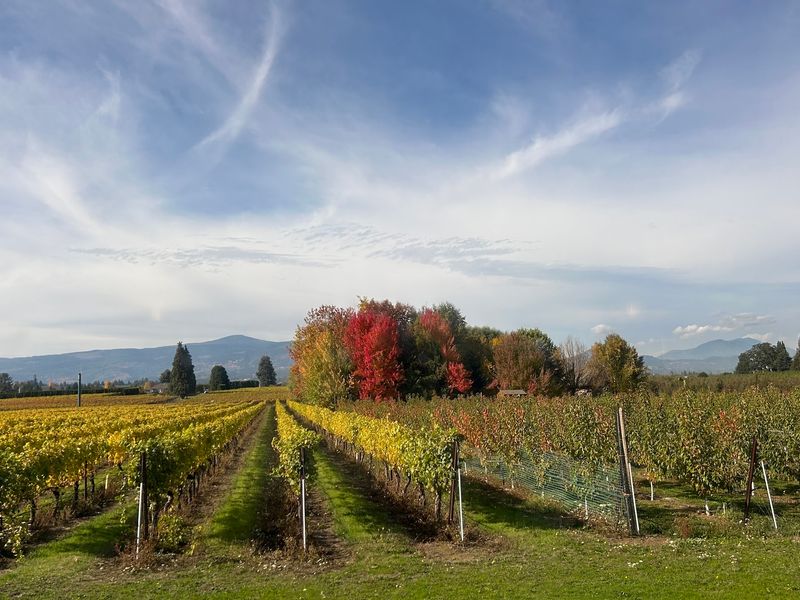
Color chasing takes a little planning. In the Hood River Valley, the show usually builds through late September and peaks somewhere in mid to late October, though a warm stretch or early frost can shift things by a week or two.
Checking local foliage updates before booking helps narrow the window. Weekends fill quickly during autumn, so reserving ahead is the smarter route.
Morning departures often bring clearer mountain views, while afternoon light warms the orchards into something golden and soft. Both work beautifully, just in different ways.
The railroad operates Tuesday through Saturday during much of the season, with the ticket window opening at 8 am.
Arriving with a flexible attitude helps too. Gorge weather does what it wants, and a misty ride through colored trees has its own quiet charm.
Making a Full Day Out of the Journey
One ride rarely feels like enough once the valley works its magic. Downtown Hood River sits just steps from the tracks, filled with small shops, bakeries, and cafes that make an easy before-or-after stop.
The Columbia River Gorge stretches out nearby with waterfalls and viewpoints within a short drive. Families often pair the excursion with a visit to a local farm stand along the Fruit Loop scenic route.
Comfortable shoes, a light jacket, and a charged phone battery cover most needs. Parking near the station is straightforward, though arriving early during busy autumn weekends saves stress.
Special seasonal trips appear on the calendar throughout the year, so checking ahead can uncover something extra.
For anyone plotting a route, the departure point sits at Mount Hood Railroad, 110 Railroad Street, Hood River, OR 97031. Come for the fall color, stay for the slow pace, and leave with the sound of that whistle still rattling around in your head.
