You think you know what a park visit looks like? Blankets on grass, maybe a picnic basket, perhaps a lazy afternoon stroll?
Virginia’s historic parks laugh in the face of those expectations. These aren’t your typical Sunday hangout spots where you zone out and watch clouds drift by.
They’re brain-bending, soul-searching destinations that challenge everything you thought you knew about American history, human nature, and the choices that shaped our nation. Walking through these landscapes means confronting uncomfortable truths, wrestling with complex questions, and leaving with more thoughts swirling in your head than when you arrived.
The Old Dominion doesn’t do shallow when it comes to preserving the past. Every battlefield, every preserved homestead, every interpretive center asks visitors to think critically about freedom, sacrifice, power, and consequence.
Pack your curiosity alongside your water bottle because these ten spots will work your mind harder than any gym session ever could.
1. Appomattox Court House National Historical Park
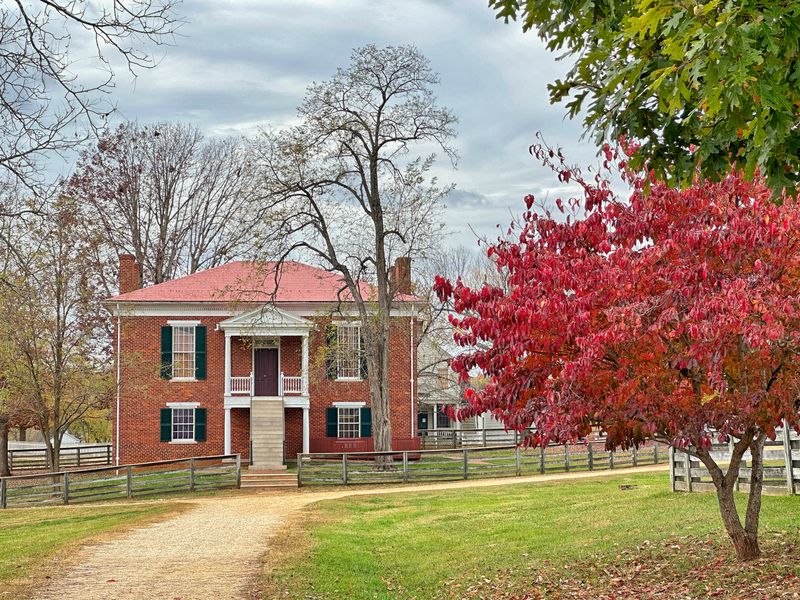
Standing where Robert E. Lee surrendered to Ulysses S.
Grant forces you to reckon with endings and beginnings simultaneously. This wasn’t just a military defeat documented in history books.
Real people watched their entire world collapse and rebuild in a single afternoon.
The reconstructed village feels frozen in time, each building whispering stories about what happened when brothers stopped fighting brothers. You’ll walk the same floors where officers negotiated terms that would reshape the nation.
The weight of those conversations still hangs in the air.
What makes this place mentally challenging is how it presents surrender not as simple defeat but as a complex human moment. Lee’s soldiers went home with their horses to plow fields.
Grant’s terms showed mercy that many didn’t expect. Visitors must grapple with how grace functioned in the midst of catastrophic violence.
The museum exhibits don’t sugarcoat anything. Slavery’s role gets examined thoroughly.
The myth of the Lost Cause gets dismantled with facts and primary sources. You can’t leave here clinging to romantic notions about the Civil War.
Kids especially struggle with understanding how neighbors became enemies. The park rangers excel at helping younger visitors process these contradictions.
Educational programs challenge students to think about loyalty, principles, and what they’d do when their community splits apart.
Walking through the McLean House where the surrender occurred feels surreal. Such a modest home witnessed such a monumental event.
That contrast alone sparks reflection about how history happens in ordinary places through extraordinary circumstances.
Address: 111 National Park Drive, Appomattox, Virginia
2. Colonial Williamsburg
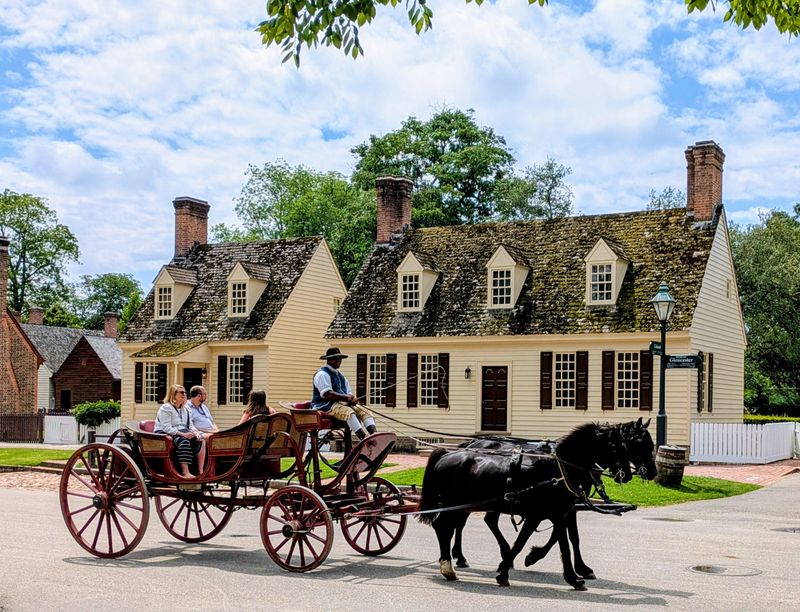
Costumed interpreters don’t just recite facts here. They embody real historical figures who made choices that ripple into our present day.
Conversations get uncomfortable fast when you ask tough questions about who had rights and who didn’t in colonial Virginia.
The entire restored area functions as a living laboratory for examining how societies organize themselves. You’ll witness recreations of court proceedings, legislative debates, and daily life that reveal the messy contradictions of the founding era.
Freedom and slavery existed side by side on these very streets.
What scrambles your brain is how normal everything looks while representing such revolutionary ideas. These colonists were literally inventing democracy while denying it to most people.
That cognitive dissonance hits hard when you’re standing in the Capitol building where Patrick Henry gave fiery speeches.
The enslaved peoples’ stories get told with increasing depth and honesty. Recent expansions focus heavily on African American experiences, forcing visitors to confront how the prosperity of colonial Williamsburg depended entirely on enslaved labor.
Those narratives challenge any simplistic hero worship of the founders.
Teenagers particularly benefit from programs that put them in historical decision-making scenarios. Would you sign the Declaration knowing it might mean your death?
How would you respond to laws you found unjust? These exercises build critical thinking muscles.
The archaeological work happening throughout the site adds layers of complexity. New discoveries constantly reshape our understanding of who lived here and how.
History isn’t static, and this place proves that our interpretations must evolve with new evidence.
Address: 101 Visitor Center Drive, Williamsburg, Virginia
3. Manassas National Battlefield Park
Two major Civil War battles happened on this same ground, and that fact alone creates a mind-bending layer of historical complexity. Soldiers fought and died here twice, each time believing their cause justified the bloodshed.
Visitors must wrestle with how the same landscape witnessed repeated tragedy.
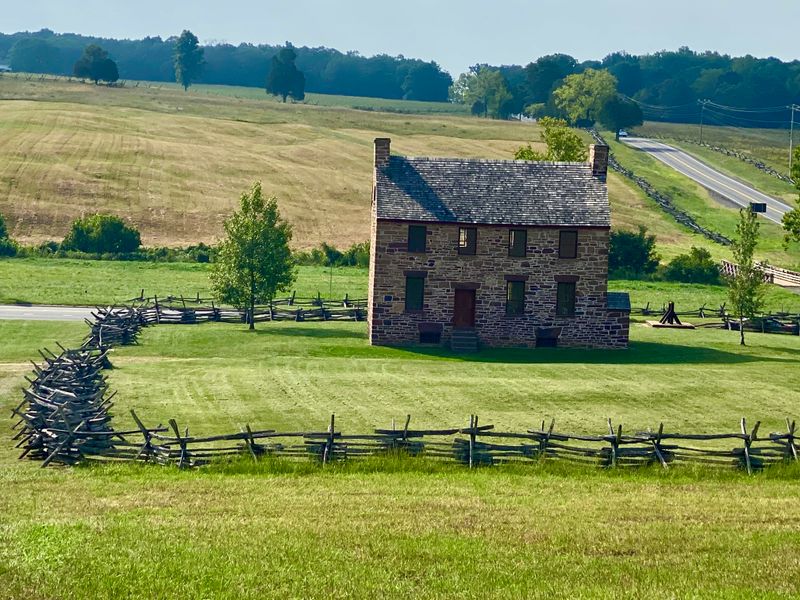
The Stone House still stands as a silent witness to unimaginable suffering. It served as a field hospital where surgeons worked frantically to save shattered bodies.
Walking past it knowing what happened inside those walls changes how you view medical care and human resilience.
Hiking the trails means literally following in the footsteps of terrified young men who had never experienced combat before. First Manassas shattered any romantic notions about war being glorious.
The reality of violence became brutally clear to both sides within hours.
What makes this park intellectually demanding is how it presents military strategy alongside human cost. You can study troop movements and tactical decisions while simultaneously confronting the names and faces of those who died implementing those plans.
Strategy stops being abstract when you see the consequences.
Educational programs challenge visitors to think about why people fight. What motivates someone to march toward enemy fire?
How do leaders convince soldiers to risk everything? These questions have no easy answers, and the park doesn’t pretend otherwise.
The landscape itself tells stories that plaques and exhibits can’t fully capture. Stand where Confederate troops emerged from the woods in surprise attacks.
Feel how exposed Union positions were. Geography shaped outcomes, and understanding terrain helps visitors grasp why battles unfolded as they did.
Address: 12521 Lee Highway, Manassas, Virginia
4. Fredericksburg and Spotsylvania National Military Park
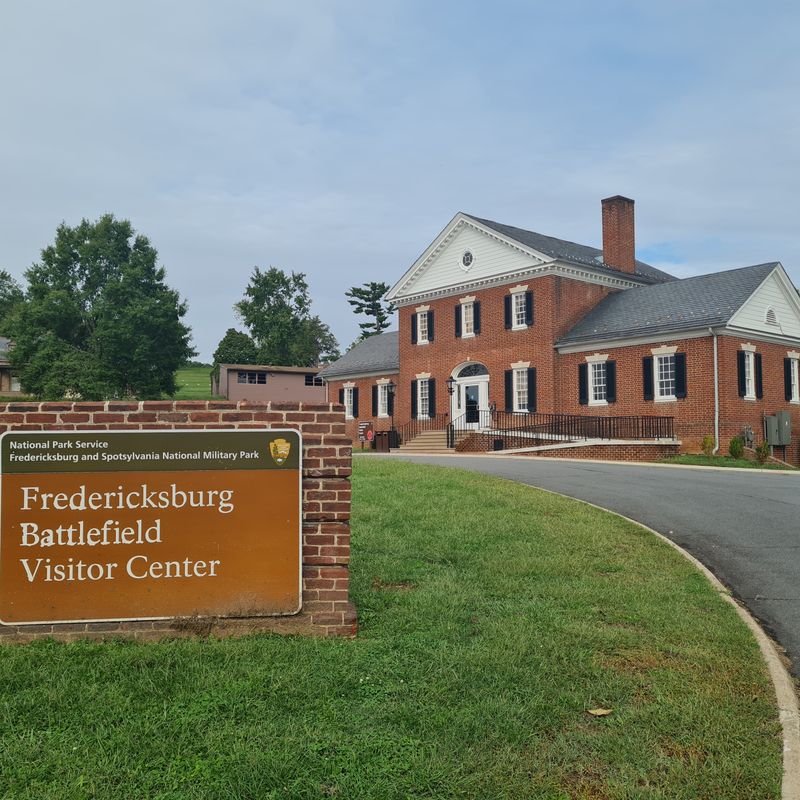
Four major battles scarred this region, making it one of the bloodiest landscapes in American history. The sheer scale of death and destruction that happened across these fields challenges visitors to comprehend violence beyond normal human experience.
Numbers become numbing until you focus on individual stories.
The Sunken Road at Fredericksburg represents perhaps the most haunting spot in Virginia. Confederate soldiers positioned behind that stone wall mowed down wave after wave of Union troops ordered to charge across open ground.
The tactical stupidity becomes obvious when you stand where those soldiers stood.
Visitors often struggle with the futility displayed here. Brave men died following orders that made no military sense.
Examining those command decisions forces reflection on authority, obedience, and when following orders becomes morally wrong. Those aren’t comfortable questions.
Spotsylvania’s Bloody Angle earned its name through close-quarters combat so intense that bullets cut down trees. The violence reached a level of savagery that shocked even hardened veterans.
Trying to imagine that level of sustained brutality strains the mind.
The park spans multiple sites, each with distinct characteristics and challenges. Chancellorsville saw Stonewall Jackson accidentally shot by his own troops.
The Wilderness battles happened in dense forest where soldiers couldn’t see enemies yards away. Each location presents unique scenarios to analyze.
What really makes visitors think is examining how these battles changed the war’s trajectory. Fredericksburg crushed Union morale.
Spotsylvania demonstrated Grant’s willingness to accept massive casualties. Strategy and human cost collided repeatedly on this ground.
Rangers lead programs that explore leadership failures and successes. Learning from historical mistakes requires honest assessment of what went wrong and why.
Address: 1013 Lafayette Boulevard, Fredericksburg, Virginia
5. Yorktown Battlefield
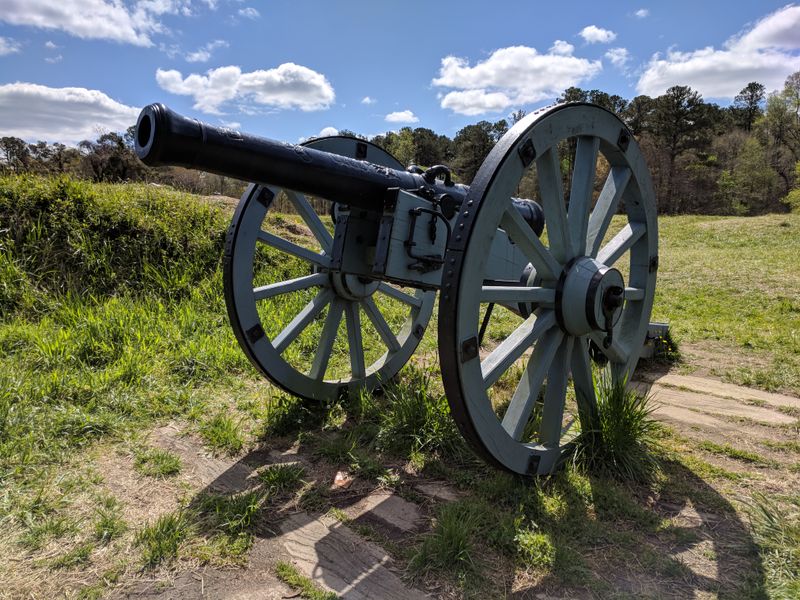
American independence got secured here when Cornwallis surrendered to Washington’s combined American and French forces. But calling it an American victory oversimplifies what actually happened.
French naval power and military expertise proved absolutely essential to the outcome.
Walking the siege lines reveals how methodical and scientific warfare had become by this point. Engineers calculated angles and distances.
Soldiers dug elaborate trench systems. Victory came through mathematics and logistics as much as courage.
That realization challenges romantic notions about revolutionary heroism.
The role of enslaved people at Yorktown complicates the narrative of freedom being won. Enslaved laborers built fortifications for both sides.
Some escaped to British lines seeking the freedom they’d been promised. Others remained enslaved despite fighting for American independence.
Those contradictions demand serious reflection.
French contributions often get minimized in popular history, but you can’t ignore them here. The battlefield itself testifies to how crucial that alliance was.
Without French ships blocking British reinforcements and French troops providing experienced soldiers, the outcome might have been completely different.
Yorktown also forces visitors to think about what happens after military victory. The war officially continued for two more years.
Winning battles doesn’t automatically create functional governments. The hard work of building a nation came after the shooting stopped.
The preserved earthworks let you trace exactly how the siege progressed. You can walk where American and French troops stormed British redoubts in night attacks.
Seeing the actual terrain helps visitors understand tactical decisions and why certain positions mattered so much.
Educational programs explore what independence actually meant to different groups. Freedom’s definition varied dramatically depending on your race, gender, and economic status.
Address: 1000 Colonial Parkway, Yorktown, Virginia
6. Petersburg National Battlefield
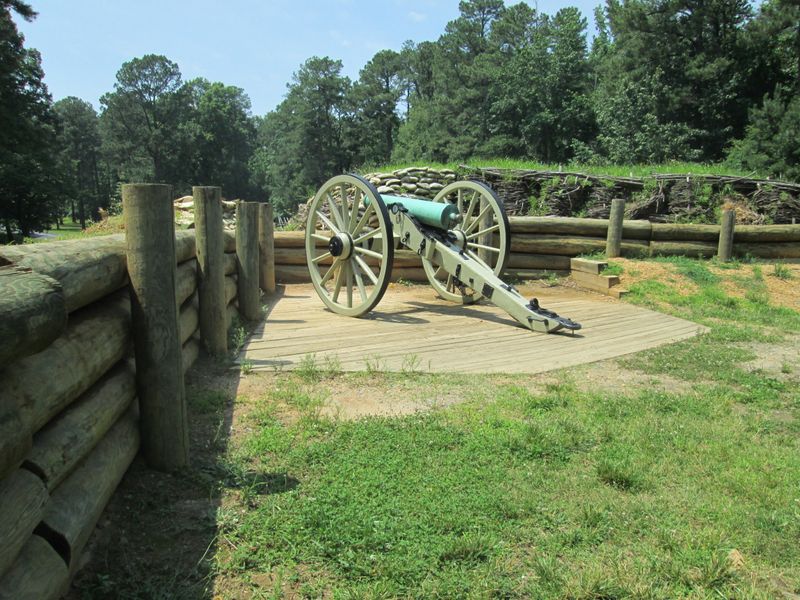
A ten-month siege sounds abstract until you walk miles of preserved trenches and realize soldiers lived in those ditches through brutal summer heat and freezing winter cold. The human endurance required to survive that ordeal while maintaining combat readiness boggles the mind.
Petersburg represents the birth of modern warfare in many ways. Trench systems, constant artillery bombardment, and grinding attrition replaced dramatic charges and decisive battles.
World War I’s Western Front had its prototype here in Virginia decades earlier.
The Crater site remains one of the most disturbing locations in American military history. Union forces tunneled under Confederate lines and detonated massive explosives, creating a huge crater.
Then they ordered troops to charge into that crater where they became trapped and slaughtered. The tactical incompetence and resulting massacre force visitors to confront military leadership failures.
What makes Petersburg mentally exhausting is understanding how the siege affected civilians trapped in the city. Food shortages, constant bombardment, and economic collapse created desperate conditions.
War’s impact on non-combatants becomes impossible to ignore here.
The role of United States Colored Troops gets examined thoroughly at Petersburg. Black soldiers fought with distinction despite facing discrimination from their own army and certain death if captured by Confederates.
Their courage and sacrifice under those conditions demands recognition and reflection.
Walking the fortification lines reveals the engineering sophistication both sides developed. These weren’t hastily dug ditches but carefully designed defensive systems with overlapping fields of fire and protected supply routes.
The science of killing became highly refined.
Programs exploring daily life in the trenches help visitors understand the psychological toll of siege warfare. Boredom, fear, disease, and discomfort ground down even the toughest soldiers over months.
Address: 1539 Hickory Hill Road, Petersburg, Virginia
7. Maggie L. Walker National Historic Site
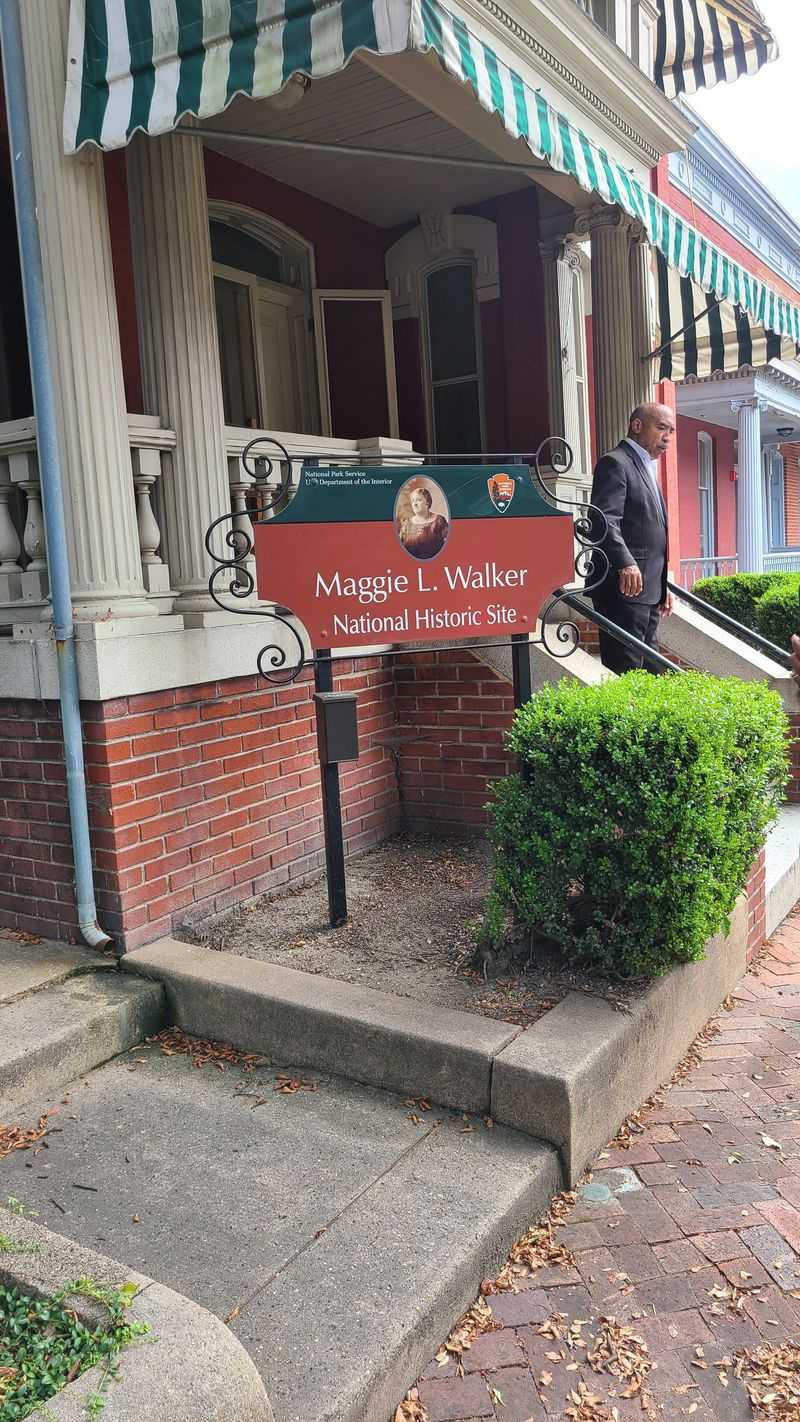
Maggie Walker broke every barrier placed in front of her as a Black woman in the early twentieth century. She became the first female bank president in the United States while navigating the oppressive racism of Jim Crow Virginia.
Her story challenges assumptions about who could achieve success and how.
The preserved home showcases the life she built through determination and business genius. Visitors see tangible evidence of Black prosperity and achievement during a period when history books often portray only struggle and oppression.
That complexity forces more nuanced thinking about African American experiences.
Walker’s work with the Independent Order of St. Luke transformed how Black communities built economic power. She understood that financial independence provided the foundation for civil rights advances.
Her strategies remain relevant today, making this historic site deeply contemporary in its implications.
What really makes visitors think is confronting how much talent and potential got wasted due to discrimination. Walker succeeded despite enormous obstacles, but how many others never got the chance?
The loss to society becomes staggering when you consider the systematic barriers that blocked so many capable people.
The site examines Walker’s family life alongside her professional achievements. She dealt with personal tragedies while running businesses and leading civil rights organizations.
The full picture of her life reveals a complex woman who refused to be limited by others’ expectations.
Educational programs connect Walker’s economic strategies to current discussions about wealth gaps and financial literacy. Her teachings about community investment and mutual support offer practical wisdom for contemporary challenges.
Seeing her actual home and possessions makes her achievements feel real and accessible. She wasn’t a distant historical figure but a flesh-and-blood person who worked incredibly hard and smart.
Address: 600 North 2nd Street, Richmond, Virginia
8. Booker T. Washington National Monument
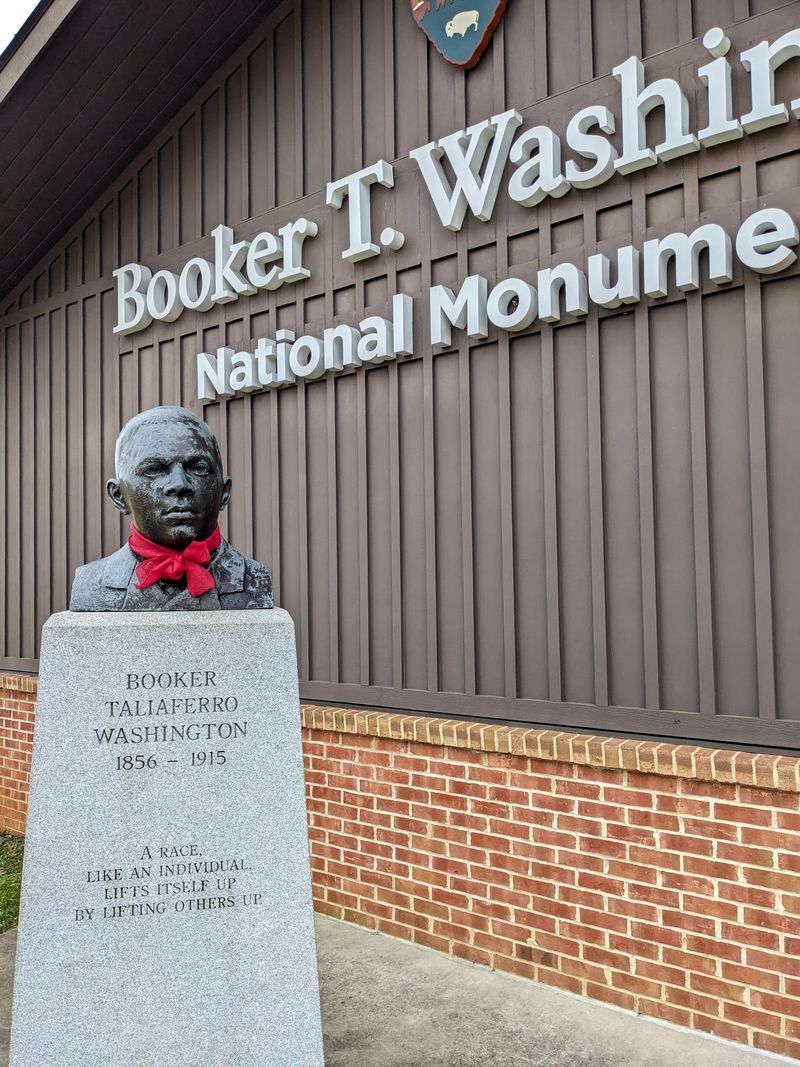
Booker T. Washington was born enslaved on this tobacco farm, and that brutal beginning shaped everything he later accomplished.
Walking the grounds where he spent his childhood forces reflection on how someone emerged from such oppression to become one of America’s most influential educators.
The reconstructed slave cabin demonstrates the harsh material conditions of bondage. The tiny space, dirt floors, and minimal furnishings reveal how enslaved people survived with almost nothing.
That stark reality makes Washington’s later achievements even more remarkable and thought-provoking.
What challenges visitors is reconciling Washington’s accommodationist approach to race relations with the radical changes he actually implemented through education. His public rhetoric emphasized gradual progress and vocational training, but Tuskegee Institute represented revolutionary uplift for Black Americans.
Understanding that complexity requires moving beyond simplistic historical judgments.
The farm setting helps visitors grasp how agricultural labor dominated enslaved people’s lives. Tobacco cultivation was backbreaking work that enriched white owners while destroying Black bodies.
The economic system built on that exploitation shaped Virginia and the entire South.
Programs exploring Washington’s philosophy spark debates about the best strategies for achieving equality. Was accommodation pragmatic or compromising?
Could more confrontational approaches have succeeded in that era? These questions have no easy answers, and wrestling with them builds critical thinking skills.
The site also examines Washington’s mother and her determination to ensure her children got educated after emancipation. Her influence shaped his life trajectory, highlighting how families fought for advancement despite overwhelming obstacles.
Comparing the plantation’s prosperity with the poverty of those who actually worked the land reveals the moral bankruptcy of slavery. Wealth built through stolen labor can’t be separated from the crime that created it.
Address: 12130 Booker T. Washington Highway, Hardy, Virginia
9. Arlington House, The Robert E. Lee Memorial
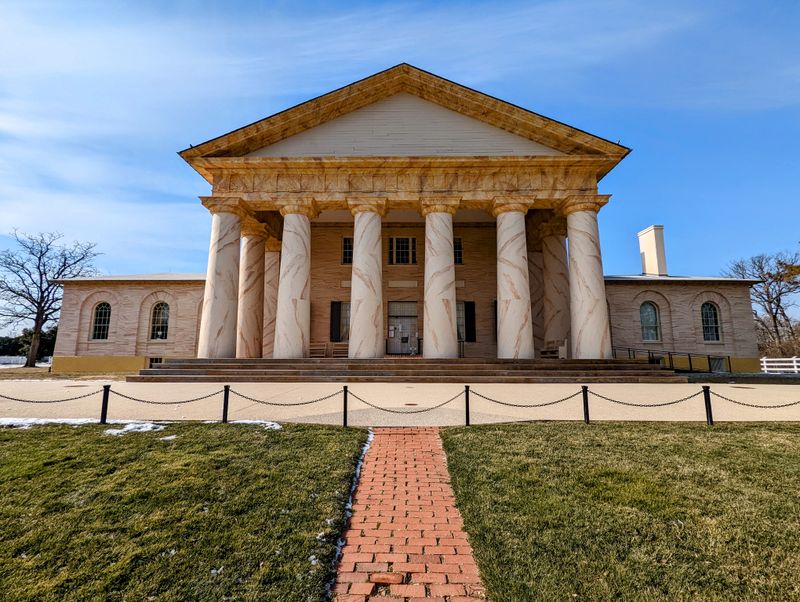
Robert E. Lee’s former home sits on a hill overlooking the capital of the nation he fought against, creating perhaps the most symbolically loaded location in Virginia.
The property’s transformation into Arlington National Cemetery represents both punishment and reconciliation in ways that spark endless debate.
The house itself showcases the wealth and privilege Lee enjoyed while enslaved people maintained that lifestyle. Visitors can’t separate the elegant architecture from the bondage that made it possible.
That tension runs through every room and exhibit.
What makes this site mentally demanding is confronting Lee as a complex historical figure rather than a simple hero or villain. He opposed secession but fought for the Confederacy.
He called slavery evil but enslaved people himself. Those contradictions force visitors to think about moral complexity and historical judgment.
The enslaved community at Arlington gets extensive attention in current interpretations. Their names, lives, and perspectives receive the focus they deserve.
Learning their stories alongside Lee’s creates a fuller, more challenging picture of the plantation’s reality.
The view from the portico encompasses monuments to American democracy while you stand in a house owned by someone who tried to destroy that democracy. The irony and tragedy of that visual contrast hits hard.
Programs exploring why the Union seized the property and turned it into a cemetery reveal how memory and landscape intersect. Burying Union soldiers on Lee’s land sent a powerful message about who won and what that victory meant.
The ongoing debates about how to interpret Confederate leaders play out directly at this site. Should we honor military skill while condemning the cause?
How do we acknowledge complexity without excusing treason? Visitors leave with questions rather than answers.
Address: 321 Sherman Drive, Fort Myer, Virginia
10. Green Springs National Historic Landmark District
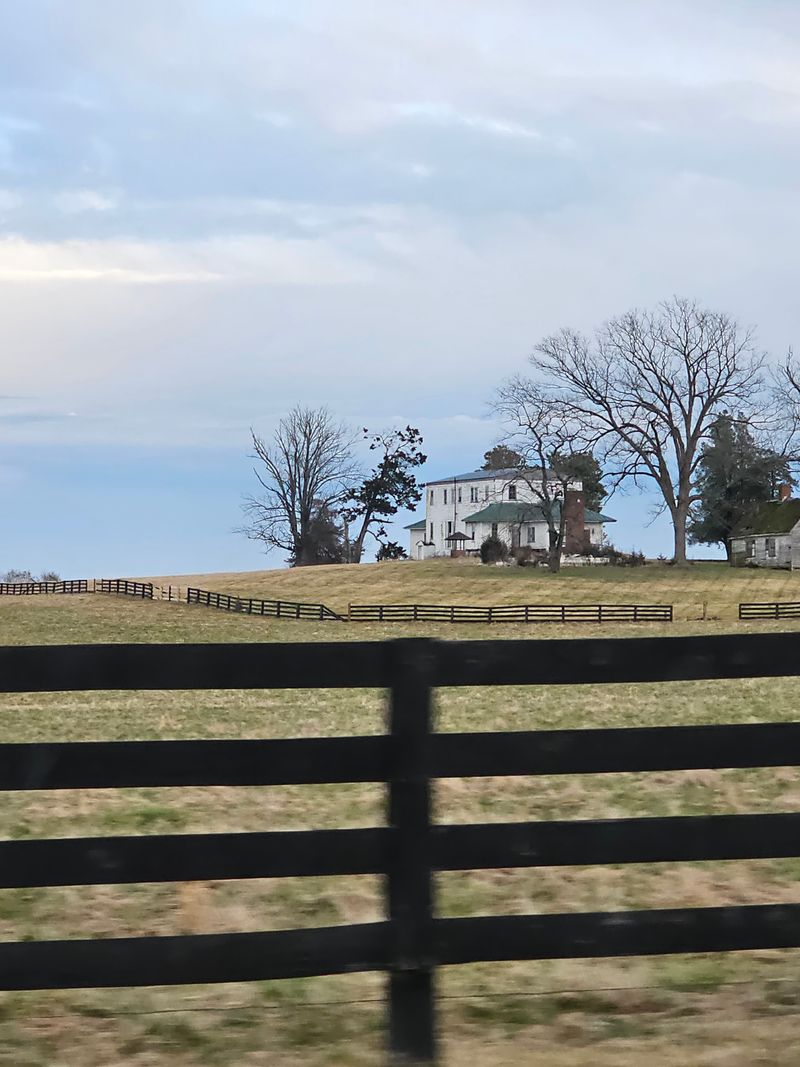
This rural landscape preserves centuries of Virginia agricultural history, but underneath the scenic beauty lies complicated stories about land, labor, and who benefited from both. The district encompasses multiple historic properties that together tell a broader story about how the state developed.
Unlike battlefield parks focused on specific events, Green Springs asks visitors to think about continuity and change over generations. The same families often owned these properties for centuries, accumulating wealth through systems that exploited others.
That long view of history reveals patterns that shorter timeframes obscure.
The preserved architecture showcases how prosperity manifested in physical structures. Grand homes required enormous resources to build and maintain.
Visitors must ask where those resources came from and who actually did the building and maintaining.
What makes this district intellectually challenging is its focus on everyday life rather than dramatic events. History happened slowly here through agricultural practices, family decisions, and economic changes.
Understanding that gradual historical process requires different thinking than analyzing battles or political moments.
The landscape itself serves as a historical document. Field patterns, roads, and property boundaries reflect centuries of human decisions about land use.
Reading that landscape requires learning to see what’s not immediately obvious.
Programs exploring agricultural history connect past farming methods to current environmental and sustainability issues. How people used land in the past affects what’s possible today.
Those connections between historical choices and contemporary consequences become clear in this rural setting.
The district also raises questions about historic preservation priorities. Why preserve wealthy landowners’ homes while the quarters of those they enslaved often disappeared?
What stories get told and which ones get forgotten? Those questions about historical memory and power matter deeply.
Address: Green Springs National Historic Landmark District, Louisa County, Virginia
Dear Reader: This page may contain affiliate links which may earn a commission if you click through and make a purchase. Our independent journalism is not influenced by any advertiser or commercial initiative unless it is clearly marked as sponsored content. As travel products change, please be sure to reconfirm all details and stay up to date with current events to ensure a safe and successful trip.
