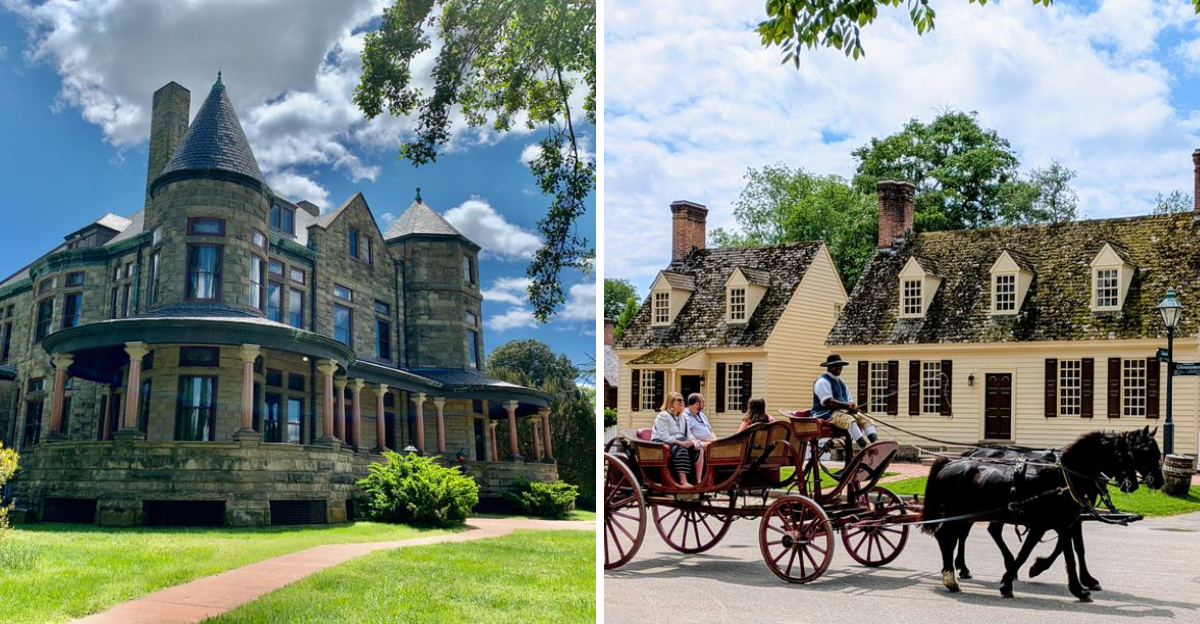
Virginia is a treasure trove of stunning landscapes, historic architecture, and charming towns that seem plucked straight from the silver screen.
From cobblestone streets lined with colonial buildings to wild coastal islands and grand estates with manicured gardens, the state offers backdrops that filmmakers dream about. Many of these locations have actually appeared in major movies and TV shows, proving that their cinematic appeal is no illusion.
Whether you’re a history buff, a nature lover, or simply someone who appreciates beauty, these ten Virginia spots will transport you to another time and place, making you feel like you’ve stepped onto a movie set.
1. Colonial Williamsburg
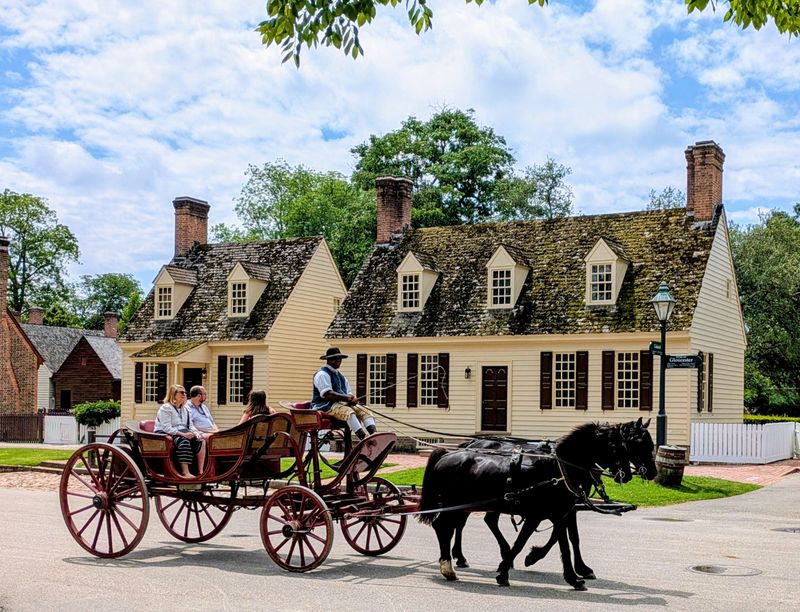
Step into the living past at this extraordinary museum that brings 18th-century America to life in the most authentic way imaginable. Located at 101 Visitor Center Drive, Colonial Williamsburg is not just a collection of old buildings but an entire world where costumed interpreters go about daily tasks as if the Revolutionary War just ended yesterday.
Horse-drawn carriages clatter down the streets while blacksmiths hammer away at their forges, creating an atmosphere so convincing that you might forget what century you’re actually in.
The meticulous attention to detail here is what makes this place feel like a period drama brought to reality. Every building has been carefully restored to reflect its original appearance, from the Governor’s Palace with its elegant gardens to the humble tradesmen’s shops lining Duke of Gloucester Street.
The interpreters don’t just wear costumes; they embody the characters they portray, engaging visitors in conversations about colonial life, politics, and daily struggles that make history feel immediate and personal.
HBO recognized the cinematic potential of this location when they chose it as a filming site for their acclaimed miniseries John Adams. Walking through these streets, you’ll understand why directors are drawn here.
The authentic architecture provides a ready-made film set that requires minimal modification, and the sprawling grounds offer countless angles and perspectives for storytelling.
Visitors can explore over 300 acres of restored colonial capital, including taverns where founding fathers once debated independence and churches where communities gathered for worship. The experience goes beyond visual appeal, engaging all your senses with the sounds of fife and drum corps, the smell of wood smoke from cooking fires, and even the taste of period-appropriate foods at the historic taverns.
This immersive environment creates memories that feel more like scenes from your own historical epic than a simple museum visit.
2. Old Town Alexandria
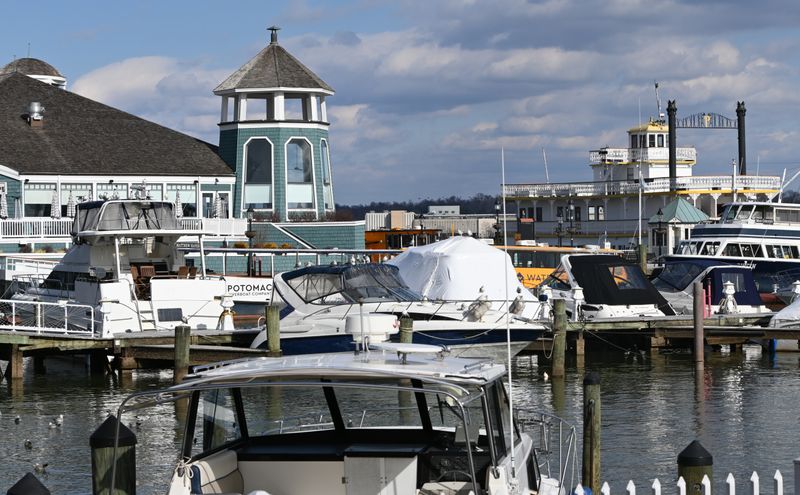
Cobblestone streets whisper stories of centuries past in this waterfront neighborhood that could easily double as a European port city. Old Town Alexandria preserves its colonial heritage with such dedication that wandering its blocks feels like traveling through time, with each corner revealing another perfectly maintained building that dates back to when George Washington walked these same paths.
The neighborhood stretches along the Potomac River, where tall ships still dock at the waterfront, creating postcard-perfect scenes that have attracted countless film crews over the years.
The Providence, a replica tall ship permanently moored here, actually appeared in the Pirates of the Caribbean films, giving you a chance to see a genuine movie prop in its home port. This vessel adds an element of maritime adventure to the streetscape, complementing the rows of Georgian townhouses painted in historically accurate colors.
King Street serves as the main thoroughfare, lined with brick sidewalks and gas-style street lamps that glow warmly after sunset, creating an ambiance that romantic comedies and historical dramas both find irresistible.
Rising above the city, the George Washington Masonic National Memorial stands as a prominent landmark visible from miles around. This towering structure combines neoclassical and Egyptian architectural elements, creating a unique silhouette that has made it a sought-after filming location for productions needing an imposing, mysterious building.
Inside, the memorial houses museums and observation decks, but its exterior alone commands attention with its massive columns and temple-like design.
Filmmakers appreciate how Old Town offers variety within a compact area. You can shoot a waterfront scene at the docks, then move a few blocks inland for shots of intimate alleyways and hidden courtyards.
The Torpedo Factory Art Center, a converted munitions plant now housing artist studios, provides industrial architecture for grittier scenes, while Founders Park offers green space with river views for lighter, more contemplative moments.
3. Historic Petersburg
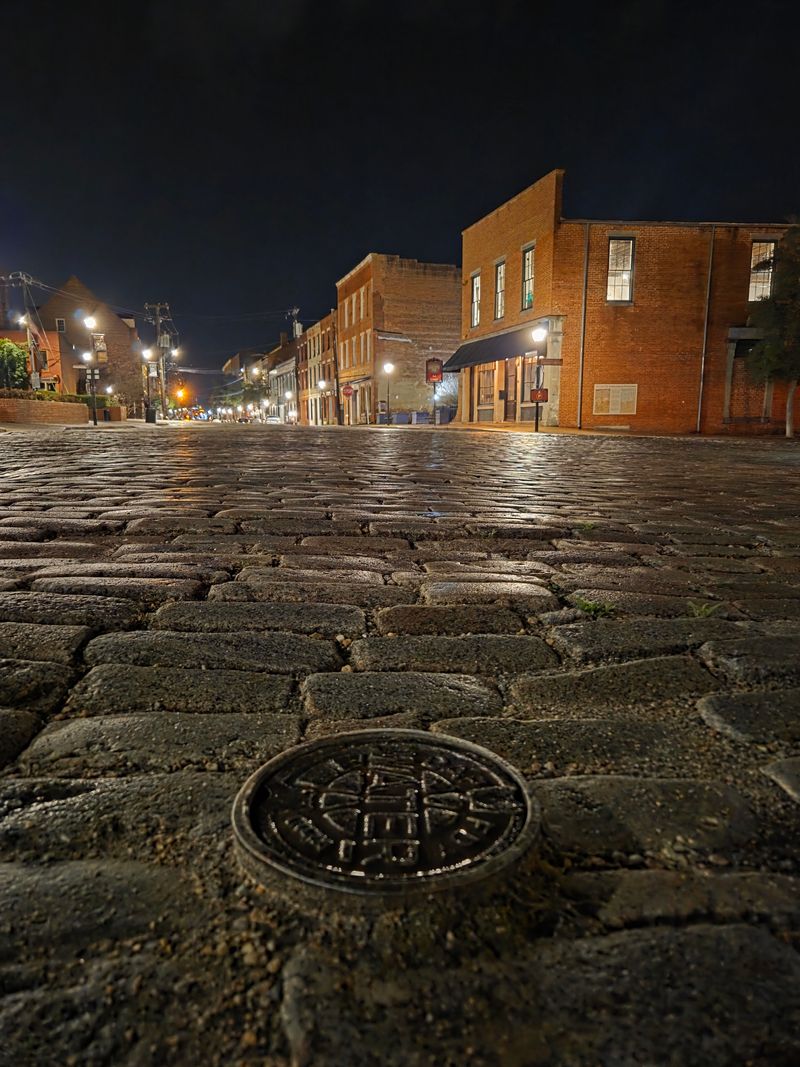
Authenticity radiates from every brick and weathered board in this often-overlooked city that served as a crucial backdrop for Steven Spielberg’s Lincoln. Situated just south of Richmond, Petersburg maintains an extensive collection of 18th and 19th-century buildings that have survived wars, economic changes, and the passage of time with their character intact.
The city’s historical significance as a Civil War battleground adds layers of genuine gravitas that set designers simply cannot replicate on studio lots.
Walking through the historic district, you’ll notice how the buildings tell their own stories through architectural details. Some structures still bear marks from the Siege of Petersburg, a ten-month campaign that was one of the war’s longest and most grueling battles.
This battle-scarred authenticity is exactly what attracted Spielberg’s production team, who needed locations that could convey the weight of a nation divided without relying on digital effects or artificial aging techniques.
The streetscapes here offer remarkable versatility for period productions. Depending on camera angles and minor set dressing, the same block can represent different decades or even different cities.
Old Towne Petersburg features Federal-style row houses, Greek Revival mansions, and Victorian commercial buildings, all within walking distance of each other. This architectural diversity allows filmmakers to establish multiple locations without the logistical nightmare of moving entire crews across long distances.
Beyond its value to film productions, Petersburg rewards curious visitors with layers of American history waiting to be explored. The Siege Museum provides context for understanding the city’s wartime experience, while the Centre Hill Mansion showcases how wealthy families lived during various periods of the 19th century.
The Appomattox River forms a scenic boundary to the historic area, adding natural beauty to the built environment. For anyone who loves history or appreciates places where the past feels present, Petersburg delivers an experience that’s both educational and deeply atmospheric, proving that some locations don’t need Hollywood magic to feel cinematic.
4. Virginia State Capitol
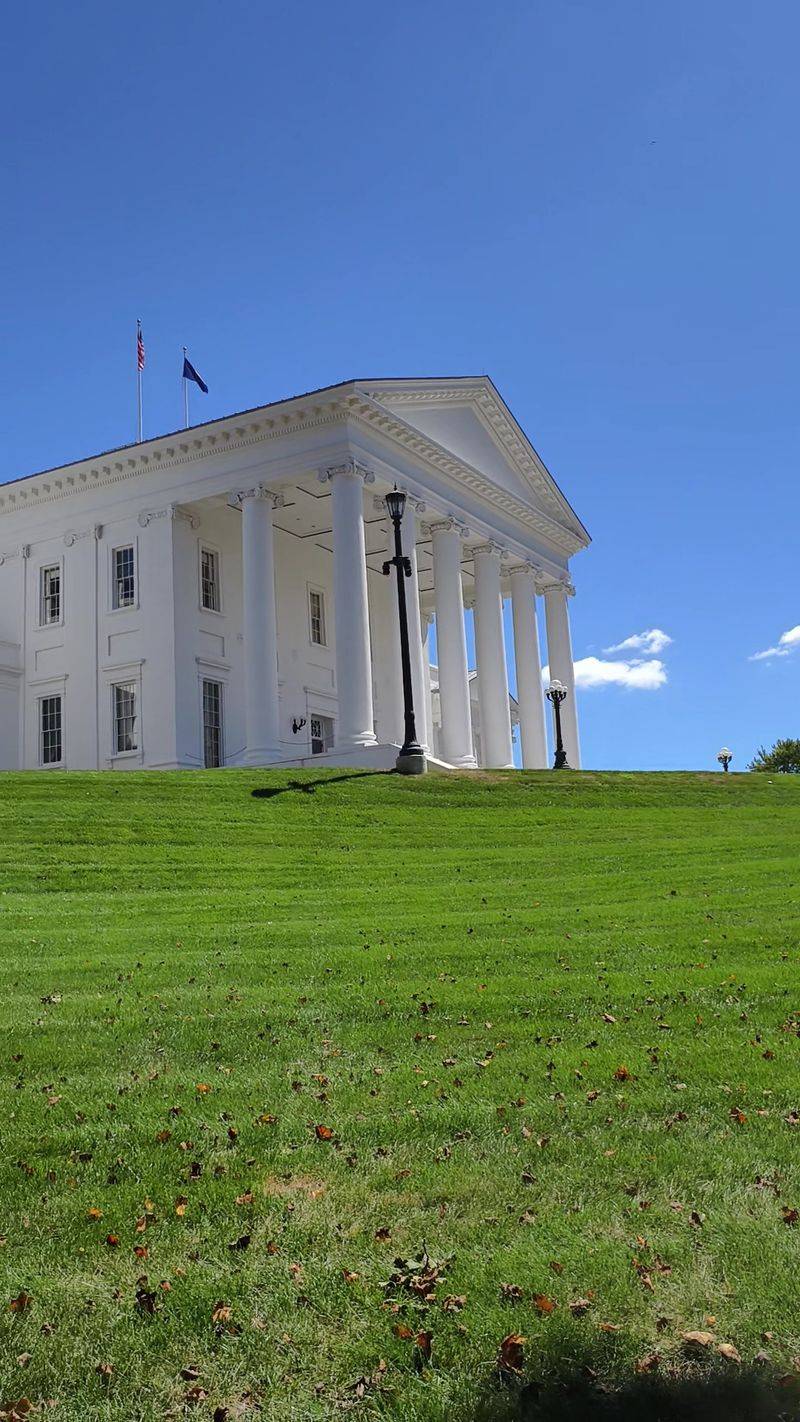
Majesty and history converge in this architectural masterpiece designed by Thomas Jefferson himself, standing proudly at 1000 Bank Street in Richmond. The building’s neoclassical design draws inspiration from an ancient Roman temple, creating a structure so commanding that it famously doubled for the White House in Spielberg’s Lincoln.
Jefferson modeled the Capitol after the Maison Carrée in Nîmes, France, bringing European classical ideals to American soil and creating a template that would influence government buildings across the nation for generations.
The exterior presents a vision of democratic ideals made manifest in stone and columns. The central portico features Corinthian columns that soar upward, supporting a pediment that catches light differently throughout the day, creating dramatic shadows and highlights that photographers and cinematographers find endlessly compelling.
The building sits on Shockoe Hill, giving it an elevated position that enhances its imposing presence and provides sweeping views of the surrounding city.
Inside, the rotunda houses a life-sized statue of George Washington by the renowned sculptor Jean-Antoine Houdon, created from life while Washington still lived. This statue is the only one modeled directly from the first president, making it an artifact of immense historical value.
The surrounding space features marble floors, soaring ceilings, and architectural details that create an atmosphere of gravitas appropriate for the serious business of governance.
Film productions are drawn to the Capitol because it provides instant visual shorthand for power, tradition, and American democracy. The building requires minimal dressing to serve as various government institutions, and its classical proportions photograph beautifully from almost any angle.
Natural light floods through tall windows, reducing the need for extensive artificial lighting setups that can slow down production schedules. When you visit, you’re walking through both a functioning seat of government and a frequent film location, where real legislative sessions happen in the same chambers that have hosted fictional presidents and dramatic political showdowns on screen.
5. Maymont
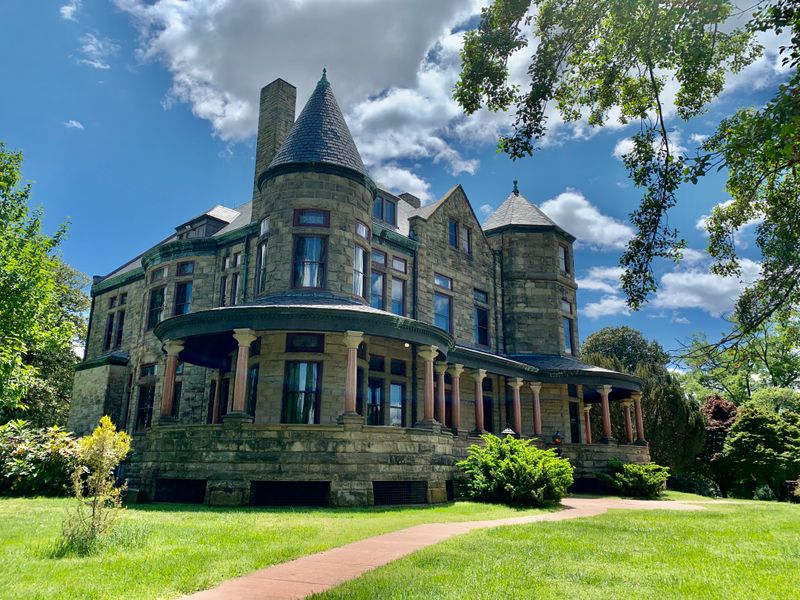
Elegance unfolds across 100 acres of this historic estate where Victorian grandeur meets botanical splendor at 1700 Hampton Street in Richmond. The Maymont mansion rises like something from a period romance, its Gilded Age opulence perfectly preserved to show how Virginia’s wealthy elite lived at the turn of the 20th century.
But the house is just the beginning of what makes this location cinematically compelling.
The grounds showcase an astonishing variety of garden styles, each distinct enough to serve as a separate filming location. The Japanese Garden descends a hillside with carefully placed stones, bridges, and water features that create a serene Asian atmosphere right in the heart of Virginia.
Meanwhile, the Italian Garden presents formal European design with stone balustrades, cascading terraces, and classical statuary that could convince viewers they’re watching a scene filmed in Tuscany.
Productions like Swagger and Homeland have recognized Maymont’s versatility, using different areas of the estate to establish contrasting moods and settings within the same project. The mansion’s ornate interiors feature carved woodwork, stained glass windows, and period furnishings that transport you to the 1890s.
Outside, the Victorian garden explodes with seasonal color, while the arboretum provides naturalistic woodland settings perfect for more contemplative scenes.
Children especially love the estate’s working farm and nature center, where heritage breed animals live in historic barns that add rural authenticity to the property. The wildlife exhibits showcase native Virginia species in naturalistic habitats.
A carriage collection displays the vehicles that once transported the Dooley family, who created this estate, around Richmond’s streets.
What makes Maymont truly special for both filmmakers and visitors is how seamlessly the different areas flow together despite their stylistic diversity. You can start your visit in a Japanese garden, walk through Italian terraces, explore a Victorian mansion, and end at a working farm, all without leaving the property.
This concentrated variety saves production companies time and money while giving regular visitors an incredibly rich experience that feels like touring multiple estates in a single afternoon.
6. The Fan District
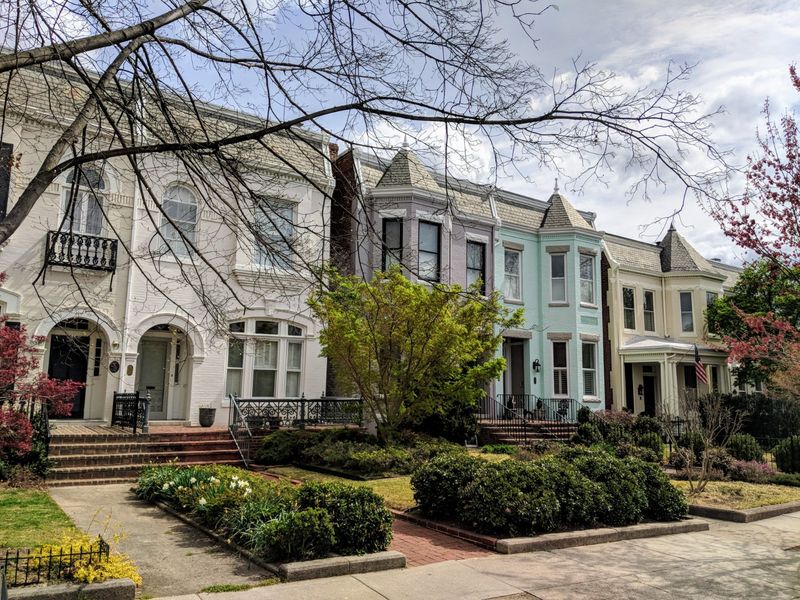
Victorian charm radiates from every tree-lined block in this Richmond neighborhood where architectural consistency creates an entire district that looks frozen in the late 1800s. The Fan District gets its name from the way its streets fan out westward from Monroe Park, creating a unique urban layout that’s as practical as it is picturesque.
Row houses in various shades of brick and painted wood line both sides of the streets, their front porches creating a rhythm of shadow and light that changes beautifully as the sun moves across the sky.
Architectural enthusiasts recognize the Fan as one of the best-preserved collections of Victorian and Edwardian residential architecture in the country. Most homes date from the 1890s through the 1920s, representing styles from Queen Anne to Colonial Revival, all maintaining their original character despite being well over a century old.
The consistency of scale and style means that filmmakers can shoot entire sequences here without worrying about anachronistic buildings appearing in the background, a constant challenge when filming period pieces in modern cities.
Monument Avenue cuts through the Fan, providing a grand boulevard lined with statues and mansions that add variety to the intimate residential streets. The avenue’s wide median and mature trees create a parkway atmosphere that’s been featured in numerous television productions needing an upscale urban setting.
The surrounding side streets offer more intimate settings, with narrow sidewalks and densely packed homes creating a sense of community that’s increasingly rare in modern developments.
Television crews appreciate how the Fan provides ready-made establishing shots that immediately communicate time period, economic status, and regional character. A single wide shot down a Fan District street tells viewers they’re watching a story set in a historic city with deep roots and established neighborhoods.
The district also offers practical advantages for filming, with street parking that can be temporarily cleared and front porches that serve as natural staging areas.
Residents have maintained their neighborhood’s character through strict preservation guidelines, ensuring that renovations respect original architectural details. This community commitment to historical integrity benefits everyone who visits, whether with a camera crew or just a smartphone.
7. The Alleghany Highlands
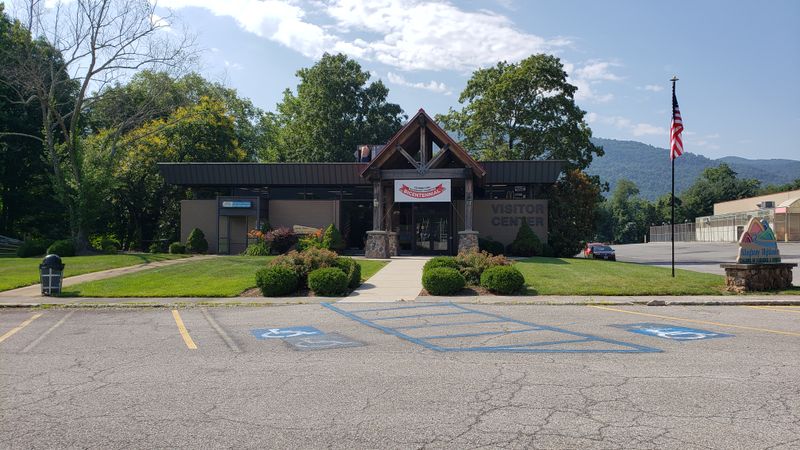
Mountains rise in dramatic waves across this western Virginia region where wilderness still reigns and modern development feels like a distant rumor. The Alleghany Highlands encompass some of the most rugged and scenic terrain in the state, with peaks that challenge hikers, rivers that carve through ancient rock formations, and forests so dense that sunlight barely penetrates to the forest floor.
This is the landscape that comes to mind when people imagine Appalachia, a place where nature’s power and beauty remain largely untamed.
Filmmakers seeking authentic wilderness backdrops find everything they need in these highlands. The terrain varies dramatically within short distances, offering rocky outcrops perfect for dramatic confrontations, gentle valleys ideal for pastoral scenes, and rushing rivers that add both visual interest and natural sound to any production.
The region’s relative isolation means that signs of modern civilization are minimal, allowing crews to film expansive landscape shots without worrying about power lines, cell towers, or other contemporary intrusions appearing in frame.
The Jackson River and Cowpasture River wind through the highlands, creating ribbons of water that reflect sky and forest in constantly changing patterns. These waterways provide natural corridors through the mountains, their banks alternating between gentle meadows and steep gorges depending on the terrain.
The rivers also support diverse wildlife, adding authenticity to any production that needs to show characters interacting with a living ecosystem rather than just pretty scenery.
Seasonal changes transform the highlands completely, giving the same locations entirely different moods depending on when you visit. Spring brings explosive wildflower blooms and rushing water from snowmelt.
Summer cloaks everything in deep green, with thick canopy cover creating cool, shadowy environments. Fall sets the hillsides ablaze with color that rivals any place in North America.
Winter strips the forest bare, revealing the underlying bone structure of the landscape and creating stark, dramatic vistas.
For adventure seekers and nature lovers, the Alleghany Highlands offer hiking trails, fishing spots, and scenic drives that showcase Virginia’s wild side. The region feels worlds away from the state’s colonial history and urban centers, proving that Virginia contains multitudes within its borders.
8. Jamestown Settlement
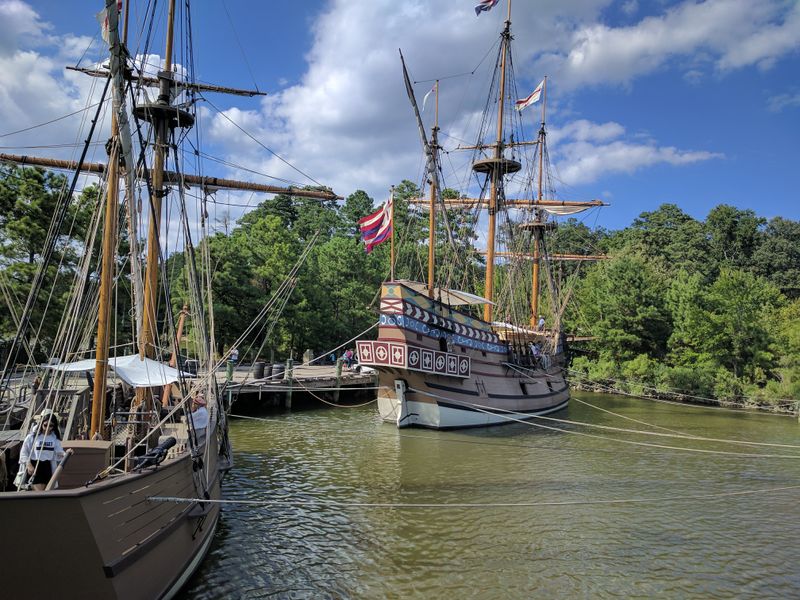
History breathes through the reconstructed fort and Powhatan village at this living museum located at 2110 Jamestown Road. Unlike Colonial Williamsburg’s focus on the Revolutionary era, Jamestown Settlement takes visitors back to the very beginning of English colonization in North America, recreating the world of the early 1600s with remarkable attention to archaeological and historical accuracy.
The site sits near the original Jamestown colony, and many of the recreations draw directly from archaeological excavations that continue to reveal new information about how the colonists and indigenous peoples lived.
The reconstructed James Fort amazes visitors with its massive palisade walls and thatched-roof buildings that demonstrate just how vulnerable and isolated the early colonists were. Inside the fort, interpreters demonstrate period crafts, cook meals using 17th-century techniques, and explain the daily challenges of survival in a new world.
The fort’s layout follows archaeological evidence precisely, placing buildings exactly where their foundations were discovered, creating an authentic spatial experience that helps you understand how the colonists organized their community.
Across the grounds, the Powhatan village showcases indigenous architecture and lifeways that existed long before European contact. The bark-covered houses, called yehakins, demonstrate sophisticated building techniques adapted to the local climate and available materials.
Gardens grow the three sisters (corn, beans, and squash) using traditional agricultural methods, while interpreters explain how the Powhatan people thrived in this landscape for thousands of years before colonization disrupted their world.
Terrence Malick’s film The New World used this location extensively, recognizing that the settlement provides unmatched authenticity for stories set in this period. The replica ships Susan Constant, Godspeed, and Discovery float at the pier, full-scale recreations of the vessels that carried colonists across the Atlantic.
You can board these ships and experience the cramped quarters that passengers endured for months during the ocean crossing.
The museum buildings house artifacts and exhibits that provide context for the outdoor recreations, but the real magic happens when you step into the fort or village and feel transported across four centuries.
9. The Eastern Shore Barrier Islands
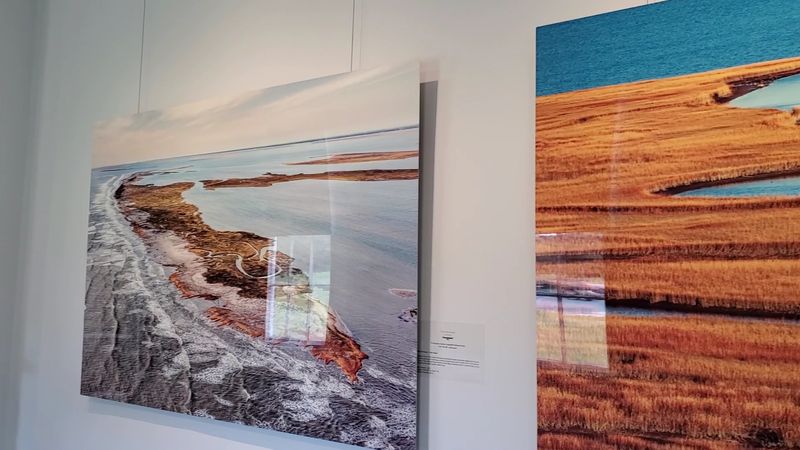
Isolation defines these wild strips of sand and marsh that protect Virginia’s Eastern Shore from the Atlantic’s fury. Islands like Hog Island and Smith Island exist in a state of beautiful desolation, largely uninhabited and accessible only by boat, creating landscapes that feel utterly removed from the modern world.
These barrier islands are constantly shifting as wind and waves reshape their contours, making them dynamic environments where nature’s power is always visible and immediate.
The islands’ remoteness creates a sense of being at the edge of the world, making them perfect settings for stories about isolation, survival, or escape. Miles of pristine beach stretch without a single footprint, backed by dunes that rise and fall like frozen waves.
Behind the dunes, maritime forests of twisted pines and live oaks create shadowy groves where the wind makes a constant rushing sound through the branches. Salt marshes extend for acres, their grasses changing color with the seasons and providing critical habitat for countless bird species.
Filmmakers seeking truly wild coastal landscapes find what they need on these islands without the complication of removing modern development from shots. There are no houses, no roads, no power lines to work around.
The challenges of filming here are logistical rather than aesthetic, requiring careful planning to transport equipment and crew to locations accessible only by boat. But the resulting footage has an authenticity that’s impossible to achieve in more developed areas.
The Nature Conservancy manages several of these islands as preserves, protecting them from development while allowing limited public access for research and recreation. Visiting requires advance planning and often involves hiring a boat captain familiar with the treacherous channels and shifting sandbars that surround the islands.
Once there, you enter a world where time seems suspended, where the only sounds are waves, wind, and bird calls.
These islands represent what much of the Atlantic coast looked like before development, offering a glimpse of a wilder America that’s increasingly rare. For photographers, nature lovers, and anyone who appreciates raw coastal beauty, the Eastern Shore barrier islands provide experiences that feel more like adventure documentaries than typical Virginia tourism.
10. Chincoteague Island
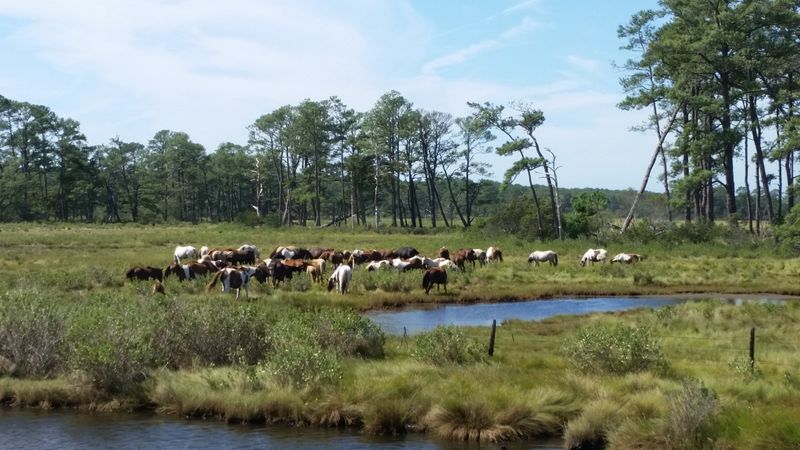
Coastal charm permeates this low-key island town where life moves at the gentle pace of tides and seasons. Chincoteague offers a classic seaside experience without the commercialization that has overtaken many beach destinations, maintaining an authentic character that makes it feel like a setting from a family-friendly film about summer adventures and small-town life.
The island sits just off Virginia’s Eastern Shore, connected to the mainland by a bridge that somehow seems to transport you to a simpler time as you cross it.
The town’s main claim to fame comes from its proximity to Assateague Island, where wild ponies roam freely across beaches and marshlands. These horses have lived here for centuries, their origins shrouded in legend and mystery.
Some say they descended from survivors of a Spanish shipwreck, while others believe colonists brought them here as a way to avoid livestock taxes on the mainland. Regardless of their history, the ponies have become iconic symbols of the region, and watching them gallop across the beach or graze in the marsh grass creates moments that feel almost mythical.
Downtown Chincoteague features locally-owned shops and restaurants housed in modest buildings that prioritize function over flash. The waterfront area provides views across the channel to Assateague, with fishing boats and pleasure craft creating a working harbor atmosphere.
Main Street maintains a walkable, human scale that encourages strolling and window shopping rather than rushing from one attraction to another.
The island’s aesthetic makes it ideal for productions needing a wholesome, All-American setting. The combination of natural beauty, wildlife, and small-town architecture creates ready-made backdrops for stories about families reconnecting, children discovering nature, or people finding peace away from urban stress.
The soft light that comes off the water gives everything a gentle glow that cinematographers appreciate.
Visitors come to Chincoteague to slow down, to watch sunsets over the marsh, to eat seafood caught that morning, and to remember what summer vacations felt like before smartphones and constant connectivity. The island delivers an experience that’s increasingly hard to find, making it feel like a place where time hasn’t just slowed but actually reversed to a gentler era.
Dear Reader: This page may contain affiliate links which may earn a commission if you click through and make a purchase. Our independent journalism is not influenced by any advertiser or commercial initiative unless it is clearly marked as sponsored content. As travel products change, please be sure to reconfirm all details and stay up to date with current events to ensure a safe and successful trip.
