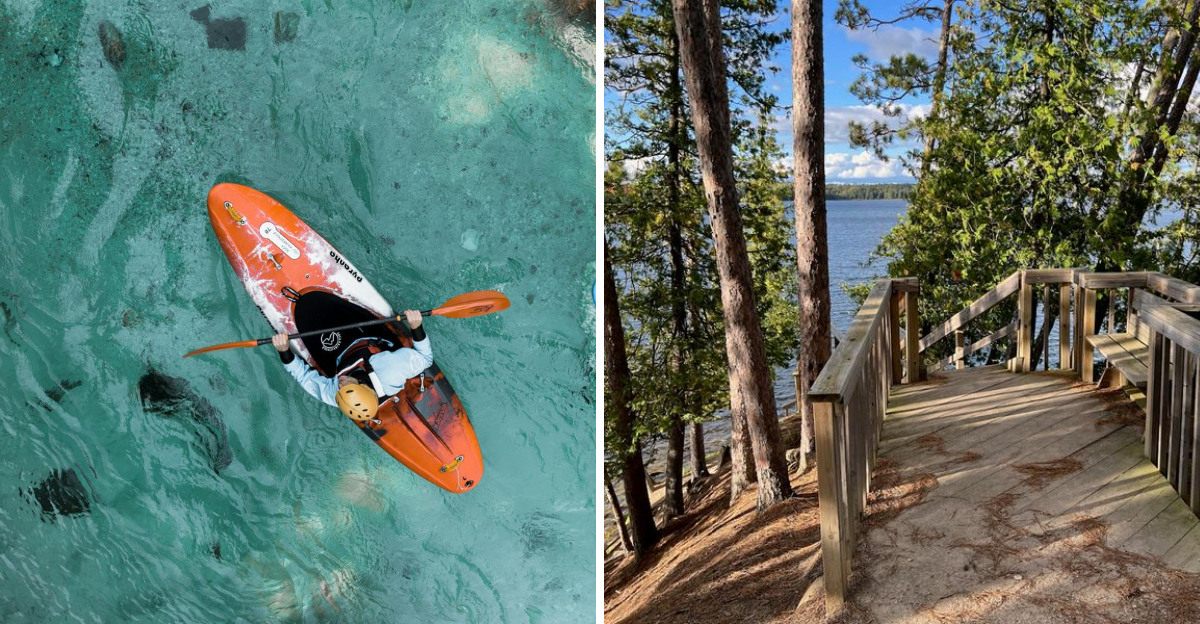
Spring in Minnesota doesn’t ease in quietly – it bursts out of winter like it’s making up for lost time. Lakes thaw, trails come alive, and suddenly the whole state feels like it’s been reset and recharged.
This isn’t just a list of things to do, it’s a lineup of places and moments that actually make you want to step outside again.
Think outdoor adventures, hidden gems, and those simple spring experiences that somehow hit differently after a long winter.
I kept coming back to how much Minnesota changes the second the snow disappears, almost like it becomes a different place entirely. There’s a mix of energy and calm here that makes every plan feel worth putting on a bucket list.
And if spring is the season of “getting back out there,” this is exactly where it starts.
1. Hike the Lost Forty, Chippewa National Forest, Minnesota
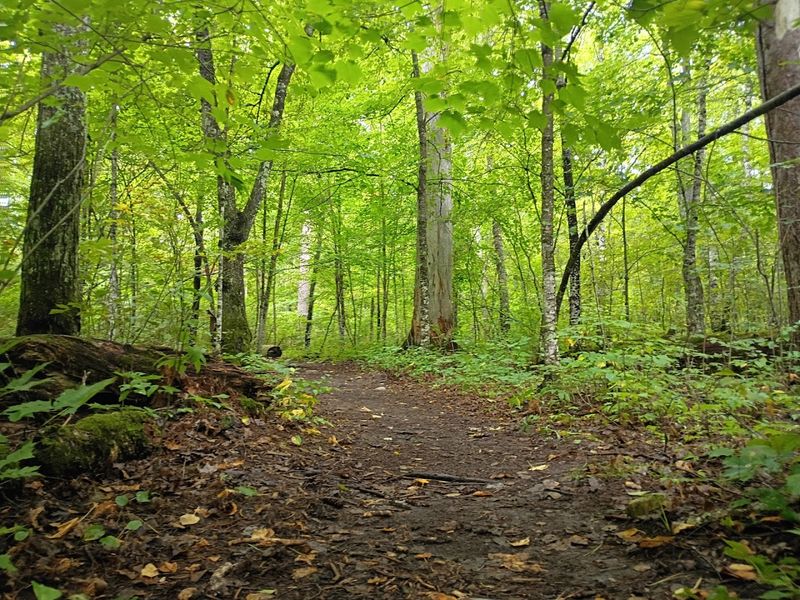
Some forests make you feel small in the best way possible. The Lost Forty, located in the Chippewa National Forest near Bigfork, Minnesota, is one of those rare places.
The name comes from a 19th-century surveying error. Mapmakers accidentally labeled this land as a lake, which meant loggers never touched it.
Because of that mistake, you get to walk among red and white pines that are over 300 years old.
The trees here are absolutely massive. Some of the pines reach heights of 120 feet, and their trunks are so wide you’d need a few friends to wrap your arms around them.
Spring is a magical time to visit. The forest floor comes alive with wildflowers, and migrating birds fill the canopy with sound.
The trail system is easy to follow, covering about two miles in a loop.
This is a great spot for families, beginner hikers, or anyone who just wants a peaceful morning surrounded by old trees. Bring a camera, because the light through those ancient pines is genuinely stunning.
There are no crowds, no entrance fees, and no distractions. Just you, the trees, and the kind of quiet that reminds you why nature deserves to be protected.
The Lost Forty earns its legendary reputation every single spring.
2. Paddle the Mississippi River, Grand Rapids, Minnesota
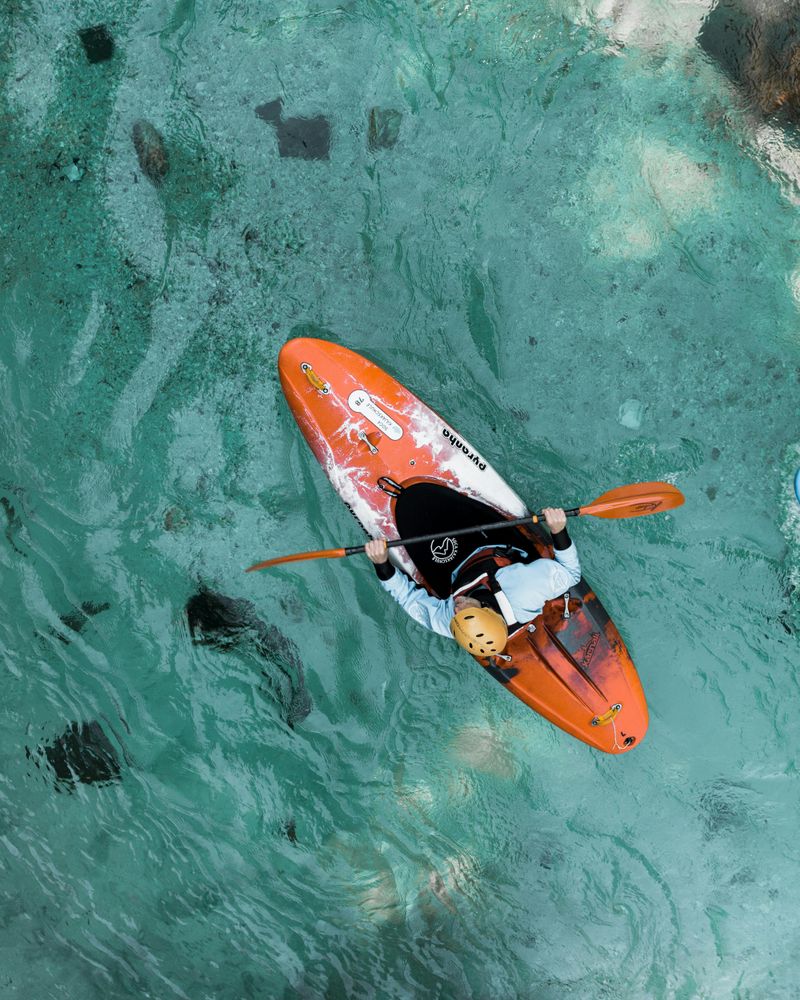
Most people picture the Mississippi River as wide, muddy, and industrial. Up near Grand Rapids, Minnesota, the story is completely different.
Here, the river is clear, calm, and lined with forests that explode into green every spring. Canoeing or kayaking this stretch gives you a perspective of Minnesota that you simply cannot get from a car window.
Grand Rapids sits near the headwaters region, which means the river is still young and manageable here. Paddle rentals are easy to find in town, and the water conditions in spring are generally calm enough for beginners.
Keep your eyes open on the water. Bald eagles, great blue herons, and river otters are frequently spotted along this stretch.
Spring migration season adds even more bird activity, making this a dream outing for wildlife lovers.
You can plan a short two-hour float or a longer half-day trip depending on your energy. Either way, the scenery rewards every stroke of the paddle.
Pack a lunch and find a sandbar to stop on. There is something deeply satisfying about eating a sandwich on a riverbank with nothing but birdsong and moving water around you.
The Mississippi River near Grand Rapids will completely change the way you think about this iconic waterway.
3. Mountain Bike at Tioga Recreation Area, Grand Rapids, Minnesota
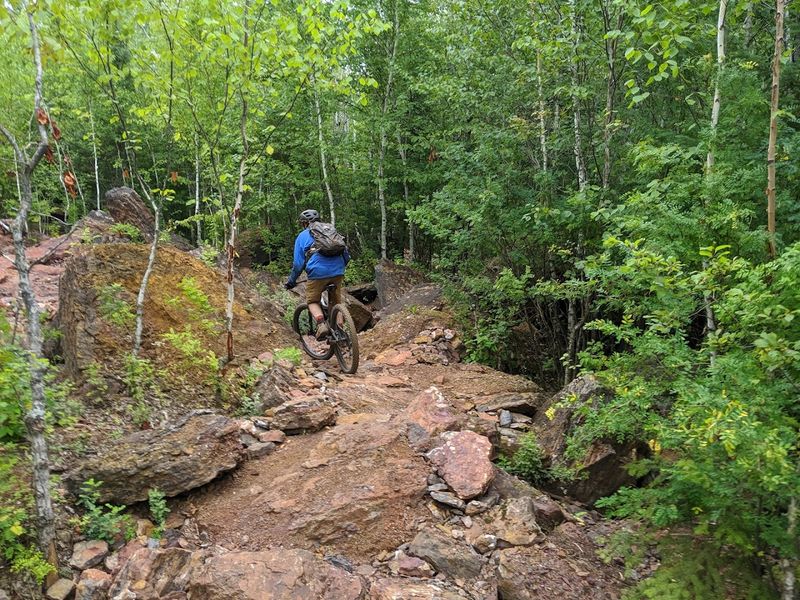
Ready to get your heart rate up? The Tioga Recreation Area near Grand Rapids, Minnesota, delivers a trail system that mountain bikers genuinely get excited about.
The trails here wind through mixed forests and roll over terrain that keeps things interesting without being punishing. There are options for beginners, intermediate riders, and more experienced cyclists who want a real challenge.
Spring is actually a fantastic season for mountain biking in this part of Minnesota. The air is cool, the trails are firm after the winter thaw, and the forest around you is bursting with fresh green growth.
One thing that makes Tioga stand out is the variety. You can spend a few hours here and cover completely different terrain on each loop.
The trail markers are clear, which means you spend more time riding and less time second-guessing your route.
Bring plenty of water and a snack because the trails can keep you moving longer than you expect. A basic repair kit is also smart to carry, especially early in the season when sticks and debris can occasionally cause a flat.
Tioga Recreation Area is proof that Minnesota’s Iron Range region has far more to offer than just its mining history. Two wheels and a free afternoon is genuinely all you need to have an outstanding spring day out here.
4. Fish on Opening Day at Bowstring Lake, Itasca County, Minnesota
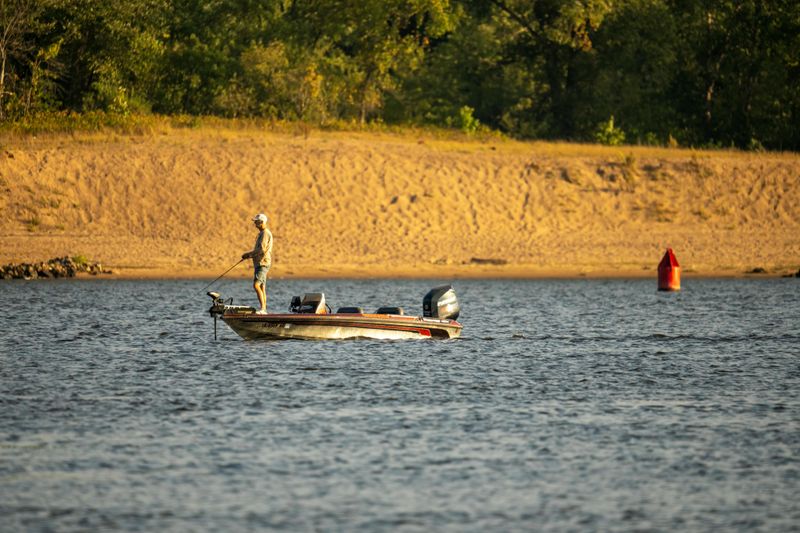
Minnesota’s fishing opener is practically a state holiday. Bowstring Lake in Itasca County is one of the best places in the state to experience it firsthand.
The lake covers over 11,000 acres and sits in a region famous for clean water and excellent walleye fishing. Spring walleye season here draws serious anglers from across the Midwest, and for good reason.
There is a particular kind of excitement that comes with the fishing opener. Boats launch before sunrise, thermoses of coffee get passed around, and everyone is quietly hopeful that this will be the year they land something truly memorable.
Bowstring Lake also holds northern pike, largemouth bass, and yellow perch, giving you multiple species to target depending on your mood and technique. Beginners are absolutely welcome here too.
The surrounding area has fishing resorts, cabin rentals, and bait shops that have been serving visitors for generations. Locals are generally friendly and happy to share tips about productive spots on the water.
Even if the fish are not cooperating, sitting on a calm Minnesota lake in early spring with loons calling in the distance is its own reward.
5. Bike Along the Mesabi Trail, Iron Range, Minnesota
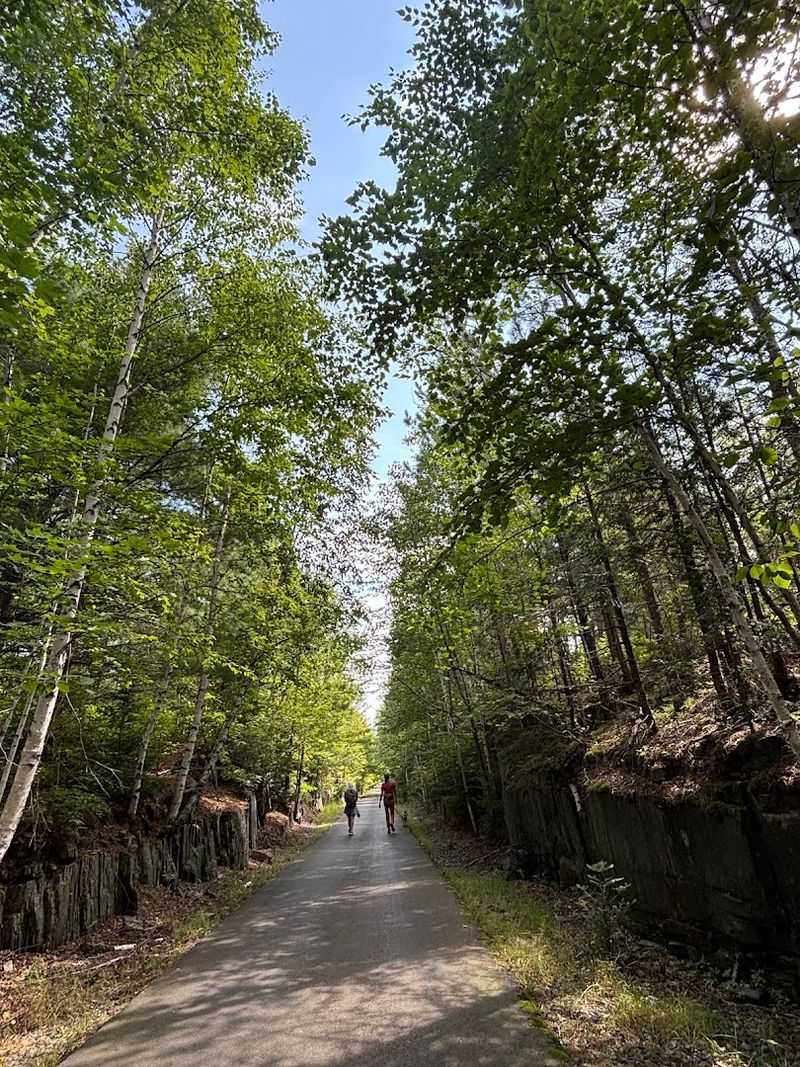
The Mesabi Trail is one of Minnesota’s most impressive cycling achievements, and spring is the perfect time to roll it out properly.
Stretching over 135 paved miles across the Iron Range region of northeastern Minnesota, this trail connects small towns, former mining sites, and stretches of surprisingly beautiful countryside. You do not need to ride the whole thing to have a great experience.
Pick a section near Hibbing or Virginia, Minnesota, and you will quickly discover how the landscape shifts between open taconite country and quiet wooded corridors. The trail is smooth, well-maintained, and mostly flat, making it accessible for cyclists of many fitness levels.
Spring brings a bonus: wildflowers start appearing along the trail edges, and the trees along wooded sections leaf out in that vivid, almost electric green that only lasts a few weeks each year.
The towns along the route add genuine character to a cycling day. Stop in a small Iron Range diner for a slice of pie, or visit a local historical marker to learn about the mining heritage that shaped this entire region.
Rental bikes are available in several nearby towns if you did not bring your own.
6. Paddle LaRaue Mine Pit, Grand Rapids, Minnesota
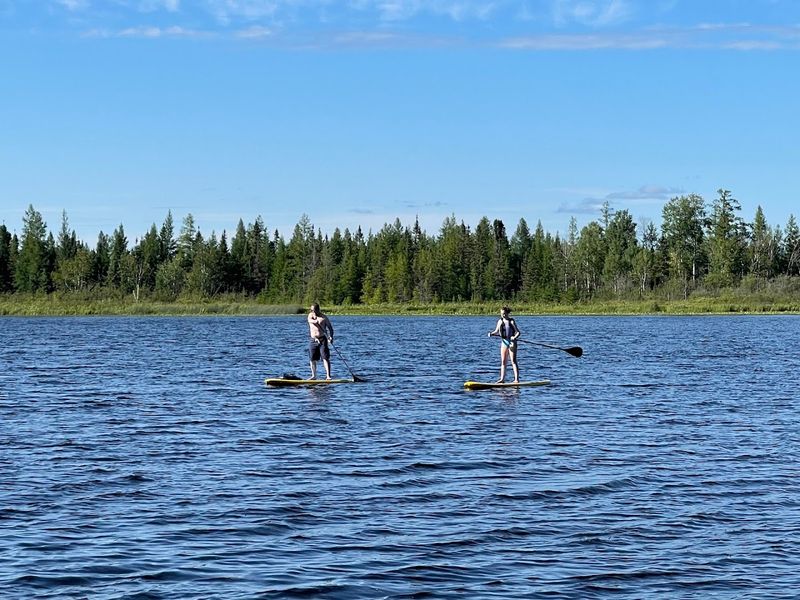
Not every great paddling destination starts as a paddling destination. LaRaue Mine Pit near Grand Rapids, Minnesota, was once an active iron ore excavation site.
Over time, the pit filled with groundwater and rainwater, eventually becoming a surprisingly beautiful lake with strikingly clear water and unusual rocky shorelines. Today, it is a genuinely unique spot to bring a kayak or canoe.
The water here has a distinctive blue-green color caused by minerals in the surrounding rock. It looks almost tropical, which feels especially surreal when you are paddling it in the cool, crisp air of a Minnesota spring morning.
The pit walls rise steeply around you in some sections, giving the experience a dramatic quality you do not get on a typical flatwater lake. It is a short paddle overall, but the scenery makes it feel like a full adventure.
Because this is a reclaimed industrial site, the surroundings also tell a story about the Iron Range’s transformation over the decades. Mining shaped this entire region, and places like LaRaue show how nature can reclaim and reinvent even the most altered landscapes.
Bring a picnic and plan to stay a while. The rocky edges around the pit offer perfect spots to sit and take in the view after your paddle.
LaRaue Mine Pit is genuinely one of Minnesota’s most surprising spring discoveries.
7. Hike at Scenic State Park, Bigfork, Minnesota
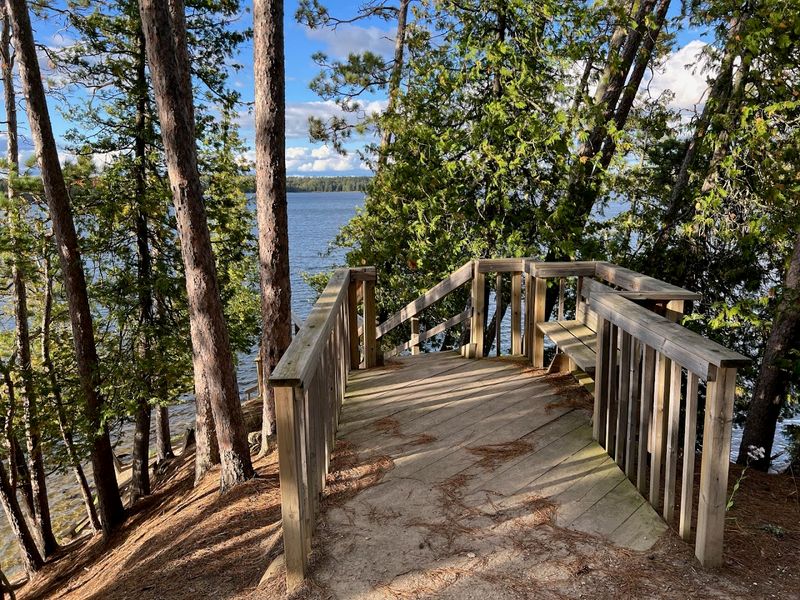
The name might sound like a marketing slogan, but Scenic State Park near Bigfork, Minnesota, absolutely earns every syllable of it.
The park sits in the northern part of the state and features some of the most beautiful old-growth forest remaining in Minnesota. Trails wind through stands of ancient pines and along the shorelines of Sand Lake and Spider Lake, both of which are stunningly clear and calm in spring.
Spring hiking here carries a particular magic. The ice has just left the lakes, migratory birds are returning in force, and the forest floor is carpeted with trout lilies, hepatica, and other early wildflowers that only bloom for a short window each year.
The park has about 14 miles of trails ranging from easy lakeshore walks to longer loops through the forest interior. The Chase Point Trail is a particular favorite, offering sweeping views over the lakes that feel almost impossibly peaceful.
Cabins and campsites are available if you want to extend your stay past a single day hike. Waking up inside the park to birdsong and lake mist is a genuinely restorative experience.
Scenic State Park is also a certified dark-sky area, so staying overnight gives you access to spectacular stargazing once the sun goes down. Spring evenings here have a quiet drama that is very hard to leave behind.
8. Fish for Perch on Lake Winnibigoshish, Cass County, Minnesota
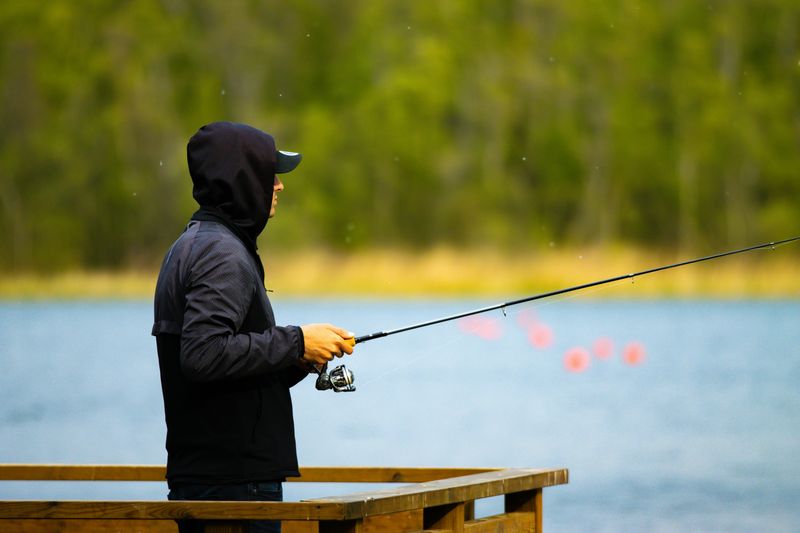
Lake Winnibigoshish is a name that takes a moment to get right, but once you fish it, you will never forget it. Locals simply call it Lake Winnie, and it is one of Minnesota’s most celebrated fishing lakes.
Located in Cass County, this enormous lake covers nearly 67,000 acres and is known statewide for outstanding yellow perch fishing in the spring. Schools of perch move into the shallows as the water warms, making them relatively easy to locate and fun to catch.
Perch fishing is a fantastic option for kids and beginners. The fish bite actively, the gear requirements are simple, and the action is usually fast enough to keep everyone entertained on the water.
Lake Winnie also holds walleye, northern pike, and muskellunge, giving more experienced anglers plenty of additional targets. Spring is the opener for walleye season here too, which makes the lake especially busy and energetic in May.
Resorts and outfitters ring the lake, offering boat rentals, fishing guide services, and cozy cabin accommodations. Many of these businesses have operated for decades and carry a warm, old-school Minnesota charm.
The sunrises over Lake Winnibigoshish in spring are something else entirely. Fishing at dawn with the mist still sitting on the water and loons calling across the lake is a memory that simply does not fade.
9. Float at Tioga Pit Lake, Grand Rapids, Minnesota
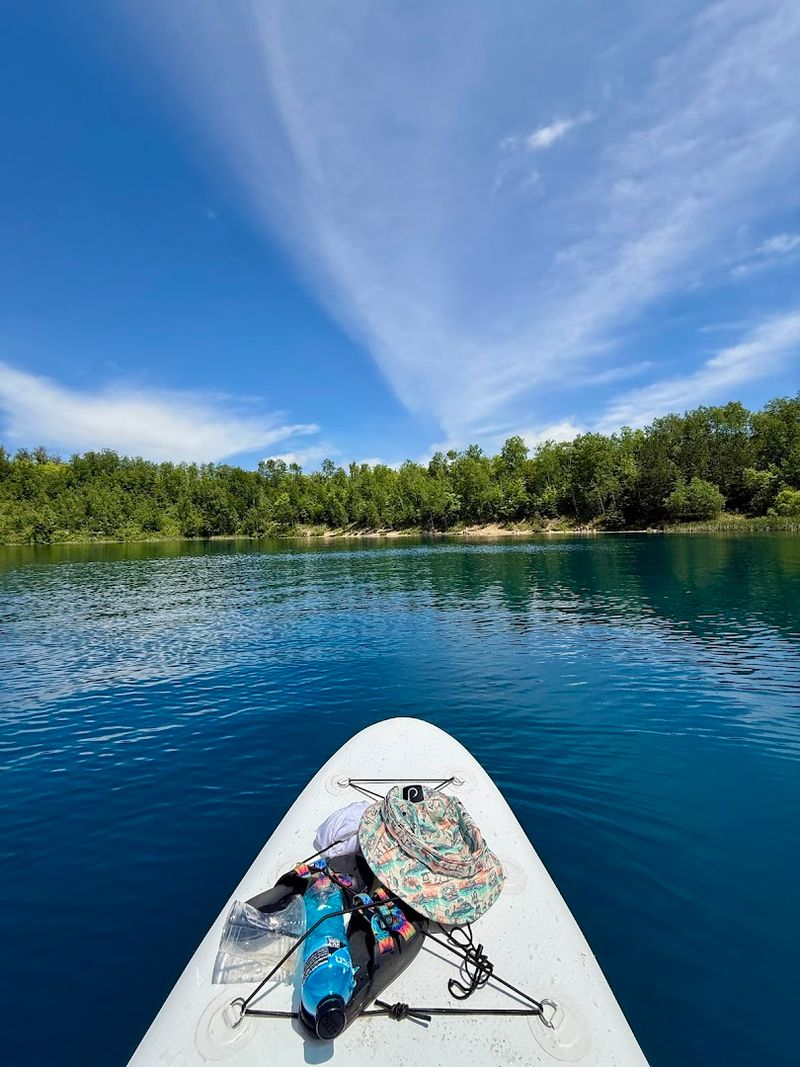
Tioga Pit Lake near Grand Rapids, Minnesota, is the kind of place you stumble upon and immediately text your friends about. It is that good.
Like LaRaue, Tioga is a former iron ore pit that has filled with water over the years. The result is a clear, strikingly colored lake with a completely different character than a typical Minnesota lake.
The water runs deep and cool, and the rocky walls surrounding it create an almost amphitheater-like setting.
Floating here in spring feels like a reward for surviving another Minnesota winter. The air is fresh, the water is crisp, and the sky above the pit walls is a perfect frame for cloud-watching.
Tioga Pit Lake is also part of the same recreation area as the mountain bike trails mentioned earlier, so you can plan a full active day that includes both biking and a relaxing float session afterward. Few places let you do both so easily.
The pit lake setting has a raw, industrial beauty to it that feels genuinely different from anything else in the state. Reclaimed landscapes like this one are reminders of how resilient and adaptable natural systems can be over time.
10. Snowmobile the Taconite Trail, Iron Range, Minnesota
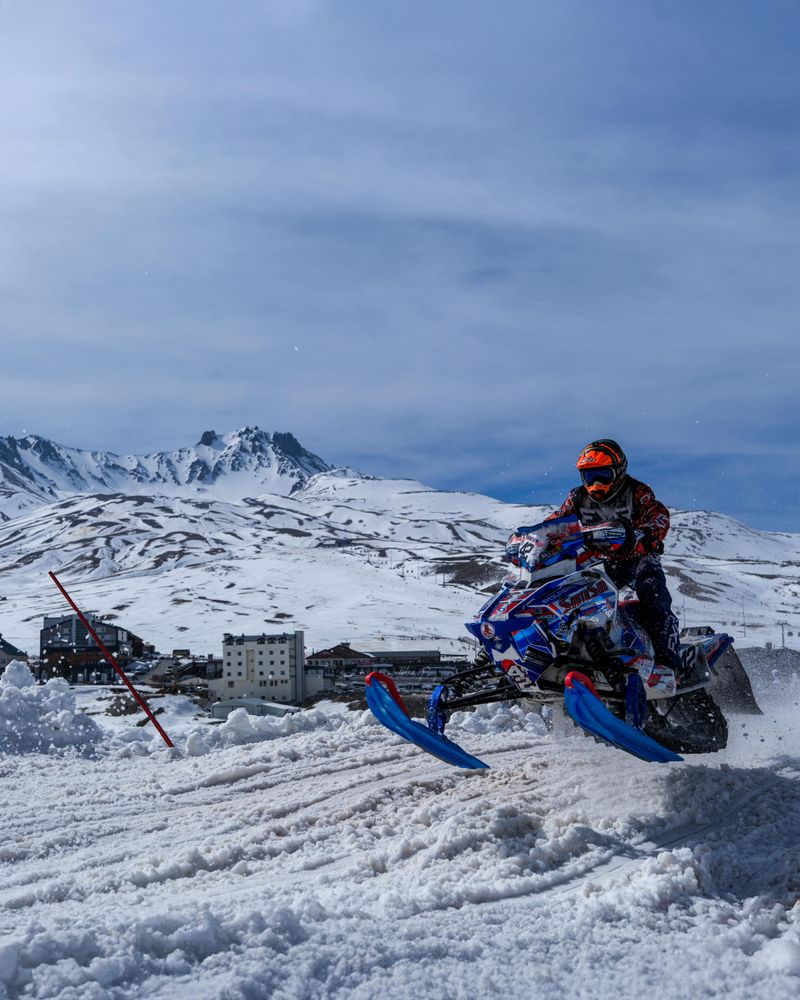
Early spring in northern Minnesota still has some serious winter energy left in it. The Taconite Trail is where that energy finds its best possible use.
Stretching roughly 165 miles across the Iron Range from Ely to Grand Rapids, Minnesota, the Taconite Trail is one of the premier snowmobile routes in the entire state. Late-season snow conditions in March and early April can still be excellent on this trail, especially in the higher elevations near Ely.
The trail passes through dense boreal forest, across frozen lakes, and through small Iron Range communities where you can stop, warm up, and refuel. The scenery on this route is genuinely spectacular when the snow is fresh and the pines are heavy with white.
Snowmobiling the Taconite Trail is also a surprisingly social experience. Groups of riders often travel together, and the trail-side stops create easy opportunities to swap stories and route tips with fellow enthusiasts.
Rental sleds are available in several communities along the route if you do not own your own machine. Guided tours are also an option for first-timers who want a more structured experience on the trail.
Dear Reader: This page may contain affiliate links which may earn a commission if you click through and make a purchase. Our independent journalism is not influenced by any advertiser or commercial initiative unless it is clearly marked as sponsored content. As travel products change, please be sure to reconfirm all details and stay up to date with current events to ensure a safe and successful trip.
