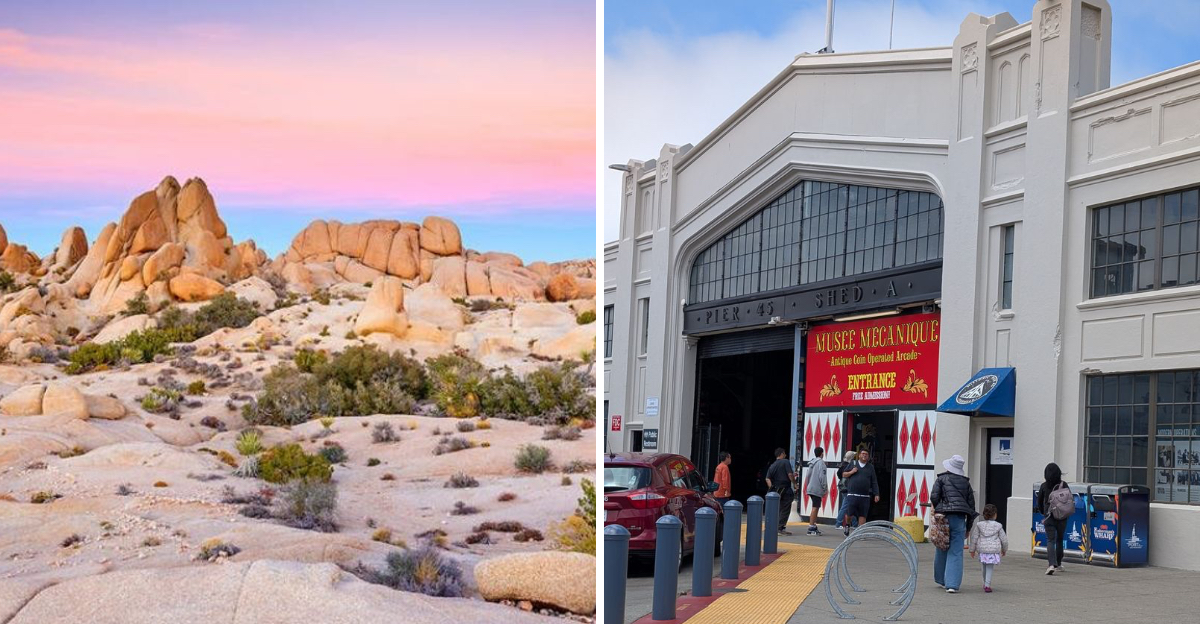
California stretches from misty redwood forests to sun-baked desert valleys, offering travelers an overwhelming mix of world-famous landmarks and cleverly marketed attractions that don’t always live up to the hype.
Visitors quickly discover that the Golden State is a study in contrasts, where genuine natural wonders sit alongside tourist traps designed to separate you from your wallet.
Whether you’re drawn to coastal cliffs, urban icons, or quirky roadside stops, understanding what’s worth your time can transform your trip from frustrating to unforgettable.
1. The Golden Gate Bridge Lives Up to Its Reputation
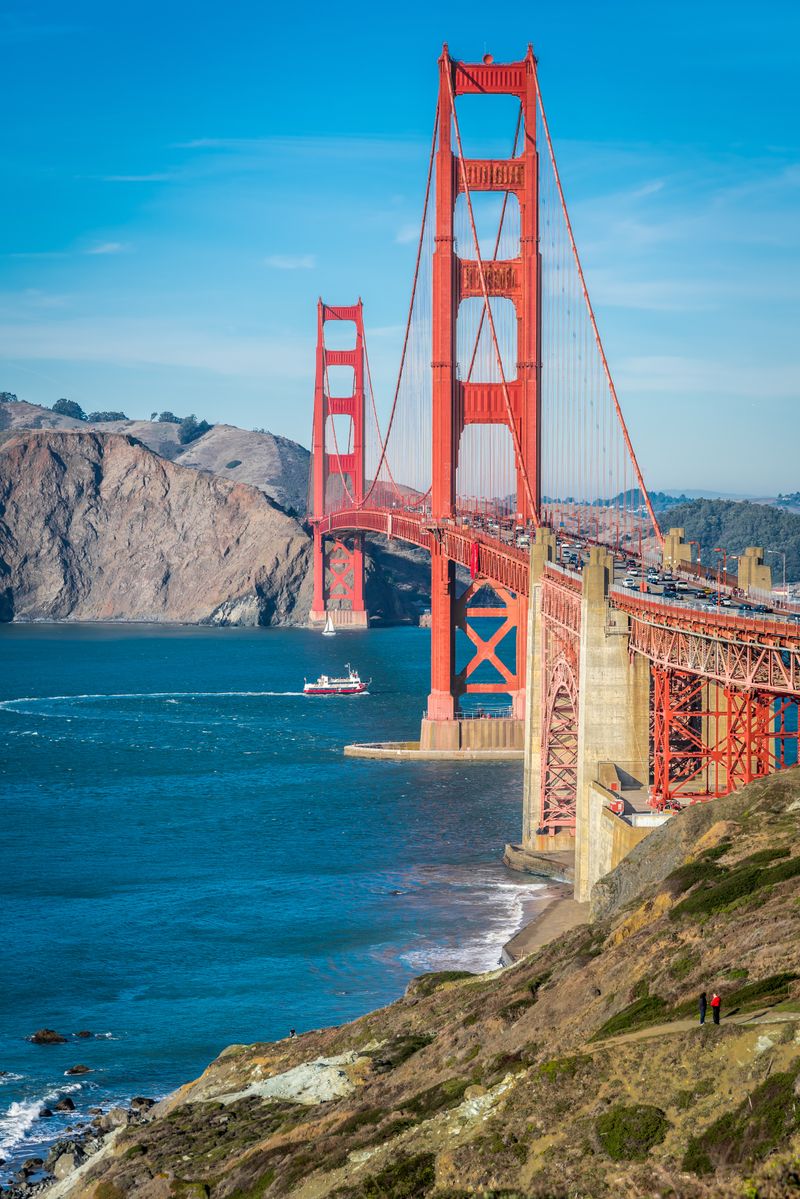
San Francisco’s most recognizable structure doesn’t disappoint when you finally see it in person.
The bridge’s massive scale becomes apparent as you approach, with towers rising nearly 750 feet above the water and cables thick enough to walk through.
Photographers camp out at Battery Spencer and Fort Point for the perfect shot, while walkers and cyclists cross the span daily, feeling the bridge sway gently in the wind.
Fog often rolls through the Gate in summer months, creating an ethereal atmosphere that makes the bridge appear and disappear like something from a dream.
The surrounding Presidio offers hiking trails with unexpected viewpoints, and the visitor center explains the engineering marvel that made this 1937 construction possible.
Unlike many hyped attractions, the Golden Gate Bridge rewards both quick photo stops and longer explorations.
Early morning visits beat the crowds and often provide clearer skies before the afternoon fog settles in.
The bridge connects San Francisco to Marin County, opening access to charming towns like Sausalito and the natural beauty of Muir Woods.
Even locals pause to admire it, which tells you something about its enduring appeal.
The orange-red color wasn’t just an aesthetic choice but also improves visibility in the frequent fog that blankets the area.
Walking across takes about thirty minutes each way, giving you time to appreciate the engineering, the views, and the constant flow of ships passing beneath.
This is one California icon that genuinely earns its fame.
2. Hollywood Boulevard Can Feel Like a Letdown
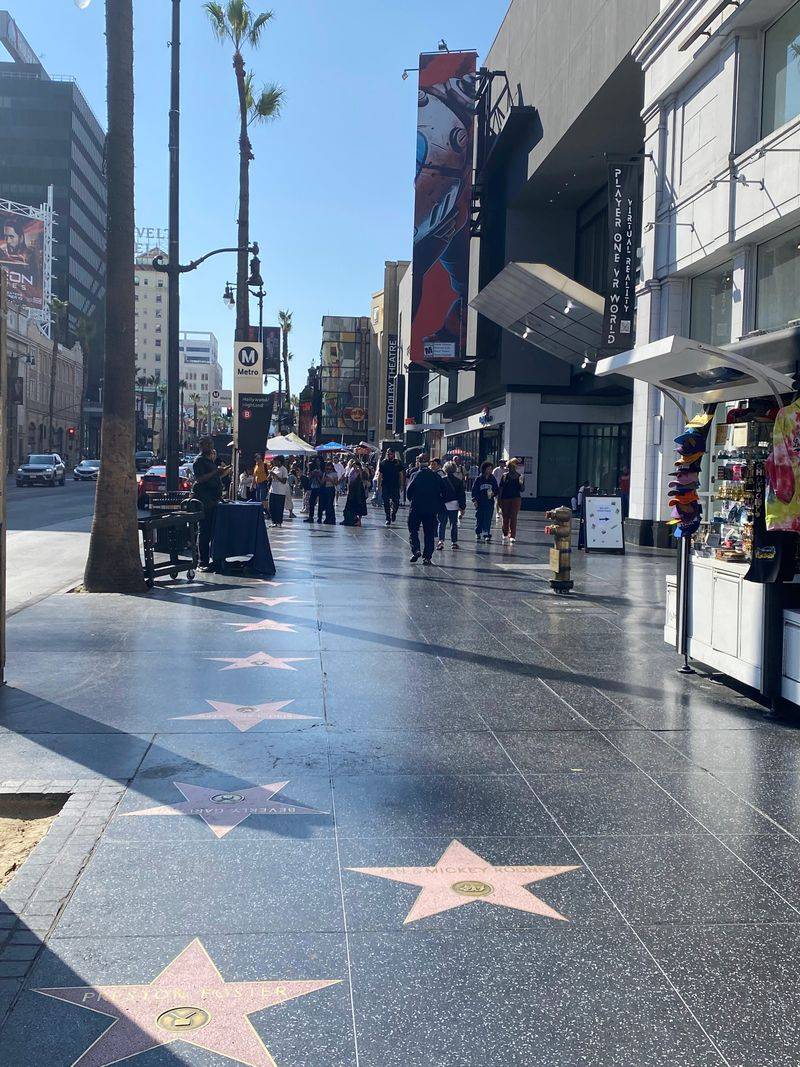
The reality of Hollywood Boulevard rarely matches the glamorous image most visitors carry in their minds.
Crowds shuffle past stars embedded in grimy sidewalks, stepping over gum stains and dodging aggressive costumed characters demanding tips for photos.
The famous Walk of Fame stretches for blocks, but most stars belong to people you’ve never heard of, making the hunt for recognizable names surprisingly tedious.
Street performers range from talented musicians to unsettling characters who follow tourists until they pay up.
The Chinese Theatre remains architecturally impressive, with its ornate facade and celebrity handprints in the forecourt, but the surrounding area feels more like a carnival than a celebration of cinema.
Souvenir shops sell identical merchandise at inflated prices, and the restaurants cater to tourists rather than locals.
Many travelers spend an hour here, snap their obligatory photos, and wonder why they bothered.
The boulevard does have pockets of genuine interest, including vintage movie palaces and the Hollywood Museum, but these require intentional seeking out.
Evening visits can feel sketchy as the area attracts a different crowd after dark.
If you must visit, go early in the morning when it’s less chaotic, grab your photos quickly, and move on to more rewarding parts of Los Angeles.
The neighborhood has seen revitalization efforts, but it still struggles with its identity as both a working entertainment district and a tourist destination.
This is California’s most famous tourist trap, where expectations consistently outpace reality.
3. Yosemite Valley Delivers Jaw-Dropping Natural Beauty
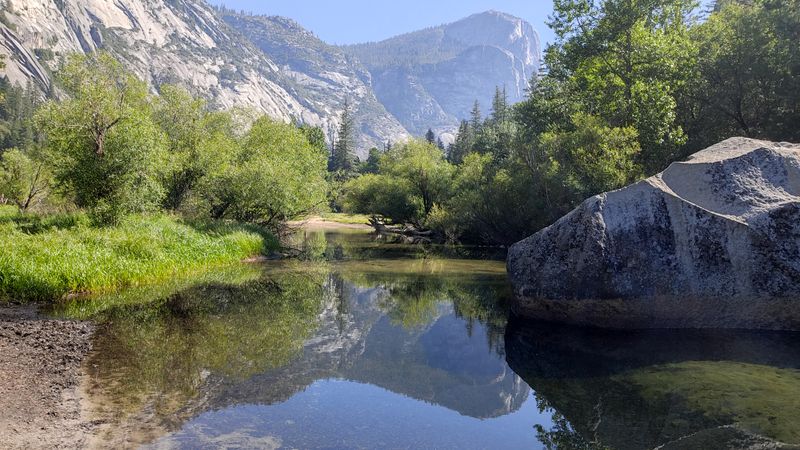
Entering Yosemite Valley through the tunnel and seeing the full panorama spread before you ranks among California’s most breathtaking moments.
El Capitan rises vertically on one side while Bridalveil Fall cascades down the opposite cliff, with Half Dome commanding the far end of the valley.
The scale of these granite formations defies comprehension until you’re standing at their base, craning your neck upward.
Photographers chase the perfect light here year-round, capturing the changing seasons as they transform the valley from snow-covered wonderland to wildflower-dotted meadow.
The Merced River meanders through the valley floor, creating mirror-like reflections when conditions align.
Summer brings massive crowds that clog roads and fill every parking spot by mid-morning, so visiting in shoulder seasons offers a more peaceful experience.
Rangers lead walks that reveal the valley’s geological history, explaining how glaciers carved these vertical walls over millions of years.
Climbers from around the world come to test themselves on El Capitan’s sheer face, and watching their tiny forms inch up the rock face adds perspective to its immensity.
The valley offers easy walks suitable for all fitness levels alongside challenging hikes that reward effort with increasingly spectacular views.
Camping here means waking to granite walls glowing pink in the sunrise, an experience no hotel can replicate.
Despite the crowds, Yosemite Valley remains genuinely awe-inspiring, a place where nature’s grandeur hasn’t been diminished by tourism.
This is California wilderness at its most magnificent and accessible.
4. Big Sur’s Coastline Exceeds Every Expectation
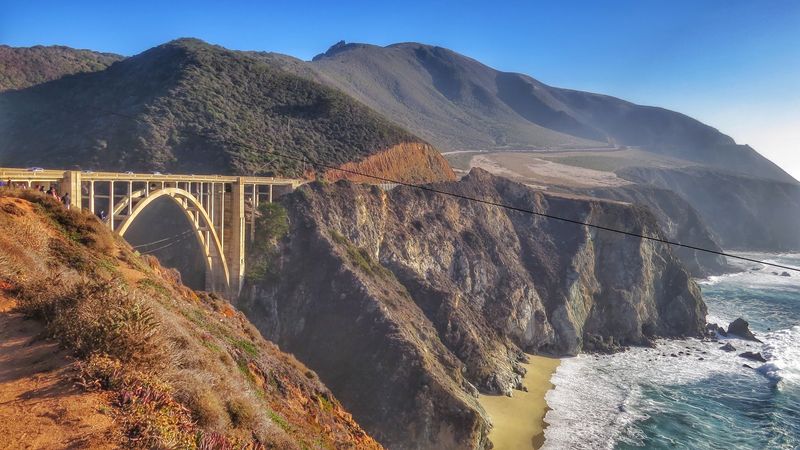
Highway 1 through Big Sur presents one of the world’s most spectacular coastal drives, where mountains plunge directly into the Pacific.
Each curve reveals another vista more stunning than the last, with waves crashing against rocks hundreds of feet below.
The ninety-mile stretch between Carmel and San Simeon offers countless pullouts where travelers stop to absorb views that photographs can’t quite capture.
Redwood groves grow in foggy canyons just inland, creating a stark contrast to the sunny coastal bluffs.
Pfeiffer Beach features purple sand and a rock formation with a natural arch that frames the sunset perfectly during certain times of year.
McWay Falls drops directly onto a pristine beach, creating one of California’s most photographed scenes.
The drive demands full attention as the road narrows and winds, with no guardrails in many sections, but the reward justifies the white-knuckled moments.
Small state parks dot the route, offering short hikes to hidden waterfalls and secluded beaches.
Campgrounds perched on cliffs provide front-row seats to the Pacific, though reservations book up months in advance.
Landslides occasionally close sections of Highway 1, so checking road conditions before your trip prevents disappointment.
The few restaurants and lodges charge premium prices, but their locations justify the expense.
Spring brings wildflowers that blanket the hillsides in purple and gold, while winter storms create dramatic wave action.
This is raw California beauty with minimal development, a reminder of what the coast looked like before highways and hotels.
5. Fisherman’s Wharf Leans Heavily Toward Tourists
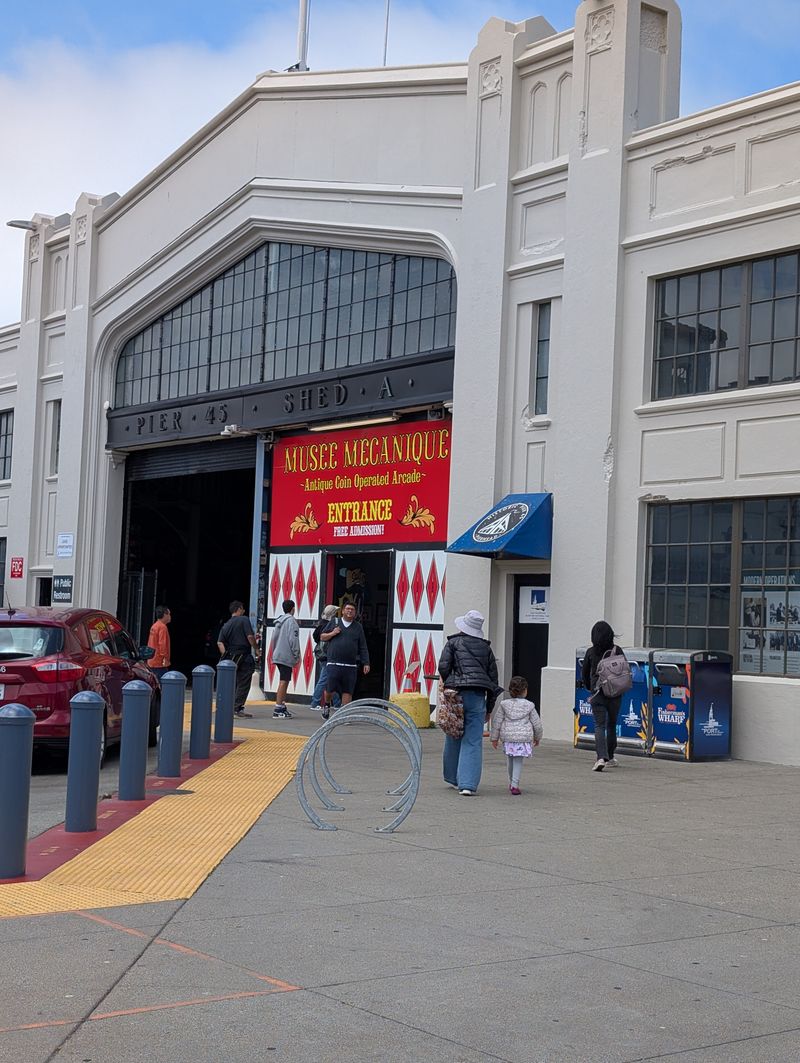
San Francisco’s Fisherman’s Wharf transformed from a working waterfront into a tourist zone decades ago, and it shows.
The sea lions lounging at Pier 39 remain genuinely entertaining, barking and jostling for prime spots on the floating docks while crowds gather to watch.
Beyond this free attraction, most of the wharf feels engineered to extract money from visitors through overpriced restaurants and souvenir shops.
Clam chowder served in sourdough bread bowls has become the signature dish, though locals rarely eat here themselves.
Street performers juggle and play music, creating a carnival atmosphere that some find charming and others find exhausting.
The historic ships at Hyde Street Pier offer a glimpse into maritime history and prove more interesting than the surrounding commercial chaos.
Alcatraz tours depart from nearby piers, and booking these in advance makes sense as they sell out quickly.
The Musée Mécanique houses vintage arcade games and mechanical amusements that provide quirky entertainment without the hard sell.
Chocolate factories offer free samples, though the quality doesn’t match the premium prices.
The wharf serves as a convenient base for exploring other San Francisco neighborhoods via cable car or bus.
Morning visits before tour buses arrive make the experience slightly more bearable.
If you skip the sit-down restaurants and stick to quick bites while watching the sea lions, you can enjoy the waterfront without feeling completely fleeced.
This is tourist infrastructure at its most developed, efficient but somewhat soulless.
6. Joshua Tree National Park Reveals Desert Magic
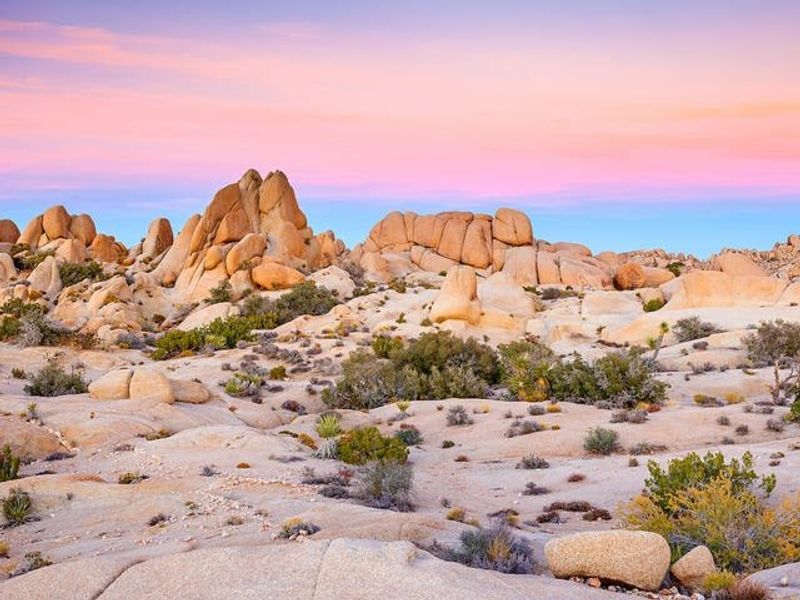
The otherworldly landscape of Joshua Tree National Park surprises visitors who expect deserts to be boring.
Massive granite boulder formations create natural sculptures that climbers scramble over while photographers wait for the golden hour light.
The park’s namesake trees look like something from a science fiction movie, their twisted branches reaching skyward in all directions.
Two distinct desert ecosystems meet here, with the higher Mojave Desert hosting Joshua trees and the lower Colorado Desert featuring different vegetation entirely.
Rock climbers consider this a world-class destination, with thousands of established routes on the jumbled granite.
Night skies explode with stars thanks to minimal light pollution, making the park a favorite among astronomers and anyone who’s forgotten what the Milky Way looks like.
Hiking trails range from easy nature walks to challenging scrambles that require navigation skills.
The park gets scorching hot in summer, so spring and fall attract the biggest crowds seeking perfect weather.
Hidden Valley offers an easy loop through a natural amphitheater of rocks where cattle rustlers supposedly hid stolen livestock.
Cholla Cactus Garden at sunset glows golden as light filters through thousands of spiny stems.
The town of Joshua Tree just outside the park has evolved into an artsy community with galleries, quirky shops, and surprisingly good restaurants.
Camping under the stars among the Joshua trees creates memories that last long after you return home.
This is California desert at its most enchanting and accessible.
7. The Mystery Spot Delivers Overpriced Confusion
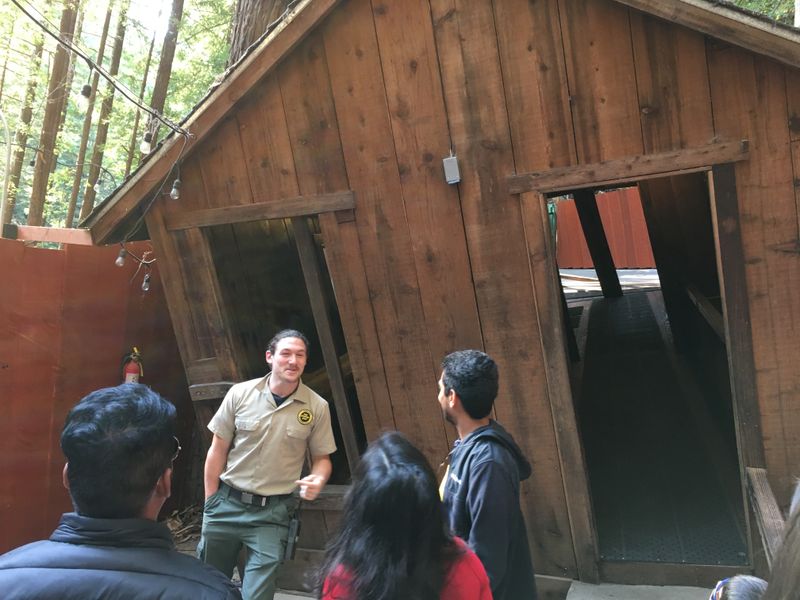
Located in the redwood forests outside Santa Cruz, the Mystery Spot has been confusing visitors since 1939 with its gravitational anomalies and tilted buildings.
The tour guides enthusiastically demonstrate how balls roll uphill and people appear to change height depending on where they stand.
Most of these effects result from clever construction and optical illusions rather than any genuine mystery, but the guides sell the story with theatrical flair.
The circular area supposedly affected by this mysterious force measures only 150 feet in diameter, which should raise immediate skepticism.
Tours last about forty-five minutes and cost more than many legitimate museums charge for admission.
The bumper stickers remain the most popular souvenirs, spotted on cars throughout California as proof of visiting this quirky attraction.
Children often enjoy the experience more than adults, who quickly figure out the tricks being employed.
The surrounding redwood forest offers beautiful scenery that almost justifies the trip, even if the Mystery Spot itself disappoints.
Long lines form during summer weekends, meaning you might wait an hour for a tour that reveals nothing genuinely mysterious.
The phenomenon has inspired similar attractions across the country, all relying on the same basic principles of forced perspective and tilted architecture.
If you approach it as campy roadside Americana rather than a genuine scientific curiosity, you might find some charm in the experience.
The staff commits fully to the bit, never breaking character to acknowledge the obvious explanations.
This is California kitsch at its purest, a relic of mid-century tourism that survives on nostalgia and curiosity.
8. Redwood National and State Parks Inspire Genuine Wonder
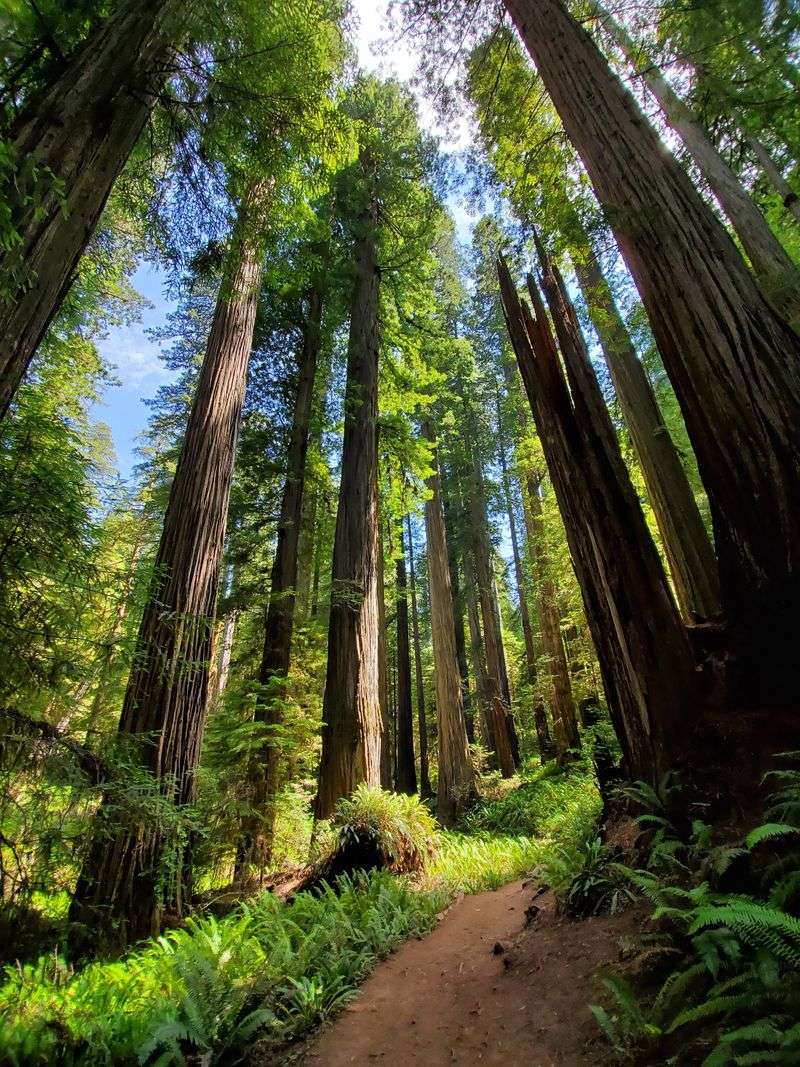
Standing among the world’s tallest trees creates a sense of scale and time that few other places can match.
The coastal redwoods of Northern California reach heights over 350 feet, their massive trunks disappearing into the fog that nourishes them.
Walking through these ancient groves feels like entering a cathedral, with filtered light creating an almost spiritual atmosphere.
Some of these trees were already centuries old when European explorers first reached California’s shores.
The parks protect both old-growth forests that survived logging and recovering second-growth areas showing nature’s resilience.
Elk graze in prairie openings between forest sections, adding wildlife encounters to the botanical spectacle.
The Avenue of the Giants offers a scenic drive through impressive trees, though the most magnificent specimens require short hikes to reach.
Fog drips constantly from the canopy in summer, creating a gentle rain even on sunny days and keeping the forest floor perpetually damp.
Ferns carpet the ground beneath the giants, some growing taller than a person.
The parks stretch along the coast, combining forest hikes with beach access where driftwood logs the size of houses litter the sand.
Rangers lead walks that explain the complex ecosystem these trees support and the conservation efforts that saved them from complete destruction.
Camping among the redwoods means waking to birdsong echoing through the canopy and morning mist swirling between trunks.
This is California nature at its most humbling and magnificent, a reminder of what the state looked like before development.
9. Venice Beach Boardwalk Offers Colorful Chaos
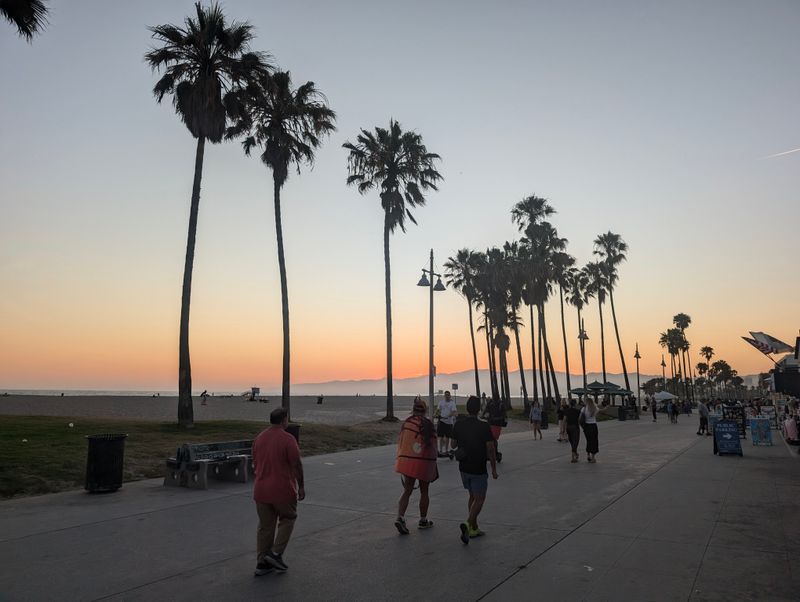
The Venice Beach Boardwalk presents Southern California beach culture in its most unfiltered form.
Bodybuilders pump iron at the outdoor Muscle Beach gym while crowds gather to watch and take photos.
Street performers range from talented musicians to bizarre characters who seem to exist nowhere else on earth.
The boardwalk vendors sell everything from cheap sunglasses to handmade jewelry, with quality varying wildly.
Skateboarders carve through the famous skate park, their skills ranging from beginner to professional.
The smell of marijuana smoke drifts constantly through the area, legal but pervasive.
Murals and graffiti art cover walls and buildings, creating an outdoor gallery that changes constantly.
The beach itself remains beautiful despite the carnival atmosphere, with wide sand and reliable surf.
Homeless encampments line some sections, a stark reminder of California’s housing crisis visible alongside the tourist attractions.
The canals a few blocks inland offer a quieter glimpse of Venice’s original vision as an American version of the Italian city.
Restaurants and cafes range from excellent to tourist traps, requiring research to separate quality from convenience.
Sunset brings out even bigger crowds as the sky turns orange over the Pacific.
The boardwalk embodies both the creative energy and the gritty reality of Los Angeles beach communities.
This is California eccentricity on full display, fascinating and exhausting in equal measure, a place everyone should experience once but might not need to revisit.
10. Point Reyes National Seashore Offers Windswept Beauty
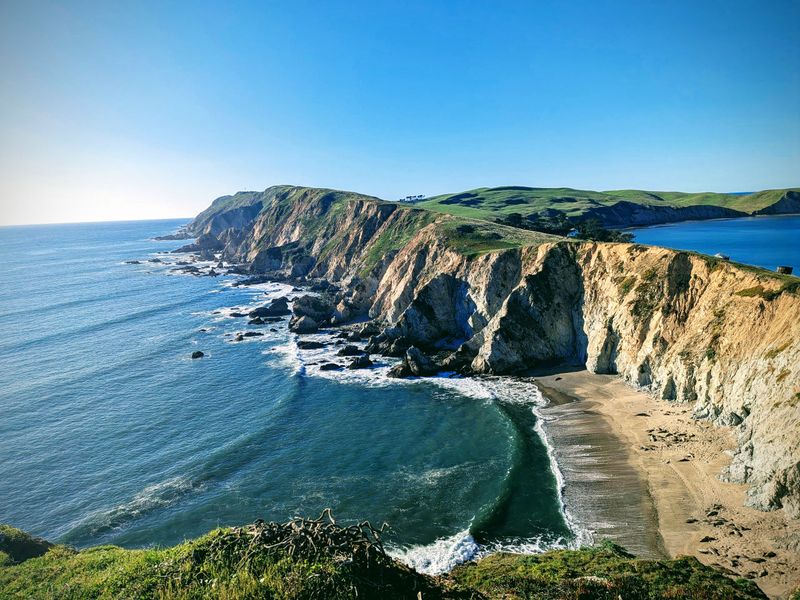
Just north of San Francisco, Point Reyes peninsula juts into the Pacific like California’s westernmost outpost.
The historic lighthouse requires descending over 300 steps down a cliff face, but the views of crashing waves and migrating whales reward the effort.
Wind batters the point constantly, strong enough to knock people off balance on extreme days, creating an atmosphere of raw natural power.
Elephant seals colonize beaches in winter, their massive forms covering the sand while bulls battle for dominance.
Tule elk roam the grasslands, reintroduced after being hunted to near extinction in California.
Hiking trails traverse coastal bluffs, dense forests, and open meadows, offering remarkable diversity within a relatively compact area.
Tomales Bay on the inland side provides calm waters for kayaking, a stark contrast to the wild Pacific coast.
Oyster farms operate in the bay, supplying restaurants throughout the region with fresh shellfish.
The Bear Valley Visitor Center explains the unique geology that places Point Reyes on a different tectonic plate than the rest of California, slowly sliding northward.
Fog blankets the point during summer months while inland areas bake in sunshine, creating a microclimate that keeps temperatures cool year-round.
The small towns of Point Reyes Station and Inverness offer farm-to-table restaurants and cozy accommodations.
Wildflowers carpet the hillsides in spring, painting the landscape in brilliant colors.
This is California coast for those seeking solitude and natural beauty over boardwalks and beach volleyball, a place where nature still dominates.
Dear Reader: This page may contain affiliate links which may earn a commission if you click through and make a purchase. Our independent journalism is not influenced by any advertiser or commercial initiative unless it is clearly marked as sponsored content. As travel products change, please be sure to reconfirm all details and stay up to date with current events to ensure a safe and successful trip.
