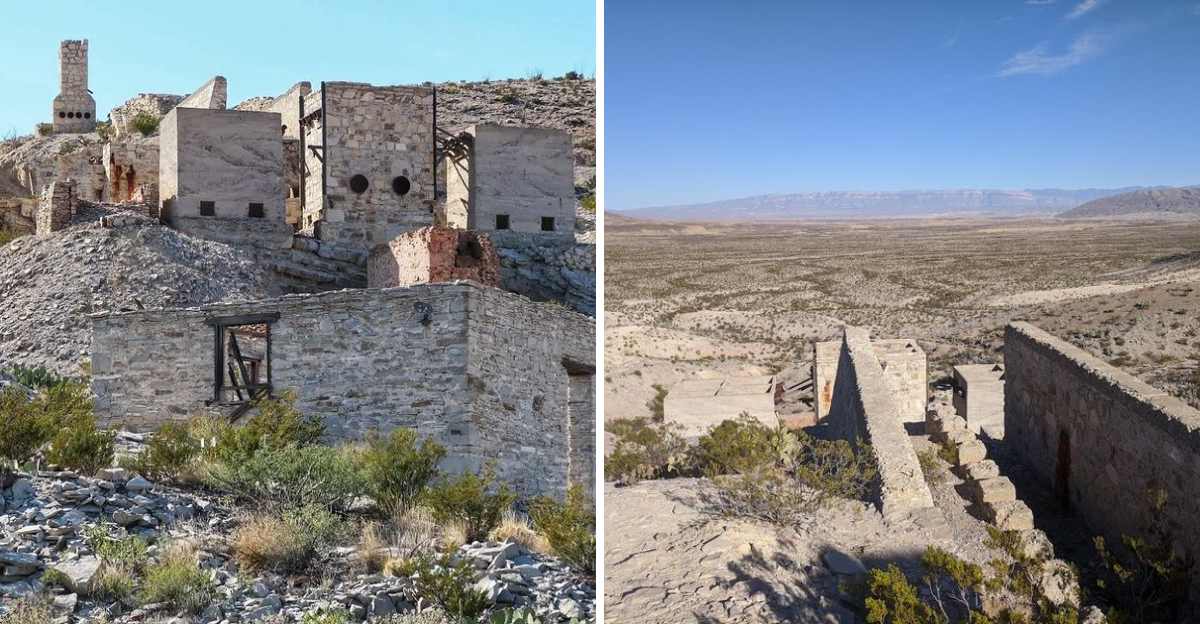
You never expect a hike in the desert to feel like a ghost story, but here you are walking among crumbling stone buildings and rusted machinery. The trail is short, barely a mile, but it leads you through the remains of an old mercury mine that was once the center of a booming industry.
Back in the day, this place produced nearly a quarter of all the mercury ever mined in the entire country. Now it stands completely abandoned, with old furnaces, broken bricks, and warning signs about traces of leftover toxins.
The silence is almost eerie, broken only by the wind and the crunch of gravel under your feet. It’s a strange, fascinating glimpse into a forgotten chapter of Texas history, and it’s unlike anything else you will ever stumble upon.
The Remote Road That Makes It All Worth It
Getting to Mariscal Mine is half the adventure, and honestly, it sets the tone perfectly. The access route runs along River Road East, a primitive dirt road that cuts through some of the most remote and dramatic desert terrain in Big Bend National Park.
You will need a high-clearance vehicle, and after any recent rainfall, four-wheel drive becomes a serious necessity rather than a bonus feature.
The road is slow going, and that is not a complaint. It forces you to pay attention to the landscape around you, which is stunning in a raw, unfiltered way.
Jagged ridgelines, open desert flats, and the occasional roadrunner darting across the path make the drive feel like its own experience.
Plan to spend at least half a day just for the round trip drive and the hike itself. Most visitors underestimate how long the road takes.
Arriving with extra time means you can stop, look around, and actually absorb the isolation. That sense of being far from everything is exactly what makes this corner of Big Bend feel so rare and worth the effort.
A Mercury Mining History Most Texans Have Never Heard Of
Mercury mining is not something that comes up often in Texas history conversations, yet Mariscal Mine was once a significant industrial operation powering a chunk of the entire country’s mercury supply. From 1900 to 1943, this site produced nearly a quarter of all the mercury mined in the United States.
That is an extraordinary number for a place so remote it barely appears on casual maps.
The mine drew workers from both sides of the border. Many of the laborers were Mexican nationals who had fled the chaos and violence of the Mexican Revolution, finding rough but steady work in this isolated desert canyon.
Their presence shaped the character of the settlement that grew around the mine.
Mercury, also called quicksilver, was used in a wide range of industrial processes during that era. The demand kept this operation running for over four decades.
Knowing that history as you walk the trail completely changes how you look at every crumbling wall and rusted piece of equipment. You are not just looking at ruins.
You are standing inside a story that most people have never been told.
The Scott Furnace: A Desert Monument You Won’t Forget
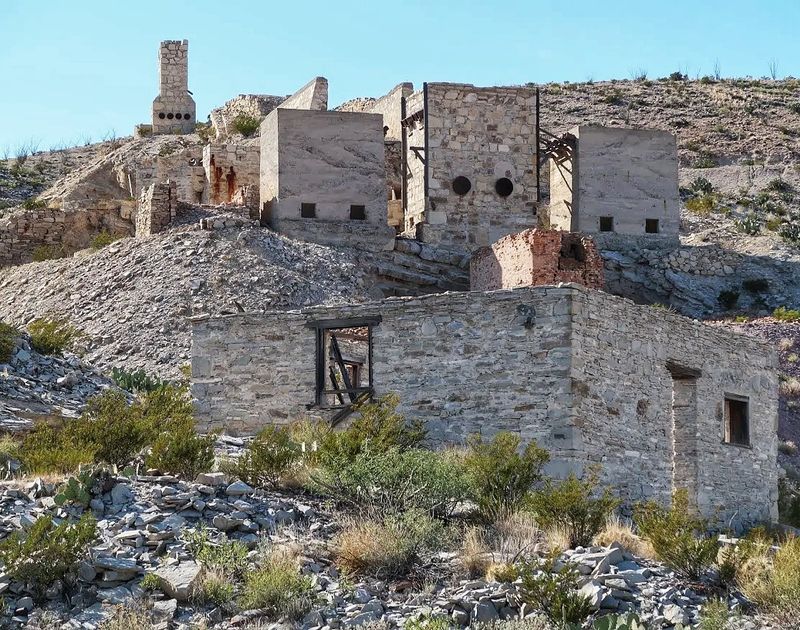
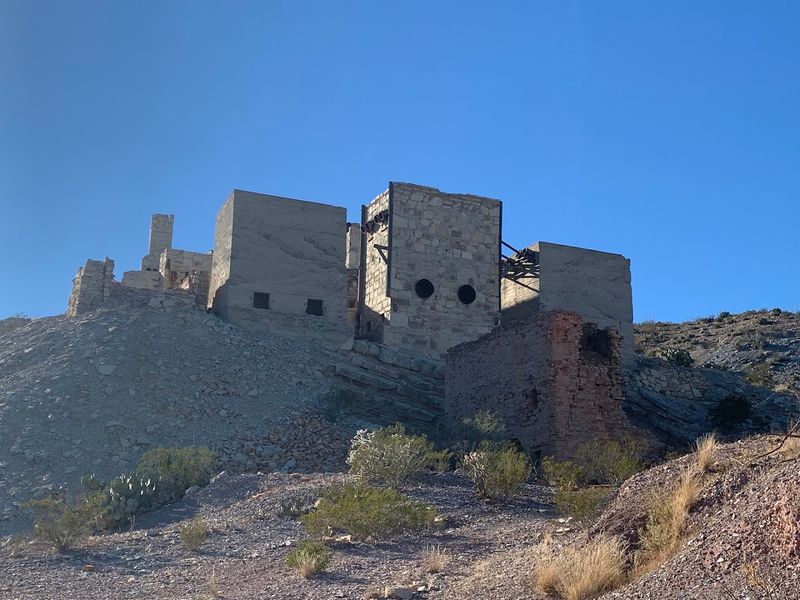
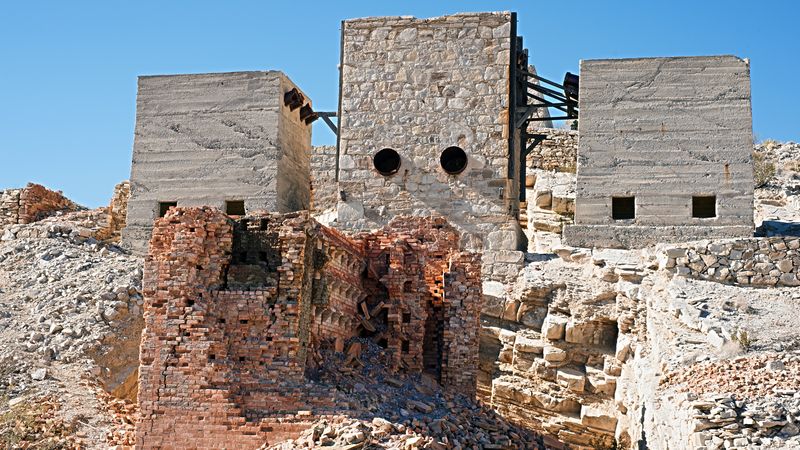
The Scott Furnace is the undisputed centerpiece of the Mariscal Mine site, and the first time you see it rising out of the desert floor, it is genuinely surprising. The structure is massive, built from stone and concrete, and despite decades of weathering, it has held its shape in a way that feels almost defiant.
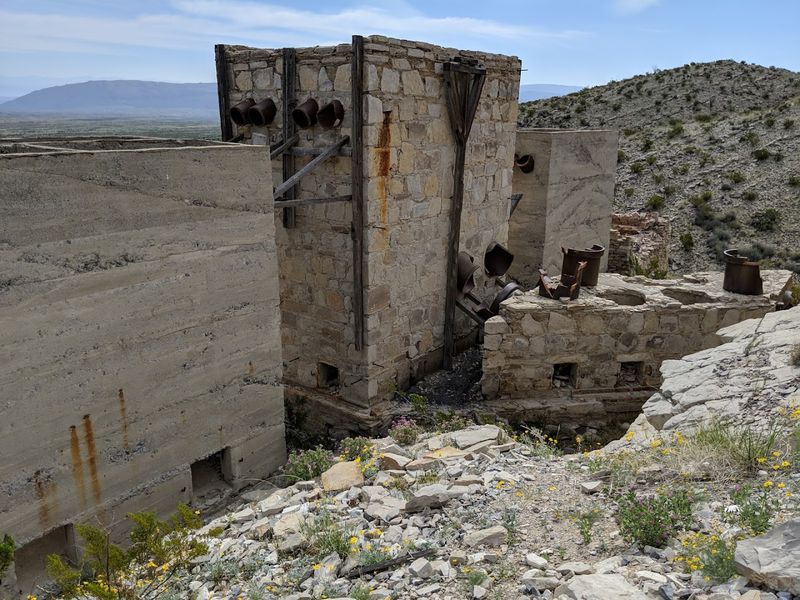
Retort furnaces like this one were used to heat cinnabar ore and extract the mercury vapor, which was then collected through a condenser system.
The condenser system here is elaborate and still largely intact, which is part of what makes this site so remarkable. Most industrial ruins of this age have been stripped, vandalized, or simply collapsed.
Mariscal Mine has stayed remarkably whole, earning its reputation as the best-preserved mercury mining site in the entire country.
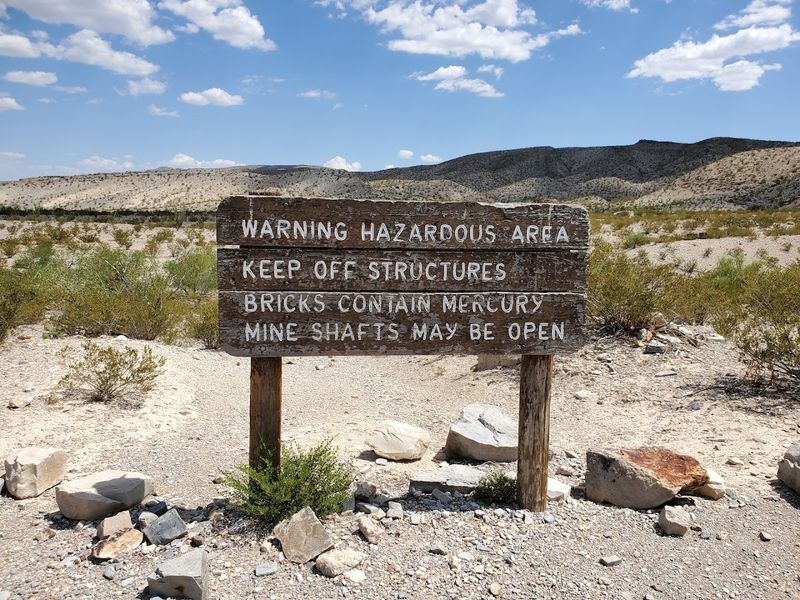
One important note: do not touch the bricks of the furnace or pick up any of the dark, crumbly material around it. Mine tailings and old furnace materials at mercury sites can contain toxic concentrations of the metal.
Admire it up close, take photos, but keep your hands to yourself. The history is fascinating and the structure is beautiful, but it comes with real hazards.
Rock Houses That Tell a Human Story
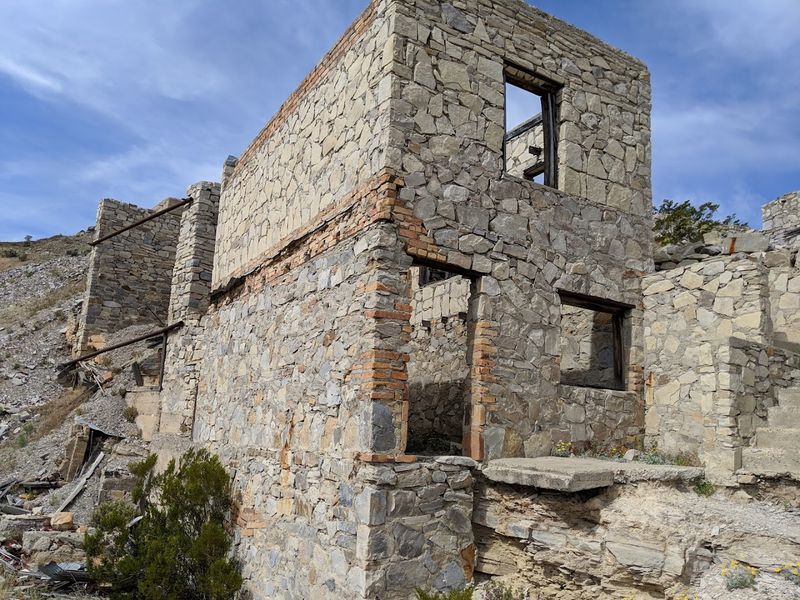
Scattered across the mine site are the remains of the housing where workers actually lived during the mine’s operating years. These are not fancy structures.
The original homes were simple one-to-three-room rock houses, built by hand from local stone by Mexican laborers who had crossed the border seeking work and safety from the revolution happening in their home country.
There are also the remains of later concrete and stucco homes on the property, believed to have been constructed but never actually occupied. That detail is oddly haunting.
Someone planned a future here that never arrived.
Looking at these structures, it is easy to imagine daily life at a place this remote. No nearby town, no easy access to supplies, surrounded by desert on all sides.
The workers who lived here were tough, resourceful people navigating genuinely difficult circumstances. The ruins feel personal in a way that a museum exhibit never quite manages.
You are standing on the ground where real people cooked meals, rested after long shifts, and built a small community in the middle of nowhere. That connection to ordinary human life is what makes these rock houses one of the most moving parts of the entire trail.
Ore Cars, Old Tools, and the Joy of Unexpected Artifacts
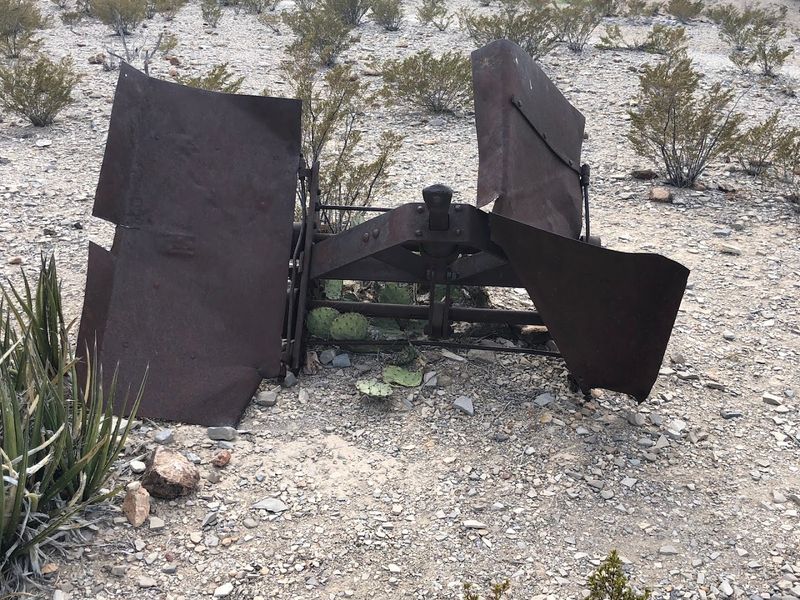
One of the genuine delights of this trail is the scattering of old artifacts along the path. Rusty ore cars sit tilted on what remains of their tracks.
Fragments of mining tools poke out of the dirt. Pieces of old machinery rest where they were left, decades ago, as if the workers simply walked away one afternoon and never came back.
It creates a kind of open-air museum feel, except there are no velvet ropes or glass cases. The artifacts are just there, in the open air, aging slowly under the desert sun.
That rawness is exactly what makes the experience feel different from a polished historic site.
Resist the urge to pick anything up or move items around. Beyond the general principle of leaving natural and historic sites undisturbed, some materials here may carry mercury contamination.
The best way to enjoy these artifacts is exactly as you find them, in context, in place, part of the landscape they have occupied for nearly a century.
Photographing them from different angles, noticing the textures of rust and weathered wood, pays off with some genuinely striking images that capture the mood of the place beautifully.
Mine Shafts and the Fences That Keep You Safe
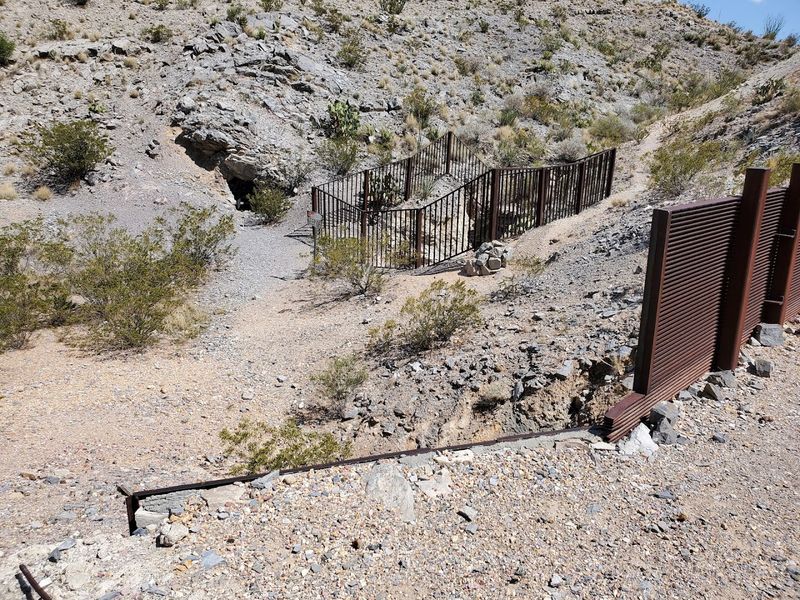
The mine shafts at Mariscal are a reminder that this is not just a scenic walk through pretty ruins. These are real industrial excavations, some of them deep, and the National Park Service has fenced or gated most of them to keep visitors at a safe distance.
Pay attention to those barriers and respect them completely.
Beyond the obvious physical danger of an open shaft, there is also the issue of air quality near old mercury mine openings. The combination of confined spaces and residual mercury compounds makes these shafts genuinely hazardous.
The fencing is not bureaucratic caution. It is there for a real reason.
That said, the presence of the shafts adds a layer of authentic industrial drama to the site. Peering at a gated shaft opening and knowing it drops into the earth where men once worked in the heat and dust is a powerful sensory moment.
The scale of the operation becomes clearer when you realize how much of the actual work happened underground, far from the surface structures you can see and photograph. The shafts are a quiet but significant part of the story this trail tells.
360-Degree Desert Views That Stretch Into Mexico
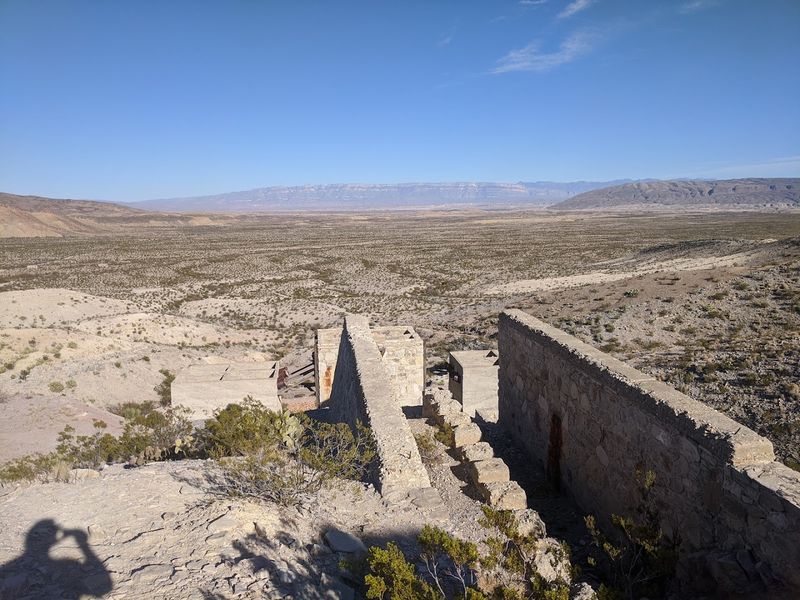
The history is the main draw here, but the scenery is not playing a minor role.
From the Mariscal Mine site, the views stretch out in every direction across the Chihuahuan Desert, and on clear days you can see well into Mexico, including the striking ridgeline of the Sierra del Carmen mountains rising beyond the Rio Grande.
There is something deeply clarifying about standing in a place this open. The scale of the desert becomes real in a way that photographs struggle to capture.
Mountains in three directions, sky taking up more of your vision than you are used to, and almost no signs of modern civilization anywhere in sight.
The elevation gain along the trail is just over 230 feet, which is gentle enough that most visitors will not find it physically demanding. That means you can spend your energy noticing things rather than just surviving the climb.
The views from the higher points along the trail are worth pausing for at length. Bring water, wear a hat, and give yourself permission to just stand still for a few minutes and take in the full sweep of what surrounds you.
It is genuinely one of the more breathtaking desert panoramas in the park.
The Feeling of True Isolation in a National Park
Big Bend is already one of the least visited national parks in the country, and Mariscal Mine sits in one of its most remote corners. The combination creates a feeling of solitude that is genuinely hard to find elsewhere.
On the day I visited, I did not see another person on the trail. Just desert, ruins, and the sound of wind moving through dry grass.
That level of quiet has a particular quality. It is not just the absence of noise.
It is a presence of something older and slower than the pace most of us live at. The remoteness of the access road filters out casual visitors naturally, which means the people who make it here tend to be those who came specifically for this experience.
If you are someone who finds crowded trailheads exhausting, this is your kind of place. The effort required to reach Mariscal Mine is real, but it is also the thing that keeps it feeling undiscovered.
That word gets overused in travel writing, but here it actually applies. You are unlikely to share this trail with a crowd, and that privacy adds something to the experience that no amount of scenic beauty can manufacture on its own.
What to Bring and How to Make the Most of Your Visit
Preparation matters more than usual for a visit to Mariscal Mine. The remote access road, the desert heat, and the distance from any services mean that arriving underprepared is a real risk.
Bring more water than you think you need. The standard advice in Big Bend is at least one liter per hour of activity, and that number climbs fast in summer months.
A high-clearance vehicle is not optional. Attempting River Road East in a standard sedan is a reliable way to end your trip early and expensively.
Check road conditions at the park visitor center before heading out, since rain can change the road’s passability quickly and without obvious warning from the trailhead side.
Start early in the morning to avoid the harshest midday heat, especially in spring and summer. Wear sun protection, sturdy shoes, and carry a charged phone even though cell service is nonexistent out there.
A downloaded offline map of the area is a smart backup. Most importantly, give yourself time to linger at the mine site rather than rushing through.
The details reward slow attention, and the whole point of coming this far is to actually be present in a place that most people will never see.
Address: Big Bend National Park, TX 79834.
