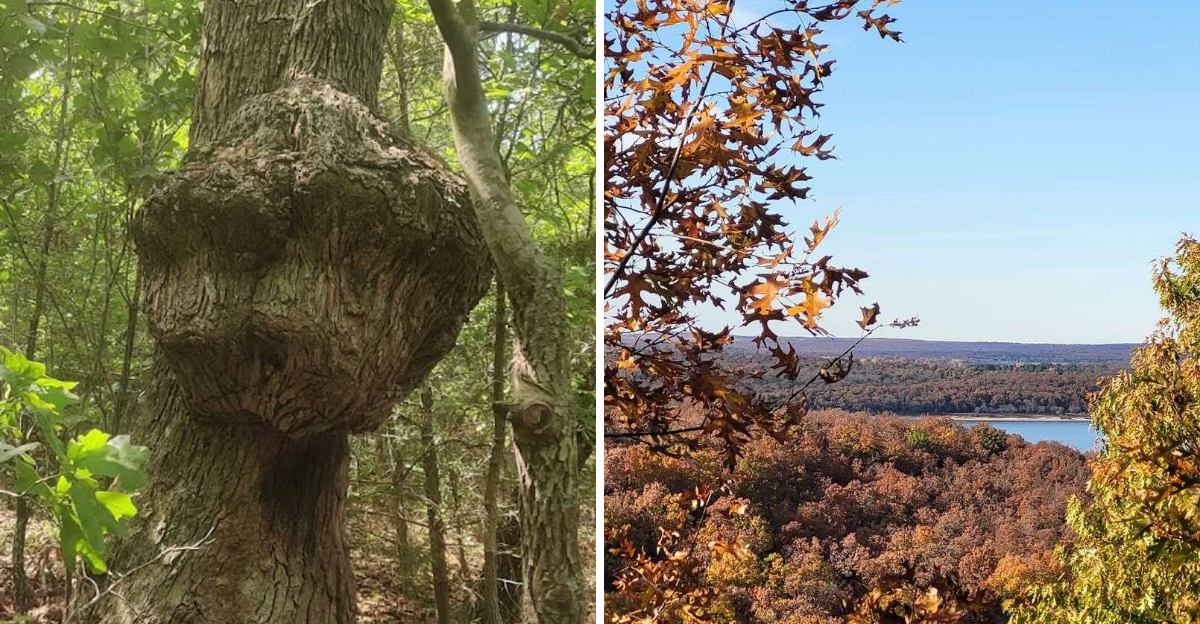
Five hundred years is a long time to stand in one place. Entire nations have risen and fallen.
Languages have appeared and disappeared. And through it all, a grove of ancient cedars in northeastern Oklahoma has simply kept growing, their twisted limbs reaching skyward through drought, fire, and wind.
This 1,360-acre preserve protects one of nature’s last great treasures, a remnant of the Cross Timbers that once stretched from Texas to Kansas.
The trees here look like they belong in a fantasy novel, gnarled and weathered, their bark etched with centuries of survival. Post oaks and eastern red cedars cling to rocky hillsides with a toughness that feels almost defiant.
Even Washington Irving struggled through these woods in 1832, cursing what he called “forests of cast iron.” Today, hikers follow trails that wind past two intermittent waterfalls and open up to sweeping views of the lake below.
The quiet here is different, heavier, older. You can hear the wind move through branches that have been swaying since before your great grandparents were born.
Bring good shoes and a willingness to slow down. This ancient place knows how to make you forget the clock.
A Forest Older Than You Can Imagine
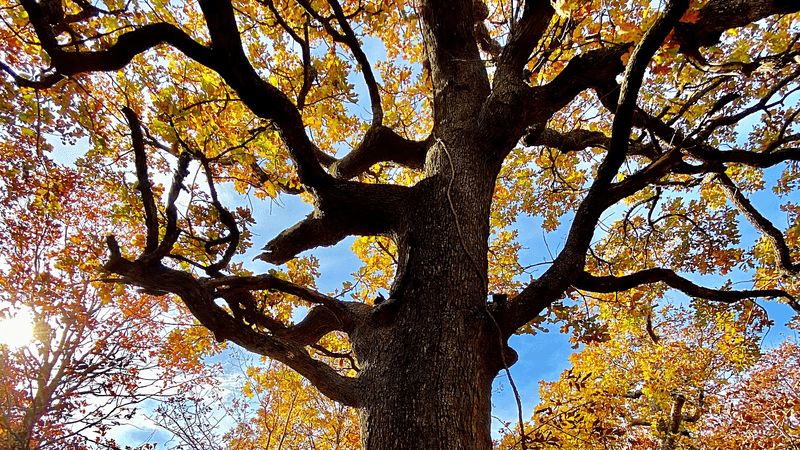
Standing beside a tree that was already centuries old when explorers first set foot in the Americas is a genuinely humbling moment. Keystone Ancient Forest in Oklahoma preserves a rare old-growth Cross Timbers ecosystem that most of the country never knew existed.
The Eastern red cedars here have been growing, undisturbed, for over 500 years. Their twisted, deeply grooved trunks tell a story that no history book can fully capture.
The forest was never logged, never developed, and never cleared for farmland, which makes it extraordinarily rare in a region where most natural land has been altered over the past two centuries.
Scientists and ecologists consider old-growth Cross Timbers forests among the most threatened woodland types in North America. Walking through this preserve, you quickly understand why protecting it matters so much.
The air feels different under a canopy this old. The ground is layered with centuries of leaf litter, moss, and root systems that have shaped the soil beneath your feet for generations.
This forest is not just old. It is alive in a way that feels almost impossible to put into words.
The 1,360 Acres of Wild Oklahoma Land
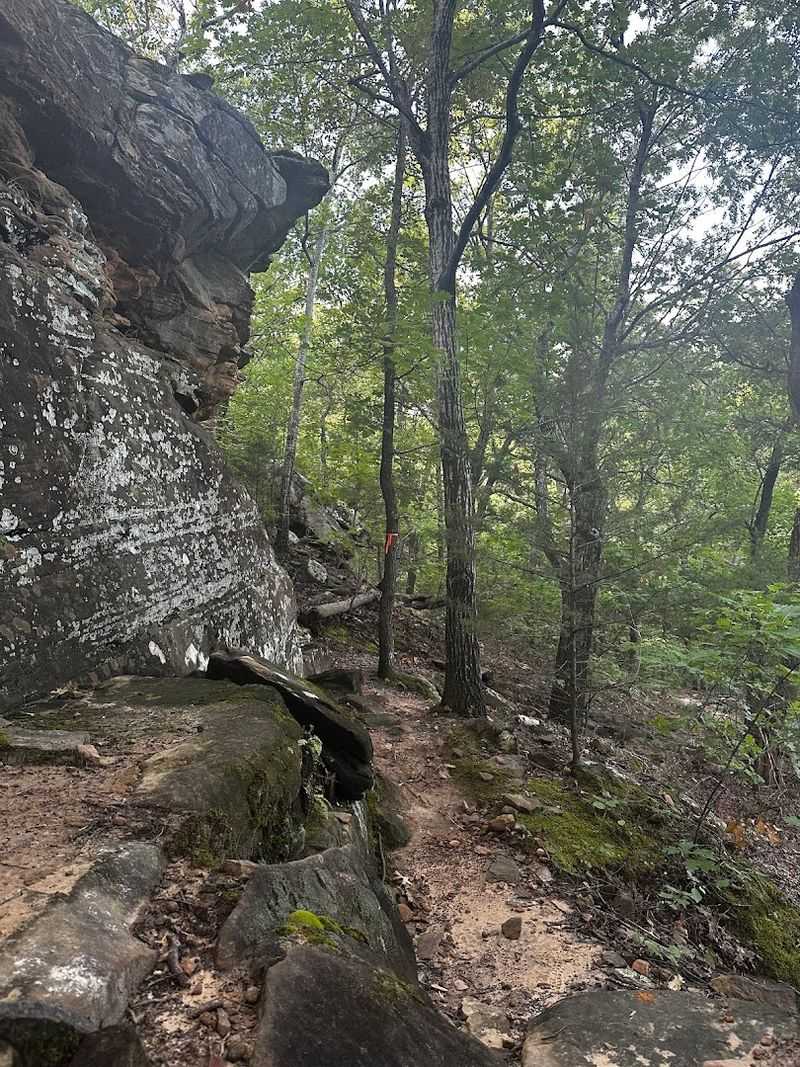
Covering 1,360 acres of rolling Cross Timbers terrain, this preserve is one of the largest protected old-growth forests remaining in Oklahoma. The sheer scale of it hits you once you get out on the longer trails and realize the canopy just keeps going.
The land is managed by the city of Sand Springs, Oklahoma, with strong support from conservation volunteers who pour real effort into keeping the trails clear and the ecosystem intact. The preserve sits just west of Tulsa, making it surprisingly accessible for such a wild and undeveloped landscape.
What makes the acreage feel even more impressive is the variety packed into it. There are creek crossings, rocky ridgelines, open meadow stretches, and dense cedar groves all within the same property.
Each trail takes you through a slightly different version of the same ancient ecosystem. The terrain changes more than you might expect for a landlocked Oklahoma forest.
Elevation shifts, stream corridors, and exposed sandstone outcroppings all add character to a landscape that rewards curious hikers who take their time and pay attention to what is around them.
The Trails Range From Strolls to Serious Challenges
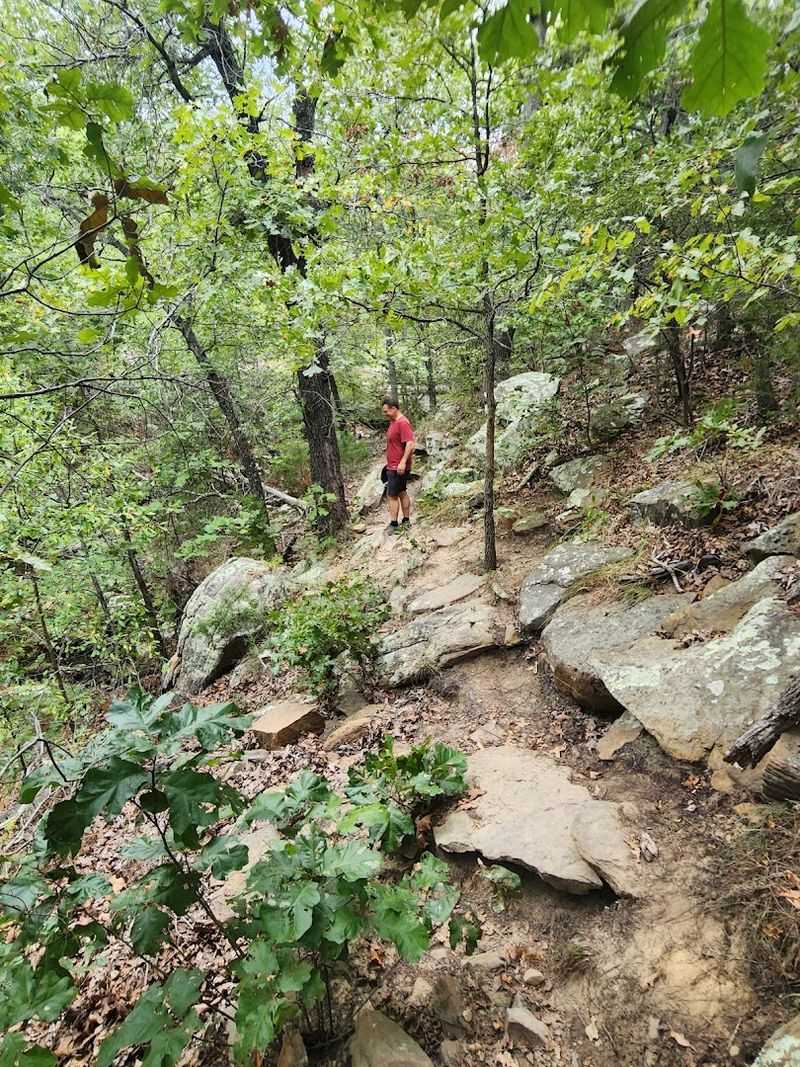
Not every nature preserve can honestly say it has something for everyone, but Keystone Ancient Forest pulls it off with a well-designed trail system that spans multiple difficulty levels. The Childers Trail is a short, paved loop perfect for a relaxed walk or for families with young children.
Frank’s Trail offers a packed-dirt path through beautiful forest scenery at a manageable pace. The Less Traveled Trail stretches about 4.5 miles and gives you a real sense of solitude among the old trees.
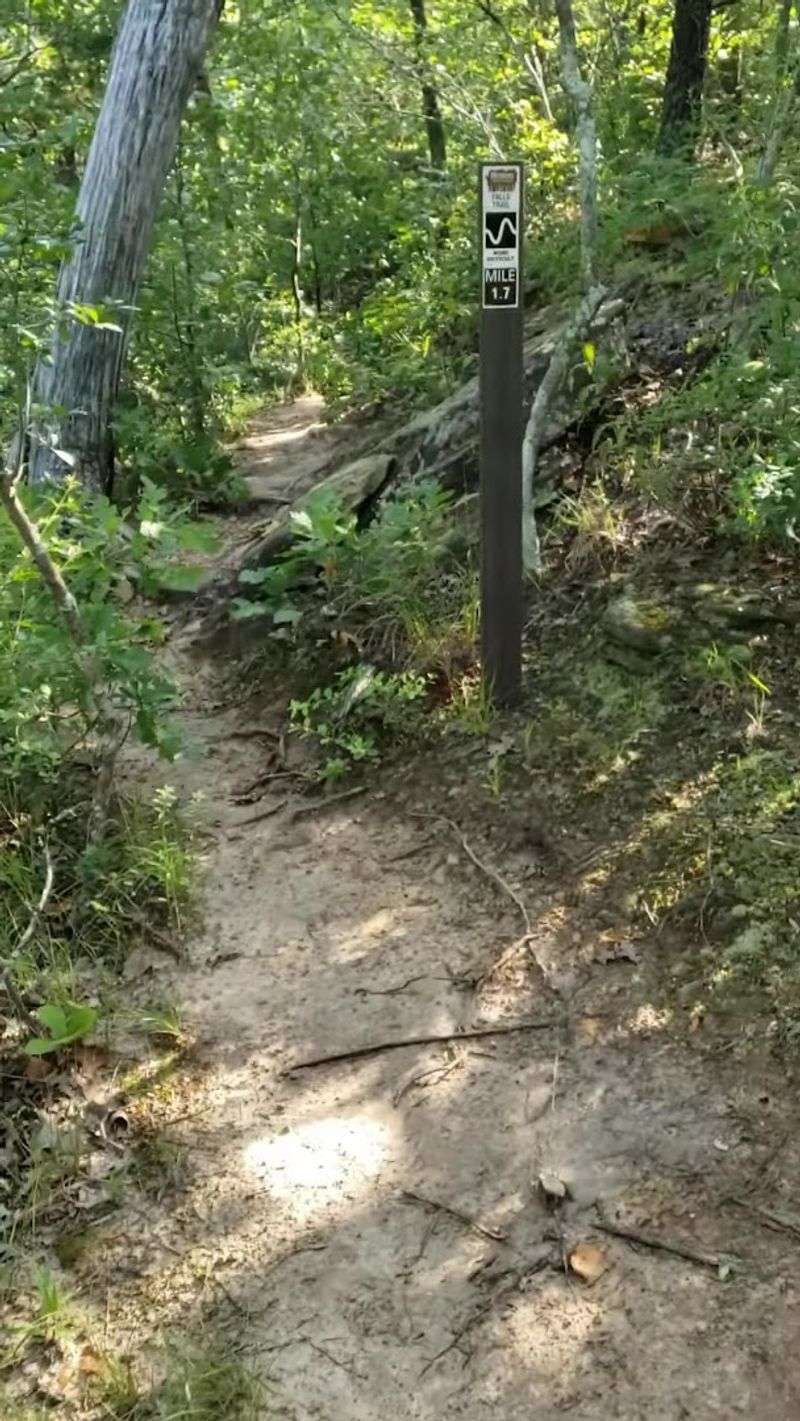
Then there is the Falls Trail, which is the one that earns its difficult rating. Rocky terrain, creek crossings, steep drop-offs, and significant elevation changes make it a genuine workout.
Wilson’s Trail rounds out the options with a short but demanding route that keeps you on your toes. The trail system is well-marked with numbered location posts, which is a thoughtful safety feature for anyone venturing out alone.
Borrowing a walking stick from the visitor center before heading out on the harder trails is a smart move. The variety here means you can tailor the experience to exactly how much adventure you are ready for on any given day.
The Visitor Center Sets the Tone Perfectly
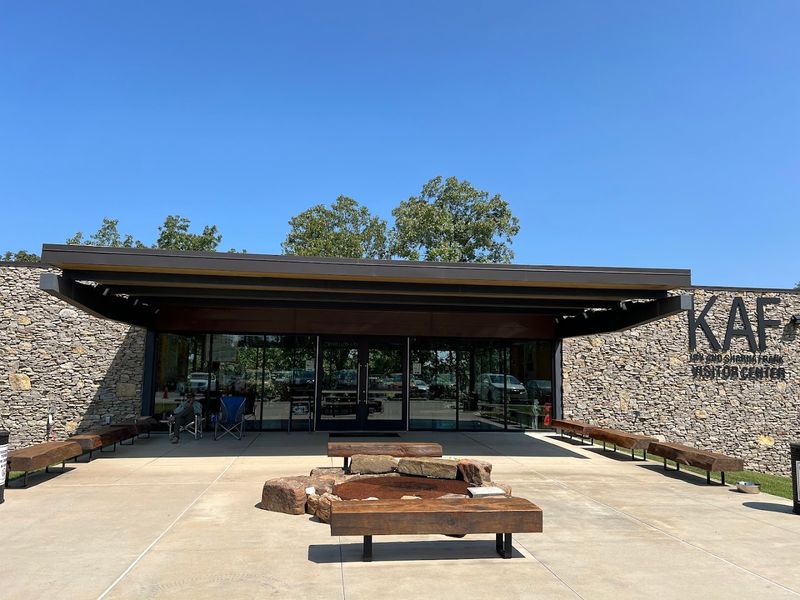
Before heading out on any trail, the visitor center at Keystone Ancient Forest deserves a proper visit. It is more than just a check-in point.
The space is genuinely well-designed, with educational displays about the Cross Timbers ecosystem, the history of the forest, and the wildlife you might encounter along the way.
Knowledgeable volunteers are usually on hand to answer questions and point you toward the trail that best fits your fitness level and available time. The gift shop carries a small but well-curated selection of items, including hats, field guides, and nature-themed souvenirs.
Walking sticks are available to borrow free of charge, which is a practical touch that hikers on the rockier trails will genuinely appreciate.
The restrooms are clean and well-maintained, which matters more than people admit when you are about to spend several hours outdoors. There is also a shelf stocked with reading materials about local flora, fauna, and forest ecology.
The overall atmosphere of the visitor center is welcoming without being overwhelming. It strikes the right balance between informative and relaxed, setting up your experience in the forest with exactly the right amount of context and enthusiasm.
Wildlife and Plant Life That Will Surprise You
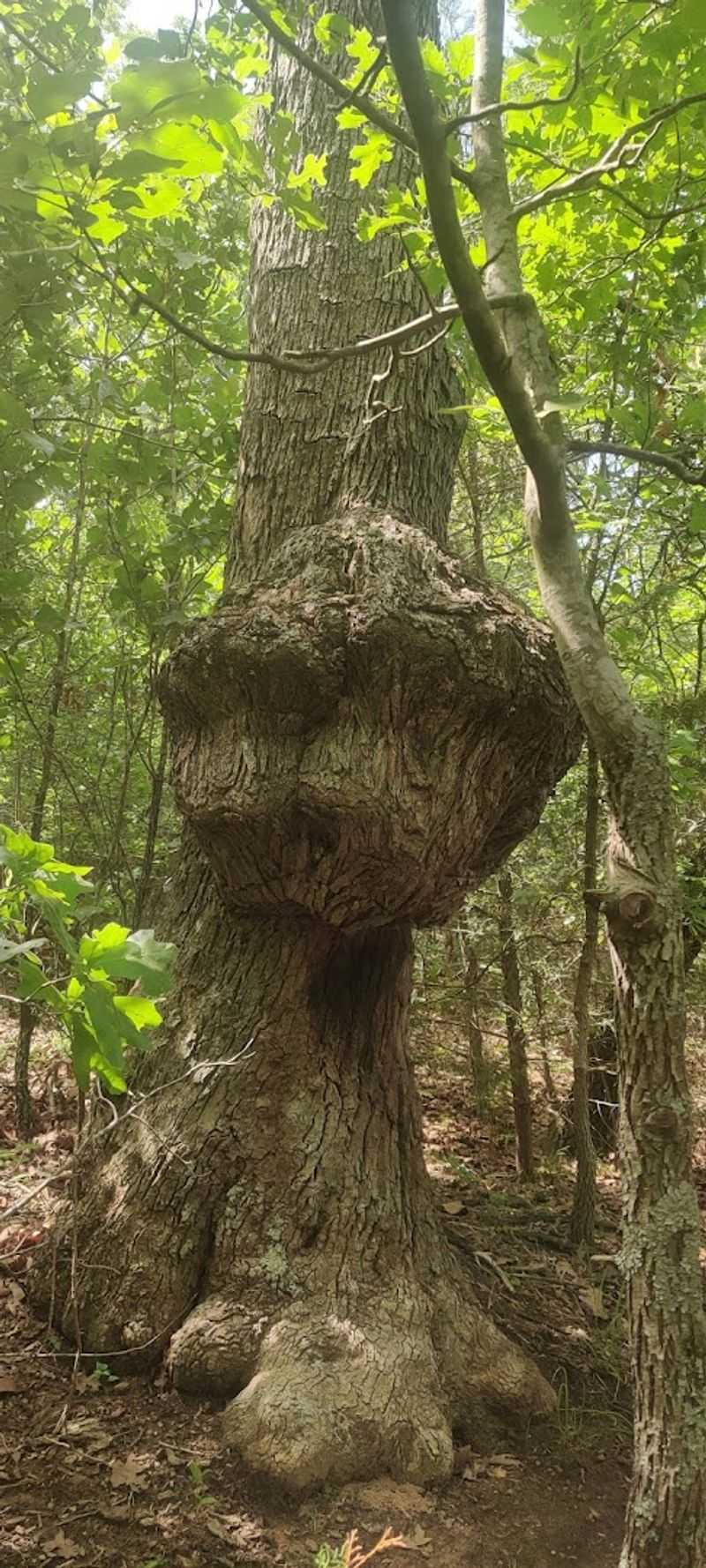
Oklahoma is not always the first state that comes to mind when people think about wildlife watching, but Keystone Ancient Forest has a way of changing that assumption fast. The Cross Timbers ecosystem supports a surprisingly rich mix of species that thrive in this undisturbed old-growth environment.
Armadillos are common sightings along the shadier sections of trail, especially in the early morning hours. Skinks dart across rocky outcroppings, and birds fill the canopy with sound throughout most of the year.
Woodpeckers, warblers, and various raptor species have all been spotted within the preserve. The forest floor is layered with native ferns, mosses, and wildflowers that change with the seasons.
The mix of Eastern red cedar, post oak, and blackjack oak creates a layered woodland habitat that supports far more biodiversity than it might appear to at first glance. Informational signs along the trails identify many of the plant species you pass, turning a simple hike into an informal nature lesson.
Keeping your eyes open and your pace slow rewards you with encounters that feel genuinely wild rather than staged, which is exactly the kind of experience this forest was built to provide.
The Arkansas River View Is Worth Every Step
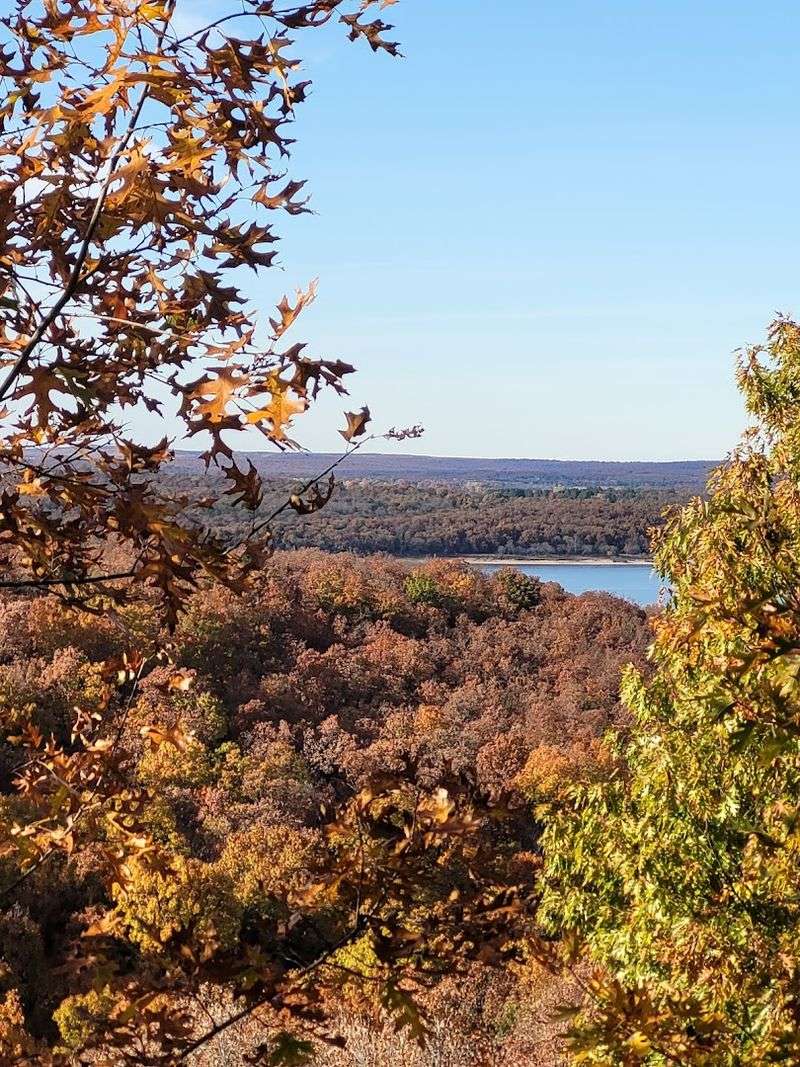
After pushing through the steeper sections of the longer trails, a view of the Arkansas River appears through gaps in the trees and immediately makes the effort worthwhile. It is the kind of payoff that reminds you why you laced up your boots in the first place.
The river winds through the valley below the preserve’s ridgelines, and on clear days the view stretches far enough to feel genuinely expansive for a state that does not always get credit for its scenic landscapes.
Oklahoma has more visual drama than most people expect, and this forest is one of the best places to discover that firsthand.
The overlook moments along the trails are not constant, but their scarcity makes them feel more rewarding when they arrive. You earn each glimpse through a combination of elevation gain and patience.
The trails are shaded roughly ninety percent of the time, which makes the sudden openness of a river view feel like a real reveal.
Sitting quietly at one of these vantage points, watching the light shift across the water and the tree canopy below, is one of the most genuinely peaceful experiences the preserve has to offer.
Accessibility Features Make It Welcoming for All
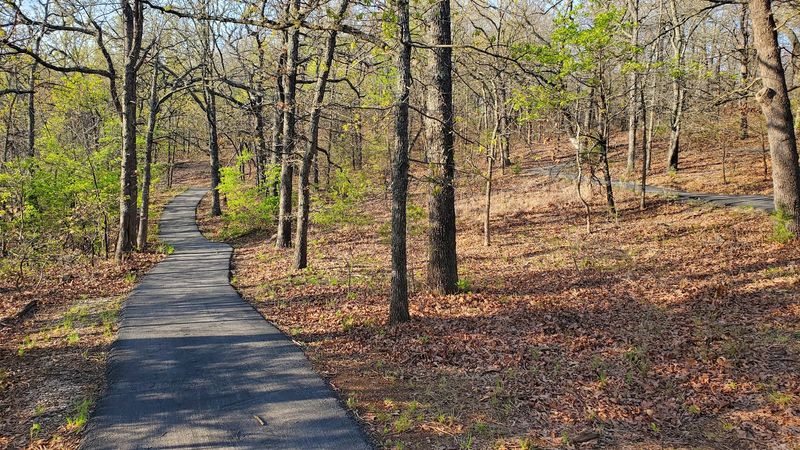
One of the most thoughtful aspects of Keystone Ancient Forest is how seriously Oklahoma takes accessibility here. The Childers Trail is a paved, fully accessible loop that allows people using wheelchairs or strollers to experience the ancient forest without needing to tackle rough terrain.
Beyond the paved trail, the preserve offers Trek Chairs, which are motorized off-road wheelchairs operated with a joystick.
These can be reserved for free through the preserve’s website, making it possible for people with mobility challenges to explore beyond the paved path and deeper into the forest environment.
It is a genuinely impressive commitment to inclusion that goes well beyond what most natural areas provide.
Benches are placed throughout the trail network at regular intervals, giving hikers of all fitness levels a chance to rest and take in their surroundings. Picnic tables and rocking chairs near the visitor center add to the relaxed, welcoming atmosphere.
The numbered emergency location markers on the trails are another practical safety feature that makes the whole experience feel thoughtfully managed.
Keystone Ancient Forest has clearly put real effort into making sure the forest is accessible not just physically but also emotionally, for every kind of visitor who shows up at the trailhead.
Seasonal Changes Transform the Forest Throughout the Year
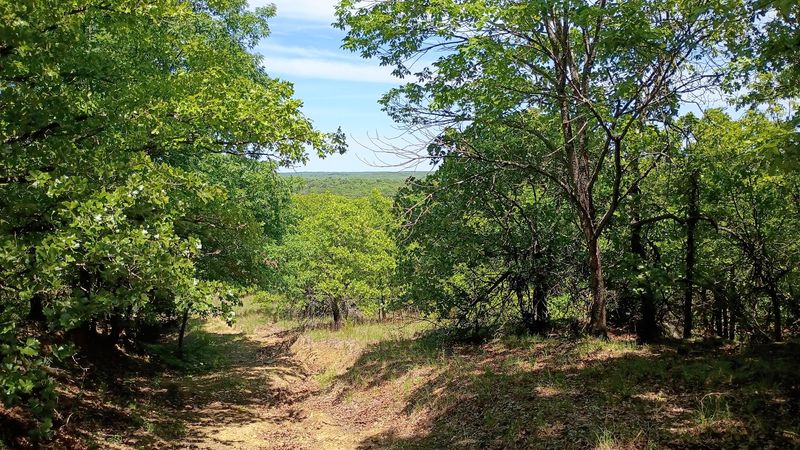
Coming back to Keystone Ancient Forest in different seasons is not a repeated experience. It is a completely different one each time.
The forest transforms in ways that are dramatic enough to justify multiple visits across a single year.
Spring brings wildflowers and fresh green growth pushing up through the forest floor, with birdsong reaching its peak as migratory species pass through Oklahoma.
Summer offers deep shade under the dense canopy, making even the harder trails more manageable than you might expect in a state known for its heat.
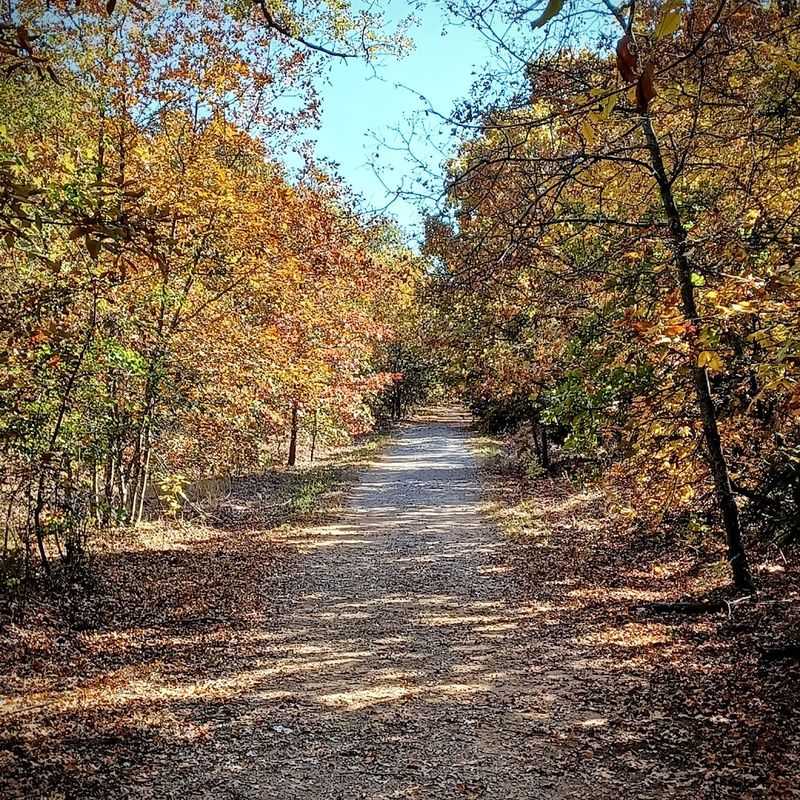
Autumn is when the deciduous oaks and hickories turn gold and copper, creating color contrasts against the evergreen cedars that are genuinely striking.
Winter strips the broad-leaved trees down to bare branches, opening up views through the forest that are completely hidden during other months. The ancient cedar trunks become the main visual feature, their reddish-brown bark and twisted forms standing out against a gray winter sky.
Each season reveals something new about the ecosystem, and the trails feel like entirely different places depending on when you visit. Planning a return trip before you have even finished the first one is a natural response to a forest this dynamic.
Practical Tips for Planning Your Visit
Getting the most out of a visit to Keystone Ancient Forest starts with knowing the hours. The preserve is open Thursday through Sunday only, with Thursday hours running from 7 AM to 2 PM and Friday through Sunday from 7 AM to 6 PM.
It is closed Monday through Wednesday, so planning ahead is essential to avoid a wasted trip.
Parking is free, which is a welcome detail. Bringing plenty of water is strongly recommended, especially for the longer and more demanding trails.
The Falls Trail and Less Traveled Trail both cover significant ground with real elevation changes, and dehydration is a genuine concern in Oklahoma’s warmer months. Wearing sturdy footwear with ankle support makes a noticeable difference on the rocky sections.
Seasonal visitors should be aware that ticks and snakes are present during warmer months, so staying on marked trails and checking yourself afterward is just good sense.
Pets are allowed on certain weekends, generally the first and third weekend of each month, so checking the preserve’s website before bringing a dog is worth the extra step.
The address is 160 Ancient Forest Drive, Sand Springs, Oklahoma 74063, and the phone number is 918-246-7795 for any questions before your visit.
Why This Forest Deserves a Place on Your Travel List
There are not many places in the United States where you can stand next to a tree that was already old when Shakespeare was writing plays. Keystone Ancient Forest in Oklahoma is one of them, and that fact alone makes it worth going out of your way to visit.
The combination of genuine ecological rarity, well-maintained trails, thoughtful accessibility features, and a knowledgeable volunteer community creates an experience that feels both meaningful and enjoyable. It is not a theme park version of nature.
It is the real thing, preserved through decades of careful stewardship and community dedication.
Oklahoma does not always get the recognition it deserves as a destination for outdoor exploration, but this forest makes a compelling case for the state’s natural richness.
The Cross Timbers ecosystem is one of the least understood and most underappreciated landscapes in the country, and Keystone Ancient Forest gives you direct, personal access to it in a setting that feels completely authentic.
Leaving the preserve, you carry with you a sense of perspective that is hard to find anywhere else. Some places remind you that the world was here long before us, and this forest is one of the most powerful reminders of all.
