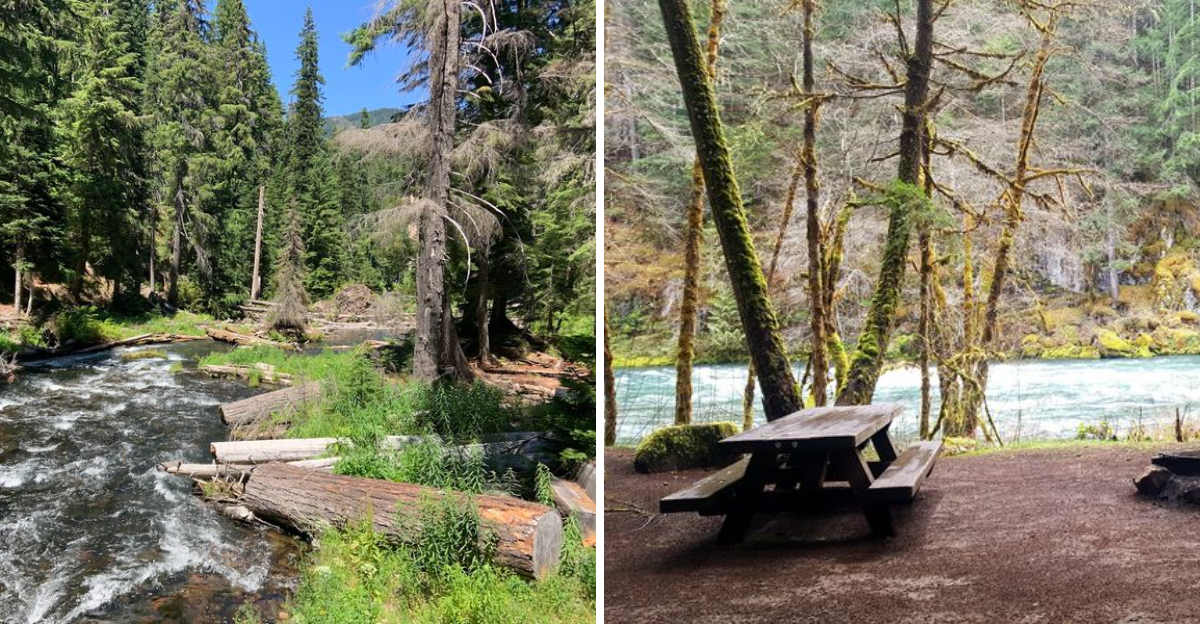
A 14.5-mile Oregon trail like this doesn’t ease you in. It pulls you straight into silence.
I start walking and quickly realize the world behind me disappears faster than expected.
The forest turns older, thicker, and wilder the deeper you go. Massive old-growth trees tower overhead, and everything feels untouched, like it’s been waiting far longer than you have.
Locals know the route, but it still carries a sense of total seclusion.
Every mile stretches the quiet a little further. No crowds, no noise, just the rhythm of footsteps and the forest breathing around you.
And somehow, the deeper you go, the more the silence starts to feel like the main attraction.
The Old-Growth Forest That Surrounds Every Step
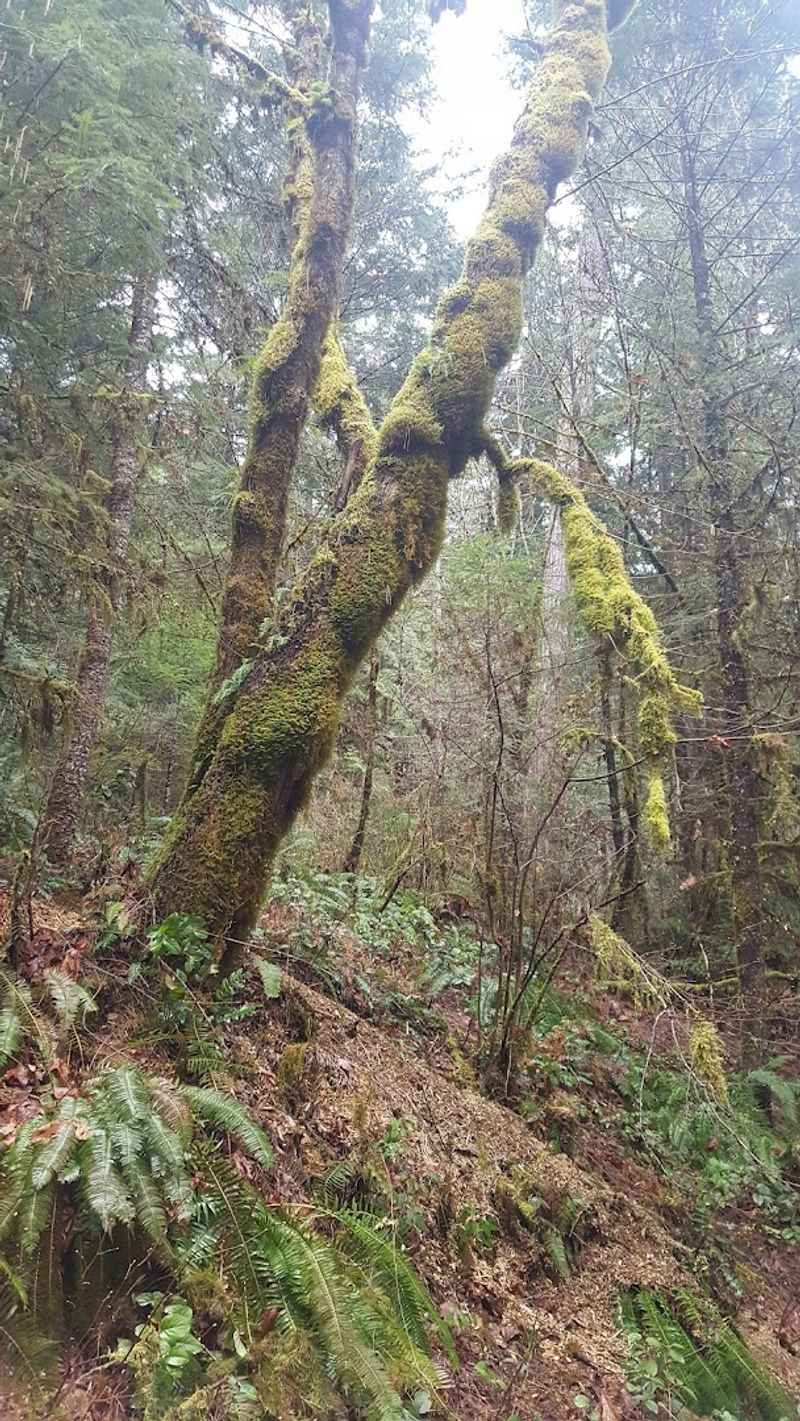
Walking into the old-growth section of the Tioga Segment feels like entering a cathedral. The trees here are enormous.
Douglas firs and western red cedars rise so high you have to tilt your head all the way back just to see the tops.
Some of these trees are hundreds of years old. Their bark is deeply furrowed and wrapped in thick green moss.
The forest floor stays cool and dim even on warm summer days.
Ferns carpet the ground in every direction. Fallen logs slowly decompose beside the trail, feeding new growth in a quiet cycle that has been happening here for centuries.
You start to notice small details, a woodpecker drumming somewhere above, a spider web catching the morning light between two ferns.
This is not a manicured park trail. It feels raw and real.
The old-growth canopy creates a kind of stillness that is hard to find anywhere else in Oregon. It is the kind of place that makes you slow down without even trying.
5 Miles of Solitude You Will Not Forget
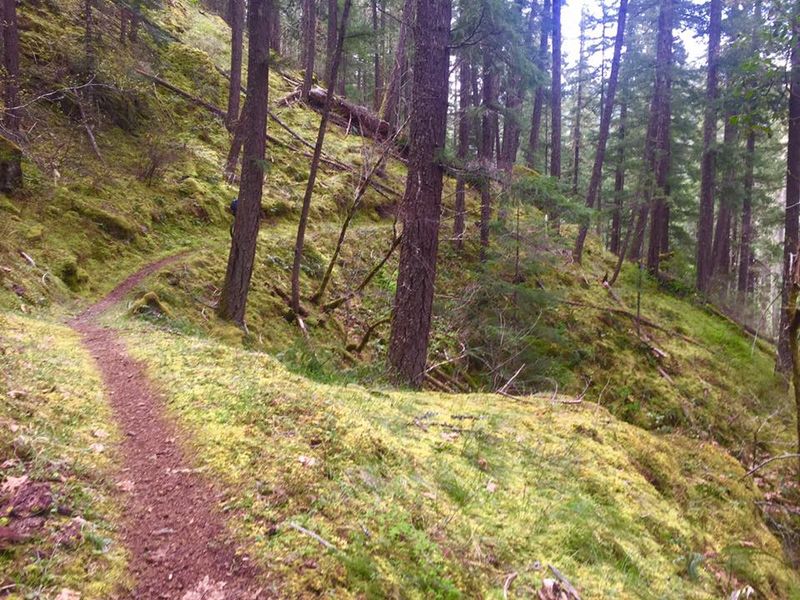
The full length of the Tioga Segment stretches 14.5 miles, and that distance means something out here. Most casual hikers turn back early.
The farther you go, the more the trail belongs entirely to you.
I passed only two other hikers on my visit. Both were heading in the opposite direction.
After that, the forest closed in and the silence became almost physical.
Long-distance trails like this one reward the hikers who commit. Each mile reveals something slightly different, a change in the tree species, a shift in the river’s sound, a new rocky outcrop appearing through the trees.
The trail does not hand you big dramatic views at every turn.
Instead, it builds a slow, layered experience. You earn the quiet.
You earn the connection to this particular stretch of wilderness. By the time you reach the far end, the 14.5 miles feel less like a distance and more like a conversation you had with the forest.
It stays with you.
The North Umpqua River Running Alongside the Trail
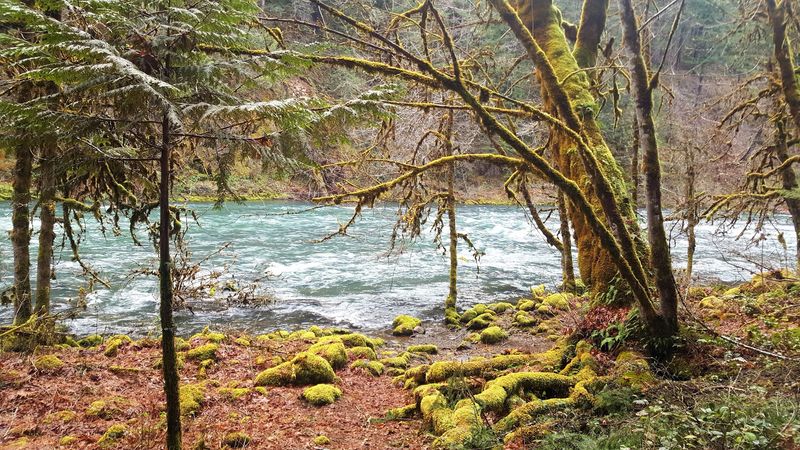
The river is a constant companion on the Tioga Segment. You hear it before you see it most of the time.
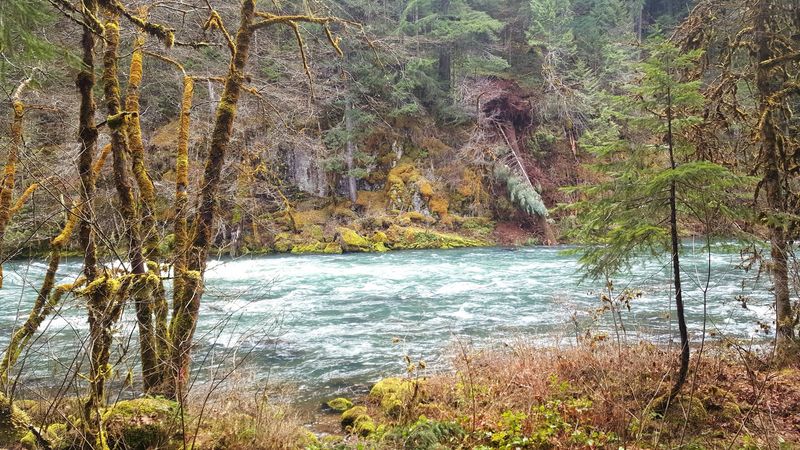
The North Umpqua runs cold and clear, tumbling over smooth basalt rocks with a sound that fills the whole valley.
At certain points the trail drops close to the water’s edge. You can crouch down and watch the current move over the stones.
The water is remarkably clear, and on calm stretches you can see right to the bottom.
The river also shapes the microclimate along the trail. The air near the water feels noticeably cooler and damper.
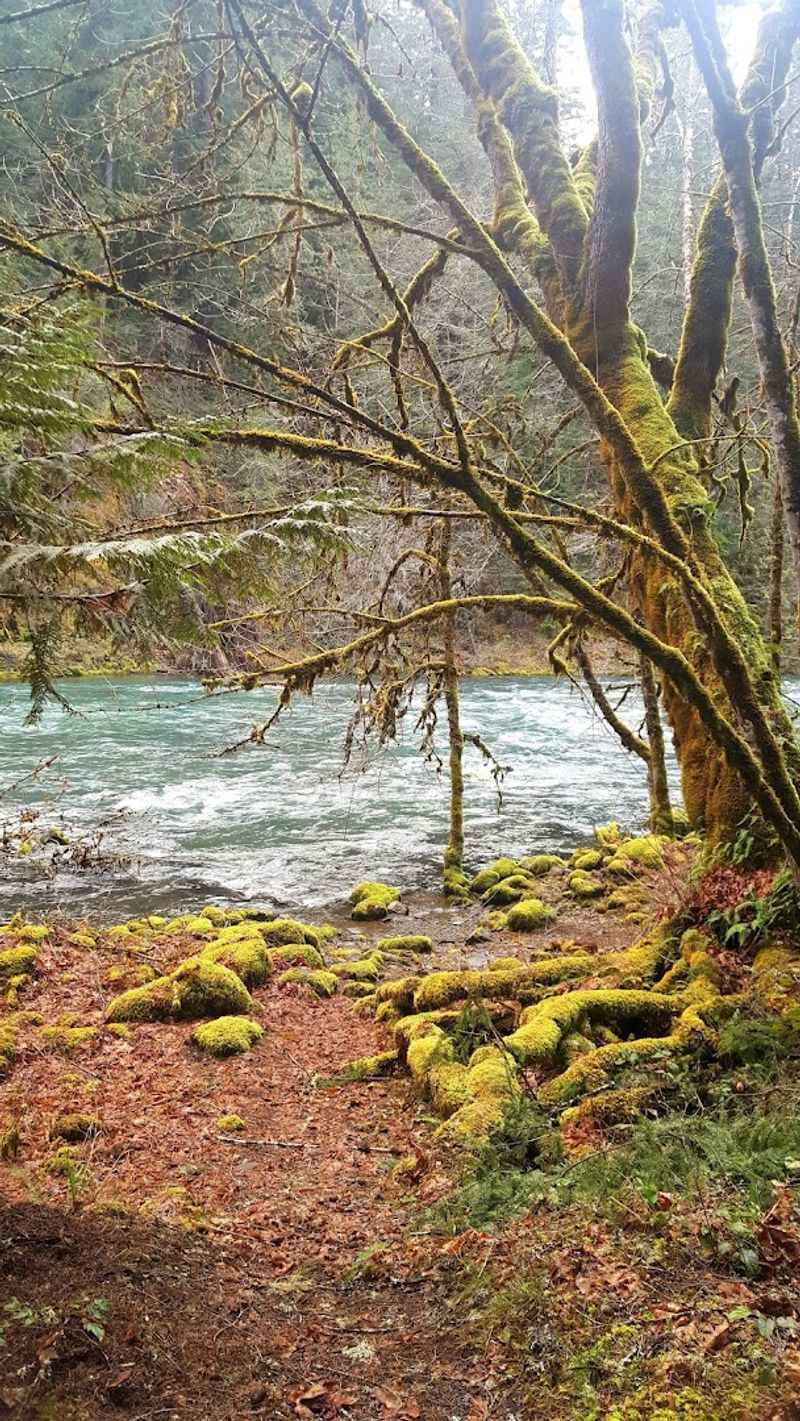
Moisture-loving plants crowd the banks, and the smell of wet earth and moving water follows you for miles.
Photographers will find incredible compositions where the trail curves near the river. Early morning light hits the water at a low angle and turns everything golden.
Even if you have no camera, just standing at the river’s edge for a few minutes resets something in you. It is genuinely restorative.
Getting to the Trailhead and What to Expect on Arrival
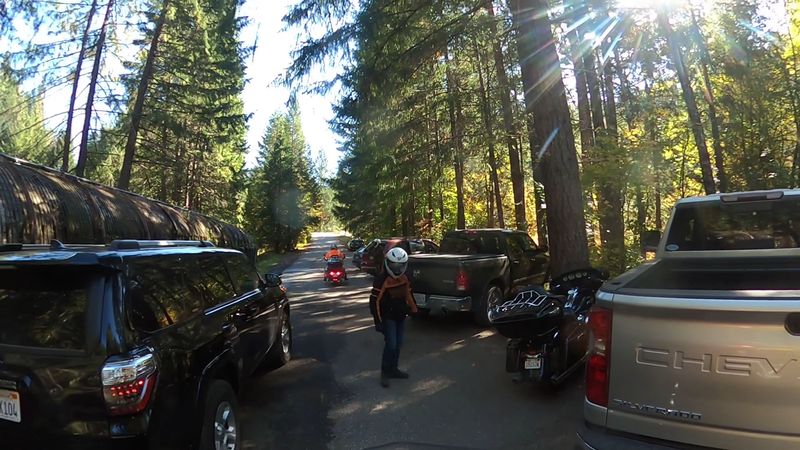
Reaching the Tioga Segment requires a bit of planning. The trail sits within Umpqua National Forest, and access roads are mostly paved but narrow in places.
A standard passenger car handles the drive fine in dry conditions.
The trailhead areas are quiet and no-frills. Do not expect large parking lots or visitor centers.
There are basic facilities at some access points, but amenities are minimal by design.
Cell service disappears well before you reach the trailhead. Download your maps before leaving town.
The nearest services are in the small community of Idleyld Park along Highway 138, which serves as a practical base for exploring this part of the North Umpqua corridor.
Arriving early in the morning is genuinely worth the effort. The forest is at its most atmospheric before 9 a.m., when mist still clings to the lower slopes and the light filters through the canopy in long, soft beams.
Parking at popular access points fills up on summer weekends, so an early start also helps with that practical concern.
Wildlife You Might Encounter Along the Way
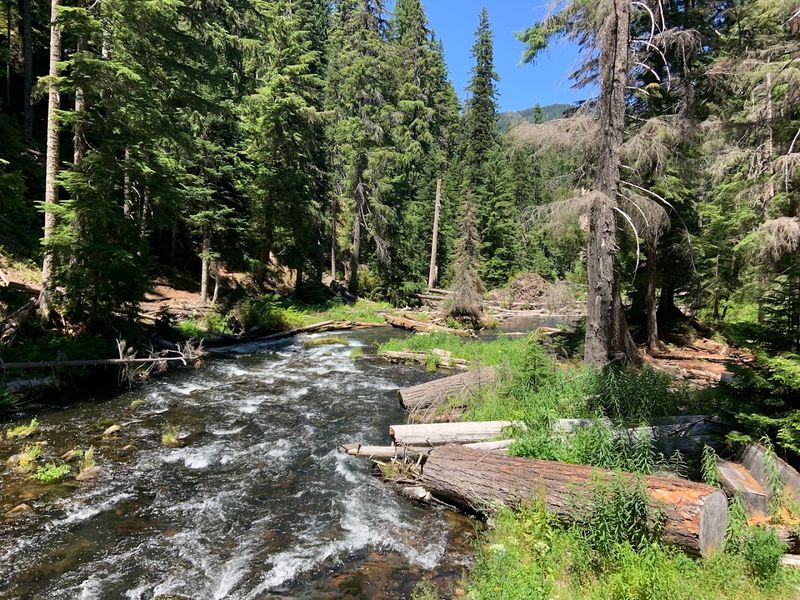
The Tioga Segment passes through prime wildlife habitat. Black-tailed deer are common along the trail, especially in the early morning and late afternoon.
They often stand completely still and watch you pass before disappearing into the undergrowth.
Black bears also live in this forest. Sightings are not guaranteed, but the signs of their presence are easy to spot.
Scratched bark, overturned rocks, and berry-stained soil tell the story of an active bear population moving through the area.
Birdlife is rich and varied. Pileated woodpeckers drill into standing dead trees with a loud, mechanical rhythm that echoes through the forest.
Dippers bounce along the river rocks. Ospreys patrol the river corridor looking for fish in the clear water below.
Ticks are present during the wet season, as trail users have noted. Wearing long pants and applying insect repellent before hitting the trail makes a real difference.
Checking yourself and your dog thoroughly at the end of the day is a smart habit out here.
Trail Conditions and What to Check Before You Go
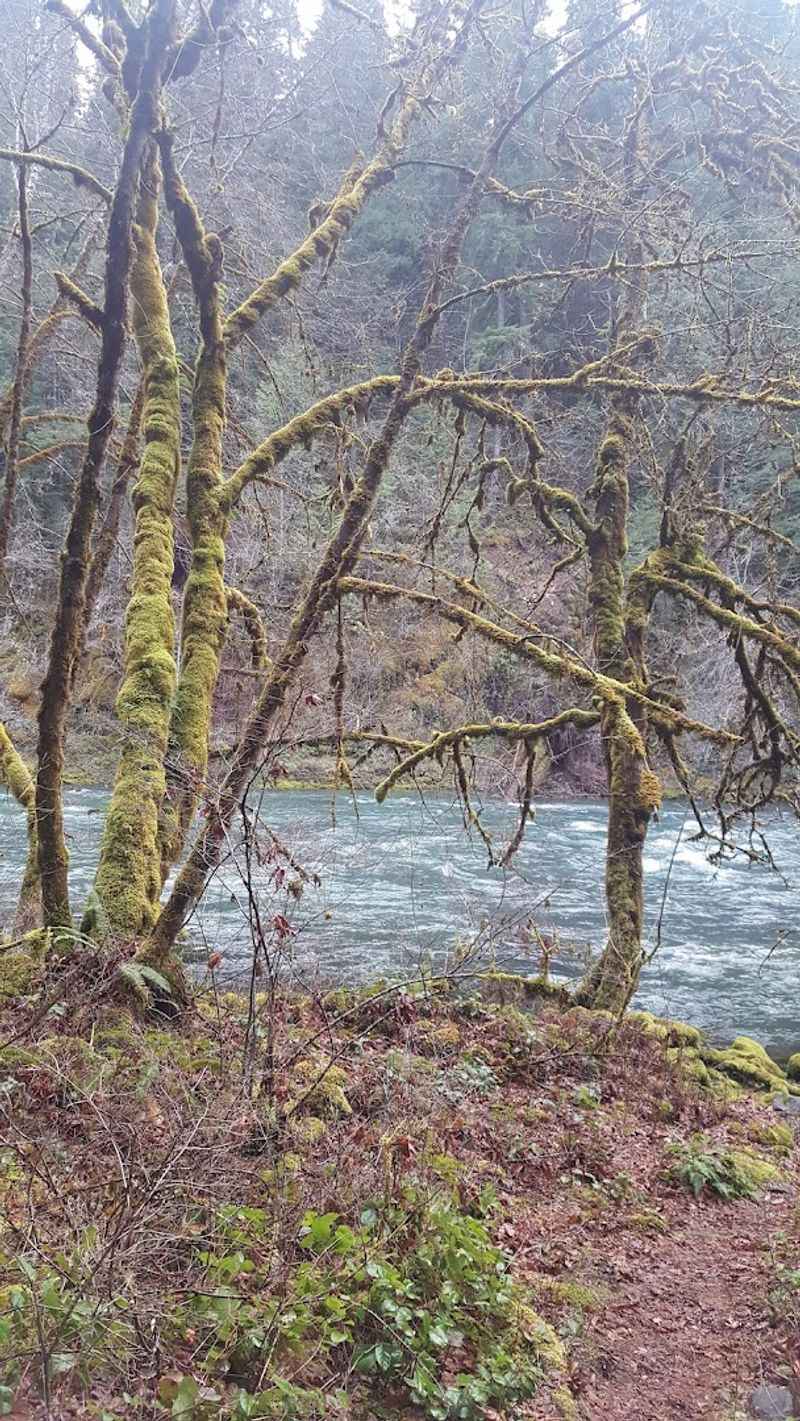
Trail conditions on the Tioga Segment can vary significantly depending on the season. Windstorms and heavy snow can drop trees across the path, sometimes in large numbers.
Hikers have reported navigating dozens of blowdowns in a single trip after a rough winter.
Calling the Umpqua National Forest ranger station before your visit is genuinely useful. The staff can tell you about current trail conditions, recent maintenance work, and any closures that might affect your plans.
That one phone call can save you a frustrating surprise mid-hike.
Spring brings lush greenery but also soft, muddy sections. Summer is generally the most reliable season for dry, clear trail conditions.
Fall offers stunning color and cooler temperatures, making it a favorite time for experienced hikers.
Bring trekking poles if you have them. Some sections involve rocky terrain and river-adjacent slopes where extra stability is genuinely helpful.
Good footwear matters here. A solid pair of waterproof trail shoes will serve you far better than light sneakers on this particular stretch of trail.
Camping Options Near the Tioga Segment
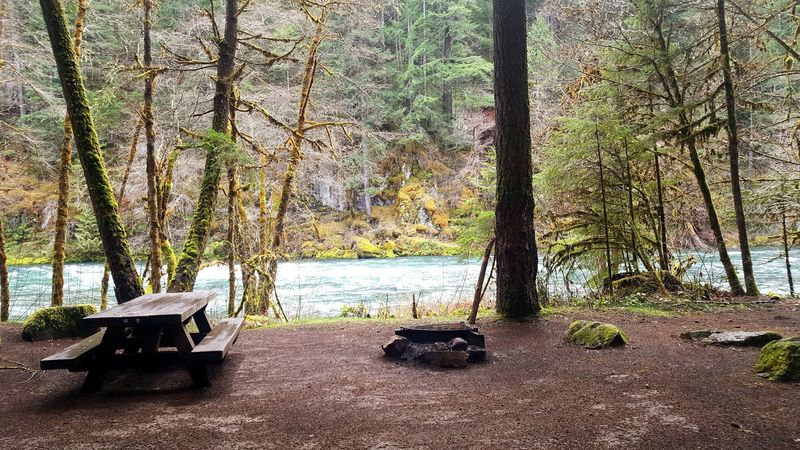
Spending a night near the Tioga Segment transforms the whole experience. The forest feels completely different after dark.
The sounds deepen, the stars appear through gaps in the canopy, and the river sounds louder somehow in the quiet of the night.
Several campgrounds operate along the Highway 138 corridor near the North Umpqua Trail system. These range from developed sites with basic facilities to dispersed camping areas for those who prefer a more primitive experience.
Camping multiple nights in the area is the best way to explore the Tioga Segment properly. The full 14.5-mile length is challenging to complete in a single day for most hikers while still enjoying the surroundings.
Breaking it into sections over two days allows you to move at a relaxed pace.
Bear canisters or hanging your food properly is important in this area. The forest is active bear habitat.
Following Leave No Trace principles keeps the area pristine for everyone who comes after you. Pack out everything you pack in.
The trail’s wild character depends on it.
The Unique Geology Shaping This Stretch of Trail
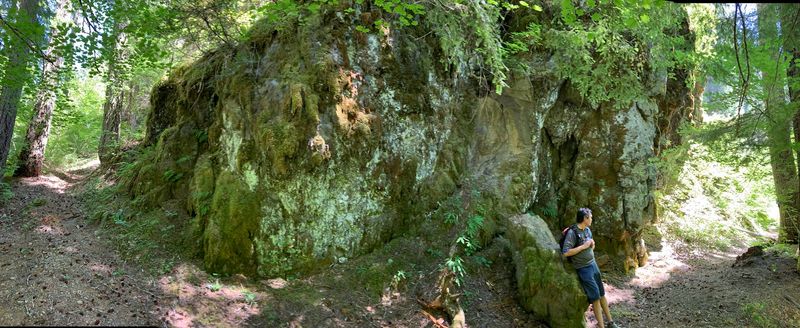
The landscape along the Tioga Segment sits atop ancient volcanic geology. The North Umpqua River has cut through layers of basalt over thousands of years, creating the dramatic canyon terrain the trail follows.
The rock walls and boulders you pass tell a story of intense geological activity long before any human walked this ground.
Basalt outcrops appear regularly along the trail. Some are draped in thick moss and lichen, turning otherwise hard rock into something that looks almost soft.
The contrast between the dark stone and the bright green forest around it is visually striking.
The river has shaped the land in other ways too. Deep pools have formed where the current slows around large boulders.
The sound changes from a rushing tumble to a low, rolling gurgle in these wider sections. It is one of the more subtle but satisfying shifts you notice as you walk.
Understanding the geology adds a layer of appreciation for the trail. The canyon you are walking through did not happen by accident.
It is the result of millions of years of water, rock, and time working together.
Best Time of Year to Hike the Tioga Segment
Timing your visit to the Tioga Segment makes a noticeable difference in the experience. Late spring through early fall covers the most reliable window for good conditions.
Snow can linger at higher elevations well into May, and winter storms can make access roads difficult.
Summer is the most popular season, and for good reason. The days are long, the trail is dry, and the river runs at a manageable level.
Wildflowers appear in open patches and along the riverbanks during June and July.
Fall is genuinely special on this trail. Vine maple and big-leaf maple turn brilliant shades of orange and gold against the backdrop of the dark evergreen forest.
The colors peak in October and create a visual contrast that feels almost theatrical.
Spring has its own appeal, particularly for those who enjoy lush, saturated green tones and the sounds of high water in the river. Just be prepared for muddy sections and check trail conditions carefully.
Every season brings something worth seeing on this stretch of the North Umpqua.
What to Pack for a Day on This Remote Trail
Packing well for the Tioga Segment is not optional. The trail is remote, and help is not close by if something goes wrong.
A ten-essentials kit is a sensible baseline for any hike out here.
Water is critical. The trail runs near the river, but treating or filtering water before drinking it is essential.
Carry at least two liters from the start and refill using a reliable filter if you plan to be out for a full day.
Layers matter even in summer. The old-growth canopy keeps temperatures cool, and afternoon clouds can roll in quickly in the mountains.
A lightweight rain jacket takes up almost no space and can save your day if the weather shifts.
Navigation tools deserve attention too. A downloaded offline map or a printed topo map is far more reliable than cell service out here.
A small first aid kit, a headlamp, and some high-energy snacks round out the essentials. Trekking poles are a strong recommendation for the rockier sections near the river.
Go prepared and the trail rewards you generously.
Dear Reader: This page may contain affiliate links which may earn a commission if you click through and make a purchase. Our independent journalism is not influenced by any advertiser or commercial initiative unless it is clearly marked as sponsored content. As travel products change, please be sure to reconfirm all details and stay up to date with current events to ensure a safe and successful trip.
