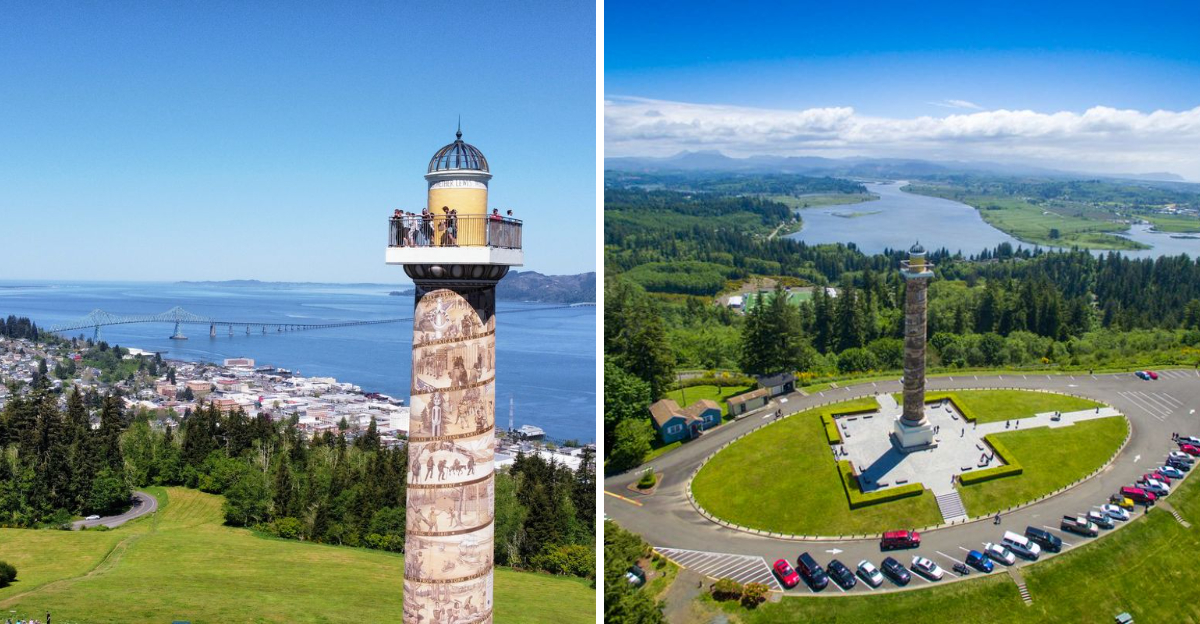
At the very tip of northwest Oregon, one climb changed how I see Astoria forever. The Astoria Column rises 125 feet above Coxcomb Hill, looking innocent enough from the parking lot, but those 164 spiraling steps get real very quickly.
Built in 1926, the column is wrapped in hand-painted scenes of Pacific Northwest history, so you’re literally climbing through time as your legs start questioning your life choices.
About halfway up, the staircase narrows and every footstep echoes, which somehow makes the anticipation even better.
I reached the top on a crisp morning, lungs working overtime, and sent a little wooden glider sailing out into open air while the Columbia River stretched endlessly below me. Mountains, forest, river, ocean, all in one jaw-dropping spin.
My calves complained for days, but my camera roll hasn’t shut up since. Five bucks, a bit of grit, and suddenly you’re standing where explorers once stood, wondering how anyone ever left.
The real surprise comes after the climb, when you realize this view might ruin every lookout for you forever.
The Legendary 164-Step Spiral Staircase
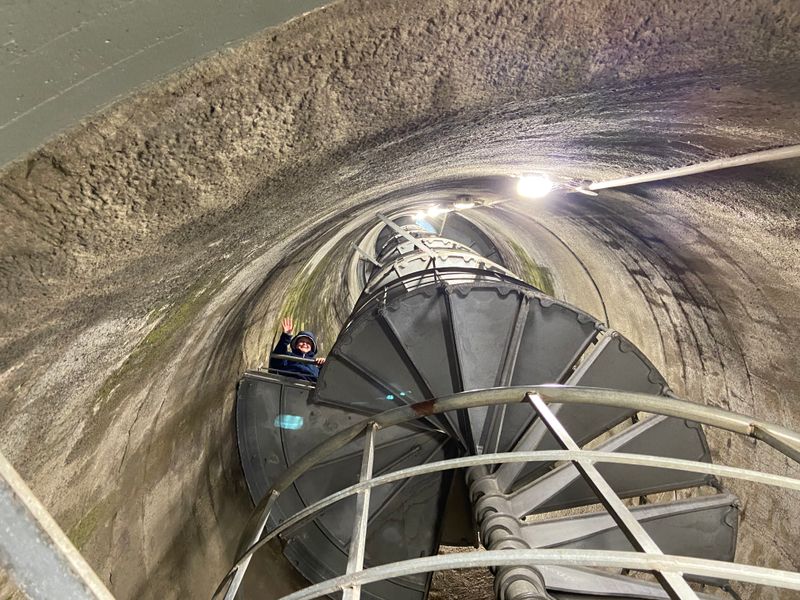
Climbing this staircase feels like entering a nautilus shell designed by someone who really loved a good workout. The steps spiral tightly upward through the column’s hollow core, narrow enough that you’ll definitely make new friends with strangers squeezing past in the opposite direction.
Every 32 steps, a landing gives your burning thighs a merciful break and a chance to catch your breath before tackling the next section.
The metal stairs clang softly under your feet, creating a rhythmic soundtrack to your ascent. I noticed how the temperature drops as you climb higher, and the breeze filtering down from the top gets stronger with each turn.
Some people zoom up in minutes, while others take their time, pausing to peer through small openings at the painted murals visible through gaps in the structure.
If you’re claustrophobic or struggle with heights, this staircase will definitely test your comfort zone. The inside railing only exists on one side, so you’re trusting your balance and grip as people pass by.
But reaching that final step and stepping onto the observation deck makes every wobbly moment worth the effort and adrenaline.
Panoramic Views That Redefine Breathtaking
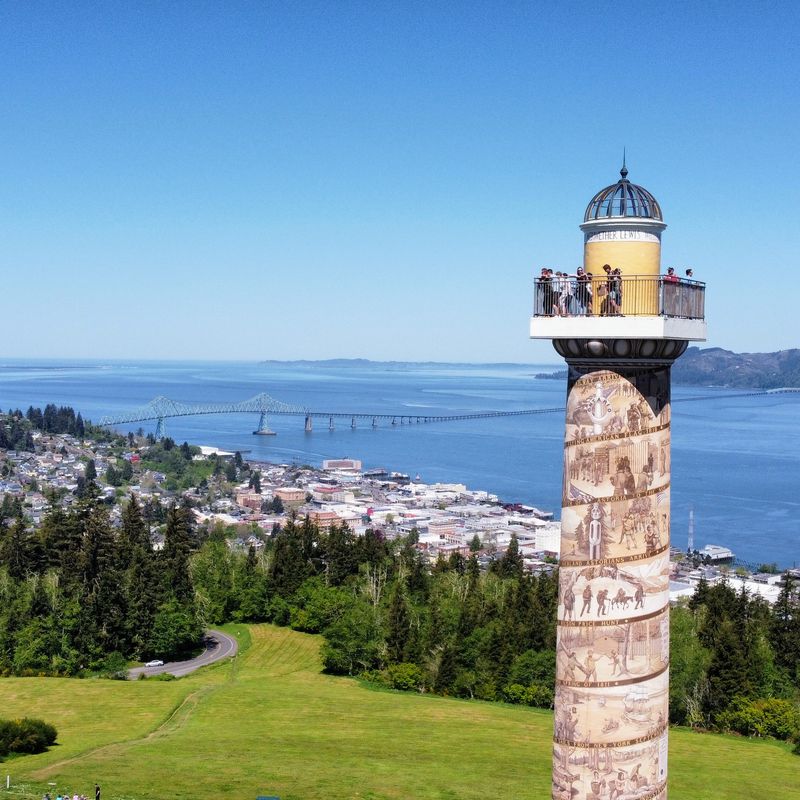
Stepping onto that observation deck hits differently when you’ve earned it with your own two legs. The 360-degree views spread out like a living map, with the Columbia River snaking westward to crash into the Pacific Ocean in a dramatic meeting of freshwater and salt.
On clear days, I could trace the Astoria-Megler Bridge stretching four miles across the river, looking like a delicate thread connecting Oregon to Washington.
To the south, the Coast Range mountains roll in green waves toward the horizon. Looking north, you’ll spot Youngs Bay glittering in the sunlight, while Saddle Mountain rises distinctively in the distance.
The town of Astoria spreads below like a miniature village, with Victorian houses dotting the hillsides and boats bobbing in the harbor.
Weather changes everything up here. Foggy mornings create mysterious layers that hide and reveal landmarks like nature’s own magic trick.
Windy days make you grip the railing tighter but also blow away any haze for crystal-clear views. I visited during golden hour once, and watching the sun paint the river orange while shadows stretched across the landscape felt like witnessing Oregon show off its best party trick.
Launching Wooden Gliders from the Summit
Buying a wooden glider at the gift shop before your climb ranks among the best three-dollar decisions you’ll make in Oregon. These lightweight balsa planes fold together in seconds, and once you reach the top, launching them into the wind creates this unexpectedly joyful moment that transforms serious adults into giggling kids.
I watched my glider catch an updraft and soar in wide circles before disappearing into the trees below, and honestly, it felt magical.
The windy conditions at the summit make perfect flying weather for these little aircraft. Some people bring multiple planes, launching them in different directions to test wind patterns and distance.
You’ll see gliders scattered across the hillside below, creating this quirky graveyard of attempted flights that somehow adds to the charm rather than looking like litter.
Kids absolutely love this activity, but so do their parents and grandparents. There’s something primal and satisfying about watching your creation fly, even if it’s just a mass-produced toy.
The tradition started decades ago and continues strong, with the gift shop stocking multiple designs and colors. Pro tip: buy two planes because you’ll definitely want a second chance after your first one sails away into the forest canopy forever.
The 1926 Construction and Roman-Inspired Design
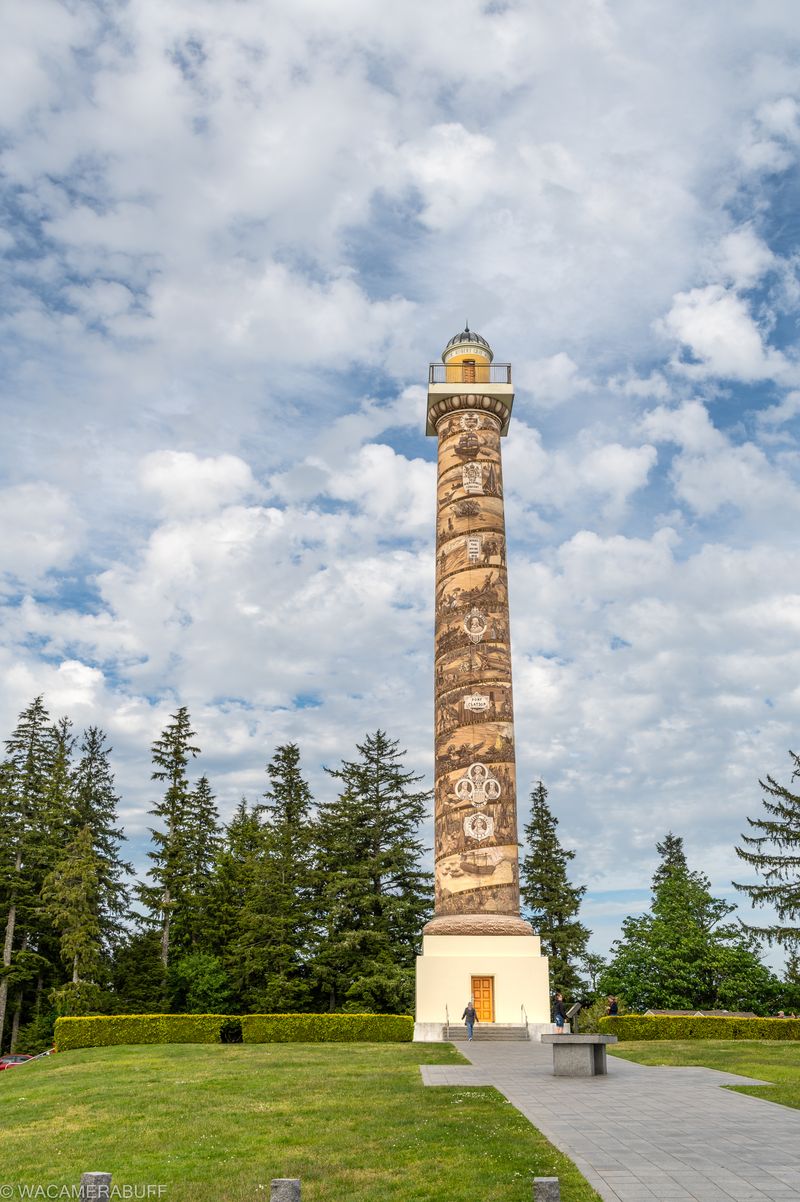
Ralph Budd, president of the Great Northern Railway, commissioned this monument as part of a series celebrating westward expansion, though the Astoria Column remains the only one still standing. Designed to echo Rome’s Trajan Column, the structure uses reinforced concrete rather than marble, a practical choice for Oregon’s wet climate that proved incredibly durable.
Construction took months in 1926, with workers carefully applying the plaster layers that would become those stunning murals.
The column stands 125 feet tall with a diameter of about 14 feet at the base, proportions that mirror classical Roman architecture while adapting to American engineering standards. Vincent Astor, whose great-grandfather John Jacob Astor founded the fur-trading post that became Astoria, helped fund the project.
This connection between the Astor family fortune and the column’s existence adds another layer to the historical significance wrapped into this concrete tower.
Engineers reinforced the spiral staircase in 2009 after decades of foot traffic took their toll on the original construction. The reinforcement work happened carefully to preserve the structure’s historic integrity while ensuring modern safety standards.
Walking up those stairs today, you’re climbing through nearly a century of history, following the same path that visitors have traced since Calvin Coolidge was president and Oregon was still very much frontier territory in many people’s minds.
The Gift Shop and Annual Parking Pass System
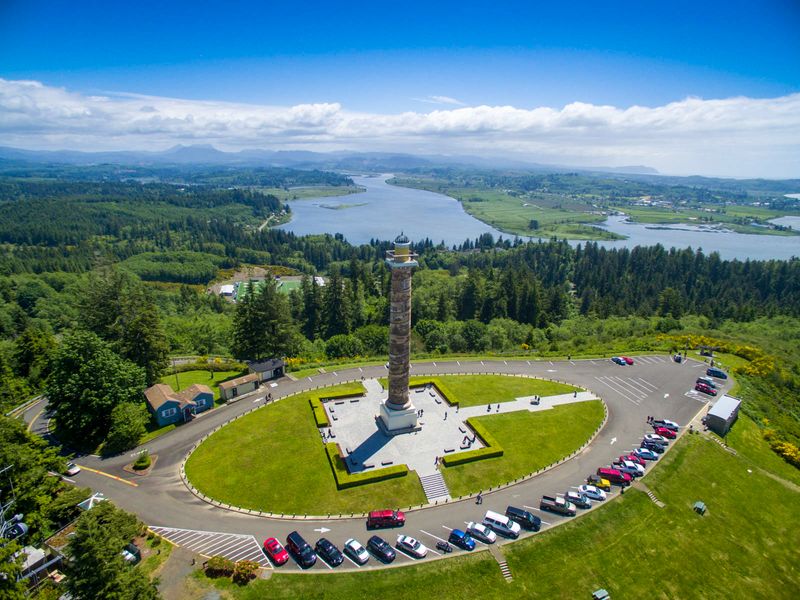
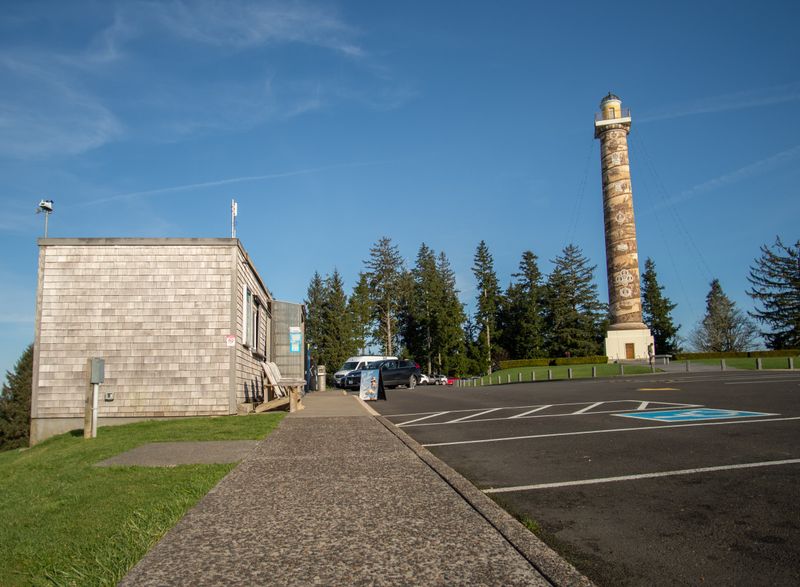
The compact gift shop near the parking area stocks way more charm than its small footprint suggests possible. Beyond the essential wooden gliders, you’ll find locally made souvenirs, Oregon-themed gifts, historical books about the region, and postcards that actually capture the column’s majesty.
I grabbed a coffee mug with the murals printed around it, and it’s become my favorite reminder of that first climb to the top.
The five-dollar parking fee might seem like a minor annoyance until you realize it’s actually an annual pass valid through December 31st of the purchase year. That sticker on your windshield grants unlimited returns, encouraging multiple visits across different seasons and weather conditions.
The fee directly funds maintenance, restoration work, and operational costs, so you’re literally investing in preserving this landmark for future generations.
Staff members working the gift shop and parking booth genuinely love sharing information about the column’s history and the best times to visit for specific views. They’ll warn you about foggy forecasts, suggest sunrise visits for photographers, and share stories about the windiest days when gliders flew for record distances.
The shop keeps reasonable hours that align with the column’s operating schedule, opening at 5 AM for early birds and staying accessible until 9 PM during peak season, giving you flexibility to plan visits around your schedule and the lighting you prefer.
Cathedral Tree Trail and Surrounding Park Grounds
After conquering those 164 steps, your legs might crave a gentler adventure, and the Cathedral Tree Trail delivers exactly that. This three-mile loop winds through old-growth forest where massive Sitka spruce and Douglas fir trees create a living cathedral with branches arching overhead like natural vaulted ceilings.
The trail’s name comes from one particularly impressive spruce that towers above its neighbors, inspiring the kind of reverent silence usually reserved for actual cathedrals.
The forest floor stays relatively soft and forgiving, covered in needles, ferns, and moss that cushion your steps. I encountered deer browsing peacefully, heard woodpeckers hammering away at dead snags, and spotted banana slugs crossing the path like they owned the place.
The trail connects to other paths that extend your hiking options if you’re feeling energetic or just want to spend more time surrounded by these ancient trees.
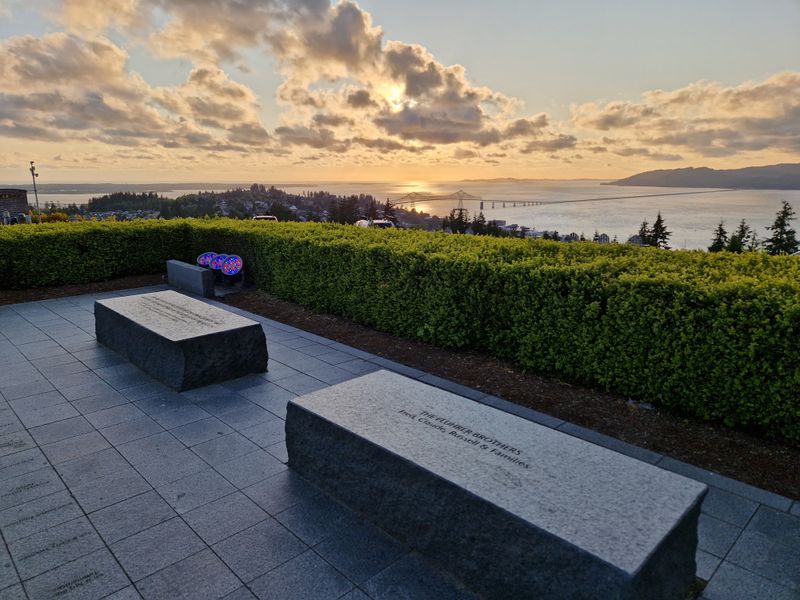
Park benches scattered around the column’s base offer perfect spots for picnics or just sitting quietly while watching other visitors launch their gliders. The grassy slopes invite lounging on sunny days, and I’ve seen families spreading blankets for impromptu picnics with million-dollar views.
Dogs are welcome on leashes throughout the park grounds, though they can’t climb the column itself, giving them plenty of space to explore while you tackle the stairs.
Physical Challenge and Accessibility Considerations
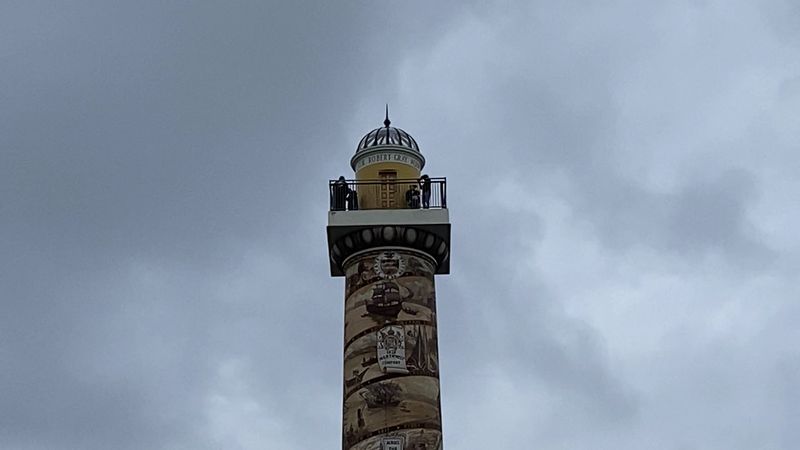
Let’s be honest about what you’re signing up for when you tackle this climb. Those 164 steps spiral tightly through a space that feels increasingly narrow as you ascend, and the continuous turning can trigger vertigo in people who normally handle heights just fine.
I’m comfortable with elevation, but even I felt my head spinning slightly after the first few rotations, and I needed those landing breaks more than I expected.
The stairs themselves are steep, and there’s only one handrail on the outer edge, meaning people going up the inside track are essentially free-climbing with nothing to grab except the wall. When you meet someone coming down while you’re going up, somebody needs to flatten against the wall to let the other pass, and these moments can feel awkward and slightly precarious.
The metal steps ring loudly under foot traffic, creating echoes that bounce around the hollow interior.
If you have knee problems, mobility limitations, or serious claustrophobia, this climb probably isn’t for you, and that’s completely okay. The views from the parking area and surrounding hillside still deliver impressive panoramas without requiring the vertical adventure.
The column lacks elevator access or alternative routes to the top, making it genuinely inaccessible for wheelchairs or anyone unable to manage stairs. But for those who can make the climb, the sense of accomplishment adds extra satisfaction to those summit views.
Operating Hours and Best Times to Visit
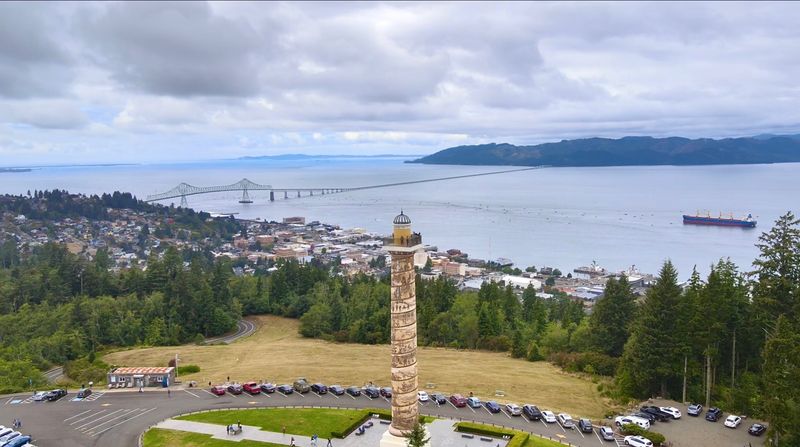
The column opens its gates at 5 AM, making sunrise visits absolutely magical for photographers and early risers who appreciate having the place mostly to themselves. I climbed at dawn once and watched the sun break over the Coast Range while fog filled the valleys below, creating layers of light and shadow that shifted by the minute.
The air feels crisp and clean at that hour, and the silence makes the experience feel almost spiritual.
Operating hours extend until 9 PM, allowing sunset chasers and evening visitors to catch golden hour light painting the landscape in warm tones. Summer brings longer days and more flexible timing, while winter shortens the window but offers dramatic weather and clearer air after storms pass through.
The column stays open seven days a week year-round, located at 1 Coxcomb Dr, Astoria, OR 97103, with very few closures except during severe weather or maintenance work.
Weekday mornings typically see lighter crowds than weekend afternoons, giving you more breathing room on the staircase and observation deck. Foggy days might obscure distant views but create atmospheric conditions that feel mysterious and moody.
Calling ahead at 503-325-2963 helps confirm conditions if you’re traveling specifically to visit. Whatever timing you choose, this climb through Oregon history delivers experiences that stick with you long after your legs stop complaining about those 164 steps.
Dear Reader: This page may contain affiliate links which may earn a commission if you click through and make a purchase. Our independent journalism is not influenced by any advertiser or commercial initiative unless it is clearly marked as sponsored content. As travel products change, please be sure to reconfirm all details and stay up to date with current events to ensure a safe and successful trip.
