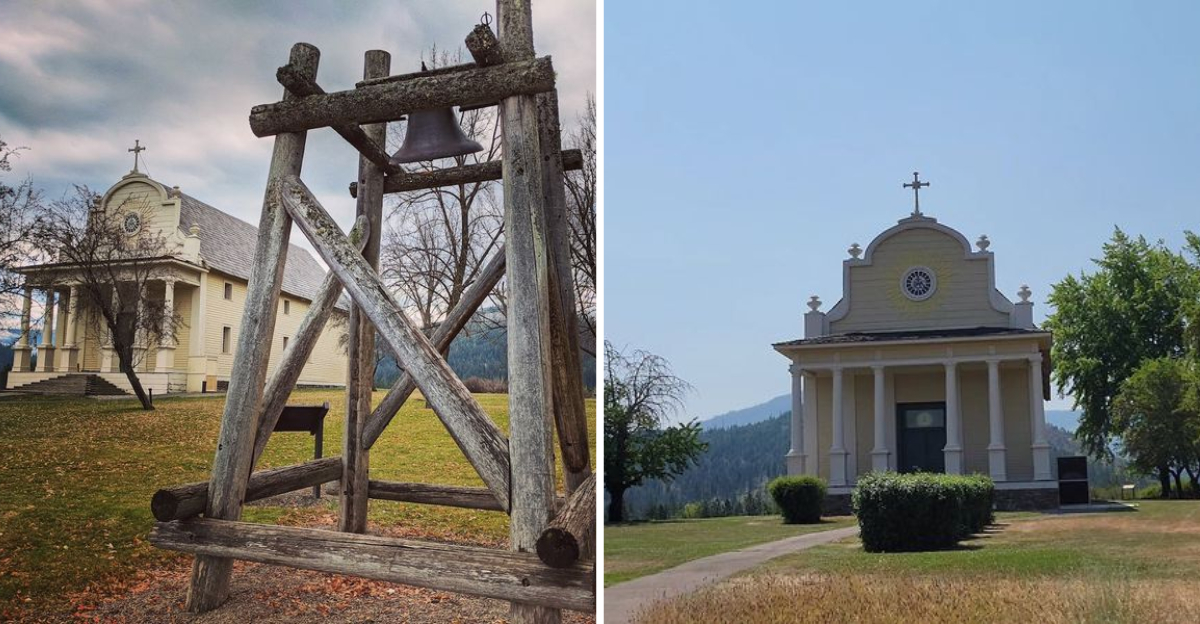
Oldest standing building in Idaho, built in eighteen fifty three. No nails hold it together, just wooden pegs, mud, grass, and sheer determination.
Jesuit missionaries and members of the Coeur d’Alene Tribe built it together. More than a hundred and seventy years later, it still stands. Quiet, humble, and completely outlasting everything around it.
I pulled off the highway and walked up to it not knowing what to expect. The stillness hit me first. The kind of quiet that makes you lower your voice without thinking.
Passing through Idaho and skipping this stop would be a mistake.
A Church Built Without a Single Nail
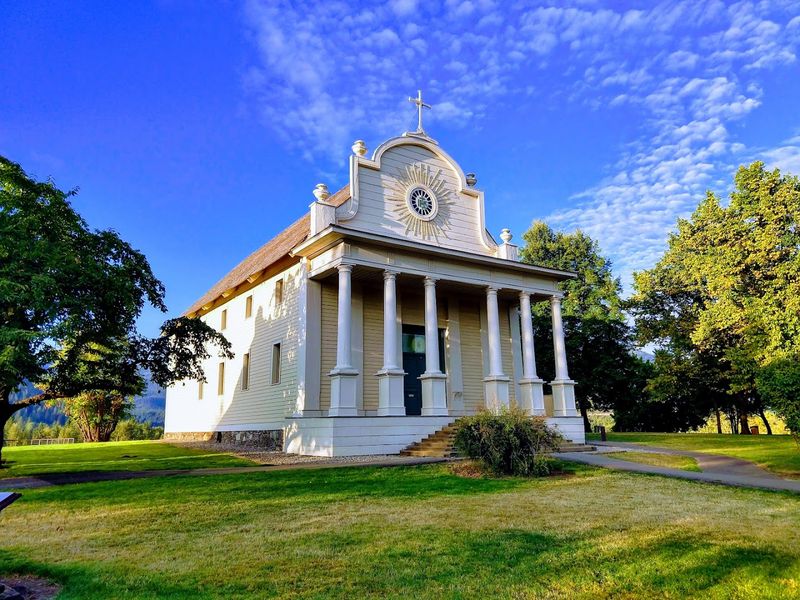
There is something almost defiant about a building that refuses to fall down. The Mission of the Sacred Heart, better known as the Cataldo Mission, was constructed between 1850 and 1853 using no nails whatsoever.
Wooden pegs and mortise and tenon joints hold the entire structure together, a technique that has proven far more durable than anyone might have expected.
The tools available to the builders were remarkably basic. A broad-axe, an auger, rope and pulleys, a pen-knife, and an improvised whipsaw were essentially all they had.
With those simple tools, missionaries and Coeur d’Alene Tribe members raised a building that now holds the title of oldest standing structure in all of Idaho.
The walls were built using the wattle and daub method, which means saplings were woven together and then packed with a mixture of mud, grass, and straw. It sounds fragile, but the results speak for themselves.
Visiting this church feels less like a history lesson and more like a quiet conversation with the past. The sheer ingenuity on display here is genuinely humbling, and it makes you rethink what humans are capable of when necessity drives creativity.
The Visionary Behind the Design
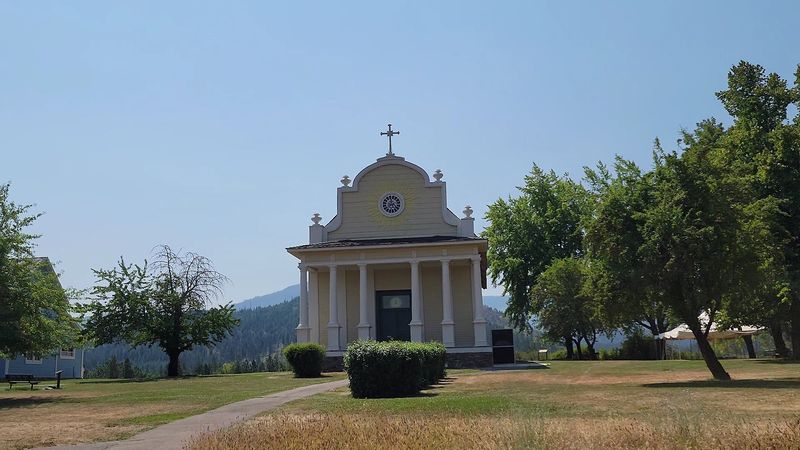
Father Anthony Ravalli was not your average frontier priest. An Italian Jesuit missionary with a background that spanned medicine, art, and architecture, he brought an unusually sophisticated eye to what most people assumed would be a simple wilderness chapel.
His design drew from simplified Baroque traditions, layered with Greek Revival and Italianate influences.
That might sound like a lot of style for a remote Idaho hillside, and honestly, it kind of is. But that contrast is exactly what makes the Cataldo Mission so striking.
You are standing in the middle of the Pacific Northwest wilderness looking at a church that would not feel out of place in a much larger city.
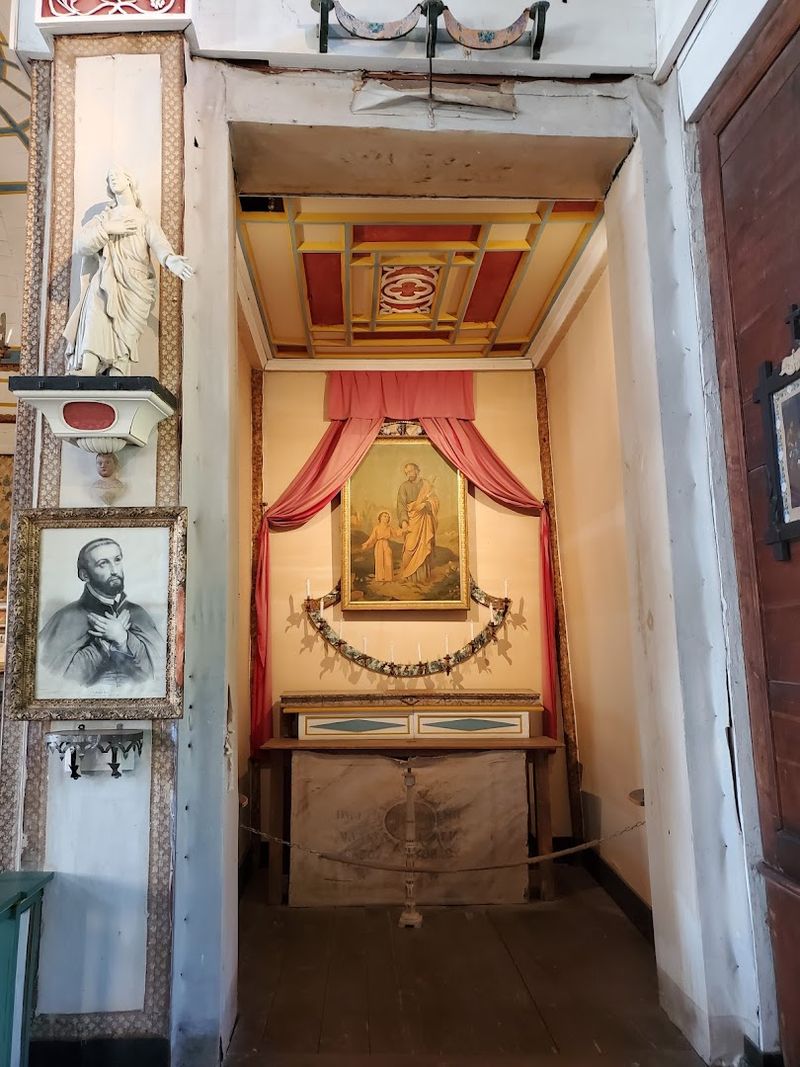
Ravalli also turned his artistic talents inward, carving wooden statues using only a knife. He improvised chandeliers from repurposed tin cans and decorated the interior walls with fabric and hand-painted newspaper.
The blue coloring visible on interior woodwork came from pressed huckleberry stains, a detail so specific and inventive it is hard not to smile. Father Ravalli was clearly someone who refused to let limited resources limit his vision, and the mission stands as a lasting tribute to that stubborn creativity.
The Coeur d’Alene Tribe’s Irreplaceable Role
The story of the Cataldo Mission cannot be told without centering the Coeur d’Alene people, because without them, there simply would be no mission. Tribal members worked alongside Catholic missionaries through every phase of construction, contributing labor, local knowledge, and skills that were absolutely essential to the project’s success.
Local materials were sourced with the help of people who knew this land intimately. The wattle and daub walls, the gathered saplings, the mud mixed with straw, all of it came from the surrounding environment that the Coeur d’Alene Tribe had lived within and understood for generations.
That knowledge was not incidental. It was foundational.
In 2001, ownership of the property was formally conveyed from the Catholic Diocese of Boise to the Coeur d’Alene Tribe, a transfer that felt like a meaningful full circle moment in the site’s long history. The tribe’s connection to this place never really went away.
It just became official again. Visiting Old Mission State Park today means standing on land that carries deep cultural significance, and that context adds a layer of meaning to every corner of the property that no museum exhibit could fully replicate.
The Interior That Will Leave You Speechless
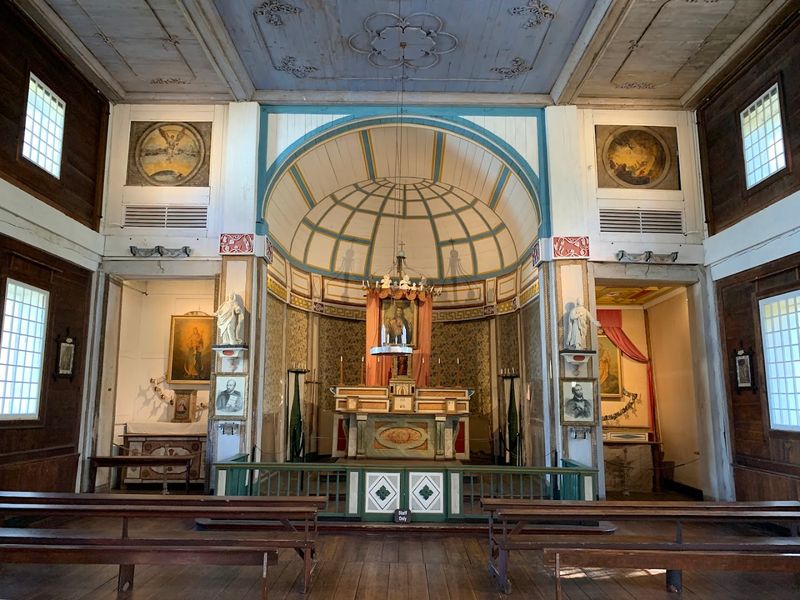
Nothing quite prepares you for the inside of this church. From the outside, the Cataldo Mission is quietly impressive.
But step through the door and the level of detail that greets you is almost overwhelming, especially when you remember what it was made from and how it was made.
The chandeliers are crafted from repurposed tin cans, which sounds rough until you actually see them. They have a handmade charm that feels intentional rather than makeshift.
The walls are covered in fabric and hand-painted newspaper, and the woodwork carries a blue tint that comes from huckleberry stains pressed directly into the grain.
Father Ravalli’s hand-carved wooden statues stand throughout the space, each one shaped with nothing more than a knife. The overall effect is somewhere between rustic and reverent, a space that feels genuinely sacred without being formal or cold.
Visitors often go quiet inside, not because they feel obligated to, but because the room seems to ask for it. The visitor center’s short film gives helpful context before you enter, and I would strongly recommend watching it first.
It makes every detail inside the mission land with much more weight.
A National Historic Landmark Worth the Detour
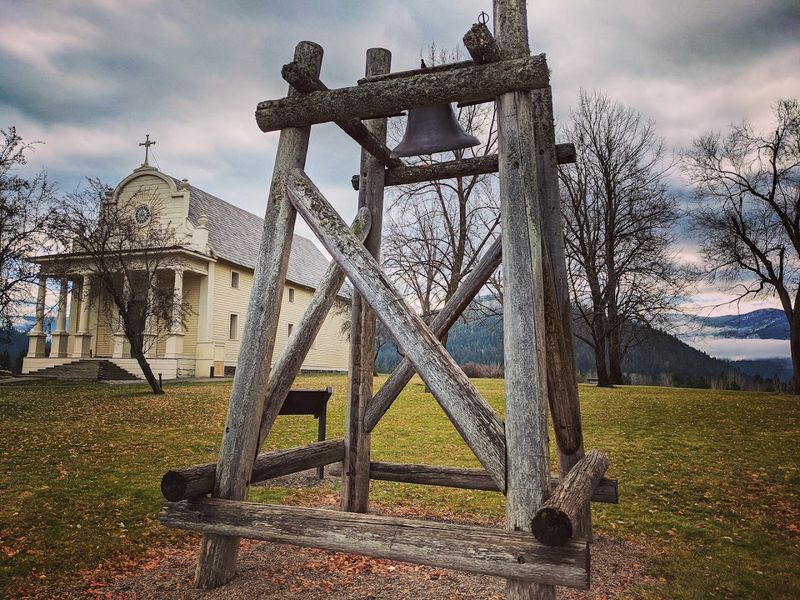
The Cataldo Mission earned its National Historic Landmark designation in 1961, and it was added to the National Register of Historic Places in 1966. Those titles are not handed out casually.
The mission holds them because it represents something genuinely rare: a structure from the mid-1800s that has survived largely intact, in its original location, telling an original story.
Old Mission State Park became an official state park in 1975, which means the surrounding grounds are well maintained and easy to explore. The park sits just off I-90, making it surprisingly accessible for a site that feels so removed from the modern world.
Many visitors admit they had driven past the exit for years before finally stopping.
The grounds include picnic tables, short walking trails, views down to the river wetlands, and a small historic cemetery that adds another quiet layer to the visit. The park has a 4.7-star rating across hundreds of reviews, and the consistent theme is that people wish they had stopped sooner.
It is the kind of place that rewards curiosity and punishes indifference. If your route takes you anywhere near Cataldo, the detour is absolutely worth every minute.
The Visitor Center Experience
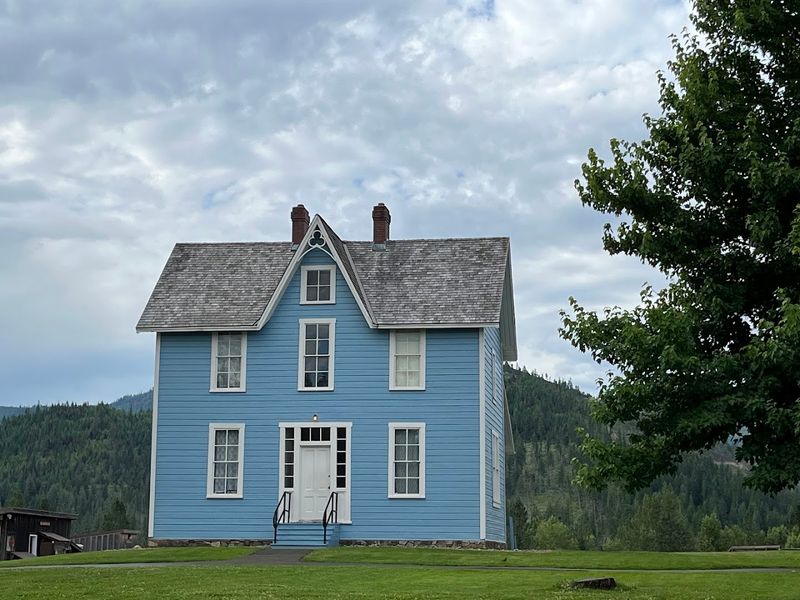
A lot of historic sites have visitor centers that feel like an afterthought. Old Mission State Park is not one of them.
The visitor center here is genuinely impressive in both size and quality, with multiple rooms of exhibits covering the mission’s history through written panels, photographs, artifacts, and video presentations.
The centerpiece is an 18-minute film that walks you through the full story of the mission’s construction, the people involved, and the significance of the site. It is informative without being dry, and it gives you the kind of background that transforms a casual look around into something much more meaningful.
Rangers are on hand and are consistently described as friendly, knowledgeable, and happy to answer questions.
The gift shop carries a solid selection of postcards and locally relevant items. Restrooms are clean and accessible.
The whole setup feels thoughtful, like someone genuinely cared about making the visitor experience as good as the history it is presenting. First-time visitors are strongly encouraged to start here before heading up the hill to the church itself.
The sequence matters. Knowing the story first makes the physical space hit differently, and that emotional payoff is part of what makes this park so memorable.
Trails, Cemetery, and the Grounds Beyond the Church
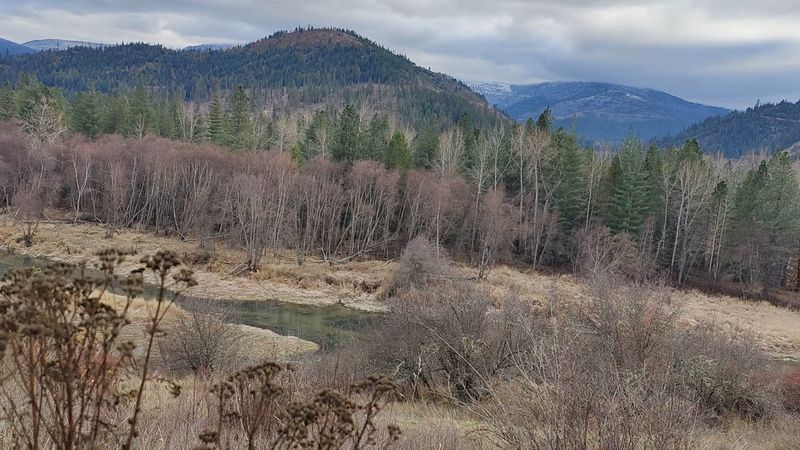
The church gets most of the attention, and rightfully so, but the rest of the Old Mission State Park grounds deserve real time too. There are short trails that wind through the property, including one that leads down toward the river wetlands and another that takes you to a historic cemetery sitting quietly under a canopy of old trees.
The cemetery has a particular kind of stillness that is hard to describe. Old markers, shaded paths, and the sense that this ground has been holding memories for a very long time.
It is not a sad place exactly. It feels more like a reminder that the story of this site is layered and long.
The hilltop grounds around the mission itself offer broad views of the surrounding Idaho landscape. Large trees keep things cool in summer, and the open green space invites people to slow down, spread out, and just be somewhere for a while.
Picnic tables are scattered throughout, and the whole atmosphere leans peaceful rather than busy. The park also sits near a river landing where wildlife enthusiasts have spotted a wide range of birds.
There is genuinely more here than a single afternoon can hold.
Address: 31732 S Mission Rd, Cataldo, Idaho
