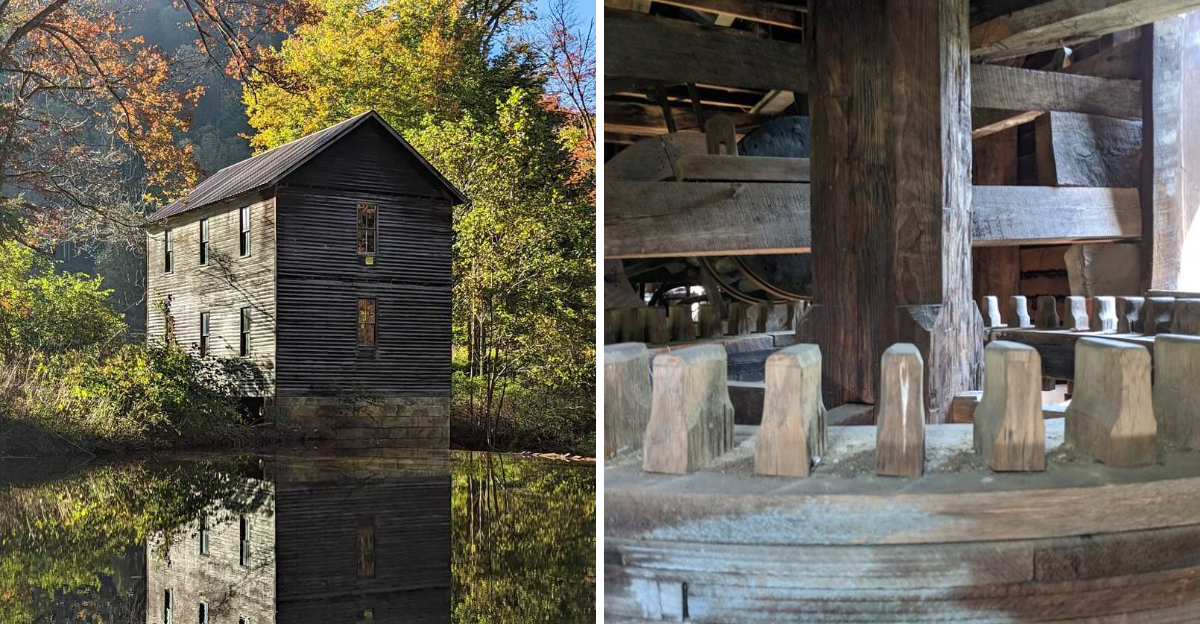
The water still rushes beneath this West Virginia grist mill, just like it did over a century ago.
Built on the banks of a river, it replaced two earlier mills that were destroyed by flooding.
The two-story frame building still stands on its original stone foundation, complete with wooden gears and stone grinding burrs.
A flood took the dam and washed away one of the turbines, but remarkably, one turbine remains, making it one of the only remaining turbine-driven grist mills in the country.
The family began restoring it decades ago, and today it sits as a perfectly preserved time capsule in the middle of rural West Virginia.
It is a fascinating glimpse into a bygone era.
Step inside and feel history turn.
Built Beside The Holly River
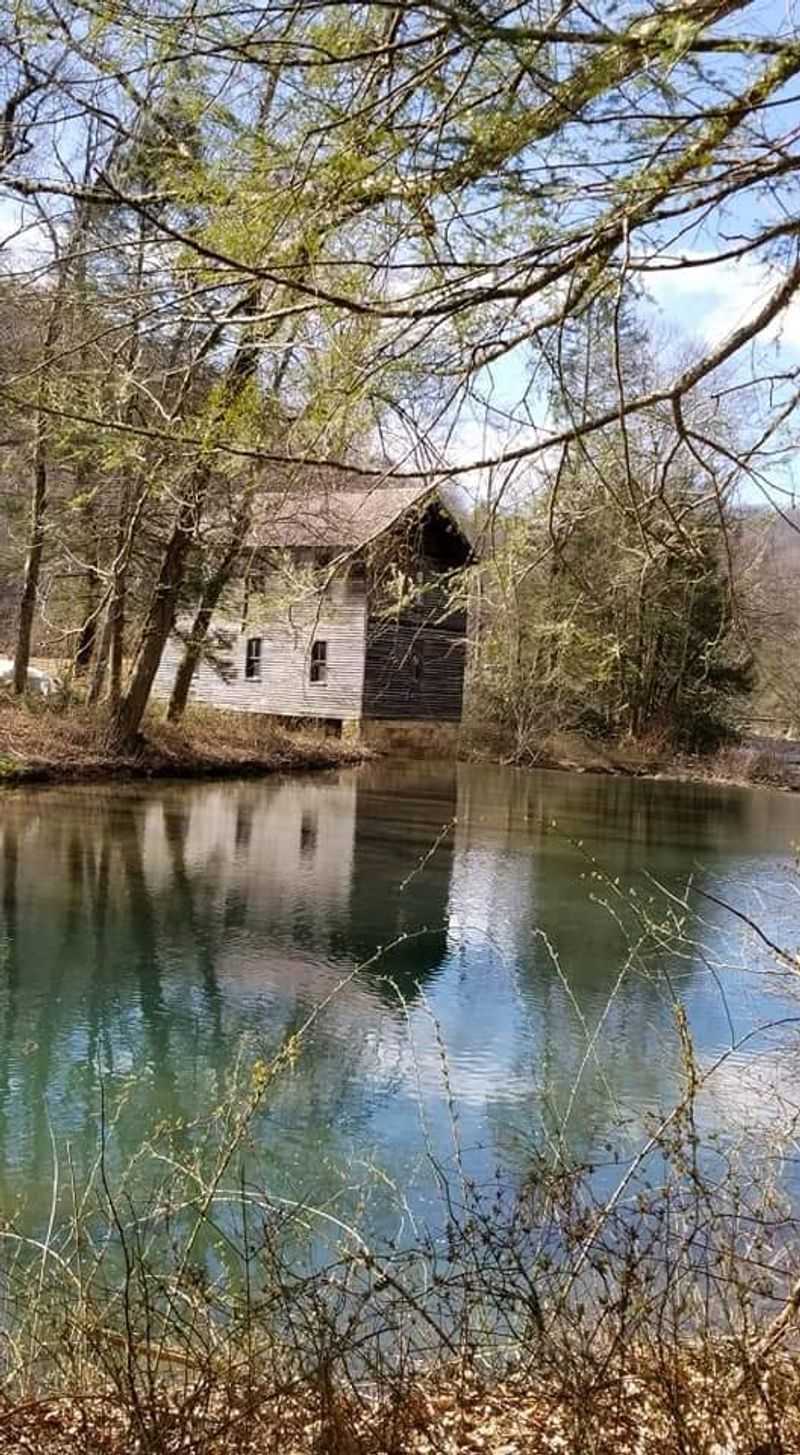
Water does most of the talking here, and the building simply leans into the conversation. Bernard Mollohan picked this bend of the Holly River back in 1894 for a very practical reason: the current never stopped coming.
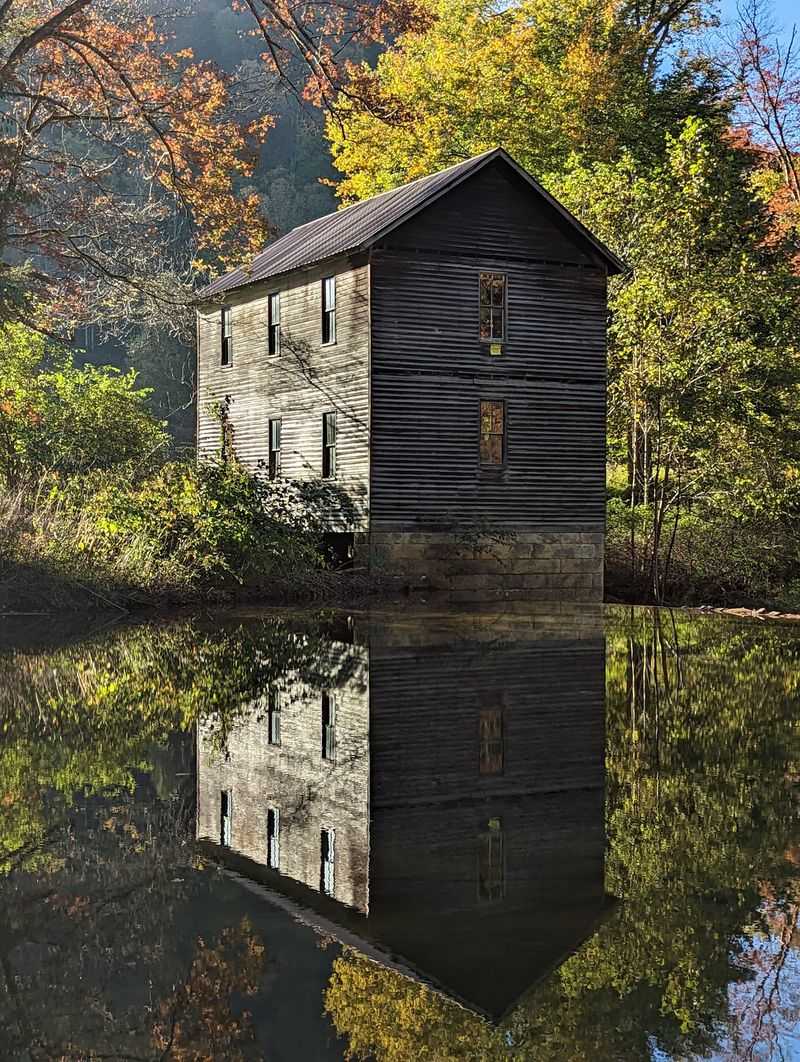
The mill sits on carefully cut stone piers, some of them planted right in the riverbed itself, which is why the structure has held its ground for well over a century.
Part of the river actually runs beneath the building, an old trick that turned moving water into grinding power without any fuss.
Two stories tall and framed with hewn post and beam timber, the mill shows off joinery that modern construction rarely bothers with anymore. The unpainted clapboard siding has gone soft gray with age, striped and freckled by decades of weather.
Standing beside it, you get a clear picture of how food once worked in these hollows. Grain came in from the hills, the river did the heavy lifting, and families went home with meal for the week.
Grinding Grain Since The 1890s
Opening day was November 23, 1894, and from that morning until 1953 the mill ran as the food engine of its corner of Webster County. Nearly six decades of steady grinding is no small run.
Farmers hauled in wheat and corn from the ridges above the river, then hauled out flour and meal that became biscuits, cornbread, mush, and feed for the livestock. Before grocery shelves and factory flour, this was simply how supper started.
The rhythm of it mattered as much as the product. A trip to the mill meant catching up with neighbors, comparing harvests, and swapping news while the stones did their slow work.
Food and community were tangled together here in a way that feels almost foreign now. Nobody wondered where their cornmeal came from, because they had watched the river grind it.
Thinking about the sheer number of meals traced back to this one building is quietly staggering.
Turbine Power Made It Different
Most people picture a big wooden wheel spinning lazily beside a mill, dripping and picturesque. That postcard image is exactly what this place skips.
Instead, the power came from water turbines tucked beneath the structure, a technology first invented back in 1827 and considered genuinely modern for a rural mill in 1894. The Holly River poured through, spun the turbine, and sent that rotation straight up into the grinding machinery.
Efficiency was the whole point. A turbine squeezes more work out of less water than a traditional wheel, which meant steadier grinding through dry spells and high water alike.
There is something charming about a building that looks entirely old-fashioned while quietly running on the cutting edge of its era. The mechanics stay mostly hidden, so the drama happens out of sight.
Once you know what is under there, the sound of the water takes on a completely different meaning. It is not scenery.
It is the motor.
Original Machinery Still Survives Inside
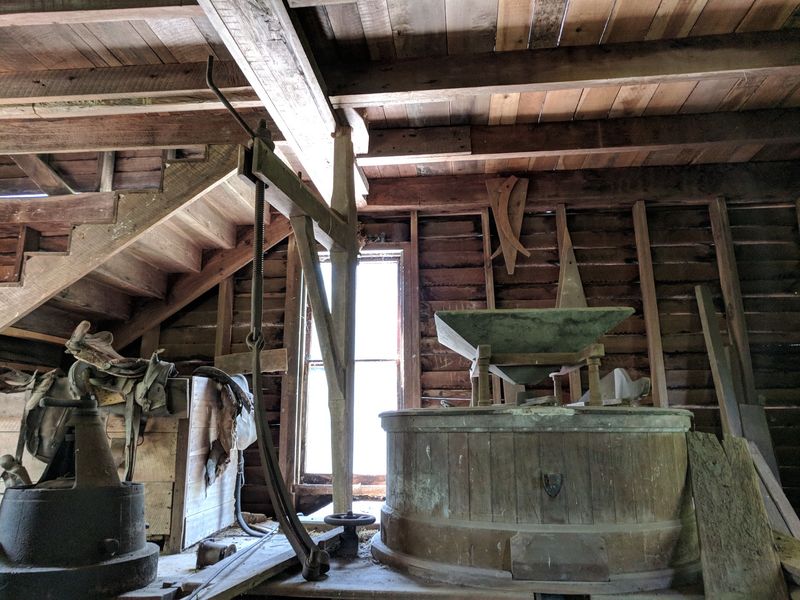
Step through the door and the air feels older than the outside air, thick with the smell of dry timber and ground grain. Very little in here has been swapped out.
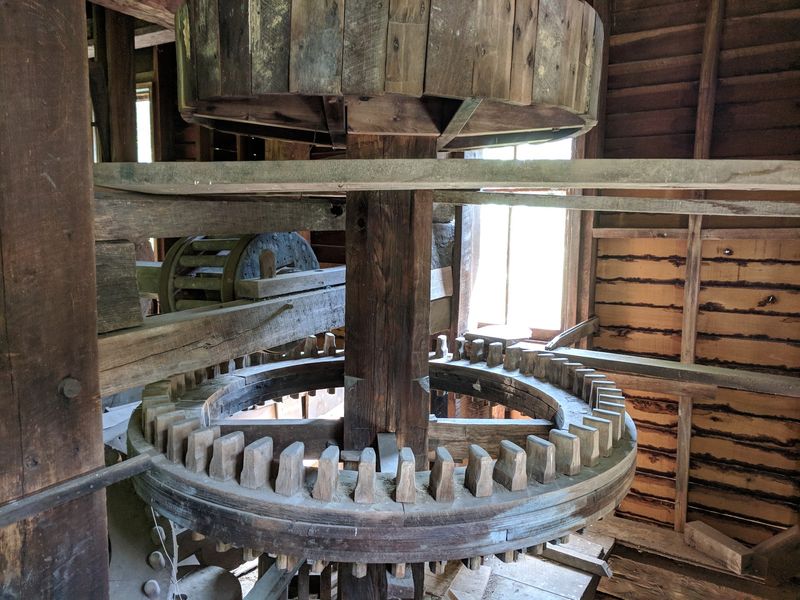
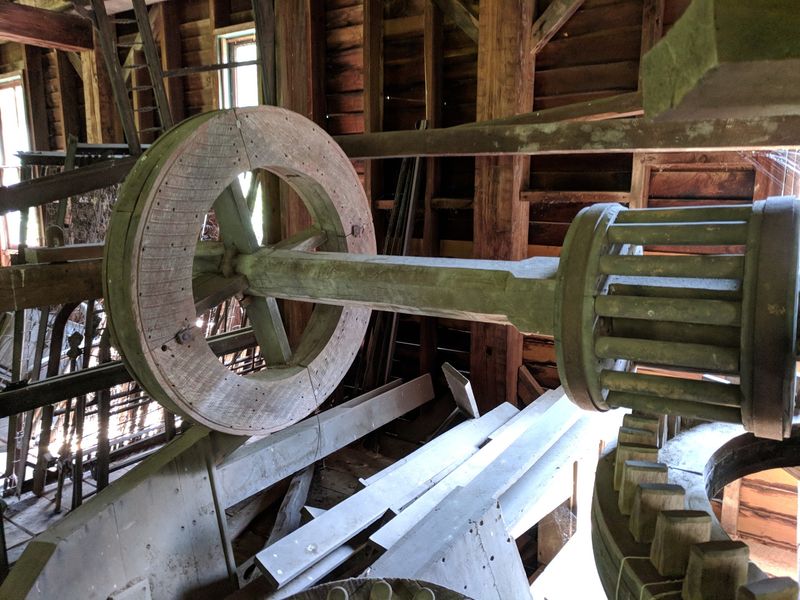
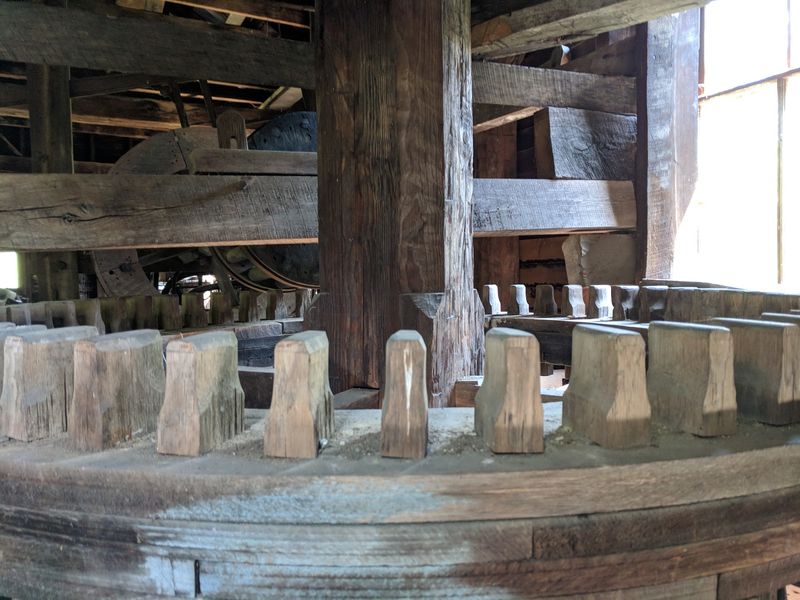
Apart from the rebuilt dam and one replaced water wheel, the equipment sits essentially as it did when the doors first opened in 1894. Wooden gears, heavy stone burrs, chutes, and sifters all remain in place, arranged exactly the way the milling process demanded.
Each piece had one job and did it well, moving grain from hopper to stone to sifter in a chain that needed no electricity whatsoever. Following that path with your eyes is oddly satisfying, like reading a recipe written in wood and iron.
The hewn post and beam framing overhead keeps everything anchored. Even the corrugated metal roof, added in 1912 over the original wooden shingles, has aged into the story rather than interrupting it.
It genuinely functions as a living museum of milling.
A 1953 Flood Changed Everything
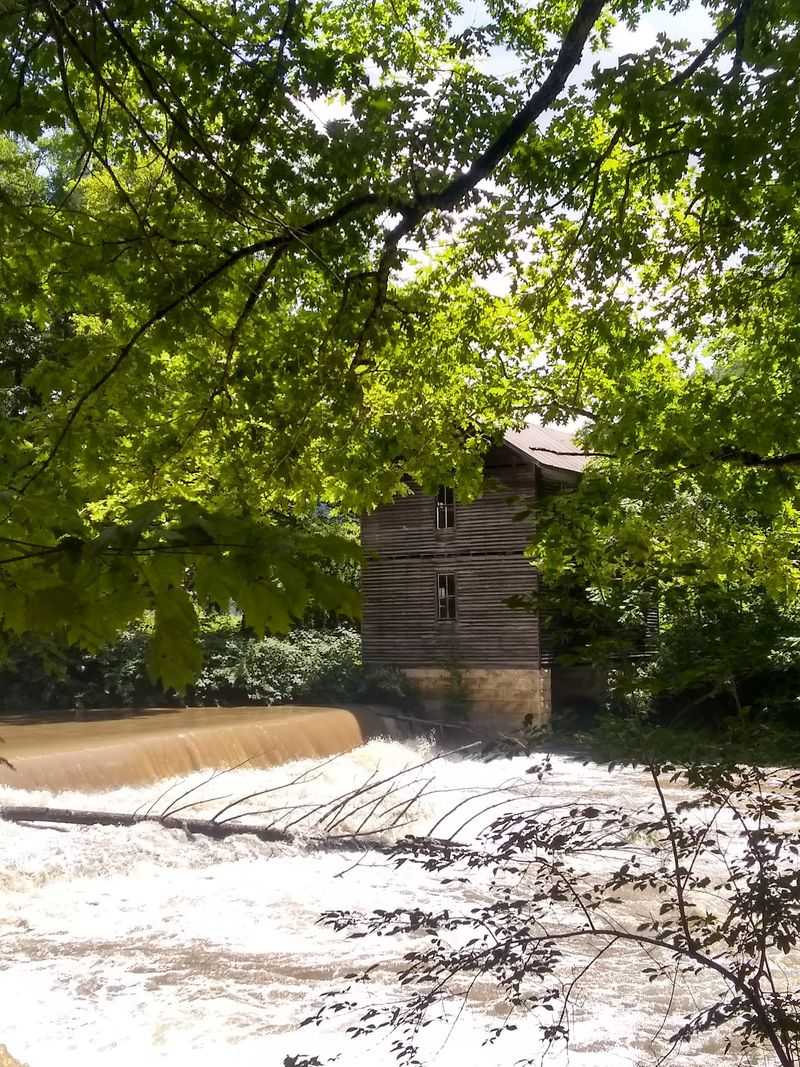
Fifty-nine years of steady work ended in a single violent stretch of high water. The 1953 flood swept through the valley and shut the mill down for good as a working business.
The raging river tore out the log crib dam, the very structure that diverted water toward the turbines, and carried away one of the mill’s two water wheels in the process. Without the dam, there was no controlled flow, and without flow there was no grinding.
Decades of quiet followed. Machinery that had hummed six days a week sat still, gathering dust while the river rolled past as if nothing had happened.
One piece refused to give in, though. The forebay, built from square logs pinned directly to solid rock, held fast through the whole ordeal and kept the hydraulic system’s backbone intact.
That stubborn survivor later became the reason restoration was even possible. Nature took plenty, but it did not take everything.
One Water Wheel Still Remains
Two turbine water wheels were part of the original design, working together to pull energy out of the Holly River. Then the flood took one.
Losing half the power system could easily have ended the story right there, but the surviving mechanism proved how well the whole arrangement had been built in the first place. The remaining components stayed anchored, waiting.
When the Mollohan family began restoration work in the 1980s, replacing that missing wheel became a priority alongside rebuilding the dam. Getting the pair back in place meant the mill’s turbine-driven identity was whole again rather than half remembered.
It is a small detail with big consequences. A turbine mill without its full set of wheels is basically a very handsome barn beside a river.
Seeing the system complete gives visitors the real thing instead of a partial sketch, and that completeness is a large part of why the site still matters to anyone curious about how rural America fed itself.
Restoration Brought The Mill Back
Silence stretched on for decades after 1953, and plenty of buildings in that situation simply collapse into the weeds. This one got a second act instead.
The 1980s brought a determined restoration effort led by the Mollohan family, who were not willing to let their ancestor’s work rot beside the river. Their goal went beyond patching holes.
Structural repairs came first, followed by the careful rebuilding of the dam that regulates water flow toward the turbines. The missing water wheel was replaced, returning the mill to a functional, complete state rather than a frozen ruin.
What makes the project impressive is the restraint behind it. Nothing was modernized for convenience or dressed up for show, so the mill still reads as a nineteenth century workplace rather than a reproduction.
Today tours are arranged by calling ahead, which keeps the atmosphere calm and personal. That approach suits the place perfectly, since this was never meant to be a crowded attraction.
Nearly Untouched After 130 Years
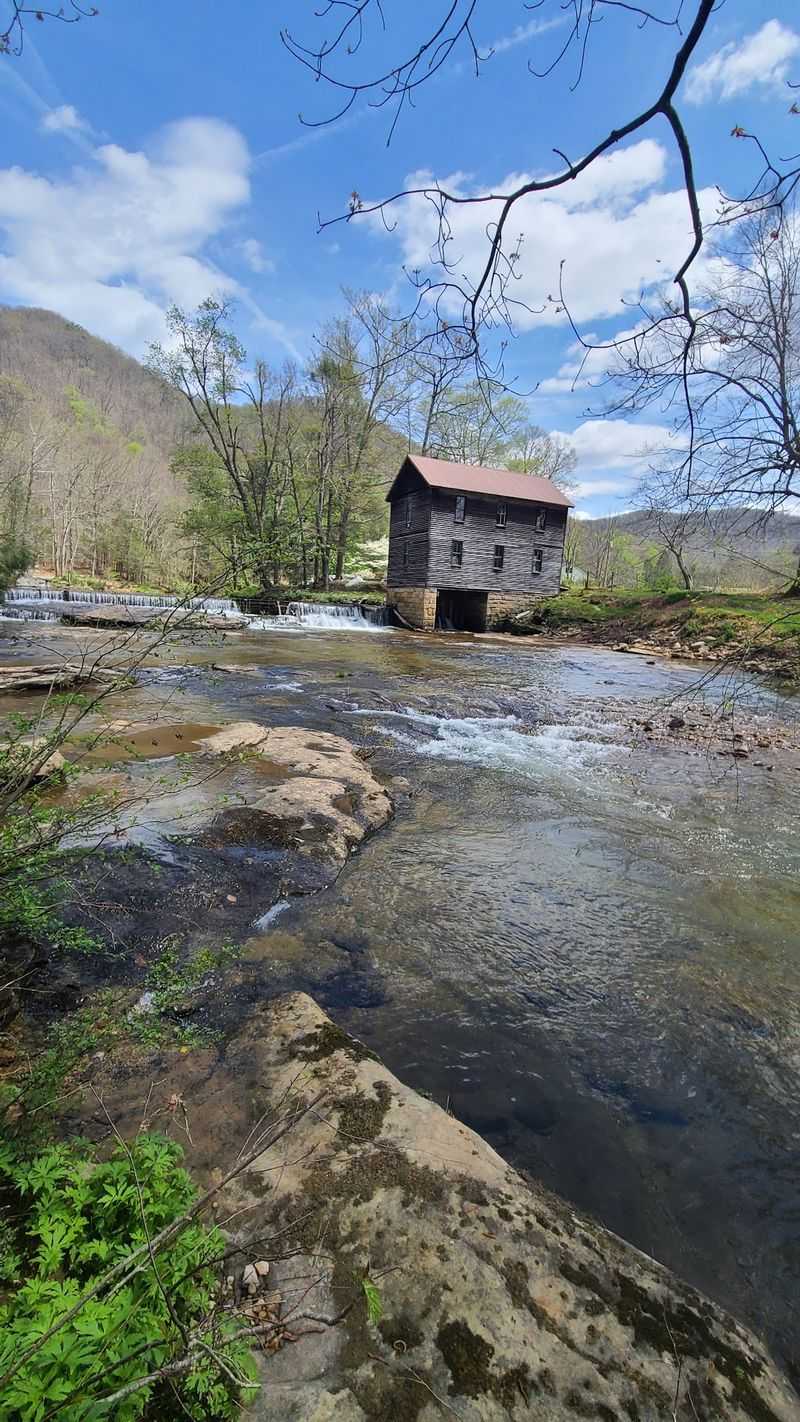
Buildings this old usually collect layers of remodeling until the original is buried somewhere underneath. Not here.
More than 130 years after construction, the mill still presents itself as a late nineteenth century industrial building, right down to the hewn post and beam frame holding up both floors. The timber was cut and fitted by hand, and it has not budged.
Changes have been minimal and honest. The wooden shingle roof gave way to corrugated metal in 1912, which counts as the biggest cosmetic shift in over a century of standing beside a river.
That level of preservation comes from two things working together: builders who overengineered everything, and later generations who chose not to meddle. The combination is rare.
Walking around the exterior, the wood grain, the stone piers, and the sound of the current create an atmosphere that no reconstruction could fake. Time did not stop here exactly, but it clearly slowed way down.
National Recognition Arrived In 1982
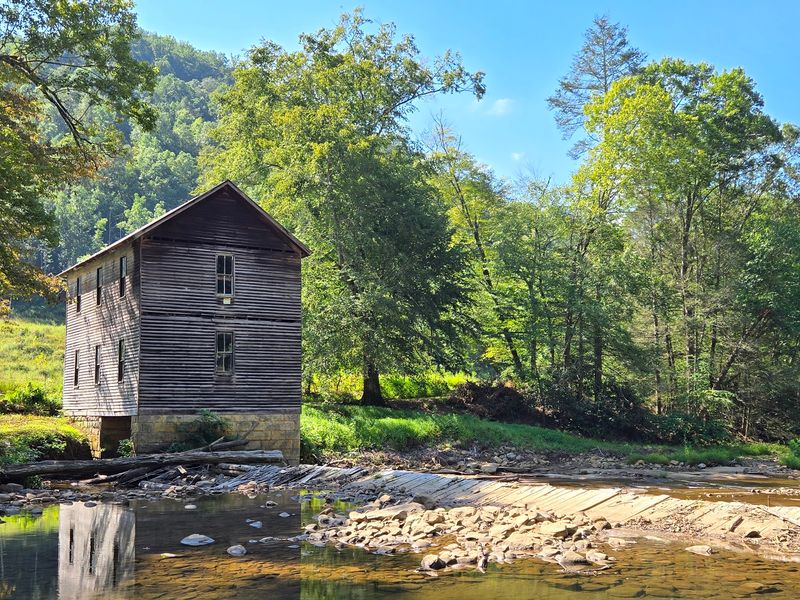
In 1982, the mill earned a spot on the National Register of Historic Places, which is a formal way of saying the country agreed it was worth keeping. Local pride became national acknowledgment.
The listing recognized several things at once: the unusual turbine power system, the remarkably intact original machinery, and the building’s role in a rural farming economy that once depended on mills like this one.
Recognition also brought a layer of protection and a wider audience of people interested in industrial history. Researchers, history buffs, and curious road-trippers all found their way here because of it.
What I like about the designation is that it did not turn the site into a polished tourist machine. The mill stayed exactly what it was, just with better documentation.
Being on that register puts a small Webster County grain mill in the same conversation as much grander landmarks. It earned the spot honestly, one turbine revolution at a time.
One Of America’s Rarest Mills
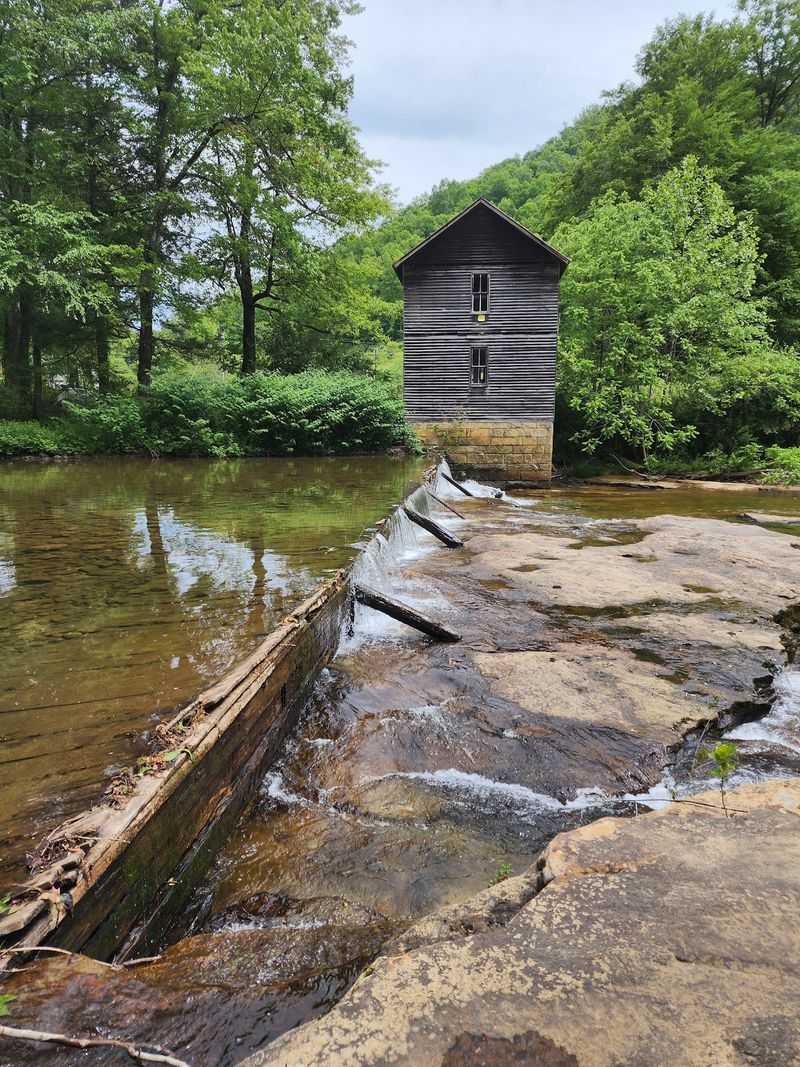
Very few turbine-driven grist mills are left standing in the entire United States, and this is one of them. That single fact turns a scenic stop into something closer to a pilgrimage for history lovers.
While most surviving mills relied on overshot or undershot wheels, this one committed to the turbine, a quieter and more efficient choice that produced more power from less water. Late nineteenth century engineering at its most practical.
The result was steadier grinding, better output, and a small operation that punched well above its weight for the families it served.
Getting here takes effort, since the roads turn to gravel and dirt and a sturdy vehicle helps enormously. Calling ahead to arrange a tour is the smart move, and the scenery on the way in is honestly part of the payoff.
For anyone who cares where their cornbread came from a century ago, this is the real thing.
Address: 1505 Poling Rd, Hacker Valley, WV 26222, United States
