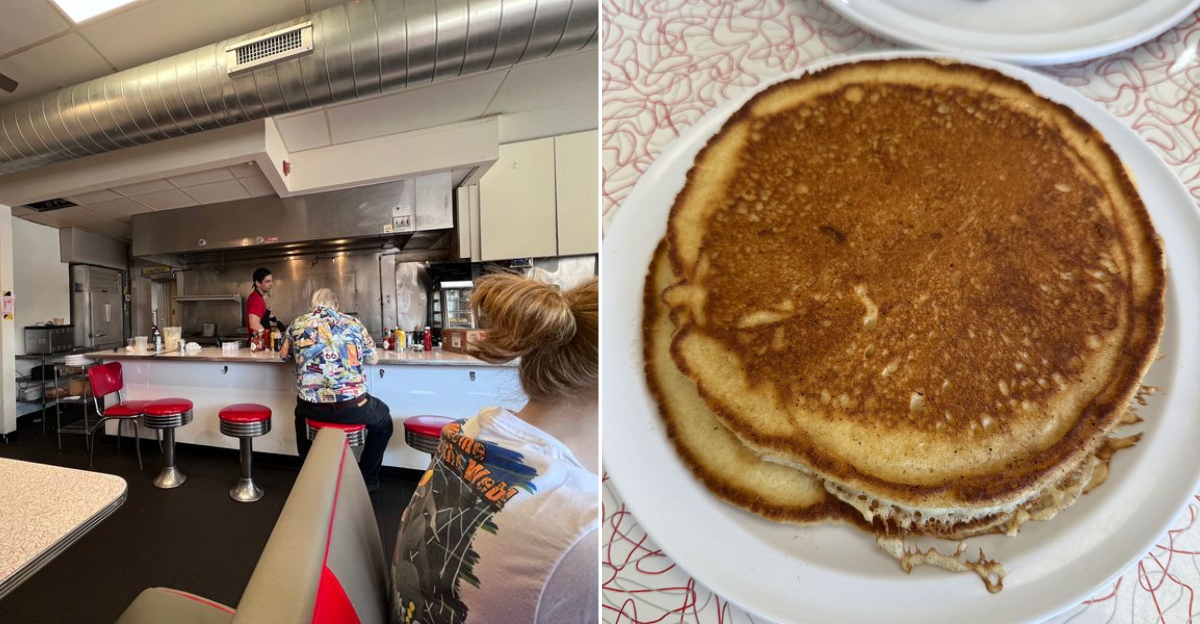
A warm stack of buttermilk pancakes and a cup of coffee that never runs dry. That is the simple promise a Missouri diner has kept since the late nineteen forties.
The griddle has been sizzling in the same spot for over seventy years. The coffee keeps pouring, and the pancakes keep coming.
Regulars slide into the same booths they have been occupying for decades. Newcomers are greeted like old friends.
The menu is short, but everything on it earns its place. Breakfast is served all day, and the pies are made from scratch.
The building itself feels like a time capsule, with vintage signs and worn countertops that tell a thousand stories. There is no pretense here, just good food and steady service.
In a world of fast trends and flashy concepts, this spot proves that doing one thing well, and doing it for decades, is still the best recipe for staying in business.
The Neon Sign With A Clock Inside It
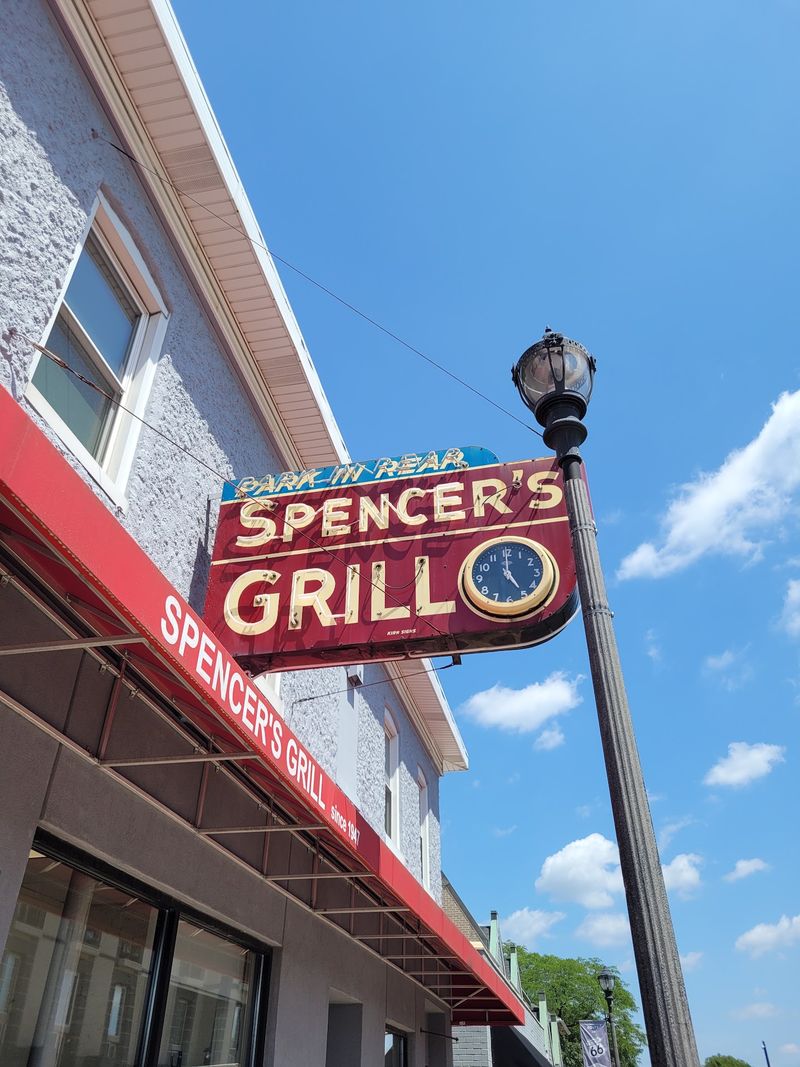
You can spot the sign before you can read the name, which is exactly what a good diner sign is supposed to do. The neon out front has a working clock built right into the middle of it, and locals have long claimed it is the oldest working neon clock west of the Mississippi River.
Whether or not you want to fact check that claim, it is the kind of detail that makes people slow down and pull out a phone. The sign has become a shorthand for downtown Kirkwood itself, showing up in photos, articles, and postcards about this corner of Missouri.
What I like about it is how unbothered it looks. There is no attempt to seem trendy or updated, just glass tubing and glowing letters doing the same job they have always done.
If you find yourself in the area, the sign photographs beautifully in the early morning when the light is still soft and the street is quiet. It also looks great after dark, when the glow bounces off the sidewalk and the whole block feels like a movie set that nobody bothered to strike.
Where To Find It In Downtown Kirkwood
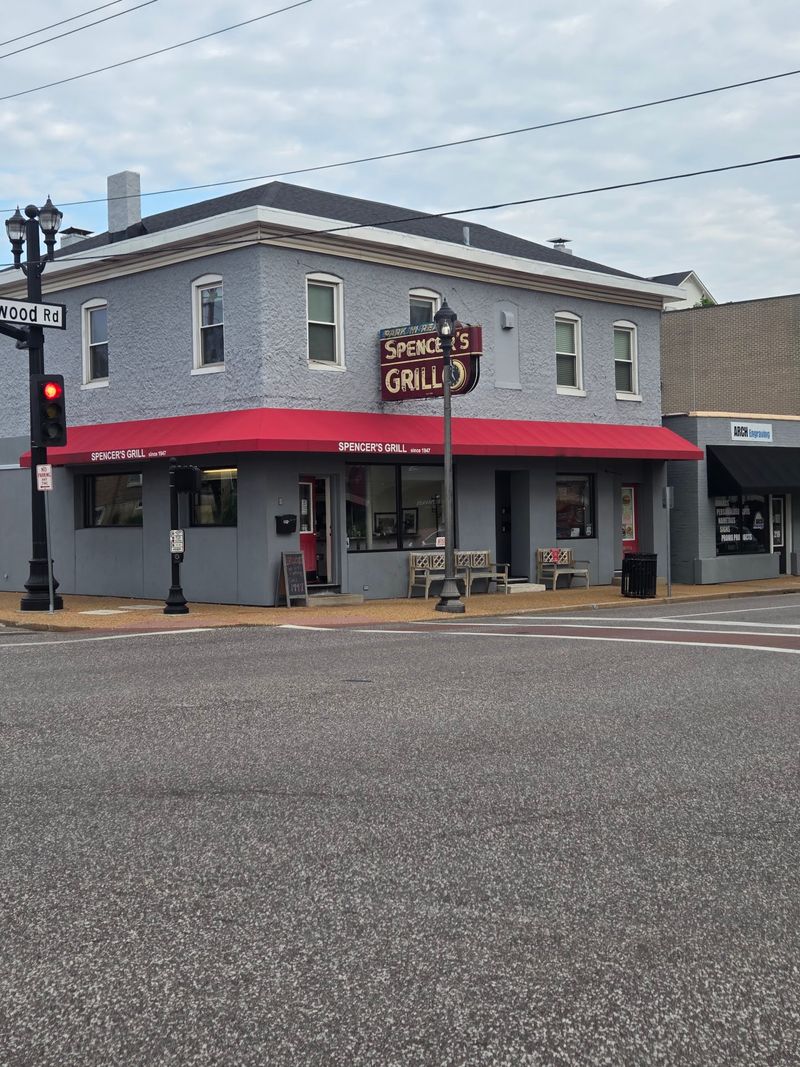
Downtown Kirkwood is one of those walkable Missouri neighborhoods where the train station, the shops, and the restaurants all sit within a few blocks of each other. Spencer’s Grill sits right in the middle of that at 223 S Kirkwood Road, Kirkwood, MO 63122, which puts it on a road plenty of people drive every single day without thinking twice.
The building itself is small, and that is honestly part of the charm, since it never pretended to be anything bigger than a neighborhood counter joint. Parking around the area can be a little tight depending on the time of day, so plan to walk a block or two.
What makes the location interesting is how much foot traffic surrounds it. You have the Amtrak station nearby, a farmers market that draws crowds, and enough small businesses that the sidewalks actually feel alive.
If you are building a day around this part of Missouri, the diner works as an anchor point rather than a destination you have to hunt down. Everything else in the neighborhood is close enough that you can wander on foot afterward without moving your car at all.
Buttermilk Pancakes With Those Crispy Edges
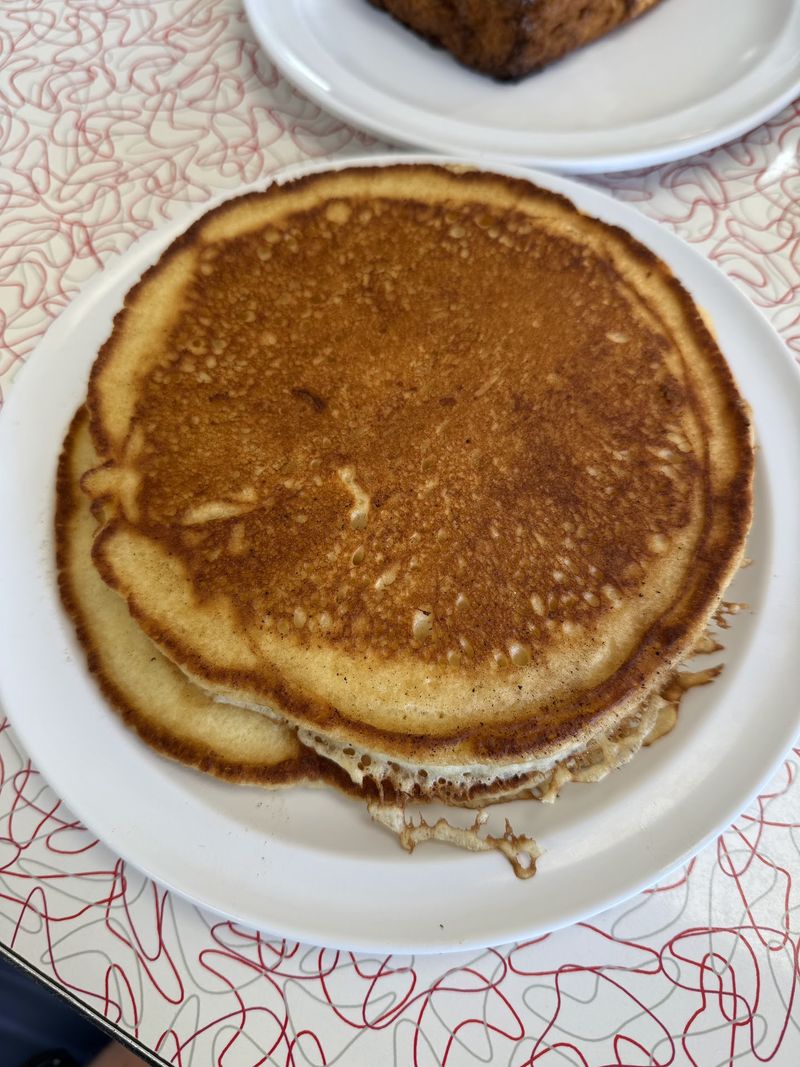
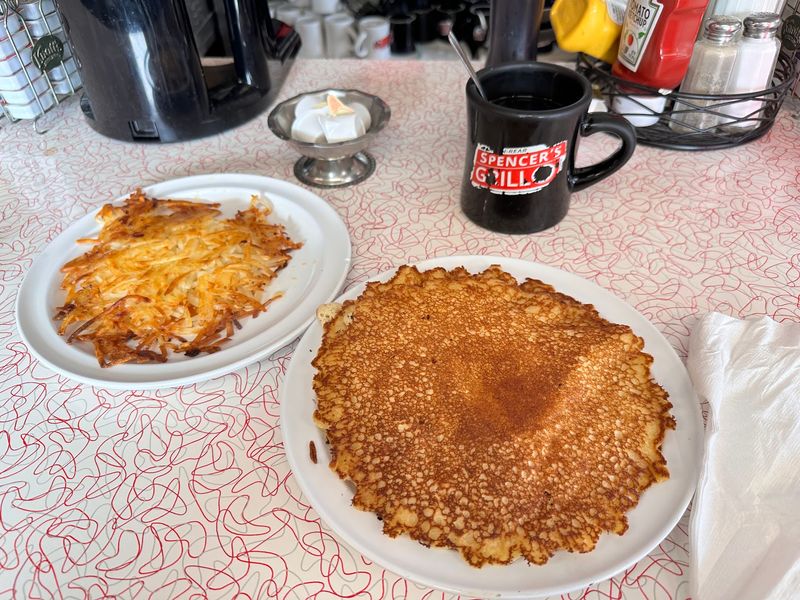
Here is the thing about diner pancakes cooked on a well seasoned flat top grill: the edges get lacy and crisp in a way a home skillet almost never manages. That is the reputation the buttermilk pancakes here built over decades, and it is the single item most people bring up first.
The batter is straightforward buttermilk, nothing fancy or reinvented, which is really the point. When a recipe has been repeated for that long on the same equipment, consistency becomes the whole selling point.
Regulars have talked about ordering a short stack alongside eggs and hash browns, letting the syrup run into everything on the plate. That kind of messy, unbothered breakfast is what a counter diner does better than anywhere else.
If you are the type who normally skips pancakes because they feel heavy and bland, this is the style that might change your mind. The contrast between the crackly browned edge and the soft middle gives you something to actually chew on.
Missouri has plenty of breakfast spots, but very few can say they have been flipping the same recipe on the same grill for this long.
Coffee That Kept Getting Topped Off
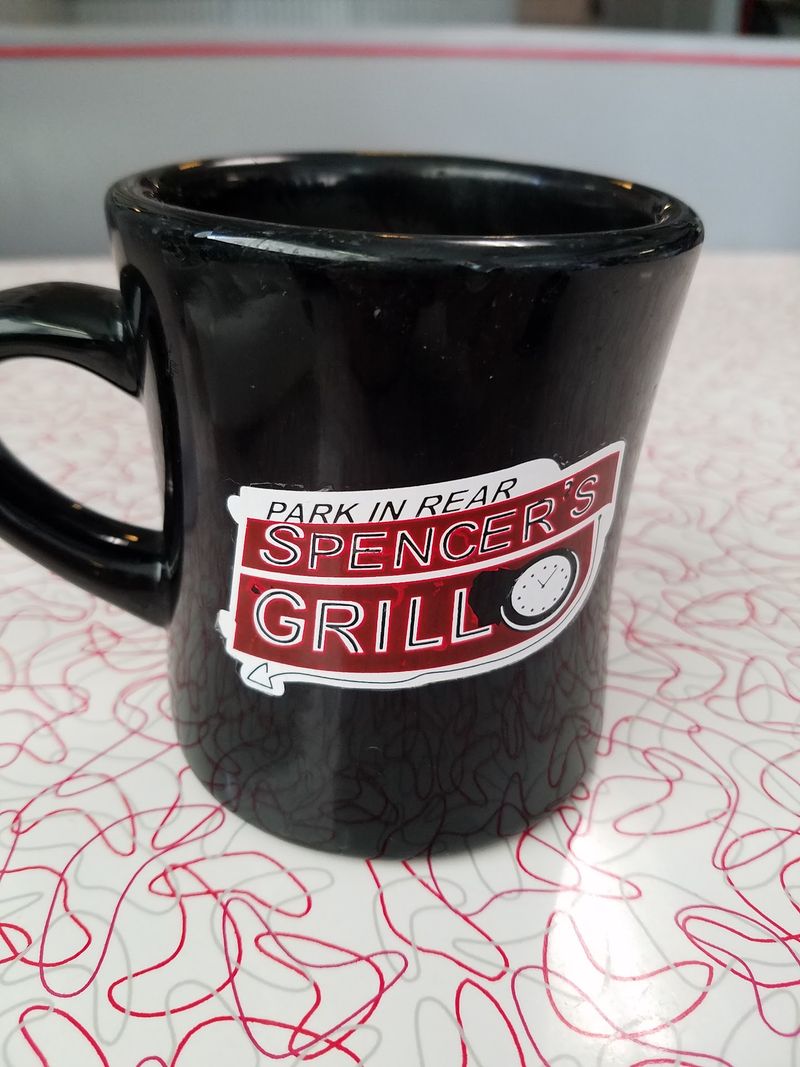
Bottomless coffee is one of those small kindnesses that separates a real diner from a place that just looks like one. At Spencer’s Grill the coffee came with steady refills, and that rhythm of someone circling back with a pot became part of the whole experience.
The beans were roasted locally by La Cosecha, which is a detail I did not expect from a spot that leans this hard into old fashioned simplicity. It tells you somebody in the kitchen actually cared about what went into the mug.
Coffee culture in Missouri has gotten pretty serious over the last stretch of time, with roasters and pour over bars popping up everywhere. But there is still something unbeatable about a thick ceramic mug that never gets a chance to go empty.
Ever notice how a refill changes the pace of a meal? You stop rushing, you talk longer, and suddenly a quick breakfast turned into an hour at the counter.
That slow drift is exactly what made this place a hangout rather than a pit stop, and it is why so many regulars measured their weeks by it.
Red Vinyl Stools And A Counter That Never Changed
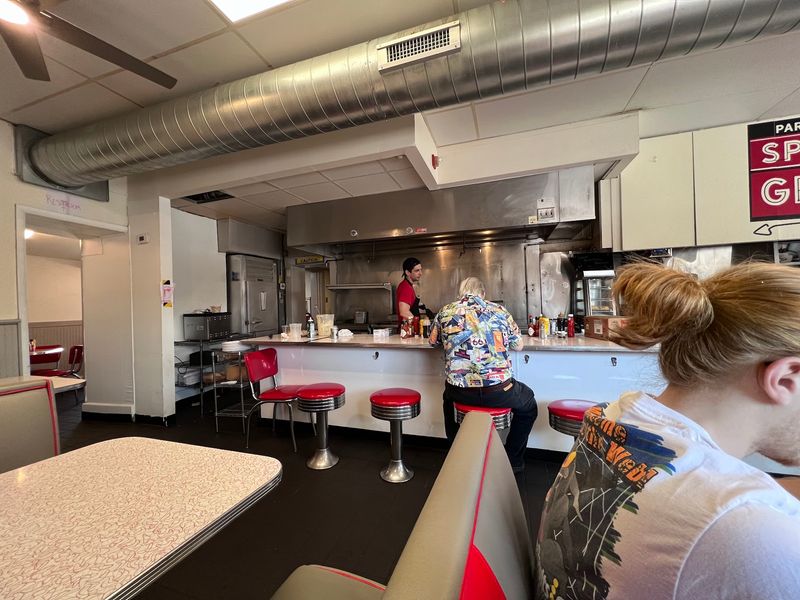
Sit down at the counter and you are sitting on the same stools people used back when this place first reopened after the war. Same counter, same grill, same layout, which is almost unheard of for a restaurant that has been running this long.
The red vinyl has that glossy, slightly worn look that no designer can fake, and the stainless surfaces still catch the light. People have described stepping inside as walking into a time machine, and honestly that description holds up.
Seating is limited because the building is small, so the counter does most of the heavy lifting. That setup forces a kind of shoulder to shoulder friendliness you do not get in a booth tucked against a wall.
You end up watching the cook work the flat top right in front of you, which is its own quiet entertainment. There is no open kitchen gimmick here, just a room that was built this way from the start.
For anyone who collects old diners the way other folks collect stamps, this room is a genuine piece of Missouri restaurant history rather than a themed recreation of one.
The Slinger, A Local Legend On A Plate
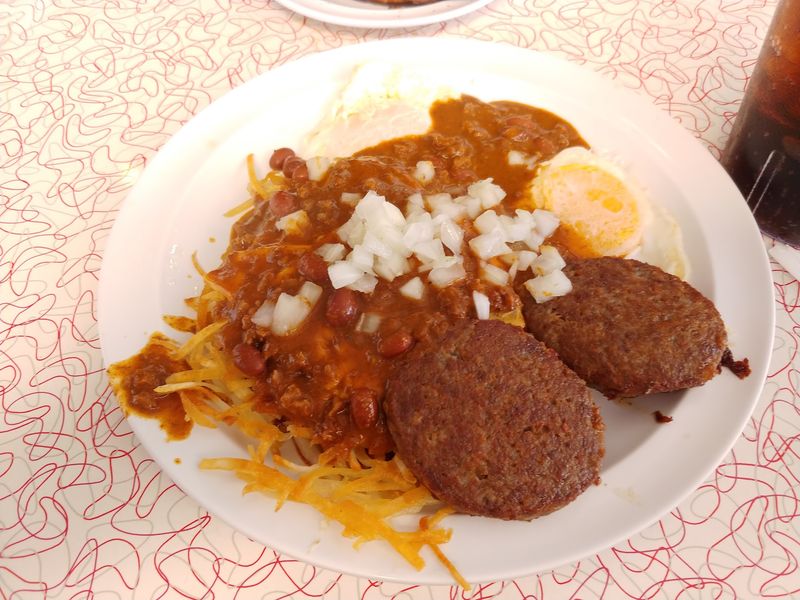
Ask anybody from the St. Louis area about the Slinger and watch their face light up. It is hash browns, eggs, a meat patty, and toast, all buried under a blanket of chili, and it is one of the most gloriously excessive breakfasts in the country.
Spencer’s Grill served its own version, which fits perfectly with the counter diner setting. The dish is regional in the truest sense, meaning you basically have to be in eastern Missouri to encounter it done properly.
Newcomers usually underestimate the portion, then spend twenty minutes quietly working through it. Splitting one between two people is a genuinely reasonable strategy if you are not starving.
What I find fun about the Slinger is that nobody outside the region seems to know it exists. It never got the national attention that other regional dishes did, so it stayed local and slightly mysterious.
If you are traveling through and want one food memory that actually says something about where you are, this beats any generic breakfast platter. It is messy, it is heavy, and it is absolutely worth ordering at least once in your life.
Route 66 Roots Baked Into The Story
Bill and Irene Spencer were not just opening a neighborhood breakfast counter, they were chasing traffic. Route 66 ran through this part of Missouri, and the couple wanted to catch travelers heading west with hot food and strong coffee.
They even kicked around the idea of running the place around the clock, which tells you how much movement they expected on that road. Interstates eventually rerouted most of that traffic, but the diner stuck around anyway by becoming a local fixture instead.
Route 66 nostalgia is a big deal across Missouri, and plenty of travelers still trace the old alignment on purpose. Spots like this one give that drive some actual substance beyond photo stops at faded signs.
The history is not decoration here, it is the reason the building exists in the first place. That distinction matters when so many places slap highway memorabilia on the walls without any real connection.
If you are doing the Mother Road thing, knowing that a diner was built specifically to greet those early cross country drivers adds a nice layer to the whole trip.
Local Farms Feeding The Flat Top
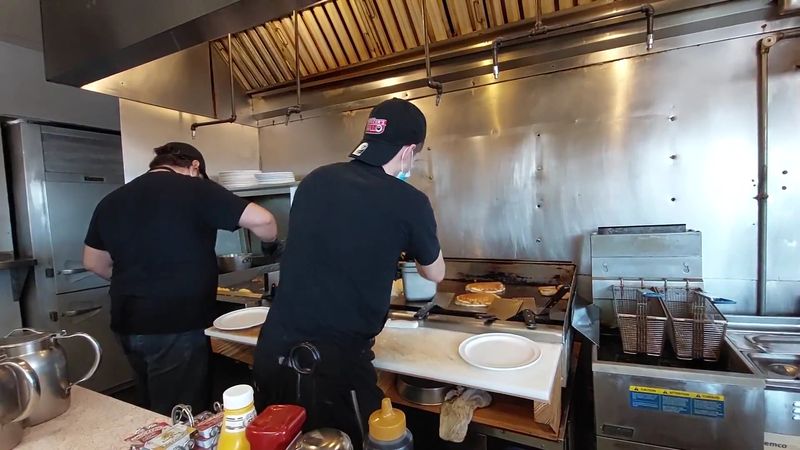
A lot of old diners coast on nostalgia and call it a day, but this kitchen went a different direction with sourcing. Bacon came from Behrmann Meats, milk arrived from Rolling Lawns Farm, and bread was baked by Union Loafers.
Eggs were supplied by a Missouri operation called The Egg Basket, and the coffee beans were roasted nearby as well. That is a genuinely impressive supply list for a counter with a handful of stools.
The result is a breakfast that tastes like the region rather than a distribution warehouse. You can usually notice it most in simple things, like how the bacon holds its texture or how bread actually toasts instead of turning to dust.
Supporting small producers also keeps money circulating locally, which matters more in a small downtown than most people realize. Every one of those suppliers is a business with its own employees and its own story.
Honestly, this combination of a decades old grill and modern farm sourcing is a smart mix. It respects the past without pretending that nothing about food has improved since then.
A Community Hub More Than A Restaurant
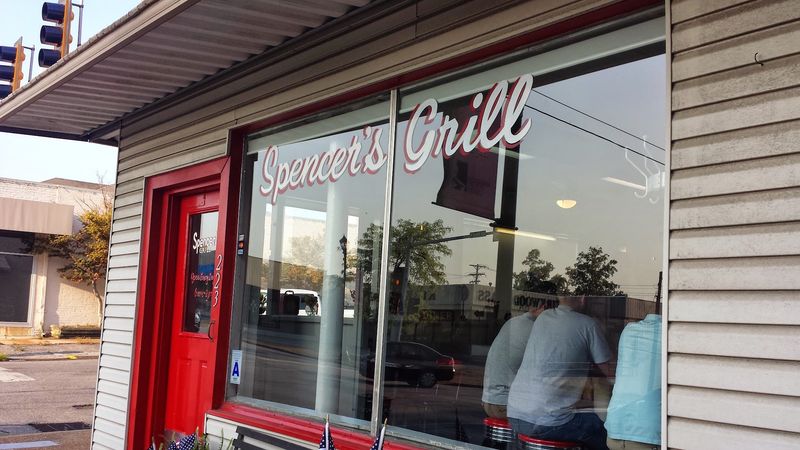
Ask around Kirkwood and you will hear the same thing over and over, which is that this diner meant something well beyond the food. Regulars had their spots, their orders, and their standing appointments with the same stools.
Places like that function as informal town squares, where news travels and neighbors bump into each other without planning to. That role is getting harder to fill as small independent spots disappear.
The diner also became a landmark that people used to give directions, which is maybe the highest honor a building can earn. When your neon sign becomes a navigational reference, you are officially part of the town.
Its ownership changed hands multiple times over the decades, and each round of owners inherited both the recipes and the responsibility. Keeping something like that intact takes real stubbornness.
If you take anything from this list, let it be a reminder to go support the small counter spots in your own town while they are still open. Missouri has plenty of them tucked into old downtowns, and every single one depends on people actually walking through the door.
