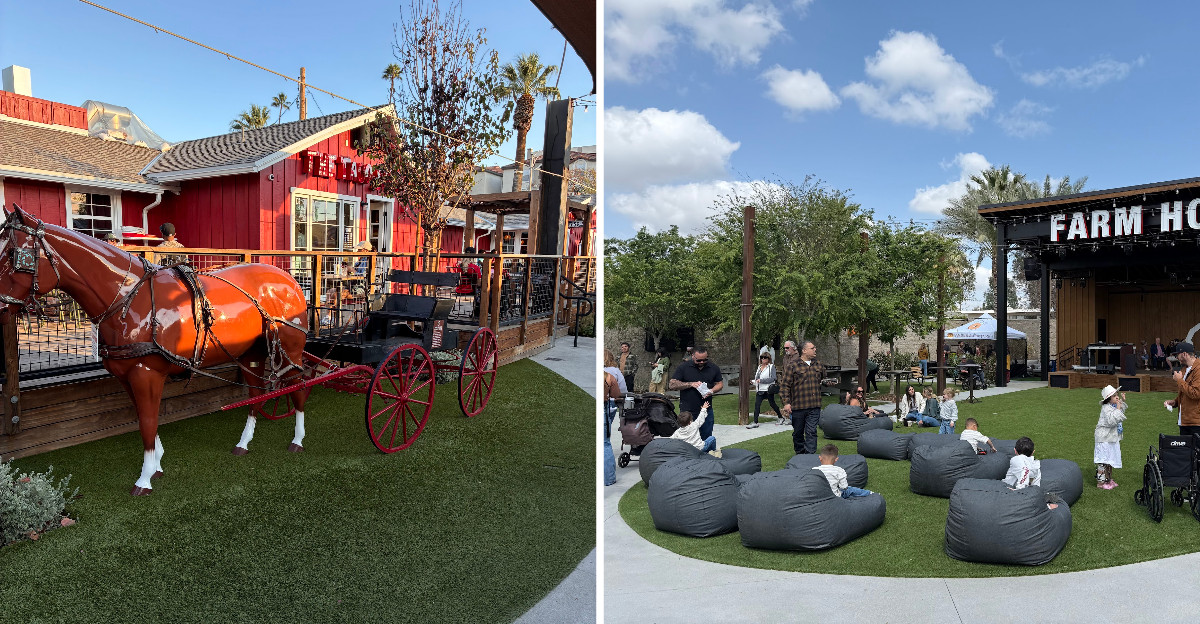
Mid-century motor courts once lined California highways, their little rooms rented to road trippers who parked right outside their doors. One such motel, built in 1953, has quietly reinvented itself.
The old rooms now hold taco counters, a record shop, and a gelato spot that people rave about. The parking spots still sit right outside each door, a hallmark of the classic motor court.
Instead of ice machines and coin-operated TVs, guests find craft tacos, vinyl records, and small-batch gelato. On a sunny afternoon, kids run across the lawn while parents claim picnic tables.
The mix of old and new feels effortless, not forced. The place still looks like a mid-century motor court, but it hums with music, games, and families on the lawn.
Visiting felt like seeing an old friend who suddenly picked up a dozen new hobbies. Hours slip away without notice.
Here is how this landmark found its second act, and why it deserves a spot on your next California trip.
A Motor Court Born in 1953
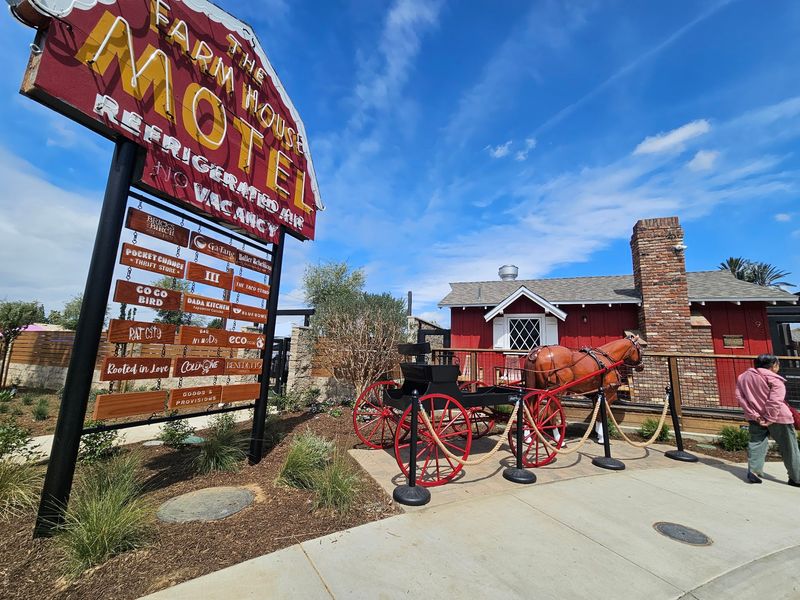
Old postcards of roadside motels always make me smile, and the Farm House Motel fits right into that picture. It opened on University Avenue in 1953, back when families crossed California by car and wanted a simple, friendly place to sleep.
The setup was classic motor court style. Guests could park right beside their rooms, unload their suitcases, and be resting in minutes.
For 32 years, Isidore and Marie Claire Camou and their family ran the motel, and it became a familiar part of the Riverside neighborhood.
What made it stand out was the look. The buildings carried a charming farmhouse design, which felt cozy and a little rural even in a growing city.
Then there was the sign, an eye-catching piece of mid-century style that told every driver exactly where they were.
I found it fun to picture those early guests. Kids probably pressed their faces to car windows, spotting the sign after a long hot drive.
Parents likely felt relief seeing a clean room steps from the car.
Here is a small tip from me. Before you visit, look up a few photos of 1950s motor courts, because you will recognize the same bones hiding under all the new energy.
The Quiet Years After Closing
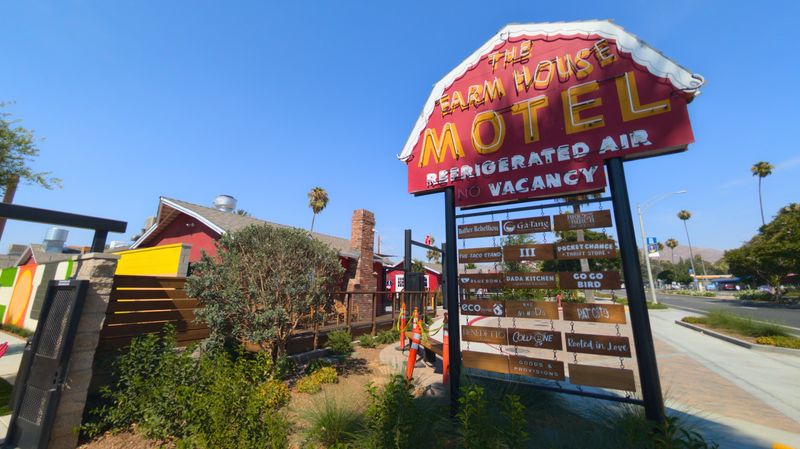
Every comeback story has a rough middle, and this one is no different. As travel habits shifted and big hotel chains spread along the highways, the small motor court slowly lost its crowd.
The motel eventually closed, and reports say the property sat empty starting around 2007. That is a long stretch for any building to wait.
Paint faded, windows suffered, and the place picked up vandalism and wear over the years.
Honestly, hearing about this part made me a little sad. So many old roadside stops across California have simply been torn down during periods like this, and their stories vanish with them.
Yet something kept the Farm House Motel standing. People in Riverside still remembered it, and the city recognized its value.
Around 2019 or 2020, it was named City of Riverside Historic Landmark No. 140, partly because it was one of the last remaining motor courts in the region.
That designation mattered a lot. It meant the buildings were worth saving, not just clearing away for something brand new.
If you enjoy history, take a moment during your visit to look closely at the rooflines and doorways. Knowing they survived years of silence makes the current buzz feel even more rewarding to experience in person.
A Family With a Bold Idea
Plenty of people drove past the empty motel and saw only a problem. The Bailey family, well known in the Inland Empire and founders of Stronghold Engineering, Inc., looked at the same buildings and saw a gathering place waiting to happen.
Their plan was not to bulldoze and start fresh. Instead, the project team chose to adapt the original structures and keep their character intact.
I really respect that choice, because saving an old building is usually harder, slower, and more complicated than building a new one.
Work picked up around 2021. Crews carefully restored the original rooms and grounds while slipping in the modern features a busy public space needs, like updated restrooms and fresh landscaping.
The goal was clear. They wanted a spot that celebrated local makers, food artisans, and musicians, a place where neighbors could actually spend time together rather than just pass through.
Fun fact for history fans: this approach is often called adaptive reuse. It means giving an old structure a new job without erasing its past.
When you stroll the grounds, notice how the old motel layout still shapes the way you move. That is the quiet signature of a team that chose preservation over demolition.
Old Rooms, Brand New Tenants
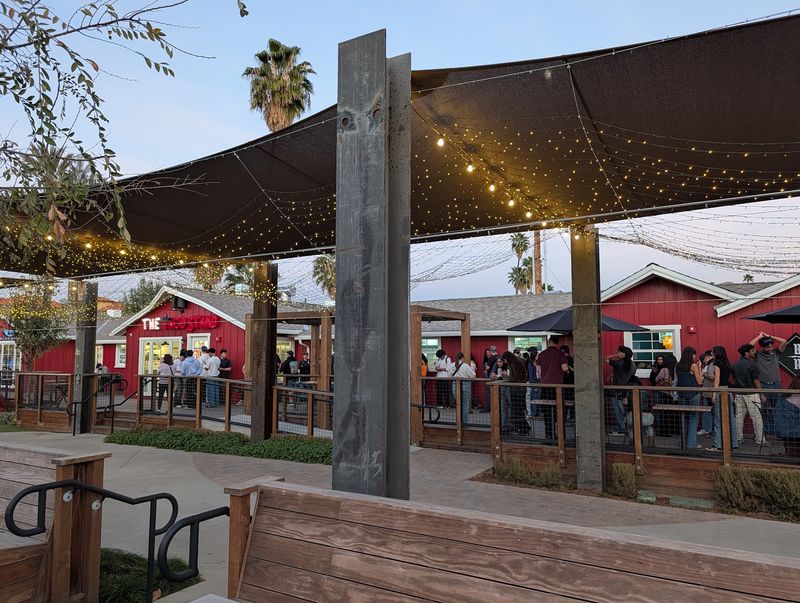
My favorite moment came when I realized I was ordering lunch from what used to be a guest room. The grand reopening as Farm House Collective happened in March 2025, and those tiny rooms now hold food counters and boutique shops.
There are roughly 15 to 16 vendor spaces in total. Around 10 serve food and drinks, and about 6 are retail shops, so you can easily bounce between snacking and browsing.
Names pop up often in conversations about the place. The Taco Stand gets plenty of love, Sarap Social brings Filipino flavors, and Benedetto Gelato is a sweet favorite on warm afternoons.
There is also a record store, which feels perfectly at home in a mid-century setting.
The old breezeways that once linked motel rooms have become shaded paseos. They make lovely little paths for wandering, with doorways opening on both sides.
My advice is simple. Do a full lap first before choosing anything, because the variety can surprise you.
Groups especially do well here, since everyone can pick something different and still sit together. I liked grabbing a savory dish from one counter, then finishing with something cold from another, all within a few easy steps.
From Parking Lot to Party Lawn
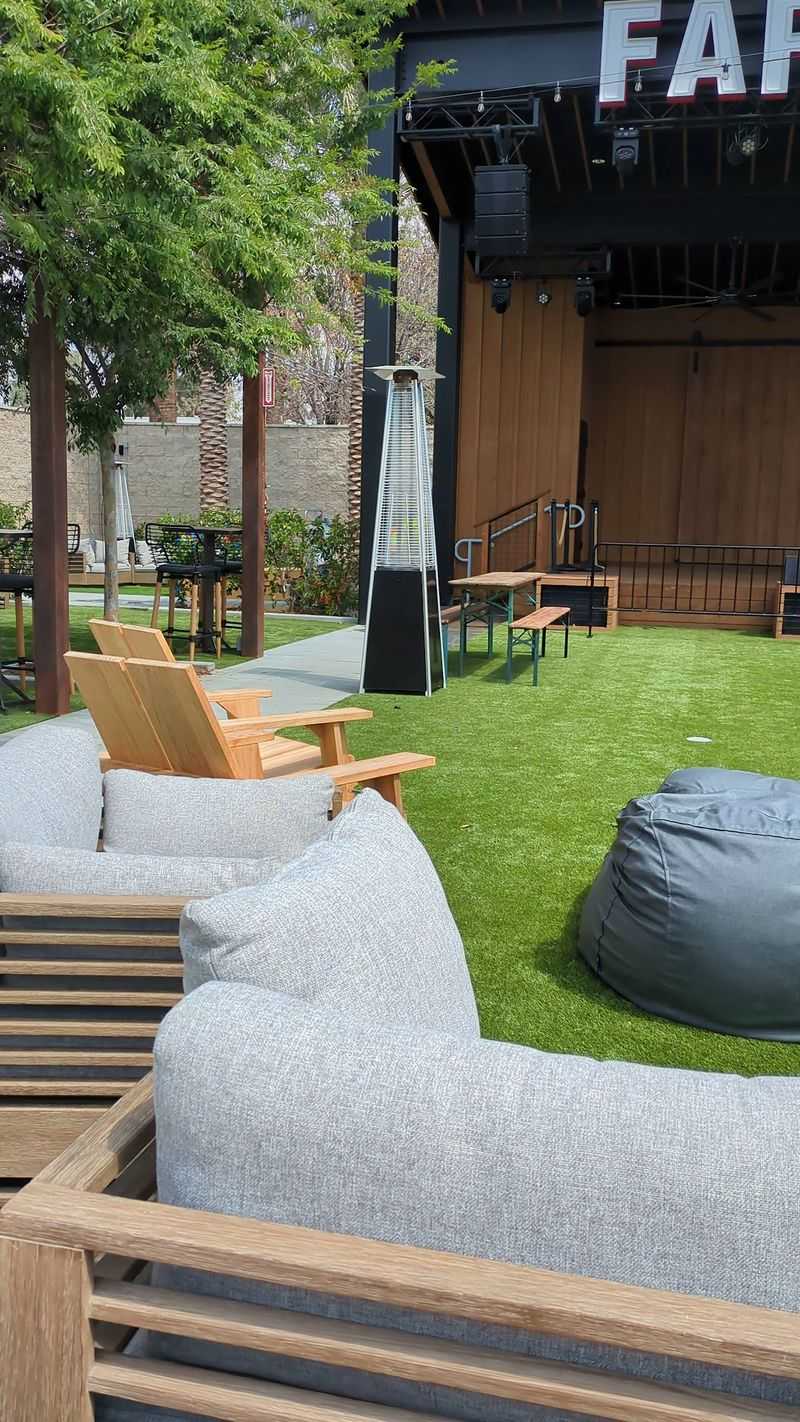
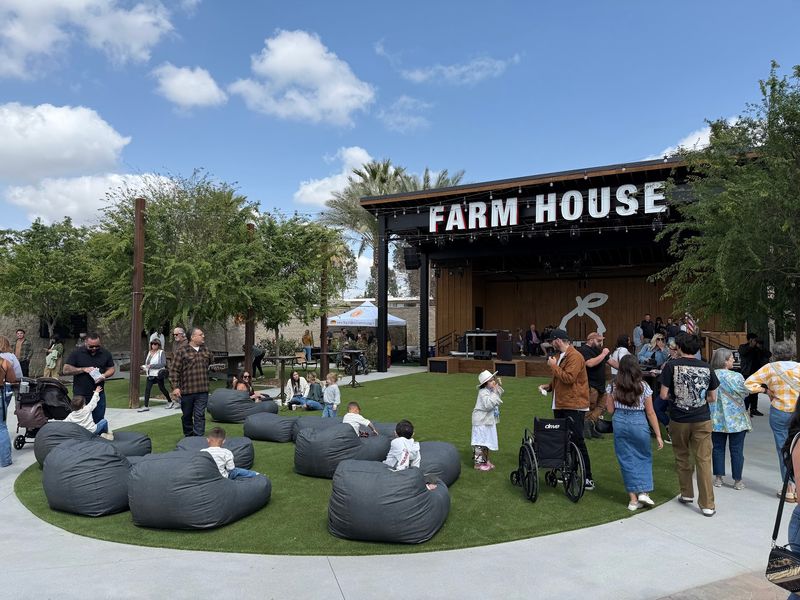
Cars used to fill this space overnight, which makes the current scene almost funny. The old motel parking lot has turned into a wide open lawn where kids run, friends lounge on bean bags, and nobody is worried about backing out.
At one end sits a stage with a big screen. Live bands, DJs, and performances fill the calendar, and on game days the screen turns the lawn into a lively watch party.
Monday jazz sessions featuring student bands from Riverside City College have become a local treat.
Games add another layer of fun. You will find cornhole and ping pong around the edges, and I may have lost a couple of rounds with more enthusiasm than skill.
Here is a practical tip. Bring a blanket or a folding chair for big events, since seating fills up and the lawn is perfect for spreading out.
Summer days in Riverside can get hot, so sunscreen and bug spray are smart additions to your bag. Misters help, though a hat never hurts.
Evenings are when this space really glows, with lights overhead and music drifting across the grass like the whole neighborhood decided to hang out together.
Markets, Movies, and Weekend Buzz
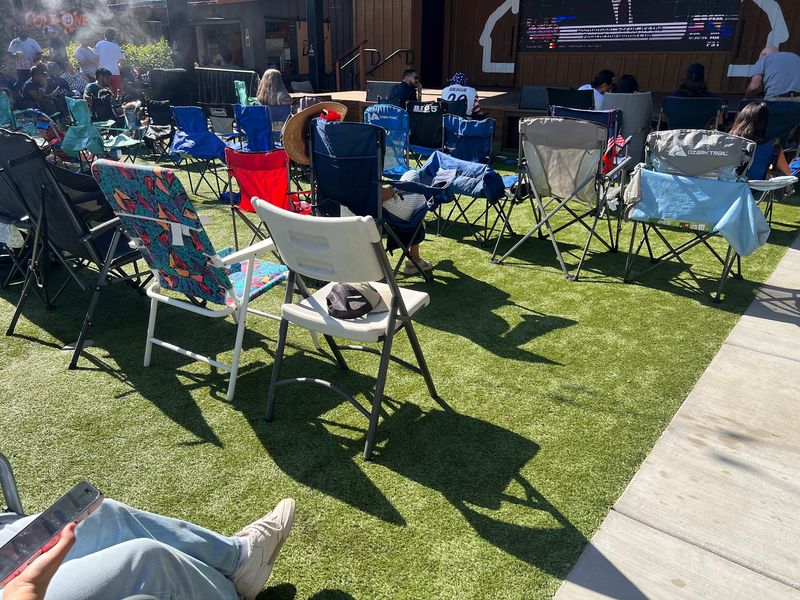
Timing your trip can totally change what you find. On certain days, tents pop up outside and the collective turns into a farmers market, packed with local produce and handmade goods.
Friday markets and weekend bazaars draw a steady flow of shoppers. I liked how casual it felt, with people chatting with vendors, kids holding snacks, and a few dogs supervising everything.
Once the sun drops, the vibe shifts again. Family movie nights play on the big screen, and the lawn fills with blankets and folding chairs.
Flea markets, concerts, and wellness classes also rotate through the schedule.
Entry to the collective is typically free, so wandering around costs you nothing. Some larger concerts and special events are ticketed, which is worth checking ahead of time.
My best advice is to peek at the official website before you go. The event calendar changes often, and you might stumble onto a market morning or a lively music night without planning much.
Hours are generous too. The collective opens at 10 in the morning daily, closing at 10 at night most days and staying open until midnight on Fridays and Saturdays, which makes late hangouts easy and relaxed.
Why the Story Still Matters
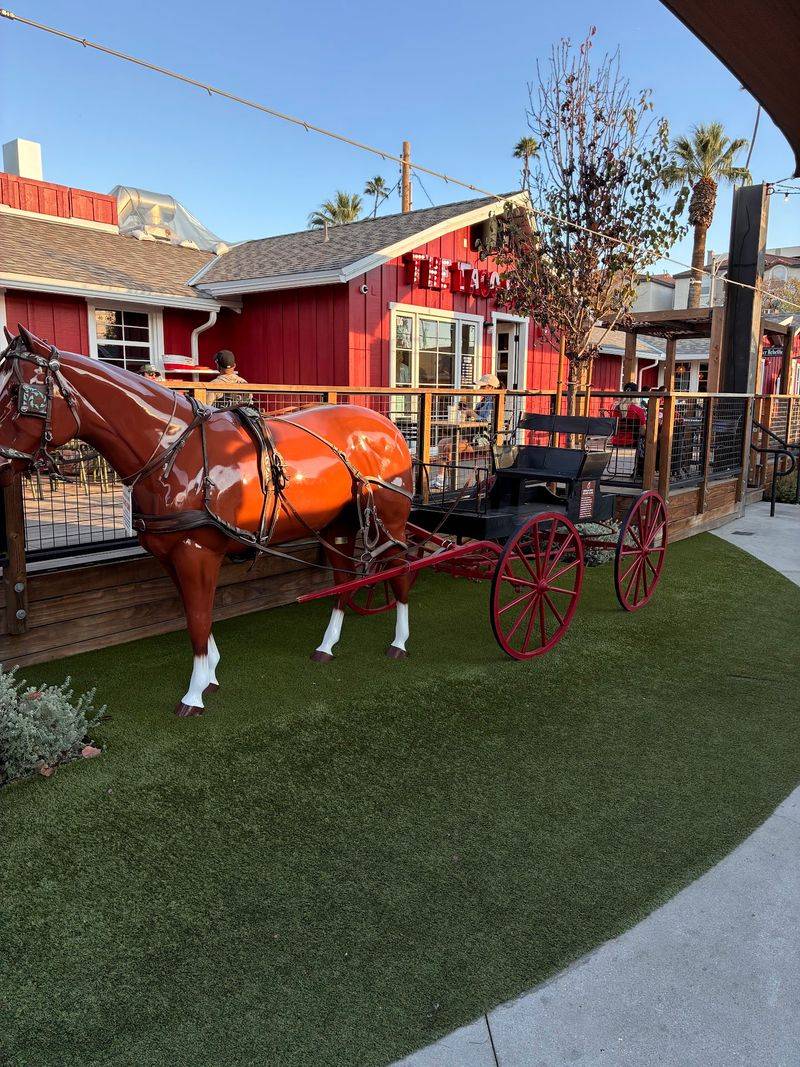
Leaving that evening, I kept glancing back at the old sign, glowing over a courtyard full of people. It summed up the whole place for me, a piece of 1953 still standing proudly above something completely new.
The original structures and the iconic sign were folded right into the fresh design. Nothing feels fake or overly polished, and the history sits comfortably next to the modern touches.
Location makes visiting easy. The collective is just minutes from downtown Riverside and close to UC Riverside, so it slips nicely into a day of exploring the city.
Parking is limited and fills fast, but nearby street access and neighboring lots help.
What stays with me most is the idea behind it all. An empty building that could have disappeared now hosts birthday dinners, game nights, and lazy Sunday afternoons.
Restrooms are kept clean and the grounds are well cared for, small details that make a long visit pleasant. Staff around the property tend to be friendly too.
So come hungry, bring curiosity, and give yourself time to linger. Seventy years in, this little motor court proves a place can absolutely start over.
Address: 1393 University Ave, Riverside, CA 92507
