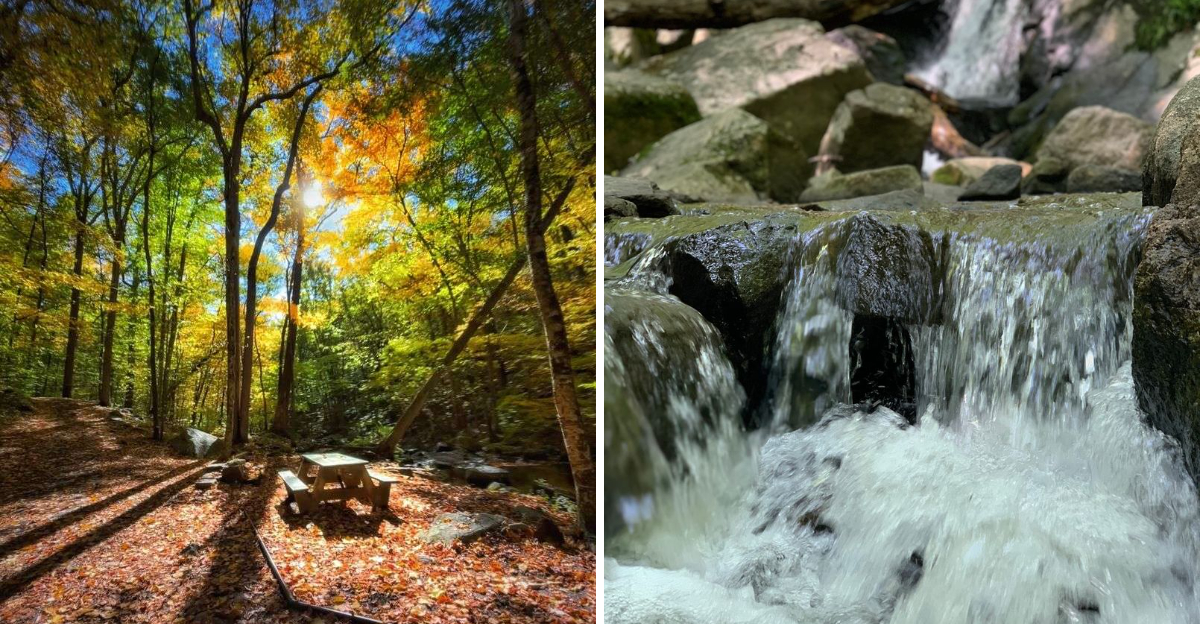
You want fall foliage without the bumper-to-bumper traffic and crowded overlooks? This New Jersey trail is your answer.
Two and a half miles of river views, cascading water, and boulder fields that make you feel like you are hiking through a painting.
The best part?
The timing is perfect right now. The path winds through hemlocks, oaks, and maples just starting to show off.
You will cross stone bridges, scramble over roots, and hear the Black River rushing beside you the whole way. It is a hike that rewards you at every turn, not just at the end.
No agenda. No pressure.
Just you and some of the best color the state has to offer.
Bring a camera. You will want to prove this place is real. Late September is the sweet spot.
The 2.5-Mile Loop That Packs In Everything
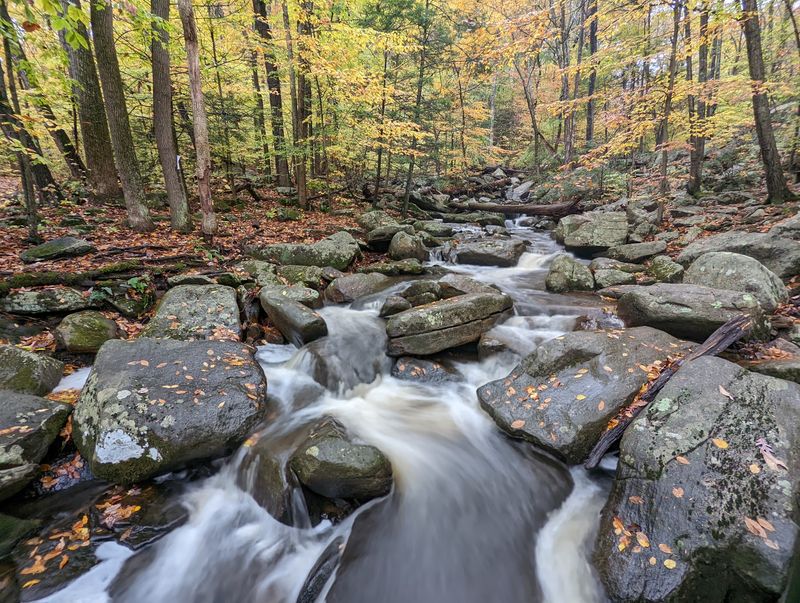
Most visitors stitch together a loop of roughly two and a half miles by linking the white-blazed Main Trail with the red Riverside Trail, and honestly, that combination gives you the whole park in one go.
The Main Trail runs about seven tenths of a mile and acts like a spine, feeding you into everything else.
From there, the descent toward the water begins. Steps, switchbacks, and a few gentle hills bring you down into the gorge where the sound of the Black River takes over completely.
What surprised me was how quickly the terrain changes character. One stretch feels groomed and easy, almost stroller-friendly, and then suddenly you are stepping across boulders and over exposed roots.
Plan on two to three hours if you want to linger, take photos, and stop at a few benches along the way. Families with young children manage it regularly, though the rockier second half asks for a bit more patience and steadier footing.
Why Late September Hits The Sweet Spot
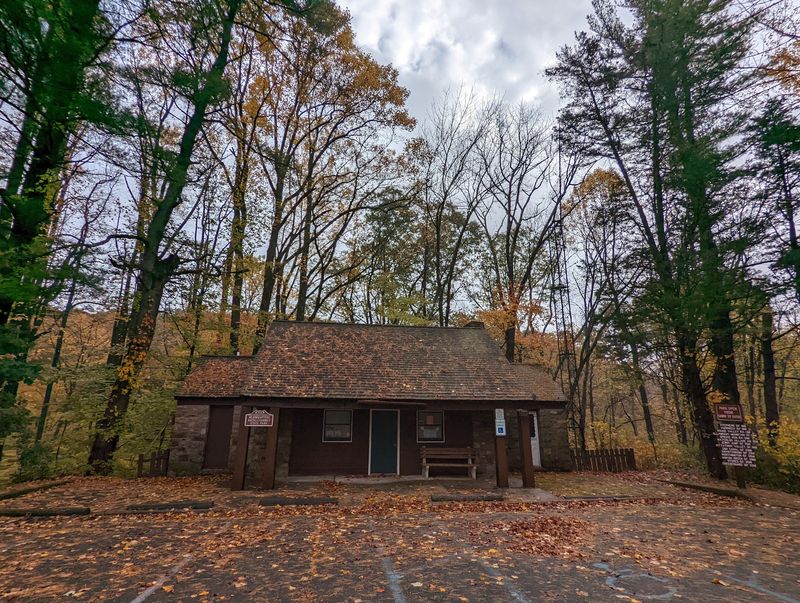
Late September is the shoulder season nobody talks about enough. The heavy humidity of August has lifted, the biting bugs have thinned out considerably, and the trails feel calmer than they will during peak color weeks.
Color-wise, you are catching the opening act. Early maples and birches begin turning while the hemlock canopy stays dark and glossy, creating this layered contrast that photographs beautifully in the filtered light of the gorge.
Peak foliage in this part of the state generally arrives from mid-October into early November, so a late-September visit means fewer cars in the lot and more of the trail to yourself. That trade-off is worth it if you value quiet over maximum brilliance.
Morning light works especially well here because the gorge is deep and shaded. Arriving early gives you soft beams cutting through the trees, mist over the water, and the kind of stillness that disappears by midday on a warm weekend afternoon.
Waterfalls You Hear Before You See
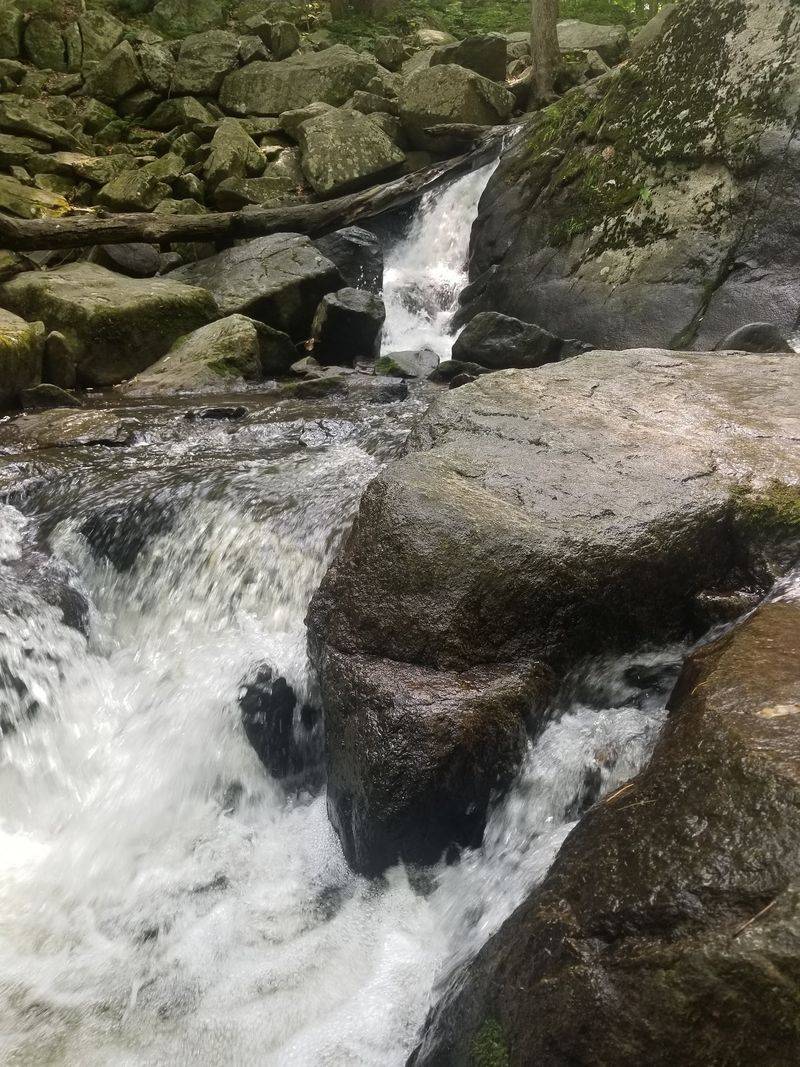
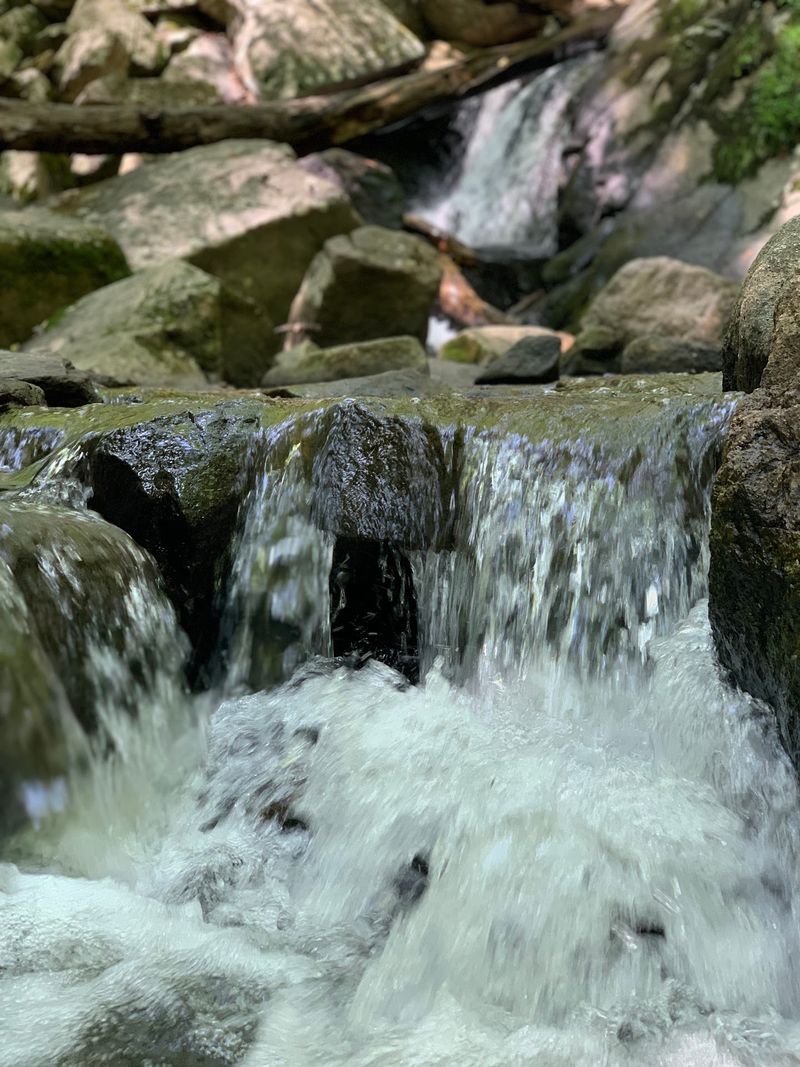
Water is the headliner at this park, and it announces itself constantly. Rinehart Brook and Trout Brook both feed into the Black River, and along the way they spill over rock ledges in a series of small, tumbling cascades.
None of them are towering. They are the intimate kind, where you can sit on a boulder within arm’s reach of the spray and watch leaves swirl in the pools below.
The Waterfall Trail and the riverside sections give you the best access, and after a rainy stretch the flow picks up noticeably. Autumn tends to deliver decent water levels without the muddy chaos of spring melt.
Photographers love these spots because the surrounding hemlocks block harsh sunlight, keeping the exposure even. Bring a lens cloth, though, since the mist has a habit of settling on everything.
Waterfalls come up more than almost any other feature when people describe this park, and after a single visit it is easy to understand why.
The Red Riverside Trail And Its Rocky Personality
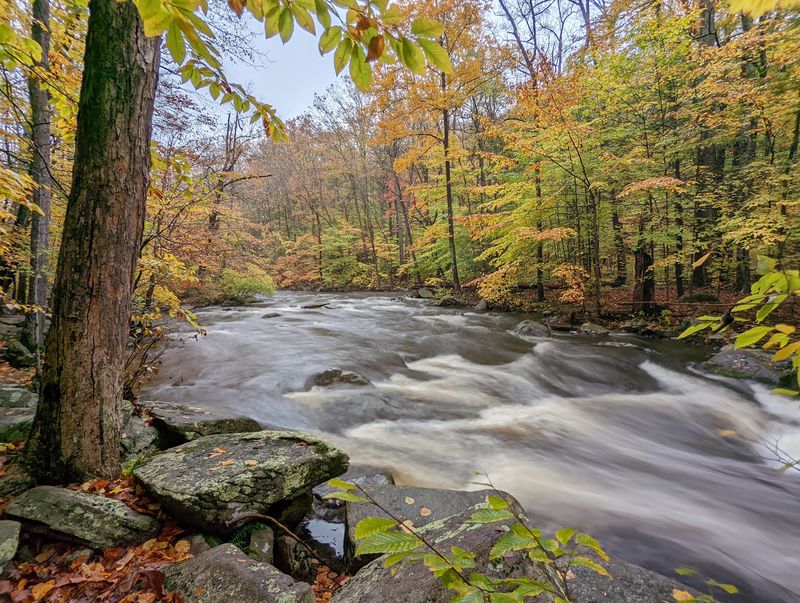
Ask around about the best route and the red trail comes up almost immediately. It hugs the Black River closely, which means gorgeous water views paired with footing that demands attention.
Rocks, roots, and uneven ledges make up long stretches of it. In places you are less walking than picking your way, using hands occasionally for balance on the bigger boulders.
That said, this is not a technical climb. Plenty of families tackle it, and kids often treat the boulder fields as a playground rather than an obstacle.
Wet spots appear where spray reaches the path, so grippy shoes or hiking boots make a real difference. Sneakers with worn soles are the fastest route to a slip.
Benches show up at helpful intervals, giving you excuses to pause and just watch the current. A short workout, a bit of a cardio push on the inclines, and river views the entire time make this the trail I would pick first every single visit.
Boulders, Gneiss, And A Glacier’s Leftovers
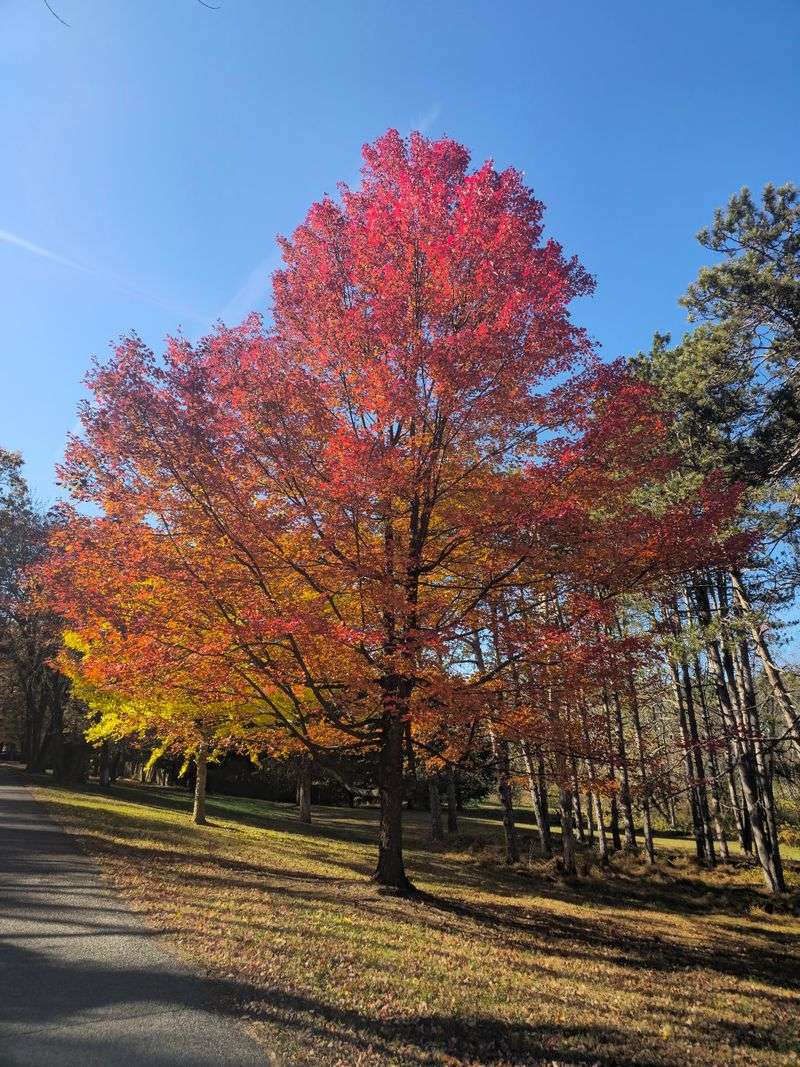
Those enormous boulders scattered along the river did not simply roll there. The whole valley is glacial, carved and scoured long ago, and the giant stones are leftovers from that ice-age reshaping.
Geology nerds will spot exposures of Proterozoic Losee Gneiss and Byram Granite, some of the oldest rock in the region. You do not need to know the names to appreciate the scale of them.
Kids figure it out instantly. Climbing from one flat-topped boulder to the next becomes the actual point of the hike, and hours vanish that way.
Water has spent millennia polishing the surfaces smooth, which looks lovely and also means caution near the edges. Damp stone gets slick without warning.
Sitting on one of the larger boulders with the river rushing past on both sides is one of those small moments that sticks with you. Ancient rock, moving water, and hemlock shade all in the same frame.
Picnic Tables Practically Everywhere
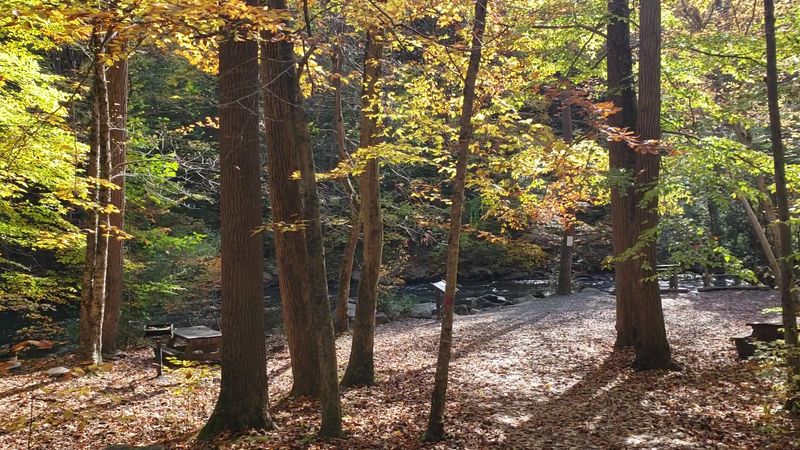
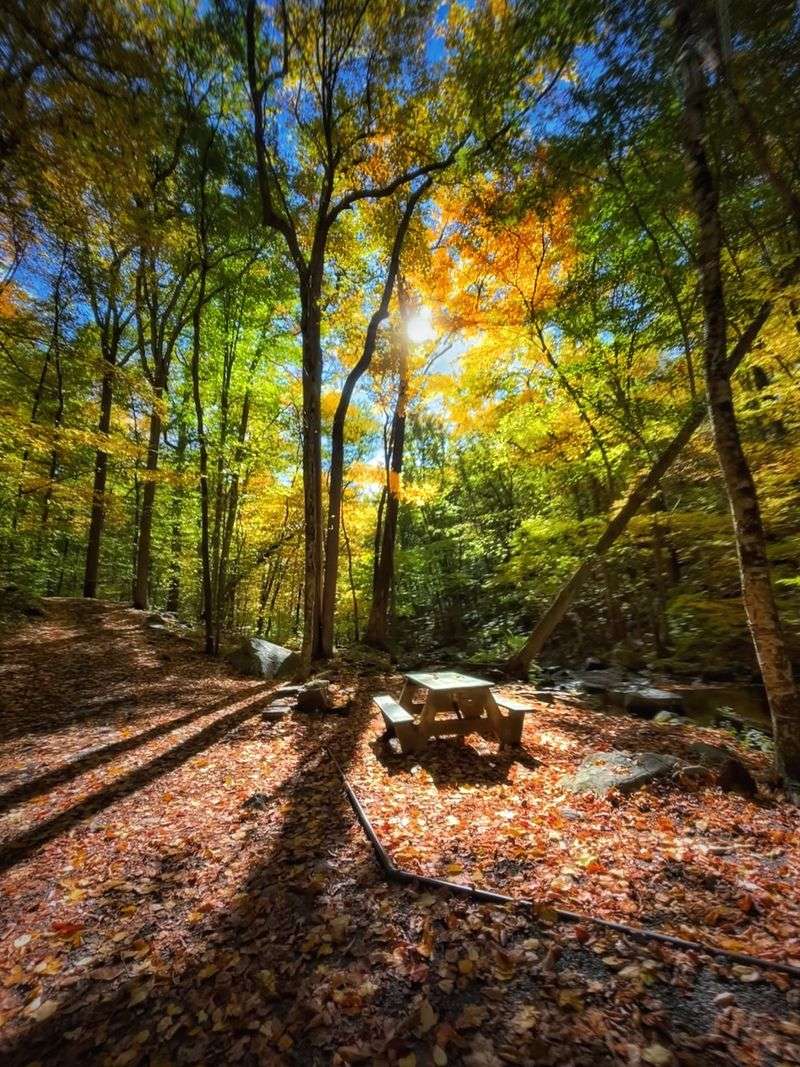
Over a hundred picnic tables are spread across the grounds, and they show up in the most convenient places. Some sit near the parking area, others are tucked beside the water partway down the trails.
All of them work on a first-come basis. There are charcoal grills mixed in as well, which turns a hike into a proper afternoon outing.
Packing lunch is genuinely the move here. A sandwich eaten beside a cascade beats almost any indoor meal, and the shade keeps things comfortable even on warmer days.
One important detail catches some visitors off guard. Trash cans are not provided, so whatever you carry in goes back out with you, wrappers and orange peels included.
Bring a spare bag and you are set. Benches also line the riverside stretches for quick breaks when you do not want to commit to a full picnic, and the combination makes pacing your day pleasantly flexible.
Birds, Bears, And Other Neighbors
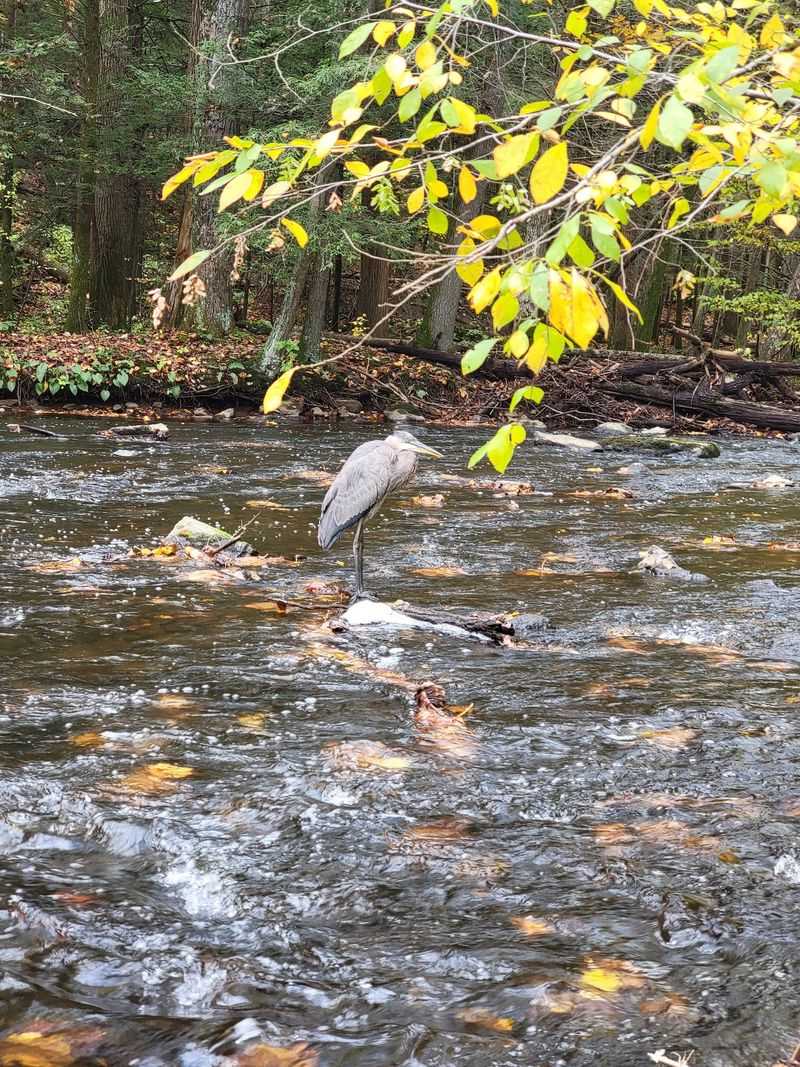
More than a hundred bird species have been recorded across these woods, which explains the near-constant chatter overhead. Bring binoculars in autumn and you will catch migrants passing through the canopy.
Larger residents share the space too. White-tailed deer, foxes, woodchucks, and black bears all live in the surrounding forest, though sightings of the last group are uncommon and generally fleeting.
Standard woodland manners apply. Keep food packed away, make a bit of noise on quiet stretches, and give any animal plenty of room.
The plant life deserves attention as well. Roughly 465 acres fall under the Natural Areas System, protecting rare species including American ginseng, leatherwood, and Virginia pennywort.
Look down occasionally instead of always up at the trees. Ferns, mosses, and fungi cover the damp rock faces near the water, and the detail down there is easy to walk right past while chasing the bigger views.
Fishing The Stocked Black River
Anglers show up early here, often before the hikers arrive. The Black River is stocked with trout, making it one of the more popular fishing stretches in Morris County.
Watching someone work a line into a pool below a cascade adds a nice rhythm to the morning. The pace is unhurried and the setting does a lot of the work.
Access points are scattered along the riverside trails, though reaching some of them means navigating those famous boulders. Sturdy footwear matters just as much for fishing as for walking.
New Jersey fishing regulations and licensing apply, so check current rules before casting. Seasons and limits shift, and it is worth confirming details ahead of your trip.
Even if fishing is not your thing, the anglers become part of the scenery. Quiet figures in the shallows, hemlocks reflected in the water, and the occasional splash breaking the calm all add up to a scene that feels far removed from the highways nearby.
Traces Of Iron Mines And Stonework
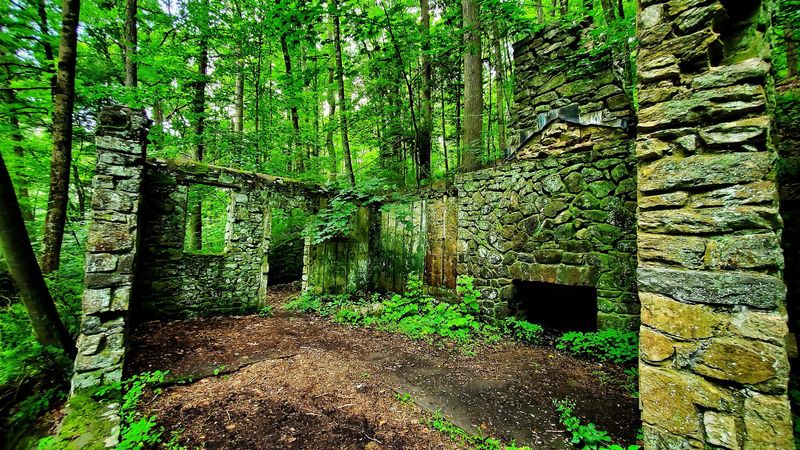
Long before hikers arrived, this land served a different purpose entirely. Iron ore mining took place in the area during the nineteenth century, and the industry shaped how these hills were used.
The park name itself remains a bit of a puzzle. One theory traces Hacklebarney to a Native American derivation possibly meaning ground to put wood on fire, while another links it to an iron mine foreman named Barney Tracey.
Nobody has settled the debate, which somehow suits the place.
Stone structures built by the Civilian Conservation Corps in the 1930s still stand in spots, weathered walls and steps blending into the hillsides. You will pass some without noticing unless you slow down.
The park opened to the public in 1924, giving it a century of visitors wandering these same gorges. Knowing that history layers something extra onto an ordinary afternoon walk, especially in autumn when the woods feel older and quieter than usual.
Practical Notes Before You Head Out
A few logistics smooth out the whole visit. Entry is free, parking sits near the main entrance and picnic area, and the lot is large enough to handle busy weekend traffic.
Gates open in the early morning and close in the evening, so an early start is easy to arrange. Sunrise light in the gorge is worth setting an alarm for.
Footwear tops the packing list. Rocky, uneven ground runs through much of the park, and boots or trail shoes prevent a lot of ankle drama.
Bikes are not allowed on the trails, but cross-country skiing is permitted once winter snow settles in. Leashed dogs are welcome and you will see plenty of them.
Carry water, bug spray during muggy stretches, and a bag for your trash. A downloaded trail map helps too, since the paths branch more than you expect.
You will find Hacklebarney State Park at 119 Hacklebarney Rd, Long Valley, NJ 07853, tucked into the quiet hills of northwestern New Jersey.
