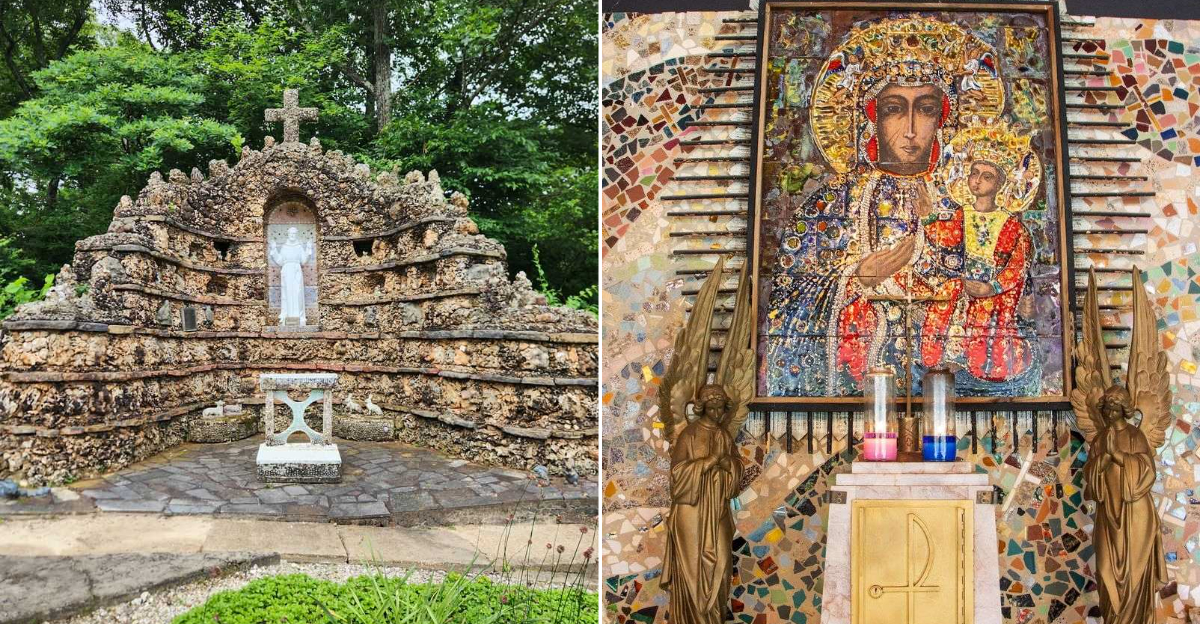
Twenty-three years of work went into building this Missouri shrine, and the man who did it used no power tools. A Franciscan monk carried stones, seashells, and pieces of broken jewelry up a hillside, embedding them into seven grottos that still stand today.
He worked alone, mostly at night, and never asked for help. The shrine is free to visit, and the grottos are open to anyone who wants to walk the paths and take in the quiet craftsmanship.
You can see the rosary beads pressed into the mortar, the colored glass catching the light, and the patience of a single man who turned a hillside into a sanctuary.
One Man One Mountain Dream
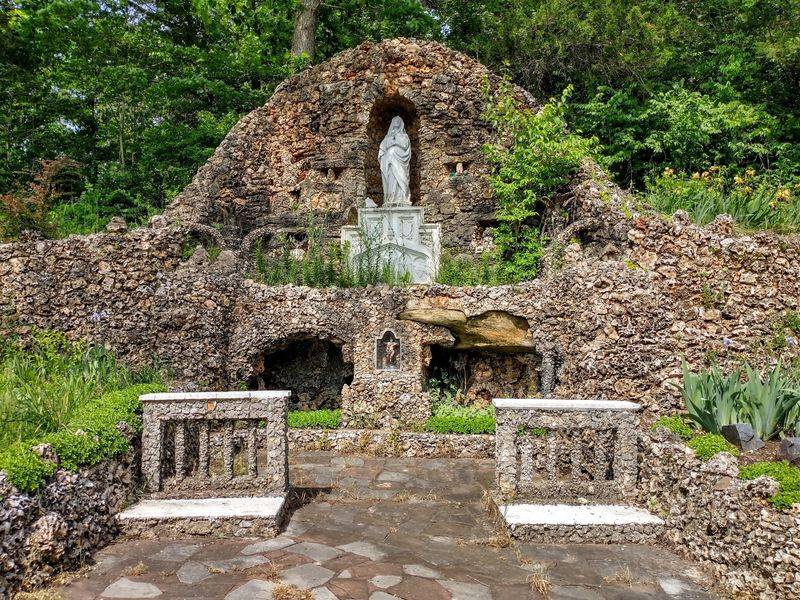
You can feel the human effort here almost right away, and that is what makes the shrine so memorable. Knowing Brother Bronislaus Luszcz imagined this place and then slowly built it by hand changes how you look at every rock, curve, and tucked-away little alcove.
He was a Franciscan monk from Poland, and the shrine carried both his faith and his memories of home into the Missouri hills. Instead of making something polished or grand in a formal way, he created a place that feels personal, almost like you are walking through somebody’s prayer made out of stone.
That story matters because it gives the whole visit a different weight than a normal roadside stop. When you stand there and realize one person spent years shaping grottos, chapels, and paths with steady determination, the place feels less like an attraction and more like a life poured into the land.
If you go, give yourself time to notice the small choices, because they say as much as the larger structures do. The shrine is not just impressive because it is big, but because it shows what patience, devotion, and stubborn creativity can leave behind for strangers to enjoy.
Where To Find The Hillside Shrine
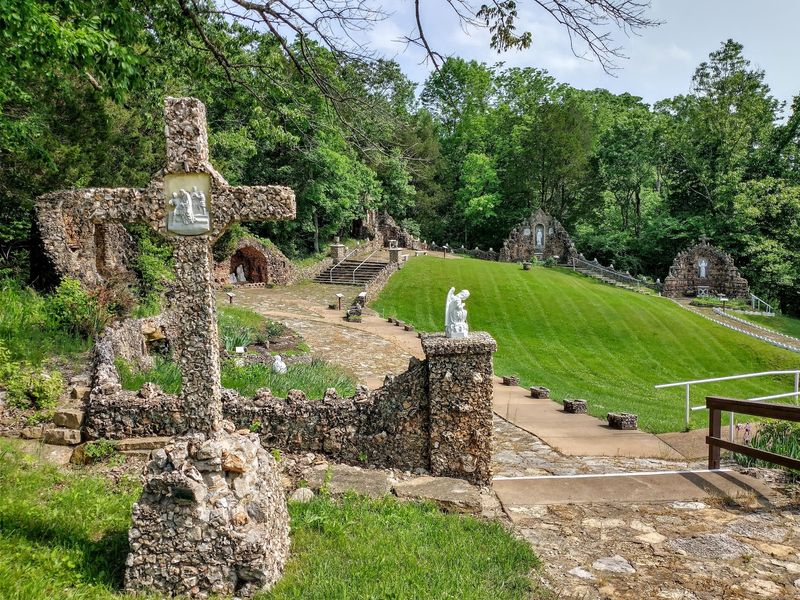
Getting there feels like part of the experience, because the setting is quiet enough that you start slowing down before you even step out. The shrine is at Black Madonna Shrine And Grottos, 100 St. Joseph Hill Road, Pacific, MO 63069, tucked into a peaceful stretch of Missouri countryside near the Ozark foothills.
What I like most is that it does not arrive with a flashy build-up or a big tourist feel. You head into the hills, the road gets calmer, and then suddenly you are at a place that seems built for walking slowly and paying attention.
Since admission is free, there is less pressure to rush through and get your money’s worth, which honestly changes the mood in a good way. You can just wander, breathe a little, and let the stonework unfold as you move from one area to the next.
If you are planning a Missouri road trip, this works best when you leave room in your day for unhurried exploring. Wear comfortable shoes, bring water when the weather is warm, and expect more walking and climbing than you might guess from the road below.
Stonework Done By Hand
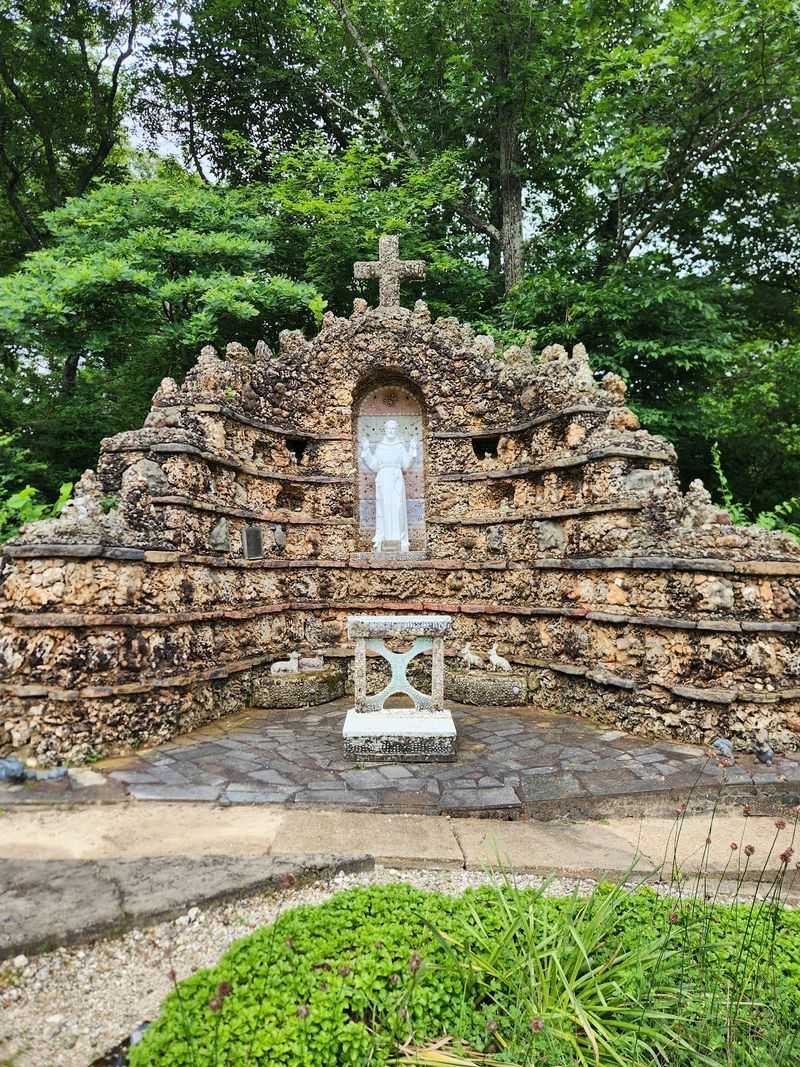
Here is the part that really gets me, because none of this feels machine-made or rushed in any way. Brother Bronislaus shaped the grottos from native Missouri tiff rock, and the rough texture gives everything a grounded, almost cave-like feeling that fits the hillside beautifully.
As you look closer, the surfaces start showing off tiny surprises that could be easy to miss at first. Bits of shell, ceramic, and other found pieces were worked into the designs, so the walls do not just hold form, they also hold personality.
That hand-built quality is probably why the shrine feels so alive compared with places that seem overly planned. Nothing about it comes across as slick, and the small imperfections actually make it better because they remind you someone stood there, choosing and placing each piece.
My advice is to slow way down when you walk through this section of the grounds. Step close, look at the patterns, and notice how different materials catch the light, because the real magic often lives in details that do not shout for attention at all.
The Open Air Chapel
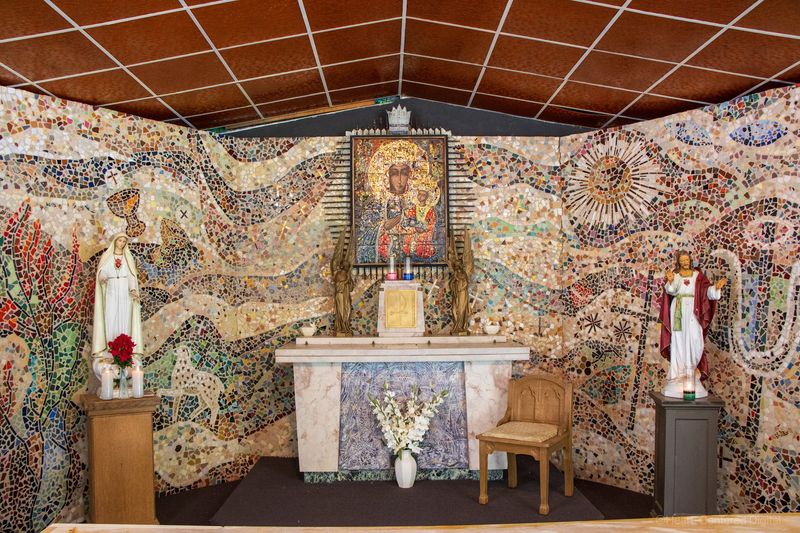
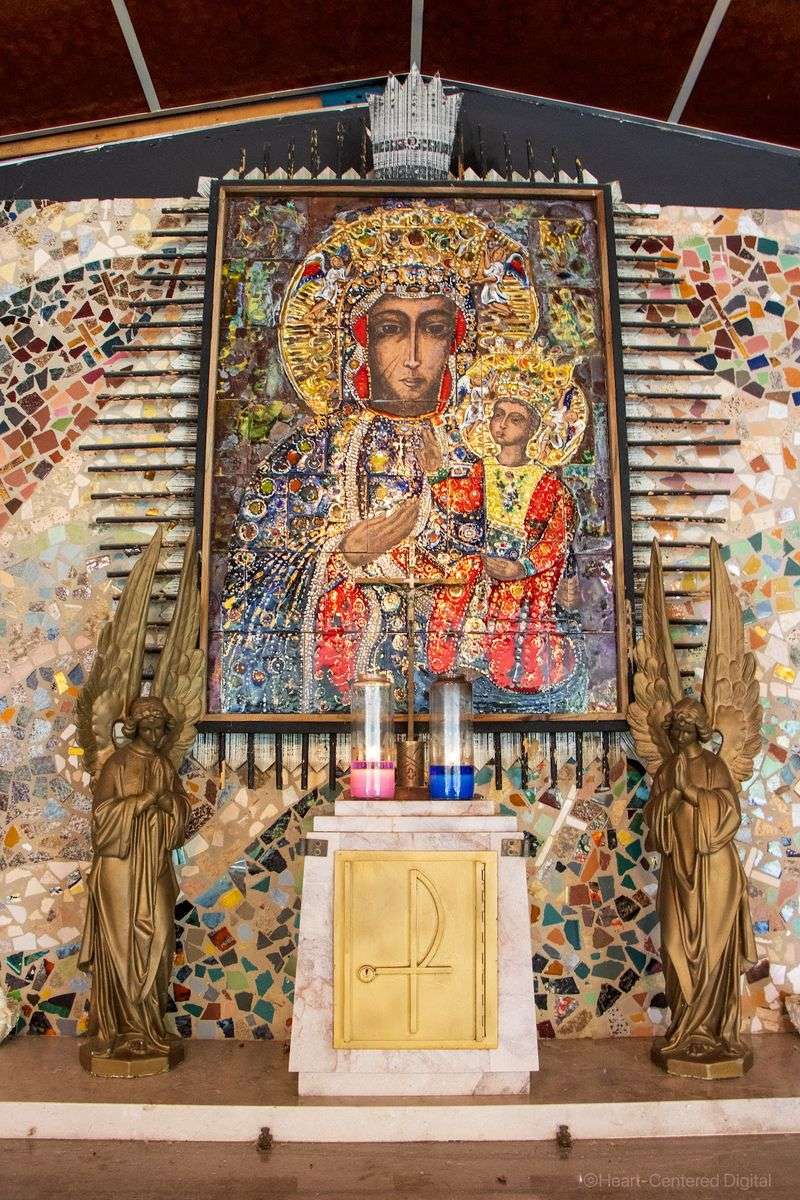
Some spots make you whisper without meaning to, and the open-air chapel has that effect almost immediately. Set at the heart of the shrine, it honors Our Lady of Czestochowa, the Black Madonna, and it ties the whole hillside together with a calm, centered feeling.
Because the chapel is open to the air, it does not separate you from the rest of the grounds in a stiff or formal way. Birds, breeze, stone, and trees all become part of the experience, which somehow makes the place feel more welcoming and more real.
There is also a deeper personal layer here that is easy to appreciate even if you are just visiting out of curiosity. Brother Bronislaus grew up near the original Black Madonna shrine in Poland, so building this chapel in Missouri connected his faith with memories of the place he came from.
If you are walking with family or friends, this is a good place to pause instead of hurrying along. Sit quietly for a minute, look around at how the chapel sits in the landscape, and let yourself notice how much feeling can be carried by stone and open sky.
Gethsemane In Filtered Light
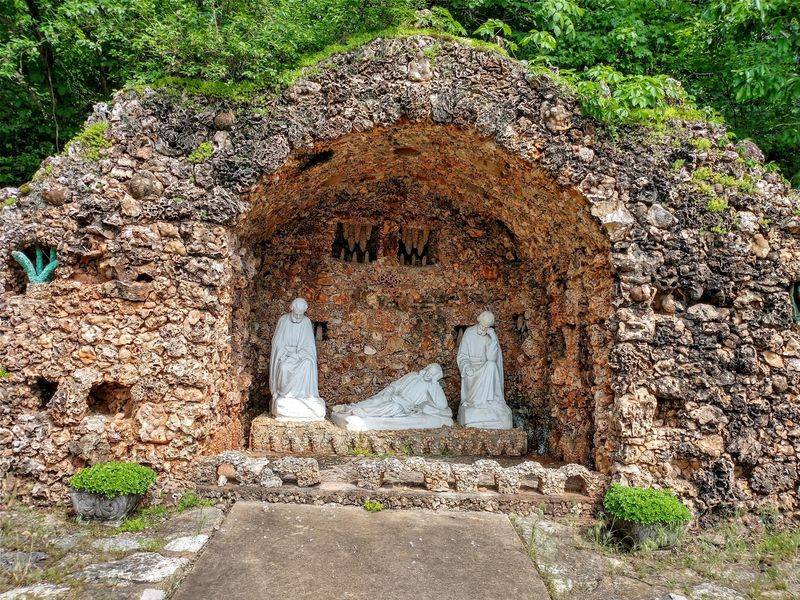
If you enjoy the little touches that make a place feel thoughtful instead of merely decorative, the Gethsemane Grotto stands out fast. It represents the scene on the Mount of Olives, yet what stays with many visitors is the way light softens the space.
Brother Bronislaus used colored jars to filter sunlight, which sounds simple until you actually see how gentle the effect can be. The glow changes the mood around the sleeping apostles and gives the grotto a hushed feeling that seems to settle over you while you look.
I love details like that because they show problem-solving mixed with imagination, not just labor for labor’s sake. Rather than depending on flashy tricks, the grotto uses ordinary materials in a careful way, and the result feels surprisingly moving when the light is right.
Take your time here and look from more than one angle, because the mood can shift as you move. In a place full of stone and structure, this softer kind of artistry helps explain why the shrine feels memorable long after a typical stop would have faded from your mind.
Saint Joseph And The Monk’s Favorite
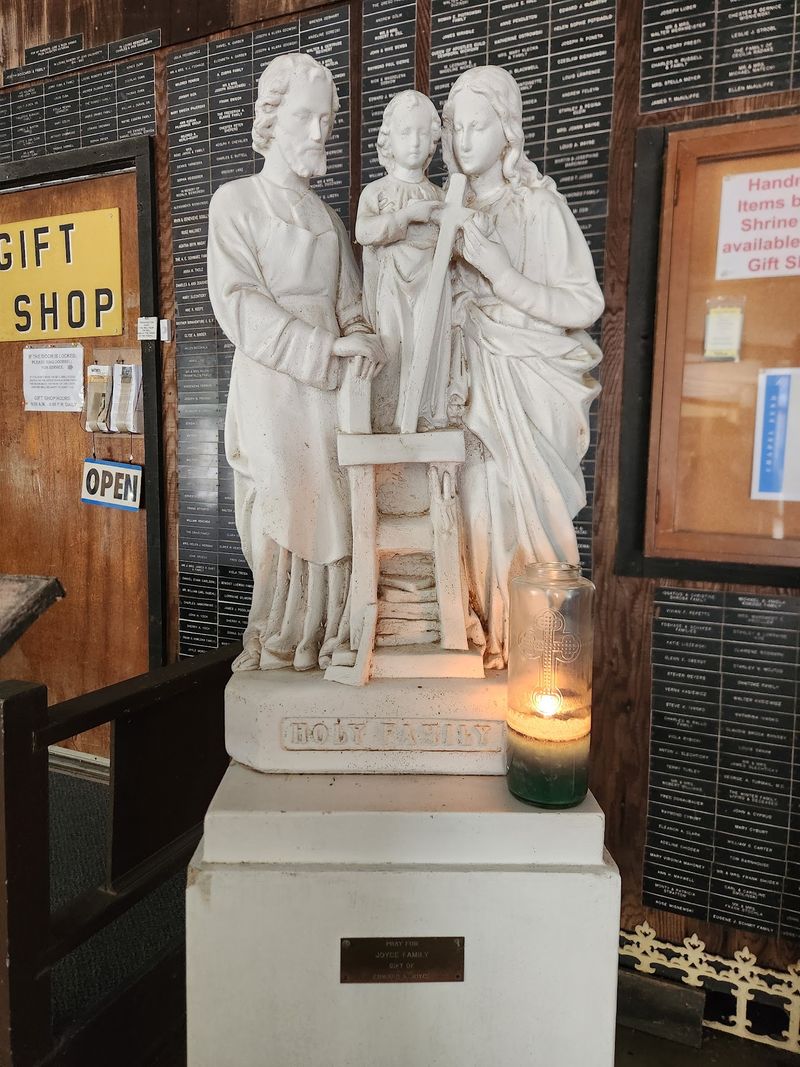
Not every part of the shrine feels solemn in the same way, and that is one reason it stays so interesting as you walk. The Saint Joseph Grotto is often remembered as a favorite of Brother Bronislaus, and it carries a warmth that feels personal rather than distant.
One detail people especially notice is the figure of a boy playing with his dog, which adds a touch of ordinary affection to the setting. That kind of image softens the stone around it and reminds you that faith, memory, and daily life can all live side by side.
I think that is why this area lands so well with visitors who may not know much about the shrine’s religious background. You do not need a long explanation to understand tenderness, and the scene quietly offers that without trying too hard or asking for a dramatic response.
When you reach this grotto, let yourself linger and take in the gentler mood around it. Missouri has plenty of places that impress with size or scenery, but this spot works differently, pulling you in through affection, simplicity, and a feeling that someone built what mattered most.
The Path Toward The Assumption
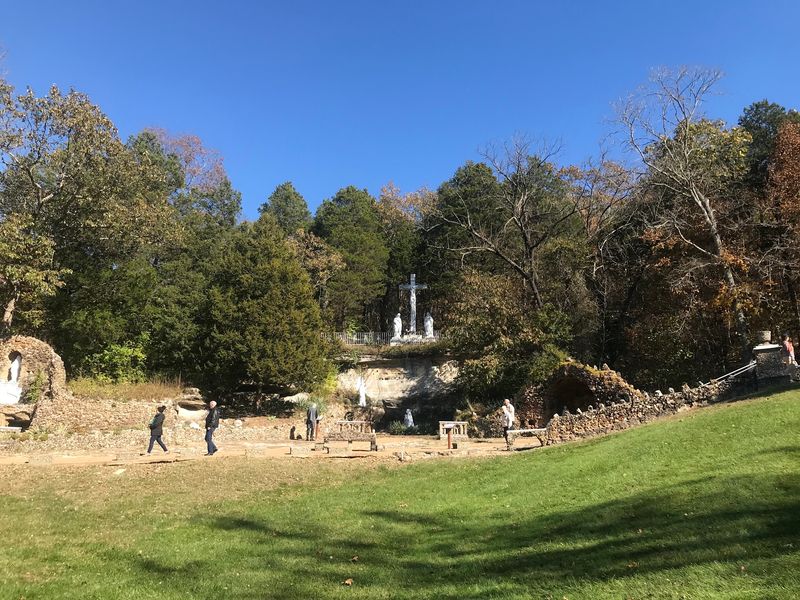
Walking toward the Assumption Grotto feels a bit like being led through a story instead of just moving from one structure to another. The larger grotto is the main visual payoff, but the approach matters just as much because smaller shrines guide you there step by step.
That gradual build gives the area a sense of movement and expectation, which is smart design even if it grew from devotion first. You are not simply dropped in front of the biggest feature, and because of that, the destination feels more earned once it comes into view.
I always appreciate places that think about how people arrive, not just what they see when they get there. Here, the sequence of grottos helps create a quiet rhythm, and the hillside setting in Missouri adds another layer by making the walk feel connected to the land itself.
My suggestion is not to rush uphill with your eyes fixed only on the final stop. Look back once or twice, notice how the path frames the stonework behind you, and pay attention to how the shrine uses distance, elevation, and pacing to shape the whole experience.
Little Details You Might Miss
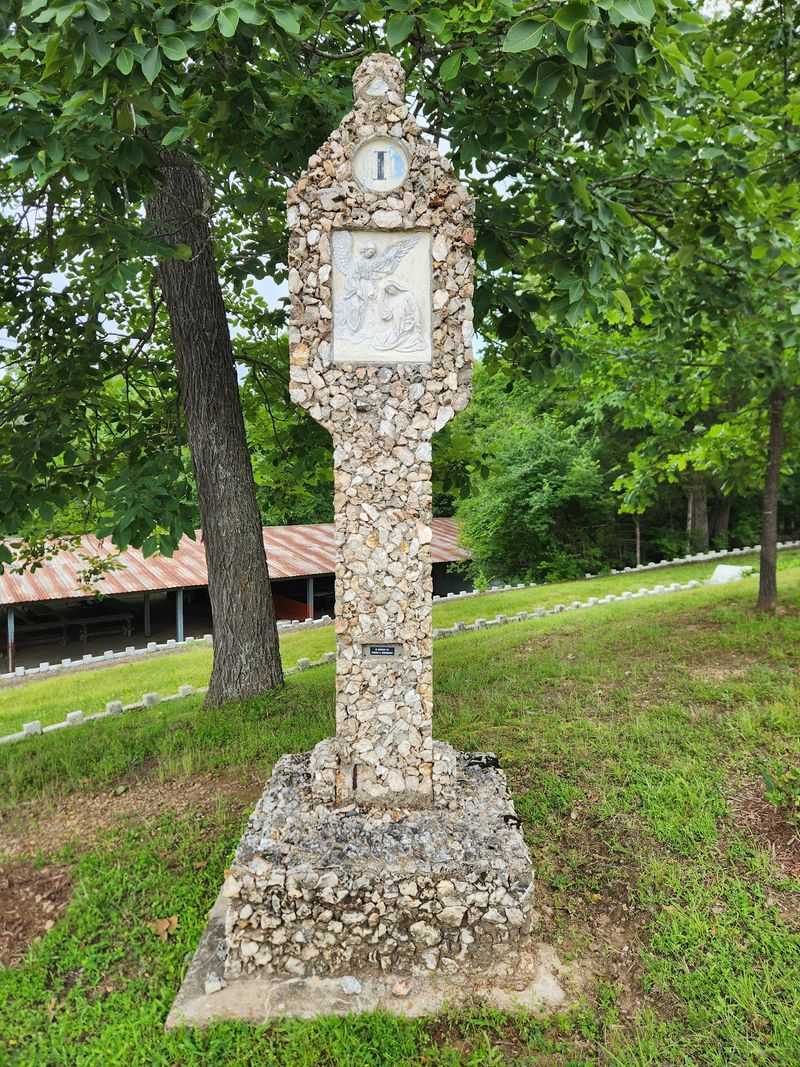
What makes the shrine fun to explore is that it does not spend all its energy on the biggest grottos alone. Around the grounds, you can spot smaller features like a bridge, old bells, and tucked-away bits of craftsmanship that reward anyone who pays closer attention.
Those details help the place feel layered instead of one-note, which is probably why a simple walk can stretch longer than expected. You turn a corner, catch some different stonework, notice how a path lines up with a view, and suddenly another part of the shrine starts feeling important too.
I am always a fan of places that trust visitors to notice things on their own without giant signs pointing at every feature. The Black Madonna Shrine lets you wander a little, and that freedom makes your visit feel more personal because you start discovering your own favorite corners.
So yes, look at the famous grottos, but save some attention for the side notes around them as well. Often, those smaller moments are the ones you remember later, especially in a Missouri place built with such careful hands and such a strong sense of quiet character.
Why The Place Stays With You
Some places are easy to admire and easy to forget, but this shrine does not really work that way. Long after you leave, the thing that sticks is the mix of scale, solitude, and the stubborn human effort behind every grotto, path, and carefully shaped wall.
It helps that the setting does not fight for attention with noise or commercial clutter. The hillside, the trees, and the handmade stone all support the same quiet mood, so by the time you finish walking, you feel like you have spent time inside somebody’s vision.
That is why I would tell a friend not to expect a flashy attraction or a polished museum experience. Come to Missouri ready for something more personal than that, something a little rough around the edges in the best possible way, and you will probably connect with it.
For me, the Black Madonna Shrine and Grottos proves that a free place can still feel rich, moving, and surprisingly transporting. You walk in thinking you are stopping to see unusual stonework, and you leave thinking about persistence, faith, memory, and what one determined person can make.
