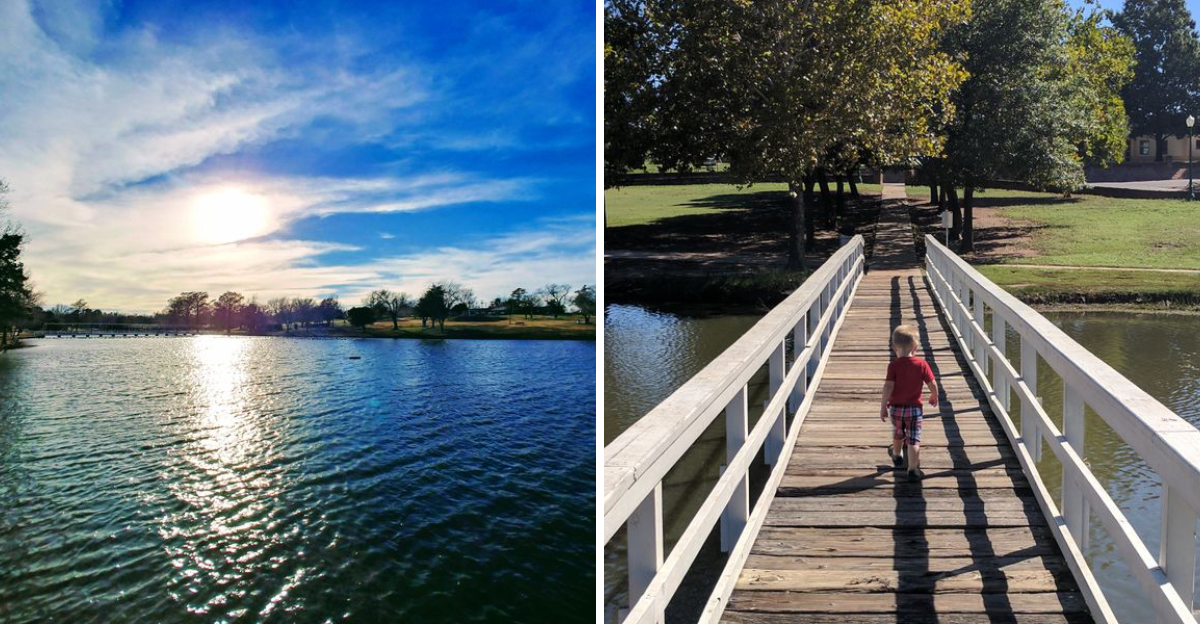
As winter settles across Oklahoma and the pace of evenings slows, one short drive in Chickasha continues to spark quiet debate among locals.
Some insist its magic belongs strictly to December, tied to tradition and routine, while others argue the experience reshaped how winter nights feel long after the holiday season ends.
The route itself is brief, just two miles, but the impression it leaves stretches far beyond the calendar. For many residents, the drive became less about lights and more about rhythm. It offered a reason to leave the house on cold nights, to move slowly, to let conversation and silence share the same space.
Even once the decorations come down, the memory of that calm remains attached to winter itself rather than a single celebration. What keeps people talking is not whether the attraction still exists, but whether its influence does. In Chickasha, winter nights are measured not only by temperature, but by how a simple drive taught people to slow down when the year does the same.
A Winter Habit That Outlasts the Holidays
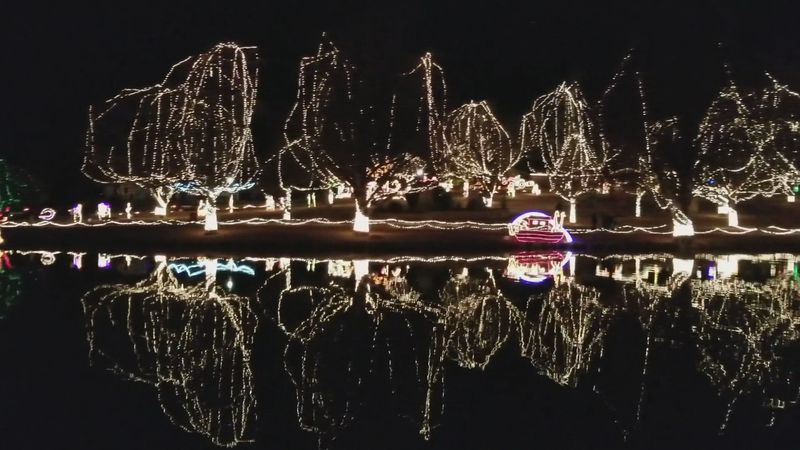
While most seasonal displays pack up and vanish by early January, the memory of Shannon Springs Park’s two-mile drive settles into Chickasha’s winter identity like frost on a windshield.
Families return year after year not because the calendar tells them to, but because the ritual itself has become woven into how they experience the coldest months.
Conversations around town shift from “Did you see the lights?” to “Remember when we drove through?” long before spring arrives. The drive creates a shared vocabulary for winter evenings, a common experience that connects neighbors, coworkers, and strangers at the grocery store.
Parents who grew up making the drive now bring their own children, repeating stories about what the park looked like decades ago. That continuity transforms a simple light display into something more substantial, a tradition that marks time and growth.
Even visitors passing through Oklahoma notice how locals speak about the drive with a particular fondness, as if it represents something beyond entertainment. The route through Shannon Springs becomes shorthand for winter itself, a way to describe the season without mentioning temperature or weather.
What makes this habit endure is its simplicity. No tickets, no crowds, no pressure to perform joy.
Just a slow drive through a park that understands winter doesn’t need to be rushed. That patience resonates long after the last bulb is unplugged, reminding people that some traditions grow stronger precisely because they don’t demand anything except presence.
Slowing Down When Everything Else Speeds Up

Modern life hums at a frantic pace, even in smaller Oklahoma towns where traffic rarely backs up and rush hour feels more like a suggestion. Shannon Springs Park offers something increasingly rare: a built-in excuse to crawl along at five miles per hour without anyone honking or passing.
The drive forces a different rhythm onto bodies accustomed to hurrying. Shoulders drop, jaws unclench, and the urge to check phones fades when the only thing ahead is another curve of glowing trees.
Kids stop asking “Are we there yet?” because the point isn’t arrival, it’s the journey itself.
Couples rediscover conversation in the dim glow of dashboard lights, their words softer without the usual distractions of home. Friends riding together find themselves reminiscing instead of scrolling, their laughter fogging up windows that nobody bothers to wipe clear.
This enforced slowness creates a pocket of calm that feels almost rebellious against the year’s usual momentum. Winter already encourages hibernation and reflection, but the drive makes those instincts feel intentional rather than lazy.
Local therapists could probably write papers on the mental health benefits of this two-mile stretch. The repetitive motion of driving combined with gentle visual stimulation creates a meditative state that most people don’t realize they’re craving until they’re halfway through the park.
By the time cars exit onto the main road, passengers often sit quietly for a moment before returning to normal speed, reluctant to break whatever spell the drive cast over them.
Creating Warmth Without Fire or Fuel

Oklahoma winters rarely match the brutal cold of northern states, but they carry their own particular chill that seeps through coat seams and car heaters. Shannon Springs Park generates a different kind of warmth, one that has nothing to do with thermostats or blankets.
The glow from thousands of lights creates an optical illusion of heat, tricking brains into feeling cozier even when breath still fogs. Colors shift from cool blues to amber golds, each section of the drive offering a different emotional temperature that passengers feel without naming.
Families huddle together in backseats not because they’re freezing, but because proximity feels right in this environment. Hands reach across consoles, heads lean on shoulders, and the small interior space of a vehicle becomes a mobile living room where everyone actually wants to be.
This manufactured coziness extends beyond the physical. The drive sparks stories about past winters, old friends, and childhood memories that warm from the inside out.
Grandparents recall when the park looked different, parents share first-date stories, and children imagine future trips they’ll make with their own families someday.
The warmth persists even after cars leave the park. Passengers carry it home like embers in their chests, glowing quietly through the rest of the evening.
Bedtime feels less lonely, morning arrives less harsh, and the next cold day doesn’t bite quite as hard because the memory of that warmth lingers. It’s the kind of heat that doesn’t show up on thermometers but makes all the difference in surviving winter’s darker hours.
Transforming Ordinary Space Into Winter Wonderland
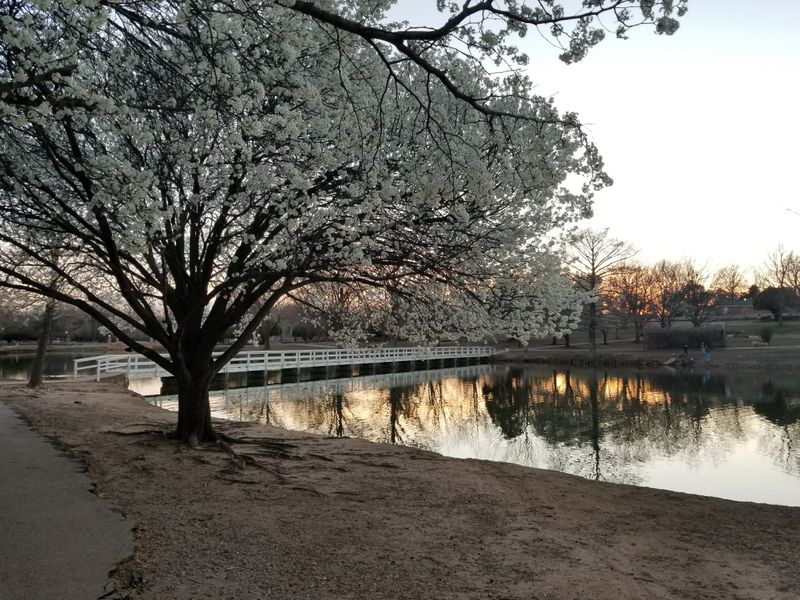
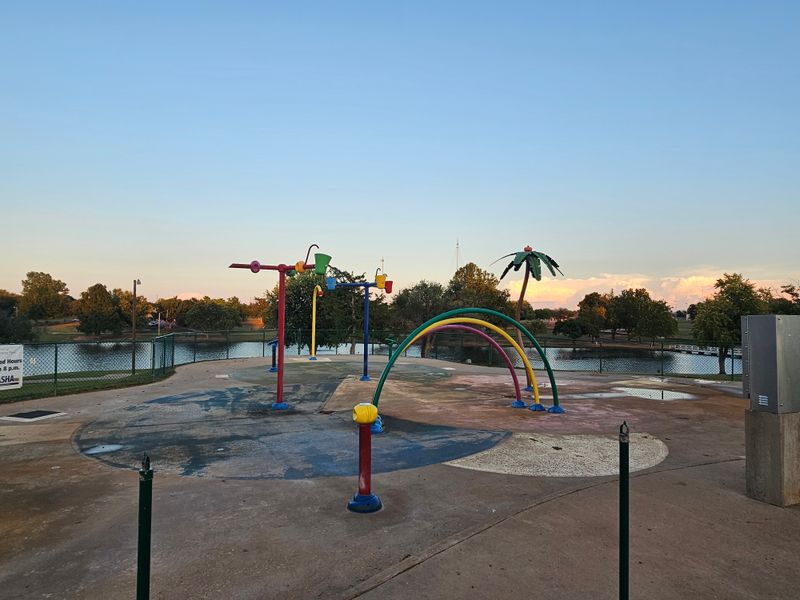
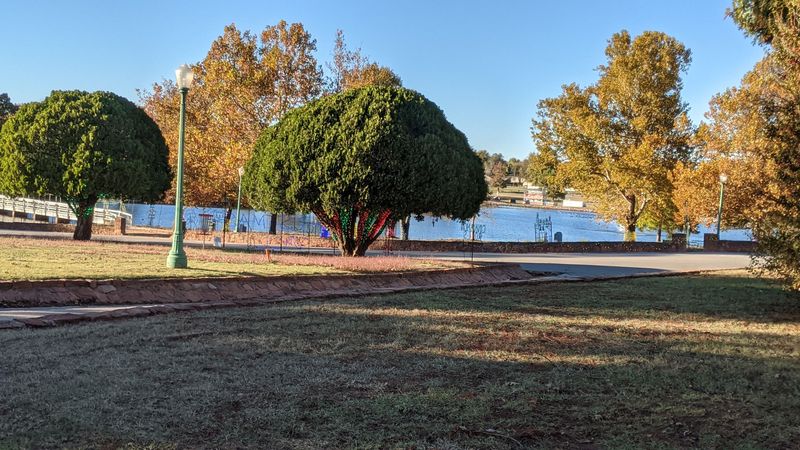
Shannon Springs Park spends most of the year as unremarkable public land, a place for jogging loops, dog walks, and forgettable lunch breaks. Bare trees stand like sentinels over empty paths, and the landscape blends into the background of daily life without demanding attention.
Winter’s arrival changes everything. Suddenly those same trees become canvases for light and color, their naked branches transformed into elaborate sculptures that glow against the dark sky.
The familiar becomes fantastical, and locals who’ve driven past the park a thousand times barely recognize it.
This transformation matters because it proves that magic doesn’t require exotic locations or expensive destinations. The same park where kids play soccer in September becomes unrecognizable by December, demonstrating that wonder lives closer than most people think.
Visitors from other parts of Oklahoma make the pilgrimage specifically to see how ordinary space can be reimagined. They return home inspired to look at their own towns differently, wondering what hidden potential exists in familiar places.
The drive also reshapes how locals think about public land. Shannon Springs stops being just a park and becomes a community canvas, a shared space that reflects collective creativity and effort.
Volunteers who string lights each year aren’t just decorating, they’re redefining what their town can be.
When winter ends and the lights come down, the park returns to its quieter identity. But people who made the drive never quite see it the same way again.
They know what those trees are capable of, what that road can become, and they carry that knowledge through all the ordinary months ahead.
Offering Refuge From Holiday Pressure
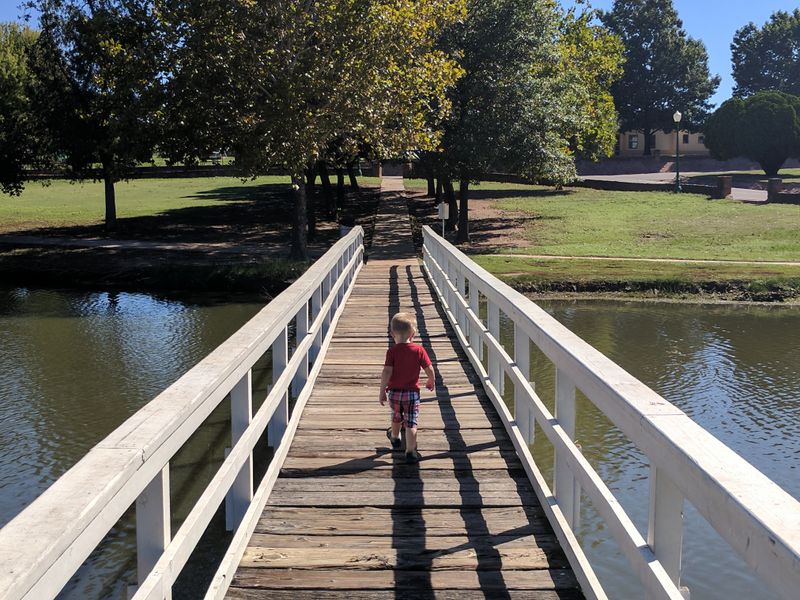
December arrives with a relentless checklist, shopping, cooking, decorating, hosting, attending, performing joy on demand. Shannon Springs Park provides an escape hatch from that pressure, a low-stakes outing that requires no preparation, no outfit changes, and no forced cheerfulness.
Families can show up in pajamas with unbrushed hair, and nobody judges because everyone stays in their cars. There’s no need to clean the house, prepare food, or worry about whether Uncle Jerry will say something inappropriate.
The drive demands nothing except showing up.
This simplicity becomes particularly valuable for people struggling through difficult winters, those grieving losses, navigating divorces, or simply feeling overwhelmed by life’s usual chaos. The park doesn’t ask them to pretend everything is fine; it just offers something beautiful to look at for twenty minutes.
Parents exhausted from meeting everyone else’s expectations find rare moments of peace in the driver’s seat, their children temporarily quiet in the back, the outside world reduced to manageable beauty. The drive becomes a reset button they can press whenever holiday stress builds too high.
Even the timing works in favor of stressed families. Shannon Springs stays open late, welcoming cars long after bedtimes have been missed and dinner has been skipped.
There’s no wrong time to drive through, no schedule to keep, no reservation required.
The park functions as a pressure valve for an entire community, releasing tension that might otherwise explode in less healthy ways. Therapists probably notice fewer crisis calls on nights when the park is open, though nobody’s tracking that particular correlation.
Sometimes the best gift a town can give itself is permission to do something simple and slow when everything else demands fast and complicated.
Celebrating Community Effort and Pride
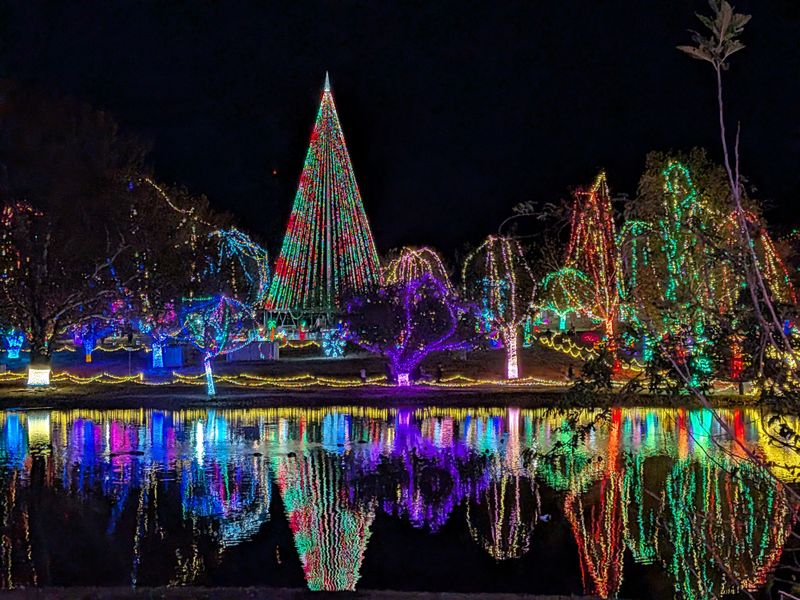
Behind every glowing tree and illuminated archway stands an army of volunteers who spent weeks stringing lights, testing circuits, and ensuring the drive would be ready when winter arrived. Shannon Springs Park doesn’t just appear magically, it’s built by people who believe their town deserves something special.
Local businesses donate supplies, electricians volunteer expertise, and high school students earn community service hours by helping install displays. The park becomes a collective project that involves dozens of groups working toward a shared vision, and that collaboration strengthens community bonds in ways that last all year.
When families drive through, they’re not just seeing lights, they’re witnessing proof that their neighbors care about creating beauty and joy. That knowledge shifts how people think about their town, replacing cynicism with pride and isolation with connection.
Chickasha residents develop a particular swagger when talking about their winter drive, a defensive pride that emerges when outsiders suggest bigger cities have better displays. They’ll argue passionately that Shannon Springs holds its own against any metropolitan light show, and they’re not entirely wrong.
The drive also attracts visitors from across Oklahoma, bringing economic benefits to local restaurants, gas stations, and shops. Business owners notice the uptick in winter traffic and appreciate that their community has something worth traveling for, something that puts Chickasha on the map for positive reasons.
Volunteers who work on the display each year form lasting friendships, their shared labor creating bonds that extend beyond the park. They see each other at grocery stores and remember nights spent untangling light strands, laughing at mistakes, and celebrating when sections finally illuminated correctly.
That camaraderie ripples through the entire community, making Chickasha feel a little smaller and a lot friendlier throughout the winter months.
Providing Accessible Entertainment for All
Not everyone can walk through traditional light displays or stand in cold weather for extended periods. Shannon Springs Park removes those barriers by keeping everyone warm inside their vehicles, making the experience accessible to elderly residents, people with disabilities, and families with very young children who can’t handle outdoor winter activities.
Parents with infants appreciate being able to bring babies along without worrying about crying disturbing other visitors. The car provides a private space where children can fuss, sleep, or need diaper changes without anyone else being affected.
That freedom makes the drive possible for families who might otherwise skip winter outings entirely.
Elderly residents who no longer feel steady on icy sidewalks can still experience the full display from the safety of their cars. Nursing homes and assisted living facilities organize group trips, loading residents into vans for an outing that doesn’t require walkers, wheelchairs, or complicated logistics.
The drive also works for people with sensory sensitivities who might find crowded events overwhelming. Families can control their environment, adjusting music volume, managing lighting, taking breaks, in ways impossible at traditional attractions.
That flexibility makes Shannon Springs welcoming to neurodiverse visitors who often feel excluded from holiday activities.
Cost accessibility matters too. Unlike ticketed attractions that price out lower-income families, the drive operates on donations, ensuring everyone can participate regardless of financial circumstances.
Nobody checks bank accounts at the entrance, and nobody leaves feeling like they couldn’t afford to create winter memories with their children.
This radical accessibility transforms the park into genuinely public space, living up to the promise that community resources should serve everyone. The drive doesn’t discriminate based on age, ability, or income, it simply opens its arms and invites the whole town inside.
Anchoring Memory to Specific Place
Human brains link memories to physical locations, creating mental maps where certain feelings live in specific places. Shannon Springs Park becomes the geographic home of winter contentment for thousands of people, a coordinate on the map where good memories cluster year after year.
Children growing up in Chickasha develop a Pavlovian response to the park, even passing it during summer triggers faint echoes of winter excitement. That geographical anchoring creates a sense of home that’s hard to replicate, a feeling that this particular place holds personal significance beyond its objective features.
Adults who move away from Oklahoma find themselves describing the drive to new friends, trying to explain why a simple light display meant so much. They realize the park represents more than entertainment, it symbolizes a time and place where life felt manageable, where winter nights held magic instead of dread.
The permanence of the location matters. Unlike traveling shows or temporary installations, Shannon Springs stays put, offering reliability in an unpredictable world.
People can return year after year knowing the park will still be there, still glowing, still holding space for their memories.
This geographic consistency helps families mark time and growth. Parents point out where they sat as children, showing their own kids the exact curve where they first held hands with their future spouse.
The park becomes a physical timeline, a place where past and present overlap.
Even people who only visit once carry the location in their mental landscape afterward. Shannon Springs joins the list of places that shaped them, that taught them something about beauty or community or winter’s possibilities.
Geography becomes biography, and a park in Oklahoma becomes part of countless personal stories told and retold for decades.
Teaching Patience in an Impatient World
Everything about modern life prioritizes speed, fast food, fast internet, fast responses to texts that arrived seconds ago. Shannon Springs Park operates on a different philosophy entirely, teaching visitors that some experiences improve when stretched across time rather than compressed into efficiency.
The two-mile route takes twenty minutes minimum, longer if cars ahead stop to take photos or simply linger. That forced patience initially frustrates people accustomed to moving quickly, but somewhere around the first major display, resistance melts into acceptance.
Hurrying becomes impossible, so people finally stop trying.
Children learn to sit still without screens, discovering they can entertain themselves by actually looking at what’s outside the window. Parents model patience by not complaining about slow traffic, demonstrating that sometimes waiting is part of the experience rather than an obstacle to overcome.
The drive also teaches delayed gratification, each curve reveals new displays, rewarding people who resist the urge to rush through. The best installations often appear near the end, encouraging visitors to trust that staying present will be worth it.
This lesson in patience extends beyond the park. Families who practice slowing down during the drive often find themselves applying that skill elsewhere, taking longer walks, having longer conversations, resisting the urge to scroll through moments instead of experiencing them fully.
In a culture that treats patience like weakness or wasted time, Shannon Springs Park makes a radical argument for slowness. The drive doesn’t apologize for taking twenty minutes when it could theoretically take five.
It insists that those extra minutes matter, that the journey deserves as much attention as the destination. That philosophy, absorbed through repetition over multiple winters, quietly reshapes how people move through the world long after they’ve left Oklahoma behind.
Dear Reader: This page may contain affiliate links which may earn a commission if you click through and make a purchase. Our independent journalism is not influenced by any advertiser or commercial initiative unless it is clearly marked as sponsored content. As travel products change, please be sure to reconfirm all details and stay up to date with current events to ensure a safe and successful trip.
