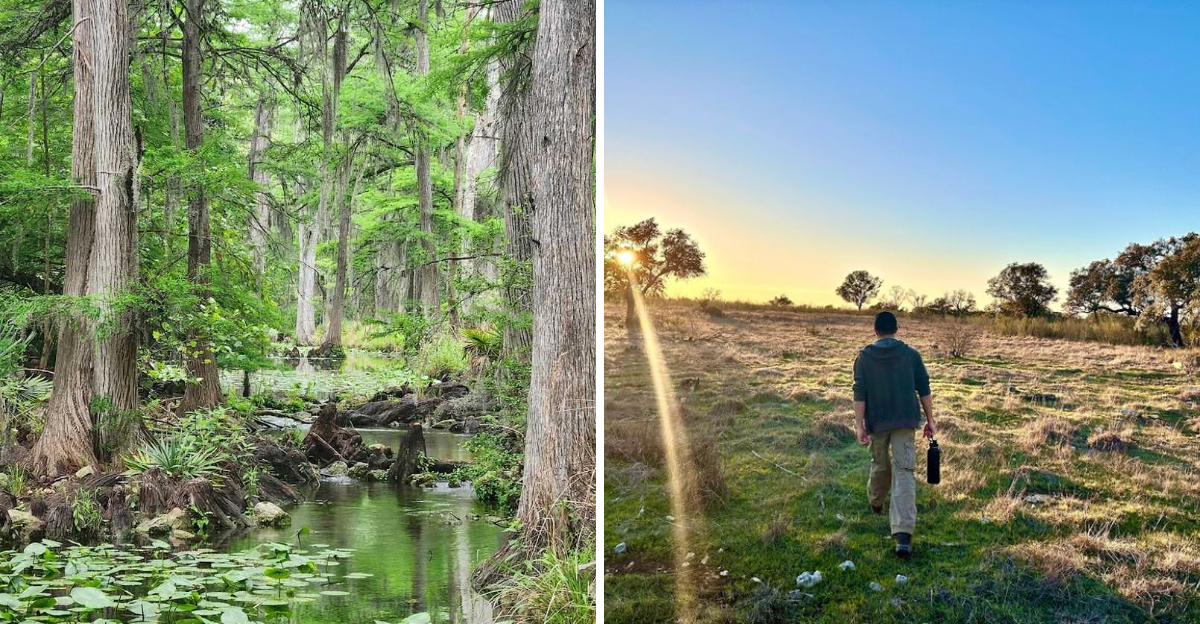
A two mile trail that stays quiet on busy weekends sounds like a myth. But this Texas natural area pulls it off. Honey Creek only opens for guided hikes or by reservation, which keeps the crowds away before they even start.
The path follows the creek through oak and cypress trees, with water views that make a person forget about their phone. No loud groups, no Bluetooth speakers, just the sound of footsteps and the occasional splash from a turtle.
The creek itself is clear enough to see the bottom, and the shade stays thick even in July. Texas has plenty of popular hiking spots where a person fights for parking, but this one feels like a secret. Pack water, wear good shoes, and make a reservation before heading out. A quiet two miles beats a crowded five any day.
How the Guided Tour System Works at Honey Creek
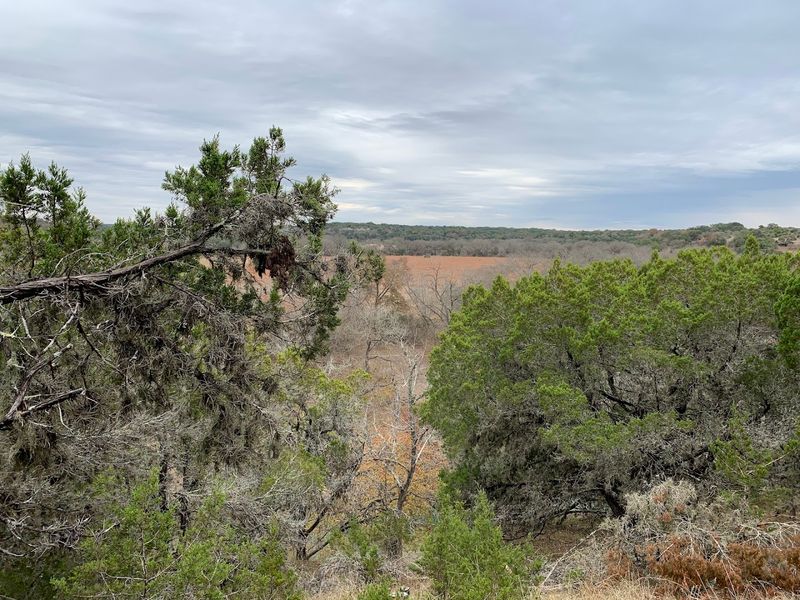
Not every trail asks you to slow down before you even start, but Honey Creek does exactly that. Access to the natural area is exclusively through a guided tour, which means you cannot just show up and wander in on your own.
Tours typically depart from the historic Rust House inside Guadalupe River State Park, usually on Saturday mornings at 9:00 AM.
Registration is required ahead of time, and day-use reservations for Guadalupe River State Park are strongly recommended. Without a reservation, you might not even make it through the park entrance.
The standard entrance fees for Guadalupe River State Park apply, so plan for that as part of your visit budget.
The guided format is actually one of the best parts of this experience. Your guide brings the trail to life with stories about the geology, plants, and wildlife that you would almost certainly miss on your own.
Tours last around two to two-and-a-half hours, with frequent stops along the way. It feels less like a hike and more like an outdoor classroom, in the best possible way.
Come early, come prepared, and let the guide do the talking.
Honey Creek Itself, the Heart of the Whole Hike
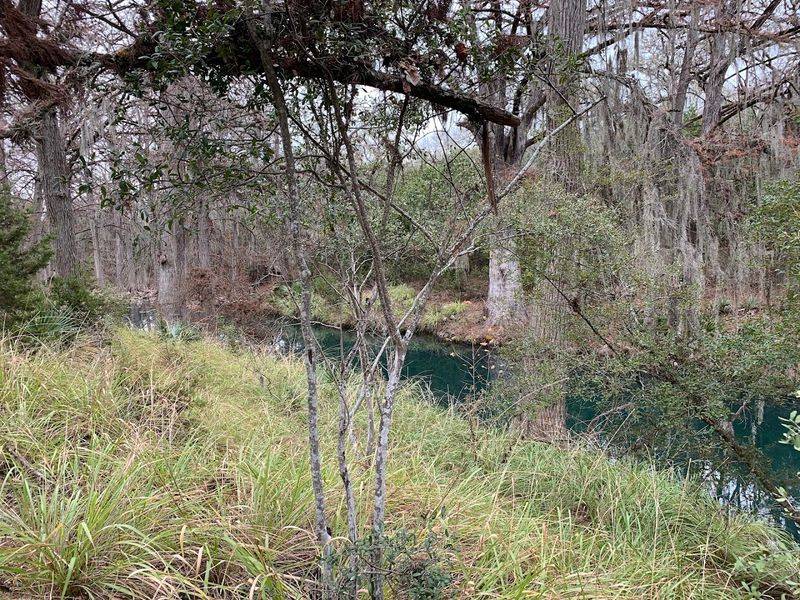
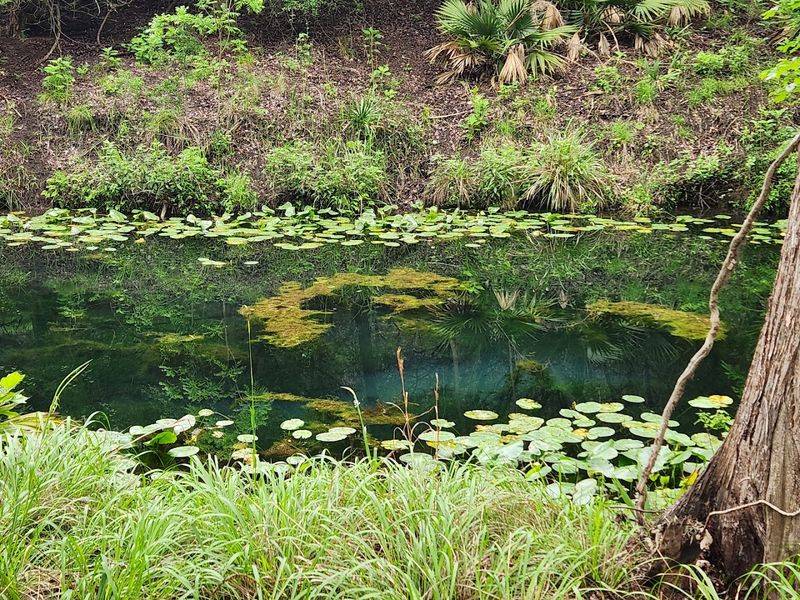
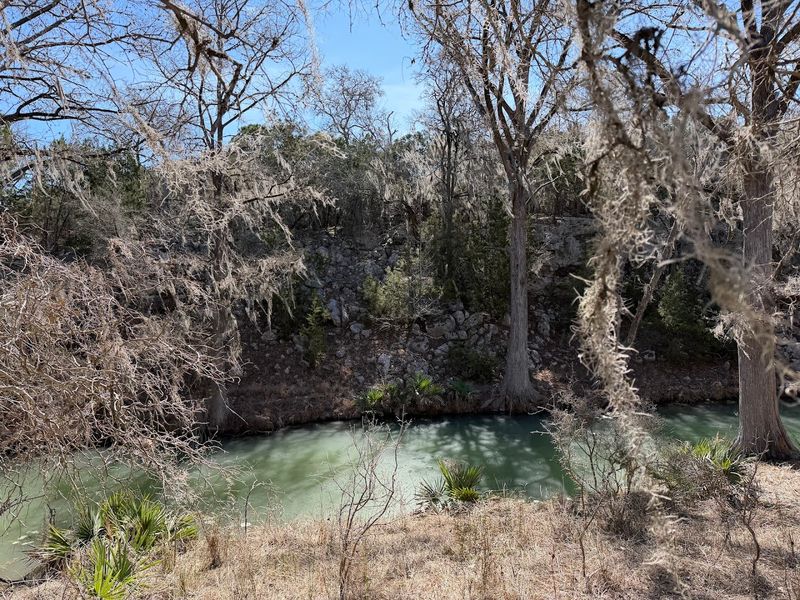
There is a moment on this trail when Honey Creek comes into full view, and it genuinely stops you in your tracks. The water is remarkably clear, fed by the Edwards Aquifer deep underground, and it runs cool even in the warmer months.
You can see straight to the bottom through the current, which feels almost surreal in a state known more for its heat than its water.
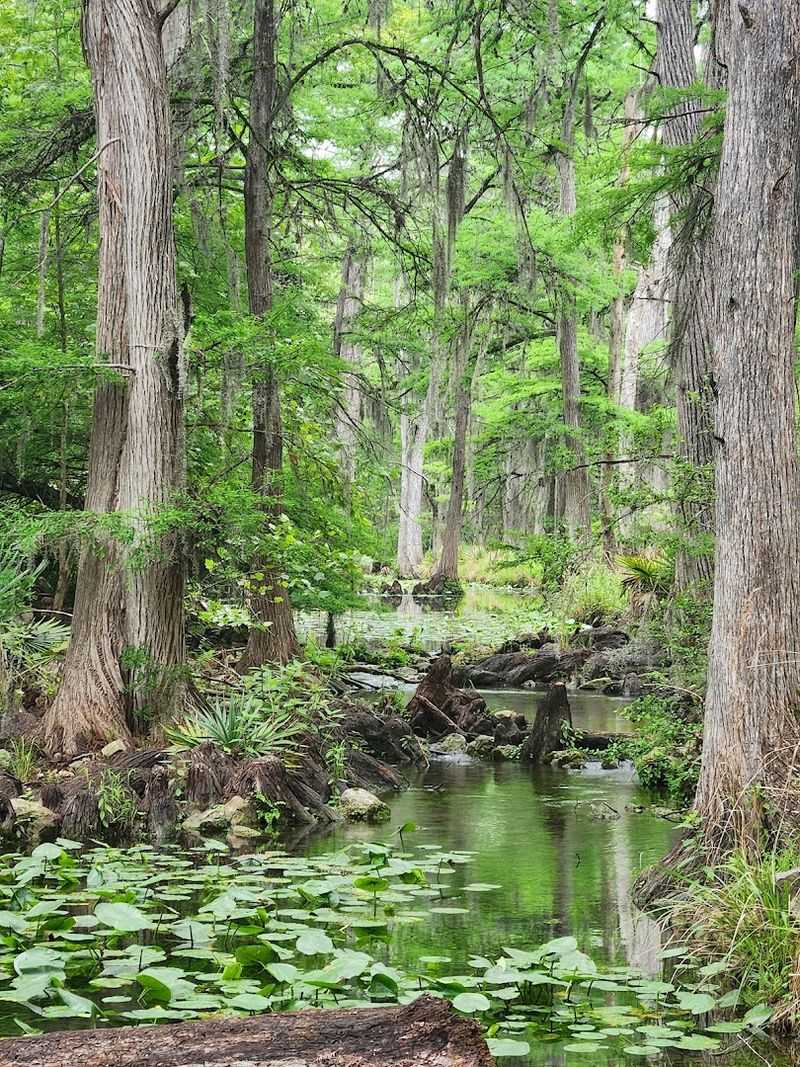
The creek stretches about 1.5 miles and eventually flows into the Guadalupe River, playing a quiet but important role in the regional watershed. Bald cypress trees line the banks, their roots gripping the limestone edges, their canopy casting wide patches of shade.
Spanish moss drapes from the live oaks nearby, giving the whole scene a slightly dreamy quality.
Maidenhair fern and columbine grow along the water’s edge in sheltered spots, adding small bursts of delicate color. This is the kind of creek you want to sit beside for a while, listening to the water move over the rocks.
The guide will likely point out Guadalupe bass holding in the current, which is the Texas state fish and a native species that thrives in these clean, cool waters.
Wildlife You Might Actually Spot Along the Way
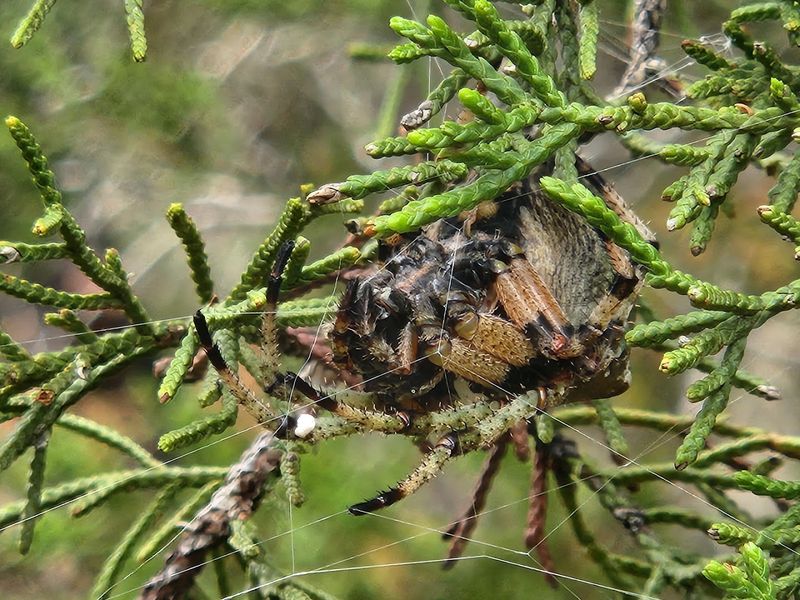
Wildlife watching at Honey Creek is less about luck and more about being quiet and observant. White-tailed deer are common sightings, often spotted near the tree line in the early morning light.
Armadillos rustle through the leaf litter, and wild turkeys occasionally cross the trail with that unhurried confidence they seem to carry everywhere.
The natural area is a known nesting site for the golden-cheeked warbler, an endangered bird that breeds only in Texas. Hearing one before you see it is part of the experience, a small, sharp call threading through the cedar canopy.
Birders tend to get genuinely excited on these tours, and honestly, even non-birders start scanning the treetops after a while.
Down near the creek, keep an eye out for Cagle’s map turtle, a species with a range that barely extends beyond a handful of Texas rivers. The Honey Creek Cave salamander is another rare resident, though sightings are less common on the trail itself.
This level of biodiversity in a relatively small area is part of what makes the natural area so ecologically significant. The preserve protects habitats that many species depend on, and walking through it feels like being trusted with something rare.
The Trail Itself, What to Expect Underfoot
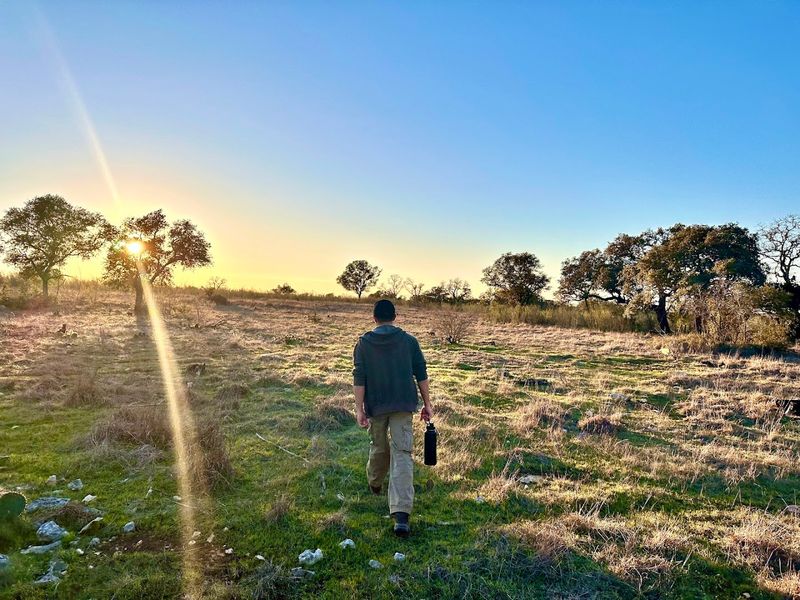
The loop covers roughly 2.0 to 2.5 miles of terrain that earns its easy-to-moderate rating honestly. Most of the path is flat and manageable, but there are stretches with rocky footing, short steep hills, and uneven slopes that keep you paying attention.
Good hiking shoes or trail runners make a real difference here.
The trail drops down from the Rust House area into a canyon, and that descent is one of the most satisfying moments of the whole hike. Suddenly the trees close in, the temperature drops a few degrees, and the sound of Honey Creek starts to reach you before you even see it.
It feels like the land is welcoming you into something quieter.
There are no restrooms or water fountains along the trail, so carrying your own water is non-negotiable, especially in July when the Texas sun gets serious. Pets are not permitted in the natural area, with the exception of service dogs.
The loop format means you end up back where you started, which makes navigation simple. Even first-time hikers tend to feel comfortable here as long as they come ready.
The Ancient Geology and Fossils Hidden in the Limestone
Walking through Honey Creek State Natural Area means walking across roughly 125 million years of Earth history, whether you realize it or not. The limestone here was once the floor of a shallow inland sea, and fossils from that ancient marine world are still embedded in the rock along the trail.
Your guide will point them out, and once you see the first one, you start noticing them everywhere.
The Edwards Plateau, which this area sits on, is one of the most geologically interesting regions in Texas. The karst landscape, shaped by water slowly dissolving soluble rock over millennia, is responsible for the caves, springs, and sinkholes that define the Hill Country terrain.
Honey Creek itself exists because of this geology, springing from the aquifer below.
Beyond the fossils, the canyon walls tell their own layered story. Different bands of rock mark different periods, each one a quiet record of time passing on a scale that is hard to fully grasp.
There is something grounding about touching a rock that predates almost everything familiar. It does not feel like a geology lecture out here.
It feels more like the land is telling you its own story, slowly, in stone.
The Plant Life That Makes This Preserve So Distinct
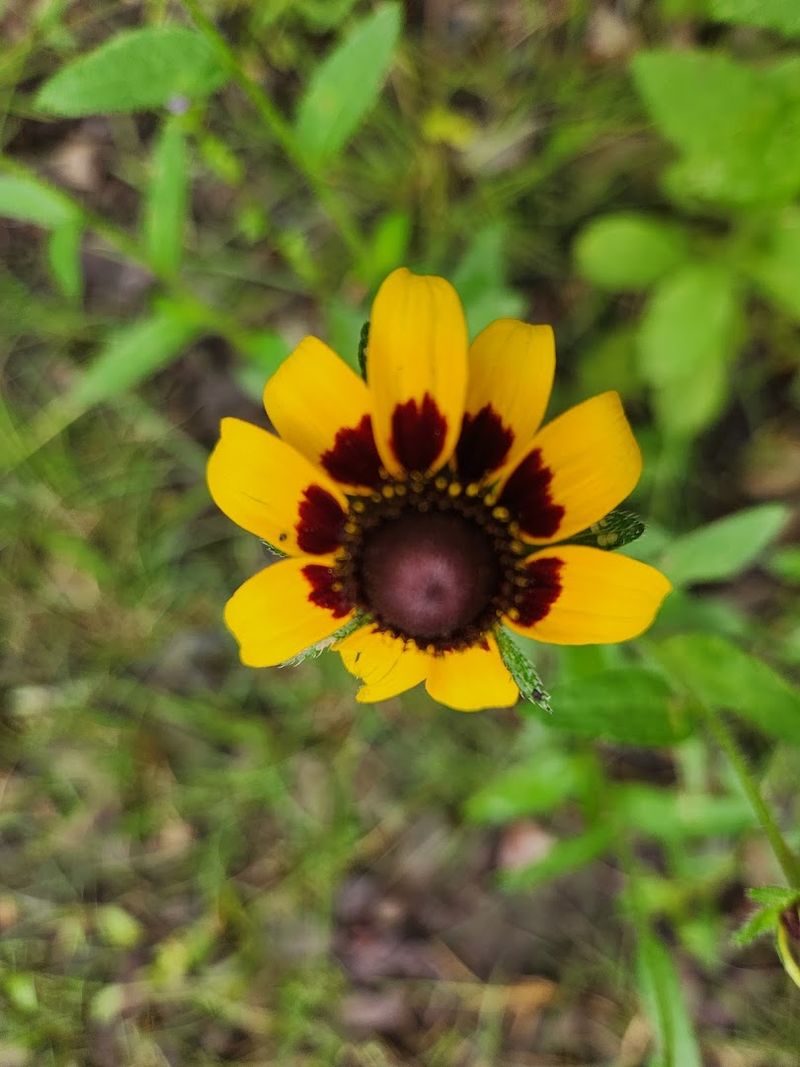
Plant diversity at Honey Creek is one of those things that sneaks up on you. You start noticing the bald cypress along the water, then the Texas palmetto fronds fanning out in the shade, and suddenly you realize the landscape has been shifting the whole time.
This is not a monotonous cedar scrub. It is a layered, living mosaic.
Ashe juniper covers much of the upland areas, which is typical for the Hill Country, but the canyon and riparian zones introduce entirely different species. Maidenhair fern clings to moist rock faces near the creek, and columbine blooms in sheltered spots during the right season.
Spanish moss drapes from live oaks in a way that feels more Louisiana bayou than central Texas.
The variety of habitats packed into this relatively small area is genuinely impressive. Upland juniper forest, live oak savanna, canyon ecosystems, and riparian zones all overlap here, creating conditions that support an unusually wide range of plant species.
July is a good time to see the vegetation at its most lush, even if the trail itself can be a bit overgrown in spots. Bring long pants if you are at all sensitive to brushing against plants along narrow sections of the path.
Hiking Honey Creek in July, What You Should Know First
July is not the most universally recommended time to visit Honey Creek, and it is worth being honest about that. The cooler months from October through February tend to offer the most comfortable conditions, with fewer insects and clearer trail edges.
But July has its own appeal, including full green canopy, active wildlife, and a landscape that feels genuinely alive.
The trade-offs are real, though. Mosquitoes and ticks are more active in July, so long pants, a good insect repellent, and a tick check after the hike are all practical must-dos.
The trail can be a bit overgrown in spots, which makes those long pants even more useful. Sun protection matters too, because once you leave the canyon shade, the Texas sun makes itself known quickly.
Hydration is the most important preparation of all. There are no water sources along the trail, so carrying more water than you think you need is the right call.
Start early, which the 9:00 AM tour time helps with naturally. The morning hours are cooler, the birds are more active, and the light along the creek is genuinely beautiful.
July hiking here rewards the prepared visitor generously.
The History and Human Story of This Land
Long before this land became a protected natural area, people lived here and moved through it in ways that left quiet marks. Archaeological evidence found within the preserve points to ancient hunter-gatherers who used this landscape for shelter, food, and water.
The spring-fed creek and the canyon’s natural resources made it a logical place for people to return to, season after season.
Native American tribes also have a presence in the history of this region, and the land holds that history in a way that feels respectful and significant. The guides on the tour often touch on this context, helping visitors understand that the trail they are walking is not just a nature path.
It is a route that human beings have traveled for thousands of years.
The Rust House, which serves as the tour’s starting point, adds another layer of more recent history to the experience. Built in an earlier era of Texas settlement, it stands as a reminder that this land has passed through many hands and many stories.
Walking through Honey Creek with that historical awareness changes how the place feels underfoot. The ground carries more weight when you know something about who walked it before you.
Planning Your Visit, Practical Details Before You Go
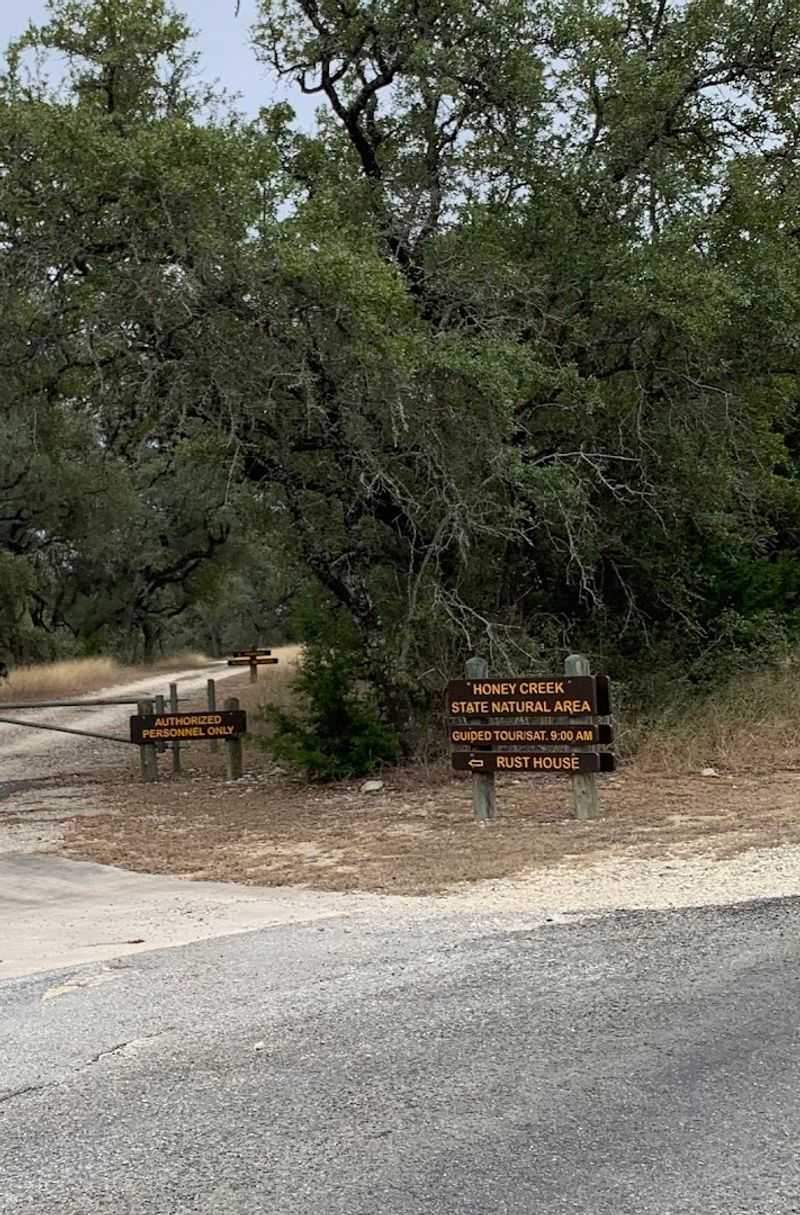
Getting to Honey Creek State Natural Area requires a little more planning than your average trailhead stop. The preserve is located in Comal County near Spring Branch, about 35 miles north of San Antonio.
Access runs through Guadalupe River State Park, so that is your first destination when you arrive.
Tours typically run on Saturday mornings at 9:00 AM, with some Sunday and seasonal availability depending on the time of year. Registration is required, and spots fill up, so booking ahead is genuinely important.
Day-use reservations for Guadalupe River State Park are also highly recommended to make sure you can get through the entrance on the day of your tour.
Pack water, wear comfortable closed-toe shoes, and dress in layers if you are visiting in the early morning. Bug spray and sunscreen are both worth throwing in your bag, especially for a July visit.
Pets are not allowed in the natural area, so plan accordingly if you were hoping to bring a dog along. The tours are subject to cancellation in bad weather, so checking conditions the day before is a smart move.
With the right preparation, this two-mile guided hike delivers far more than its modest distance suggests.
Address: Guadalupe River State Park, 3350 Park Road 31, Spring Branch, TX 78070
