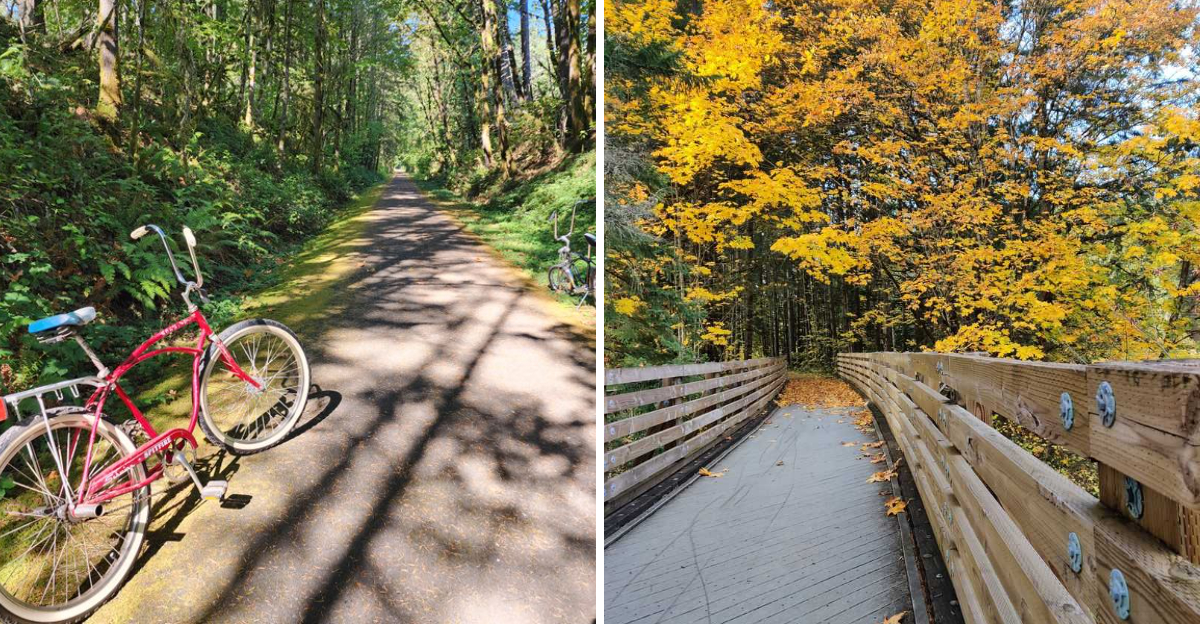
The Banks-Vernonia State Trail stretches 21 miles through Oregon’s lush Coastal Range, transforming what was once a 1920s logging railroad into one of the state’s most beloved recreational paths.
I discovered this remarkable trail during a summer visit, and it quickly became clear why cyclists, hikers, and equestrians flock here year-round.
The paved pathway connects two charming small towns while crossing 13 historic bridges and winding through dense forests that feel worlds away from everyday life. Whether you’re seeking a leisurely family outing or a full-day adventure, this converted railway offers something special for everyone who ventures onto its smooth, accessible surface.
Oregon’s Pioneering Rails-to-Trails Conversion
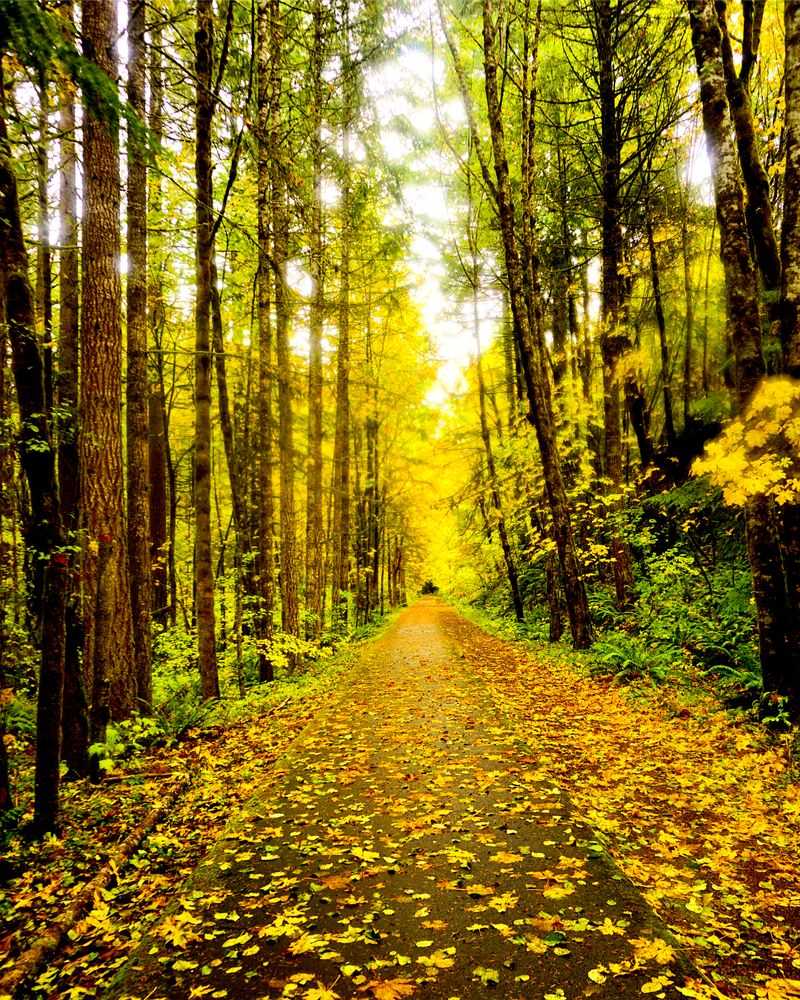
Back in the early 1990s, Oregon made history by transforming an abandoned logging railway into its first linear state park. The Banks-Vernonia State Trail became a model for similar projects across the country, proving that old infrastructure could find new life serving outdoor enthusiasts.
I found it fascinating to pedal along the same route where steam locomotives once hauled massive timber loads through the Coastal Range. The original railway operated from the 1920s until the 1970s, serving the region’s booming logging industry.
When the trains stopped running, the corridor sat unused until visionaries recognized its recreational potential.
Today, the trail’s smooth asphalt surface makes it accessible to riders of all skill levels, from families with young children to serious cyclists tackling the full distance. The gentle grades follow the railway’s original engineering, which was designed to move heavy freight efficiently.
This means you won’t encounter steep climbs that leave you gasping for breath.
Walking or riding this path connects you directly to Oregon’s industrial heritage while enjoying modern outdoor recreation.
The Magnificent Buxton Trestle Bridge
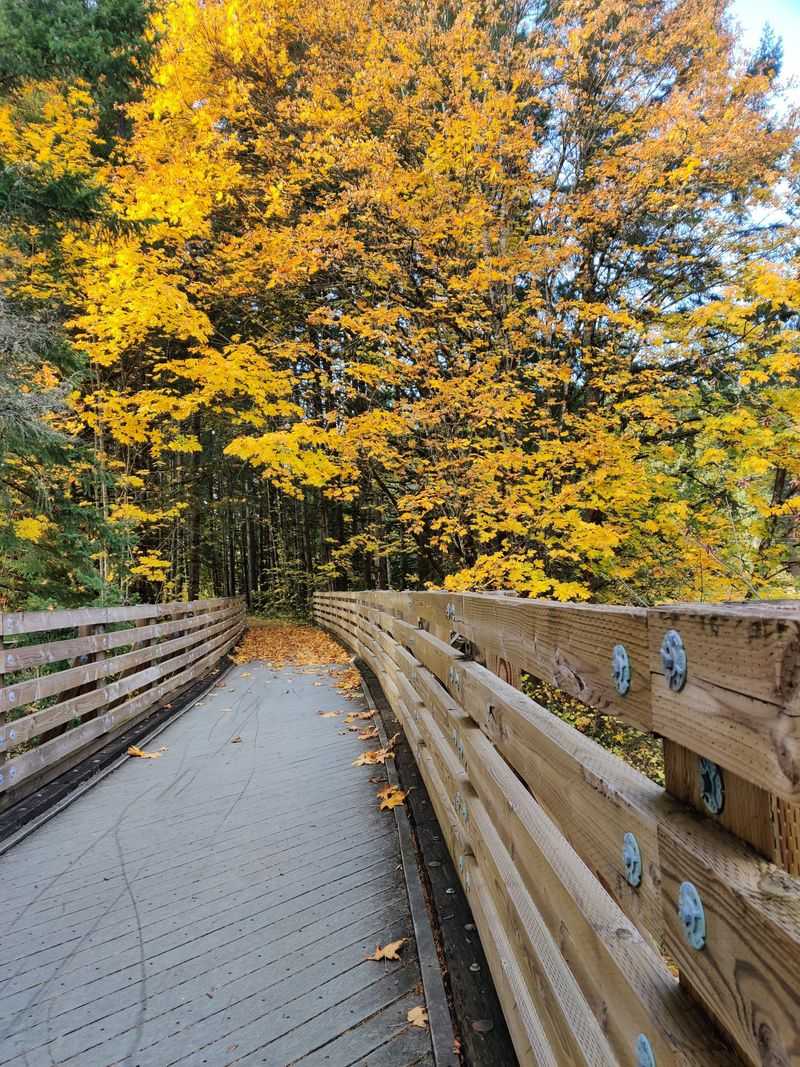
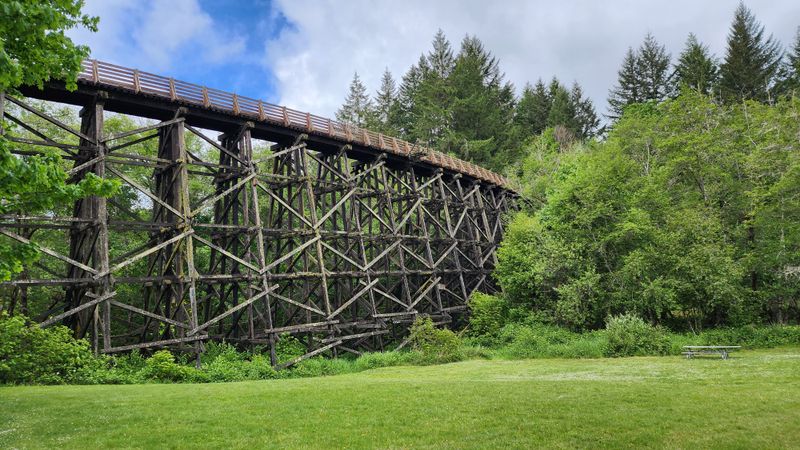
Crossing the 733-foot Buxton Trestle ranks among the most thrilling moments on the entire trail. This towering wooden structure stands as the longest and highest bridge along the route, offering breathtaking views that make you pause mid-crossing to soak in the scenery.
When I first approached this engineering marvel, I could hardly believe cyclists and pedestrians were allowed to traverse something that felt so monumental. The bridge rises high above the forest floor, giving you a bird’s-eye perspective of the surrounding wilderness.
On clear days, you can see for miles across the treetops.
The original trestle was built to support heavy logging trains, and its sturdy construction has been carefully maintained and reinforced for trail users. Walking across, you can hear the hollow sound of footsteps on the wooden deck, a reminder of the structure’s railway heritage.
Photography enthusiasts should definitely bring cameras for this section. The combination of historic architecture and natural beauty creates stunning compositions.
I spent nearly twenty minutes just taking photos from different angles and perspectives.
Thirteen Historic Bridge Crossings
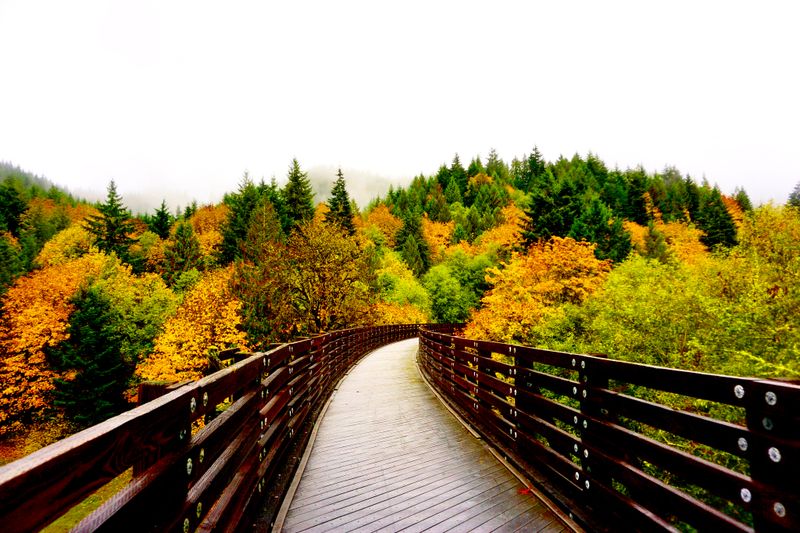
Beyond the famous Buxton Trestle, twelve additional bridges punctuate your journey along the Banks-Vernonia State Trail. Each crossing offers its own character and charm, transforming what could be a simple forest ride into an adventure filled with variety and visual interest.
These bridges span creeks, ravines, and wetlands that would otherwise make the route impossible to complete. Some sit just feet above babbling streams, while others tower over deep gullies carved by centuries of water flow.
I loved how each bridge approach brought anticipation about what I’d see from the next vantage point.
The engineering required to build these structures in the 1920s was remarkable, especially considering the remote locations and limited equipment available at the time. Railway workers constructed these bridges to last, using techniques that have stood the test of nearly a century.
Many bridges feature interpretive signs explaining their history and construction methods. Taking time to read these plaques adds educational value to your outdoor experience, especially if you’re traveling with curious kids who ask endless questions.
Connecting Two Charming Oregon Towns
Starting in Banks and ending in Vernonia, or vice versa, gives you the chance to explore two distinctly different small Oregon communities. Banks sits closer to the Portland metropolitan area, offering easier access and more modern amenities for trail users preparing for their journey.
Vernonia, the northern terminus, feels more remote and retains a stronger connection to its logging heritage. The town has faced challenges over the years, including devastating floods, but maintains a resilient spirit that visitors can feel immediately upon arrival.
Local shops and cafes welcome trail users with genuine warmth.
I chose to start in Banks and ride north toward Vernonia, which meant finishing my journey in the smaller, quieter town. This arrangement felt rewarding, like reaching a special destination rather than simply returning to where I started.
The sense of accomplishment was palpable.
Both towns offer parking areas, restrooms, and opportunities to grab food or drinks before or after your trail adventure. Planning a shuttle or arranging two vehicles lets you ride one-way and fully experience the point-to-point nature of this unique trail.
Dense Coastal Range Forest Scenery
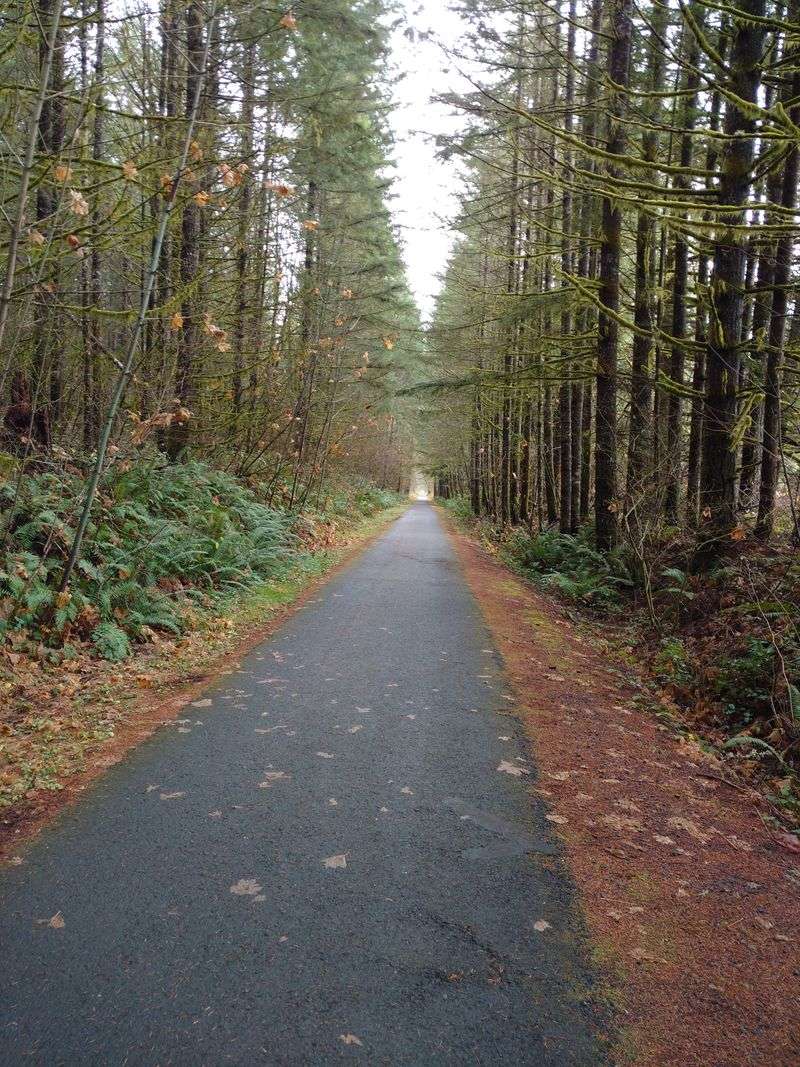
Pedaling through Oregon’s Coastal Range immerses you in some of the Pacific Northwest’s most beautiful forest landscapes. Towering Douglas firs, western red cedars, and bigleaf maples create a verdant canopy that provides welcome shade during summer rides and stunning color displays in autumn.
The forest feels alive with sounds and movement. I heard woodpeckers drumming on dead snags, spotted deer browsing in clearings, and watched squirrels racing up tree trunks.
The air smells fresh and earthy, especially after rain when the forest releases that distinctive Pacific Northwest petrichor.
Undergrowth along the trail includes sword ferns, salal, Oregon grape, and countless other native plants that thrive in this moist climate. Spring brings wildflowers that add splashes of color to the green palette.
The biodiversity here reflects the healthy ecosystem that has rebounded since logging operations ceased.
Unlike many trails that traverse open landscapes, the Banks-Vernonia State Trail keeps you enveloped in forest for most of its length. This creates an intimate, almost magical atmosphere that makes you feel far from civilization despite being relatively close to Portland.
Multi-Use Path for Various Activities
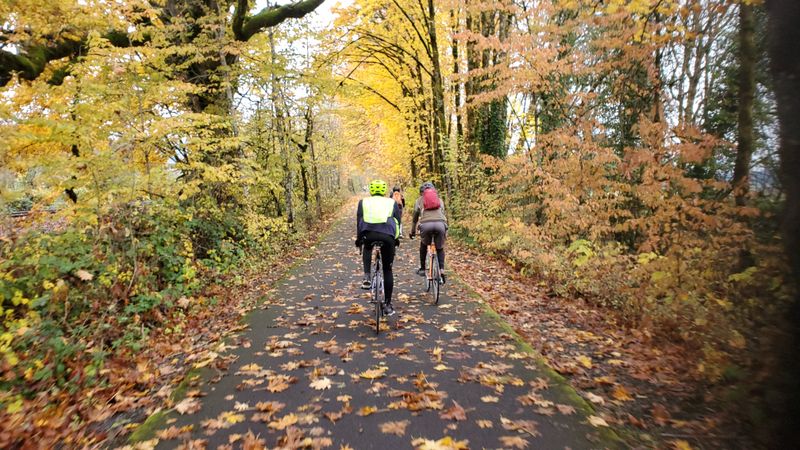
One of the trail’s greatest strengths is its accommodation of multiple user groups. Cyclists make up the majority of visitors, but hikers and equestrians also enjoy the route regularly.
The wide, paved surface provides plenty of room for everyone to coexist peacefully.
I encountered friendly interactions throughout my ride. Cyclists called out warnings when passing, hikers stepped aside with smiles, and even the occasional horseback rider navigated the trail with practiced ease.
The culture here emphasizes courtesy and shared enjoyment of this special place.
The paved surface makes the trail accessible to people using wheelchairs or pushing strollers, expanding recreational opportunities to those who might struggle on rougher paths. Families with young children can confidently bring kids on training wheels without worrying about difficult terrain.
Some sections feature parallel soft-surface paths specifically designated for horses, protecting the main trail from hoof damage while giving equestrians their own space. This thoughtful design shows how careful planning can serve diverse recreational needs.
Whether you prefer two feet, two wheels, or four hooves, the Banks-Vernonia State Trail welcomes your chosen mode of travel.
Manageable Grades and Family-Friendly Design
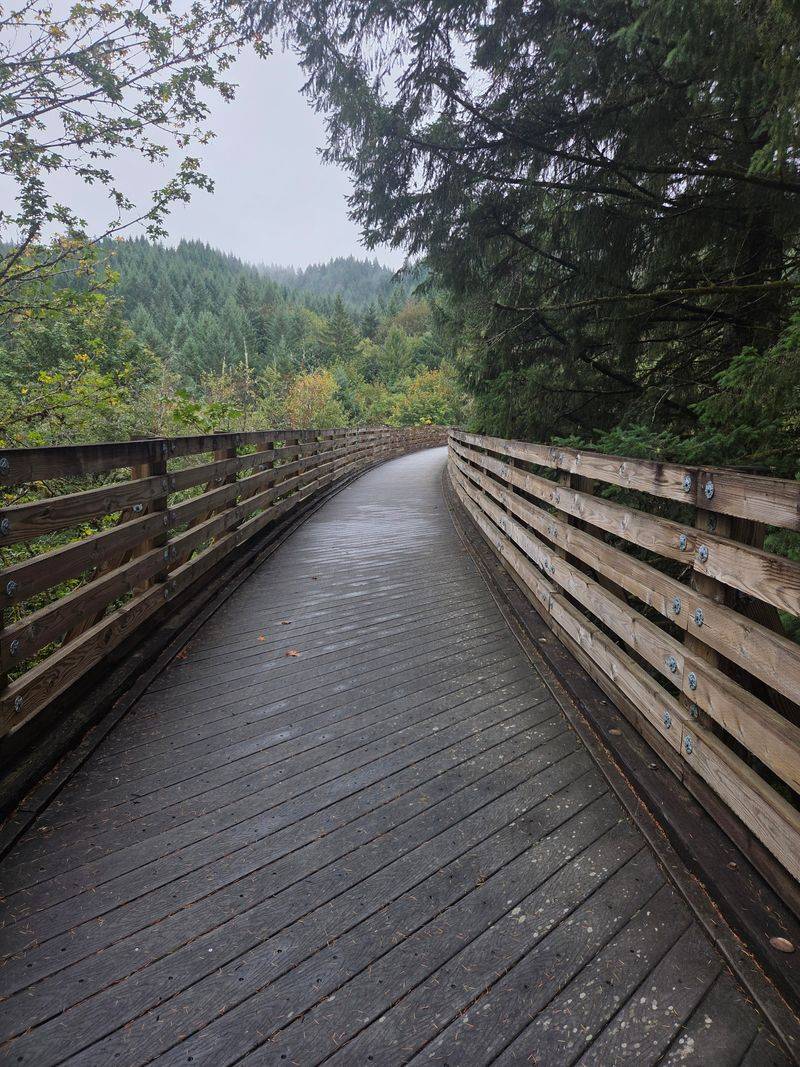
Following an old railway corridor means the Banks-Vernonia State Trail maintains remarkably gentle grades throughout its 21-mile length. Railroad engineers designed the original route to move heavy freight efficiently, which required minimizing steep climbs.
Modern trail users benefit enormously from this historical necessity.
The maximum grade rarely exceeds three percent, making this trail accessible to riders who might struggle on hillier routes. I appreciated how I could maintain a steady pace without encountering lung-busting climbs that force you off the bike.
Families with children find this especially valuable.
The smooth asphalt surface stays in excellent condition thanks to regular maintenance by Oregon State Parks. Unlike many trails where roots, cracks, or rough patches create hazards, the Banks-Vernonia Trail provides consistent riding conditions from end to end.
This reliability lets you focus on scenery rather than watching for obstacles.
Rest areas appear at strategic intervals, offering benches, picnic tables, and sometimes vault toilets. These stopping points give families with young children convenient places to take breaks, have snacks, or simply enjoy the forest surroundings without feeling rushed to complete the full distance.
Year-Round Recreation and Seasonal Beauty
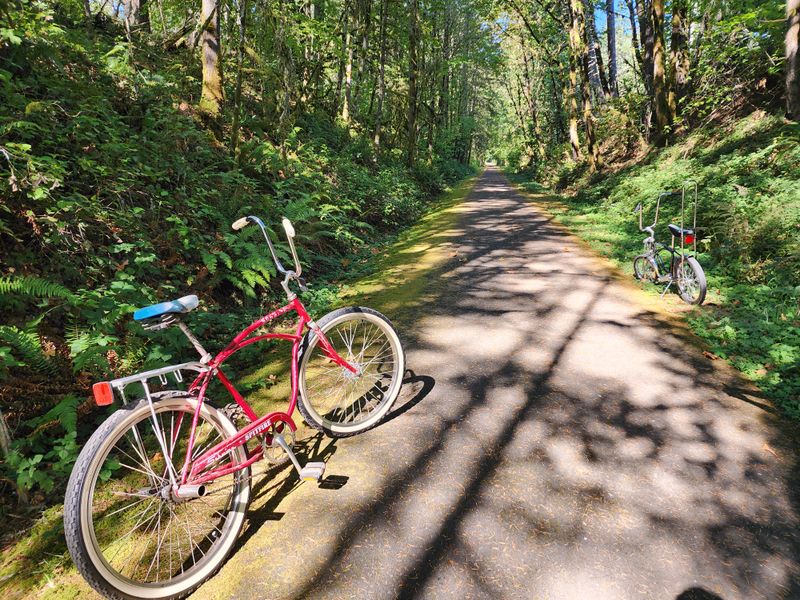
The trail remains open throughout the year, though each season offers distinctly different experiences. Spring brings wildflowers and the bright green of new growth, creating a fresh, vibrant atmosphere that celebrates renewal.
Summer provides warm weather perfect for all-day adventures, though you’ll want to start early on hot days.
Autumn transforms the forest into a painter’s palette of golds, oranges, and reds as deciduous trees change color. I visited in October and found the combination of evergreens and autumn foliage absolutely stunning.
The cooler temperatures made for comfortable riding without summer’s heat.
Winter can be challenging, with rain, mud, and occasional snow at higher elevations. However, hardy souls who venture out during quieter months often have the trail nearly to themselves.
The forest takes on a different character in winter, more somber and introspective but no less beautiful.
Oregon’s mild climate means the trail rarely becomes completely impassable, though checking conditions before winter visits is wise. Whenever you choose to visit, the Banks-Vernonia State Trail rewards you with natural beauty and outdoor recreation that showcases why Oregon is beloved by nature enthusiasts.
Dear Reader: This page may contain affiliate links which may earn a commission if you click through and make a purchase. Our independent journalism is not influenced by any advertiser or commercial initiative unless it is clearly marked as sponsored content. As travel products change, please be sure to reconfirm all details and stay up to date with current events to ensure a safe and successful trip.
