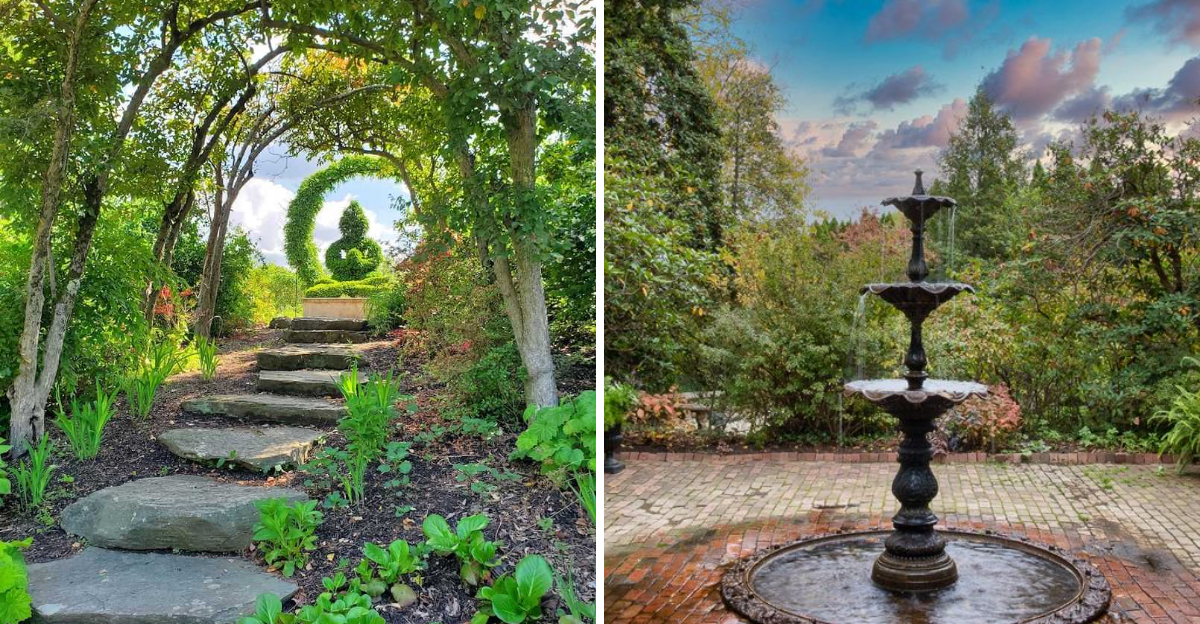
Some places make you forget where you are, and that is a wonderful thing. Twenty two acres of gardens, topiary sculptures, and peaceful paths, this Maryland escape feels like a slice of the French countryside.
The attention to detail is remarkable, with flowers arranged in patterns that seem almost too perfect, and hedges trimmed into shapes that make you smile. You can wander for hours and find something new around every corner.
I spent an afternoon here and did not want to leave. It is the kind of place where you slow down without even trying, where the only noise is birds and rustling leaves.
Locals come here to recharge. Visitors leave feeling like they found something special.
If you need a peaceful escape that does not require a plane ticket, this garden is waiting for you.
The Enchanting Welcome Beyond the Hedges
The first thing that hits you is not the size of the place but the sheer confidence of it. Ladew Topiary Gardens does not ease you in gently.
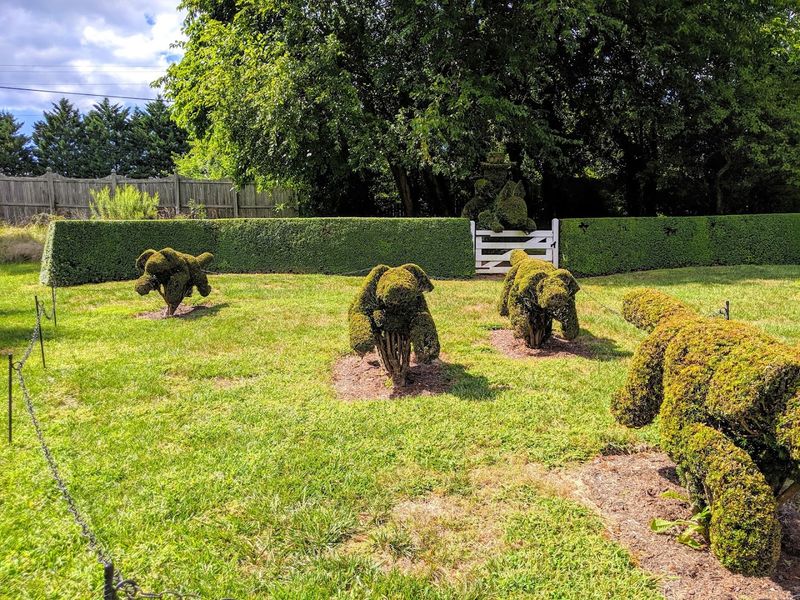
Right from the entrance, the iconic Hunt Scene greets visitors with a burst of sculptural storytelling, a fox bolting ahead of a pack of hounds, a rider clearing a hedge, all rendered in living, clipped yew. It is playful and precise in equal measure, and it immediately tells you that this is no ordinary garden.
The Garden Club of America once called this the most outstanding topiary garden in America. That is a bold claim, but standing at the threshold of the property, it is easy to understand why.
The 22 acres unfold in a way that feels deliberate, almost theatrical, as if every step has been choreographed to reveal something new.
Harvey Ladew, the man behind all of this, was deeply inspired by the grand estate gardens he encountered during fox hunting trips across England. He brought that influence home and planted it, literally, into the Maryland soil.
The result is an entrance experience that feels genuinely surprising. You expect a pleasant garden.
What you get is something closer to a living storybook, one that rewards slow, curious exploration from the very first glance.
Harvey’s Vision and a Lifelong Passion
Not many people can say they transformed a modest four-room farmhouse into one of the most celebrated garden estates on the East Coast. Harvey S.
Ladew, born in 1887, was exactly that kind of person. He purchased Pleasant Valley Farm in 1929 with a vision that was ambitious, personal, and rooted in a genuine love of beauty, not just wealth.
His travels through England and Italy left a lasting mark on him. He was particularly captivated by the formal topiary traditions he encountered abroad, and he returned home determined to create something equally remarkable on American soil.
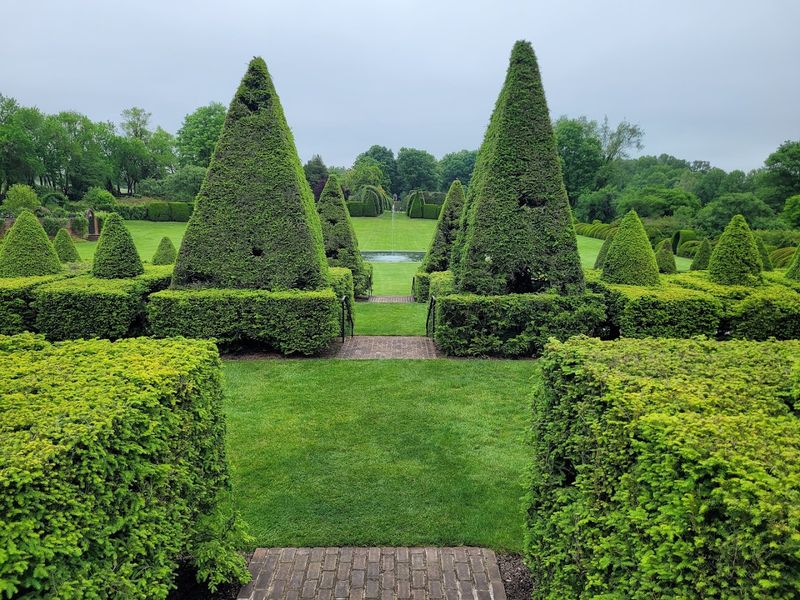
What makes his story even more compelling is that he did it largely without professional help, shaping over 100 living sculptures with his own hands and eye.
Ladew was not simply a hobbyist with a hedge trimmer. He was an artist with a philosophy, believing that gardens should delight, surprise, and invite contemplation.
His fox hunting background gave the estate its playful spirit, while his aesthetic sensibility gave it elegance. The combination produced something genuinely rare, a garden that feels both grand and personal, formal yet full of wit.
Visiting today, you sense his presence in every carefully clipped corner. The gardens are a reflection of a man who lived fully and created boldly, leaving behind a legacy that continues to enchant visitors more than nine decades after he first put shears to hedge.
The Great Bowl, A Verdant Heart
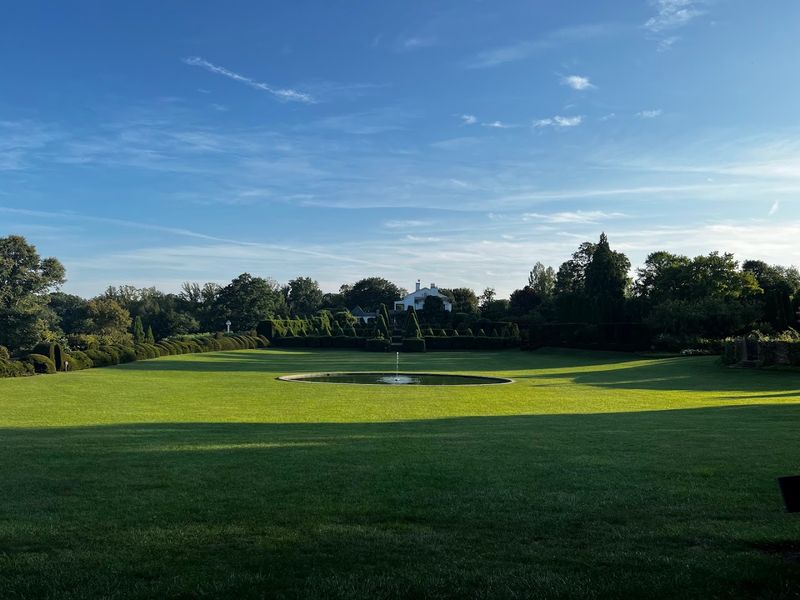
At the center of the Ladew estate lies a space that genuinely takes your breath away. The Great Bowl is a sweeping expanse of lawn framed by towering topiary hedges, sculpted with cutouts and layered shapes that give the whole scene a theatrical, almost stage-like quality.
An oval swimming pool sits at its heart, catching the sky and reflecting the surrounding greenery in a way that feels almost too picturesque to be real.
What struck me most about this space was the sense of scale. You walk through a narrow garden room or a hemlock allee, and then suddenly the landscape opens up into this vast, open bowl.
The contrast is stunning. Ladew designed the layout around two cross-axes, and the Great Bowl is where those axes converge, making it the visual and emotional center of the entire property.
Terraced topiaries rise on either side, creating natural tiers that draw the eye upward and outward. The vistas from this central point stretch across the property in multiple directions, giving you a sense of the full scope of what Ladew created.
It is a space that works in every season, dramatic in summer green, quietly beautiful in the bare months of winter. Spending time here feels less like visiting a garden and more like sitting inside a living painting, one that shifts and breathes with the wind and the light.
Sculpted Whimsy and the Living Art of Topiary
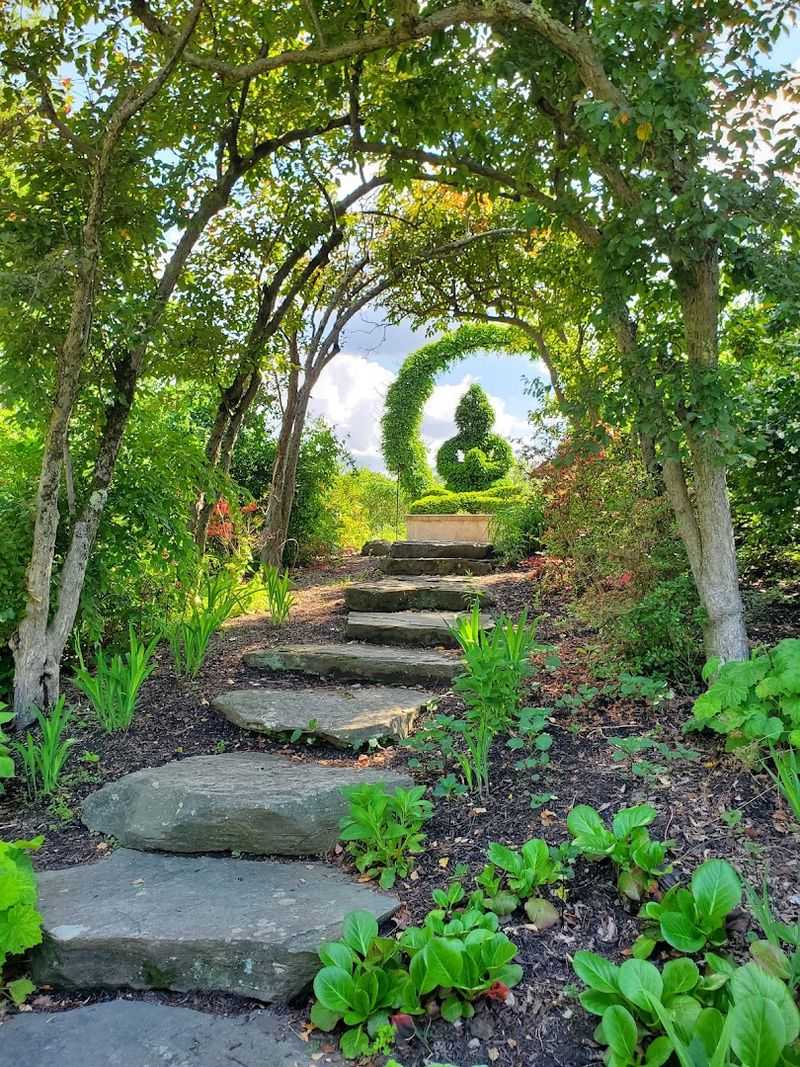
Forget everything you think you know about topiary being stiff or stuffy. At Ladew, the living sculptures are genuinely funny, charming, and occasionally a little surreal.
Scattered across the 22 acres like botanical Easter eggs, more than 100 topiaries wait to be discovered around every corner, each one more unexpected than the last.
A Chinese junk with full sails floats in a naturalistic pool, its hull and rigging formed entirely from clipped evergreen. Elegant swans glide without water, frozen mid-motion in perfectly trimmed foliage.
A towering giraffe stretches its neck above the hedgerows, and somewhere nearby you will find seahorses, Churchill’s top hat, and a Buddha, all rendered in yew and hemlock with remarkable precision.
The craftsmanship involved is hard to overstate. These are not rough approximations.
They are detailed, recognizable, and surprisingly expressive for plants. The Hunt Scene alone, with its fox, hounds, horse, and rider, tells a complete story in green.
What makes the whole collection feel special rather than gimmicky is the evident joy behind each piece. Ladew was not trying to impress critics.
He was playing, experimenting, and celebrating the things he loved through the medium of living plants. That spirit of genuine delight is contagious.
You find yourself grinning at a topiary seahorse and wondering what will appear around the next bend, which is exactly the feeling a great garden should produce.
Journey Through Garden Rooms, a Tapestry of Colors and Themes
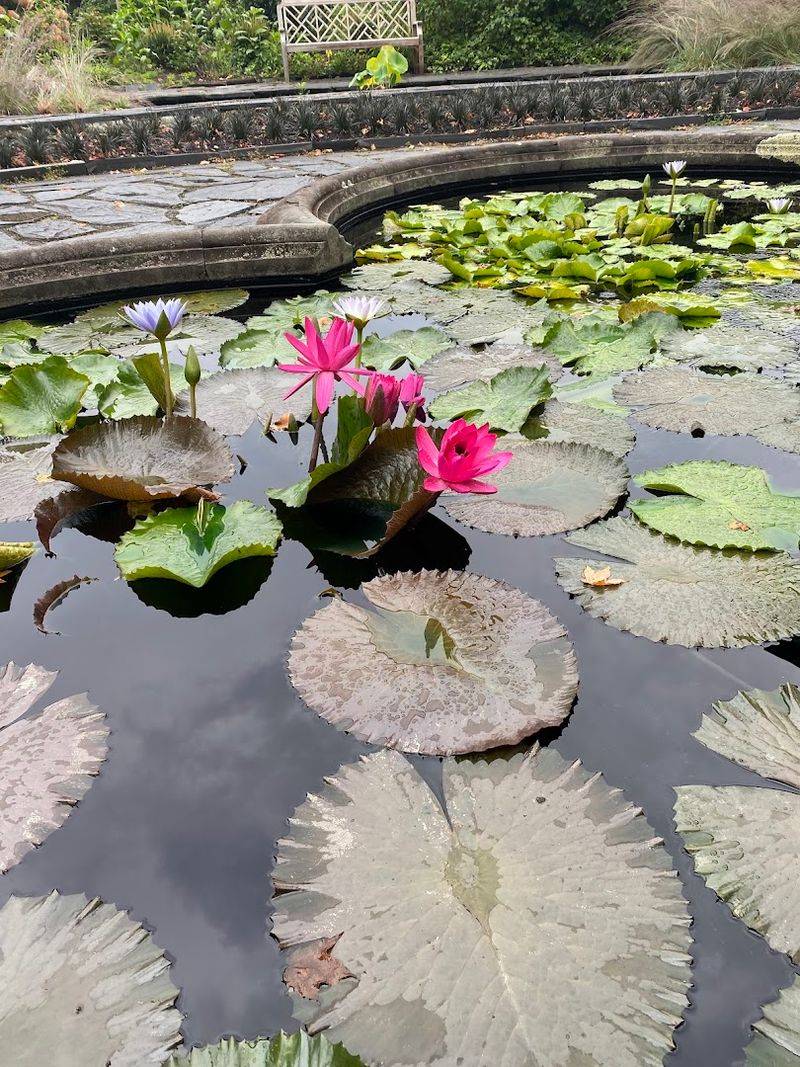
One of the most clever design choices Harvey Ladew made was organizing his estate into 15 distinct garden rooms. Each one has its own theme, its own mood, and its own color story, so moving between them feels like flipping through the pages of a beautifully illustrated book.
No two rooms feel alike, and that variety keeps the entire walk feeling fresh from start to finish.
The Yellow Garden bursts with warm, cheerful energy. Step through the next opening and the White Garden greets you with a hushed, luminous calm that feels almost sacred.
The Rose Garden carries a classic, timeless elegance, while the Iris Garden near the water features hundreds of varieties in a kaleidoscope of soft and vivid tones.
The Victorian Garden, Herb Garden, Cottage Garden, and Water Lily Garden each bring their own distinct personality to the overall composition.
Ladew’s travels in England and Italy clearly shaped the formal structure of these rooms, with their clipped borders, symmetrical layouts, and carefully considered sight lines. But his personal taste added warmth and playfulness that keeps the formality from feeling cold.
The garden rooms reward visitors who move slowly and look carefully. Details appear everywhere, a carved stone figure here, an unexpected color combination there.
The entire sequence of rooms builds toward something larger than any individual space, a complete, immersive world that reflects one man’s lifelong conversation with beauty, color, and the natural world.
A Glimpse Into the Past, The Historic Manor House

The gardens rightfully get most of the attention, but the Manor House at Ladew is a destination in its own right.
What began as a modest four-room farmhouse built around 1747 was gradually transformed under Harvey Ladew into an elegant, personality-filled home that reflects his wide-ranging tastes and global travels.
Every room tells a story, and the house tours make those stories accessible and genuinely engaging.
The Elizabethan Room is a standout, featuring a 16th-century Tudor Rose patterned plaster ceiling and leaded windows that transport you centuries back in an instant.
Antiques and treasures gathered from Ladew’s journeys across Europe and beyond fill the rooms with a sense of accumulated life, not a staged museum but a real home shaped by real curiosity.
The Oval Library is perhaps the most celebrated interior space on the property, recognized as one of the 100 Most Beautiful Rooms in America. An 18th-century oval partners’ desk imported from England anchors the room, surrounded by a collection of more than 2,500 books.
There is also, apparently, a secret door that Ladew used to slip out into the gardens when he wanted to avoid unwanted company. That detail alone tells you everything you need to know about the man.
The house feels warm, witty, and deeply personal, a perfect complement to the gardens outside and a reminder that great spaces always carry the spirit of the people who shaped them.
Nature’s Embrace, The Wild Side of Ladew
After the manicured drama of the topiary gardens, the mile-long Nature Walk at Ladew offers something completely different, and honestly, something just as rewarding. The trail winds through woodlands that were once pastureland for Ladew’s horses and a steeplechase course.
Since 1999, nature has been slowly reclaiming that space, and the result is a quiet, evolving woodland that feels genuinely wild in the best possible way.
Educational signs along the path add context without being overwhelming, pointing out native species and ecological details that enrich the experience. A Wetland Forest boardwalk lifts you above the ground, offering unusual views of the water and the trees from a slightly elevated perspective.
A bird blind hidden along the route gives patient visitors the chance to observe local wildlife without disturbing it.
The six-acre Pollinator Gardens Trail is another highlight, showcasing native plants and a wildflower meadow designed specifically to attract butterflies, bees, and other pollinators.
Ladew established this area with biodiversity in mind, creating habitat while also reducing the environmental footprint of weekly mowing.
The seasonal Butterfly House adds a magical layer, an outdoor exhibition where the full life cycle of native butterflies and moths plays out up close.
Stepping away from the formal gardens and into this wilder, greener corridor reminded me that the best landscapes are the ones that leave room for nature to do its own thing, and Ladew gets that balance exactly right.
Quiet Corners and Hidden Delights, Discovering Serenity
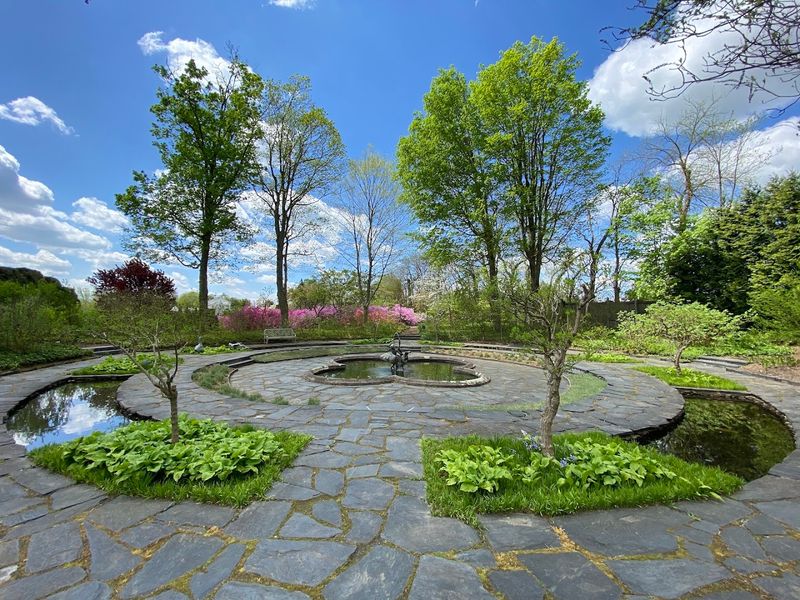
Some of the best moments at Ladew happen when you slow down enough to notice the small things.
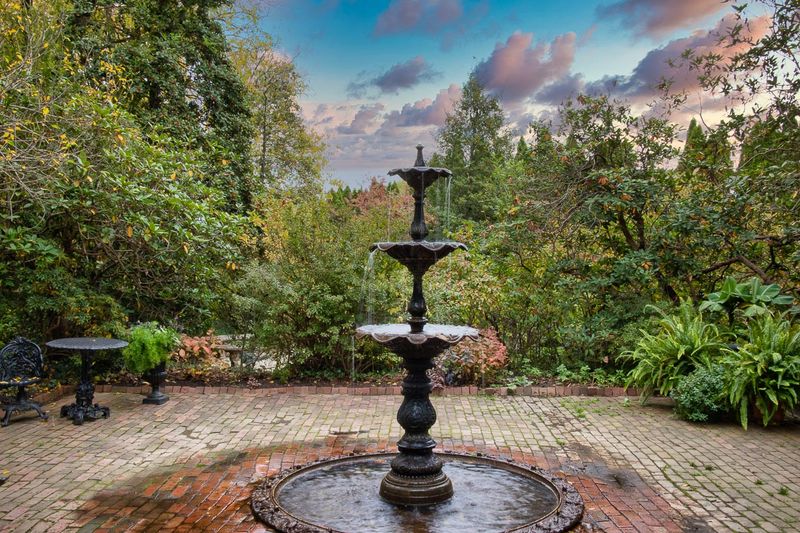
The estate is full of thoughtful details hidden between the grand gestures, seating areas positioned to catch the best views, French lead figures standing quietly in hemlock allees, garden ponds that mirror the sky on still mornings.
These smaller discoveries give the visit a layered quality that rewards curiosity.
The Tivoli Tea House is one of those unexpected finds that sticks with you long after you leave. Originally a ticket booth from an old English theater, Harvey Ladew had it shipped to the estate and transformed into a charming, pink-painted entertaining space.
It sits within the gardens like a little secret, perfectly scaled and full of character. Finding it felt like stumbling onto something private, a glimpse into Ladew’s personal sense of humor and style.
Throughout the grounds, the furniture, the ornaments, and the layout of pathways all reflect the same careful attention to experience. Nothing feels accidental.
Even the quietest corner of the estate seems to have been considered from the perspective of a visitor who might pause there for a few minutes, needing a moment of stillness.
That kind of thoughtfulness is rare in public gardens, and it is part of what makes Ladew feel so genuinely welcoming.
You never feel rushed here. The place invites you to linger, and lingering is exactly the right response.
An Enduring Legacy, Inspiration for All
Places that outlive their creators by nearly a century and still feel vital and relevant are rare. Ladew Topiary Gardens is one of them.
Harvey S. Ladew passed away in 1976, but the estate he shaped continues to enchant thousands of visitors every year, maintained with a dedication that honors his original vision without freezing it in amber.
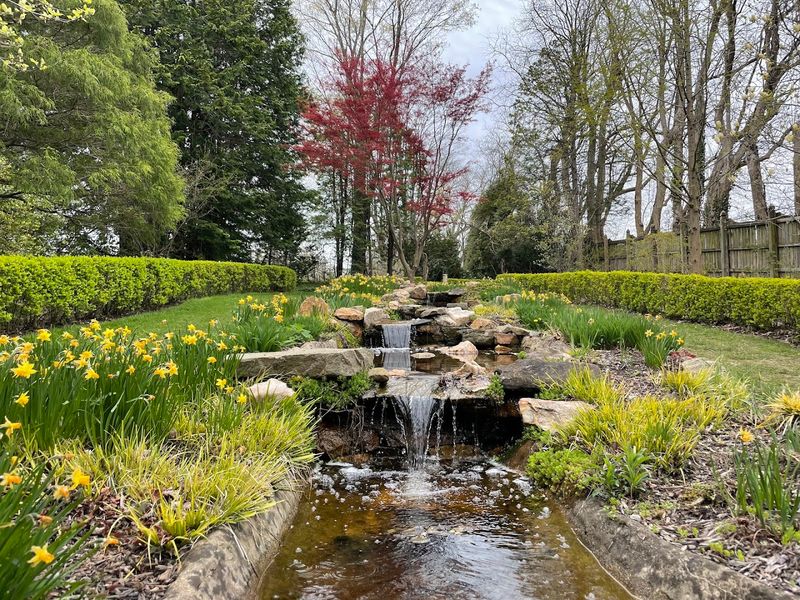
The gardens are a living thing, which means they change with the seasons, grow more complex with time, and reveal new details to returning visitors. Spring brings an explosion of color through the iris and rose gardens.
Summer deepens the green of the topiaries into something almost impossibly lush. Autumn adds warmth and texture.
Even the quieter months carry their own kind of beauty. Each season gives you a different version of the same remarkable place.
What Ladew created here was not just a garden. It was a gift, an argument for the idea that beauty matters, that one person’s passion can become a source of joy for an entire community across generations.
The blend of formal design, living sculpture, natural landscape, and historic architecture produces something that is genuinely hard to categorize and even harder to forget. If you are anywhere near Monkton, Maryland, make the detour.
You will not regret a single minute spent inside these 22 extraordinary acres.
Address: 3535 Jarrettsville Pike, Monkton, MD 21111
