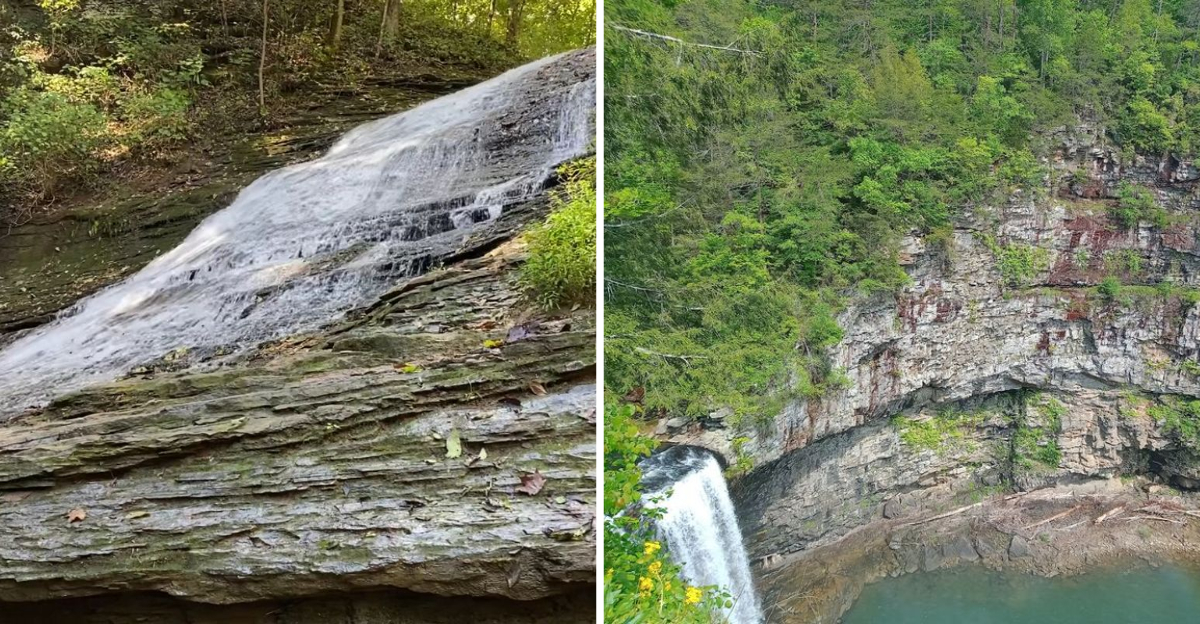
A wide rock slab with water fanning across it like nature’s own waterslide sat in front of me in Tennessee.
I laughed out loud because it looked too perfect to be real.
I stumbled onto that place almost by accident, following a scenic parkway.
It stopped me in my tracks the moment I arrived.
Cool water pooled at the base.
Moss covered the rocks.
The sound of rushing water echoed off the canyon walls.
I spent an afternoon scrambling over those rocks and wading into the pool.
It felt like a summer daydream tucked into the middle of the state.
That spot sits surprisingly close to a couple of major cities.
Most people have no idea it exists.
If you are road-tripping or just looking for a reason to get outside, that waterfall is absolutely worth the detour.
The Natural Water Slide That Started It All
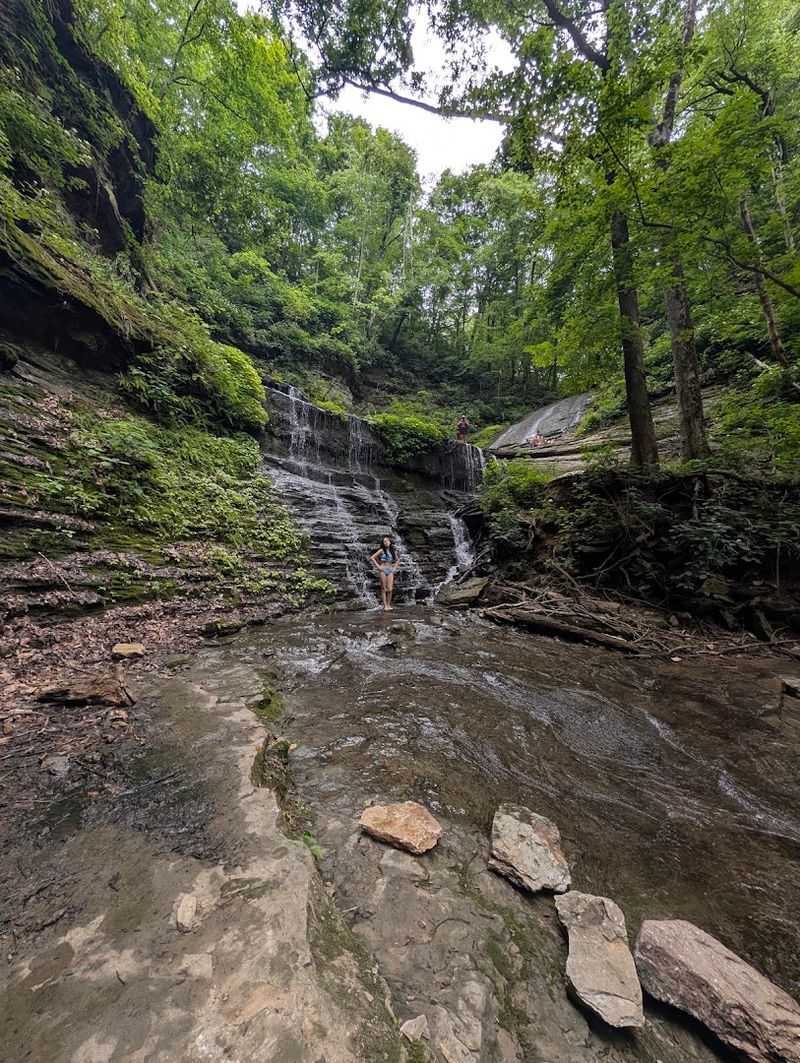
Honestly, I did not expect a waterfall in rural Tennessee to make me feel like a kid at a theme park, but here we are.
The upper section of Jackson Falls moves downhill at roughly a 45-degree angle across a broad, sculpted rock face before the creek drops about 15 feet into the pool below.
That angled rock slab is the star of the show.
Water fans out evenly across its surface, and on a warm day, people of all ages take turns sliding right down it.
The rock has been smoothed by thousands of years of flowing water, which is part of what makes it feel so surprisingly polished.
Kids go down it repeatedly, and more than a few adults do too once they realize how fun it actually is.
The natural geometry of the stone creates a surprisingly consistent ride, even if the water level changes depending on recent rainfall.
Geologically, this feature formed through a process called stream piracy, where the Duck River gradually captured Jackson Branch and erosion shaped the rock over a very long time.
That history adds a layer of cool to something that already looks incredible.
The slide feeds directly into a clear, calm pool at the base where visitors wade and cool off during the warmer months.
Just keep in mind that the rocks are genuinely slick, so confident footing matters here.
The National Park Service advises against climbing recklessly on the falls for good reason.
Wear shoes with grip, take your time, and enjoy every second of it.
Getting There: The Steep but Rewarding Trail Down
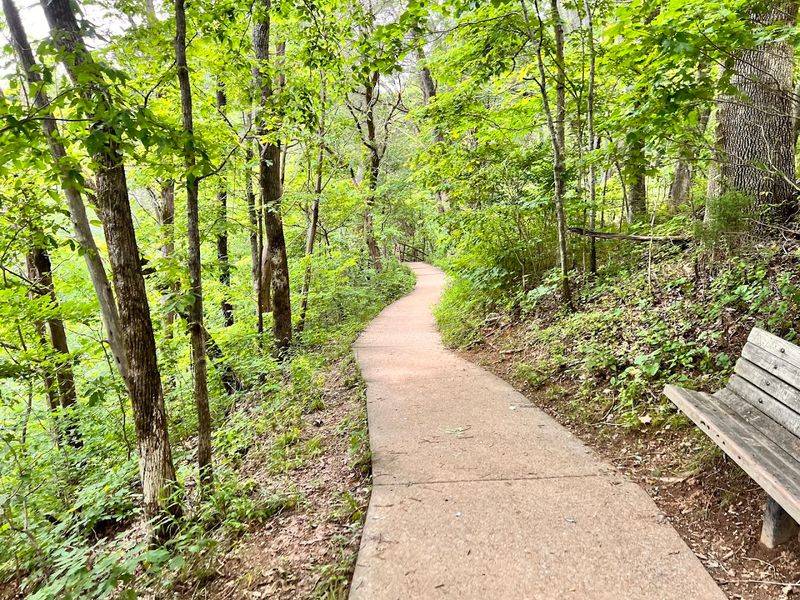
The trail to Jackson Falls is short, but it does not let you forget it.
From the parking area at Milepost 404.7 on the Natchez Trace Parkway, the path stretches about 900 feet to the base of the falls.
That is roughly a quarter-mile out and back, which sounds easy until you realize the descent is steep and the concrete surface can get slick after any rainfall.
Handrails run along most of the path, which is genuinely helpful on the way back up.
The elevation change is only about 49 feet, but because the trail compresses that drop into a short distance, it feels more intense than the numbers suggest.
Going down is where your knees feel the impact most, since you are constantly braking against gravity rather than pushing uphill.
A few resting benches are placed along the route, which is a thoughtful touch for families with young kids or anyone who needs a breather.
There is also a small cave-like formation visible just off the trail before you reach the falls, and it is one of those little surprises that makes the walk feel like an actual adventure rather than just a commute to a viewpoint.
Dogs are welcome on leashes, and plenty of visitors bring their pets along for the trip.
Wear proper footwear no matter what season you visit.
Wet leaves in fall and possible ice in winter make the path extra unpredictable.
The reward at the bottom is absolutely worth the careful descent.
The Two-Stage Waterfall and What Makes It Unique
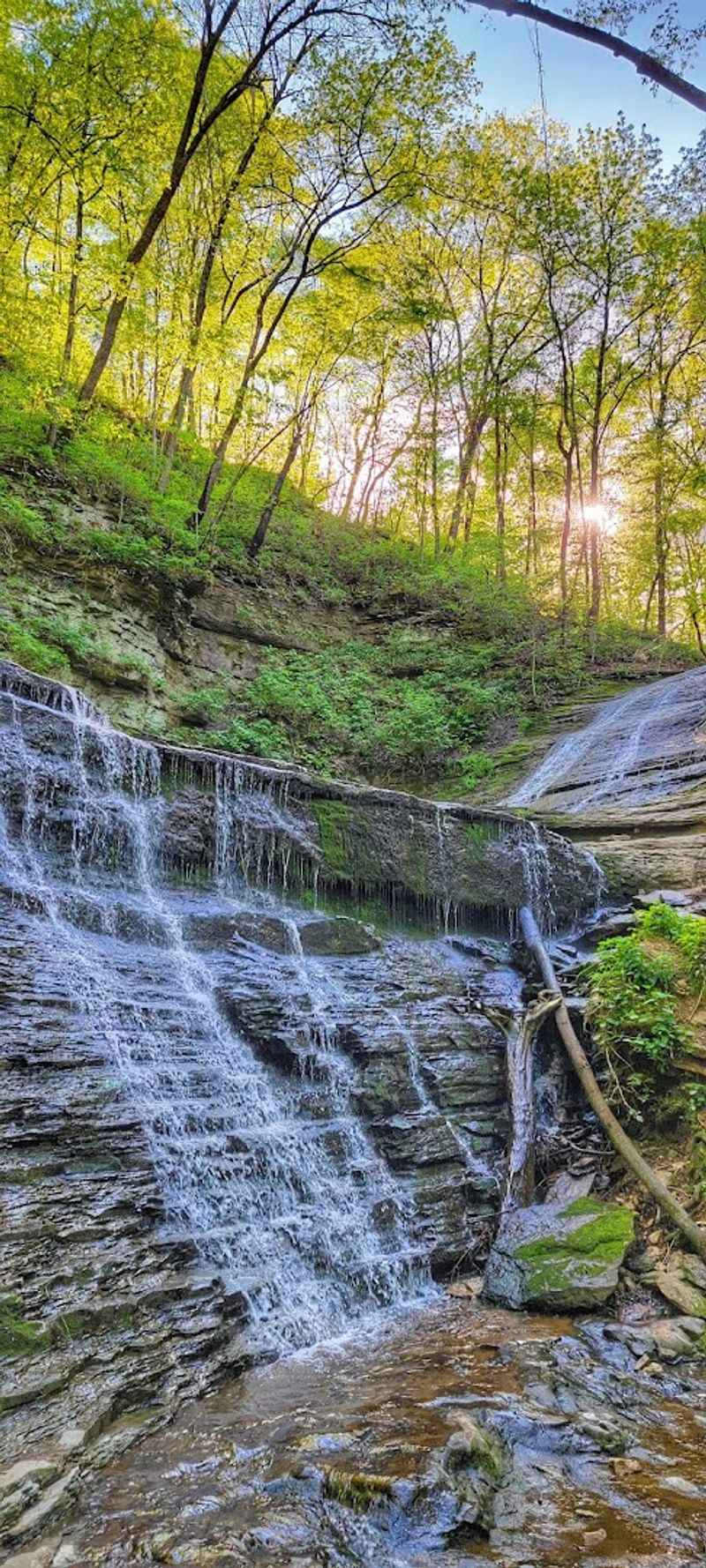
Most waterfalls are a single dramatic drop, and that is fine.
Jackson Falls does something a little different, and it ends up being more interesting for it.
The cascade has two distinct stages.
First, the upper creek flows down that wide angled rock slab at a gentle slope, spreading out across the stone surface before flattening briefly.
Then comes the proper drop, roughly 15 feet, where the water falls freely into the pool below.
That two-stage structure gives the falls a layered personality.
From a distance, the whole thing reads as one continuous feature.
Up close, you start to notice how each section behaves differently, the upper slide moving fast and smooth, the lower fall catching light and creating a fine mist near the base.
The surrounding canyon walls frame the scene in a way that feels almost theatrical.
Depending on how much rain has fallen recently, the volume of water changes dramatically.
After a good rain, the upper slab turns into a rushing sheet of white water and the lower fall roars with real force.
In drier stretches, the flow becomes more of a trickle, but even then the rock formations are worth the visit.
Visitors frequently walk the rocks at the base and explore further down the creek toward where it eventually meets the Duck River.
That short downstream walk offers a completely different perspective of the landscape and is one of the more underrated parts of the whole experience.
It feels exploratory in the best way.
Best Times to Visit for the Most Impressive Experience
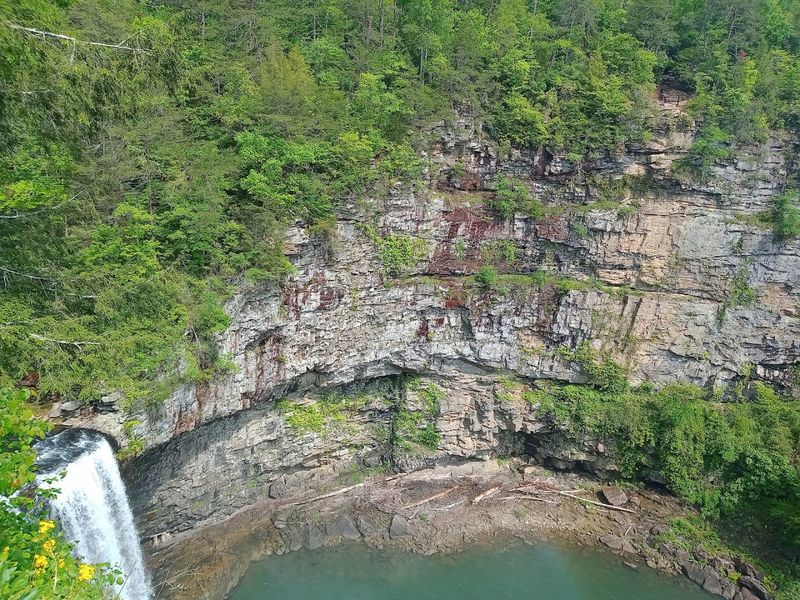
Timing your visit to Jackson Falls can make a real difference in what you see when you get there.
Spring is widely considered the best season.
Winter snowmelt and spring rains push more water through the creek, which means the upper slide runs fast and the lower fall puts on a genuine show.
The surrounding vegetation is also at its most lush and vivid in spring, and wildflowers pop up along the trail, including impressive displays of saxifrage that bloom on the rocky surfaces near the falls.
Fall is a close second for a different set of reasons.
The water levels may be lower by then, but the autumn foliage along the Natchez Trace turns the whole drive into something worth savoring on its own.
Cooler temperatures make the hike more comfortable, and the canyon feels quieter and more meditative once summer crowds thin out.
The mix of orange and gold leaves against the grey rock is genuinely photogenic.
Summer draws the biggest crowds, especially on weekends when families come specifically to wade in the pool and try the natural slide.
It is the most social version of the experience, energetic and fun, but expect company.
Weekday visits in summer tend to be noticeably calmer.
Winter visits are possible but come with real caution.
Ice can form on the paved trail and on the rocks near the water, making the descent genuinely hazardous.
If you go in cold weather, microspikes or very grippy boots are worth bringing along for safety.
Wildlife, Scenery, and the View From the Parking Lot
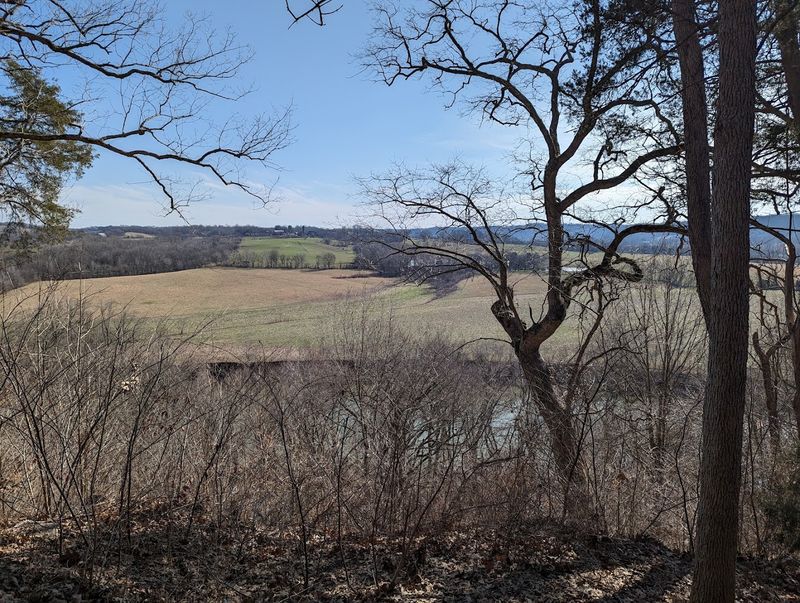
Before you even start down the trail, the parking area at Jackson Falls gives you something worth pausing for.
An expansive overlook of the Duck River Valley stretches out from the lot, and on a clear day the view rolls across layers of forested ridges that feel almost endless.
It is one of those unexpected bonuses that makes the stop feel richer than a single attraction.
The trail itself passes through dense second-growth forest that stays cool even in summer.
Birdsong follows you the whole way down.
The rocky walls near the base of the falls are covered in mosses, ferns, and fungi that are worth a closer look if you slow down enough to notice them.
Chipmunks are regular visitors at the falls, and several people have spotted them darting around the rocks near the water.
The creek below the falls leads toward the Duck River, and that stretch of water and rock is home to a quieter, more contemplative side of the place.
You can walk along the creek bed, climb over fallen logs, and eventually reach the river itself if you are up for a bit of scrambling.
The surrounding Duck River Valley is recognized as one of the most biologically diverse river systems in North America, so the natural richness of the area goes well beyond what you can see from the trail.
Even a short visit gives you a real sense of how alive this landscape is, full of small details that reward curiosity and a slower pace.
Practical Tips Before You Pack Your Bag
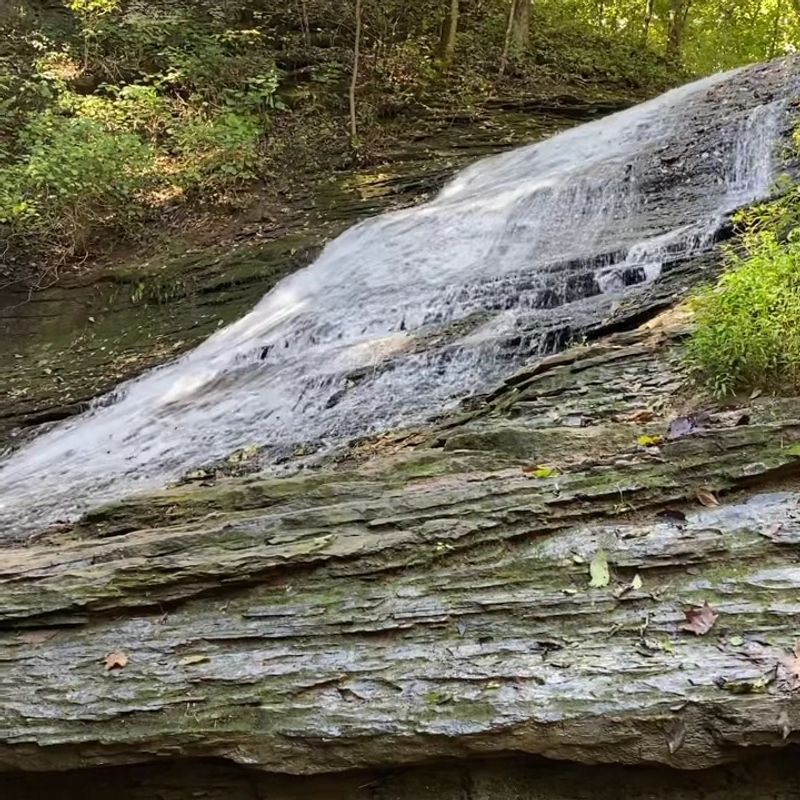
A little preparation goes a long way at Jackson Falls, and the single most repeated piece of advice from visitors is simple: wear the right shoes.
The paved trail looks manageable, but the combination of steep angles, moisture near the water, and potential algae on the rocks makes grip a genuine necessity.
Sneakers with flat soles are risky.
Trail shoes or anything with a textured rubber sole will serve you much better.
The trail is short enough that most people can complete the out-and-back in under 30 minutes at a relaxed pace.
That said, if you plan to explore the creek below the falls or walk downstream toward the Duck River, budget extra time.
That part of the visit is unstructured and wonderfully unhurried, and it tends to stretch out naturally once you are down there.
Parking is free and the lot has decent capacity, though it fills up fast on sunny weekend afternoons in summer.
Restroom facilities are available at the parking area, although they have been reported closed on some visits, so planning ahead is smart.
Dogs are welcome on the trail as long as they stay on a leash, and the creek area is a big hit with four-legged visitors.
Families with young children do well here overall, though the steep trail requires attentive supervision near the water.
Bring water, sunscreen if you are visiting in summer, and a dry bag or change of clothes if sliding is on the agenda.
The falls sit at Natchez Trace Parkway Milepost 404.7, Duck River, TN 38454.
Address: Natchez Trace Pkwy, Duck River, Tennessee 38454
