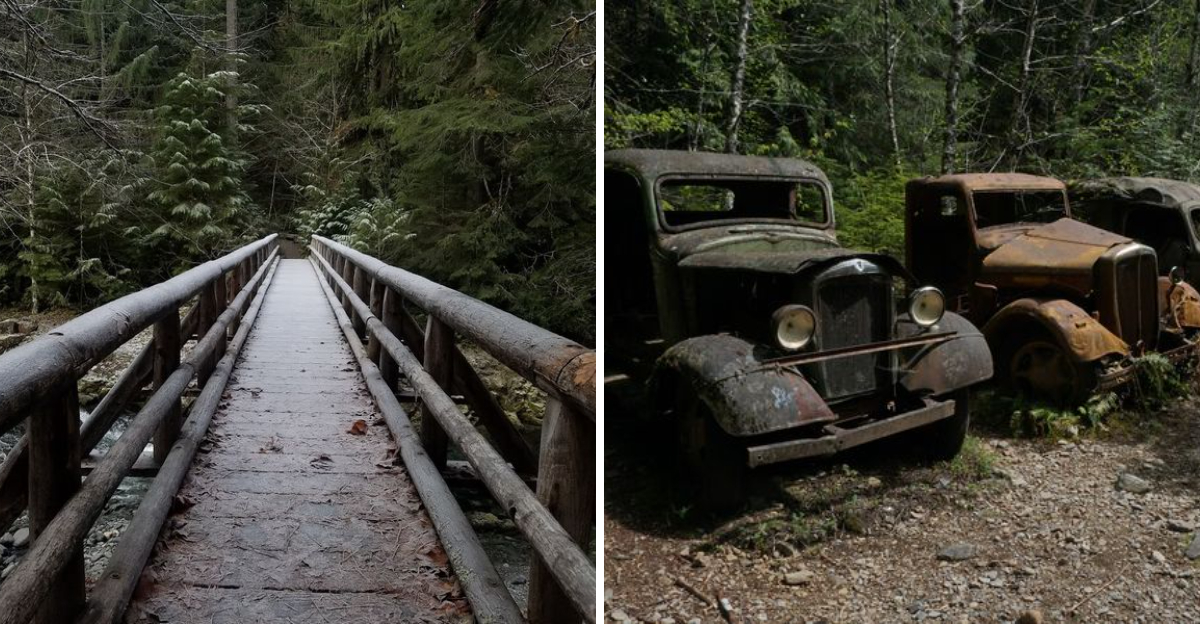
A 3.1-mile Oregon hike doesn’t feel long until the forest starts changing around you. I step onto the trail and immediately get that quiet, slightly eerie sense that something is waiting deeper in.
The trees grow denser, the path gets softer, and every step feels like it’s pulling me further away from anything modern. Locals know the route, but it still feels like a hidden path that doesn’t get much attention.
Then the ghost town appears. Weathered remains tucked into the forest like time just paused and never restarted.
Walls, foundations, and fragments of life still holding on in silence.
And standing there, it doesn’t feel abandoned – it feels remembered.
The Trailhead at Opal Creek Wilderness
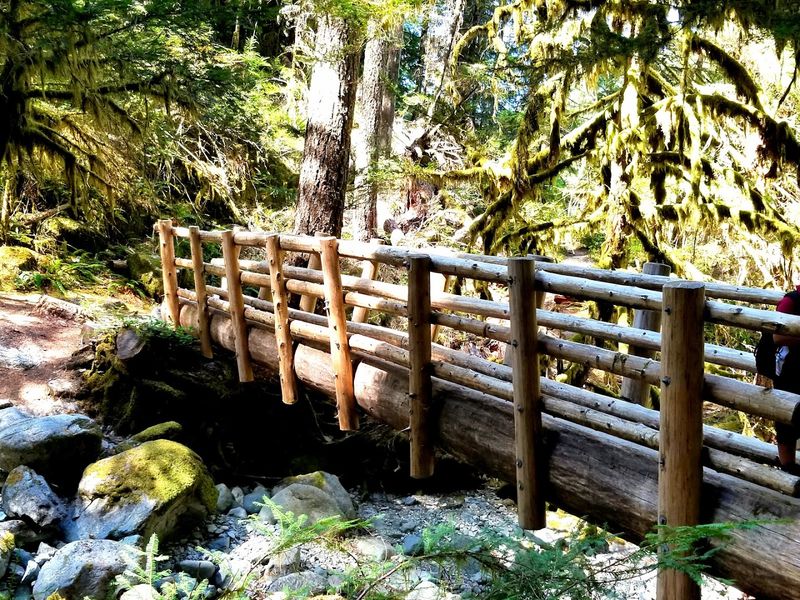
Pulling into the trailhead parking area off North Fork Road feels like arriving at the edge of a different world. The air is cooler here.
It smells like pine and damp earth before you even lace up your boots.
The trailhead sits at the end of a famously rough nine-mile road. Potholes are real and plentiful, so a higher-clearance vehicle makes the drive much easier.
Most visitors agree the bumpy approach is absolutely worth it once the trees close in around you.
A Northwest Forest Pass is required for parking. Make sure to grab one in advance to avoid any surprises at the gate.
The trailhead has basic amenities, including a vault toilet and an information board with trail maps.
Starting early on a weekday is smart. Summer weekends bring bigger crowds, and the small parking area fills up fast.
Getting there by 8 a.m. gives you the trail nearly to yourself. That quiet morning energy at the start sets the whole tone for the hike ahead.
The Old-Growth Forest Along the Path
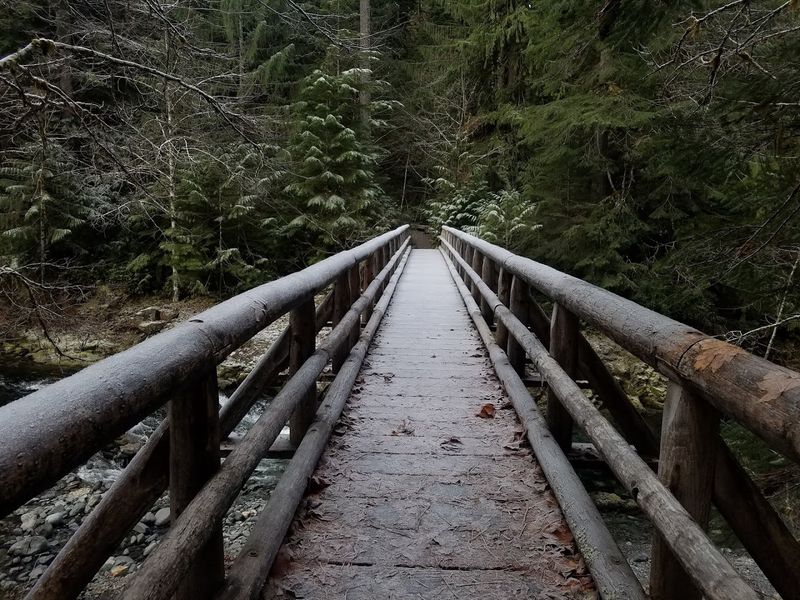
Walking into this forest feels genuinely humbling. Some of these Douglas firs have been standing for over 500 years, their trunks wider than most living rooms.
Looking straight up at them gives you a slight dizzy spell, the good kind.
The canopy is so thick that even on bright days, the light arrives in soft, filtered beams. Mosses coat almost every surface, giving the whole place a green, glowing quality that photos never quite capture.
Ferns spill across the trail edges in thick, lush clusters.
Old-growth forests like this one are increasingly rare in the Pacific Northwest. Opal Creek survived logging pressure for decades, thanks largely to conservation efforts that protected it in 1996.
Walking through it now feels like stepping into something precious.
Keep your eyes on the upper branches. Spotted owls and other wildlife make their homes in these ancient trees.
The forest is alive in every direction, and slowing your pace to notice the small details makes the experience richer.
Opal Creek and Its Impossibly Clear Water
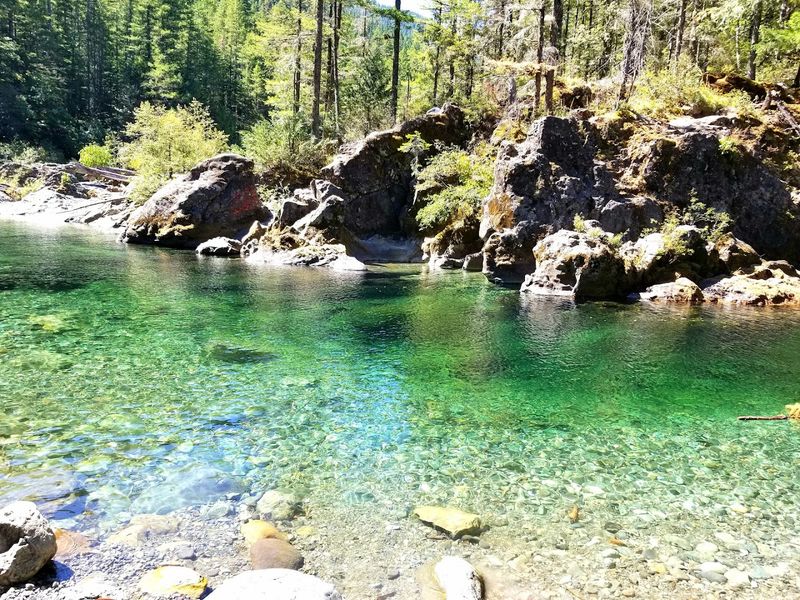
The creek appears beside the trail early on, and it immediately demands your full attention. The water runs this remarkable shade of blue-green that looks almost artificial, like someone added food coloring to a mountain stream.
That color comes from the exceptional clarity of the water. The creek drains from a pristine, largely undisturbed watershed with very little sediment.
On sunny days, the opal-like shimmer on the surface gives the creek its fitting name.
Temptation to wade in is strong, especially in summer. The water is cold, genuinely cold, but on a warm day that chill feels like a reward.
Sandy-bottomed pools along the bank make for perfect rest spots on the way to or from Jawbone Flats.
Fishing is allowed in certain sections for those who carry a valid Oregon license. The creek supports native fish populations, so catch-and-release is widely practiced here.
Even if fishing is not your thing, just sitting beside the water for a few minutes resets everything.
The Historic Mining Past of the Area
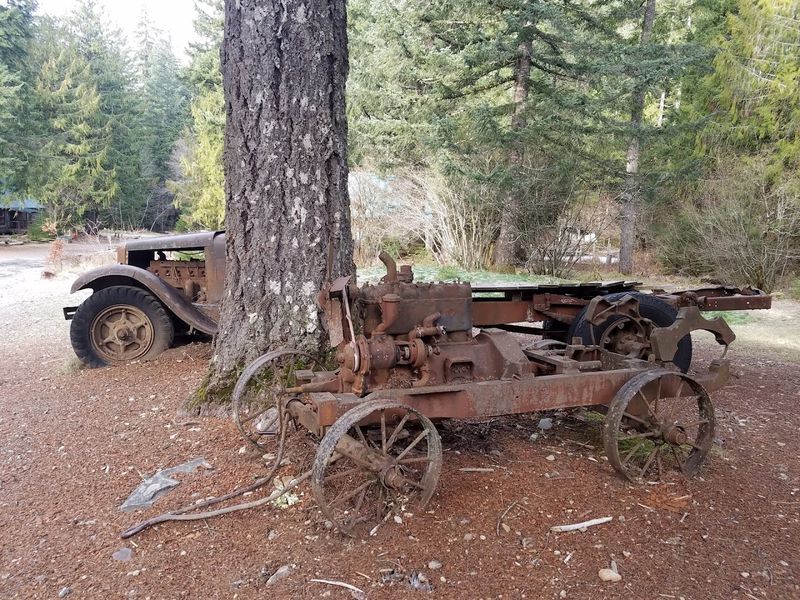
Long before hikers arrived with trekking poles and trail mix, miners were hauling equipment through this same forest. Silver and gold were pulled from the surrounding hills starting in the late 1800s.
The Opal Creek area was once a legitimate hub of mining activity.
Jawbone Flats served as the working camp for the nearby Amalgamated Mine. At its peak, the settlement had a cookhouse, bunkhouses, a mill, and even a small school.
Life here was rugged and remote, even by the standards of that era.
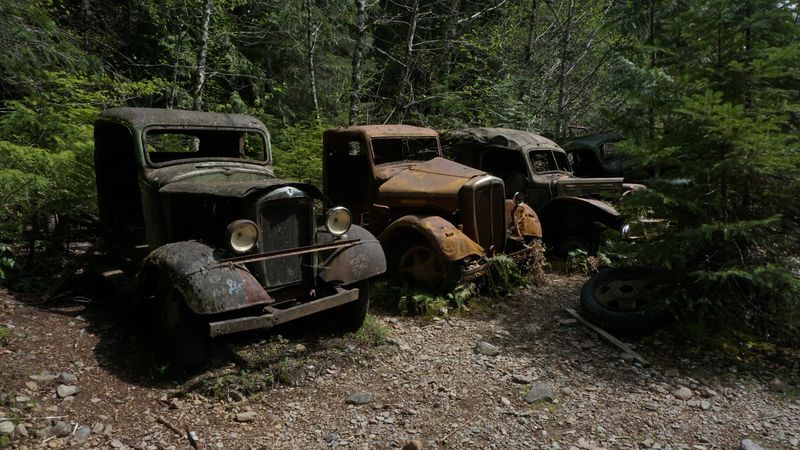
Some of the original mining machinery still sits in the forest, slowly being reclaimed by moss and roots. Rusted equipment beside the trail offers a tangible connection to the people who once worked this land.
It is eerie and fascinating in equal measure.
Gold panning is still a popular activity for visitors in certain creek sections. Finding flecks of gold is possible, though unlikely in large quantities.
The real treasure is understanding how much history is layered into this quiet, forested valley.
Jawbone Flats Ghost Town
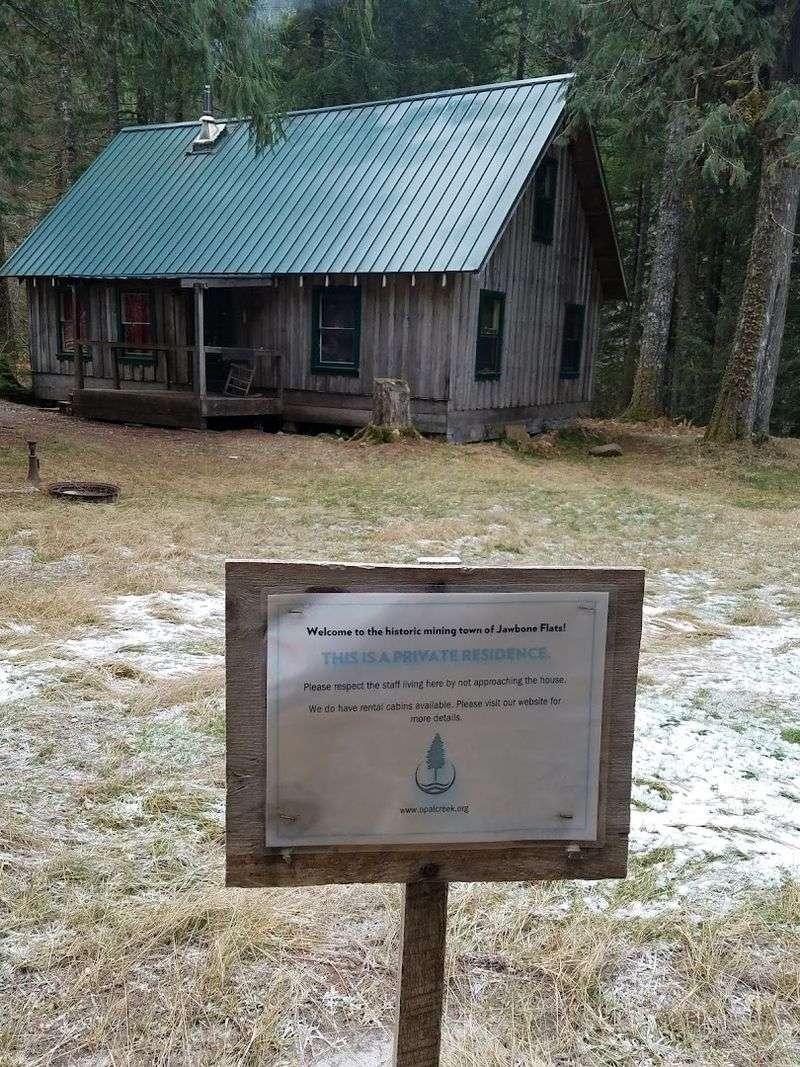
Nothing quite prepares you for that first glimpse of Jawbone Flats. The trees part just slightly, and there it is, a cluster of old wooden buildings sitting quietly in a forest clearing like time simply forgot to keep moving here.
The settlement dates back to the early 1900s and was once a functioning mining camp. Several original structures still stand, including cabins, a cookhouse, and a small store building.
The Friends of Opal Creek organization has worked to preserve and maintain the site.
Walking between the buildings feels surreal. Weathered wood, rusted hinges, and old window frames give each structure its own personality.
It does not feel like a museum. It feels like the people just stepped out and never came back.
The site is open to visitors and some of the buildings can be entered with permission during organized programs. Educational tours are sometimes offered through the Friends of Opal Creek.
Checking their website before visiting can help you plan a more meaningful stop at this remarkable little ghost town.
Opal Pool and the Waterfalls
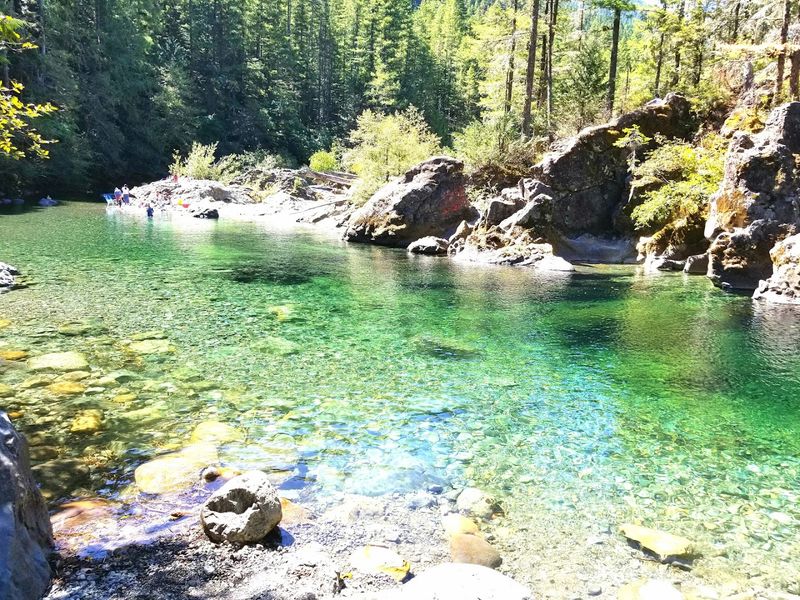
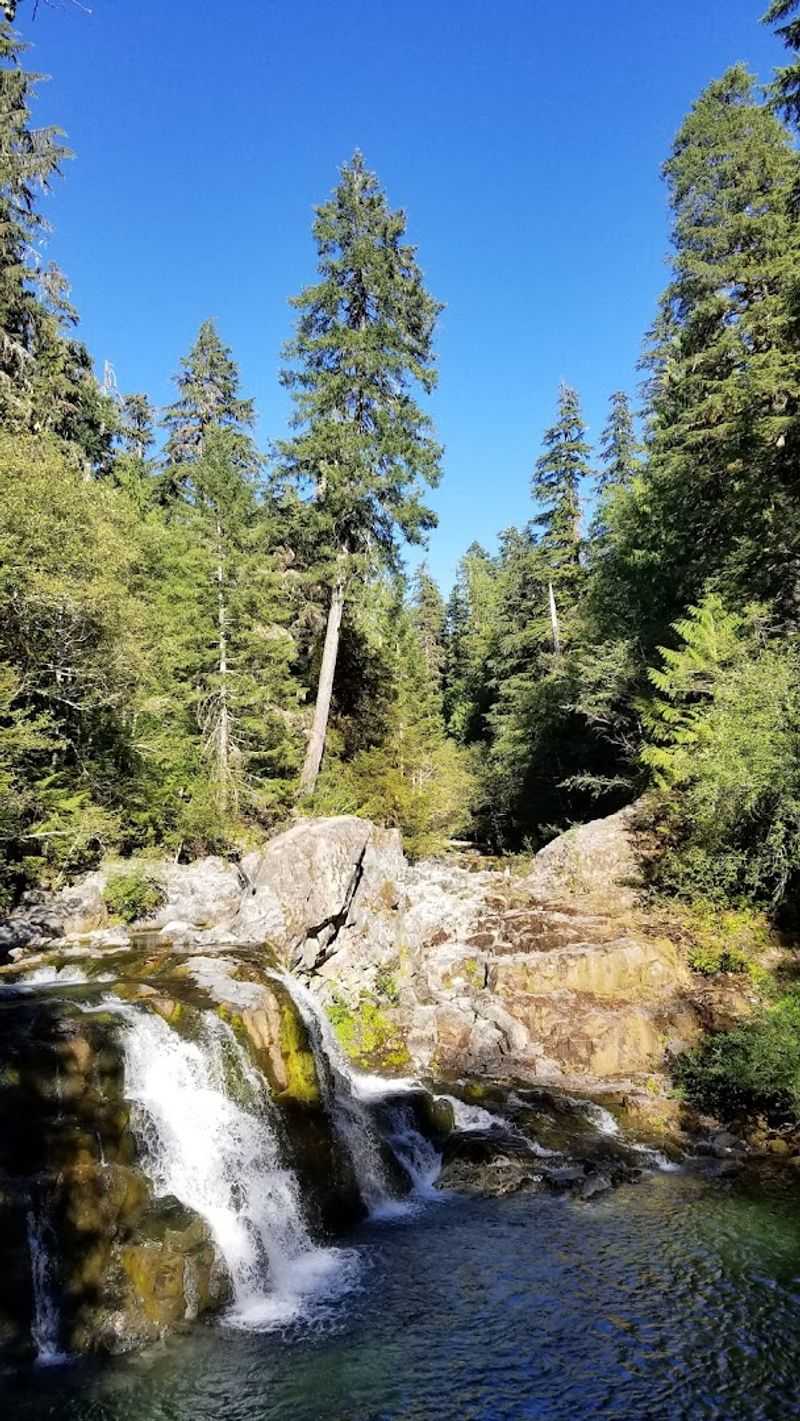
Opal Pool is one of those places that makes you stop mid-step and just stare. The water pools into a wide, deep basin of shimmering blue-green, framed by mossy rock walls and draped ferns.
It looks like something out of a fantasy novel.
A small waterfall feeds the pool from above, creating a constant soft roar that fills the clearing. The combination of sound and color is genuinely overwhelming in the best possible way.
Standing at the edge, the mist from the falls drifts across your face.
Swimming is popular here in summer, though the water temperature stays bracingly cold year-round. The depth of the pool means it stays refreshingly cool even during hot August afternoons.
Many hikers treat reaching Opal Pool as the main reward of the entire trip.
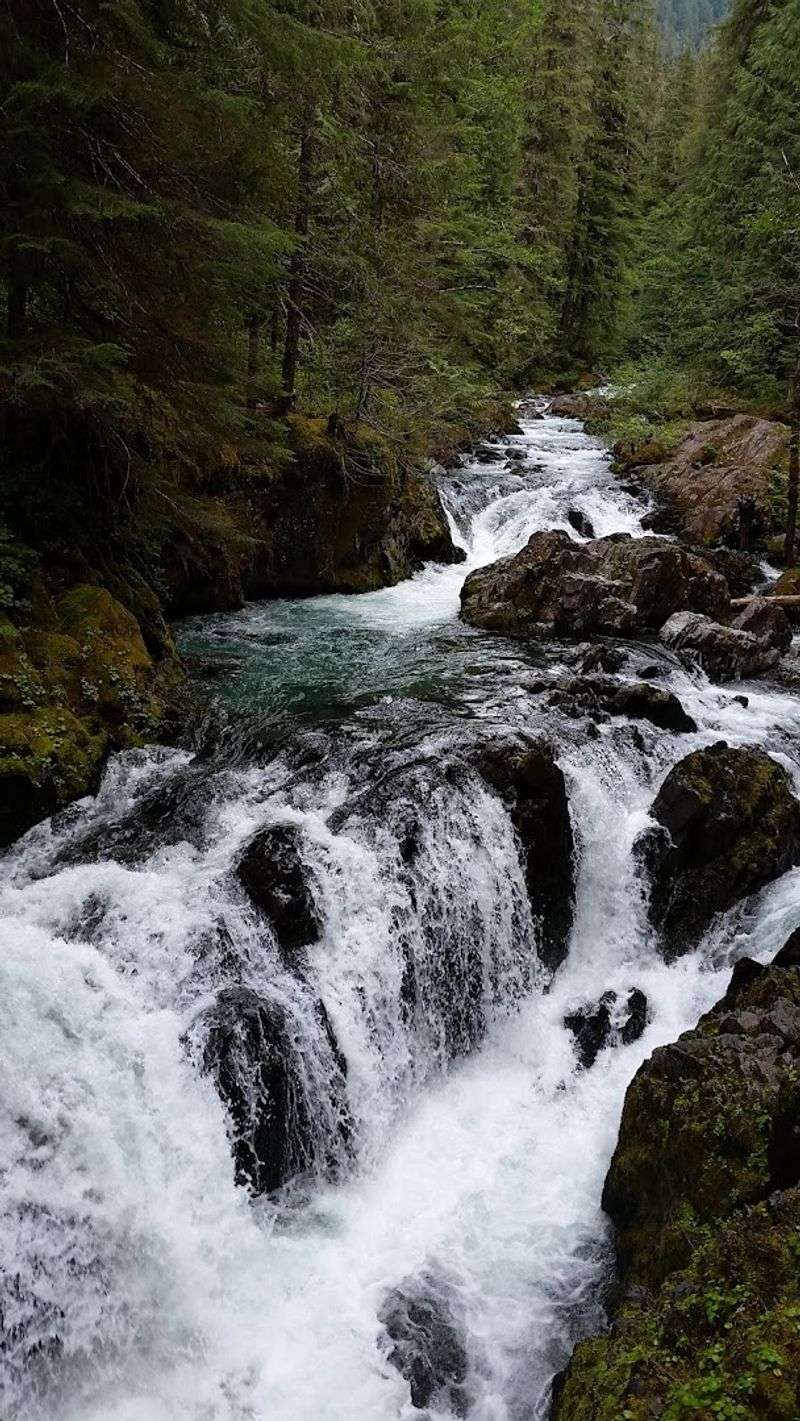
Beyond Opal Pool, additional cascades are accessible for those willing to keep exploring. The forest continues upstream with more waterfalls tucked into the canyon.
Each one feels like a secret the trail is sharing just with you.
Trail Conditions and What to Expect Underfoot
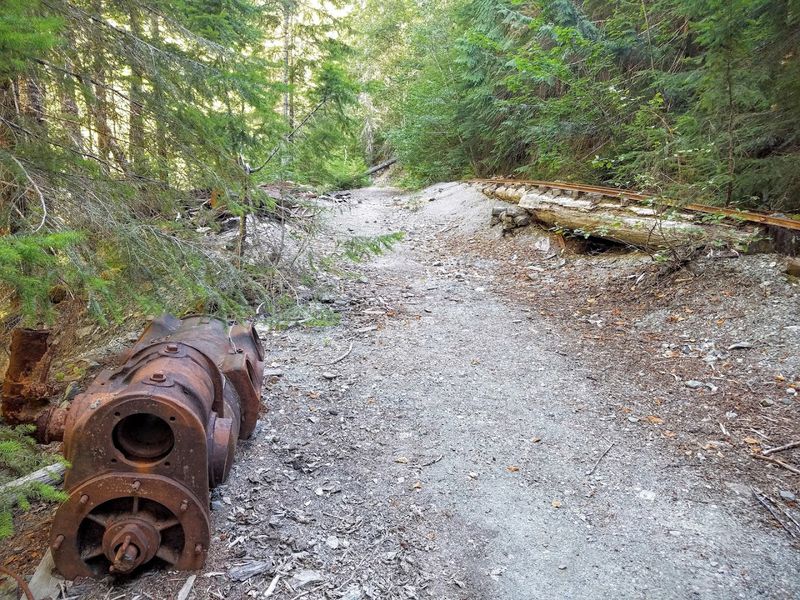
The trail to Jawbone Flats is rated moderate, and that feels accurate for most of the route. The path follows an old mining road for much of its length, which keeps it relatively wide and easy to follow.
Some narrower sections do appear closer to the creek.
Elevation gain is modest overall, which makes this hike accessible to a wide range of fitness levels. That said, the uphill sections do add up, especially on the return trip when legs are already tired.
Pacing yourself early is always a good strategy here.
Roots and rocks cross the trail in several spots, so watching your footing matters. After rain, muddy patches appear quickly.
Waterproof trail shoes or light hiking boots make a noticeable difference in comfort, especially in spring and fall.
Snow can dust the upper sections of the trail during winter months. Conditions change quickly at elevation, even on a seemingly mild day.
Checking current trail reports through local ranger stations or the Friends of Opal Creek website before heading out saves a lot of headaches.
Wildlife and Nature Along the Way
The wildlife here moves quietly, but it is always present if you pay attention. Great blue herons stalk the shallows of the creek with almost comical patience.
Dippers, small gray birds, bob along the rocks and actually dive into the current to feed.
Deer are frequently spotted near the trail edges, especially in early morning and late afternoon. Squirrels and chipmunks are a near-constant presence in the forest, darting across the path with urgent purpose.
Black bears also live in this wilderness, though sightings on the main trail are uncommon.
The plant life is equally impressive. Vine maples turn brilliant red and orange in fall, layering color over the green forest floor.
Wildflowers dot the trail margins in spring, adding soft pops of pink and white to the mossy palette.
Dogs are welcome on the trail and the area is considered good for them. Keeping pets leashed helps protect the wildlife and prevents disturbances near the creek.
Responsible hiking here keeps the ecosystem healthy for every visitor who comes after you.
Best Times to Visit Opal Creek Wilderness
Fall is genuinely spectacular here. Vine maples ignite in shades of orange, red, and gold while the evergreen firs stay dark and steady above them.
The contrast of colors makes every bend in the trail feel like a painting.
Summer brings the warmest temperatures and the most visitors. Weekdays are noticeably quieter than weekends during July and August.
Arriving early and parking by 8 a.m. is the best way to enjoy a peaceful experience during peak season.
Spring offers a different kind of magic. Snowmelt swells the creek, making the waterfalls more dramatic and the water level higher.
Wildflowers start appearing along the trail by late April, and the forest smells incredibly fresh after winter rains.
Winter visits are possible but require more preparation. Snow can appear on the trail, and the access road may be slick.
The wilderness is open 24 hours every day of the year, so determined visitors can experience it in any season. Each season reveals a completely different side of this remarkable place.
Planning Your Visit to Opal Creek Wilderness
Getting to Opal Creek Wilderness takes a little planning, but nothing complicated. The trailhead is located at the end of North Fork Road, about nine miles off the main highway.
That road is rough, so budget extra time and check your vehicle clearance before heading out.
A Northwest Forest Pass is required for parking at the trailhead. The pass can be purchased online or at local outdoor retailers before your trip.
Cell service along the drive and on the trail is essentially nonexistent, so download offline maps in advance.
Pack layers regardless of the season. The forest stays cool even in summer, and temperatures drop quickly in the shade of the canyon.
Bringing more water than you think you need is always the right call on any Pacific Northwest trail.
The Friends of Opal Creek organization manages and supports the wilderness area. Their website at opalcreek.org has updated trail information, event listings, and details about Jawbone Flats programs.
Dear Reader: This page may contain affiliate links which may earn a commission if you click through and make a purchase. Our independent journalism is not influenced by any advertiser or commercial initiative unless it is clearly marked as sponsored content. As travel products change, please be sure to reconfirm all details and stay up to date with current events to ensure a safe and successful trip.
