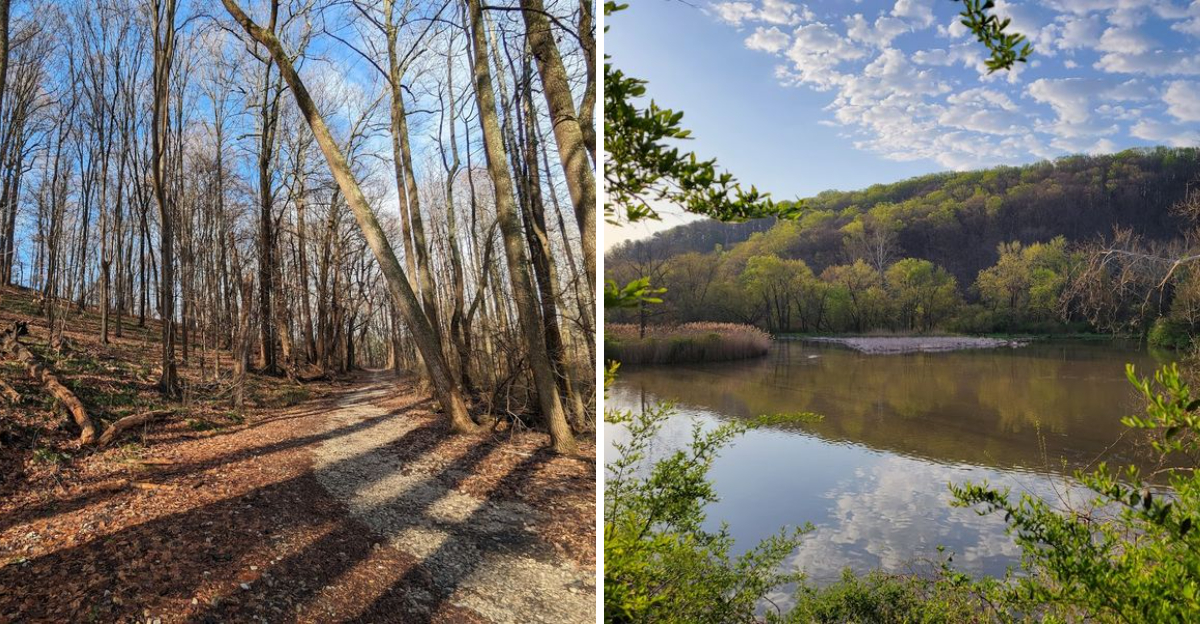
A good trail does more than just give you exercise. It tells a story.
This one is only about three and a half miles, but it packs in a whole lot of Maryland history along the way. Old stone walls, quiet woods, and signs that point to forgotten moments from the past.
Runners love the smooth path. Bikers zoom through without too much effort.
And walkers can take their time reading the markers. You might start just wanting to stretch your legs, then suddenly you are wondering about the people who walked here a hundred years ago.
No steep climbs, no tricky turns, just a pleasant loop that makes you feel smart and active. That is the best kind of Maryland trail.
Short enough for a lunch break, rich enough to remember.
Running The Merryman Trail, A Route Worth Every Step
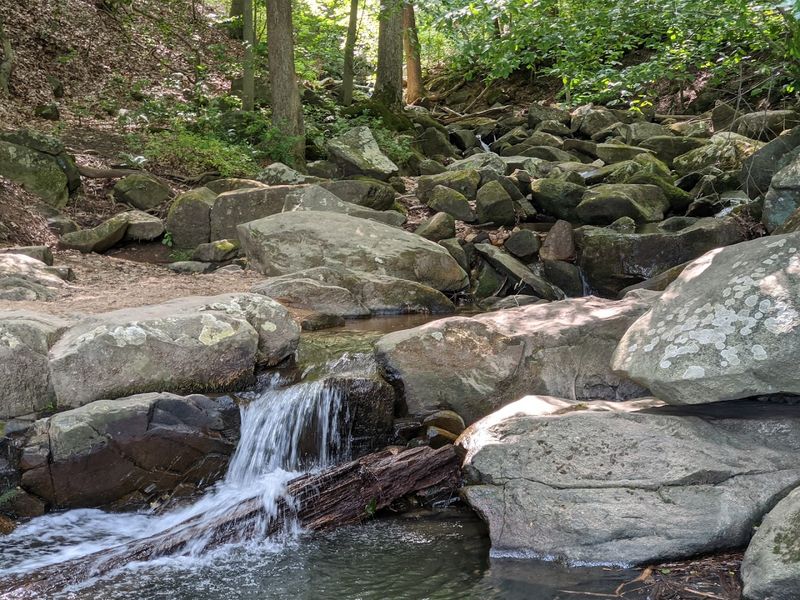
Runners around the Baltimore area have quietly kept this trail to themselves for years, and once you experience it, that protectiveness makes complete sense. The 3.6-mile route offers a satisfying mix of terrain that keeps your legs and your brain engaged the whole way through.
There are stretches of smooth singletrack where you can open up your stride, followed by rockier sections that demand a bit more focus and footwork. The elevation changes are real but not brutal, making it accessible for intermediate runners while still giving experienced athletes something to work with.
I found the rhythm of this trail genuinely addictive, the kind of run where you check your watch and are surprised by how much time has passed.
Compared to some of the more popular trails in the Loch Raven area, the Merryman route tends to be less crowded. That means fewer interruptions and more of those rare, peaceful moments where it is just you and the sound of the woods.
Trail shoes with decent grip are recommended, especially after rain when the dirt paths get slick.
Biking Through The Trees, What Cyclists Need To Know
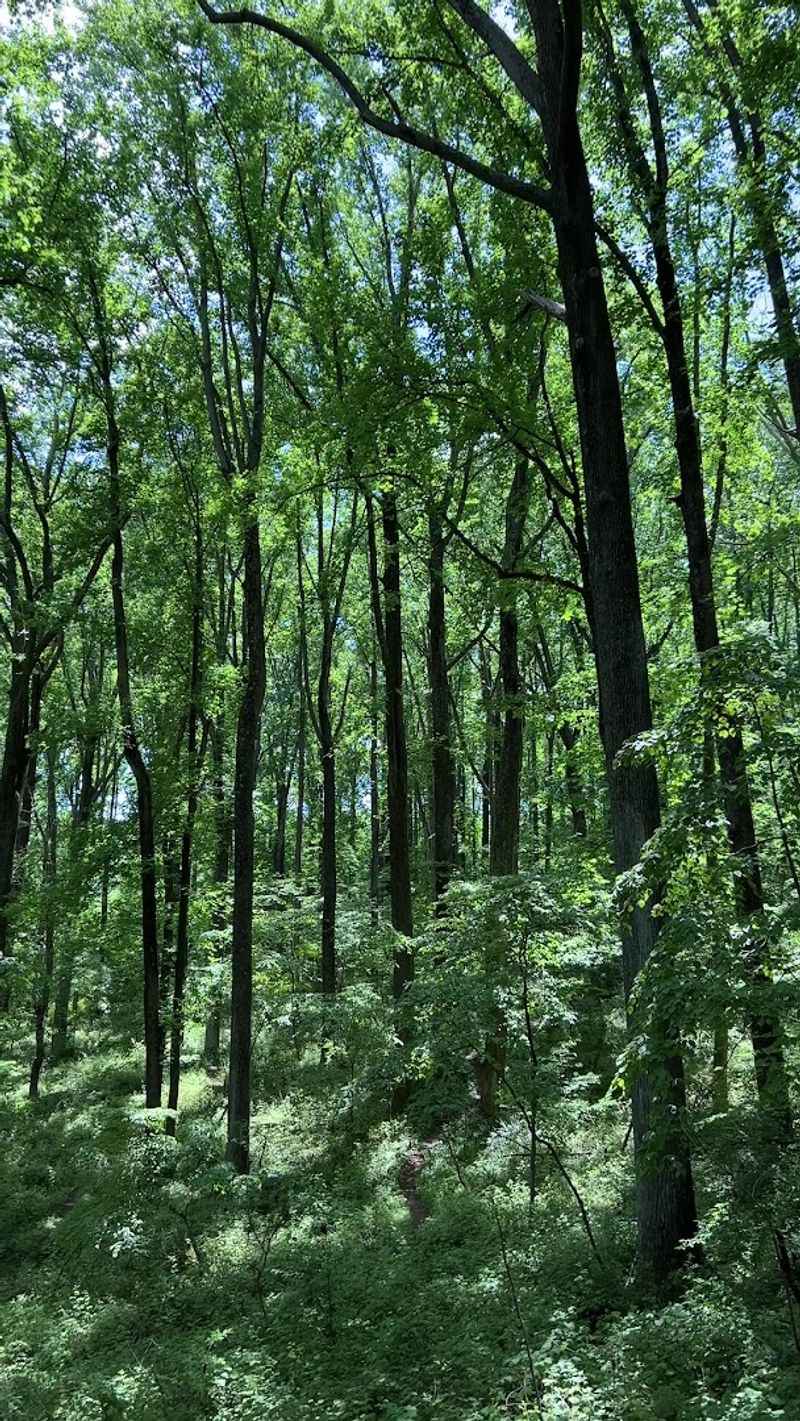
Mountain bikers and gravel riders will find the Merryman trail system genuinely rewarding, though it helps to know which sections suit your setup before you roll out.
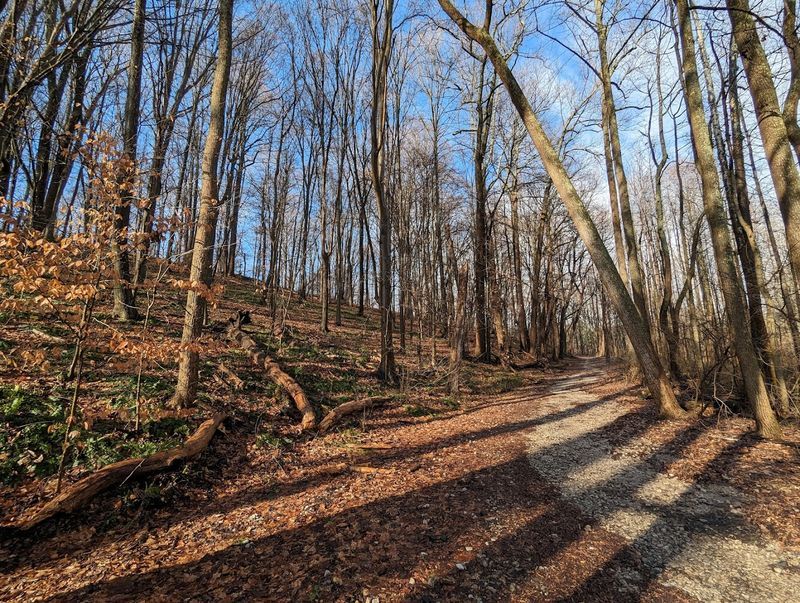
The Merryman Mill Outer Trail is the section most commonly ridden, offering a wider fire road experience that works well for gravel bikes and hardtail mountain bikes alike.
The fire road sits higher on the hill, giving riders a different perspective than the lower singletrack routes closer to the water. You get more open sightlines up here, and the surface stays relatively firm even after wet weather.
That said, some technical sections do appear, so overconfidence on a fast descent is not your friend.
Riders who prefer a more rooted, technical challenge can explore the lower singletrack segments, though those require sharper bike handling skills. Helmets are obviously non-negotiable, and eye protection helps when branches get close to the trail edge.
Checking local trail condition reports before heading out saves a lot of frustration, especially in spring when mud season can make sections temporarily unrideable. Overall, this is a trail system that rewards cyclists who like variety and a little bit of unpredictability.
The Merryman Family Legacy, History Hidden In The Forest
Most people hiking or running this trail do not realize they are passing through land that has carried the Merryman name for over three hundred years. Benjamin Merryman patented significant tracts of this land in 1788, with a parcel formally recorded as Merryman’s Inclosure Rectified.
The family’s roots in Maryland stretch back to the late 1600s, making this one of the longer-standing land histories in Baltimore County.
What makes it tangible rather than just a footnote is that physical evidence of that era still exists along the trail. Old stone foundations emerge from the undergrowth at certain points, quiet reminders that this forest was once a working, living part of someone’s daily life.
There is something unexpectedly moving about stumbling across a mossy wall that has been sitting in these woods for over two centuries.
The Merryman family operated a mill in this area, and the ruins of that structure are among the most interesting historical features you can encounter on the route. No signage makes a big deal of it, which somehow makes the discovery feel more personal.
Slowing down and paying attention rewards you with details that a fast pace would completely miss.
The Mill Ruins And Cemetery, A Quiet Piece Of The Past

Finding the mill ruins and the associated cemetery along the Merryman Trail is one of those moments that genuinely stops you mid-stride.
The cemetery is small and easy to miss if you are moving too quickly, but once you see the old headstones emerging from the leaf litter, you feel the weight of the place immediately.
These are not grand monuments or well-maintained memorials. They are modest stones, worn by weather and time, sitting quietly in the middle of a forest that has slowly grown back around them.
The mill ruins nearby echo that same quiet dignity, with stacked stone walls still holding their shape despite centuries of neglect and weather. Visiting with a sense of respect goes a long way here.
This is not a designated historic site with interpretive panels or guided tours. The experience is raw and unmediated, which makes it more powerful in my opinion.
You are simply a person standing in a forest, looking at the physical remnants of a family that lived, worked, and was buried on this exact ground. That kind of unfiltered connection to local history is increasingly rare and genuinely worth seeking out.
Loch Raven Reservoir Views, Water And Wilderness Combined
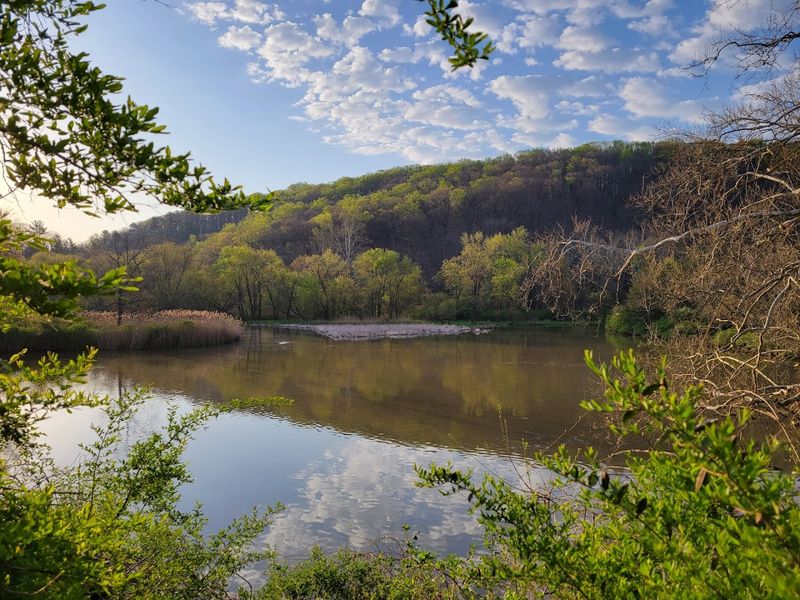
The lower singletrack sections of the Merryman Trail system run close to the shoreline of Loch Raven Reservoir, and those stretches are among the most visually rewarding on the entire route.
The reservoir has a stillness to it that feels almost deliberate, like the water is in on the secret of how peaceful this place is.
Morning visits are particularly atmospheric. Low light filters through the tree canopy and hits the water at angles that make the whole scene feel like something from a landscape painting.
I noticed great blue herons standing in the shallows on one visit, completely unbothered by my presence on the trail above. Wildlife sightings like that are genuinely common in this corridor.
The reservoir also serves as a drinking water source for the Baltimore region, which is part of why the surrounding land has been so carefully preserved. That preservation is your gain as a trail user.
The buffer of protected forest around the water means the trail environment stays genuinely wild, with minimal development intruding on the experience. If you bring a camera or even just a phone, the waterside sections will give you more than enough material to work with.
Trail Terrain Breakdown, What To Expect Under Your Feet
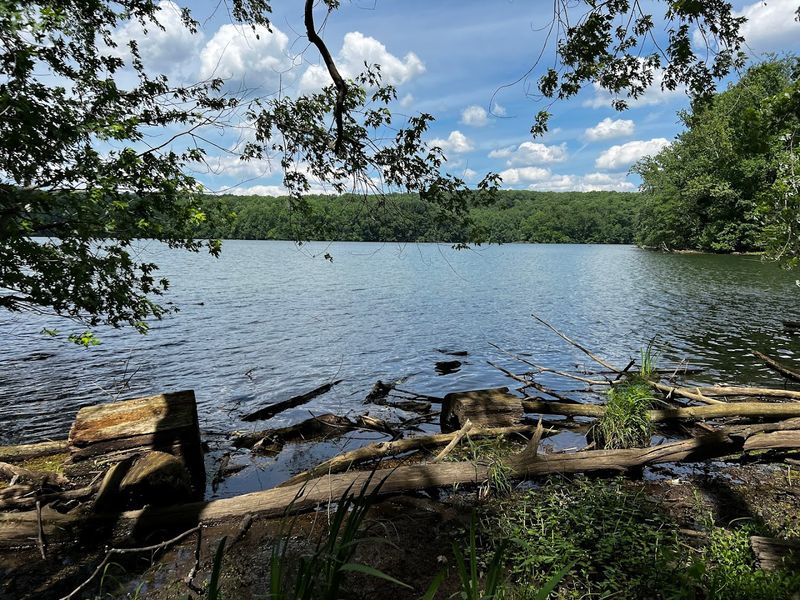
One of the things that keeps people coming back to the Merryman Trail system is the variety of surfaces packed into a relatively short distance. You are not walking on a paved path or a manicured greenway here.
The ground changes beneath you in ways that keep every outing feeling fresh.
Soft dirt dominates much of the lower singletrack, which feels forgiving on your joints and makes for fast, comfortable running when it is dry. Rocky patches appear without much warning in certain sections, requiring you to watch your footing and adjust your pace.
The fire road segments higher on the hill offer firmer, more predictable ground that is easier to maintain speed on.
After rainfall, conditions shift considerably. The dirt sections can get muddy and slippery, and some roots become genuinely treacherous when wet.
Gaiters are worth considering in shoulder seasons when mud is a regular feature. Regardless of conditions, the terrain variety is a feature rather than a flaw.
It builds balance, strengthens stabilizer muscles, and makes the whole experience feel more like an adventure than a workout. Checking recent trail reports from local running or hiking groups before heading out is a habit worth developing.
Wildlife And Nature Along The Route, Small Wonders Worth Noticing
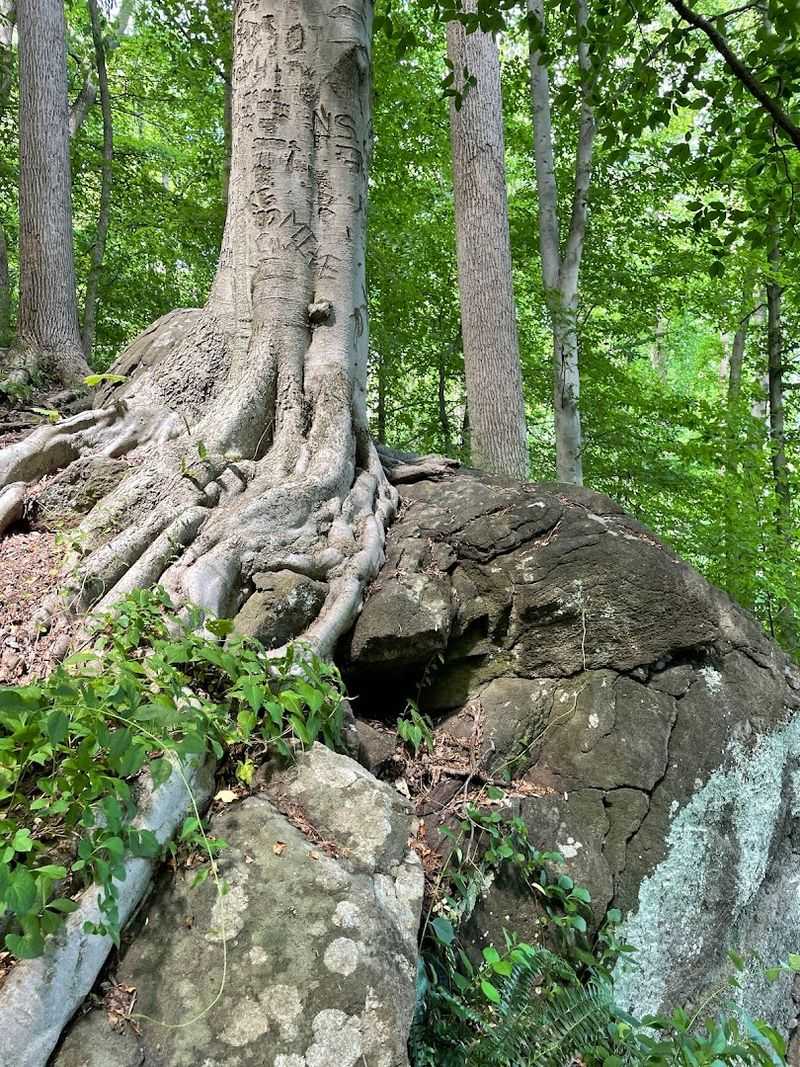
The Loch Raven watershed area supports a surprisingly rich array of wildlife, and the Merryman Trail corridor is no exception. Moving quietly through the forest increases your chances of seeing animals that most people never notice from a car or a crowded trail.
White-tailed deer are common sightings, often spotted grazing in the early morning just off the trail edge. Red foxes have been seen cutting across the path, and the birdlife here is genuinely impressive for anyone with even a passing interest in birding.
Warblers, woodpeckers, and various raptors all use this forest corridor throughout the year. The reservoir edge brings waterfowl and wading birds into the mix as well.
Spring is an especially rewarding season for nature observation on this trail. Wildflowers push up through the forest floor, migratory birds pass through in waves, and the whole corridor feels alive with movement and sound.
Even in winter, the stripped-down forest reveals the bones of the landscape in a way that is quietly beautiful. Bringing binoculars adds a whole dimension to the experience, particularly on the sections closer to the water where visibility opens up between the trees.
Best Times To Visit And How To Prepare For The Trail
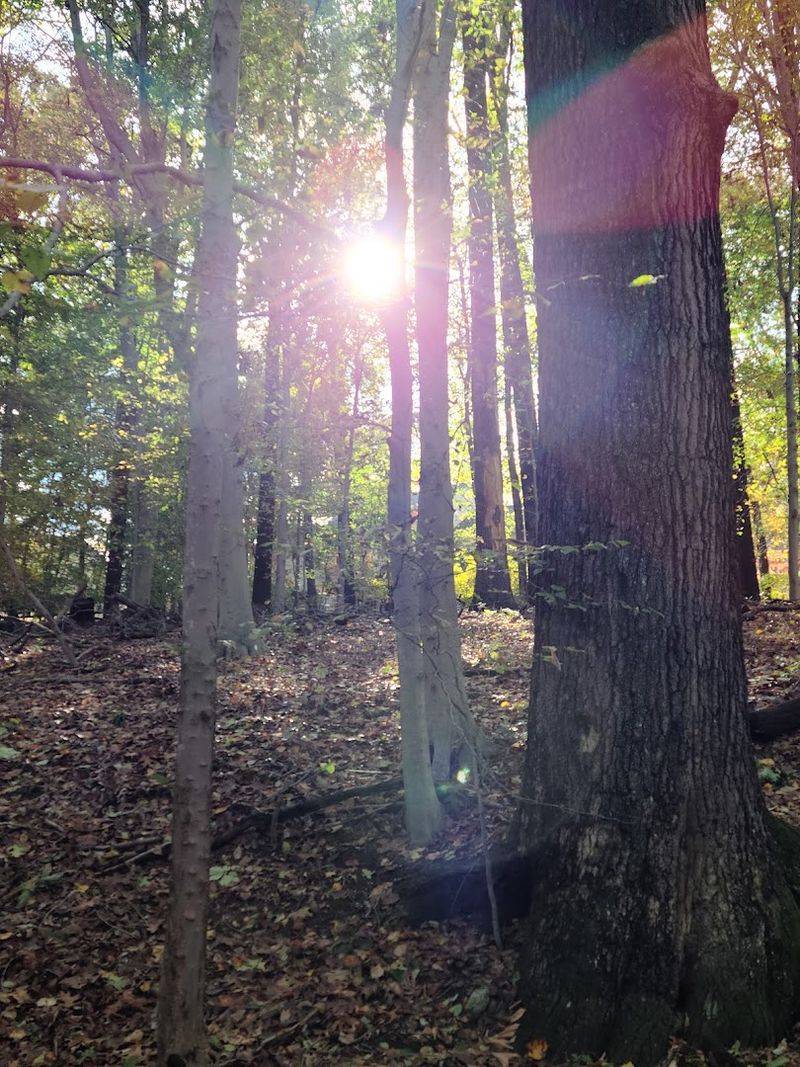
Timing your visit to the Merryman Trail makes a real difference in the quality of your experience. Weekday mornings are the sweet spot for solitude, particularly in the warmer months when weekend trail traffic picks up noticeably.
Early autumn is widely regarded as the best season overall, when the foliage turns and the temperatures drop to that perfect range for sustained effort.
Summer visits are perfectly enjoyable but require more preparation. The forest canopy provides good shade, though humidity in Maryland summers can be punishing.
Bringing more water than you think you need is always the right call, and starting early helps you beat both the heat and the crowds. Bug spray becomes a genuine necessity from late spring through early fall, especially near the wetter sections close to the reservoir.
Footwear matters more on this trail than on many others in the region. Trail running shoes or sturdy hiking boots with grip are strongly preferred over road shoes or casual sneakers.
A small daypack with water, a snack, and a downloaded offline map covers most contingencies. Cell signal is unreliable once you are in the deeper sections, so having a plan before you leave the trailhead is just good practice.
Why This Trail Deserves A Spot On Your Maryland Outdoor List
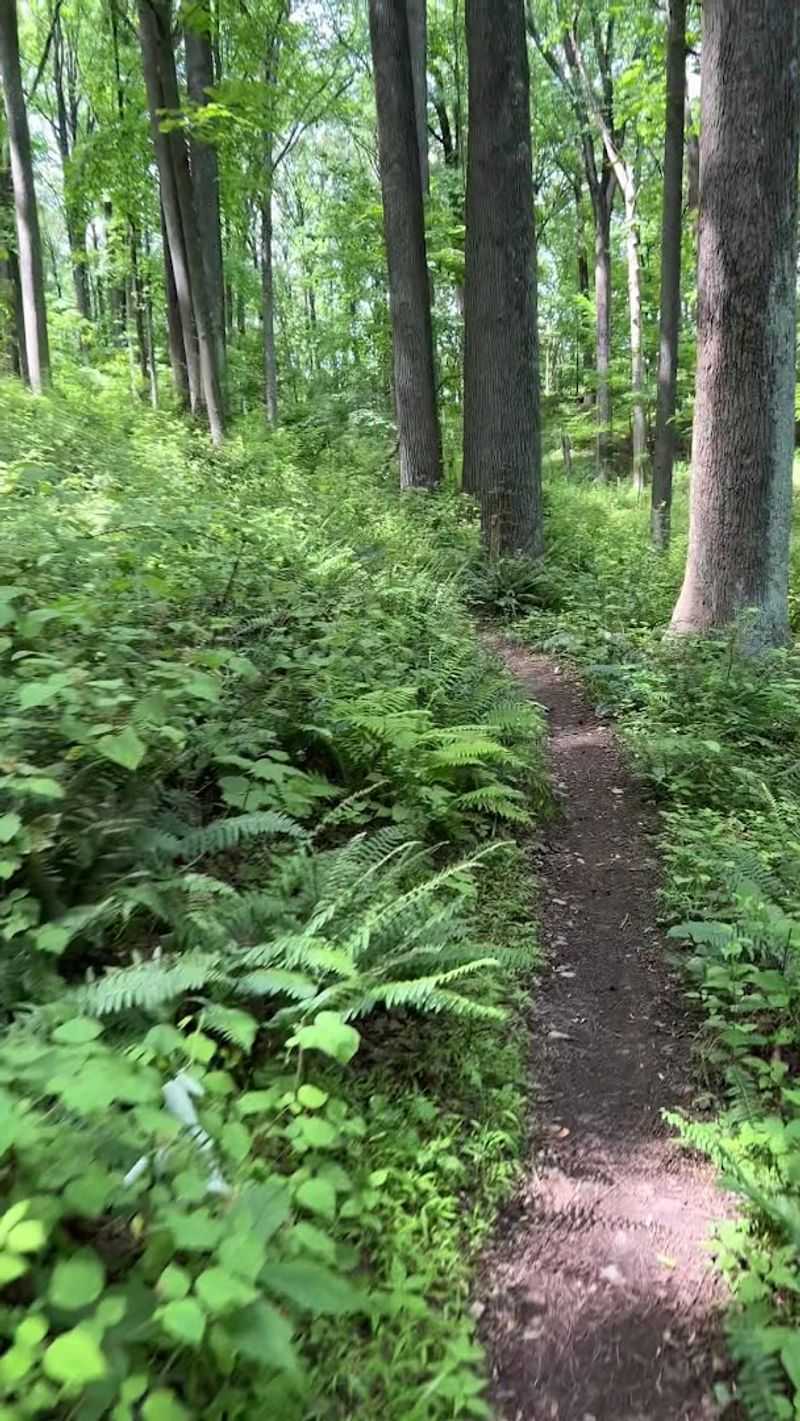
There are trails that exist to check a box, and then there are trails that actually change how you feel about a place. The Merryman Trail falls firmly in the second category.
It is not the longest trail in Maryland, and it is not the most dramatic, but it delivers something that a lot of bigger, more famous routes do not.
The combination of varied terrain, genuine historical intrigue, reliable wildlife encounters, and relative quiet makes this a trail that earns repeat visits rather than just a single curious outing. Runners come back for the feel of the singletrack.
Bikers come back for the fire road views. History lovers come back because the ruins and cemetery reveal something new each time.
That layered quality is rare.
For anyone living in or visiting the Baltimore area who wants an outdoor experience that feels authentic rather than curated, this trail is a genuinely strong answer.
The access point at 10517 Pot Spring Road in Cockeysville is easy to find and puts you immediately into a forest that feels far removed from the suburbs surrounding it.
Give it a morning. It will earn a return trip before you even make it back to your car.
