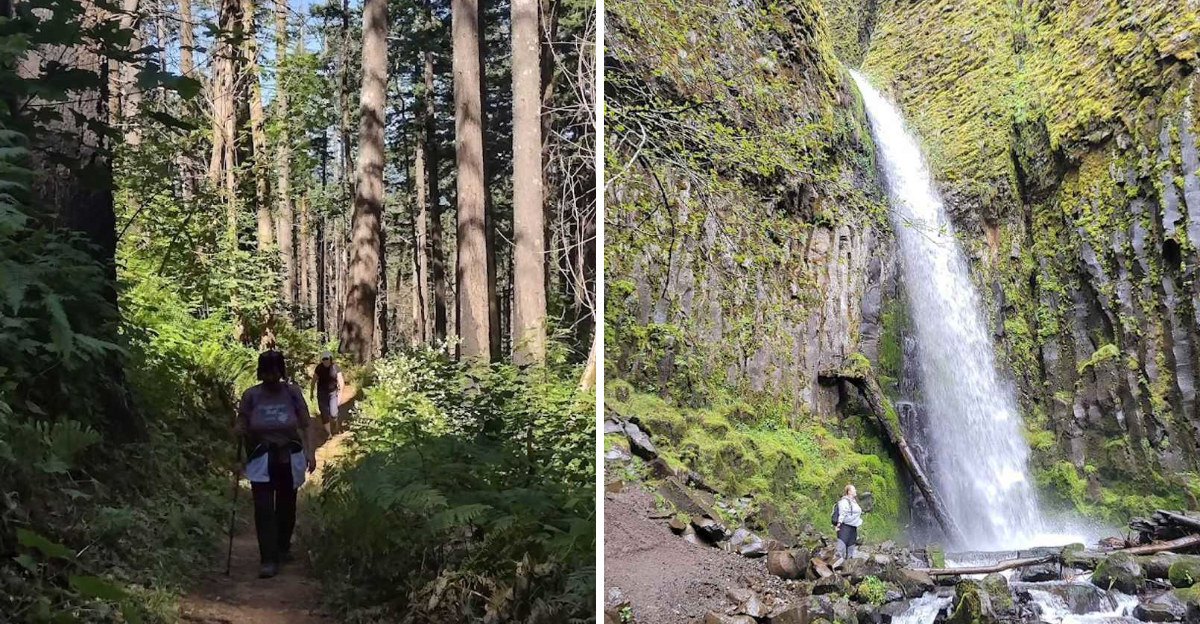
This 4.4-mile Oregon hike doesn’t waste time getting interesting. I hit the trail and it immediately feels like it knows how to keep things moving.
The path winds through changing scenery – forests that open up, viewpoints that catch you off guard, and little moments where you stop just because you have to. Nothing feels repetitive, and every stretch brings something slightly different.
It’s the kind of hike that sits right in that sweet spot: long enough to feel like an adventure, short enough to leave you thinking you could do it again tomorrow.
And by the time it wraps up, it already feels like it deserves a permanent spot on the list.
Where the Trail Begins: The Bridge of the Gods Trailhead
Starting at the right spot makes all the difference on this hike. Park near the Bridge of the Gods trailhead in Cascade Locks, or use the PCT Harvey Road trailhead, and follow the signs for the Pacific Crest Trail heading south.
This is the correct starting point. Some GPS apps have sent hikers to a gravel service road nearby, which dead-ends with no parking and very little scenery.
The trailhead area sits close to the town of Cascade Locks, just southeast along the gorge. You will spot PCT markers quickly once you are in the right spot.
The path starts gently before it builds into a steady uphill rhythm. Tall Douglas firs line the route from the very first steps.
The forest canopy keeps things cool and green even when summer heats up the gorge. Getting this starting detail right sets the whole tone for a smooth, rewarding day on the trail.
The Pacific Crest Trail Stretch That Makes It Special
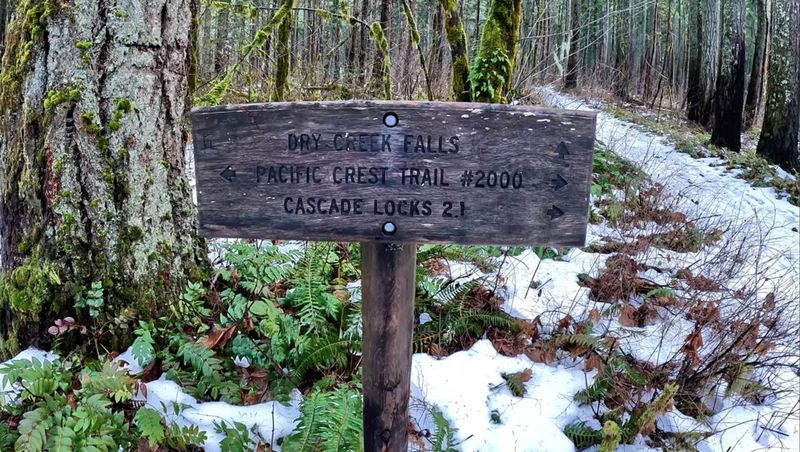
Walking on the Pacific Crest Trail feels different from a regular park path. There is something quietly thrilling about sharing the same route that long-distance hikers use for months at a stretch.
This section runs about two miles southeast from Cascade Locks before you reach the falls, and it moves through some genuinely beautiful gorge terrain.
The trail is mostly shaded, which feels like a gift on sunny days. Ferns crowd the lower edges of the path.
Mossy rocks catch the light in ways that make you stop and look twice. The elevation gain is real but manageable.
Most hikers describe it as uphill-easy, meaning your legs feel it without your lungs staging a protest. The trail surface stays relatively consistent, with some rocky sections that keep you paying attention.
Dogs handle this stretch well, and kids with some trail experience do just fine. It is one of those routes that rewards steady, unhurried movement.
Understanding the 4.4-Mile Round Trip Distance
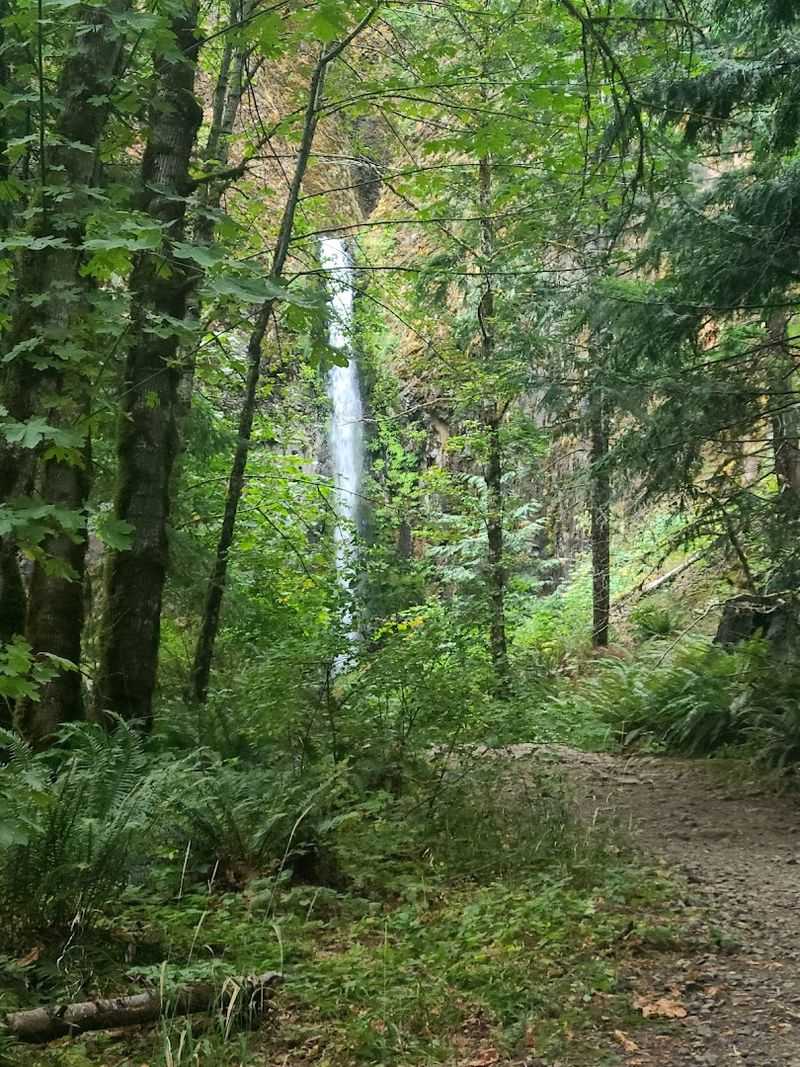
Four and a half miles sounds like a full commitment, but this trail moves at a pace that makes it feel shorter. The out-and-back format is simple to follow.
You head in two miles, reach the falls, then turn around and retrace your steps. No navigation stress, no complicated junctions.
The elevation gain adds some effort to the uphill leg. On the return trip, you get to enjoy a mostly downhill walk back through the same gorgeous forest.
Many hikers find the return journey actually faster than expected. The total distance sits comfortably in the moderate range, accessible to most adults and older kids who hike occasionally.
If you want more miles after visiting the falls, longer trail options connect nearby, including routes toward Hetman Pinnacles. But the classic 4.4-mile version is satisfying on its own.
Pack enough water for the full round trip. A light snack at the falls makes the turnaround moment feel like a proper celebration.
The Waterfall Itself: What You Actually See
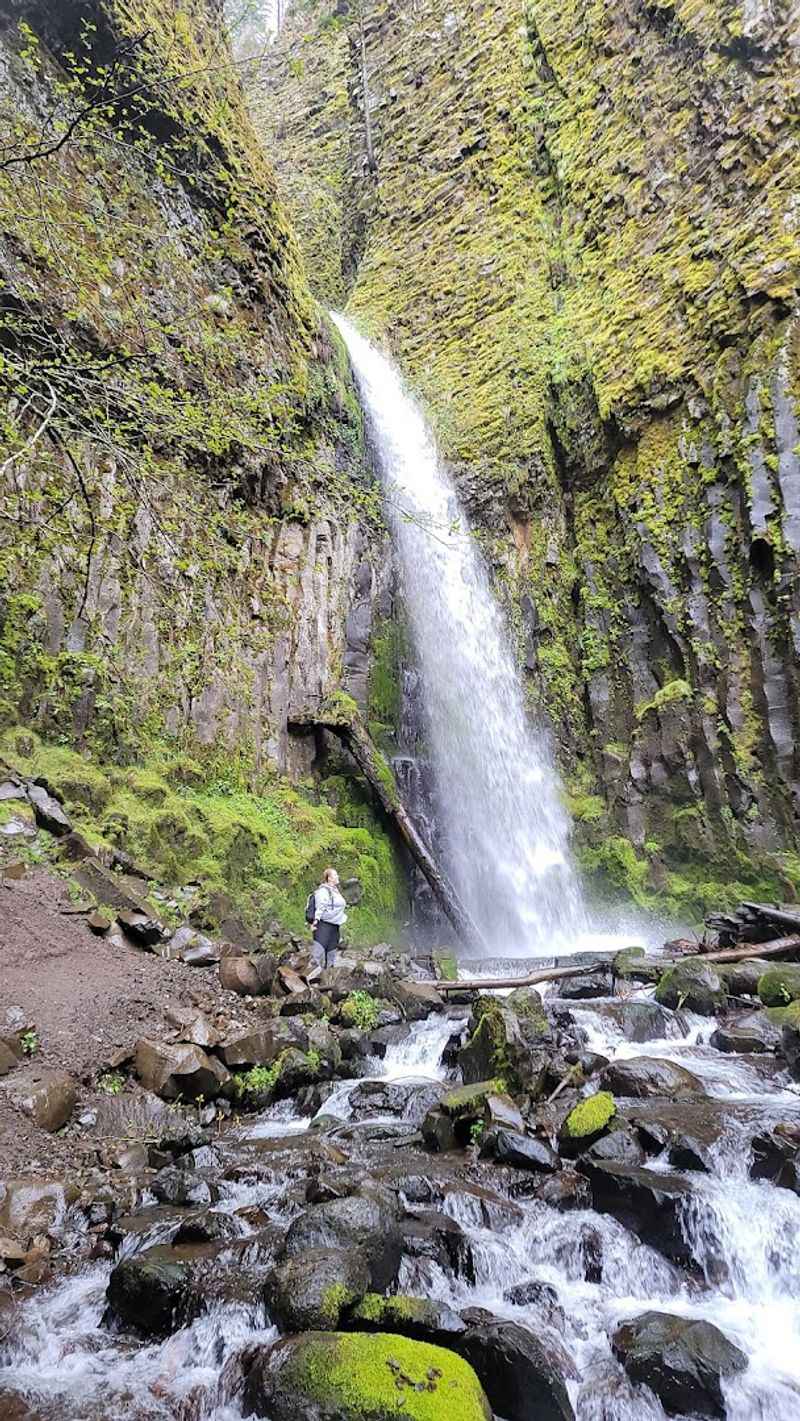
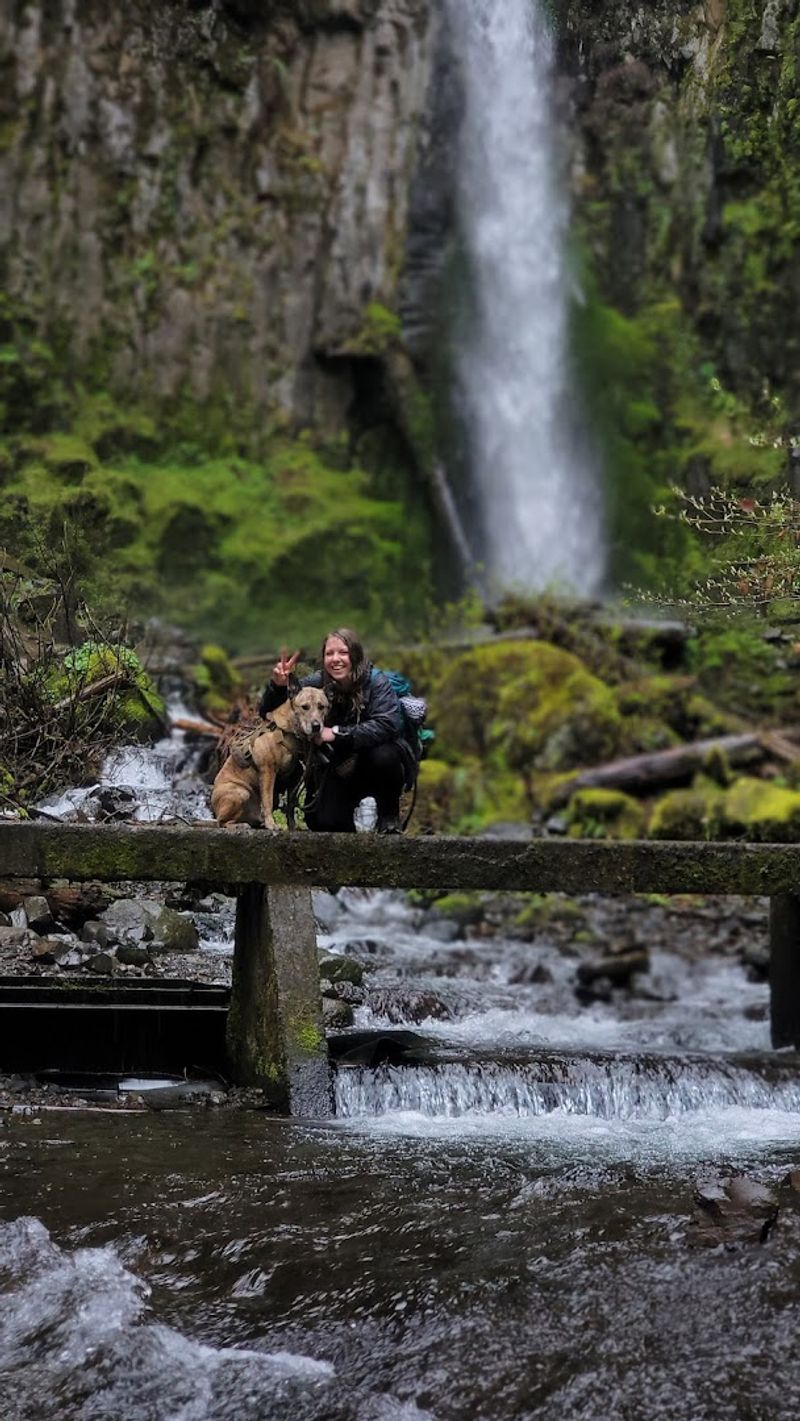
The waterfall is the kind of thing that makes you go quiet. Water drops from a significant height, carved into tall basalt rock walls that frame it like something out of a painting.
The gorge amplifies the sound as you get closer. You hear it before you see it, which builds anticipation perfectly.
One of the best parts is that you can walk right up to the base. There is no barrier keeping you at a distance.
The spray reaches you if you stand close enough. The rock walls on either side rise dramatically, giving the whole scene a nestled, tucked-away quality.
It genuinely feels like a hidden reward after earning those two miles uphill. The falls sit about two miles southeast of Cascade Locks, deep in the gorge where the landscape feels untouched.
Visiting after a rain makes the flow stronger and the colors around it even richer. Clear days bring out the contrast between dark rock and white rushing water.
Best Time of Year to Visit Dry Creek Falls
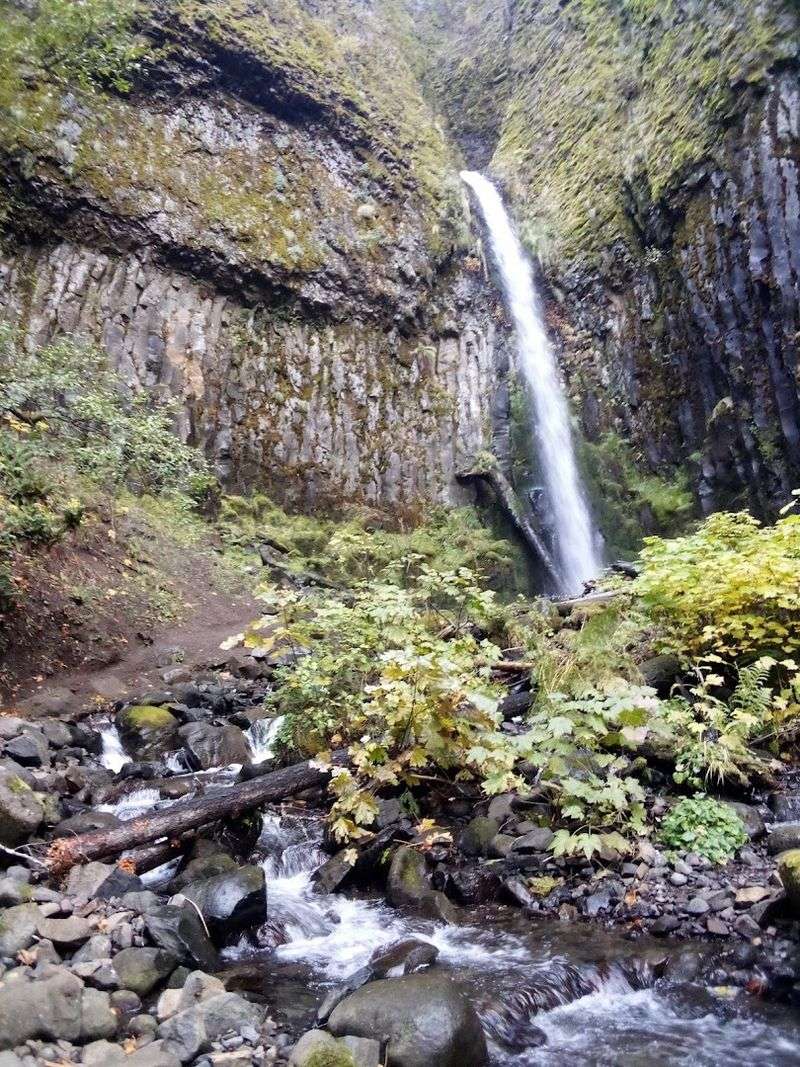
Timing your visit makes a real difference here. Spring is peak season for waterfall power.
Snowmelt and rain push the water volume up, and the falls roar with impressive force. The surrounding forest turns an almost electric shade of green during April and May.
Summer visits are pleasant thanks to the heavy shade along the trail. The falls may run a bit lighter in late summer, but the hike itself stays comfortable.
Fall brings changing leaves and quieter crowds. The trail does not close seasonally, so you have real flexibility.
Just check trail conditions before heading out in winter or early spring, since the gorge can get icy and wet. Mornings tend to be cooler and less crowded than afternoons.
Arriving early on weekends is always a smart move in this popular region.
Kid and Dog Friendly Details That Matter
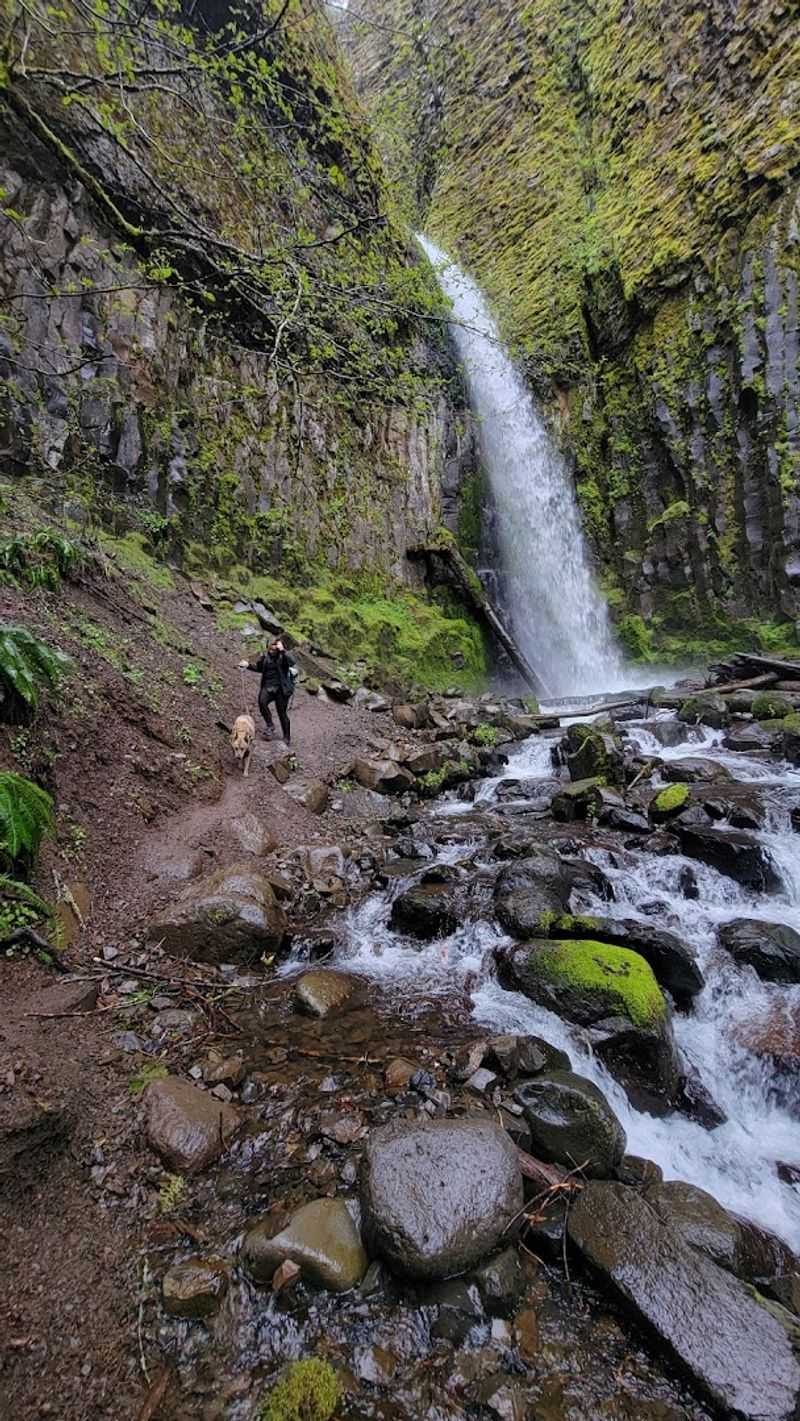
This trail has a reputation for being welcoming to both young hikers and four-legged ones. The surface is manageable for kids who have done a few trails before.
The elevation gain is steady but not brutal. Younger children may need encouragement on the uphill section, but the waterfall payoff tends to motivate everyone.
Dogs do well here. The shaded trail keeps them cooler than open exposed routes would.
Bring enough water for your pet, since natural water sources along the trail are not guaranteed to be safe for drinking. Keep dogs leashed as a courtesy to other hikers and wildlife.
The trail width accommodates passing other groups without much difficulty. For families, the out-and-back format is easy to manage because you can turn around at any point if energy runs low.
The falls themselves are accessible right up close, which makes the destination feel genuinely exciting for kids. A good pair of trail shoes makes the whole experience smoother for everyone involved.
Gear and Packing Tips for the Hike
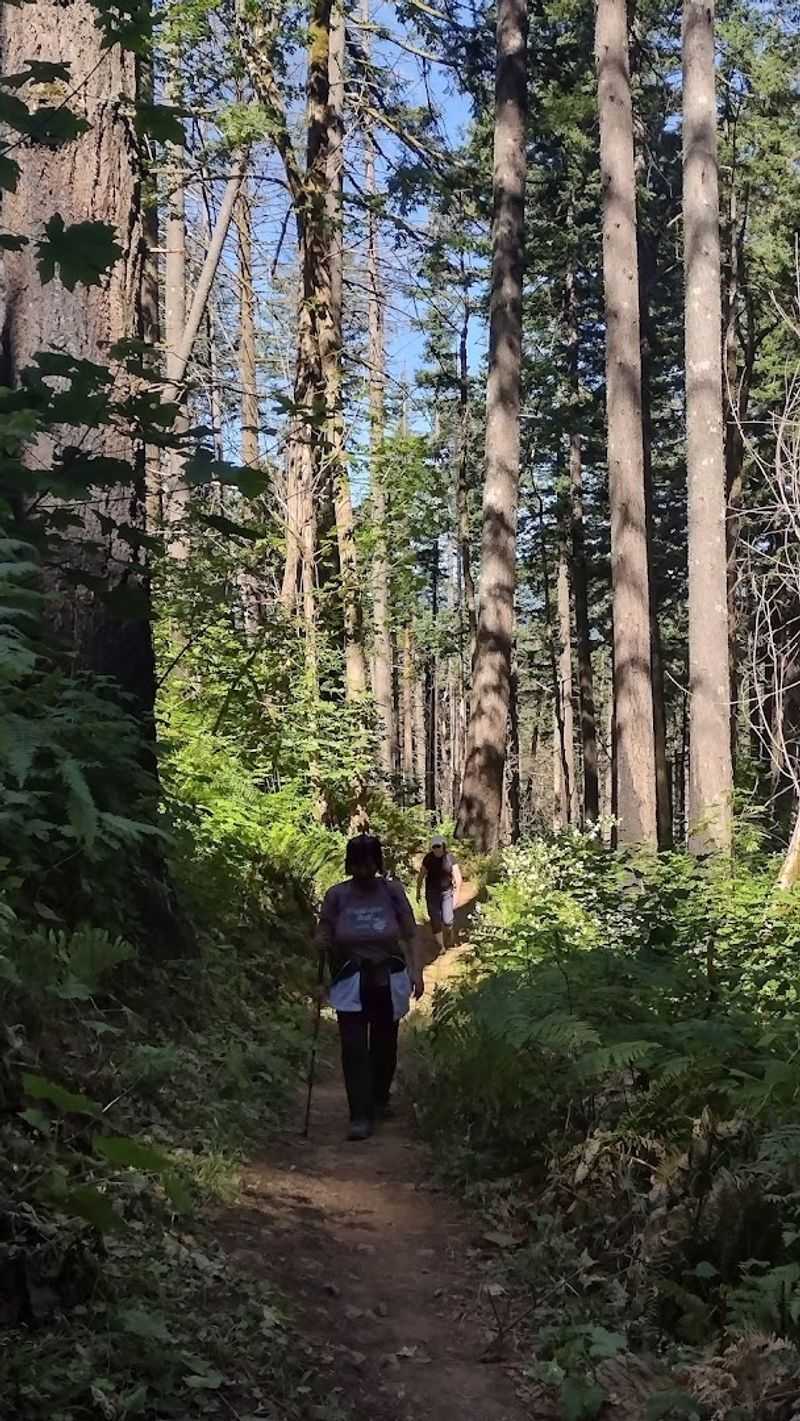
Packing smart keeps this hike enjoyable from start to finish. Water is the top priority.
Two miles uphill in the gorge works up a real thirst, and the return trip needs fuel too. Carry more than you think you will need, especially in warmer months.
Trail shoes or hiking boots with decent grip handle the rocky sections well. Sandals or flat sneakers can feel unstable on uneven terrain near the falls.
A light rain jacket is worth throwing in your pack, since the gorge creates its own micro-weather patterns. Layers help in spring and fall when temperatures shift between the trailhead and the waterfall.
Sunscreen matters even on shaded trails, since open sections do exist. A small snack keeps energy steady on the uphill push.
Trekking poles are optional but appreciated by hikers who find downhill stretches hard on the knees. Leave no trace principles apply here.
Pack out everything you bring in and respect the trail for the next person coming through.
Cascade Locks: The Town Worth Stopping In
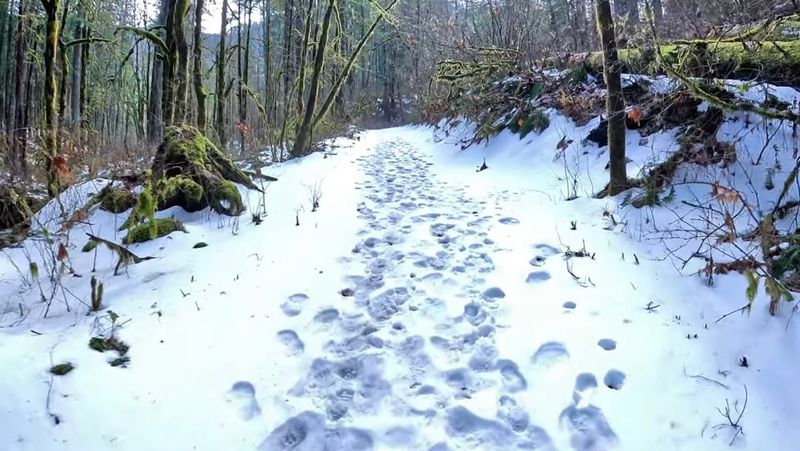
Cascade Locks sits right at the doorstep of this hike. The town is small and unpretentious, with that lived-in Pacific Northwest character that feels genuinely welcoming.
After a morning on the trail, it becomes the obvious place to regroup and refuel.
The historic Bridge of the Gods crosses the Columbia River right here. It connects Oregon to Washington and has been part of the gorge landscape for decades.
Walking across it offers a perspective of the river that you simply cannot get from the trail. The town has a relaxed pace that matches the post-hike mood perfectly.
Grab a meal, sit near the waterfront, and let the morning catch up with you. Marine Park sits along the river and gives you a comfortable spot to unwind.
The Columbia River views from Cascade Locks are wide and unhurried. The town may be small, but it carries a lot of charm for a place most people only discover because of the trail.
The Gorge Setting: Why the Columbia River Gorge Adds Magic
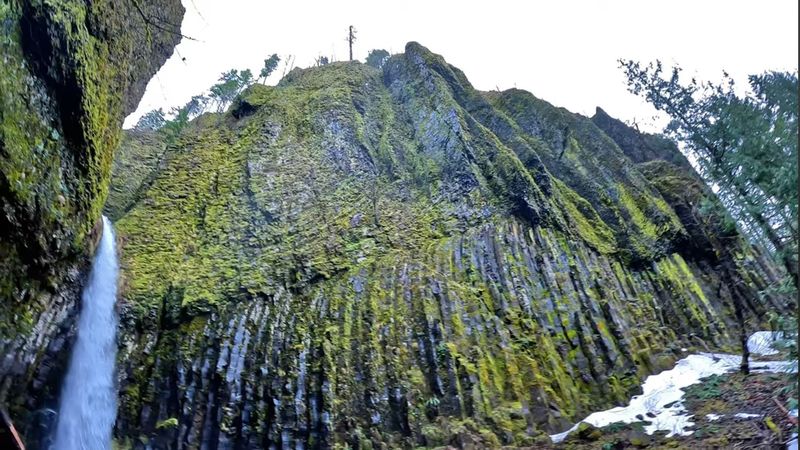
The Columbia River Gorge is one of the most dramatic landscapes in the Pacific Northwest. Carved by ancient floods, it stretches for miles with steep basalt walls and dense forest clinging to every slope.
Hiking inside it feels like moving through something much older than ordinary trails.
Dry Creek Falls sits about two miles southeast of Cascade Locks along the PCT, nestled deep in the gorge where the walls close in and the scale of everything shifts. The sound of the river, the smell of wet rock and fir trees, the filtered light through the canopy, it all adds up to an experience that goes beyond just reaching a waterfall.
The gorge also creates its own weather. Mornings can be misty and cool even when the valley is sunny.
That mist makes the forest look almost cinematic. This particular corner of the gorge feels less crowded than some of the more famous viewpoints, which gives the hike a quieter, more personal quality.
Practical Tips Before You Hit the Trail
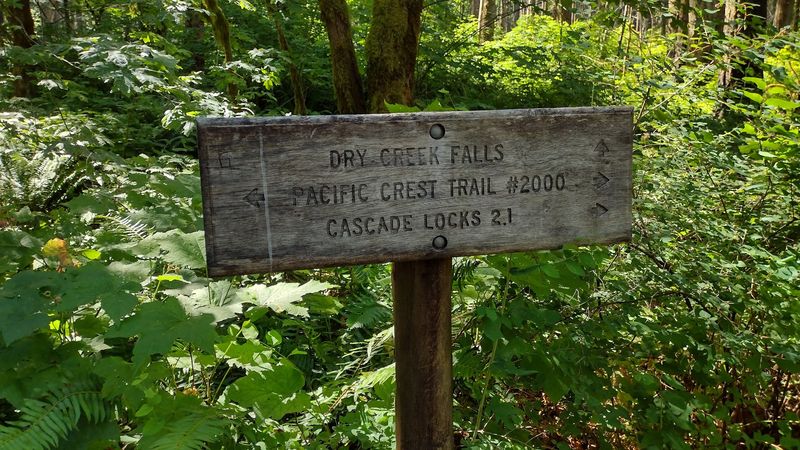
A few practical details go a long way on this hike. Start by confirming your trailhead location before you leave home.
The GPS address for this trail has led some hikers to a rough gravel service road that ends abruptly. Use the Bridge of the Gods trailhead or PCT Harvey Road trailhead and follow Pacific Crest Trail signs heading south.
Check current trail conditions through Oregon trail resources or the Columbia River Gorge National Scenic Area website before your visit. Conditions can shift quickly, especially after winter storms.
Arrive early on weekends to secure parking, since the area draws consistent traffic from Portland and beyond. Cell service can be spotty once you are deep in the gorge, so download an offline map before you go.
A recreation pass may be required for parking depending on the trailhead you use, so confirm ahead of time. The hike rewards preparation.
A few minutes of planning at home translates into a much smoother, more enjoyable day on the trail.
