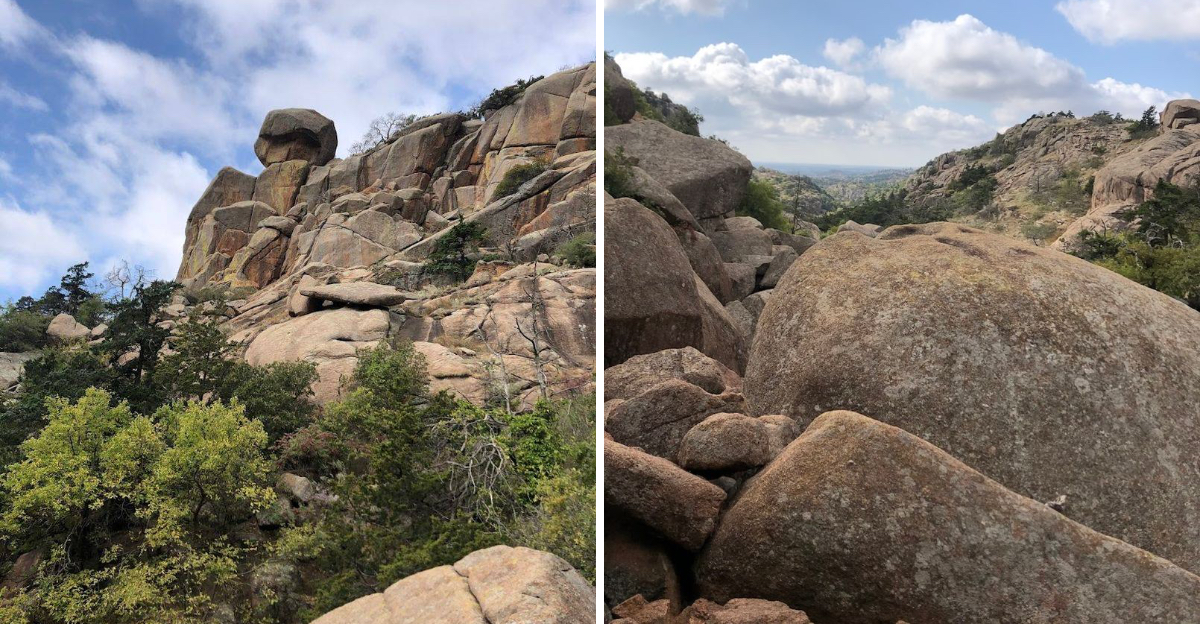
Not all trails ease you in, some drop you into a completely different world from the very first step. One minute you’re in Oklahoma, and the next it feels like you’ve wandered onto another planet.
Massive granite boulders, dramatic ridgelines, and wild open spaces come together to create a landscape that looks nothing like what most people expect from the Sooner State.
This 4.8-mile route through the Wichita Mountains Wildlife Refuge near Lawton, Oklahoma, is one of the most visually striking hikes in the entire region, and every step of it rewards the effort you put in.
The Otherworldly Landscape That Starts Before the First Step
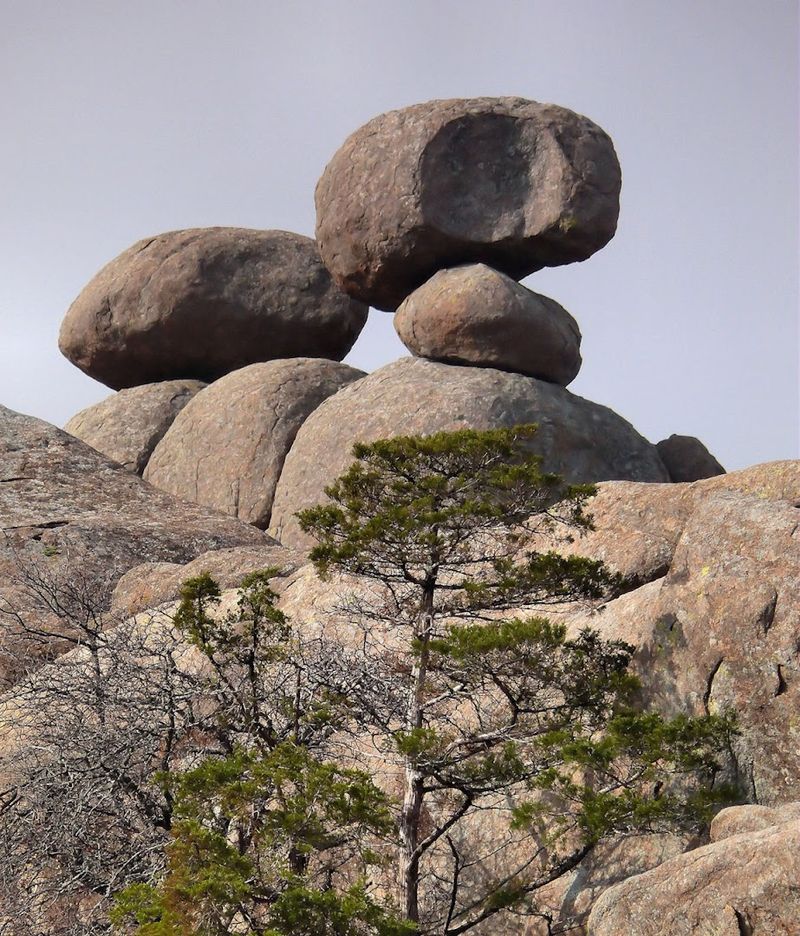
Before you even lace up your boots, the view from the trailhead parking area already sets the mood. Stacked granite boulders rise in every direction, forming a chaotic and beautiful puzzle of ancient rock.
This is not the flat, green Oklahoma that most people picture. The Wichita Mountains have a raw, almost prehistoric quality that feels completely removed from the surrounding plains.
Geologists estimate these rocks are some of the oldest exposed granite in North America, dating back roughly 540 million years.
Standing at the base and looking up, it is easy to understand why this place earned such a dramatic name. The terrain looks sculpted by something enormous and unhurried.
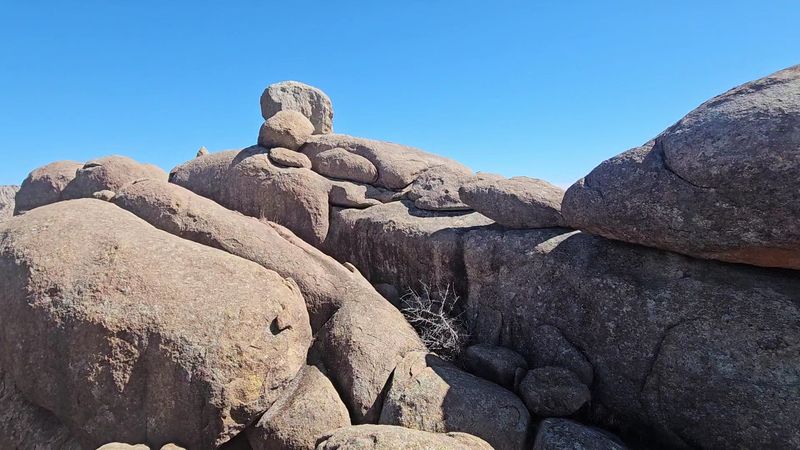
Boulders the size of small houses sit balanced on top of each other in ways that seem to defy gravity.
The trail itself begins on a well-worn dirt path, but that changes quickly as the route climbs into rockier ground. Pack plenty of water and wear sturdy footwear, because the surface underfoot shifts from soil to slab without much warning.
The adventure starts the moment you arrive.
A Quick Look at the History Behind the Name
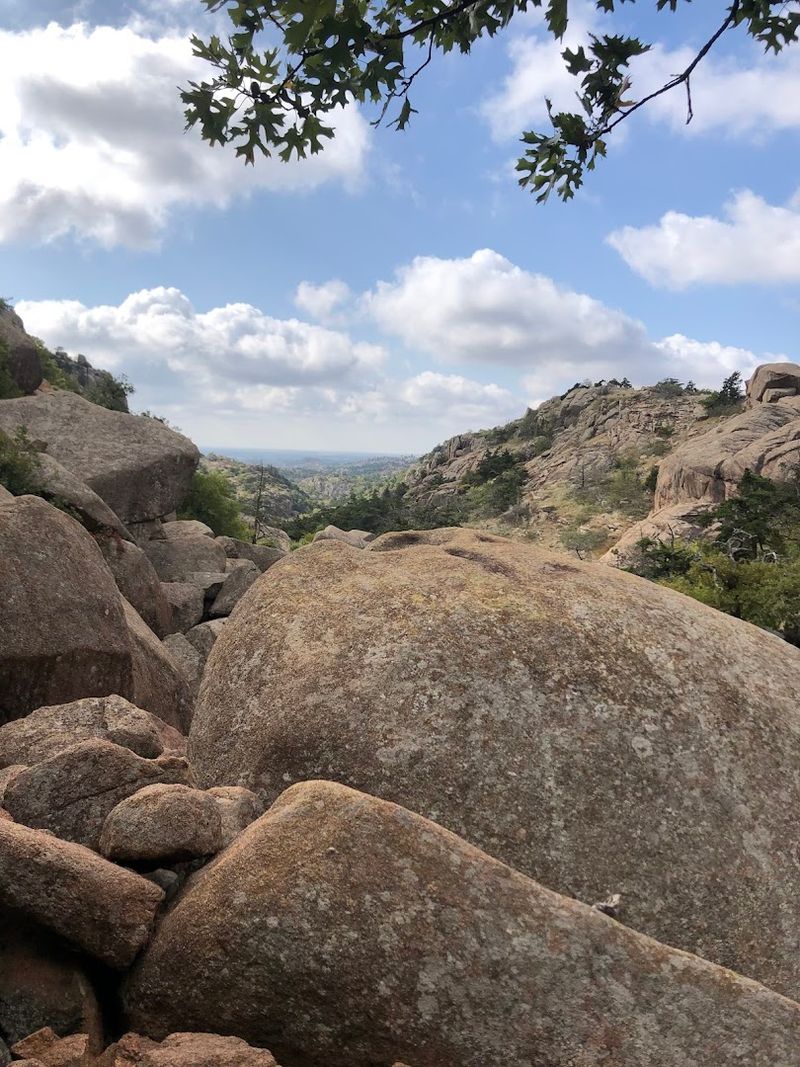
The name Charons Garden comes from Greek mythology, where Charon was the ferryman who transported souls across the river Styx. It is a fittingly dramatic title for a place that feels so removed from everyday life.
The area sits within the Charons Garden Wilderness, a protected zone inside the Wichita Mountains Wildlife Refuge in southwestern Oklahoma. Congress designated it as wilderness in 1970, which means the land has been kept intentionally wild and undeveloped for decades.
Before European settlers arrived, the Wichita Mountains served as important territory for the Comanche and Kiowa peoples, who knew this rugged land well. The refuge itself was established in the early 1900s and is one of the oldest managed wildlife areas in the United States.
That long history of protection is part of what makes the landscape feel so untouched. There are no paved paths cutting through the boulders, no guardrails lining the ridges.
The wilderness designation ensures it stays that way, preserving a piece of Oklahoma that looks much as it did centuries ago.
What the 4.8-Mile Route Actually Looks Like
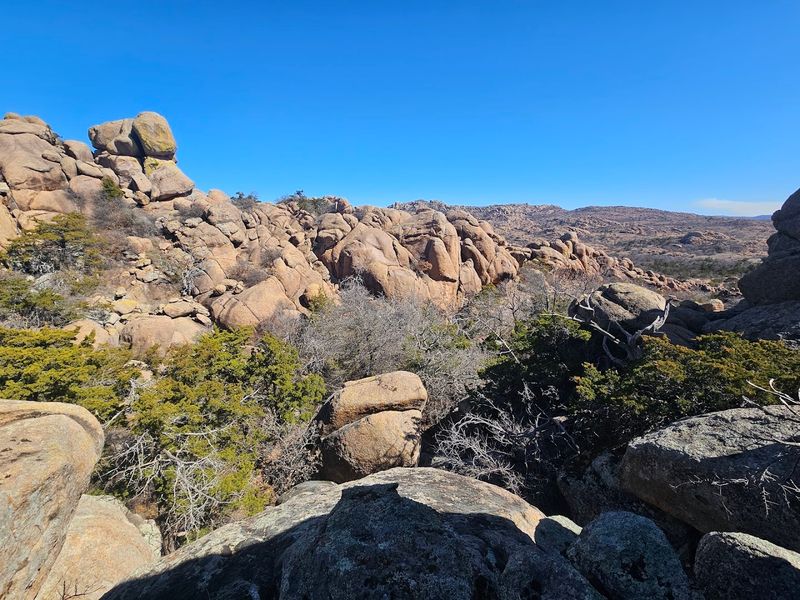
The full loop through Charons Garden covers approximately 4.8 miles, combining the Crab Eyes Trail with a route toward Treasure Lake. The first section of the hike follows a clear and well-traveled path that winds through open grassland before climbing into the boulder fields.
The Crab Eyes portion of the trail is the more straightforward stretch. The path lightly marked and can be difficult to follow in places.
Things get more interesting and more demanding as the route pushes toward Treasure Lake. The trail becomes harder to track in places, and at times the hiking route runs directly through a dry or shallow riverbed.
Scrambling over rocks becomes part of the experience rather than an obstacle to avoid.
The elevation changes are moderate but consistent, meaning the trail keeps your legs working throughout. Plan for three to five hours to complete the full loop at a comfortable pace.
Bring a map or download the route offline before heading out, since cell service in this part of Oklahoma can be unreliable on the trail.
The Boulder Fields That Make This Place Feel Alien
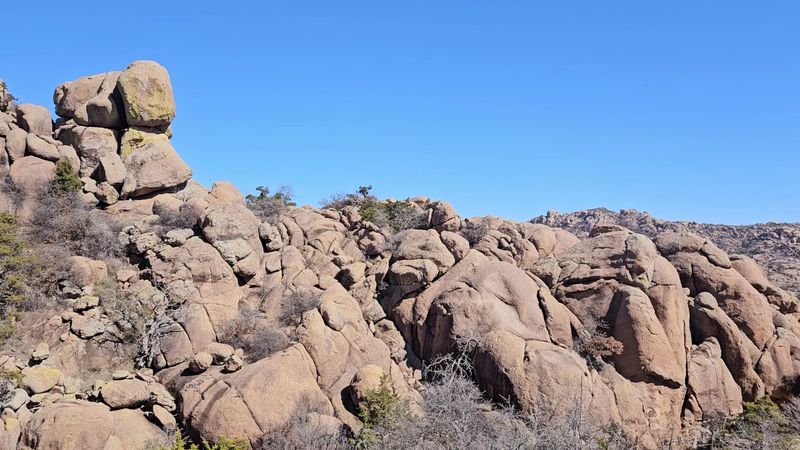
Nothing quite prepares you for the boulder fields at the heart of this hike. The granite formations pile up in clusters that seem intentionally dramatic, as if some ancient force arranged them specifically for effect.
The rocks range in color from warm pinkish-orange to deep charcoal gray, depending on the light and the mineral content of each individual boulder. Late afternoon sun turns the whole field golden, which makes for some of the best photography of the entire trail.
Scrambling through the boulders requires both hands and feet in some sections. There is no shame in going slowly here.
Taking your time actually lets you appreciate the texture of the rock and the surprising plant life that manages to grow in the crevices between stones.
Mosses, lichens, and small flowering plants cling to the granite surfaces in ways that feel almost stubborn. The boulders have their own small ecosystem, and paying attention to those details turns a simple hike into something that feels much richer.
This section of the trail is the one that tends to stay with you long after the drive home.
Wildlife You Might Spot Along the Way
The Wichita Mountains Wildlife Refuge is home to one of the oldest publicly owned bison herds in the country, and there is a real chance of spotting these massive animals somewhere along the hike. Seeing a bison up close for the first time is a genuinely memorable experience.
Beyond bison, the refuge supports populations of elk, white-tailed deer, wild turkey, and Texas longhorn cattle. Prairie dogs are common near the open grassland sections of the trail, and their colonies are entertaining to watch from a safe distance.
Birders will find plenty to appreciate here as well. Red-tailed hawks and scissor-tailed flycatchers are regular sightings, and the rocky ridgelines provide excellent vantage points for scanning the sky.
Roadrunners also appear occasionally, which always feels like a fun surprise.
One important note about wildlife in this area: keep a respectful distance from all animals, especially bison. They can move faster than expected and should never be approached on foot.
The refuge asks all visitors to stay at least 50 yards away from bison and 100 yards from other large animals. Respecting that boundary keeps both you and the animals safe.
Crab Eyes Trail: The Section Everyone Talks About
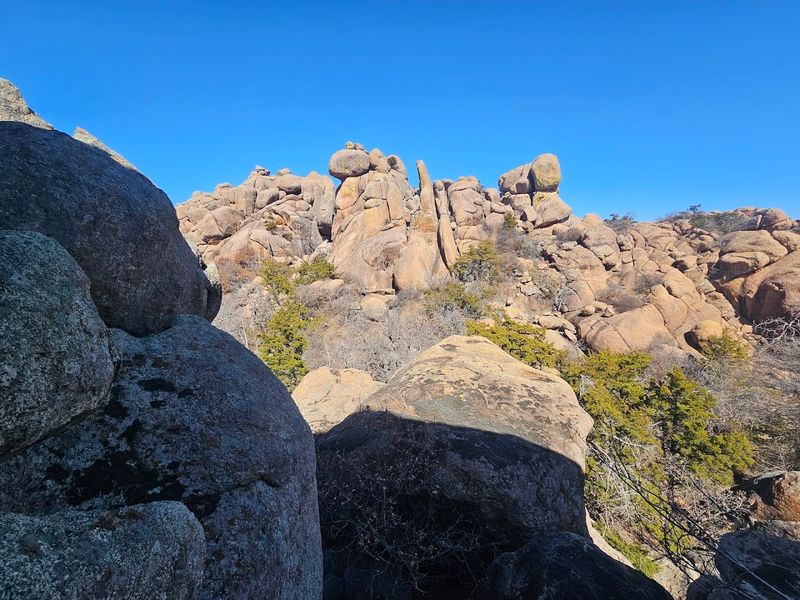
The Crab Eyes Trail gets its name from two rounded granite domes that sit side by side on the ridge, resembling the eyes of a giant crab peering over the landscape. Once you see them, the name makes perfect sense.
This section of the route is the most heavily used part of the trail system in Charons Garden, and for good reason. The path climbs steadily through open terrain before reaching the base of the domes, where the views open up in a way that feels like a reward for the effort.
From the top of the Crab Eyes formation, the entire surrounding landscape spreads out in every direction. Rolling plains meet granite ridges on one side, and the rugged interior of the wilderness stretches out on the other.
On a clear day, the visibility extends for miles.
The scramble to reach the summit of the domes is steep but short. Most hikers with a reasonable fitness level can manage it without technical gear.
Just be aware that the rock surface can become slippery after rain, so checking the weather before heading out is always a smart move on this trail.
Treasure Lake and the Wild Path That Leads There
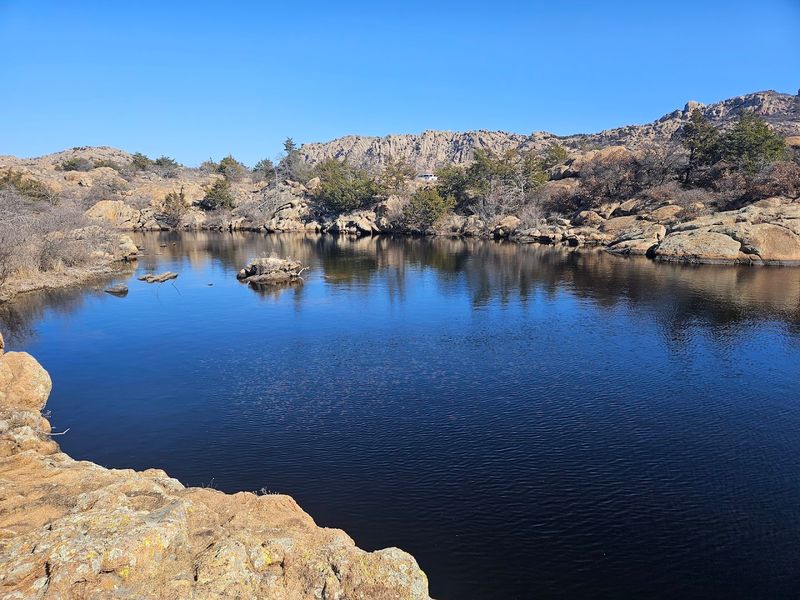
Treasure Lake sits at the far end of the loop, and reaching it feels genuinely earned. The trail toward the lake is the more challenging and less-defined portion of the hike, requiring careful attention to stay on the correct route.
In several places, the path merges with a rocky streambed, and hikers find themselves walking directly through it rather than alongside it. After rain, this section can involve some wet footing, so waterproof boots are a worthwhile investment if you plan to visit during spring or after storms.
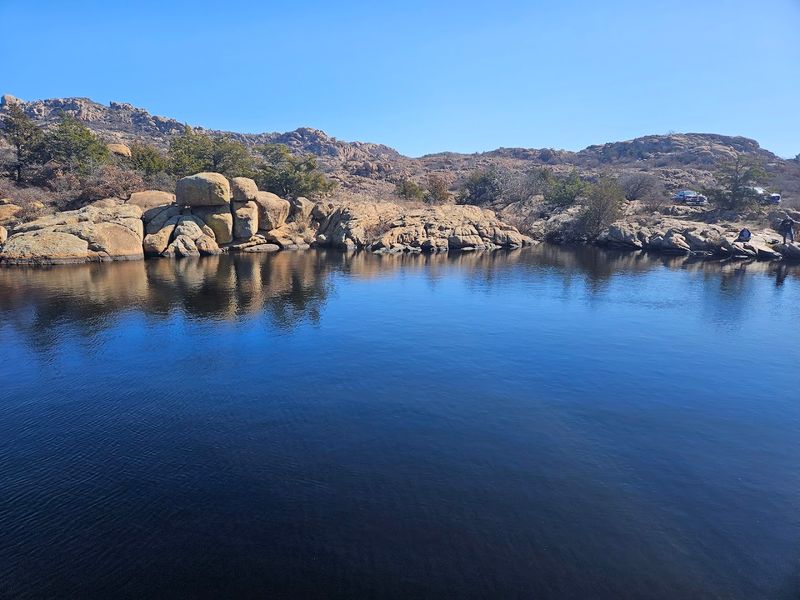
The lake itself is a quiet, reflective body of water surrounded by boulders and native grasses. It sits in a natural basin that feels sheltered and calm compared to the exposed ridgelines earlier in the hike.
The contrast between the two environments makes arriving at Treasure Lake feel like discovering a different world within the same trail.
Wildlife congregates near the water, making it a good spot to pause and look around before heading back. The return route retraces some of the earlier path, which gives you a second chance to appreciate details you may have missed on the way out.
Best Times of Year to Hike This Trail
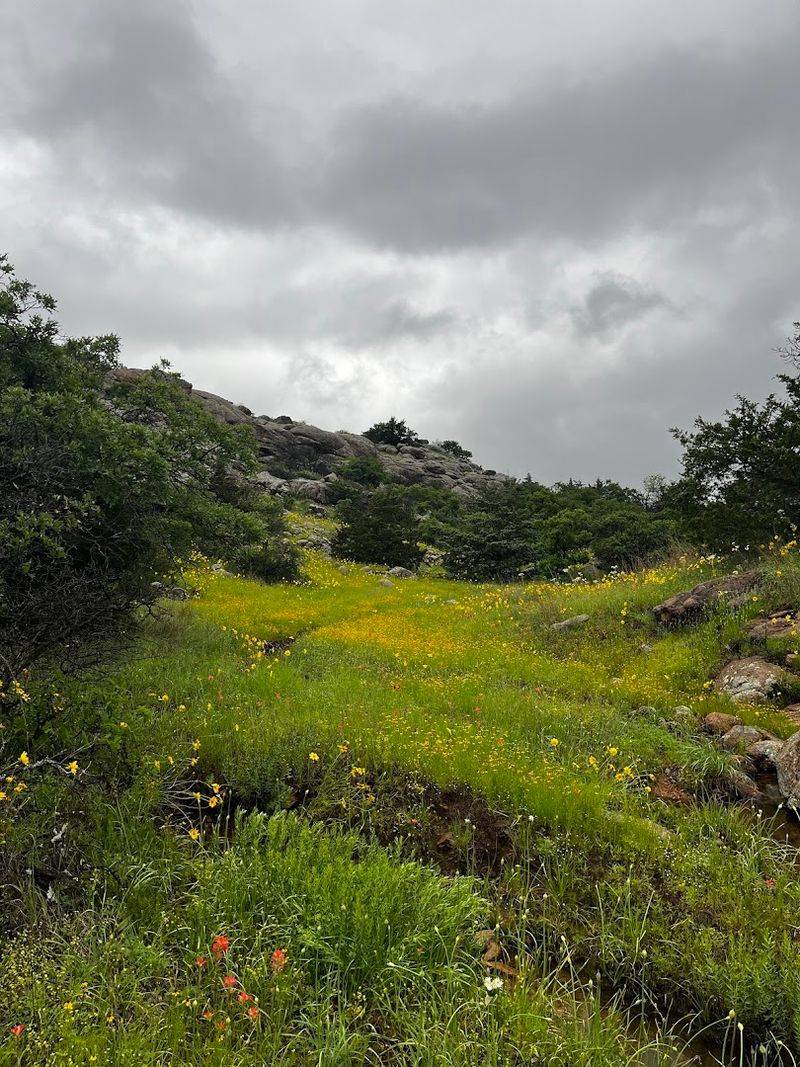
Spring and fall are the standout seasons for hiking Charons Garden. Temperatures in southwestern Oklahoma during March through May and September through November tend to stay in a comfortable range for physical activity.
Spring brings wildflowers to the grassland sections of the trail, adding bursts of color between the granite formations. Indian paintbrush and prairie verbena are among the most common blooms, and they contrast beautifully with the gray and orange rock surfaces.
Summer hiking is possible but demands serious preparation. Oklahoma summers are hot, and the exposed granite boulders absorb and radiate heat in ways that make the trail feel significantly warmer than the air temperature.
Starting before sunrise and carrying extra water are both essential strategies for warm-weather visits.
Winter brings its own kind of appeal to the landscape. The sparse vegetation allows for cleaner views across the ridgelines, and the cooler temperatures make the climbing sections feel much more manageable.
Snow occasionally dusts the boulders, turning the already dramatic scenery into something that looks almost surreal. Each season offers a genuinely different version of the same trail.
How to Get There and What to Know Before You Go
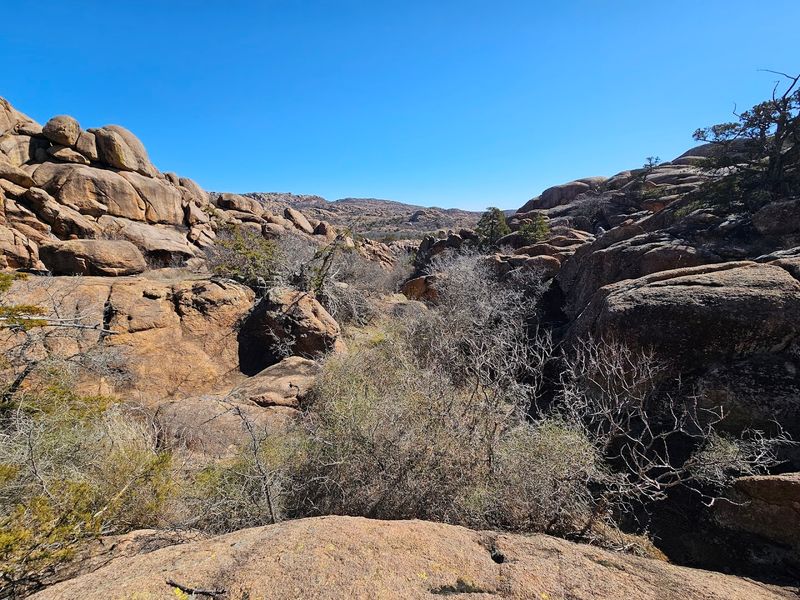
Charons Garden Mountains sits within the Wichita Mountains Wildlife Refuge near Lawton, Oklahoma.
The refuge is open year-round, though specific area access can vary by season. Checking the official U.S.
Fish and Wildlife Service website before your visit is a good habit, since closures sometimes occur during wildlife management activities.
No entrance fee is required to access the refuge, which makes this one of the more accessible outdoor destinations in Oklahoma for budget-conscious hikers. There is a small parking area near the Charons Garden trailhead, and it can fill up on busy weekends during spring and fall.
Cell service is limited inside the refuge, so downloading offline maps through an app like AllTrails before leaving home is highly recommended. Bring more water than you think you need, wear sun protection, and let someone know your hiking plan before heading into the wilderness.
The trail is not overly technical, but preparation always makes the experience better and safer.
The Geology Behind the Dramatic Rock Formations
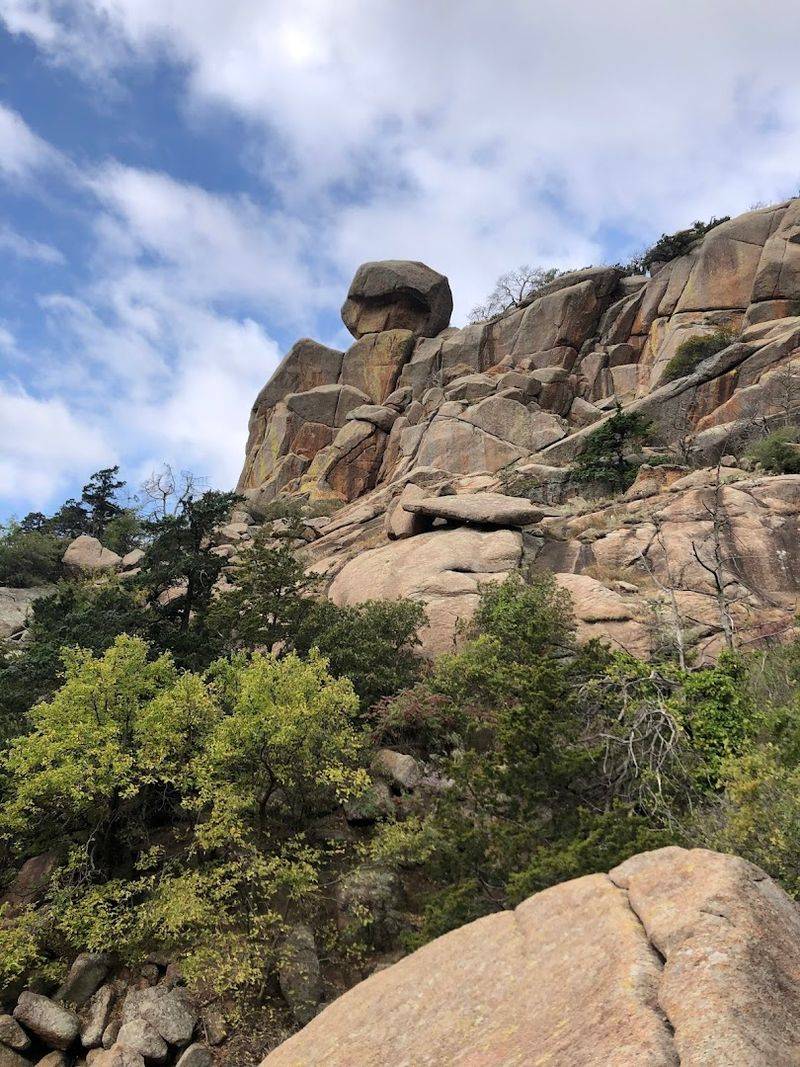
The granite at Charons Garden is not just visually striking. It is scientifically fascinating, representing some of the oldest exposed rock in the central United States.
The Wichita Mountains formed through volcanic activity and tectonic uplift that occurred hundreds of millions of years ago.
Over time, erosion stripped away the softer surrounding rock, leaving the harder granite cores exposed at the surface. The rounded shapes of many boulders are the result of a process called spheroidal weathering, where water and temperature changes gradually chip away at the corners and edges of the rock.
The pink coloring in many of the formations comes from feldspar minerals within the granite, while darker patches indicate the presence of biotite mica or hornblende. Looking closely at the rock surface, you can see individual crystals glittering in direct sunlight.
This geological story spans an almost incomprehensible stretch of time, and standing on top of these formations puts that timeline into a personal perspective. The boulders underfoot are older than most life forms on this planet.
Walking through Charons Garden is, in a very real sense, walking through deep time in the heart of Oklahoma.
Photography Tips for Capturing the Surreal Scenery
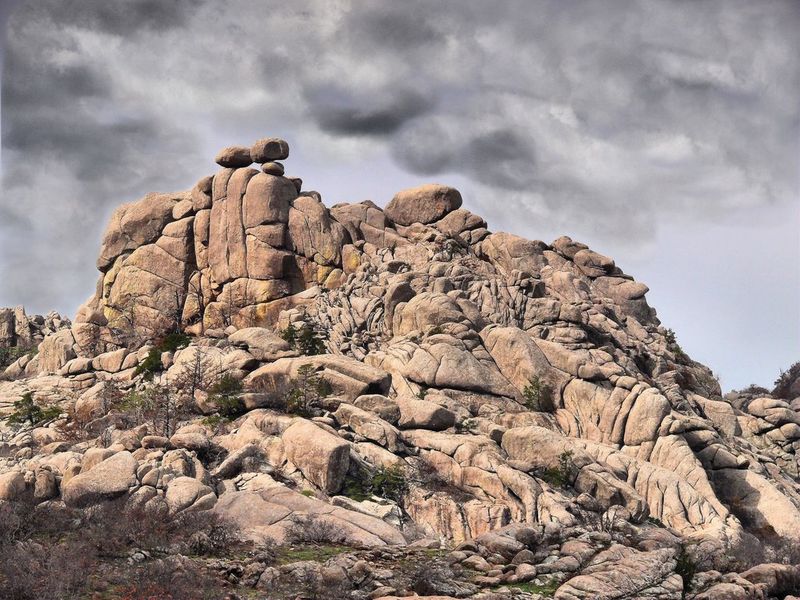
Charons Garden is one of the most photogenic hiking destinations in Oklahoma, and the right timing can make a significant difference in the quality of images you bring home.
Golden hour, the period just after sunrise and just before sunset, bathes the granite in warm orange light that makes every shot look intentional.
Wide-angle lenses work well for capturing the scale of the boulder fields. Standing low and shooting upward emphasizes the height and mass of the formations, which creates a more dramatic composition than shooting at eye level.
The Crab Eyes domes make an excellent focal point for landscape shots. Positioning yourself so that the twin granite formations frame a distant view of the plains creates a natural sense of depth and perspective in the image.
For wildlife photography, patience and a longer lens are both helpful. Bison and deer tend to move through the open grassland sections of the refuge early in the morning, so arriving at the trailhead before full daylight gives you the best chance of capturing them in good light.
A polarizing filter can also reduce glare off the rock surfaces on bright days, improving color saturation noticeably.
Why This Trail Deserves a Spot on Your Oklahoma Bucket List
Oklahoma does not always get the credit it deserves as an outdoor destination, and Charons Garden is exactly the kind of place that changes that perception. The combination of ancient geology, diverse wildlife, and genuinely challenging terrain makes this trail stand out from most other hikes in the region.
The 4.8-mile loop is long enough to feel like a real adventure without being so demanding that it excludes hikers of moderate fitness. The variety built into the route, from open grassland to boulder scrambles to a quiet lakeside finish, keeps the experience feeling fresh from start to finish.
There is also something quietly powerful about spending time in a designated wilderness area. The absence of development and the presence of genuinely wild animals create a sense of connection to the natural world that is harder to find in more heavily managed parks.
Oklahoma has more landscapes like this than most people realize, and Charons Garden is one of the finest examples of what the state has to offer. If you have been sleeping on the Wichita Mountains, this trail is the perfect reason to finally make the trip and see what has been waiting for you all along.
