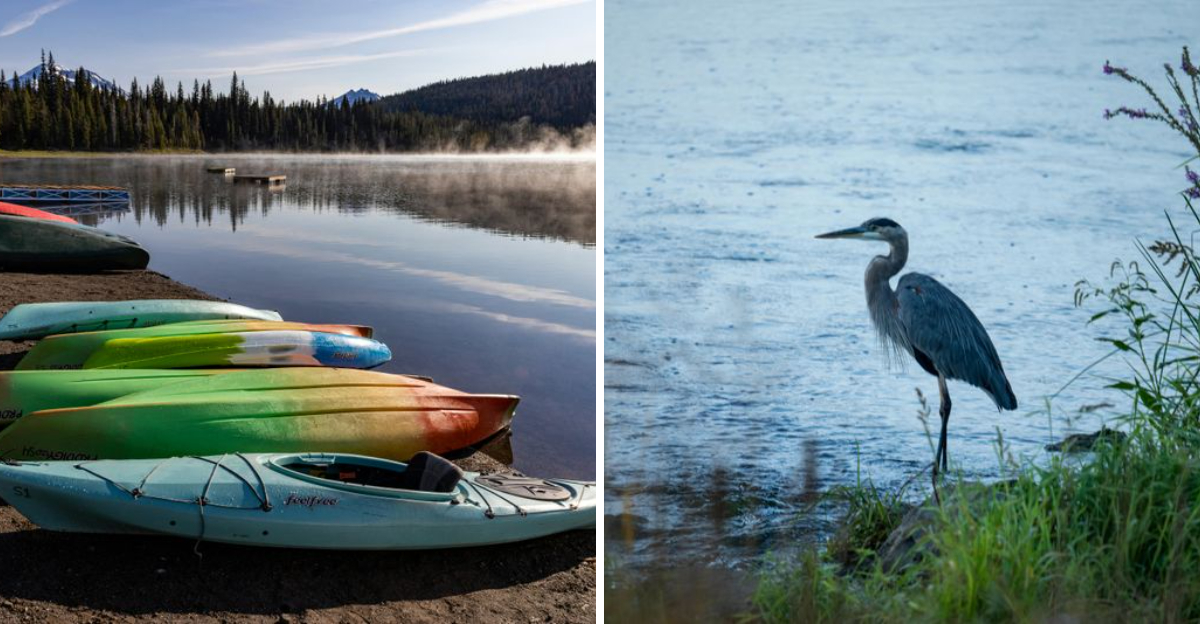
Glassy morning waters stretch out so calm that your paddle barely makes a ripple on the surface. I pushed my kayak into the reservoir before the sun had fully committed to rising for the day.
Oregon has a paddler’s dream hiding in plain sight where great blue herons glide past like silent sentinels. The herons stand motionless in the shallows then lift off with slow dramatic wingbeats that steal your attention completely.
I floated for an hour just watching the light change from soft pink to warm gold across the water. Minnesota may have ten thousand lakes but Oregon has hidden gems like this one that feel entirely your own.
The shoreline is wild and quiet with no cabins or docks or signs of other humans anywhere nearby. A family of ducks paddled past me like I was just another floating object in their neighborhood.
Oregon really created a peaceful paradise for paddlers who want solitude instead of crowded boat ramps on summer weekends. You leave with sore arms and a calm heart and the memory of herons slicing through misty morning air.
Glassy Morning Waters That Make Paddlers Stop And Stare
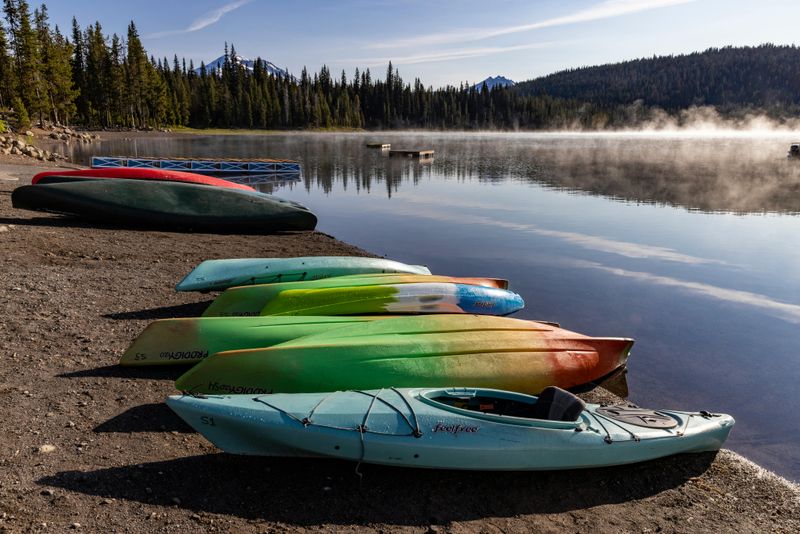
There is something almost unreal about paddling on Warm Springs Reservoir before the wind picks up. The surface sits so flat and clear that your paddle blade breaks it like glass.
It is the kind of quiet that actually makes you slow down.
Most mornings, the calm holds until mid-morning. Experienced paddlers know to launch early.
The reward is a mirror-flat stretch of water with almost no boat traffic and zero noise except birds.
The reservoir sits at around 3,200 feet elevation in Malheur County. That high desert setting keeps summer temperatures warm but not brutal in the early hours.
Light bounces off the water in ways that feel almost cinematic.
Kayaks and canoes handle the conditions perfectly on calm days. The open water gives plenty of room to explore without feeling crowded.
Bring a dry bag, sunscreen, and a camera, because mornings here are genuinely hard to forget.
Great Blue Herons Ruling The Shoreline
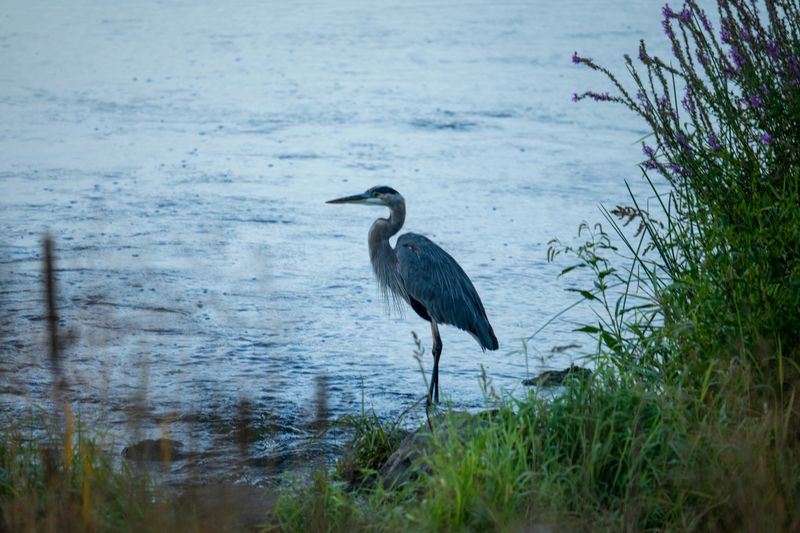
Spotting a great blue heron at Warm Springs Reservoir is not a lucky moment. It is practically guaranteed.
These birds patrol the shallows like slow, deliberate sentinels, barely moving until a fish comes too close.
They are enormous up close. Standing nearly four feet tall with a wingspan that stretches over six feet, they command attention without asking for it.
Watching one take flight is a full stop moment.
The reservoir’s marshy edges and shallow coves give herons exactly what they need. Plenty of fish, calm water, and very little human disturbance.
They seem completely unbothered by kayakers who drift nearby quietly.
Birders visiting the area often list the heron as their top sighting. It is worth bringing binoculars even if you are primarily there to paddle.
The combination of bird life and open water makes Warm Springs feel genuinely wild. Keep your voice low and your paddle quiet near the reeds.
The Sheer Size Of The Reservoir Will Surprise You
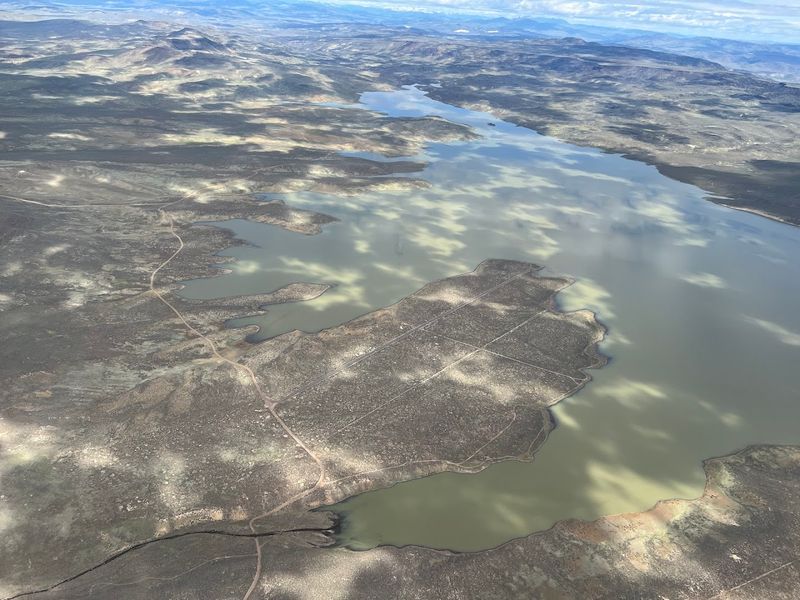
Most people driving through Juntura on US Route 20 have no idea what is hiding just off the highway. Warm Springs Reservoir covers roughly 4,500 acres when full.
That is a serious stretch of open water in the middle of eastern Oregon’s dry landscape.
The contrast hits you immediately. One moment you are surrounded by tan sagebrush flats and basalt ridges.
Then you crest a small rise and the reservoir opens up in front of you like a surprise.
The Warm Springs Creek and its tributaries feed the reservoir. It was created by Warm Springs Dam, built in the early 1900s for irrigation purposes.
The history adds an interesting layer to what already feels like a special place.
All that open water means wind can build quickly in the afternoon. Morning paddling is highly recommended.
The size also means you can find a quiet cove even on busier summer weekends. Explore the edges rather than just the center for the best experience.
Fishing Here Feels Like A Well-Kept Local Secret
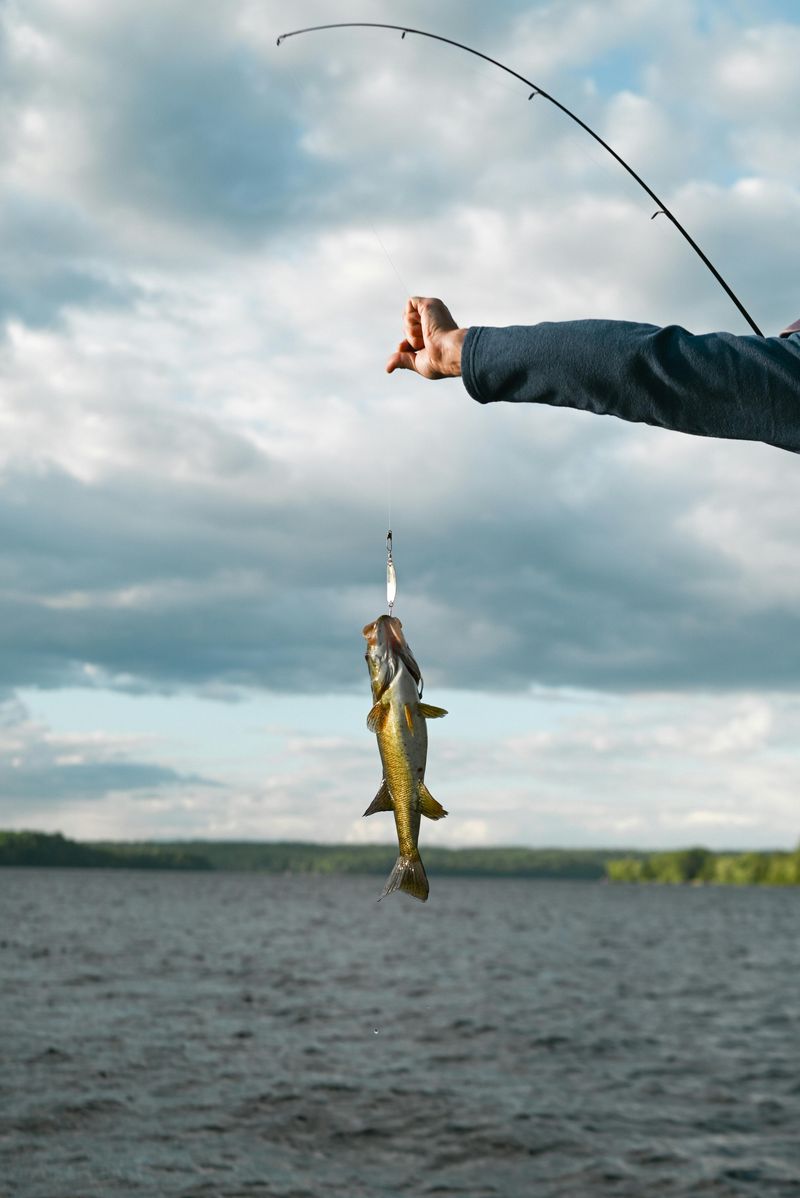
Anglers who know about Warm Springs Reservoir tend to guard the information carefully. The fishing here can be surprisingly productive.
Largemouth bass, crappie, and yellow perch are among the species that draw people back season after season.
The reservoir’s shallow coves warm up quickly in spring. That makes them ideal habitat for bass moving into feeding mode.
Working the weed edges and rocky points early in the morning tends to produce the best results.
Crappie can be found in schools near submerged structure. Perch are reliable and fun to catch, especially for younger anglers.
The variety keeps a full day on the water interesting and rewarding.
Oregon fishing regulations apply here, so a valid Oregon fishing license is required before you cast a line. Check the Oregon Department of Fish and Wildlife website for current rules and any seasonal restrictions.
The lack of a marina or crowded boat ramp makes the whole experience feel refreshingly low-key and unhurried.
Camping Near The Reservoir Under A Desert Sky
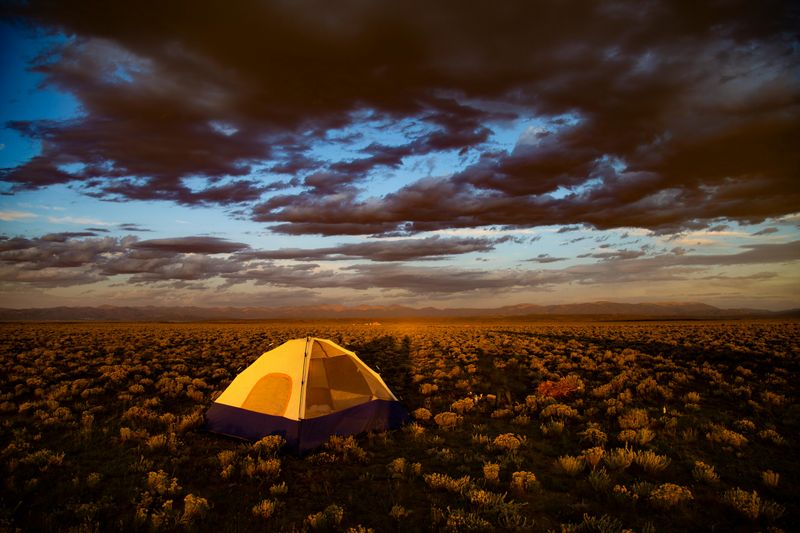
Camping near Warm Springs Reservoir means falling asleep to absolute silence. There are no streetlights, no highway noise, and no crowds pushing in on your space.
The stars at this elevation and this far from any city are genuinely staggering.
Primitive camping options exist in the area around the reservoir. This is dispersed, bring-everything-yourself camping.
Pack in your water, your food, and all your gear, and pack out every bit of your trash.
Nights in the high desert cool down fast even in July. A warm sleeping bag matters more than you might expect.
Mornings reward early risers with that glassy water window before the wind arrives.
The surrounding landscape of Malheur County feels vast and open in a way that is hard to describe without standing in it. Owls call at night.
Coyotes sometimes answer. Waking up to a heron flying low over the water right outside your tent is the kind of moment that stays with you for years.
Wildlife Watching Beyond The Herons
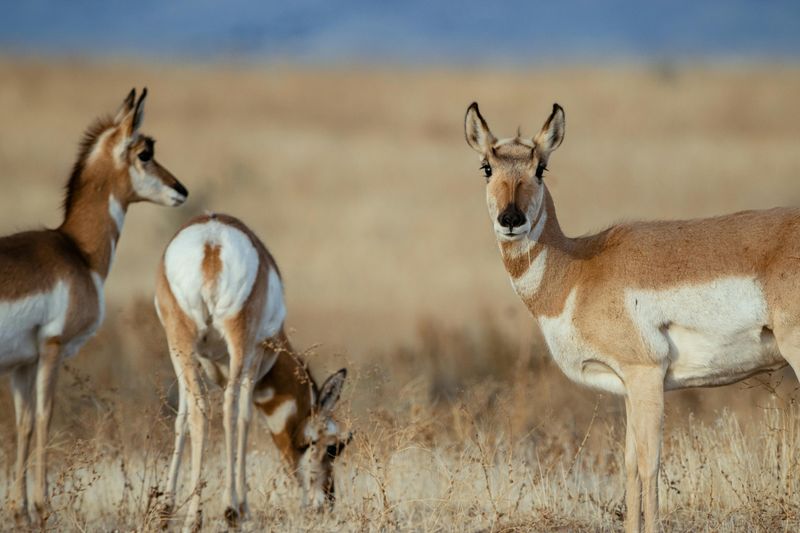
Great blue herons get most of the attention at Warm Springs Reservoir, but they are far from the only wildlife worth watching. The surrounding sagebrush habitat supports a surprising range of animals.
Pronghorn antelope are commonly spotted on the flats nearby.
White pelicans sometimes use the reservoir as a stopover during migration. Seeing a flock of pelicans circling over a high desert lake feels genuinely unexpected the first time.
Ospreys hunt the open water with precision and speed.
Mule deer visit the shoreline at dawn and dusk. Western meadowlarks fill the air with song from the sagebrush on nearly every morning visit.
The bird diversity alone makes this a worthy stop for anyone with even casual interest in wildlife.
Reptiles are active on warm afternoons, so watch your step near rocky areas. The ecosystem here is dry and rugged but full of life.
Bringing a field guide to Oregon birds and mammals adds a whole extra layer of engagement to any visit to this area.
How To Get To Warm Springs Reservoir From Juntura
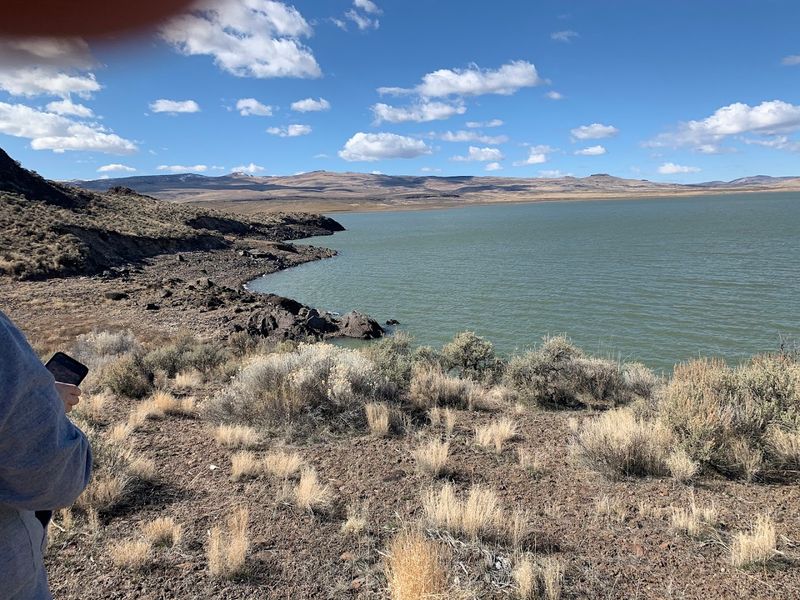
Juntura sits right on US Route 20, which makes it an easy landmark to navigate from. The community is small, with a population of fewer than 40 people.
It feels like a genuine crossroads town in the best possible way.
From Juntura, the reservoir is accessible via local roads heading north. The roads are unpaved in sections.
A vehicle with decent clearance handles the route more comfortably than a low sedan.
The drive itself is worth paying attention to. Basalt rimrock, open range cattle, and sweeping valley views make the approach feel like a proper adventure rather than just a commute.
Keep your eyes open for wildlife crossing the road.
Cell service is limited or nonexistent in this area. Download offline maps before you leave, and let someone know your plans.
Carrying extra water and a basic emergency kit is smart practice for any remote Oregon destination. The remoteness is part of the appeal, but it does require a bit of preparation and honest self-assessment before heading out.
Best Time Of Year To Visit The Reservoir
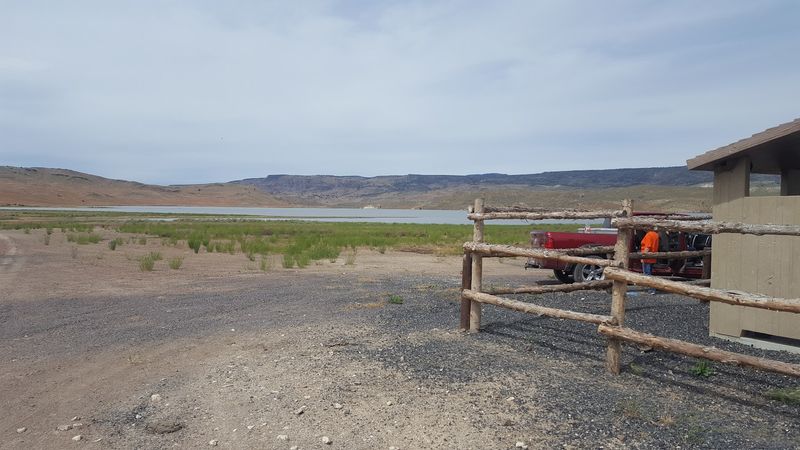
Late spring and early summer are the sweet spot for visiting Warm Springs Reservoir. Water levels tend to be higher after snowmelt feeds the creek system.
The landscape has a brief flush of green that makes the whole basin look softer and more welcoming.
May and June bring cooler temperatures and excellent wildlife activity. Migrating birds pass through.
Fish are active near the surface. The mornings are cool enough to be comfortable but warm enough to enjoy being on the water.
July and August are warm and dry. The water is perfect for swimming or paddling, but afternoon winds can make kayaking more challenging.
Early starts are essential in midsummer. Bring plenty of water and real sun protection.
Fall visits have their own rewards. The crowds, such as they are, thin out noticeably by September.
The light turns golden and the air gets crisp. Hunting seasons begin in the surrounding areas during fall, so check Oregon Department of Fish and Wildlife schedules before planning a late-season trip.
What To Pack For A Day On The Water Here
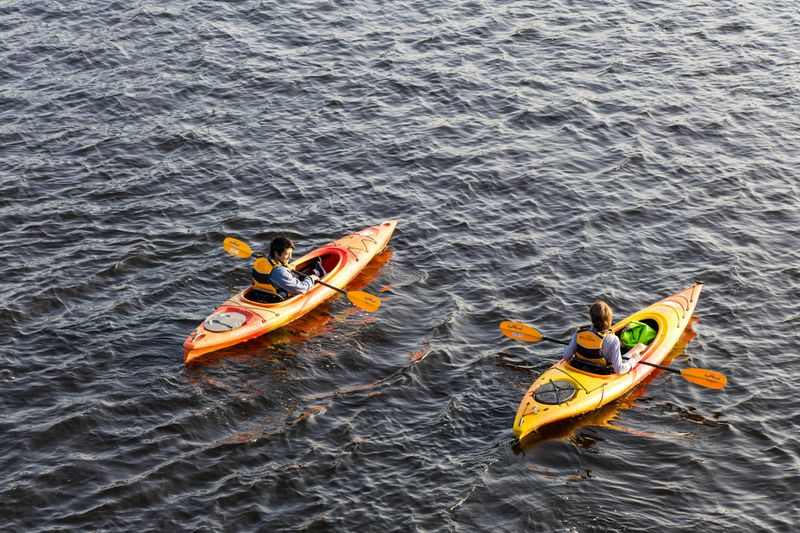
Packing smart makes the difference between a great day and a rough one at a remote reservoir. Sun exposure at high elevation is intense, even when it does not feel that hot.
A wide-brim hat and quality sunscreen are not optional here.
A personal flotation device is required by Oregon law for all paddlers. Make sure yours fits properly and is Coast Guard approved.
Bring a whistle and attach it to your PFD before launching.
Water is the most important thing you can carry. There is no water source or store near the reservoir itself.
Plan on at least two liters per person for a half-day trip. More in summer heat.
Binoculars make a big difference for wildlife watching from the water. A dry bag protects your phone, keys, and snacks from splashes.
Layers are useful because mornings start cool and afternoons warm up fast.
Why Warm Springs Reservoir Deserves A Spot On Your Oregon Road Trip
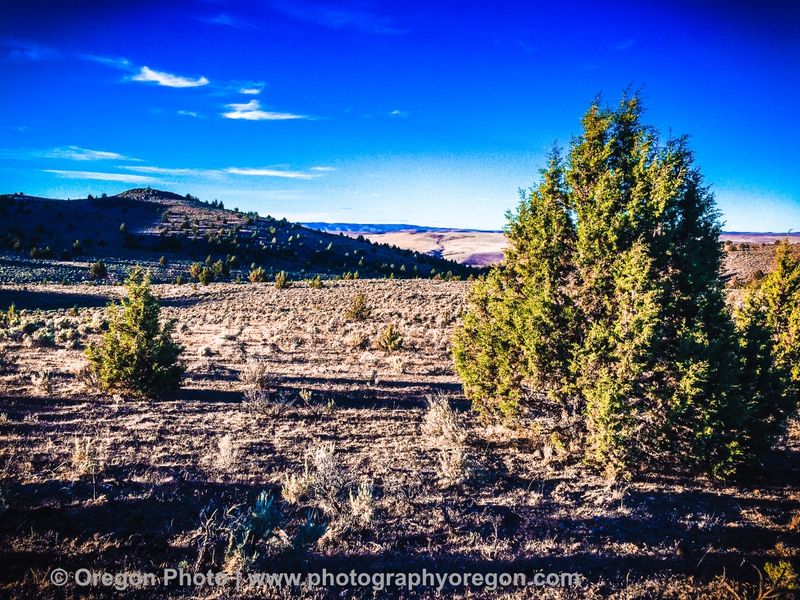
Eastern Oregon gets overlooked constantly. Most road trips in the state follow the coast or the Cascades.
Warm Springs Reservoir is one of the best reasons to point the car east and explore what most people drive straight past.
The combination of open water, wildlife, solitude, and high desert scenery is genuinely rare. You get a paddling destination that feels remote without requiring a major expedition to reach.
US Route 20 connects it to the broader Oregon road trip network easily.
Juntura itself has a quiet, unhurried character that feels like a different era. Stopping there before or after the reservoir adds a sense of place that pure nature destinations sometimes lack.
Small communities like this one are part of what makes rural Oregon interesting.
Warm Springs Reservoir is not a polished tourist attraction. It is a real place with real wildness.
That is exactly what makes it worth the detour.
Address: Warm Springs Reservoir, Juntura, Oregon 97911
