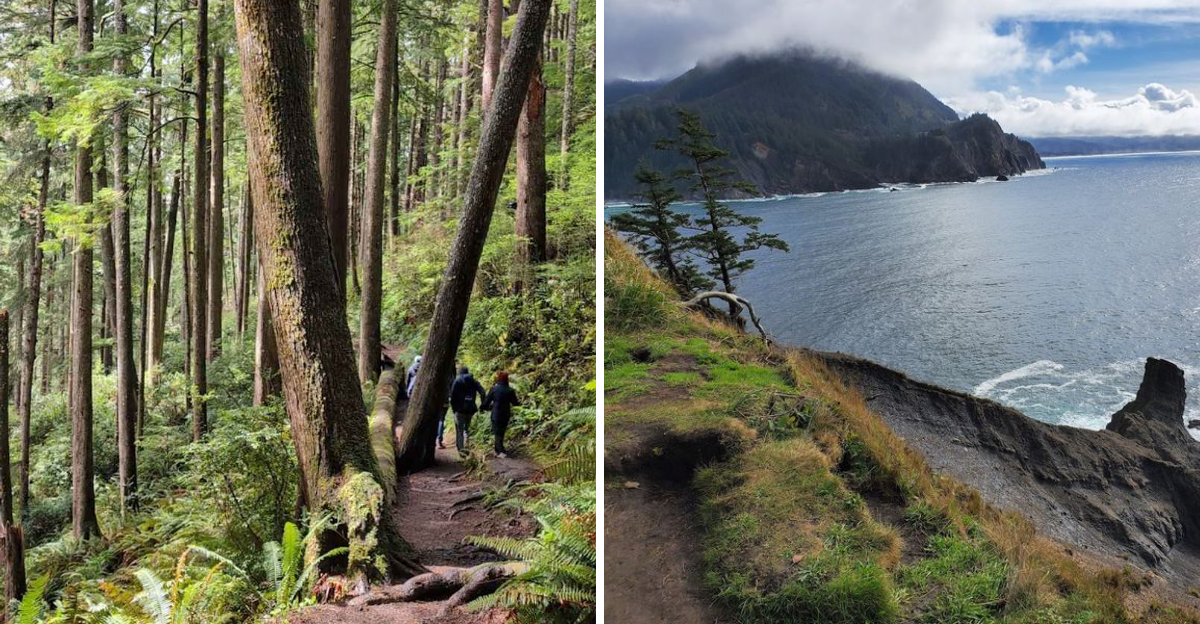
The trail winds through ancient trees whose branches create a canopy that filters sunlight into golden patches. I stepped over roots and mossy rocks while the sound of the ocean grew louder with every turn.
Oregon has a hike that rewards your effort with a view that makes you forget about tired legs completely. The forest feels cool and quiet and full of that special energy that only old growth trees can provide.
After a few miles the trail opens up to a cliff where three headlands stretch out before you like a painting. I sat on a rock and watched waves crash against the rocks far below while seabirds circled lazily overhead.
Oregon really knows how to build anticipation on a trail because the payoff at the end is absolutely worth every step. The breeze up top is fresh and salty and perfect for cooling off after the uphill climb.
A few other hitters shared the view but everyone found their own little spot to sit and stare. You leave with sore legs and a full heart and photos that will never fully capture the magic.
The Trailhead and First Steps Into the Forest
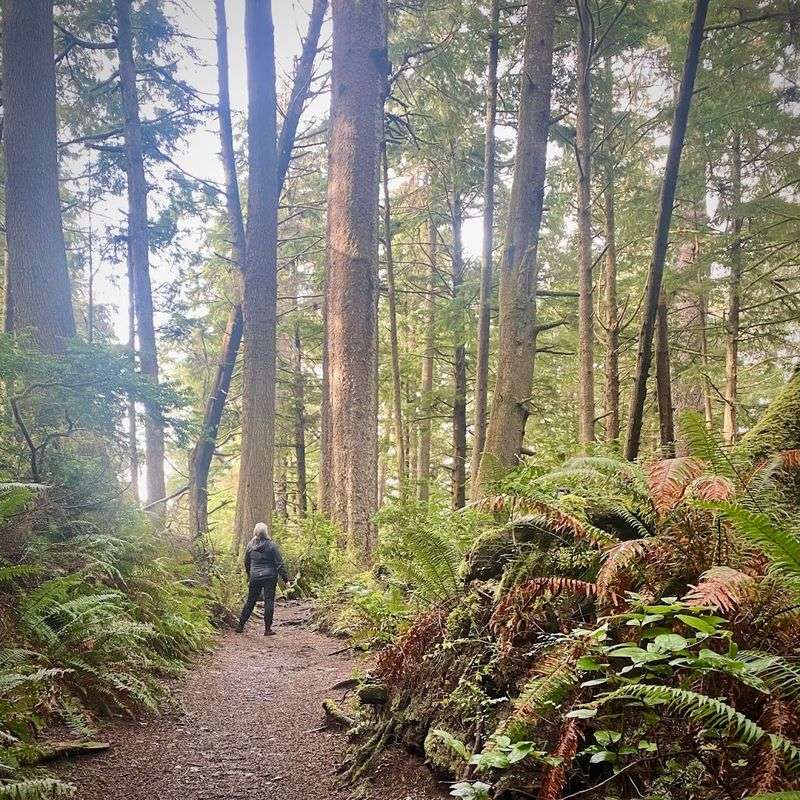
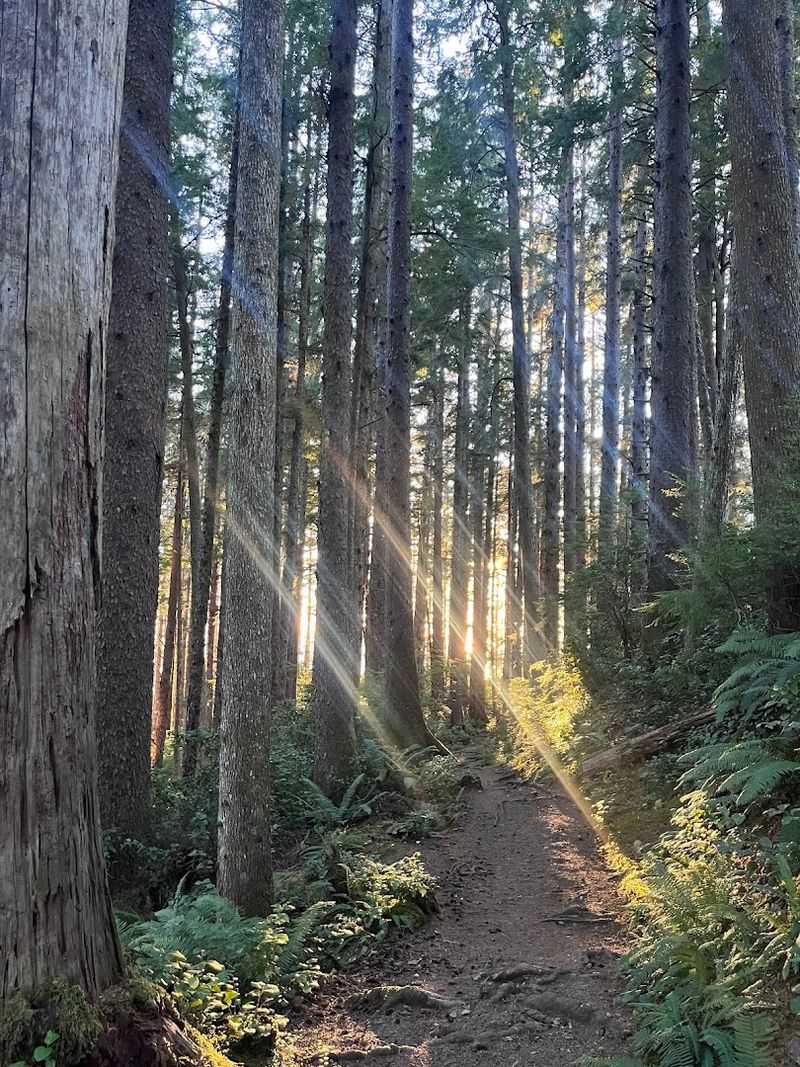
The moment you step past the trailhead sign, the forest swallows you whole. Tall Sitka spruce trees tower overhead, their canopy so thick that sunlight filters through in soft, scattered beams.
The air smells like rain and pine and something ancient.
The first quarter mile is surprisingly flat. It almost feels too easy, like the trail is luring you into a false sense of calm.
I remember thinking the trail reports must have been exaggerated.
A paved parking lot sits right off Highway 101. Getting there early matters because spots fill up fast on weekends.
Restrooms are available nearby, just across the highway, which is a nice convenience before you head in. The trailhead is clearly marked and easy to find.
Dogs on leashes are welcome here, and you will likely spot a few happy pups trotting along with their owners from the very start.
Old Growth Sitka Spruce That Stop You in Your Tracks
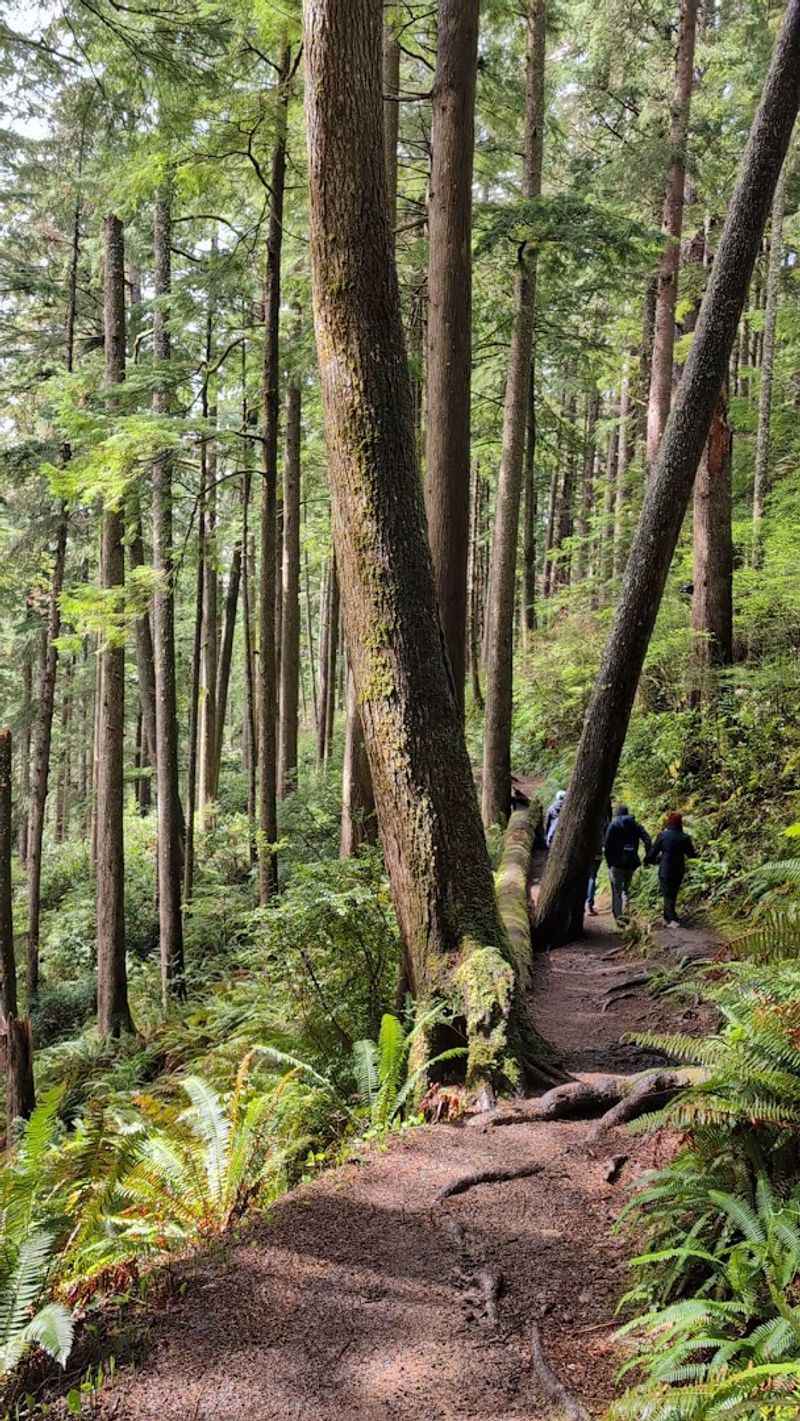
Some of these trees are just ridiculous in the best possible way. The Sitka spruce along Cape Falcon Trail grow so wide that several people holding hands could not wrap around a single trunk.
Looking straight up at them gives you a genuine sense of smallness.
Old growth forests like this one are rare. Most coastal forests in Oregon were logged heavily over the past century, so finding a stretch this intact feels like a genuine gift.
The moss clings to everything here, bark, roots, fallen logs, even the trail itself.
I kept stopping to look at the trees instead of watching my feet. That is actually a small hazard on this trail.
The roots are everywhere and they hide in the shadows surprisingly well. Still, the trees are worth every slow, careful step.
Bring a wide-angle lens if you have one. No camera really captures the full scale, but you will want to try anyway.
Muddy Sections and Root-Covered Ground
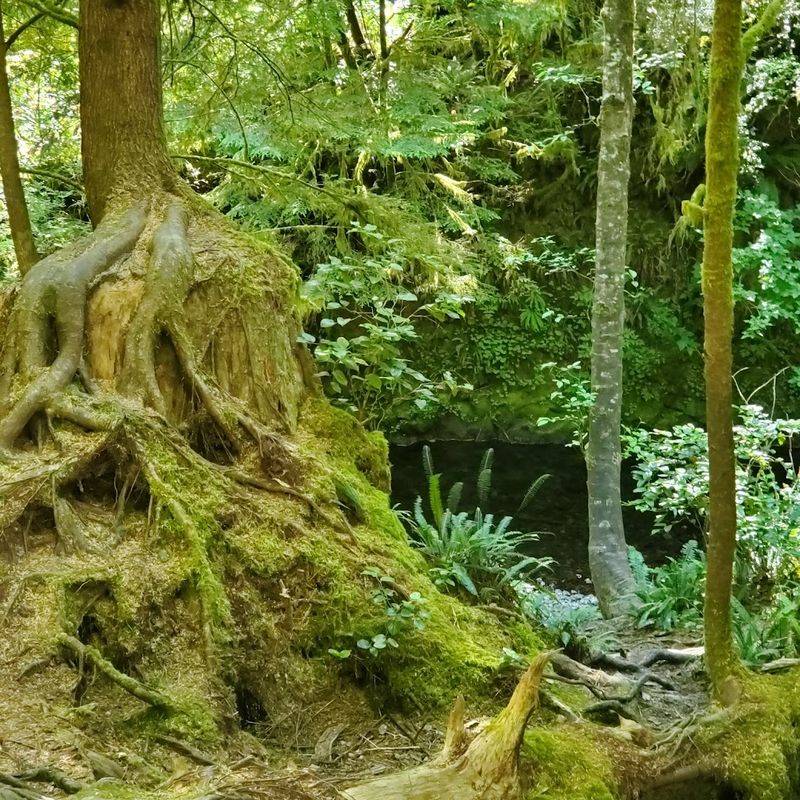
About halfway through, the trail changes its personality completely. The flat, easy walking gives way to something far more demanding.
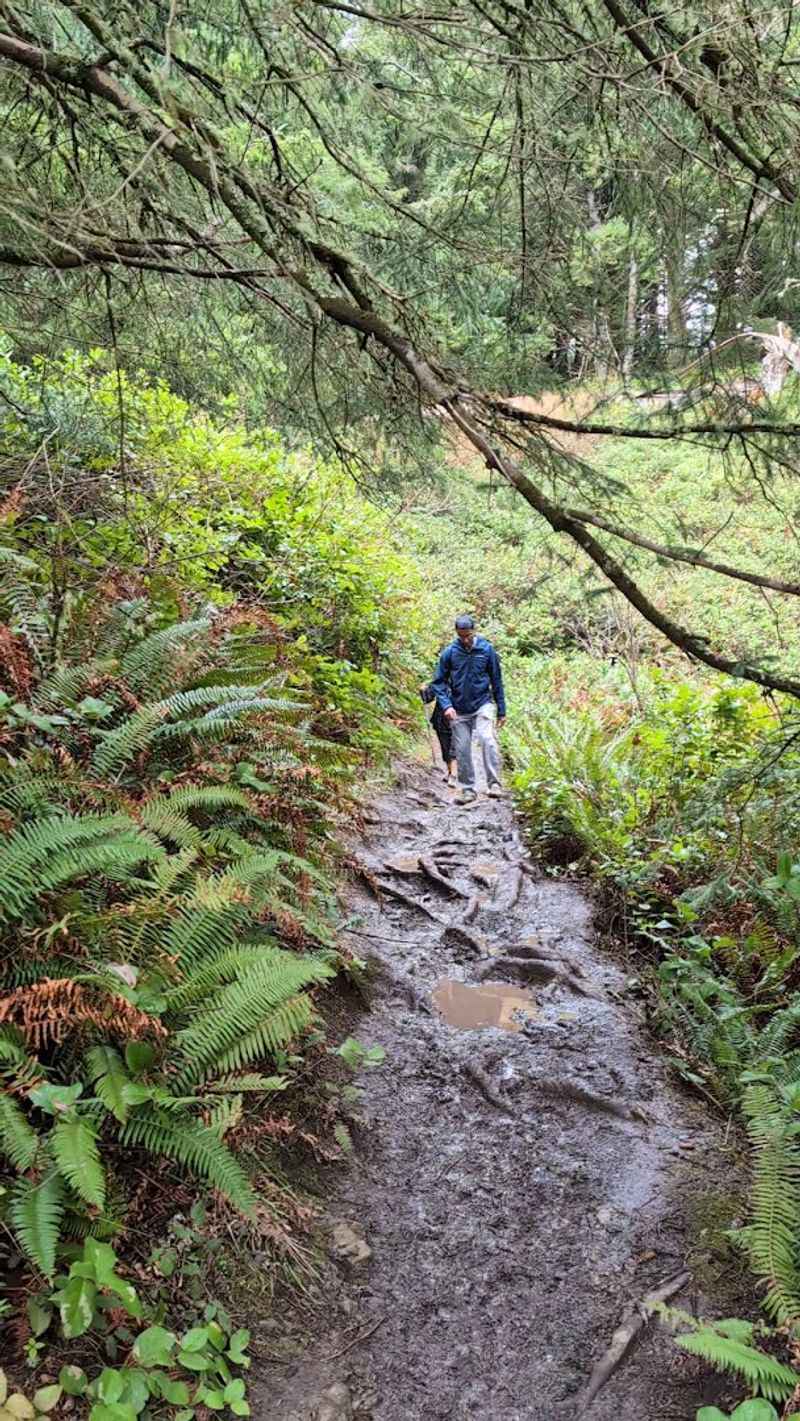
Exposed roots crisscross the path constantly, and muddy stretches can turn into genuine obstacle courses after rain.
Someone has built a few wooden platforms over the worst flooded sections. They help, though they can be slick with mud themselves.
Hiking boots with real grip are not optional here. Sneakers will have you sliding around in ways that are more stressful than fun.
The roots hide in the shadows especially well. Where sunlight and shade mix together, the ground looks deceptively uniform.
Then your foot catches on something and your heart jumps. Trekking poles make a real difference in these sections.
The trail is narrow in spots too, so step aside when faster hikers pass. Despite all of this, the challenge feels earned rather than frustrating.
The forest is so beautiful that even the tough patches have a certain charm to them.
The Side Path Down to Short Sands Beach
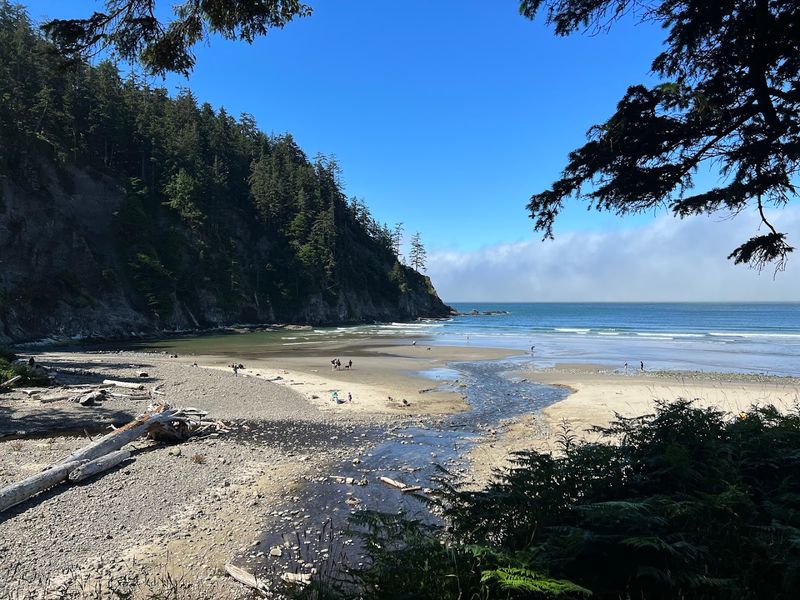
About a mile into the hike, a fork appears on the left side of the trail. Most people breeze past it without a second thought.
That left branch leads down to Short Sands Beach, and it is absolutely worth knowing about.
The descent is steep. It requires careful footing and a willingness to take it slow.
Families with older kids have made it down successfully, but it is not a casual stroll. The reward at the bottom is a sheltered cove with dark sand and crashing Pacific waves.
Surfers use Short Sands regularly, which gives the beach a laid-back, active energy. Watching them paddle out while standing on the sand is a great way to rest your legs mid-hike.
You can return to the main trail from there and continue toward Cape Falcon. It adds distance and effort to your day, so plan accordingly.
Bring water and a snack if you plan to visit both the beach and the cape.
Peek-a-Boo Ocean Views Along the Way
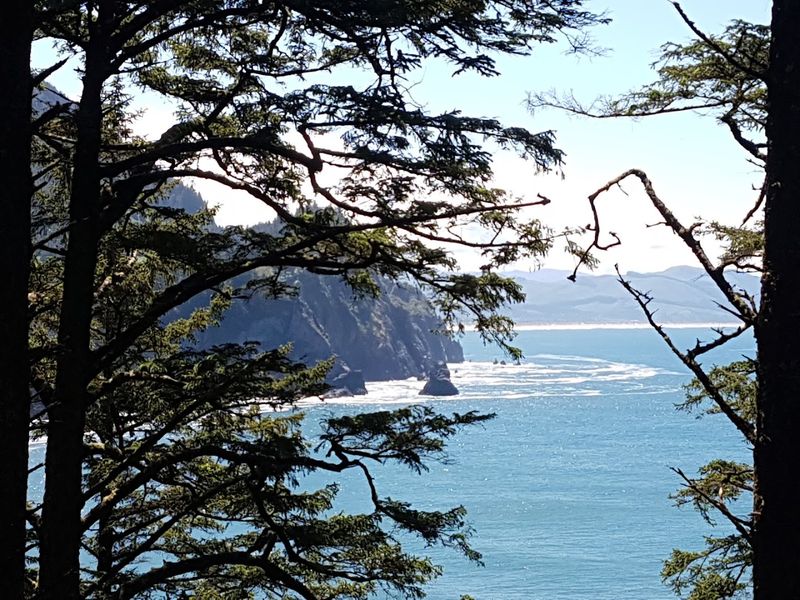
The ocean does not stay hidden the whole time. Along the middle section of the trail, gaps in the trees open up just enough to reveal the Pacific stretching out below.
These quick glimpses feel like little rewards for your effort.
I stopped at one of these natural windows and just stood there for a moment. The water was a deep steel blue.
A few waves were breaking far below against rocks I could barely make out. It was one of those quiet moments that sticks with you.
Hikers sometimes call these peek-a-boo views, and the name fits perfectly. You never quite know when the next one will appear.
There are also a few small nooks along the trail where you can sit off the path and take in the scenery privately. These spots are perfect for a snack break or just a few quiet minutes away from the trail traffic.
Keep your eyes open as you walk because missing them is genuinely easy to do.
The Narrow Final Stretch to the Cape
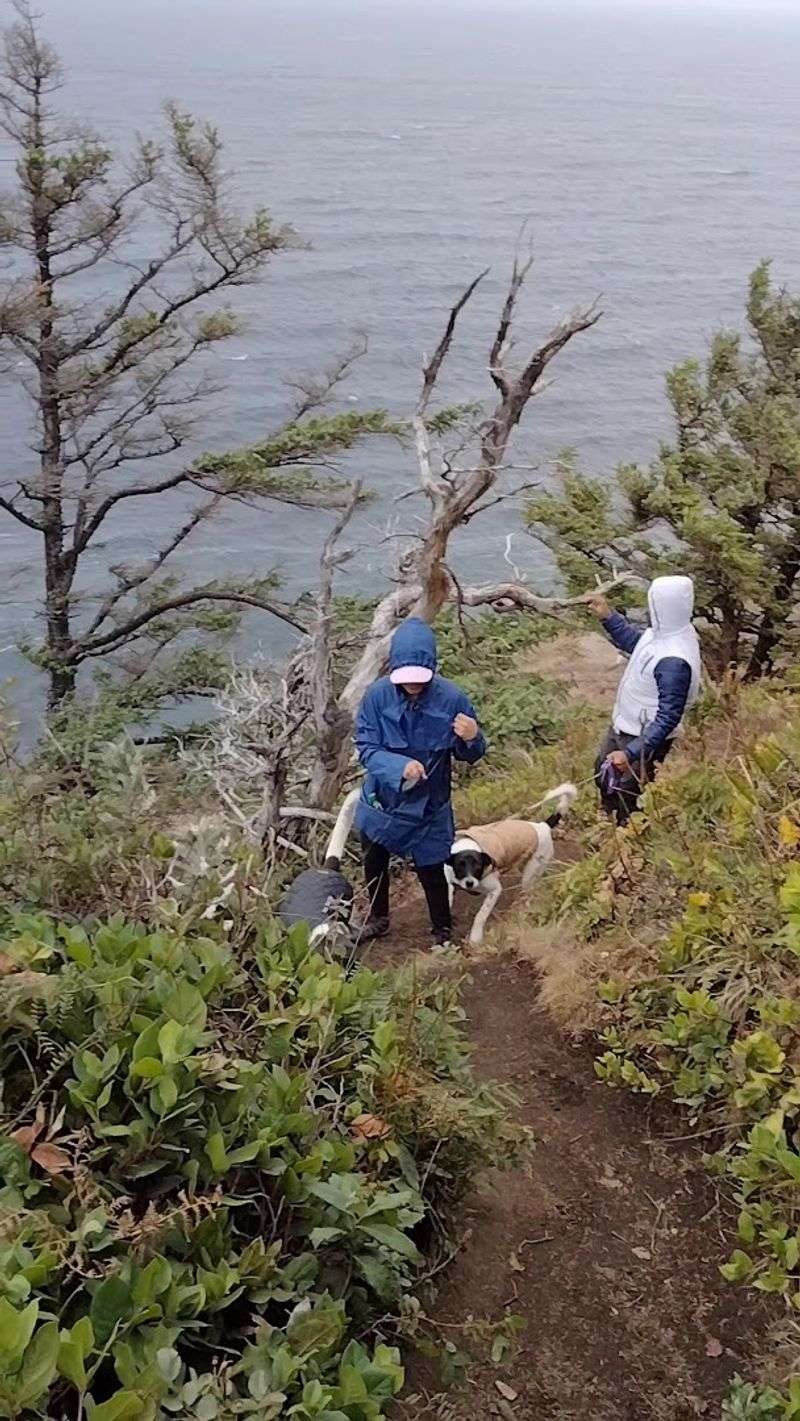
The last portion of the trail gets interesting fast. The path narrows down significantly, and in some spots you are essentially walking sideways through thick coastal brush.
The vegetation presses in from both sides.
Wind picks up noticeably here. The trees start to thin, and you can feel the full force of the Pacific air coming in off the water.
It is cool and a little wild-feeling, which honestly makes the whole approach more dramatic.
Watch your footing carefully near the edge. The cliffside drops are steep and unforgiving.
There are no guardrails at the viewpoint, so staying aware of where you are standing matters a lot. Kids and dogs should be kept close in this final section.
The trail is not marked with a clear summit sign, which surprises some hikers. If you feel like the views are getting better with every step, you are heading the right direction.
Keep going until the path simply runs out of land.
The Cliffside Viewpoint and Three Headlands
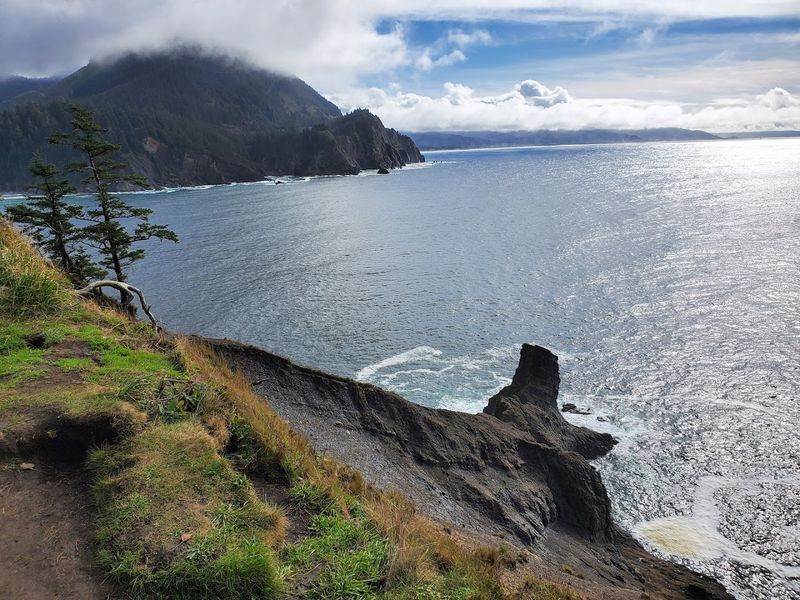
Nothing really prepares you for what opens up at the end. The trail suddenly breaks out of the brush and deposits you onto a windswept grassy cliff with ocean on multiple sides.
It feels like the edge of the world in the best possible way.
Three distinct headlands stretch out along the coastline from this spot. You can see them clearly on a good day, dark forested points jutting into the Pacific in both directions.
The geometry of the coast from up here is genuinely stunning.
The wind at the viewpoint is fierce. It pulls at your jacket and makes conversation a little difficult.
But it is also gloriously refreshing after the humid forest walk. Hikers linger here longer than anywhere else on the trail.
There are several different angles to explore along the cliff edge. Each one offers a slightly different composition of ocean, rock, and headland.
Bring layers. The temperature drop from the forest to this exposed point is more dramatic than you might expect.
Wildlife and Nature Along the Trail
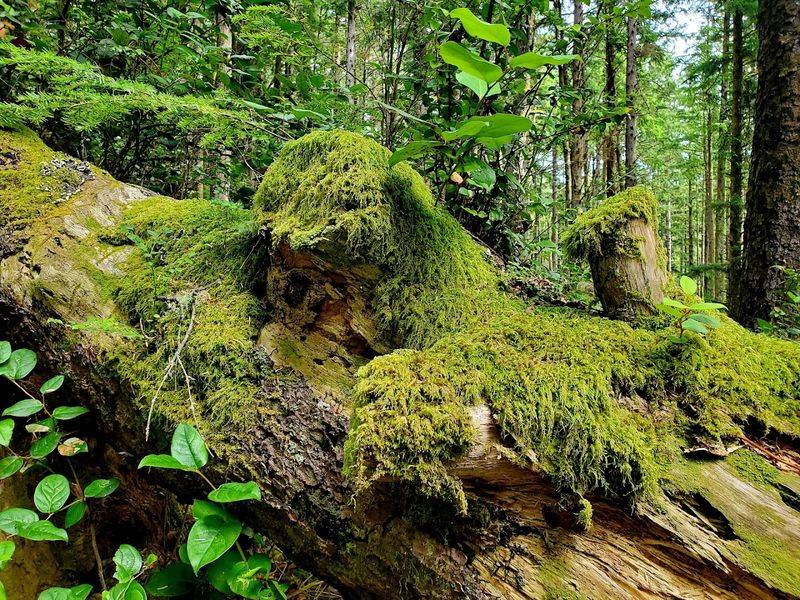
The forest along Cape Falcon Trail is alive in ways that keep surprising you. Mushrooms of unusual shapes and colors push up from rotting logs.
Ferns carpet the ground in dense green waves. Birds call from somewhere deep in the canopy that you never quite locate.
October hikers have reported particularly impressive fungi along the trail. The damp coastal climate creates ideal conditions for all kinds of forest growth.
Mosses and lichens cover nearly every surface in shades of green and grey.
A small waterfall sits just off the main trail about halfway through. It is easy to miss, but there is a short spur path that leads about fifteen feet off the main route to reach it.
The sound of water trickling over rocks in that quiet forest setting is genuinely calming. Deer have also been spotted along the trail on quieter mornings.
The ecosystem here feels complete and undisturbed, like the forest has been doing its own thing for centuries without needing any input from us.
Trail Difficulty and What to Expect
Cape Falcon Trail is listed as moderate, and that rating is accurate if you go in with the right expectations. The elevation gain is around 700 feet over the full out-and-back distance.
It is not a brutal climb, but it is not flat either.
The real challenge comes from the terrain itself rather than the elevation. Roots, mud, narrow sections, and the occasional slippery rock keep you engaged the entire time.
Looking at your feet becomes almost automatic after a while.
Round trip distance runs roughly 4.8 to 5.2 miles depending on which route variations you take. Most hikers finish in two to three hours, though stopping often for views and photos stretches that easily.
Trekking poles help on the rooty sections. Waterproof hiking boots are strongly recommended year-round.
The trail stays wet even in drier months because of the coastal climate. Reasonably fit hikers of most ages can complete it comfortably.
Just go at your own pace and do not rush the forest sections.
Tips for Planning Your Visit to Cape Falcon Trail
Arriving early is the single best piece of advice for this trail. The parking lot fills up quickly on weekends and during summer months.
Getting there before 9 AM almost always guarantees a spot without stress.
Restrooms are available at the lot just south on Highway 101, on the east side of the road. There are also cleaner restrooms near the Short Sands Beach area if you plan to visit there.
No parking fee is required at the trailhead lot, which is a pleasant surprise.
Leashed dogs are welcome on the trail, and you will see plenty of them. Bring enough water for the full round trip since there are no water sources along the route.
Pack a light snack for the viewpoint because you will want to sit and enjoy it for a while. Cell service is limited or nonexistent in the forest sections.
Download an offline map before you go just to be safe.
Address: Cape Falcon Trailhead, Arch Cape, OR 97102
