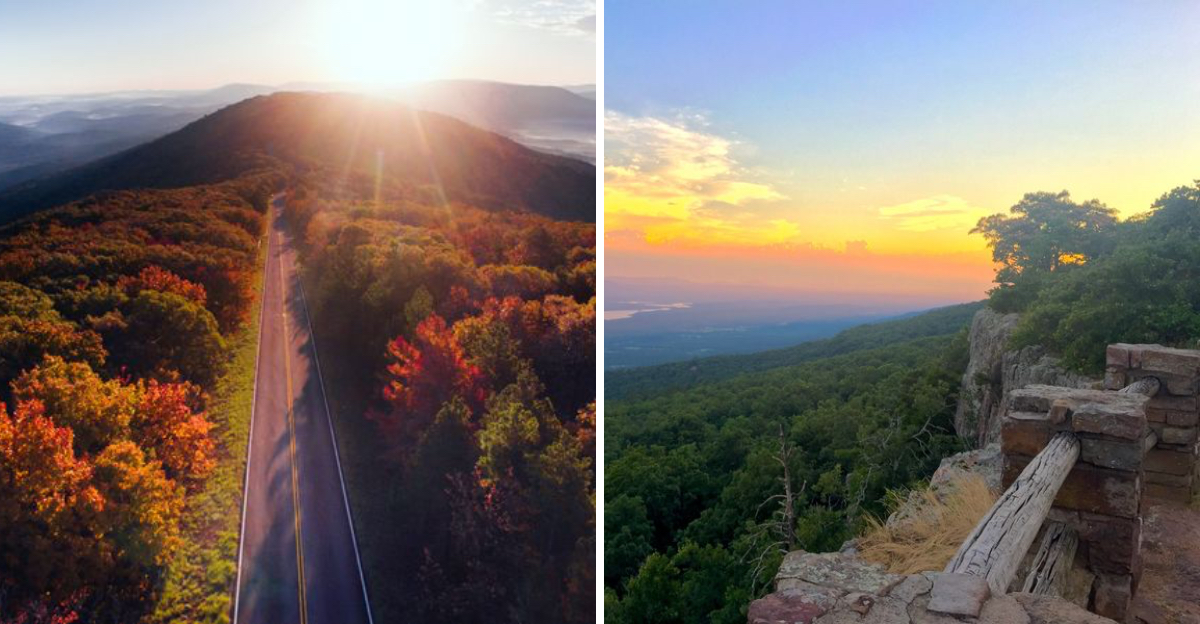
Oklahoma locals know their state holds hidden treasures that most travelers speed right past, and this 54-mile mountain drive might just be the most underrated of them all.
Winding through ridges, valleys, and forests that shift personality with every season, the Talimena Scenic Drive rewards those who slow down and pay attention.
Stretching from Talihina to Mena across the Ouachita Mountains, this route feels more like a secret shared among friends than a tourist attraction plastered on billboards.
Talihina: The Eastern Gateway to the Mountains
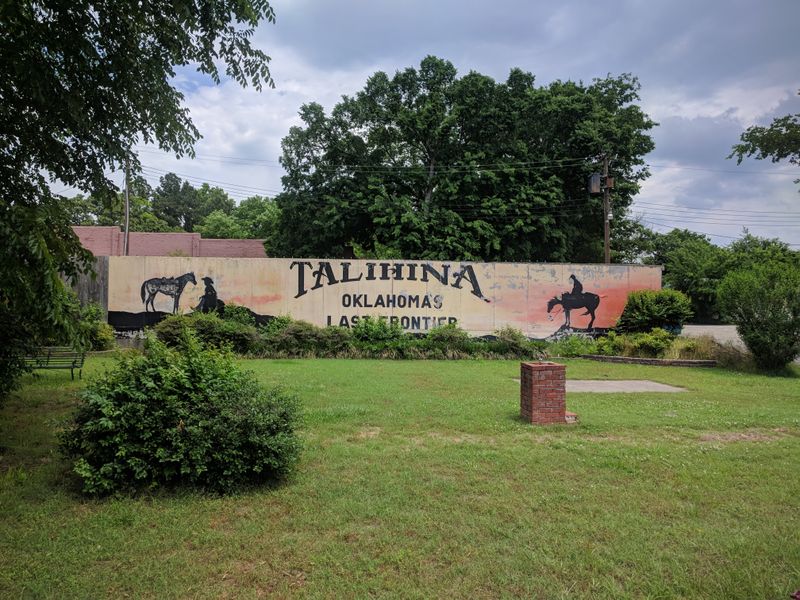
Sitting at the eastern edge of the Talimena Scenic Drive, Talihina serves as more than just a starting point. This small Oklahoma town carries the quiet confidence of a place that knows what lies ahead on the road.
Locals here treat the drive like an old friend, someone they introduce to visitors with pride but without fanfare.
Main Street feels lived-in rather than polished, with storefronts that cater to residents first and travelers second. There are no flashy visitor centers or themed gift shops competing for attention.
Instead, you find diners where the coffee is strong, gas stations that double as conversation hubs, and a pace that refuses to be rushed.
The town sits in the valley, cradled by forested hills that rise sharply to the west. From certain angles, you can see where the road begins its climb, disappearing into the tree line like an invitation written in asphalt.
The sense of anticipation here is palpable, especially among those preparing to drive the full route for the first time.
Talihina also serves a practical role. It is the last place to stock up on snacks, fill the tank, or grab a meal before committing to the drive.
Services along the route are sparse, so most travelers treat this stop as both logistical and symbolic.
What makes Talihina memorable is not what it offers, but what it does not. There are no distractions here, no pressure to linger or spend.
It simply exists as the threshold to something bigger, a place that understands its role and plays it well without demanding applause.
The Crest of the Ouachita Mountains
Elevation defines this drive in ways that maps cannot fully capture. The Talimena Scenic Drive does not cut through valleys or skirt around peaks.
Instead, it rides the ridgeline itself, following the natural spine of the Ouachita Mountains for mile after mile. The road rises and falls in a rhythm that feels deliberate, almost musical, as if the terrain is setting the tempo.
From the crest, the landscape opens in every direction. On clear days, visibility stretches for miles, revealing layer upon layer of forested ridges that fade into soft blues and grays.
The sense of space here is disorienting in the best way, making it easy to lose track of time or direction.
What stands out most is how the road stays high. Unlike routes that dip into towns or cross rivers, this one remains committed to altitude.
That commitment creates a feeling of suspension, as if you are floating above the world rather than driving through it. The air feels thinner, the light sharper, and the silence deeper.
Wildlife appears more frequently along the crest, especially during early morning or late afternoon. Deer cross without hesitation, moving through the landscape as if the road is an afterthought.
Hawks circle overhead, riding thermals that rise from the valleys below. The sense of being in their space, rather than them being in yours, is constant.
This elevated perspective transforms the drive from a simple route into an experience of immersion. You are not observing the mountains from a distance.
You are inside them, moving through their highest points with nothing but curves and overlooks to mark the passage of time.
Overlooks That Earn Their Reputation
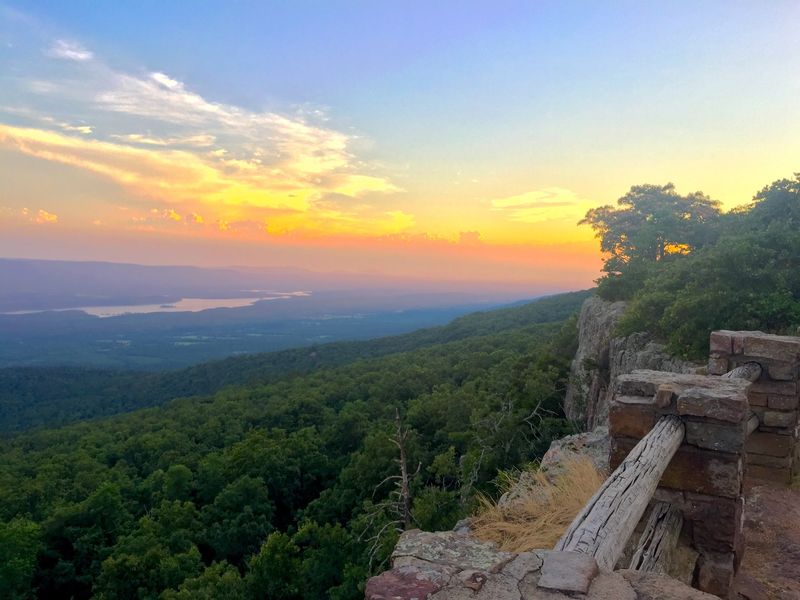
Pullouts along the Talimena Scenic Drive are not afterthoughts. Each one has been placed with intention, offering views that shift in character and composition.
Some overlooks face east, catching morning light as it spills across the ridges. Others look west, where sunsets turn the valleys into pools of gold and amber.
No two feel the same, even when separated by only a few miles.
These stops are marked but not over-developed. You will find parking areas, sometimes a sign, occasionally a bench.
What you will not find are gift shops, bathrooms, or crowds. The overlooks exist to serve the view, nothing more.
That simplicity makes them more effective, stripping away distractions and letting the landscape speak for itself.
Visitors tend to linger longer than expected. The initial impulse is to snap a photo and move on, but something about the depth of the view changes that plan.
The longer you stand there, the more details emerge. A hawk circling below eye level.
The faint outline of a fire tower on a distant peak. The way the wind moves through the trees in waves, creating patterns that ripple across the hillsides.
Photographers love these spots, especially during fall when the foliage turns the mountains into a patchwork of reds, oranges, and yellows. But even in summer, when the green is uniform and dense, the overlooks deliver.
The play of light and shadow across the ridges creates a constantly shifting composition, one that changes by the hour.
What makes these overlooks memorable is their restraint. They do not try to manufacture awe.
They simply provide access to it, trusting that the mountains will do the rest.
Fall Foliage That Rivals Any Region
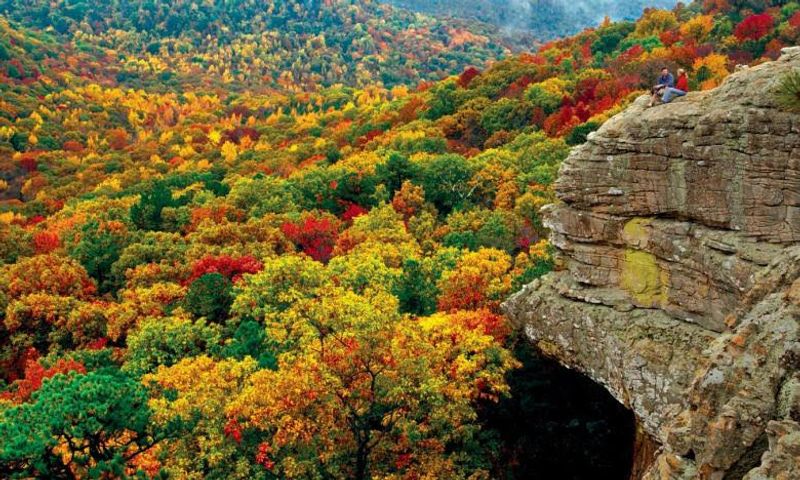
Autumn transforms the Talimena Scenic Drive into one of the most visually stunning routes in the country. The forests explode into color, turning the ridges into a living canvas of reds, oranges, golds, and yellows.
Unlike regions where fall color is confined to specific valleys or groves, here it spreads across entire mountainsides, creating a sense of immersion that is hard to replicate elsewhere.
Peak color typically arrives in mid to late October, though exact timing shifts based on weather patterns. When conditions align, the drive becomes a pilgrimage site for leaf-peepers from across Oklahoma, Arkansas, and beyond.
Traffic increases noticeably during this window, but the route is long enough to absorb the crowds without feeling congested.
What sets Talimena apart during fall is the variety of tree species. Oaks, maples, hickories, and sweetgums all contribute their own shades, creating a layered effect that changes depending on elevation and exposure.
The result is a palette that feels richer and more complex than single-species forests, where color tends to be more uniform.
The overlooks become especially valuable during this season. From high vantage points, you can see how the color shifts across the landscape, with some ridges still holding green while others have already turned.
The contrast is striking, offering a visual reminder of how much the terrain changes over short distances.
Even the light feels different in fall. The sun sits lower in the sky, casting longer shadows and bathing the mountains in a warm, golden glow that intensifies the colors.
Early morning and late afternoon become the best times to drive, when the light is softest and the views most dramatic.
Wildlife Crossings and Unscripted Encounters
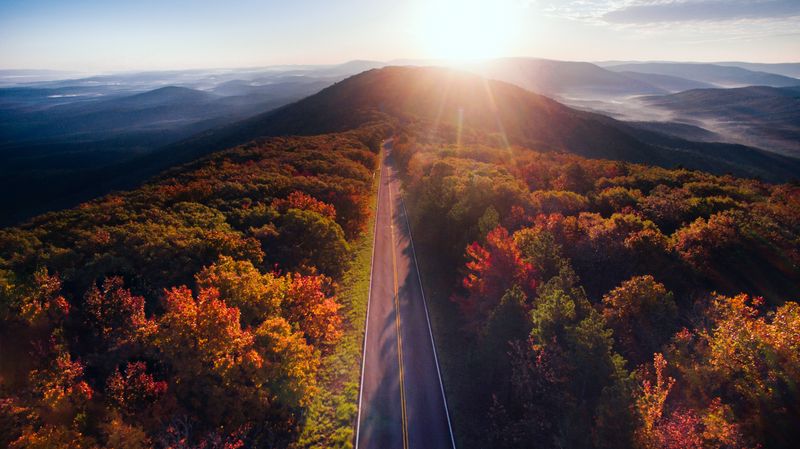
Animals own this road as much as drivers do. White-tailed deer appear without warning, stepping onto the asphalt with the casual confidence of creatures who know they belong here.
Black bears roam the forests, though sightings are less common and usually brief. Wild turkeys strut along the shoulders, and hawks perch on roadside branches, watching for movement in the underbrush below.
The frequency of wildlife encounters is tied directly to timing. Early morning and dusk are peak hours, when animals are most active and visibility is often reduced.
Drivers who start the route at dawn or finish near sunset should expect to slow down frequently, not because of traffic but because the road is shared space.
These encounters are part of what makes the drive feel untamed. There are no fences, no barriers separating the road from the forest.
The landscape flows uninterrupted from one side to the other, creating a seamless environment where human presence is temporary and wildlife is constant. That blurred boundary changes the experience, making it feel less like a drive through nature and more like a drive within it.
Photographers and wildlife enthusiasts appreciate the unpredictability. You cannot plan these moments or schedule them.
They happen when they happen, often when you least expect them. That spontaneity adds an element of surprise that keeps the drive from feeling repetitive, even for those who have traveled it many times.
Respect for wildlife is assumed rather than enforced. There are no signs reminding drivers to slow down or watch for animals.
The expectation is that anyone choosing this route understands the terrain and adjusts their pace accordingly. That trust feels refreshing in a world where most scenic drives are over-managed and over-signed.
Seasonal Shifts That Redefine the Landscape
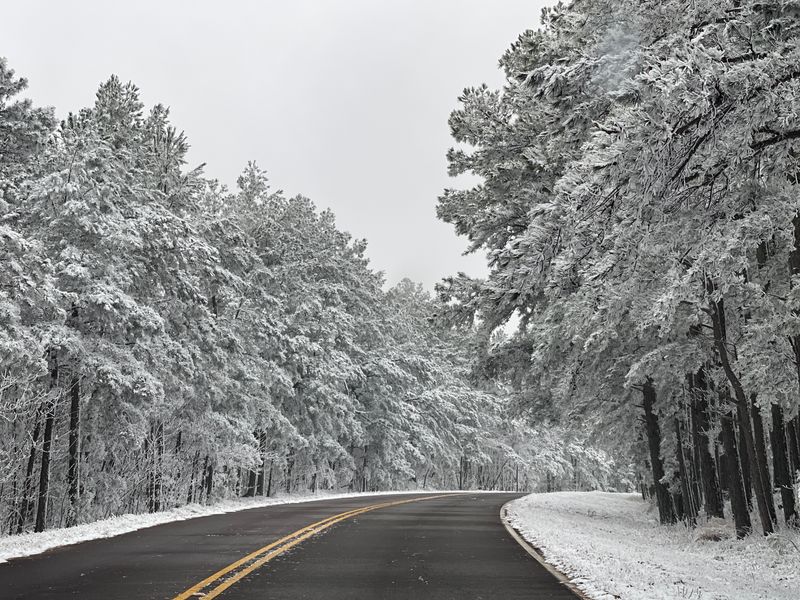
Every season rewrites the personality of the Talimena Scenic Drive. In summer, the forest closes in, creating a tunnel of green that feels dense and intimate.
The canopy overhead filters the light, casting dappled shadows across the road. The air is thick with humidity, and the sound of cicadas fills the silence.
The drive feels enclosed, as if the mountains are wrapping around you.
Winter strips everything back to essentials. The trees lose their leaves, revealing the structure of the landscape beneath.
Bare branches expose distant ridges and valleys that remain hidden during other seasons. The views open up, offering long sightlines that make the mountains feel bigger and more expansive.
Snow occasionally dusts the peaks, adding contrast and texture to the scene.
Spring brings renewal in the form of wildflowers and fresh growth. Dogwoods bloom along the roadsides, their white blossoms standing out against the dark trunks of oaks and pines.
The forest smells of damp earth and new leaves, and the sound of birdsong replaces the winter silence. The drive feels alive in a way that is almost tangible, as if the mountains are waking up after a long rest.
Each season attracts a different type of visitor. Fall brings the crowds, drawn by the promise of color.
Summer draws families and campers looking for cooler temperatures. Winter and spring see fewer travelers, making those seasons ideal for those seeking solitude and quiet.
The drive adapts to all of them, offering something distinct each time.
What remains constant is the sense of elevation and the quality of the views. No matter the season, the road stays high, and the overlooks continue to deliver.
The mountains do not change, but the way they present themselves shifts with the calendar.
The Absence of Commercialization
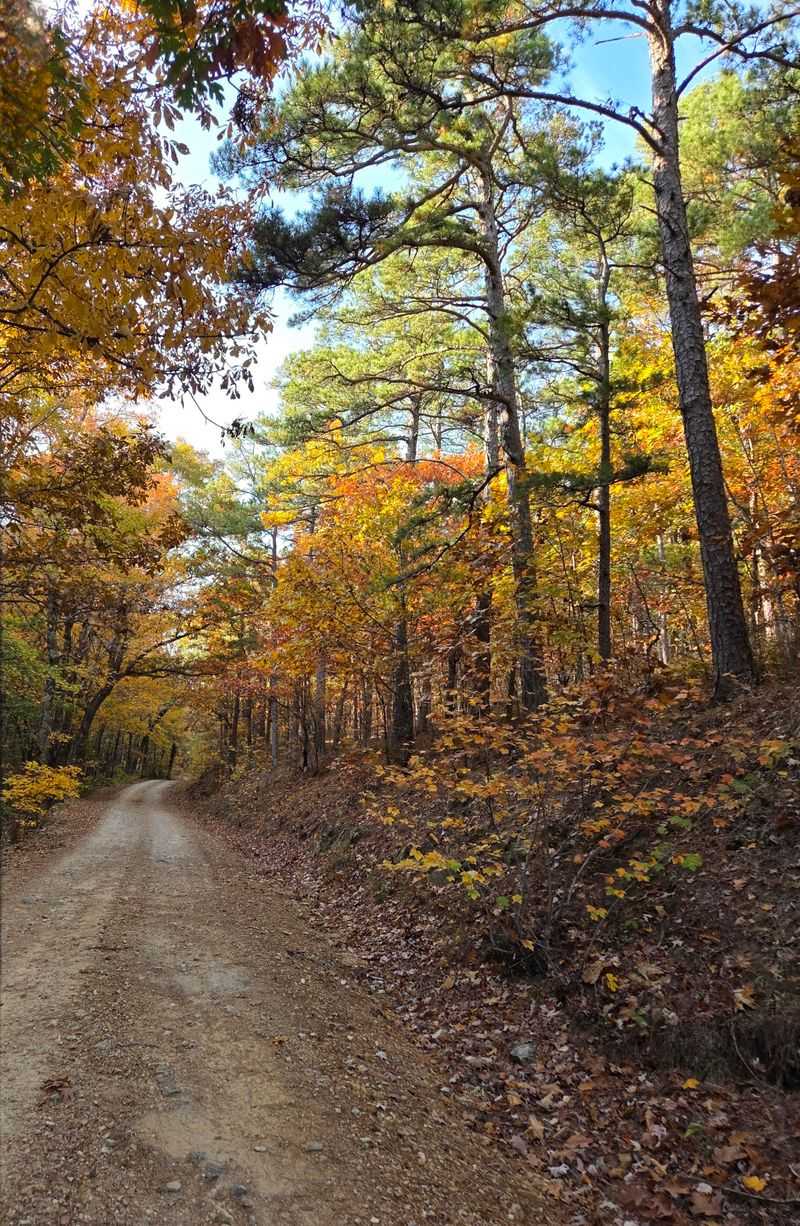
One of the most striking aspects of the Talimena Scenic Drive is what it lacks. There are no billboards, no roadside attractions, no gift shops selling souvenirs.
The drive exists in a state of near-total commercial absence, a rarity in a world where most scenic routes have been monetized to exhaustion. That purity is part of its appeal, allowing the landscape to remain the sole focus.
The lack of services can be jarring for those accustomed to more developed routes. There are no rest areas with bathrooms, no convenience stores, no places to grab a quick snack or drink.
Once you leave Talihina, you are committed to the drive until you reach Mena or turn back. That commitment creates a sense of isolation that some find uncomfortable and others find liberating.
What this absence creates is a drive that feels unfiltered. There is no marketing spin, no attempt to package the experience into something digestible or easy.
The mountains present themselves as they are, without interpretation or explanation. That rawness makes the drive feel more authentic, as if you are discovering something on your own rather than being guided through a curated experience.
For travelers seeking solitude, this lack of development is a gift. The overlooks are rarely crowded, even during peak season.
You can stand at a viewpoint for minutes without seeing another person, something increasingly rare on popular scenic routes. The silence is profound, broken only by wind, birdsong, and the occasional passing vehicle.
The absence of commercialization also means the drive remains affordable. There are no entrance fees, no tolls, no hidden costs.
The only expense is fuel, making it accessible to anyone with a car and a sense of curiosity.
Why the Drive Stays Under the Radar
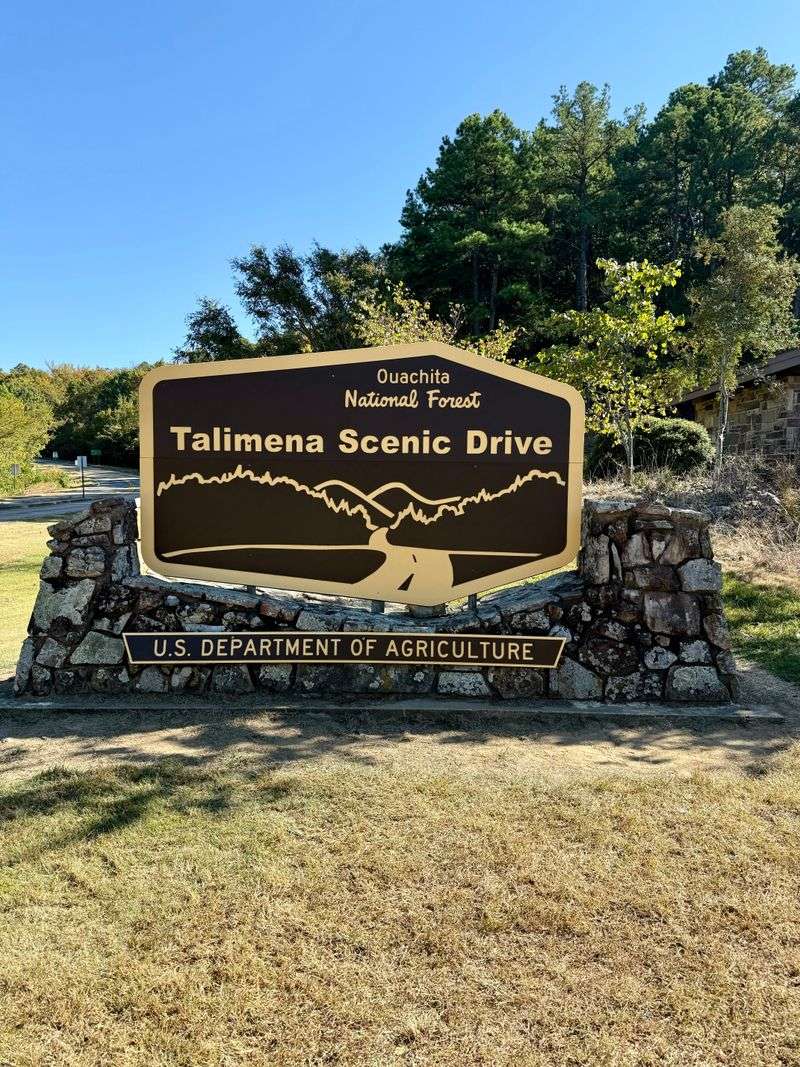
Geography plays a significant role in the Talimena Scenic Drive’s relative obscurity. The route does not connect major cities or serve as a shortcut to anywhere important.
It exists in a region of Oklahoma that many travelers pass through rather than visit, making it invisible to those focused on destinations rather than journeys. That isolation protects it from the crowds that overwhelm more famous routes.
The drive also lacks a single iconic image, the kind of postcard-perfect shot that goes viral on social media and draws hordes of visitors. Instead, its beauty accumulates gradually, revealing itself over miles rather than in a single moment.
That subtlety does not translate well to quick scrolls through photo feeds, making it harder to market and easier to overlook.
There is also the matter of expectations. Travelers seeking dramatic vistas on the scale of the Rockies or the Pacific Coast will be disappointed.
The Ouachita Mountains are older, gentler, and more forested. The views are expansive but not towering, beautiful but not overwhelming.
The drive rewards patience and attention, qualities that are often in short supply among tourists racing from one attraction to the next.
What keeps people coming back, though, is the feeling the drive leaves behind. By the end of the 54 miles, most travelers realize they remember the rhythm of the road more than any specific stop.
The sense of elevation, the constant curves, the way the forest opened and closed around them, all of these linger in memory long after the details fade.
In a state often defined by wide-open plains and long, straight highways, the Talimena Scenic Drive offers something different. It compresses variety, beauty, and atmosphere into a stretch that feels both brief and expansive, a hidden gem that rewards those who take the time to find it.
Dear Reader: This page may contain affiliate links which may earn a commission if you click through and make a purchase. Our independent journalism is not influenced by any advertiser or commercial initiative unless it is clearly marked as sponsored content. As travel products change, please be sure to reconfirm all details and stay up to date with current events to ensure a safe and successful trip.
