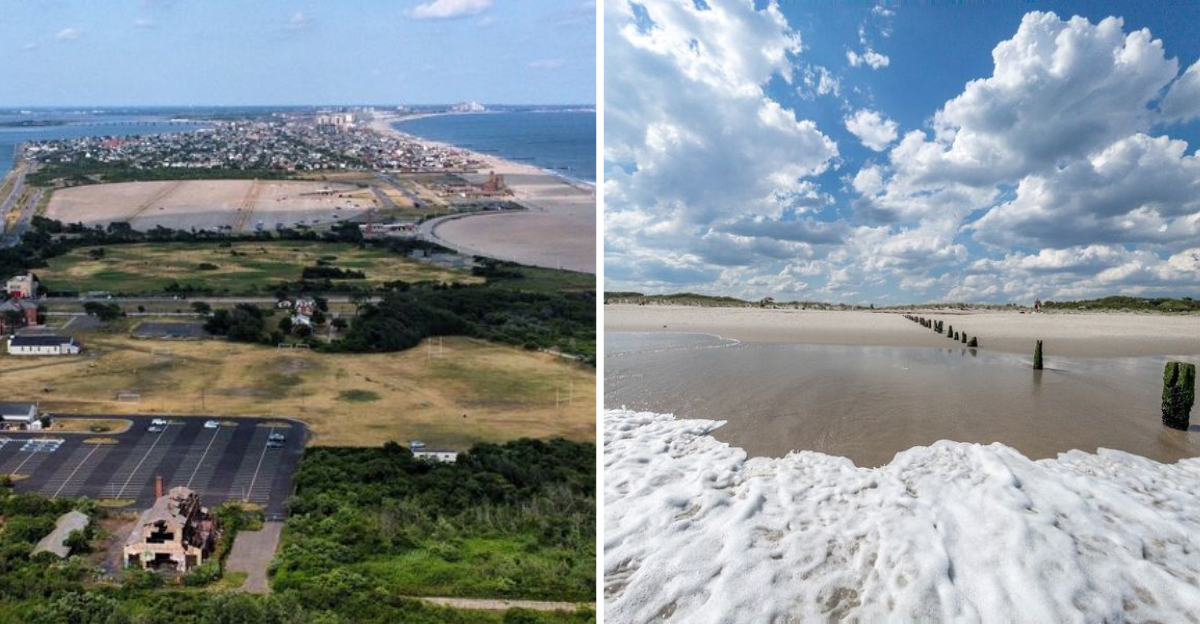
There is a stretch of sand on this New York peninsula that most people have never heard of, and honestly, that is part of what makes it so special. The beach sits on the edge of the Atlantic, tucked behind overgrown dunes and crumbling concrete bunkers from a former army base that was decommissioned decades ago. The first time I visited, I remember thinking the city had somehow disappeared, replaced by wind, waves, and the kind of silence you rarely find this close to the skyline.
Piping plovers dart across the shoreline, old battery towers rise above the dune grass, and the sand stretches for nearly two miles without a single hot dog stand in sight. No lifeguards. No vendors.
No crowds. Just quiet sand and the ocean doing its thing.
It feels less like a day trip and more like stumbling onto a secret.
A Former Army Base Frozen in Time
Most people picture a beach and think of umbrella stands and ice cream carts. Fort Tilden flips that image completely on its head.
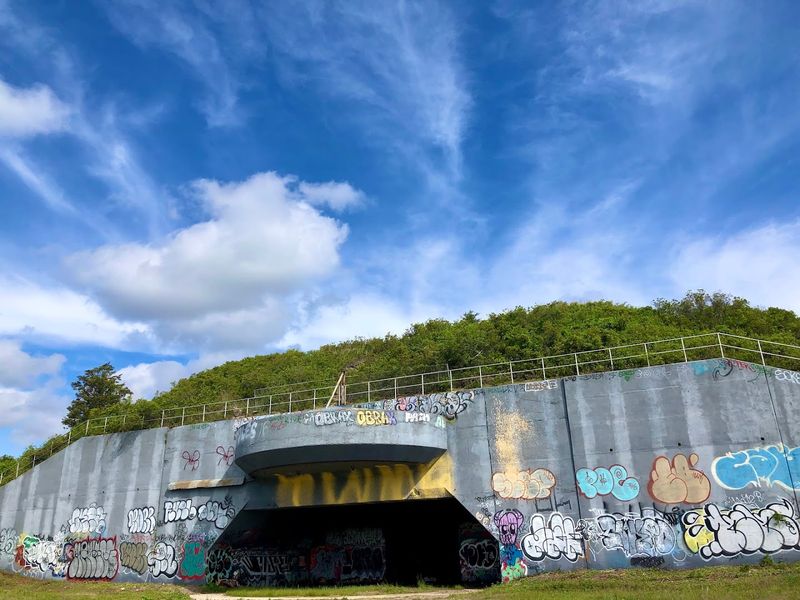
The ruins here are not hidden away or fenced off from view. They rise out of the dunes like something from a forgotten chapter of American history, concrete gun batteries and underground bunkers that once formed part of the harbor defense network protecting New York City during World War I and beyond.
The fort was originally commissioned in 1917 as Camp Rockaway Beach before being renamed after Governor Samuel J. Tilden.
Over the following decades it grew into a serious military installation, housing 6-inch and 16-inch coastal artillery, anti-aircraft guns, and eventually Nike-Ajax and Nike-Hercules missile systems during the Cold War era. The missile site was designated NY-49 and was reportedly capable of carrying nuclear warheads.
By 1974, the military had moved on and the National Park Service took over. What remained was handed to nature and time.
Graffiti now covers the old battery walls in layers of color, wild vines creep through broken windows, and the whole place carries a quiet, eerie beauty that no theme park could ever replicate. History does not feel like a textbook here.
It feels like something you can actually touch, something real and weathered and worth exploring slowly.
Sand So Quiet It Almost Feels Rude to Speak
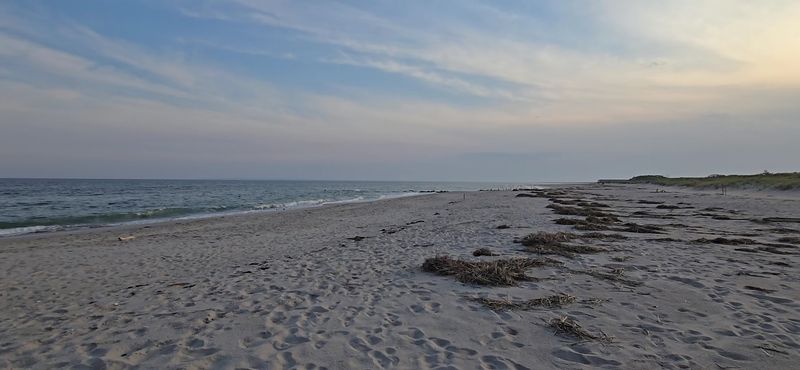
The beach itself is the main reason people keep coming back. It runs for roughly three kilometers along the Atlantic, wide and flat and almost entirely free of the noise that defines most New York City shorelines.
No vendors calling out, no loudspeakers, no packed rows of rental chairs. Just sand, wind, and the steady rhythm of the ocean doing its thing.
On a summer Saturday, Coney Island and the main Rockaway beach sections can feel like a crowded subway platform that someone accidentally moved outdoors. Fort Tilden, by contrast, tends to draw a crowd that actually wants quiet.
Birdwatchers set up near the dunes. Artists sketch or photograph the ruins.
Some visitors simply spread out a blanket and read for hours without anyone passing within twenty feet of them.
The sand itself has a texture worth mentioning. It is fine and pale, the kind that holds warmth well into the late afternoon.
Beachcombers regularly find moonsnail casings, slipper shells, and whelks along the tideline, especially after a strong swell rolls through. There are no lifeguards on duty, so swimming requires real judgment and awareness of the current.
But for those who come to walk, sit, and simply exist near the ocean, this beach delivers something genuinely rare in a city of eight million people: the feeling of having a little corner of the world almost entirely to yourself.
Getting There Is Half the Adventure
Reaching Fort Tilden takes a little more effort than pulling up to a parking lot and walking ten steps to the water. That extra effort is, honestly, part of what filters the crowd.
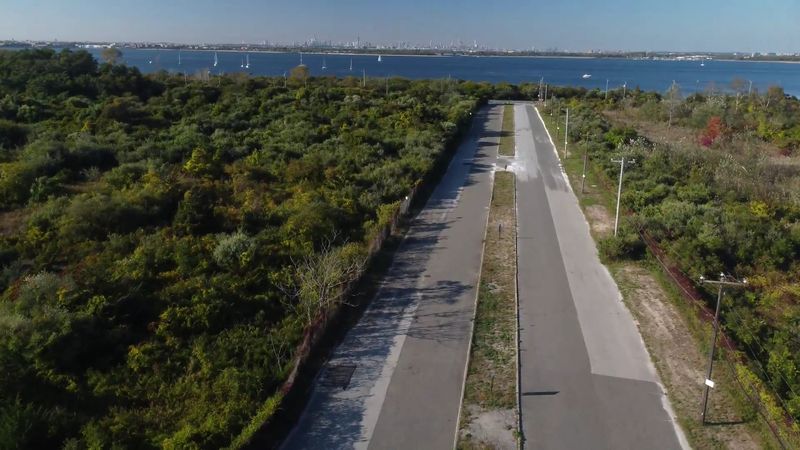
Most visitors park at the adjacent Jacob Riis Park and make the trip on foot or by bike, following a path that winds through maritime scrubland, patches of wildflowers, and open dune fields before the beach finally appears ahead.
The walk from Riis Park takes around fifteen to twenty minutes at a relaxed pace. It is flat the entire way, which makes it manageable for most people.
Cyclists have it even better, gliding along a car-free stretch that feels nothing like navigating city streets. The route itself is genuinely pleasant, with views of the dune landscape opening up gradually and the sound of the ocean growing louder with each step.
Parking inside Fort Tilden requires a special permit, and enforcement is real. Several visitors have learned this the hard way, so sticking to the Riis Park lot is the smarter move.
Public transit is also an option, with bus routes connecting to the Rockaway Peninsula from the subway. The Q35 bus stops nearby.
It is worth noting that the park is officially open daily from 6 a.m. to 9 p.m., though the beach itself tends to operate around the clock. Plan ahead, pack your own snacks and water, and enjoy the journey as part of the experience.
Birds, Dunes, and a Surprisingly Wild Ecosystem
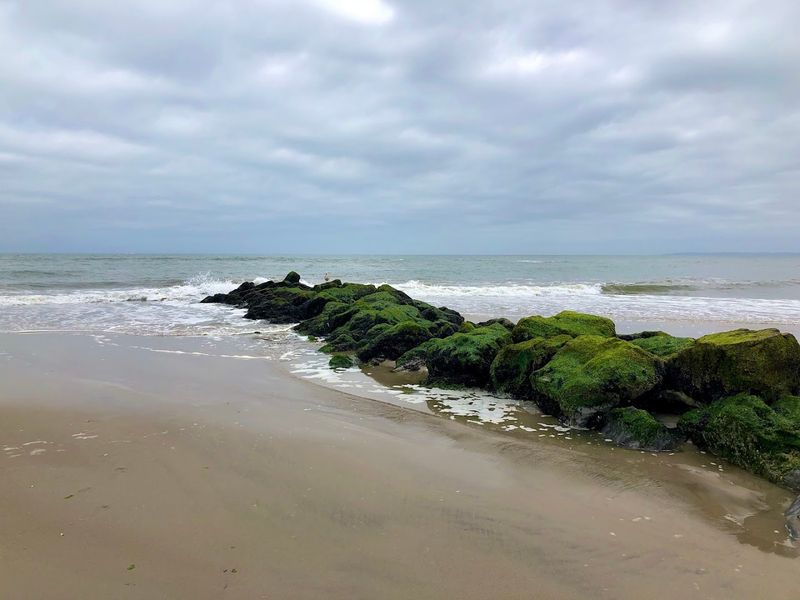
Fort Tilden is not just a beach with an interesting backstory. It functions as a genuine natural habitat, one that the National Park Service actively works to protect.
The dune ecosystem here supports a surprising variety of plant and animal life, much of it rare by New York City standards. Maritime forest patches, beach plum shrubs, and dense stands of phragmites create a layered landscape that changes noticeably as you move inland from the water.
The shorebirds are the real stars. Piping plovers, a federally threatened species, nest directly on the sand each spring and summer.
During nesting season, sections of the beach get roped off to protect the eggs and chicks. Least terns also nest in the area, and the sight of them diving into the surf is genuinely impressive.
Birdwatchers who bring binoculars tend to have a very good time here.
The dunes themselves are more than just scenery. They act as a natural buffer against storm surge, a fact that became painfully clear during Hurricane Sandy in 2012 when coastal areas without healthy dunes suffered far greater damage.
Fort Tilden took a hard hit from that storm, and the recovery effort reshaped parts of the landscape. What you see today is a mix of restored dune grass and natural regrowth, still imperfect in places but alive and doing its job.
The wildness here is not accidental. It is carefully tended and genuinely worth appreciating.
Battery Harris and the View That Stops You Cold
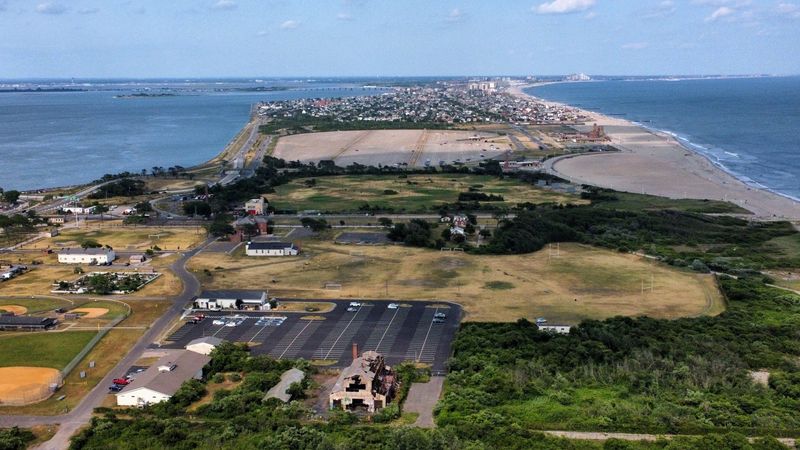
There is a moment on top of Battery Harris East when the whole picture suddenly makes sense. You climb up through a crumbling concrete structure that once housed massive coastal artillery, step out onto the observation deck, and get hit with a 360-degree view that stretches from the Atlantic Ocean all the way back toward the Manhattan skyline on a clear day.
It is the kind of view that earns a long pause.
Battery Harris was one of the most powerful gun emplacements on the East Coast during its active years. The 16-inch guns installed here could fire projectiles weighing over a ton across enormous distances.
Standing where those weapons once sat, looking out at the open ocean, gives you a strange appreciation for how seriously this stretch of coastline was once guarded. The scale of the original installation is hard to wrap your head around.
Today the battery serves a much more peaceful purpose. The Rockaway Artists Alliance has made use of several renovated military buildings nearby, turning old ammunition storage and barracks into arts spaces, a theater, and a community hub.
The contrast between the raw concrete ruins and the creative energy happening inside them is one of the more unexpected things about this place. It is not just a beach or a history site.
Fort Tilden has quietly become a gathering point for people who appreciate things that are a little off the beaten path and a lot more interesting for it.
Beachcombing and the Treasures the Tide Leaves Behind
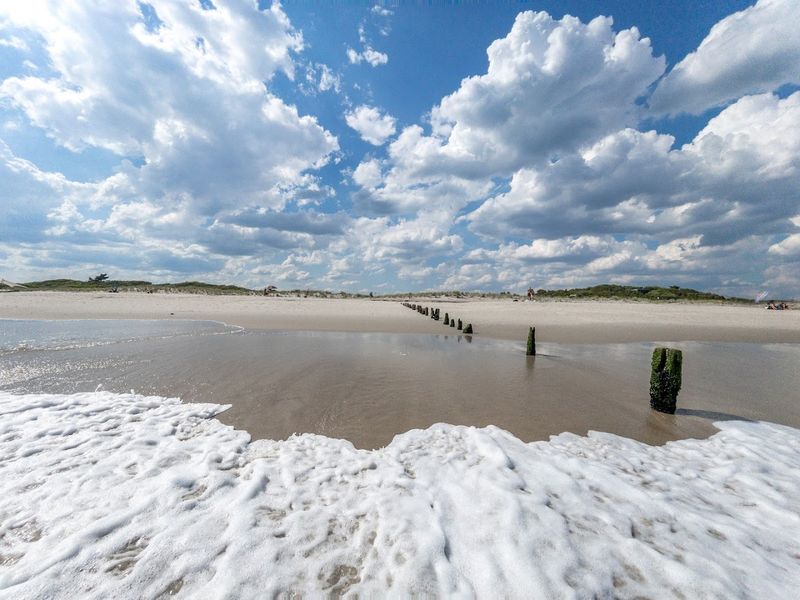
After a strong tide rolls through Fort Tilden, the shoreline becomes a slow-moving treasure hunt. The beach regularly gives up whelks, moonsnail casings, slipper shells, and the occasional piece of sea glass worn smooth by years in the water.
People who love beachcombing tend to find this stretch far more rewarding than busier beaches where the tideline gets picked over quickly by large crowds.
Part of what makes it so good here is the lack of competition. On a weekday morning, you might walk the entire length of the beach and pass only a handful of other people.
The shells accumulate undisturbed between visits, and after a storm the pickings can be genuinely impressive. I once found three intact whelk shells in a single short walk, which felt like winning something.
Beyond shells, the beach has a raw, natural quality that rewards slow attention. The way the light hits the dune grass in late afternoon, the patterns the wind carves into the sand overnight, the way a sandbar appears and disappears depending on the tide.
None of it is curated or arranged for visitors. It is just the Atlantic doing what it has always done, and Fort Tilden being patient enough to let it happen.
For anyone who finds joy in small, unhurried discoveries, this beach has a way of delivering them consistently and without any fanfare whatsoever.
Why Fort Tilden Feels Like New York’s Best Kept Secret
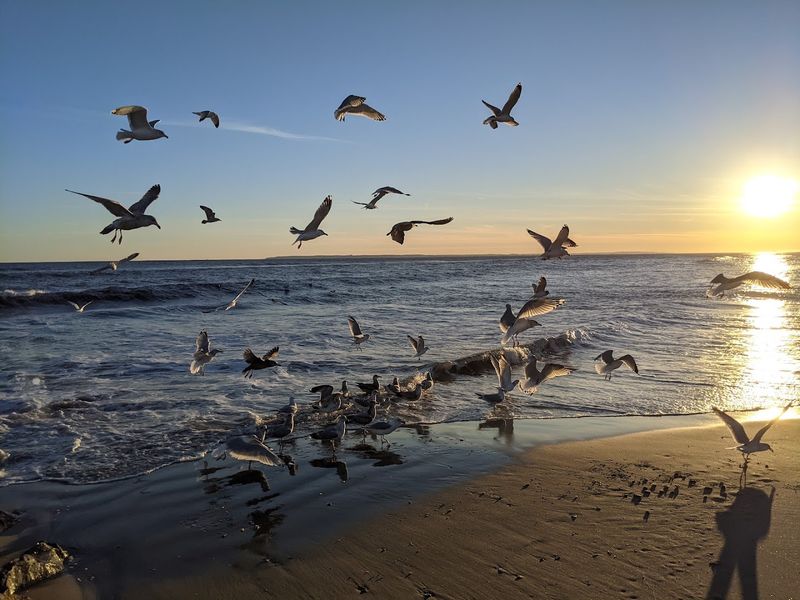
New York City has beaches that most people know. Coney Island is iconic.
The Rockaways are popular and lively. Brighton Beach has its own distinct energy.
Fort Tilden sits outside all of those categories, operating almost like a parallel version of what a city beach can be. It is technically within the five boroughs, and yet it feels genuinely removed from everything that makes the city feel relentless.
The people who discover it tend to come back quietly and regularly, not wanting to oversell it to the point where the crowds arrive. It draws a mix of artists, nature lovers, solo readers, and anyone who has ever wanted to sit by the ocean without having to negotiate for space.
The community that gravitates here has a relaxed, thoughtful vibe that sets the tone for the whole place.
Fort Tilden is not perfect in the traditional sense. There are no concessions, no showers worth bragging about, and the parking situation requires planning.
But those small inconveniences are exactly what keeps it what it is. The effort required to get here is a filter, and what it filters for is the right kind of quiet.
If you have ever felt the city pressing in from all sides and needed somewhere that actually lets you exhale, this abandoned Army base with its wild dunes and ancient batteries might be exactly the answer you were looking for.
Address: Center Rd, Breezy Point, NY 11697
