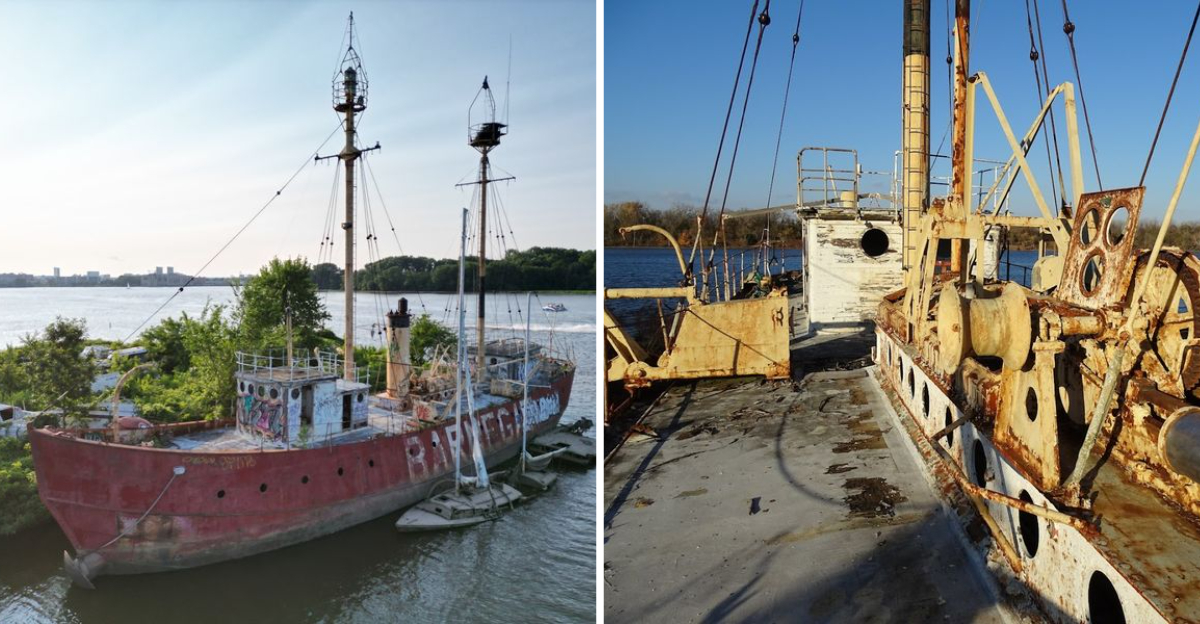
Let me tell you about a time I almost drove past something truly special.
Resting quietly in this corner of New Jersey sits an old lightship, once a floating lighthouse guiding sailors through treacherous waters.
No engine roar, no crew shouting orders anymore. Just rust, stories, and salty air.
Have you ever touched a piece of history that literally sailed itself?
This vessel saved lives without ever leaving its post. Now it is mostly overlooked, but that is what makes it magical.
You do not need a museum ticket to feel the past.
You just need curiosity and a love for forgotten things that refuse to disappear completely.
A Ship Born in Camden, Built for Danger
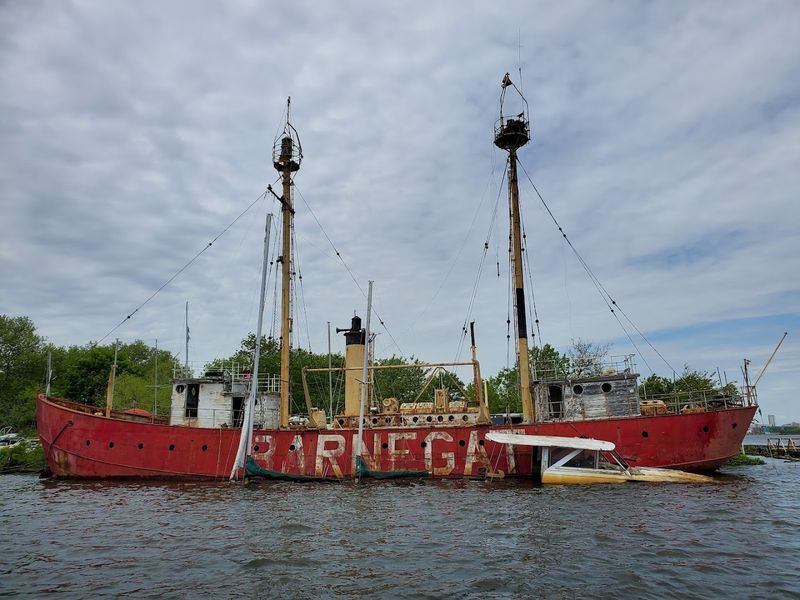
There is something almost poetic about a ship built in Camden finding its way back to Camden after more than a century of service.
The Lightship Barnegat, officially known as LV-79, rolled out of the New York Shipbuilding Company in 1904, right in the same city where it now quietly rusts away at Pyne Poynt Marina.
She weighs in at around 668 tons, stretches 130 feet long, and features a 28-foot beam, which made her sturdy enough to handle the rough Atlantic waters off the New Jersey coast. Steel-hulled and steam-propelled, she was built to take a beating.
And she absolutely did.
Back in 1904, building a floating lighthouse was serious engineering. Everything had to hold up against relentless waves, unpredictable weather, and the constant pressure of being a ship that literally could not move out of the way of a storm.
She was designed with purpose, and that purpose shaped every rivet and plank of her construction.
What Exactly Is a Lightship Anyway
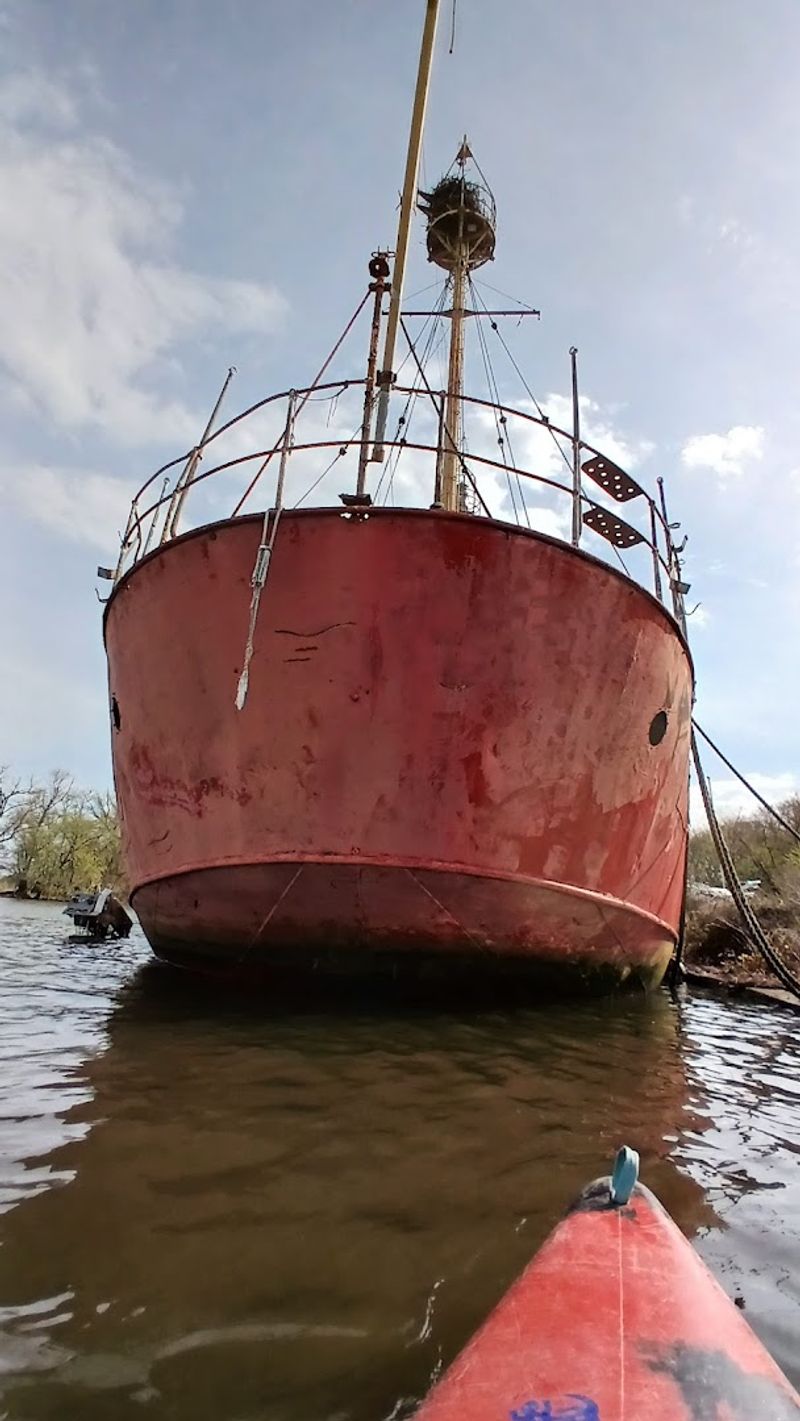
Not everyone grows up knowing what a lightship is, and honestly, that is part of the tragedy here. A lightship is essentially a floating lighthouse, anchored in a fixed spot where building a traditional lighthouse on land was not possible.
It sat there, day and night, signaling to passing ships that danger was nearby.
The Barnegat was equipped with two masts topped with oil-fed lanterns, a steam-chime whistle that could cut through the thickest fog, a submarine bell for underwater signaling, and eventually a radio beacon as technology advanced. That is a lot of gear for one vessel.
Each piece of equipment served a critical function in keeping commercial ships from running aground on shallow shoals along the New Jersey coastline.
Crews aboard lightships had one of the most isolated and underappreciated jobs in maritime history. They could not sail anywhere.
They were anchored in place, often in rough seas, responsible for keeping the light burning no matter what. It was unglamorous, exhausting, and genuinely heroic work.
Twenty Years Guarding Five Fathom Bank
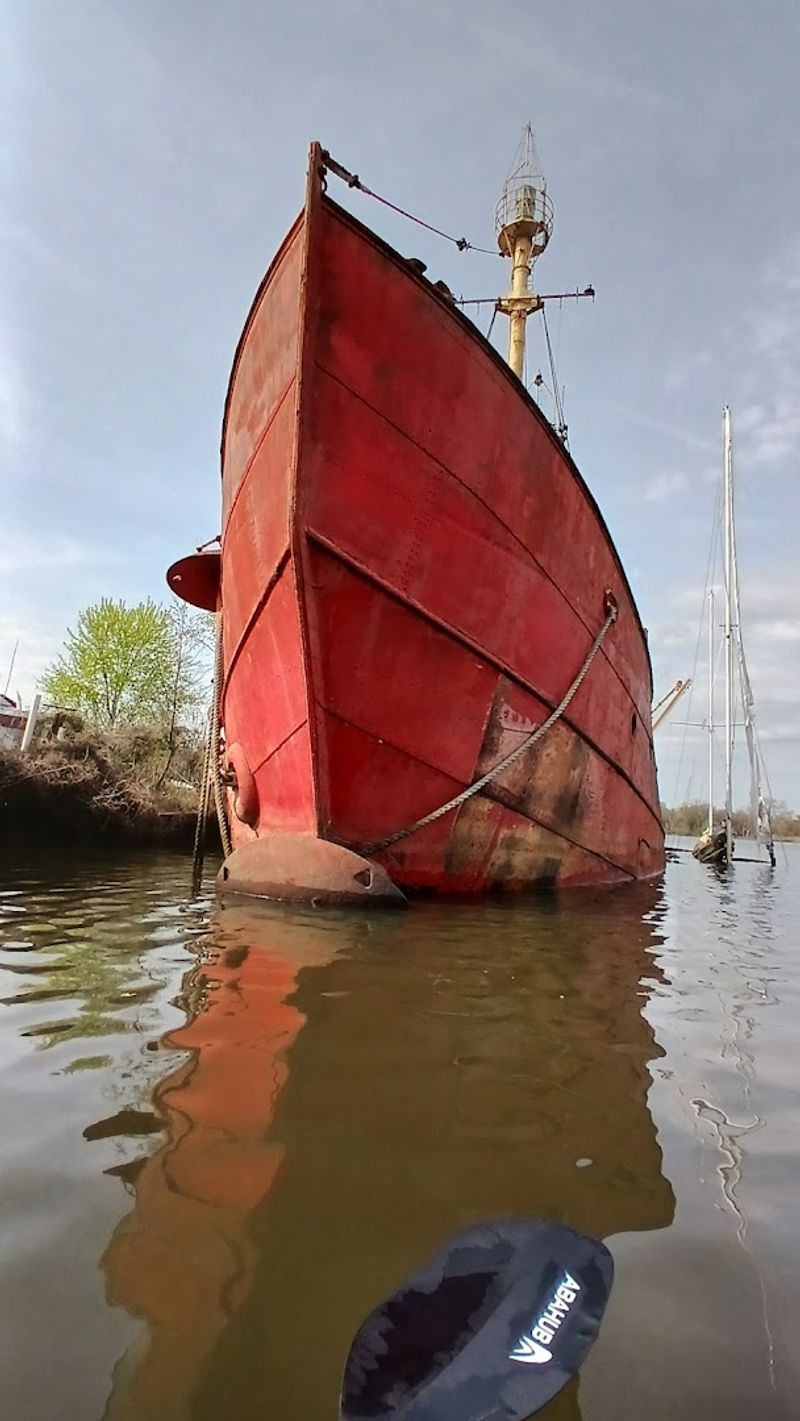
From 1904 to 1924, the Barnegat served her first assignment at Five Fathom Bank, a stretch of shallow, treacherous water near the Cape May Lighthouse at the southern tip of New Jersey.
That is twenty full years of anchored service in some of the busiest and most unpredictable shipping lanes on the East Coast.
Five Fathom Bank sits at the entrance of Delaware Bay, where Atlantic swells meet bay currents in ways that have sunk more than a few unlucky vessels over the centuries. Having a lightship stationed there was not just helpful, it was essential.
Commercial ships moving goods up and down the coast depended on that light to stay safe.
Two decades in one spot is a long time. The crew rotations changed, the equipment got upgraded, and the world around the ship transformed dramatically, from the early automobile age through the end of World War I.
Through all of it, the Barnegat stayed put, doing exactly what she was built to do, quietly and without complaint.
The Barnegat Station Years and World War II Service
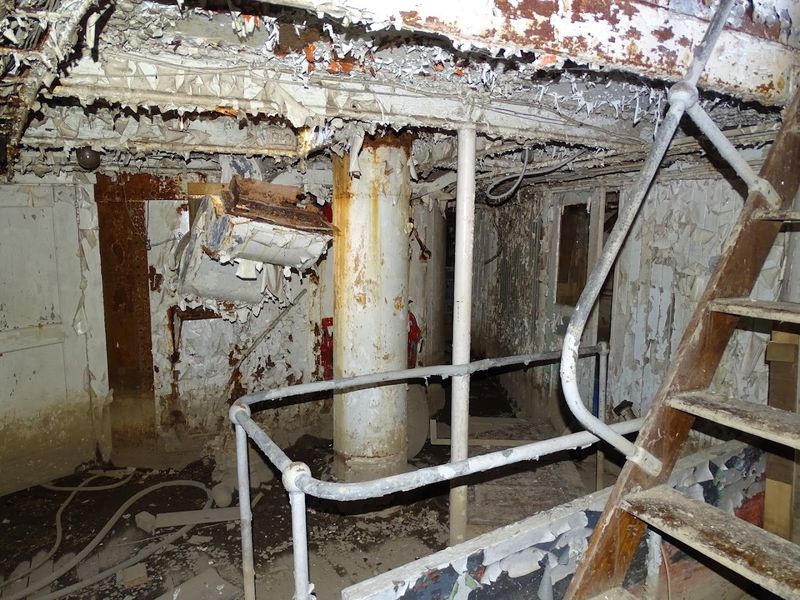
After a brief stint as a relief lightship, the Barnegat was permanently assigned to the Barnegat Lighthouse station from 1927 to 1942.
This stretch along the Long Beach Island coast was one of the most critical navigation points on the entire Jersey Shore, and the ship earned her name here during these years of steady, reliable service.
Then World War II changed everything. Starting in 1942, the vessel was repurposed as an examination ship at Edgemoor, Delaware, where she intercepted and inspected ships entering the Delaware River.
This was wartime security work, serious and strategic, a far cry from floating quietly off a sandy coastline. She served in this role until 1945.
After the war ended, she returned to the Barnegat station and continued her original mission until her decommissioning on March 3, 1967. That is over six decades of combined service, covering peacetime navigation and wartime duty.
Few vessels of her era can claim such a varied and meaningful career. She truly earned her place in history long before anyone thought to preserve her.
From Museum Dream to Slow Decay
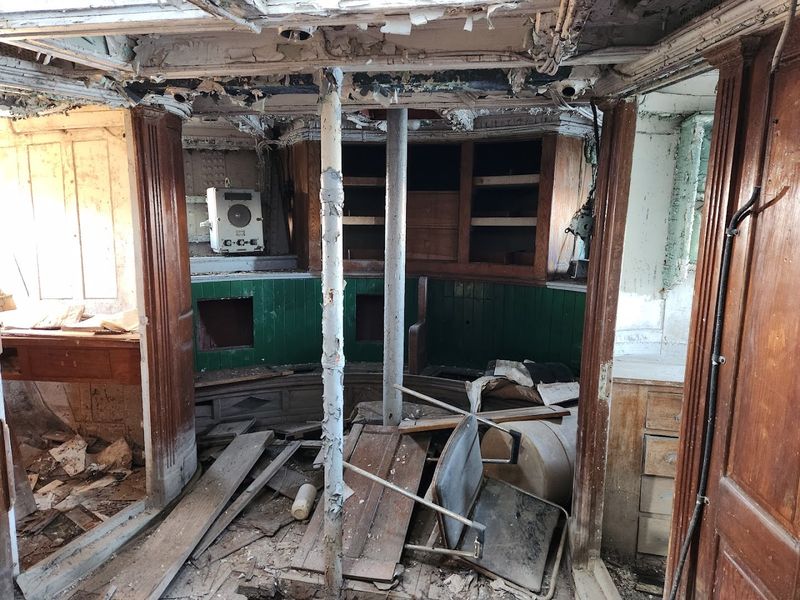
After decommissioning in 1967, the Barnegat was donated to the Chesapeake Bay Maritime Museum in Maryland, which sounds like a happy ending.
But by 1970, she was sold to the Philadelphia Ship Preservation Guild and moved to Penn’s Landing in Philadelphia for public display.
For a while, things looked promising.
Eventually, she was purchased by Rodney Sadler, owner of Pyne Poynt Marina in Camden, with plans to restore her and create a waterfront museum attraction. Those plans never fully materialized.
The ship sat, the years passed, and the maintenance simply did not happen the way it needed to.
By 2018, Preservation New Jersey had listed the Lightship Barnegat as an endangered historic site, a designation that carries both urgency and heartbreak.
Vandalism, weather damage, and neglect had taken a serious toll on her steel hull and wooden interior elements.
A ship that once guided thousands of vessels safely through dangerous waters was now herself in danger of being lost forever. It is a painful irony that is hard to shake.
On the National Register of Historic Places
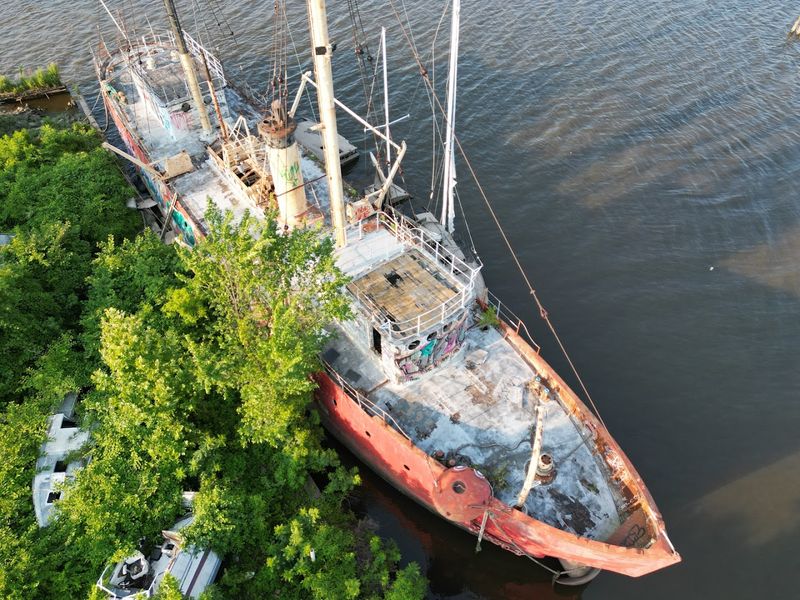
On November 29, 1979, the Lightship Barnegat was officially added to the National Register of Historic Places. That recognition matters more than it might seem at first glance.
It places the ship in the same category as iconic American landmarks, acknowledging that her story is worth protecting and remembering.
Being listed on the National Register does not automatically guarantee funding or physical restoration, but it does signal cultural significance. It tells the public and policymakers that this vessel represents something irreplaceable in American maritime history.
For a ship that had already been through so much, that recognition felt like a long overdue acknowledgment.
The listing came roughly a decade after her decommissioning, during a period when maritime preservation was gaining more attention across the country. Lightships as a category were already becoming rare, with many having been scrapped or lost.
The Barnegat being recognized at that moment helped cement her status as one of the last surviving examples of steel-hulled lightship design in the United States. That is a legacy worth fighting to preserve.
Camden County Steps In With New Hope
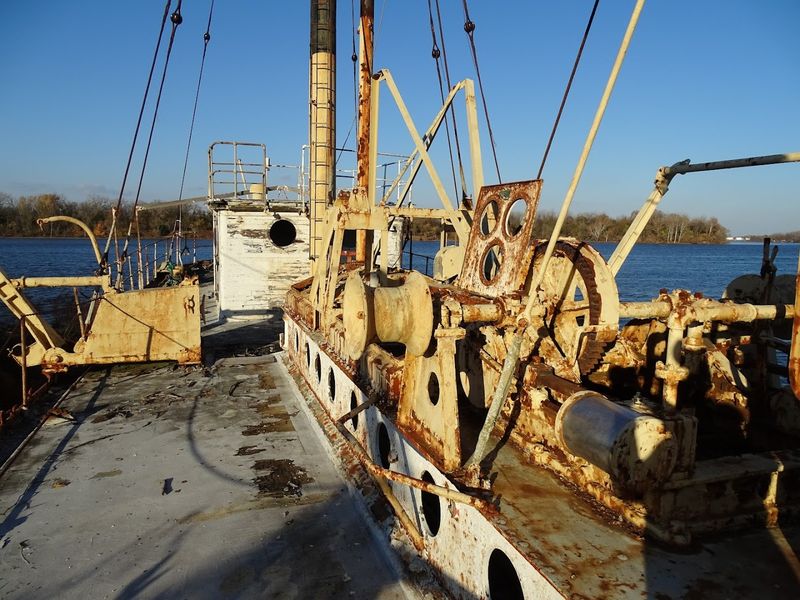
In 2023, Camden County purchased both the Lightship Barnegat and the surrounding Pyne Poynt Marina, bringing a new wave of cautious optimism to the ship’s future.
Local government ownership opens doors that private ownership simply cannot, including access to preservation grants, public funding, and coordinated restoration planning.
The purchase signals that someone with real resources and community accountability now has a stake in what happens to this vessel.
For years, the ship existed in a kind of limbo, privately owned but publicly ignored, slowly deteriorating while the maritime history it represented faded from public memory.
County involvement changes that dynamic significantly.
Restoration of a vessel this old and this damaged is never a quick or cheap process. Steel hulls corrode, wooden elements rot, and mechanical systems seize after decades of disuse.
But the fact that Camden County made this acquisition at all suggests there is genuine political will to see the Barnegat survive.
Whether that will translates into full restoration remains to be seen, but for now, the ship has a better chance than it has had in years.
The Ship’s Bell Finds a New Home
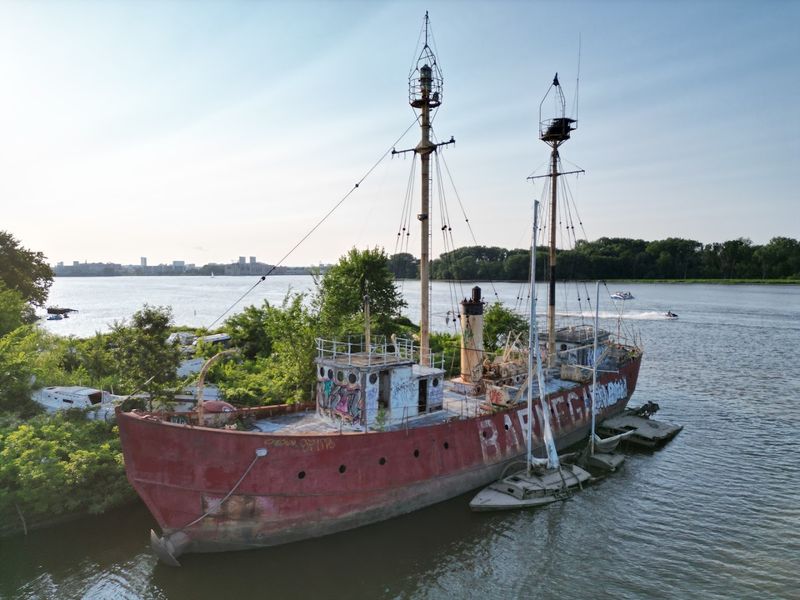
In early 2020, the Barnegat Light Historical Society did something small but deeply meaningful. They acquired the ship’s original bell for restoration and safe keeping, rescuing it from the deteriorating vessel before it could be lost to theft or further decay.
The bell was restored and unveiled in June 2020.
The unveiling took place at the Seventh Street bay side pavilion park in Barnegat Light, New Jersey, the very community that the lightship had served and protected for so many years.
Placing the bell there felt like a homecoming of sorts, returning a piece of the ship to the town that shared its name.
It was a quiet, respectful tribute.
A ship’s bell might seem like a small artifact in the grand scope of maritime history, but it carries enormous symbolic weight. Bells were used to mark time aboard vessels, to signal in fog, and to call crew to stations.
Having this specific bell preserved and displayed where locals and visitors can see it keeps the Barnegat’s story alive even as the ship itself struggles to survive. Small acts of preservation add up.
Why Lightships Matter to American History
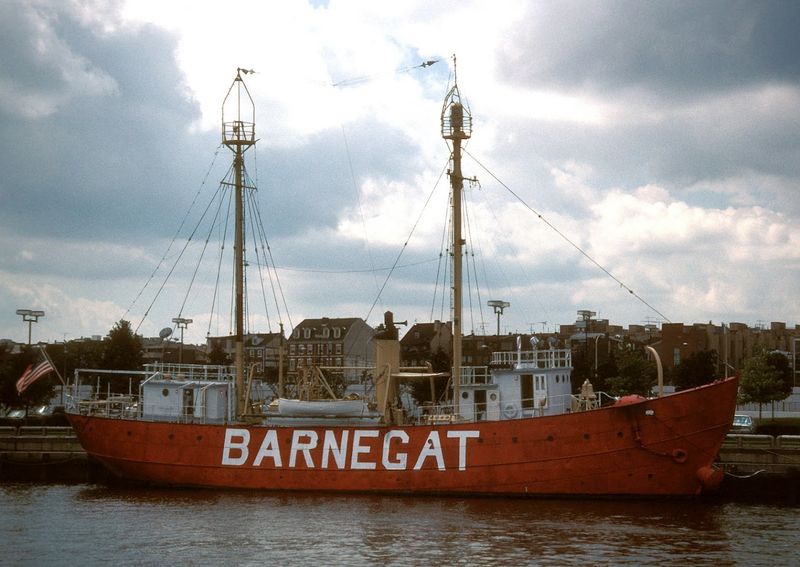
Lightships were the unsung heroes of American maritime navigation for well over a century.
They were deployed wherever a traditional lighthouse could not be built, which meant anchoring in exposed, dangerous waters with no ability to retreat when conditions turned brutal.
The crews who served on them rarely received the recognition they deserved.
At their peak, the United States had dozens of lightships stationed along its coastlines, river mouths, and offshore shoals. They guided fishing fleets, cargo ships, passenger vessels, and military craft through waters that would otherwise have claimed far more lives and cargo.
The economic and human cost saved by these vessels is genuinely incalculable.
As lighthouses and eventually automated buoys replaced them, lightships were quietly retired and mostly forgotten. Many were scrapped for metal.
Others sank or were sold off without much ceremony.
The Barnegat is recognized as one of the oldest surviving examples of a steel-hulled American lightship, which makes her preservation not just a local New Jersey issue but a matter of national maritime heritage.
Losing her would close a chapter that cannot be rewritten.
Visiting the Barnegat Today and What to Expect
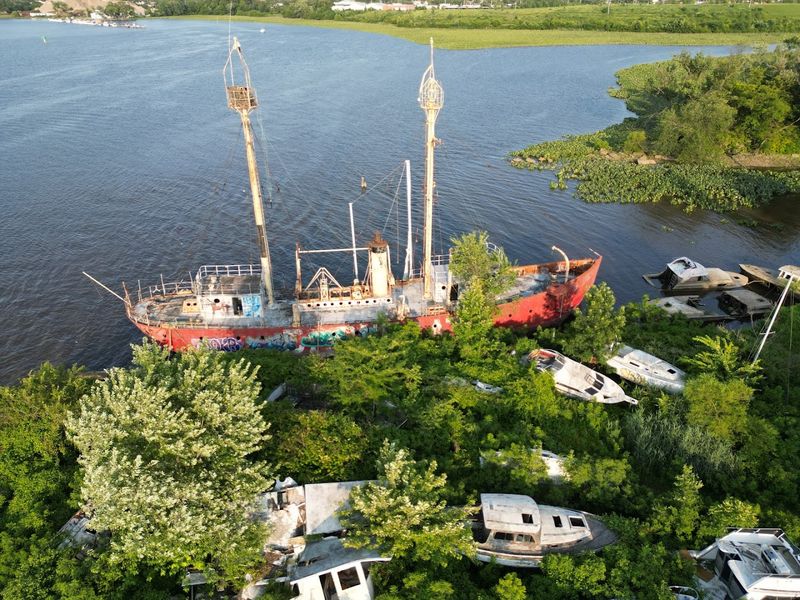
Getting a close look at the Lightship Barnegat today requires some patience and realistic expectations. The ship is docked at Pyne Poynt Marina in Camden, but public access to the vessel itself is currently limited.
From the shoreline, the two masts rising above the dock are often the most visible part of the ship.
That said, there is something strangely compelling about standing near this spot and knowing what is just out of view.
The history anchored right there in that slip represents over sixty years of active maritime service, two world wars, and a preservation saga that is still unfolding.
It does not need to be pretty to be worth your time.
Camden’s waterfront has been seeing renewed interest and investment in recent years, and the Barnegat sits at the edge of that story. Keeping an eye on developments here is worthwhile for anyone who cares about maritime history.
With Camden County now involved, the future feels more hopeful than it has in decades.
Address: 1091 N 8th St, Camden, NJ.
